
SEOUL · MONEY MUSEUM
Bank of Korea Money Museum: walking into a 1912 bank for free
Lulu walks over from Namdaemun Market, past the granite front, and notes the English tour time and photo rules first — for the day she brings a friend from abroad
The fourth part of “Namdaemun & Myeongdong.” Eight minutes on foot from Namdaemun Market, the granite building on the main road is a former bank head office completed in 1912. It was the first building in Korea to have a lift. Admission is free, and it opens Tuesday to Sunday. Lulu, who is choosing where to take a friend visiting from abroad, checks the English tour time before anything else.
How to get there
Calculated with a map app’s walking route (TMAP). The museum’s website also lists Exit 7 of City Hall and Euljiro 1-ga stations.
This is the fourth part of “Namdaemun & Myeongdong.” In part three, Maya wrote down Namdaemun Market’s timetable. Today Lulu slips out of that market and walks to the stone building on the main road.
Lulu is always choosing places to show someone. Next month a friend who lives abroad is coming to Seoul. Her conditions for where to take her are three: it has to be walkable, it has to cost nothing, and it can’t be something one photo explains.
Two o’clock on a weekday afternoon. On the first line of her notebook Lulu writes: “You walk into a bank — and there’s no admission fee.”
603 metres from the market
From Namdaemun Market (the merchants’ association address) to the Bank of Korea Money Museum, the map route is 603 m, about 8 minutes (TMAP pedestrian route calculation).
A map app’s walking route puts the Bank of Korea Money Museum 603 metres and eight minutes from Namdaemun Market, measured from the merchants’ association address. By subway, it’s 377 metres and five minutes from Exit 7 of Hoehyeon Station on Line 4. The museum’s website also lists Exit 7 of City Hall Station (Lines 1 and 2) and Exit 7 of Euljiro 1-ga Station (Line 2). Find on a map
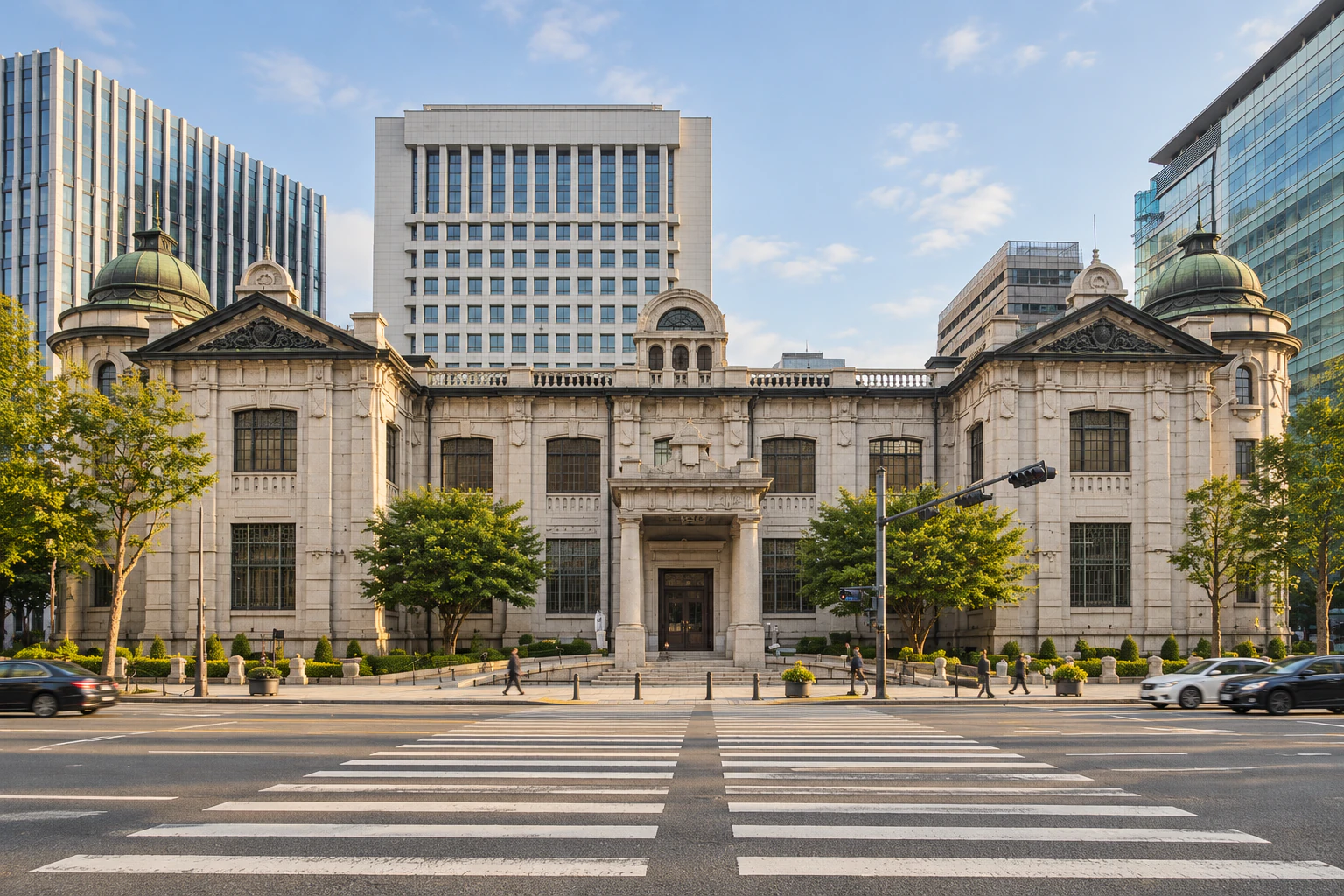
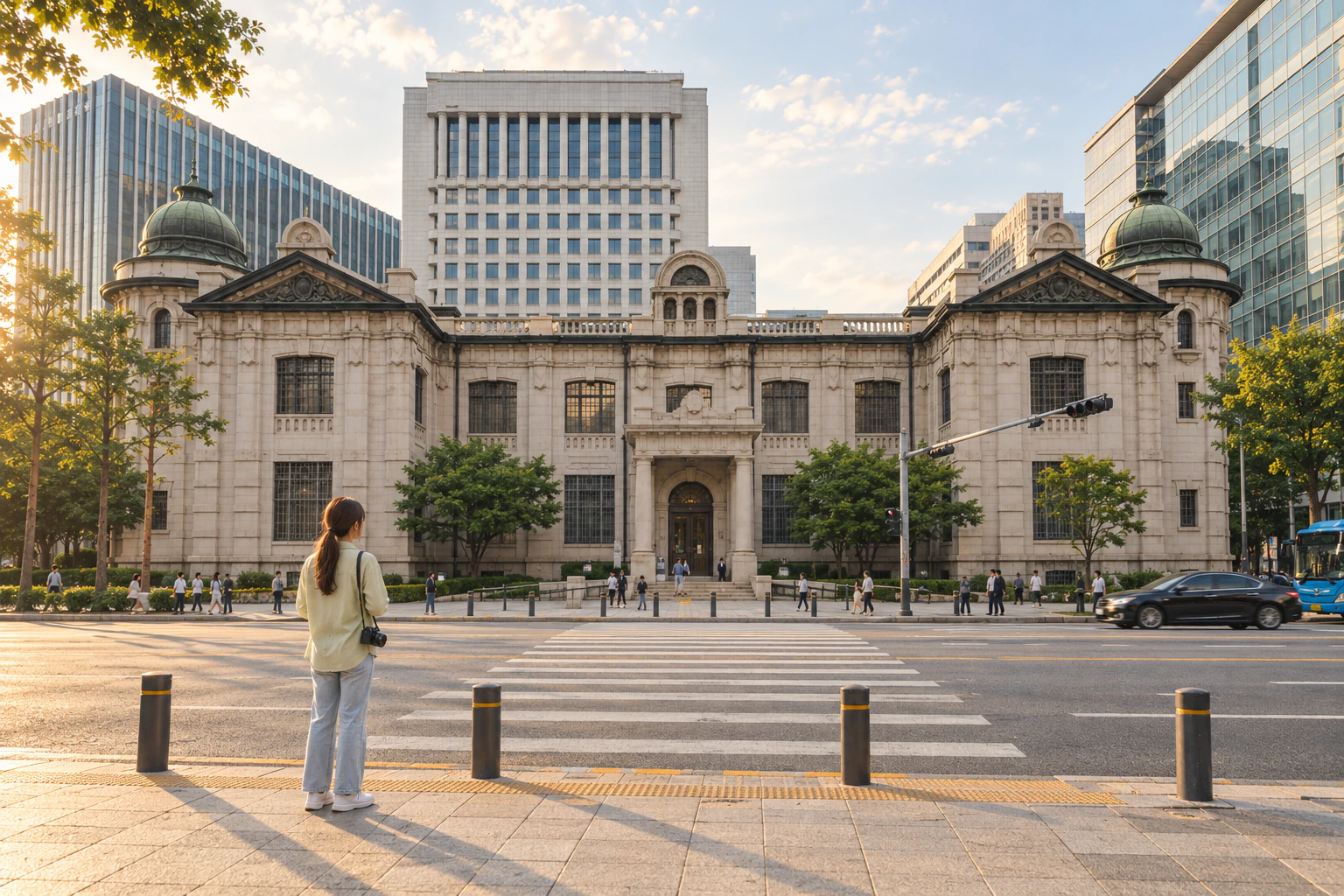
From across the main road, the building is the same on both sides. The entrance sits in the middle, a rounded roof crowns each corner, and a tall glass tower rises behind it. Lulu takes that contrast as her first photo. The first picture you send a friend should always show where you are.
The website describes it as a Renaissance-style stone building with one basement floor and two floors above ground. Seen from above it is shaped like the character 井; seen from the front it is symmetrical around the entrance. The structure is reinforced concrete, faced with granite.

A bank completed in 1912
Bank of Korea Money Museum website: construction began in 1907 for Japan’s Dai-Ichi Bank; in 1909 the (old) Bank of Korea was founded as the central bank of the Korean Empire, but under Japanese rule it was renamed the Bank of Chosen, and after the building was completed in 1912 it served as the Bank of Chosen’s head office.
The website’s introduction to the building says its name changed more than once. Work began in 1907 for Japan’s Dai-Ichi Bank. In 1909 the (old) Bank of Korea was founded as the central bank of the Korean Empire, but under Japanese rule it was renamed the Bank of Chosen. Once the building was completed in 1912, it served as the Bank of Chosen’s head office. Find on a map
According to the same page, there was a large vault in the basement when it was built, and it was the first building in Korea to have a lift. When the Bank of Korea was founded as the Republic of Korea’s central bank on 12 June 1950, this became its head office; the interior was almost destroyed during the Korean War and restored in 1958.
After a new building went up behind it in 1987, work began to bring back the original, finishing in 1989. In 2001, the Bank of Korea’s 50th anniversary, it opened as a money museum. The building was designated a national heritage site (Historic Site) in 1981. Lulu picks one line to send her friend: “The museum website says this was the first building in Korea to have a lift.”
Two floors, thirteen rooms
Bank of Korea Money Museum: the permanent exhibition has 13 rooms over two floors. On the 1st floor: “Our Central Bank”, “Life of Money”, “Money and the National Economy”, the Money Plaza and the Sangpyeong Tongbo Gallery; on the mezzanine: the former governor’s office, the museum architecture room and the former Monetary Policy Board meeting room; on the 2nd floor: the model vault, the BOK Gallery, the World Currency Room, the hands-on learning room and the special exhibition room. Exhibits are changed periodically.
Inside is a high-ceilinged hall. The permanent exhibition has 13 rooms over two floors. On the 1st floor are “Our Central Bank”, “Life of Money”, “Money and the National Economy”, the Money Plaza and the Sangpyeong Tongbo Gallery. The mezzanine holds the former governor’s office, the museum architecture room and the former Monetary Policy Board meeting room; the 2nd floor has the model vault, the BOK Gallery, the World Currency Room, a hands-on learning room and a special exhibition room. Find on a map
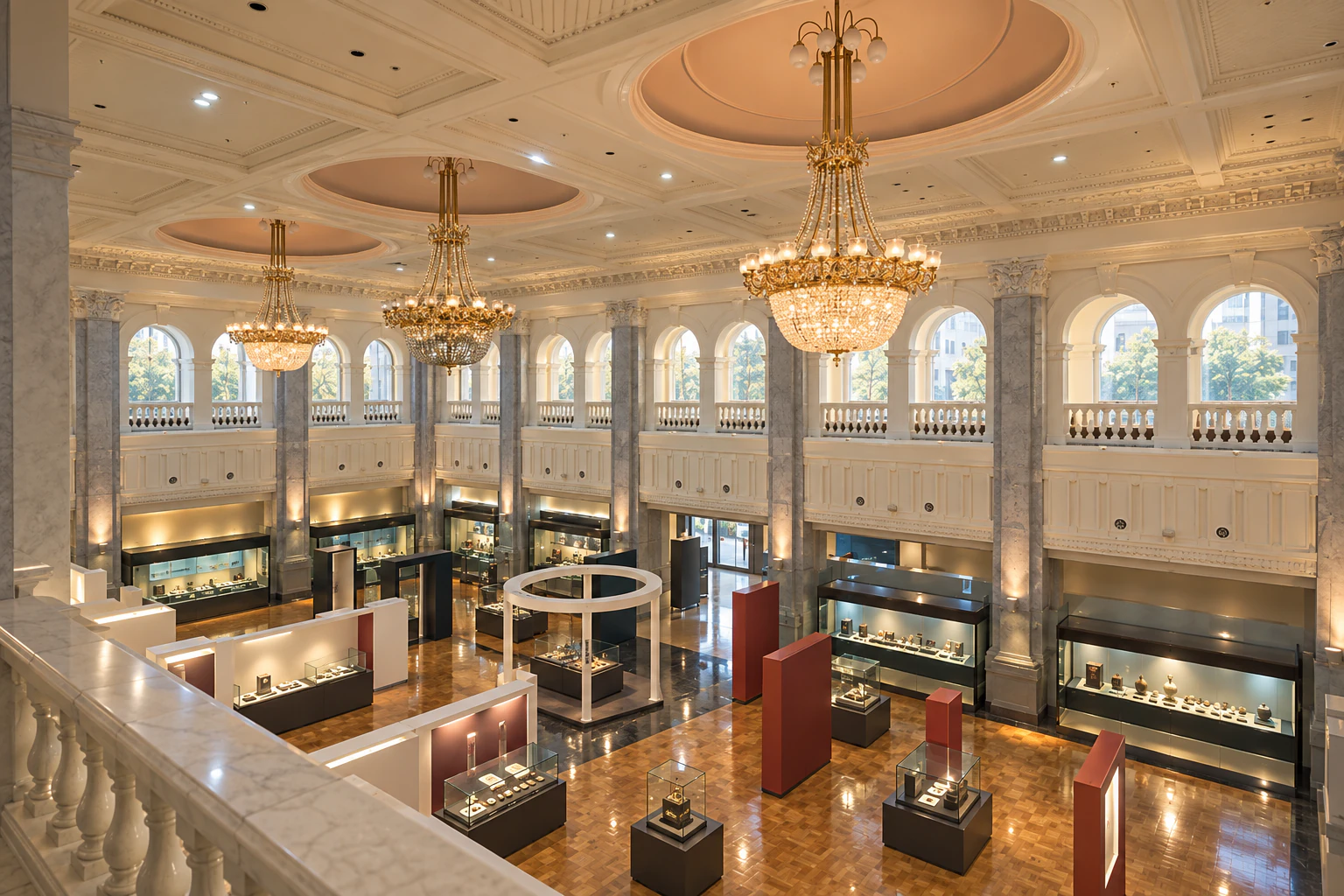
The website says exhibits are changed periodically, depending on loans and on their condition. So Lulu doesn’t tell her friend “this coin will be there.” She writes down the rooms currently listed by the museum instead.
The governor’s office and the model vault
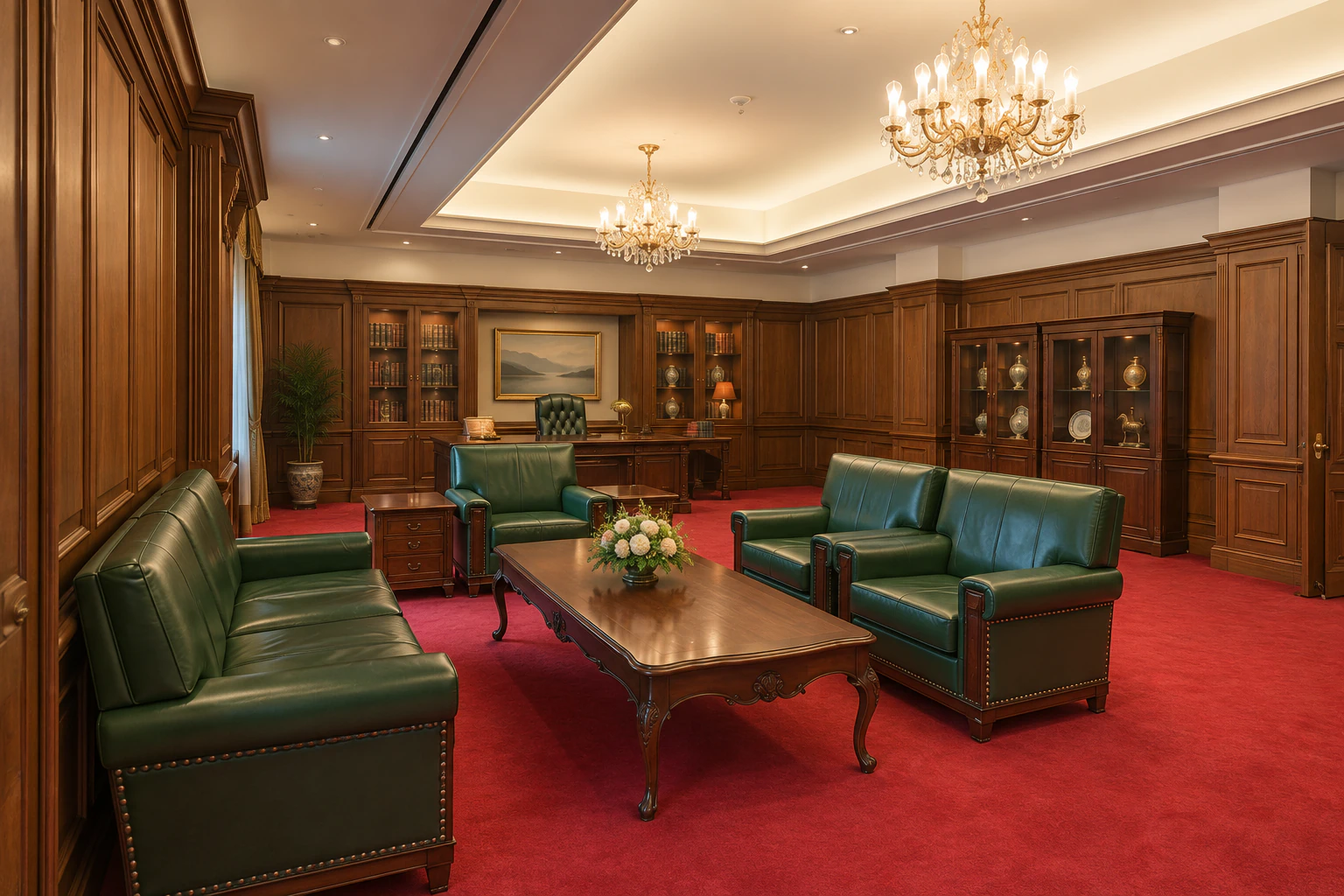
Bank of Korea Money Museum: the former governor’s office recreates the room where the Bank of Korea’s governor worked until the new main building was put up in 1987.
The former governor’s office on the mezzanine recreates the room where the Bank of Korea’s governor worked until the new main building went up in 1987. The word “recreates” matters. Lulu starts to write “the governor’s chair” to her friend, then changes it to “a room recreating the governor’s office”. Find on a map
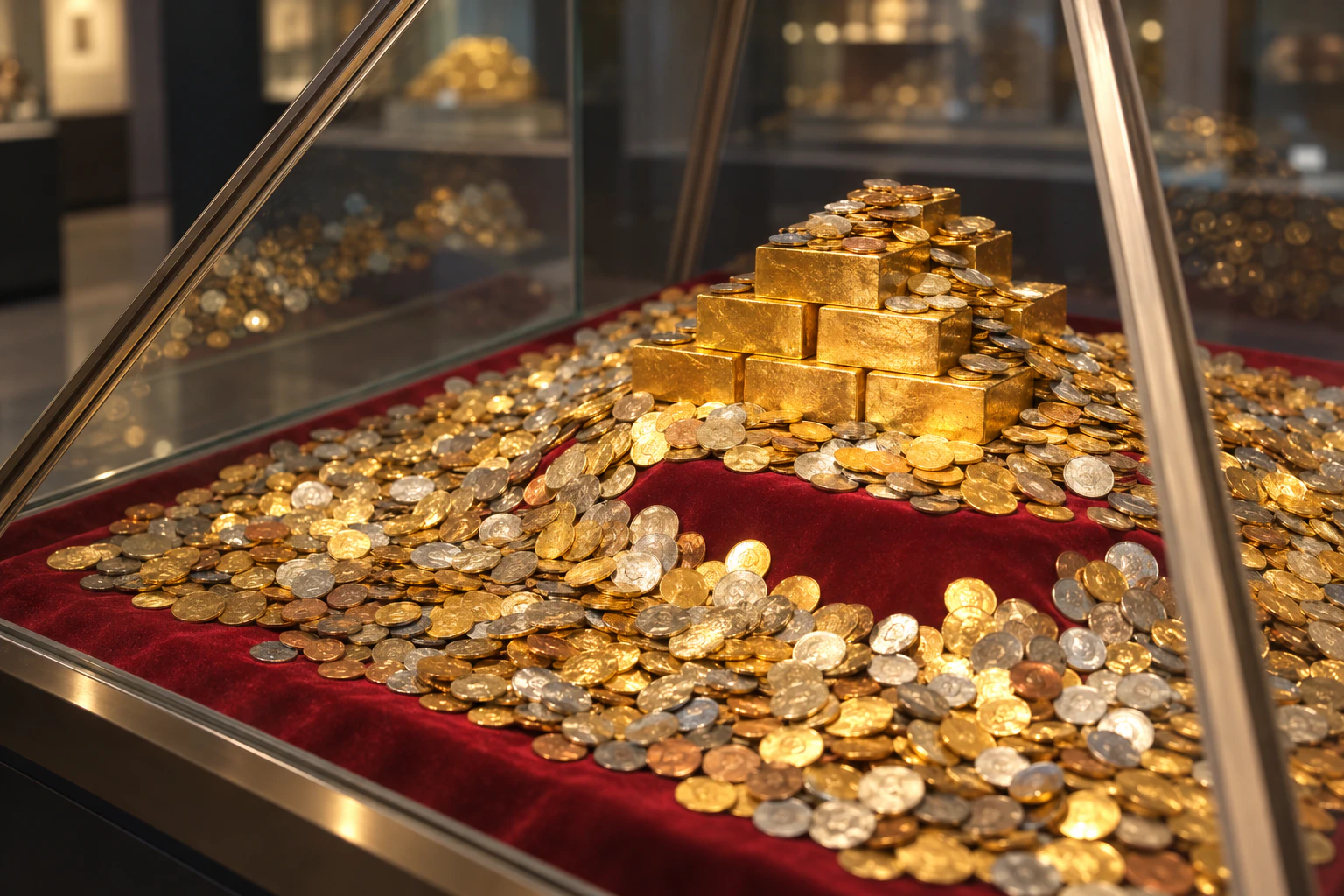
The model vault on the 2nd floor recreates how large amounts of cash are kept in a vault so that the bank can meet requests from banks and the public to exchange money. On the same floor, the World Currency Room shows actual notes and coins, with videos, from more than 170 countries where they are in use today.
Why this makes Lulu think of her friend is simple: they can look together to see whether her friend’s country is represented in the room.
The English tour is at two
Bank of Korea Money Museum: face-to-face docent tours (about 30 minutes) run Tuesday to Sunday at 11:00 (Korean), 14:00 (English) and 15:00 (Korean); the 14:00 tour is for foreign visitors only. Booking is online only, with no on-site sign-up.
What Lulu studied longest today wasn’t an exhibit but the visitor information. The face-to-face docent tour lasts about 30 minutes and runs Tuesday to Sunday at 11:00 (Korean), 14:00 (English) and 15:00 (Korean). The 14:00 tour is for foreign visitors only. Booking is online only; there’s no on-site sign-up. Find on a map

She notes the photo rules, too. Outside the photo zones you can’t use a flash or tripod, and photography for commercial purposes isn’t allowed. Lulu usually carries a camera, but the pictures she takes here stay as a few shots to send her friend.
Opening hours are 10 a.m. to 5 p.m., Tuesday to Sunday, with last entry at 4.40 p.m. It closes on Mondays, over the Seollal and Chuseok holidays, on Labour Day and election days, and from 29 December to 2 January. Admission is free.
A little after four, Lulu steps back outside and looks at the front once more from across the main road. There are two things to show her friend: a granite bank completed in 1912, and looking together to see whether her friend’s country’s money is inside it. And two things to do in advance: book the 14:00 English tour online, and avoid Mondays.
Night lighting was installed on the building in November 2005. Closing her notebook, Lulu thinks ahead to the next part: Myeongdong Cathedral on its hill, where Rina will walk up.
(※ This article includes staged images created with AI.)
Try it on your own afternoon
An editorial suggestion: walk over from Namdaemun Market or Exit 7 of Hoehyeon Station, look at the front from across the main road, then go in for the 1st-floor hall, the former governor’s office on the mezzanine, and the model vault and World Currency Room on the 2nd floor. If you’re going with a friend from abroad, book the 14:00 English tour online in advance.
A diagram of the order only · not to scale, orientation or the actual shape of the streets.
- From Namdaemun Market or Hoehyeon Exit 7 to the museum — 603 m and 8 minutes from Namdaemun Market; 377 m and 5 minutes from Hoehyeon Exit 7 (TMAP calculation). Find on a map
- The front from across the main road — Take in the symmetrical granite front in one view. Find on a map
- The 1st-floor hall and the former governor’s office — The governor’s office is a recreation of the original room. Find on a map
- The model vault and World Currency Room on the 2nd floor — Actual notes and coins, with videos, from more than 170 countries. Find on a map
Getting there
TMAPChecked 2026.09.29
From Exit 7 of Hoehyeon Station (Line 4) to the Bank of Korea Money Museum (39 Namdaemun-ro), the map route is 377 m, about 5 minutes (TMAP pedestrian route calculation).
Bank of Korea Money Museum websiteChecked 2026.09.29
Exit 7 of City Hall Station (Lines 1 and 2), Exit 7 of Euljiro 1-ga Station (Line 2, towards Lotte Department Store), or Exit 7 of Hoehyeon Station (Line 4).
Hours & fees
Bank of Korea Money MuseumChecked 2026.09.29
open Tuesday to Sunday, 10:00–17:00, with last entry at 4.40 p.m.
Bank of Korea Money MuseumChecked 2026.09.29
closed on Mondays, over the Seollal and Chuseok holidays, on Labour Day and election days, and from 29 December to 2 January.
Bank of Korea Money MuseumChecked 2026.09.29
admission is free; individuals can visit freely, while groups of 10 or more must book in advance. There is no visitor parking (except by prior arrangement for disabled visitors).
Bank of Korea Money MuseumChecked 2026.09.29
face-to-face docent tours (about 30 minutes) run Tuesday to Sunday at 11:00 (Korean), 14:00 (English) and 15:00 (Korean); the 14:00 tour is for foreign visitors only. Booking is online only, with no on-site sign-up.
Good to know
Bank of Korea Money Museum visitor rulesChecked 2026.09.29
outside the photo zones you may not use a flash or tripod, and photography for commercial purposes is not allowed.
Background11
TMAPChecked 2026.09.29
From Namdaemun Market (the merchants’ association address) to the Bank of Korea Money Museum, the map route is 603 m, about 8 minutes (TMAP pedestrian route calculation).
Bank of Korea Money Museum websiteChecked 2026.09.29
construction began in 1907 for Japan’s Dai-Ichi Bank; in 1909 the (old) Bank of Korea was founded as the central bank of the Korean Empire, but under Japanese rule it was renamed the Bank of Chosen, and after the building was completed in 1912 it served as the Bank of Chosen’s head office.
Bank of Korea Money Museum websiteChecked 2026.09.29
a Renaissance-style stone building with one basement floor and two floors above ground; seen from above it is shaped like the character 井, and from the front it is symmetrical around the entrance. The structure is reinforced concrete, faced with granite.
Bank of Korea Money Museum websiteChecked 2026.09.29
when it was built there was a large vault in the basement, and it was the first building in Korea to have a lift.
Bank of Korea Money Museum websiteChecked 2026.09.29
when the Bank of Korea was founded as the Republic of Korea’s central bank on 12 June 1950, this became its head office; the interior was almost destroyed during the Korean War and restored in 1958.
Bank of Korea Money Museum websiteChecked 2026.09.29
after a new building (today’s main building) was completed behind it in 1987, work began to restore the original, finishing in 1989; in 2001, the Bank of Korea’s 50th anniversary, it opened as a money museum. The building was designated a national heritage site (Historic Site) in 1981.
Bank of Korea Money MuseumChecked 2026.09.29
the permanent exhibition has 13 rooms over two floors. On the 1st floor: “Our Central Bank”, “Life of Money”, “Money and the National Economy”, the Money Plaza and the Sangpyeong Tongbo Gallery; on the mezzanine: the former governor’s office, the museum architecture room and the former Monetary Policy Board meeting room; on the 2nd floor: the model vault, the BOK Gallery, the World Currency Room, the hands-on learning room and the special exhibition room. Exhibits are changed periodically.
Bank of Korea Money MuseumChecked 2026.09.29
the former governor’s office recreates the room where the Bank of Korea’s governor worked until the new main building was put up in 1987.
Bank of Korea Money MuseumChecked 2026.09.29
the model vault recreates how large amounts of cash are kept in a vault so the bank can meet requests from financial institutions and the public to exchange money.
Bank of Korea Money MuseumChecked 2026.09.29
the World Currency Room shows actual notes and coins, with videos, from more than 170 countries where they are in use today.
Bank of Korea Money Museum historyChecked 2026.09.29
night lighting was installed on the building in November 2005, and it won the top prize in the night-view category of the Seoul Architecture Awards.
- Open Tuesday–Sunday 10:00–17:00 (last entry 16:40); closed Mondays, over Seollal and Chuseok, on Labour Day and election days, and 29 December–2 January; admission free (Bank of Korea Money Museum website, checked 29 September 2026).
- Docent tours (about 30 minutes) run at 11:00 in Korean, 14:00 in English (foreign visitors only) and 15:00 in Korean, and are booked online only. Groups of 10 or more must book in advance.
- Outside the photo zones, flashes and tripods are not allowed, and commercial photography is prohibited. There is no visitor parking (disabled visitors can arrange it in advance).
- Exhibits change periodically, so check before you go if you want to see a particular coin or note.
More from this area
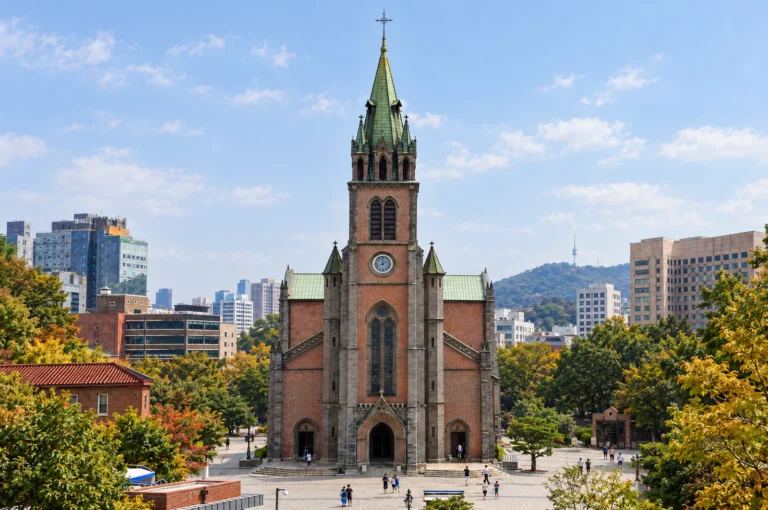
Myeongdong Cathedral: counting two colours of brick on the hill
The last part of “Namdaemun & Myeongdong.” The National Heritage Service describes Myeongdong Cathedral as Korea’s first church built of brick. The bricks were made in Korea, in some twenty shapes and two colours, red and grey. Rina has walked the streets of Myeongdong many times but has only ever seen the cathedral’s spire from below; this time she climbs the hill and starts with the bricks.
Namdaemun Market: One Line of Food Alleys, Starting with Kalguksu
An added piece in the Namdaemun and Myeongdong issue.