
SCENE · SINSA-DONG
Garosu-gil: bring home a colour you love
From Sinsa Station’s Exit 8 on Line 3, Mali heads to Garosu-gil, walks to its far end, then chooses one small item on the way back.
Garosu-gil is a street lined with ginkgo trees. Mali carries one colour that stayed with her from a morning meeting and walks the whole length of the street once. On the way back she looks at her candidates again, and takes that colour home as a claw clip.
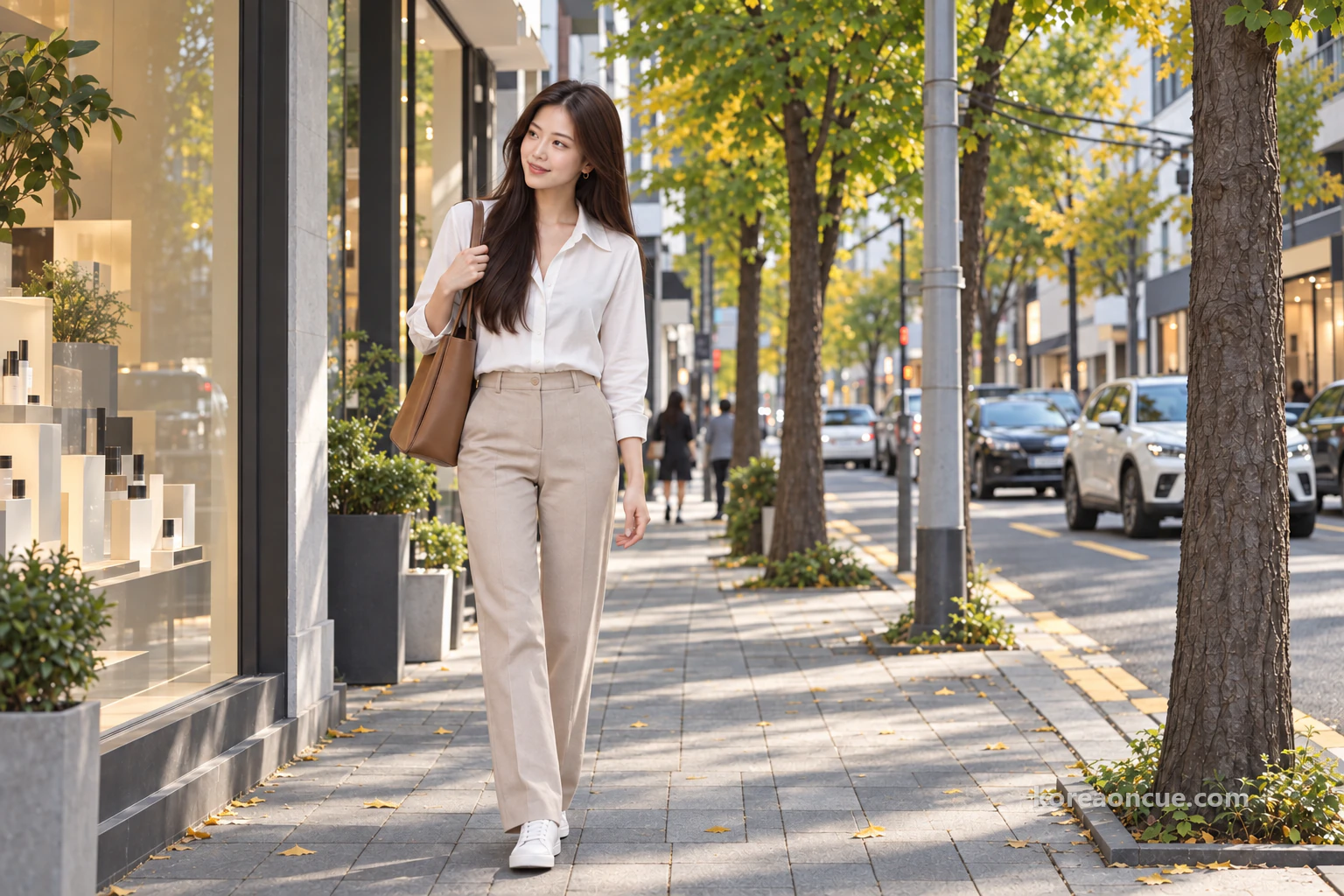
How to get there
Mali tends to remember her days by colour. She works for a beauty magazine in Bangkok and comes to Seoul about twice a month for meetings with Korean cosmetics companies. In the meeting room, the talk is of new products, their shade names and textures. Some days, one of those colours stays in her head long after the meeting is over.
Today is one of those days. Among the lip samples at the morning meeting, there was a shade like dried roses, and she keeps coming back to it. Mali took a photo of the colour card. Her afternoon is free. She finds herself wanting to take that colour home in something other than a lipstick. Ideally, something small that she could carry around and see every day.
Today she has chosen Garosu-gil in Sinsa-dong. As the name suggests, it’s a street lined with trees — ginkgos. Where galleries and film companies once gathered, fashion and beauty shops and cafés now run one after another. Fashion and beauty pop-up stores open here, too. Mali wants to look for her colour on this street and take it home in one small thing.
This guide is for anyone who wants to shop on Garosu-gil but can’t decide what to look at among the shops on both sides of the street. How to get from the station onto the street, how to walk it end to end once, how to look at your candidates again, what to ask before paying, and how to get back: Mali works through each in turn.
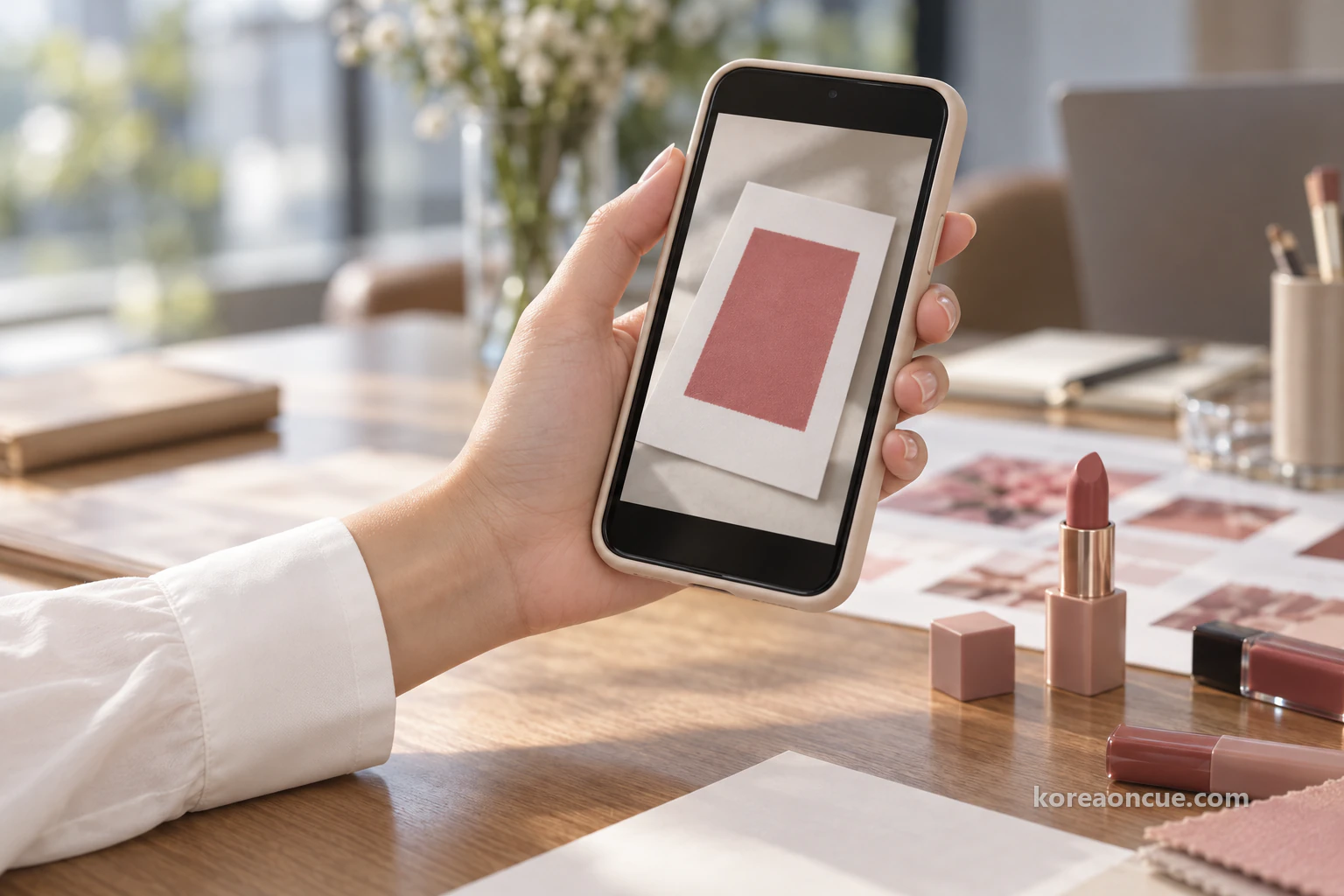
The Cue
On her first pass along Garosu-gil, Mali doesn’t go into any shops. She walks to the end of the street once, noting only the windows where she can see her colour, and looks at those candidates again on the way back.
- It’s about a five-minute walk from Exit 8 of Sinsa Station on Line 3.
- Opening hours and closing days vary from shop to shop.
- Write down the one colour or item you’re looking for today, your budget and how much room is left in your bag.
- If you plan to claim a tax refund, bring your passport.
- If you’re browsing separately from your companions, agree where to meet as “Sinsa Station Exit 8 + above or below ground + time”.
- If you need step-free access, check the route from the station to the street and whether the entrances of the shops you plan to visit have a step.
01At Sinsa Station’s Exit 8, mark the two ends of your walk
Mali gets off at Sinsa Station on Line 3 and comes out of Exit 8. At the top of the stairs she doesn’t start walking straight away. She steps aside, out of the way of people coming and going, and opens her map.
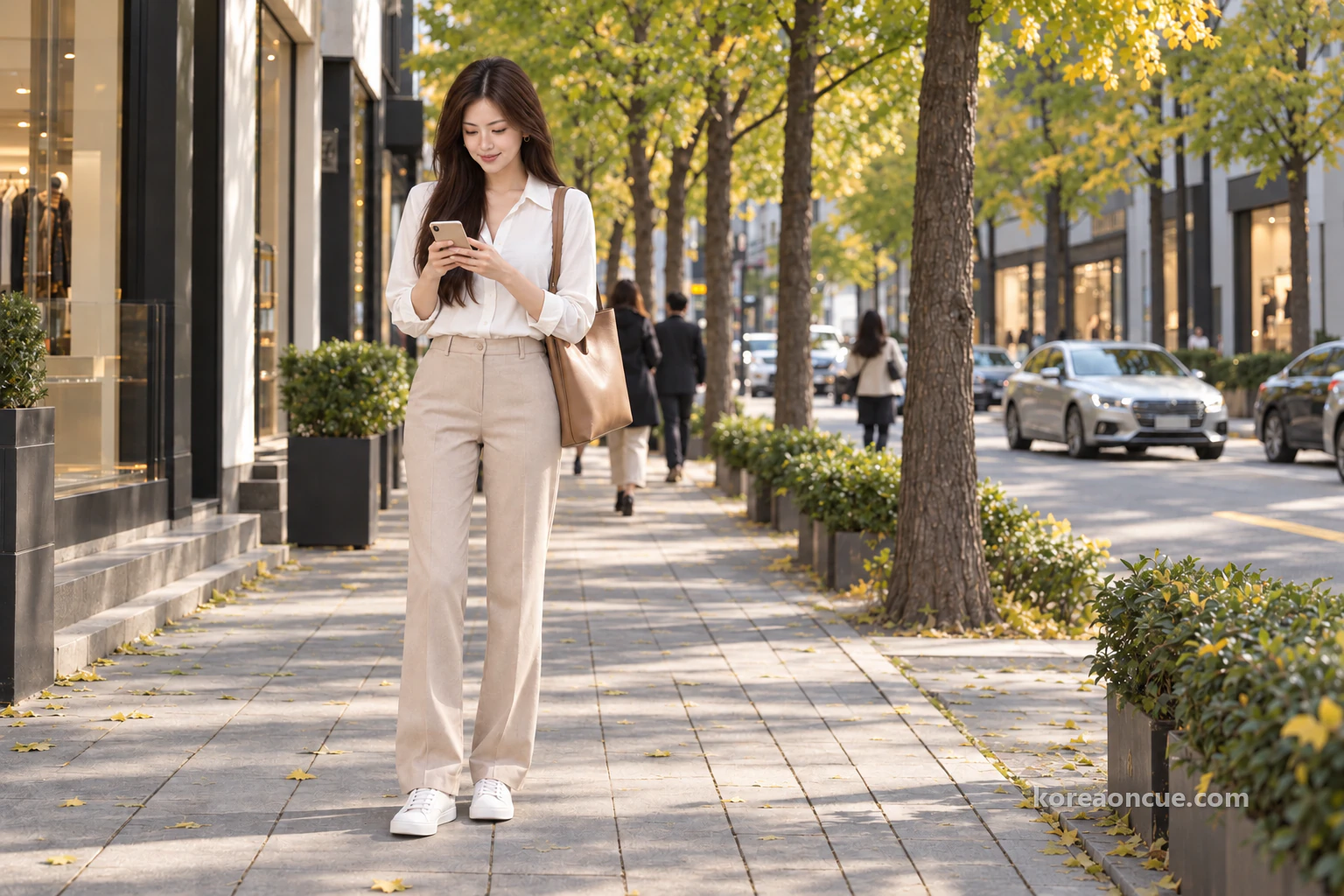
Garosu-gil runs from the crossroads in front of Hyundai High School to the T-junction with Dosan-daero, east of Sinsa Station. Mali finds the two ends on the map first. The junction on the Dosan-daero side is where she’ll go in today, and the crossroads in front of Hyundai High School is where her walk will end. At the top of her notes she writes two lines: “Start — the junction on the Dosan-daero side (from Sinsa Station Exit 8)” and “End — the crossroads in front of Hyundai High School”.
There’s a reason for fixing the end in advance. On a street where shops run along both sides, stopping at every window soon blurs your sense of how far you’ve come. Until she reaches the end, Mali treats everything on the street as “seeing for the first time”. Once she gets there, it switches to “seeing again”.
She saves her way back on the map too. Today she plans to come back to Exit 8 and go into the station from there. On days when she’s browsing separately from her companions, Mali sends where and when to meet in a single line, like “Sinsa Station Exit 8, street level, 4 p.m.” On a street of look-alike shops, “outside that shop we passed” can easily mean different places to different people.
Open in Kakao Map — Garosu-gil
- Come out of Exit 8 of Sinsa Station on Line 3 and open your map once you’ve stepped out of the way.
- Find both ends of the street on the map — the junction on the Dosan-daero side and the crossroads in front of Hyundai High School.
- Save the exit you’ll go back to, and meet your companions by exit number, above or below ground, and time.
02Walk the line of ginkgo trees to the end, once
Turn into Garosu-gil from the junction and ginkgo trees stand in rows on both sides of a two-lane street. Mali has decided that this first walk is “for looking only”. She doesn’t go into any shops, and she doesn’t linger in front of the windows either.
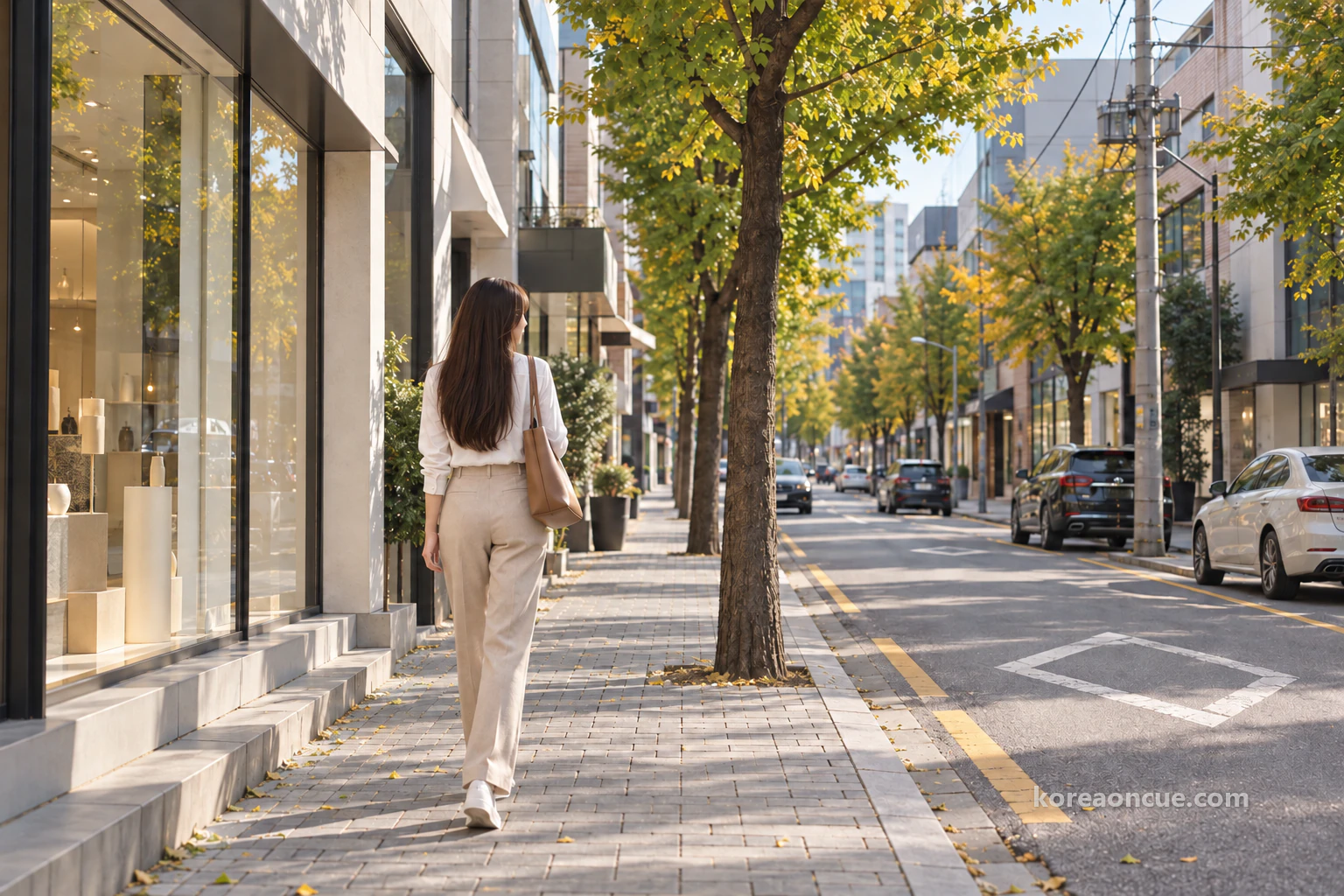
What Mali is looking for is the colour she brought with her today. On her phone is the photo of the colour card from the morning: a muted pink, its red subdued, like dried roses. When she spots something in a window that resembles that colour, she slows down. It could be clothing, a bag or a small accessory. She hasn’t decided on the item yet. Today the colour comes first.
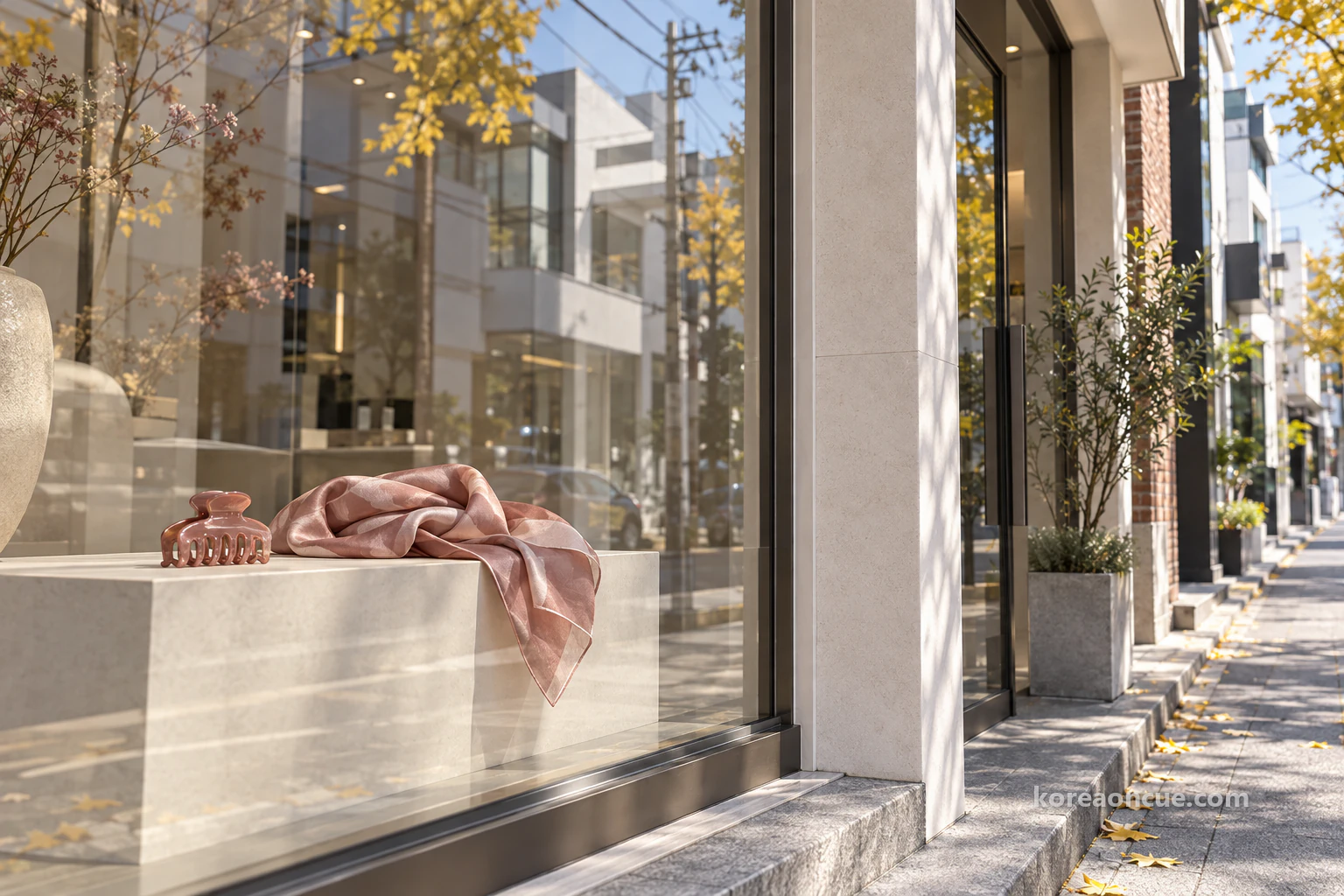
When she sees a similar colour, Mali checks the shop’s location on her map and drops a pin, then writes one line about what she saw through the window. She also notes which side of the street the shop is on, like “Right-hand side, facing Hyundai High School — window display, rose-coloured claw clip”. On the way back, she reads “left” and “right” as seen when facing Hyundai High School.
Everything she notes on this walk is a candidate. A colour seen through a window is a colour under the shop’s lighting, and the size is a guess by eye. Mali tags these lines in her notes “seen through the window”.
When she takes a photo of a window, she stops at a spot on the pavement where she won’t block anyone. If she wants to photograph inside a shop, she asks the staff first.
When she reaches the crossroads in front of Hyundai High School, Mali stops. Her notes now hold five candidates: a rose-coloured claw clip, a scarf that includes a similar shade, a rose-coloured card wallet, a piece of knitwear in the same colour family, and one window whose whole display was dressed in that colour. Her first walk ends here.
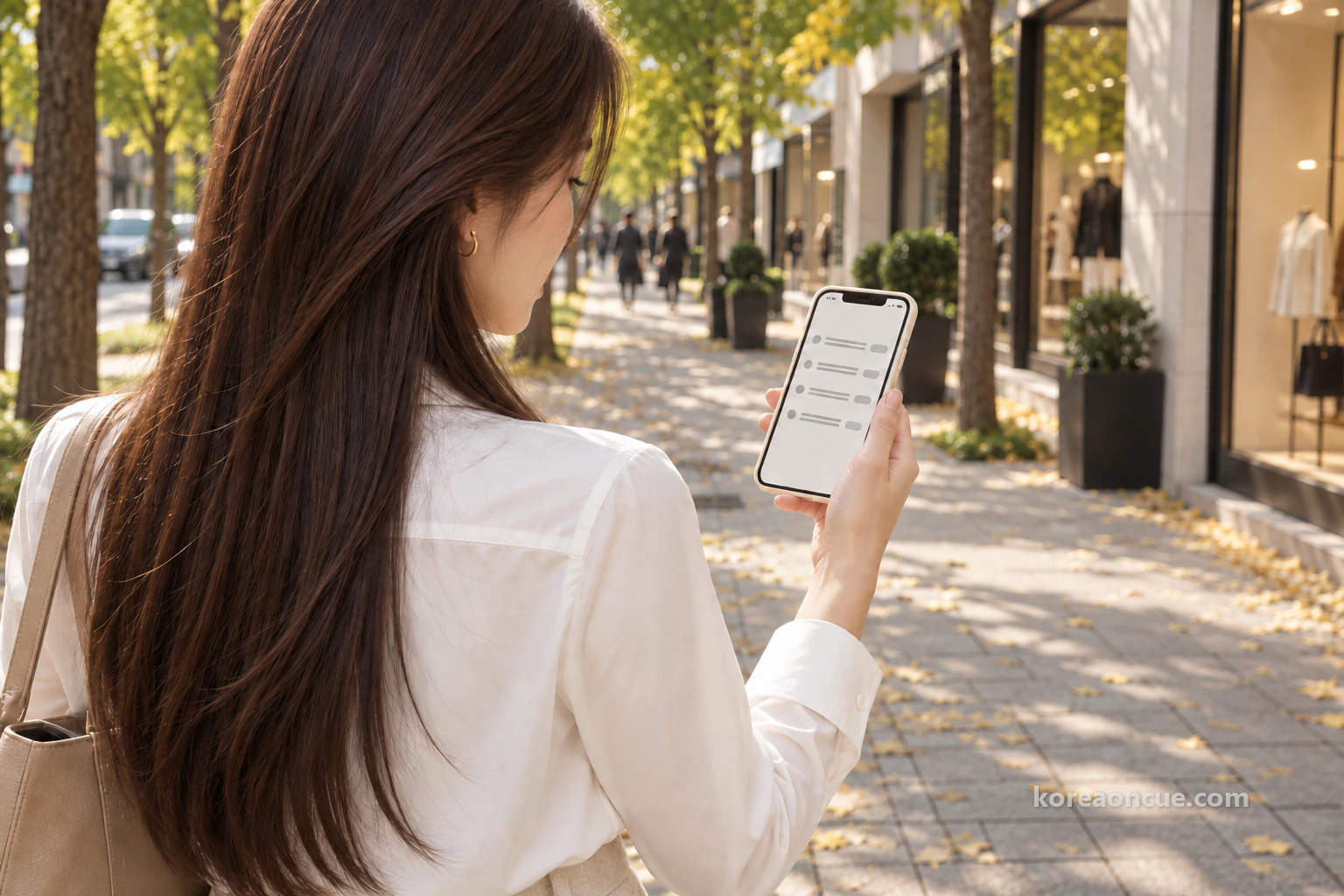
- If you haven’t decided which shops to go into on your first walk, walk to the end of the street just looking.
- For each candidate, note the map pin, what you saw and which side the shop is on. Add the direction you were facing to any “left” or “right”.
- Note what you see through a window as a “candidate”, not as something you’ve checked.
- Take photos from a spot where you won’t block the pavement, and ask the staff before photographing inside a shop.
03Separate what’s for work from what you take home today
There are plenty of beauty shops on Garosu-gil. As she walked, Mali slowed down twice in front of beauty shop windows. One window prominently displayed a new make-up product; the other belonged to a pop-up shop.
Mali notes these two in a different section of her notes. Candidates for what she takes home today go under “to find”, and anything connected with her magazine work goes under “for work”. The new make-up product goes under “for work”, as something worth bringing up at her next meeting. The pop-up store goes in the same section. Next to it, she writes the date she saw it and what caught her interest. That way, when she opens her notes later, she’ll know which day’s display the thought came from.
The reason for the separate sections is simple. Some days, every single window looks like material for her next article. If she put all of that on her shopping list, the afternoon would become an extension of her working day, and her shopping bag would get heavier. Mali keeps what’s for work as photos and notes, and decides separately what she’ll carry home.
The window dressed entirely in rose goes under “for work” too. What Mali liked about it wasn’t any item, but the way the colour was used. Next to her photo of the window she writes: “Rose used broadly as a backdrop — next shoot meeting”.
- Split your notes into “to find” and “for work” (or “seen”).
- Note the date you saw a pop-up.
- Keep scenes you can’t take home as a photo and a one-line note.
04Sit down in Serosu-gil and narrow the candidates
Before turning back at the end of the street, Mali looks for somewhere to sit for a moment. The side streets running off Garosu-gil are also known as Serosu-gil. The nickname plays on garo (“horizontal”) and sero (“vertical”), while garosu in the original street name means roadside trees. Mali decides to step into a small café in one of those side streets and read through her notes.

Out on the street the next window keeps catching her eye, so she needs somewhere she can read her notes to the end.
Four lines are left under “to find” in her notes: the claw clip, the scarf, the card wallet and the knitwear. The first thing Mali thinks about is her bag. The bag she brought today holds her laptop and meeting papers, and the space left is about one side pocket. Once again, she isn’t checking in any luggage on this trip. She did like the colour of the knitwear. But today she has decided to keep that colour in a small accessory rather than a piece of clothing. Mali moves the knitwear to “seen” and writes “Not buying clothes today”.
Three candidates remain. Looking at the pins on her map, she sets the order for seeing them again, starting with the one closest to the end of the street. For shops on the other side, she checks where the pedestrian crossings are too. She numbers the three lines 1, 2 and 3. She still hasn’t decided what to buy. What she has decided is the order to see them in.
She also writes down what to check when she sees them again. Does the colour still feel like the rose she has in mind when she sees it for real? What kind of item would she like to have in that colour? Is that thing comfortable when she actually uses it? Mali thinks about where in her day she’ll keep the colour she spotted through the window.
- When you want to go through your notes, find somewhere to sit off the street. Serosu-gil is the side streets next to Garosu-gil.
- Narrow your candidates by deciding what kind of thing you’ll take home today.
- Set the order for seeing them again, and write down what to check when you do.
05Choose where the colour will go
Following her pins back along the street, Mali goes into the three shops one by one. This time she doesn’t look through the window but holds each thing in her hand. On her phone she has the morning’s colour card photo open.
First Mali looks at the colour of the real thing. She checks whether the rose that caught her eye through the window still appeals when she holds it. Then she pictures where she’d keep and use that colour. Would she wear it round her neck, carry it in her bag or clip it into her hair? Whether it fits in her bag is a condition to check before buying. What she wants to choose today is the place that colour will have in her day.
At the first shop she picks up the scarf. It’s thin and light, and folded, it fits in the side pocket of her bag. It’s the right size to carry, but when she pictures wearing it round her neck, she hesitates. Mali hardly ever wears a scarf in Bangkok. She thanks the staff and puts the scarf down. The line she adds to her notes: “Few days to wear it in Bangkok”.
At the second shop, the card wallet looks a little brighter in her hand than it did through the window. It fits easily in the pocket. But she didn’t come out today to replace her card wallet. Mali already has one in her bag, and it’s still in good shape. There’s no reason to carry a second card wallet that does the same job in a different colour. “Same job as the one I have”.
The third is the claw clip. It’s smaller than her palm and light. When she asks whether she can try it in her hair, the staff point her to a mirror. Mali sweeps her hair to one side and fastens it with the clip. In meetings, Mali always sweeps her hair to one side before trying a tester on the back of her hand. She bends her head as if looking down at the back of her hand. The clip holds her hair. It doesn’t slip when she turns her head from side to side. Mali runs a fingertip along the clip’s edges too. She feels no rough spots along the edges.

She looks at the colour again. She uses the photo on her phone to recall the morning’s colour. Held up next to the photo, the clip looks a little warmer, but she likes how it sits next to her hair in the mirror. Mali isn’t trying to copy the colour in the photo exactly. She wants to keep the rose that stayed with her from the morning in a small thing she’ll wear in her hair.
Mali decides to take the colour home as the claw clip. It’s small enough for her bag, and she can already picture taking it out when she sweeps her hair aside in a meeting. She moves what she has checked into her notes: “Tried it in my hair — stays put when I look down · no roughness to the touch · a little warmer than the photo”. Below the first line from her window-shopping notes, she adds another recording what she has now checked in person.
The scarf and the card wallet she didn’t choose each still have a one-line reason. When she opens these notes on her next trip, she’ll be able to see what she based today’s choice on.
“Today I want to wear that rose shade in my hair.”
06Look for the Tax Free sign before you pay
Having settled on what to buy, Mali looks for a “Tax Free” or “Tax Refund” sign and asks the staff whether the shop takes part in the refund scheme. She also checks whether this item qualifies, and whether the refund is an immediate refund handled at the shop or a tax refund claimed after purchase.
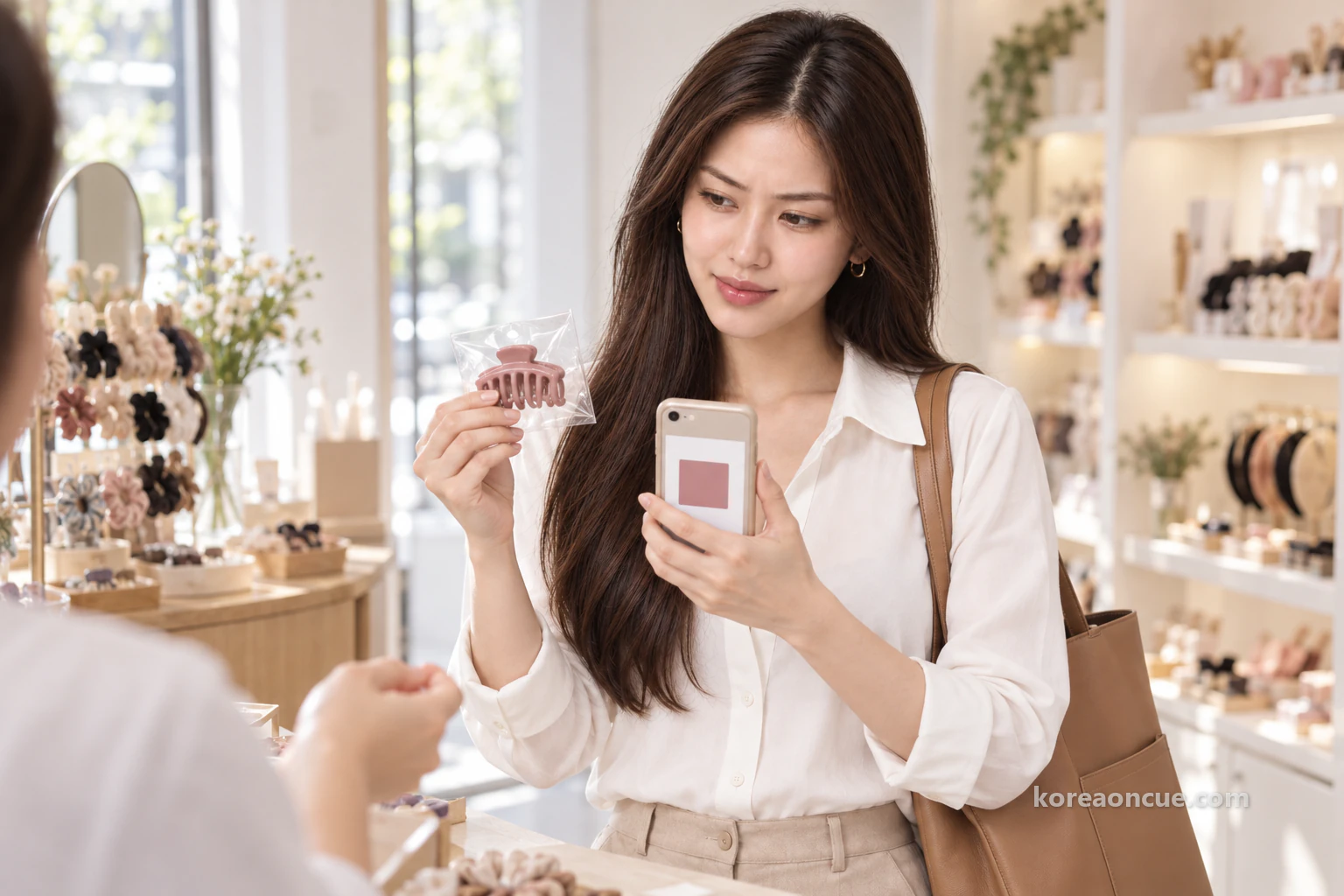
If you’re a non-resident foreign traveller who doesn’t earn income in Korea and you’re staying for less than six months, you can claim a refund when you meet the conditions — such as spending KRW 15,000 or more in a single purchase at a participating store. The goods must be taken out of Korea unopened and unused, within three months of the date of purchase.
For a tax refund claimed after purchase, show your passport at the shop and keep both the purchase receipt and the refund documents. If you’re getting your refund at the airport, follow your departure airport’s export confirmation procedure. At Incheon Airport, you start at a tax refund kiosk in the departures hall, and if you’re told your goods are to be inspected, you show the goods and documents at the customs counter. After that, you receive your refund in the way you’re directed.
Today Mali decides not to claim a refund on the claw clip, which she’ll start wearing tomorrow morning. Nor does she go back for the scarf to reach the refund threshold. She checks that the staff have handed her one clip in the colour she chose, compares the final amount with her original budget, and pays. The clip goes into the side pocket of her bag, still in its packaging.
- If you plan to claim a refund, ask first whether the shop takes part in the scheme and how it handles refunds.
- For a tax refund claimed after purchase, keep your passport, purchase receipt and refund documents.
- At the airport, follow your departure airport’s guidance on export confirmation and refunds.
- Don’t buy more because of the refund.
07Back along the ginkgo trees to Exit 8
Having paid, Mali closes her notes and leaves the shop. All that’s left is to go back the way she came. She brings up Sinsa Station Exit 8, saved on her map, and walks towards the junction on the Dosan-daero side.
The same street looks different from the first time. Then, searching for her rose, she kept her head turned towards the shops. Now, with nothing left to find, Mali looks at the street itself for the first time. Ginkgo trees in rows on both sides of the two lanes, and the windows running between them. Only once she has found what she was looking for can she see why this is Garosu-gil, the street of roadside trees.
As she walks, Mali finds a spot on the pavement where she won’t block anyone, stops, and takes one photo of the street. This time it isn’t a window but the line of trees running towards the end of the street. She adds the photo to the “seen” section of her notes.
- On the way back, bring up the Sinsa Station Exit 8 you saved and walk towards the junction on the Dosan-daero side.
- Stop at a spot where you won’t block anyone before taking photos.
If you need help
- Phone — Tourist information and interpreting 1330 · crime reports 112.
After the Cut
On the way back to Sinsa Station Exit 8, Mali opens her notes again. At the top are the two ends of the street, followed by five entries from her window-shopping walk and her notes for work. At the bottom is the entry about the claw clip she examined in person. Mali adds today’s date beside the morning’s colour-card photo. Before tomorrow morning’s meeting, she plans to sweep her hair to one side and secure it with the rose-coloured clip.

(※ This article includes staged images created with AI.)
Common Mistakes
- Agreeing to meet your companions “outside that shop we passed” without making sure you all mean the same shop.
- Noting a shop as “left” or “right” without noting which way you were facing.
- Writing down a colour and size seen through a window as if you’d checked them in your hand.
- Blocking the pavement while taking photos of a window.
- Not checking the size of what you’re buying when you plan to fit it into the room left in your bag.
- Planning to claim a refund without checking whether the shop takes part in the scheme and how it handles refunds.
- Opening and using goods you’re claiming a refund on before you leave Korea.
FAQ
Which station should I use to get to Garosu-gil?
It’s about a five-minute walk from Exit 8 of Sinsa Station on Line 3.
Where does Garosu-gil start and end?
It runs from the crossroads in front of Hyundai High School to the T-junction with Dosan-daero, east of Sinsa Station.
What time do the shops open?
Opening hours and closing days vary from shop to shop. If you have particular shops in mind, check their own information.
Where is Serosu-gil?
It’s the side streets running off Garosu-gil. There are lots of small cafés and restaurants, which makes it a good place for a break after shopping.
Can I get a tax refund?
You need to check whether the shop takes part in the refund scheme, as well as the traveller eligibility, purchase amount and export conditions. Ask at the shop how refunds work and what documents you need. If you claim the refund at the airport after making your purchase, follow your departure airport’s guidance on export confirmation and refunds.
Can I go by car?
If you’re driving, check in advance whether the shops you plan to visit have parking, and the opening hours and fees of the car park you’ll use.
Recap — 30 seconds before you leave
- Sinsa Station Exit 8 on Line 3 · about a five-minute walk
- The two ends: the junction on the Dosan-daero side ↔ the crossroads in front of Hyundai High School
- One colour or item to find · budget · room left in your bag
- Mali’s order: look through the windows first, then on the way back choose what kind of thing to take the colour home in
- Passport · check for a Tax Free sign before paying
Reality Check
Last checked: 13 October 2026 — transport, the stretch of street covered, and tax refund conditions and procedures. Check each shop’s own information for its opening hours, days closed, participation in the tax refund scheme and how refunds are handled. For traveller eligibility, purchase amounts and conditions for taking goods out of Korea, follow the official tax refund guidance. For export confirmation and refunds at the airport, follow the guidance of your departure airport.
Sources
- Visit Seoul — Garosu-gil in Sinsa-dong — Exit 8 of Sinsa Station on Line 3 checked 2026-10-13
- VISITKOREA — Major Shopping Streets — The street begins as you come out of Exit 8 of Sinsa Station on Line 3 · the name comes from the roadside trees checked 2026-10-13
- Korea Tourism Organization (Korean) — Sinsa-dong Garosu-gil — From the crossroads in front of Hyundai High School to the junction with Dosan-daero east of Sinsa Station · from a street of galleries and film companies to fashion and beauty shops and cafés · pop-up stores checked 2026-10-13
- Korea Tourism Organization (Korean) — Serosu-gil — Side streets off Garosu-gil · small cafés and restaurants · a place to rest after shopping checked 2026-10-13
- Visit Seoul — A Tour of Seoul’s Streetside Architecture (6): Garosu-gil — Ginkgo trees on both sides of a two-lane street · the name Serosu-gil (garo and sero) checked 2026-10-13
- VISITKOREA — Garosu-gil — Opening hours and closing days vary by shop checked 2026-10-13
- Visit Gangnam — Travel — About a five-minute walk from Exit 8 of Sinsa Station on Line 3 checked 2026-10-13
- Visit Gangnam — FAQ — Shops with a “Tax Free” sign on Garosu-gil · bring your passport checked 2026-10-13
- VISITKOREA — Comprehensive Tax Refund Guide — Eligibility (non-residents staying under six months), KRW 15,000, immediate refunds and refunds claimed after purchase, three months from purchase, unopened and unused checked 2026-10-13
- VISITKOREA — Duty Free & Tax Refunds — “Tax Refund” signs · showing your passport at the till checked 2026-10-13
- Incheon International Airport — Tax refunds — Tax refund kiosk in the departures hall · customs if flagged for inspection checked 2026-10-13
- Visit Seoul — Safety — 1330 tourist information and interpreting · 112 crime reports checked 2026-10-13
More from this area

Bongeunsa: What the Shot of a Temple Roof Against Glass Towers Leaves Out
The first part of “Gangnam & Songpa.” A tiled temple roof with glass towers rising behind it is a frame Elena knows well. Elena, who reads scenes, walks up from Exit 1 of Bongeunsa Station to find out whether that smooth shot survives on the street — and what it quietly folds away.
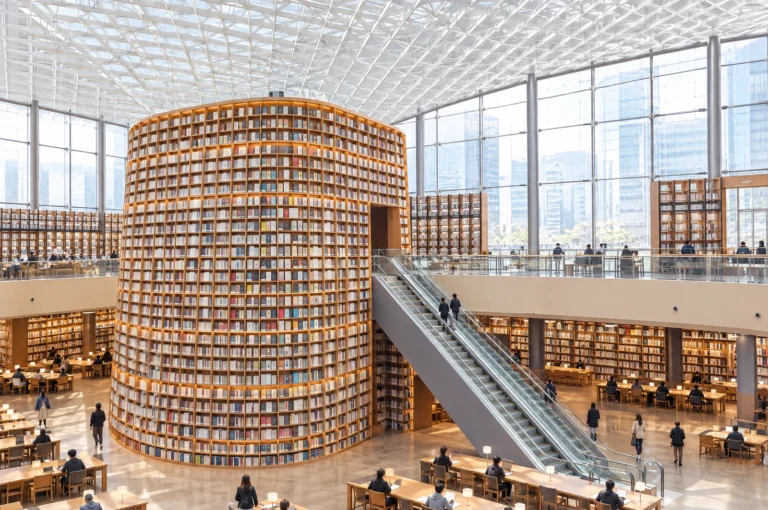
Starfield Library: Choosing the Tall-Shelf Scene Again, on Foot
Starfield Library is a free space on two levels at the centre of COEX Mall, open every day, 10:30–22:00.