
SEOUL · BUKCHON
The Garden Outside Jeongdok Library
A ten-minute uphill walk from Anguk Station leads to Jeongdok Library’s garden, set before a former school building from 1938.
How to get there
The arrival point is the map app’s coordinate for Jeongdok Library (entrance side), used as the routing reference; distances and times are map-route calculations.
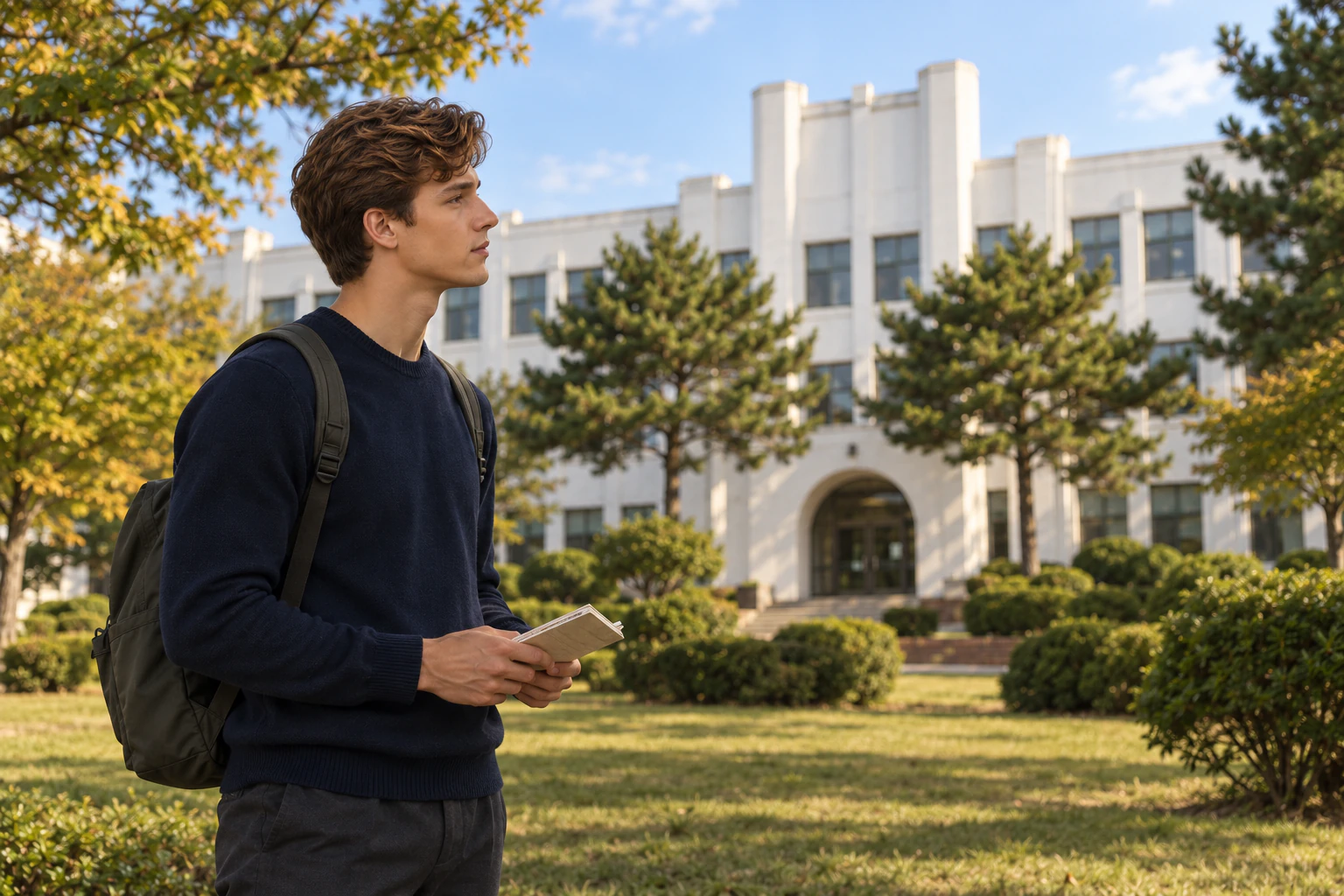
Rina walked the lanes and the culture centre over three pieces; Elena climbed Samcheong-dong-gil. Today it is Noah. Noah is the one who went to see the glass box in Tapgol Park from Insadong, the one who reads a street with his eyes: signs, the flow of people, the corners of buildings, light.
What Noah is going to see today is a library. Not the books, though — the building and its garden. Jeongdok Library opened in January 1977 on the site of the former Kyunggi High School, and the building dates from 1938. The Korea Heritage Service portal describes it as a top-grade reinforced-concrete school building of its day, one that brought in steam heating. For Noah that sentence is a trailer. What face does a school from 1938 wear?
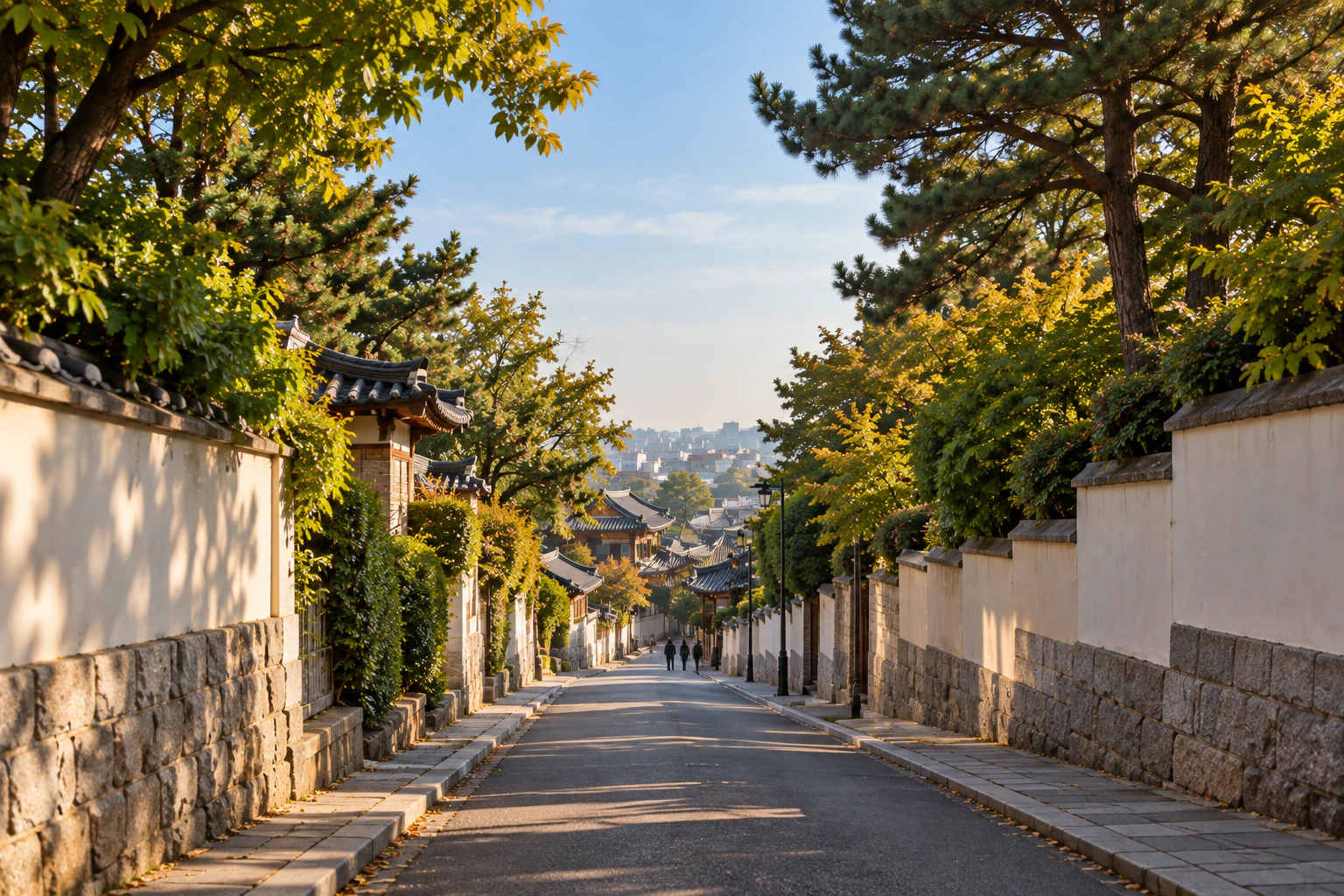
From Exit 1 of Anguk Station, it is 789 metres by the map route — a ten-minute walk. The library’s own directions also say about ten minutes. In Noah’s scene the road climbs toward the library, and as the drive approaches, the white building appears through the trees.
The drive on the hill — a white wall over the fence
From Exit 1 of Anguk Station (Line 3) to the entrance of Jeongdok Public Library, 789 m, about 10 minutes (TMAP pedestrian routing). The library’s own directions also give about 10 minutes from Exit 1: about 150 m toward the former Poongmoon Girls’ High School, then about 430 m to the right from its gate.
Come out of Exit 1 of Anguk Station and turn right. The official directions say about 150 metres toward the former Poongmoon Girls’ High School, then about 430 metres to the right from its gate. Noah writes down directions instead of numbers. “Right, then right again. After that, uphill.” This is Bukchon-ro 5-gil. Somewhere along it is a local bus stop named Jeongdok Library Entrance. Find on the map
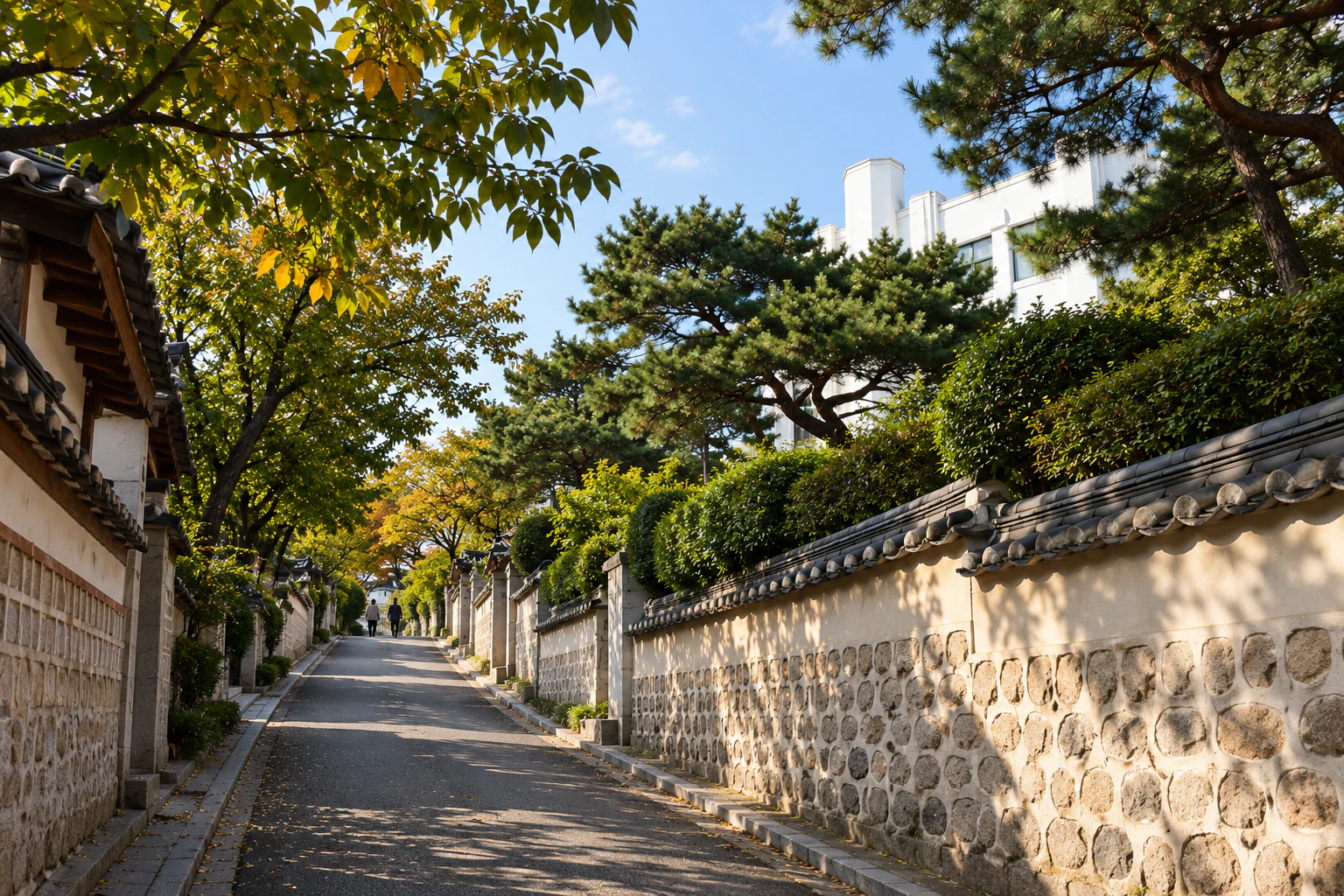
In Noah’s scene the wall grows longer as his steps slow. Trees show over the wall first, and between the trees the white wall of a building. It is a library’s wall, not a school’s, but to Noah’s eye it still reads as a school. The entrance drive opens wide, and inside it lawn and building appear together.
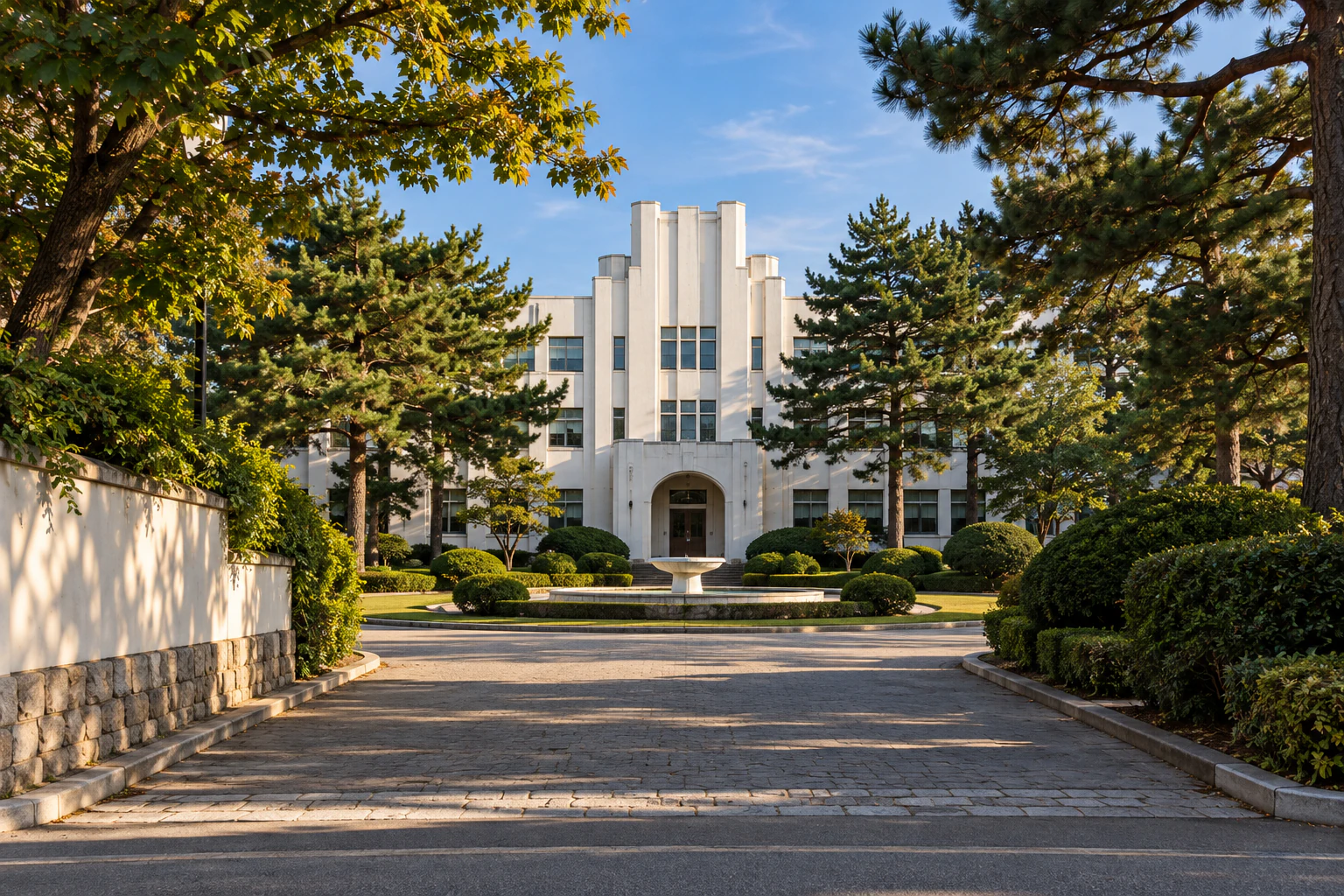
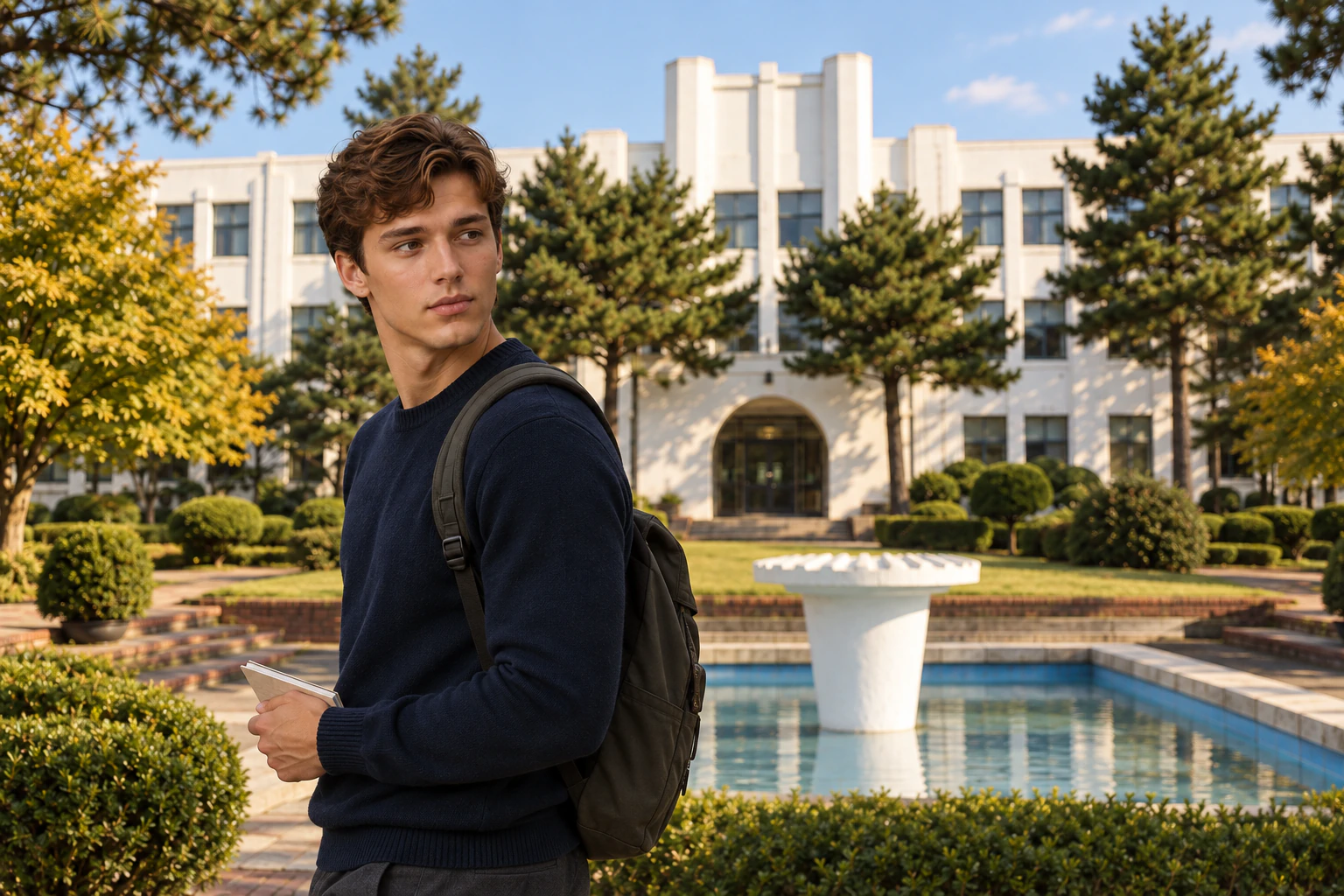
Noah stops at the mouth of the drive — the spot where you look in from the street. What can be seen from here is half the garden and the front of the building. The front is the same on both sides. The middle steps up one level higher, and under it there is a single arch. Noah notes three things first: “Symmetry. A tower in the middle. An arch.”
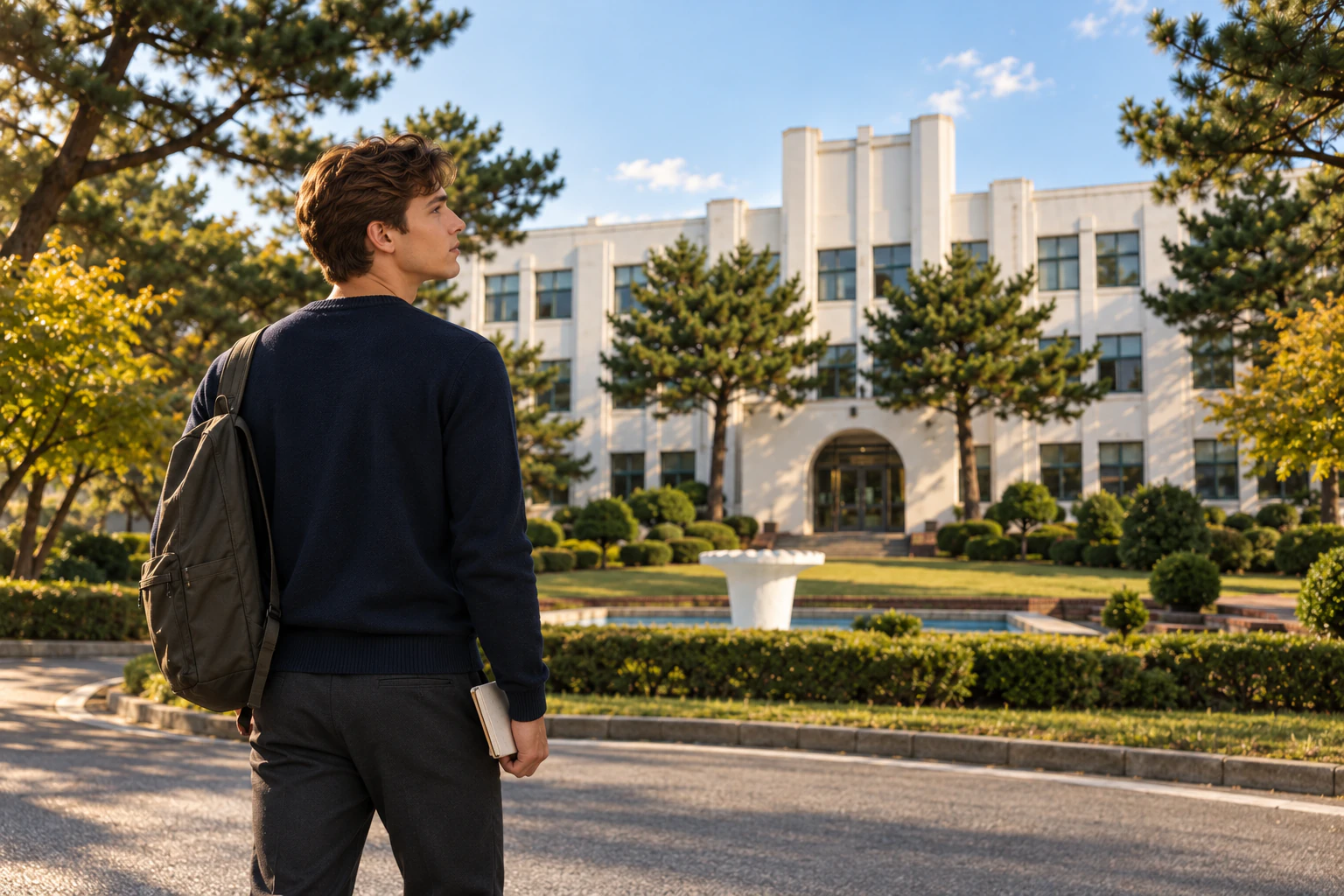
The face of 1938 — a stepped tower and an arched porch
The former Kyunggi High School, now Jeongdok Public Library, was built in 1938 as a top-grade reinforced-concrete school building of its day with steam heating. Used by a US Army signal unit during the Korean War, it was returned to the school in 1956; after the school moved out in 1976 it has housed Jeongdok Public Library since 1977. Four buildings were registered as National Registered Cultural Heritage on 28 February 2002 (Korea Heritage Service portal).
As he walks closer, the white building reveals long horizontal rows of windows. The central tower rises in tiers. Beneath it sits an arched porch. The heritage portal records the building as built in 1938, reinforced concrete, steam heating. What Noah sees is the outside of that sentence: concrete under white paint, the rows of windows, the steps of the tower. Find on the map
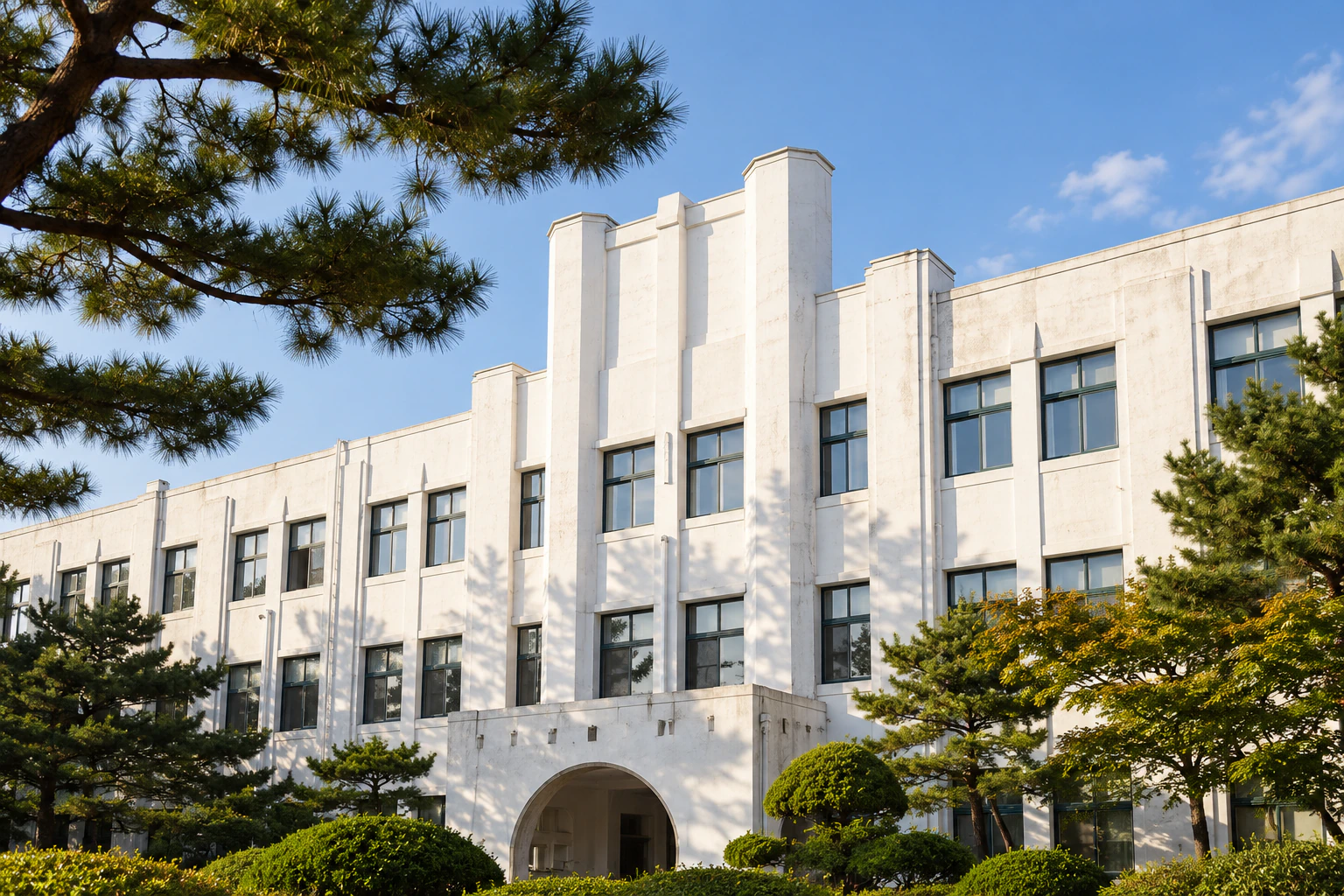
The same entry records the building’s time as well. A US Army signal unit used it during the Korean War; it went back to being a school in 1956; when the school moved out in 1976 it became a library from 1977. Four buildings were registered as National Registered Cultural Heritage on 28 February 2002. Noah copies the years and adds a line beside them. “A school building from 1938. A library since 1977. Same wall, different time.”
Noah’s eye rests on the arch. The windows repeat to left and right, and the arched porch is the most visible curve on the front. With that single curve set against repeating straight lines, the front reads almost like a face. On screen an old school always comes out dark. Here the white wall takes the afternoon light and is not dark at all.
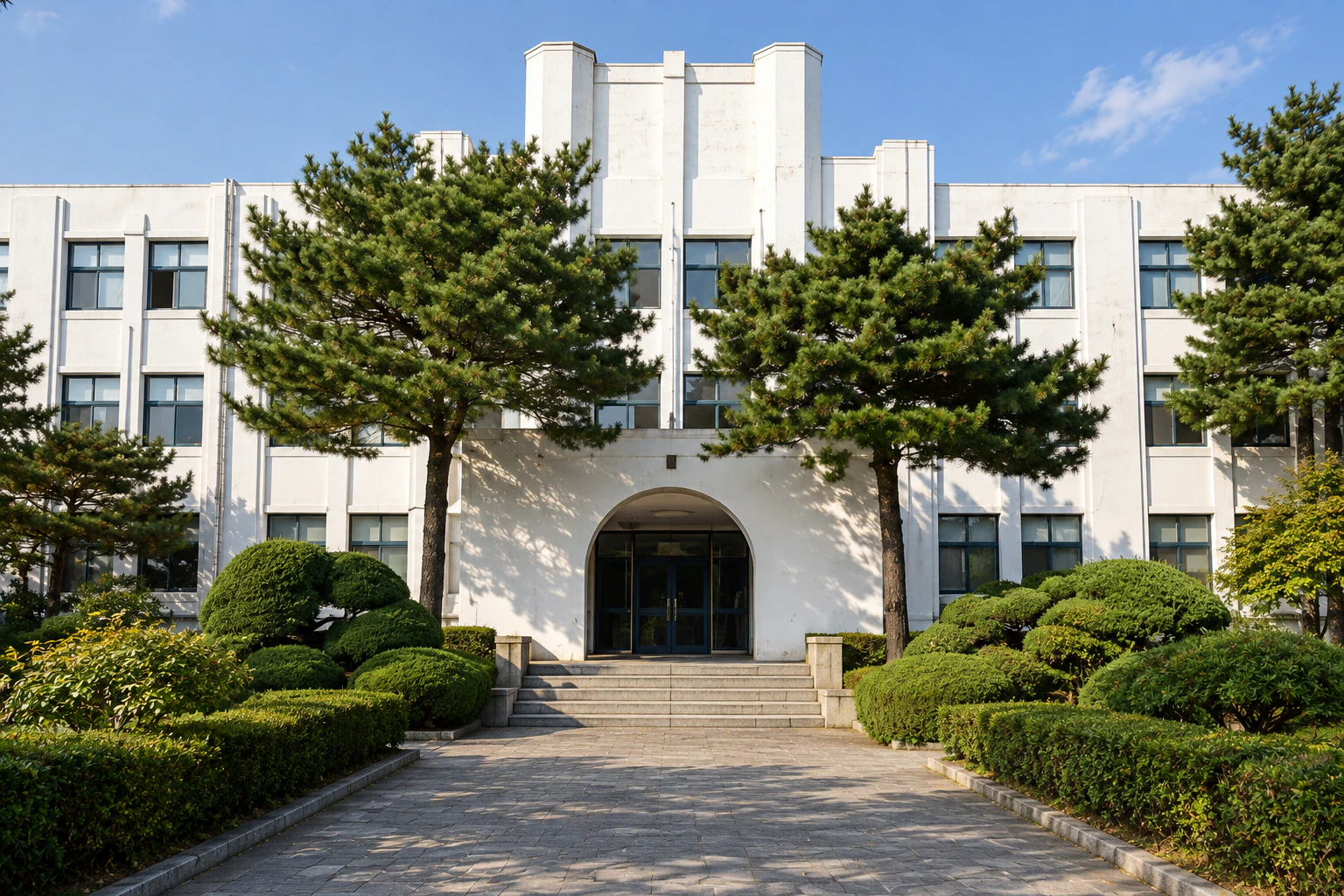
Noah does not go in through the porch. Inside are the reading rooms, and today belongs to the garden. Instead, he turns from the porch to look out the way the building faces. There is the garden, a fountain basin at its centre, and pines.
The garden — lawn, fountain basin, pines
The Korea Tourism Organization describes Jeongdok Public Library as a Seoul public library opened in January 1977 on the former site of Kyunggi High School in Bukchon, Jongno-gu, and notes that cherry blossoms fill the area around the library in spring, when the Samcheong-dong cherry blossom festival is held in nearby Samcheong Park.
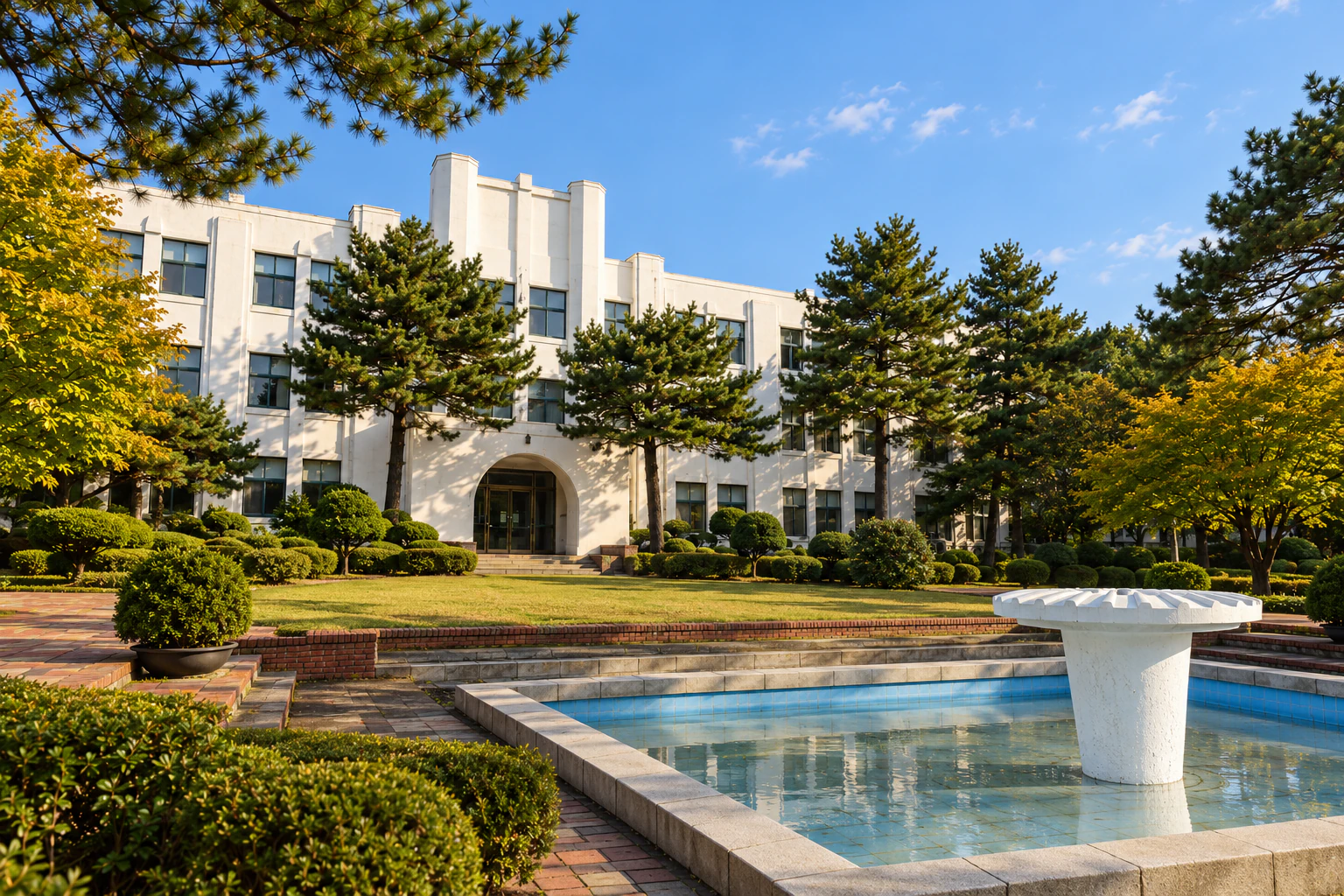
The garden spreads wide in front of the building. In the middle is a fountain basin. Around the basin is a low step, then lawn, and a few pines standing in it. The pines look older than the building, but that too is Noah’s guess. Find on the map
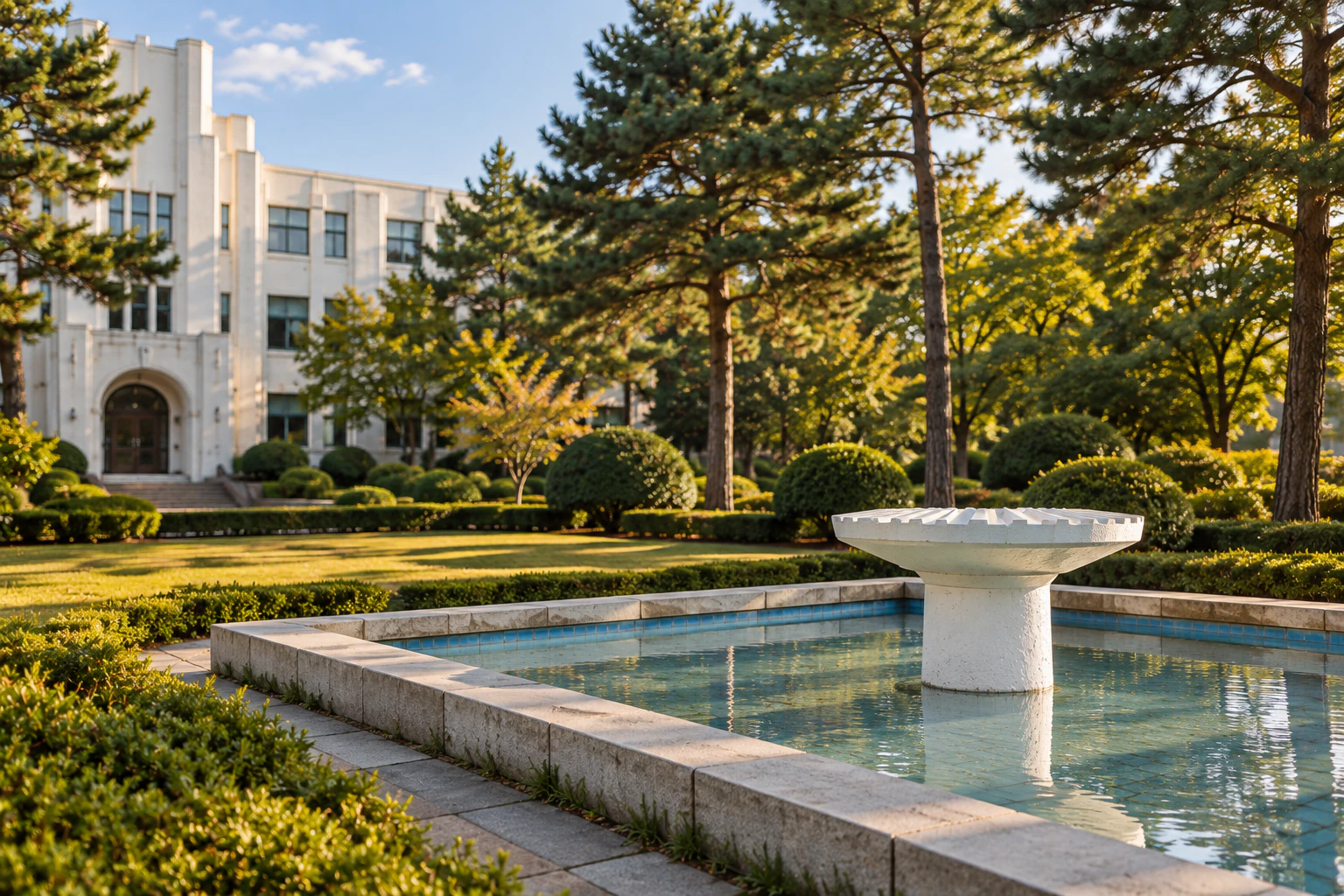
Noah sits on the step beside the basin and looks at the building again. The symmetry he saw from the drive becomes more exact. The tower sits in the centre and the rows of windows run out the same number to each side. On screen a building is rarely framed this squarely; the screen shoots at an angle. Sitting in the garden, the view becomes direct and frontal.
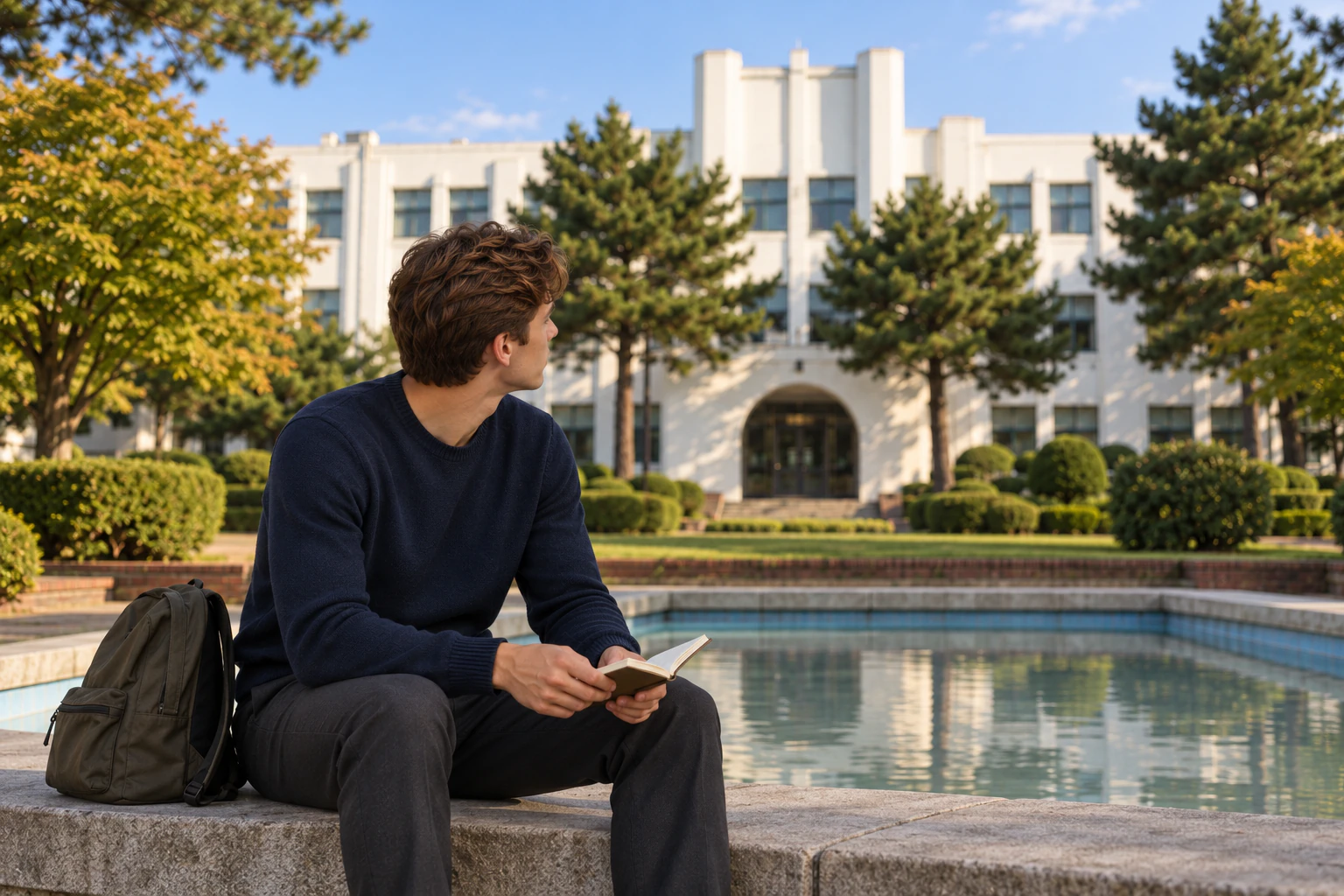
People come and go: someone with a book, someone with a bag, someone holding a child’s hand. This building is still a library. Depending on the room, the reading rooms are open until eight or six on weekday evenings and until five at weekends; from March to October the self-study room opens at seven in the morning. Noah writes down only that the timetable opens the self-study room at seven in the morning from March to October.
The Korea Tourism Organization writes that in spring cherry blossom fills the area around the library and a blossom festival is held in nearby Samcheong Park. It is September and there is no blossom. Noah writes the sentence down and marks it “a cut for another season.” Today’s cut is white wall, green pines and afternoon light.
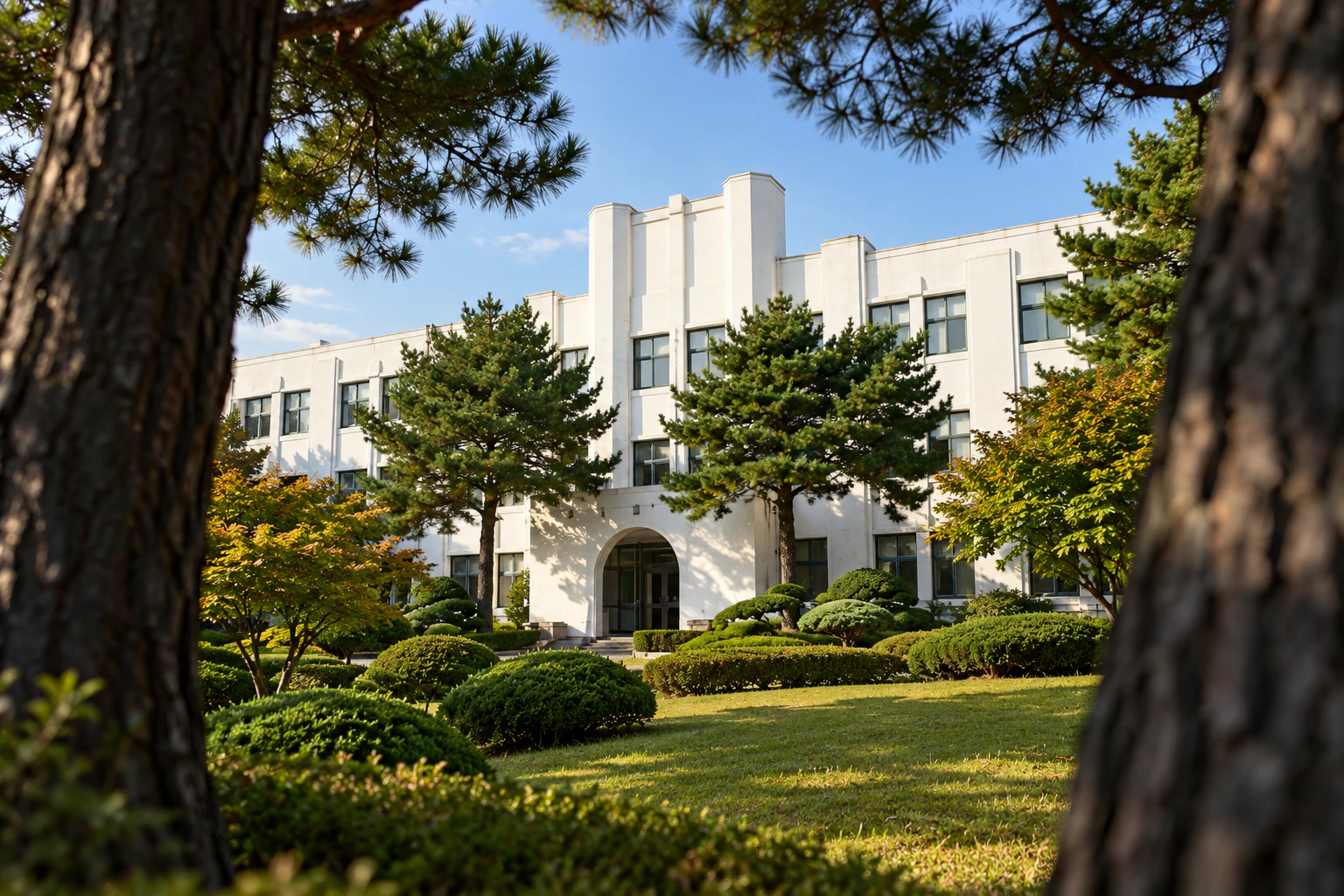
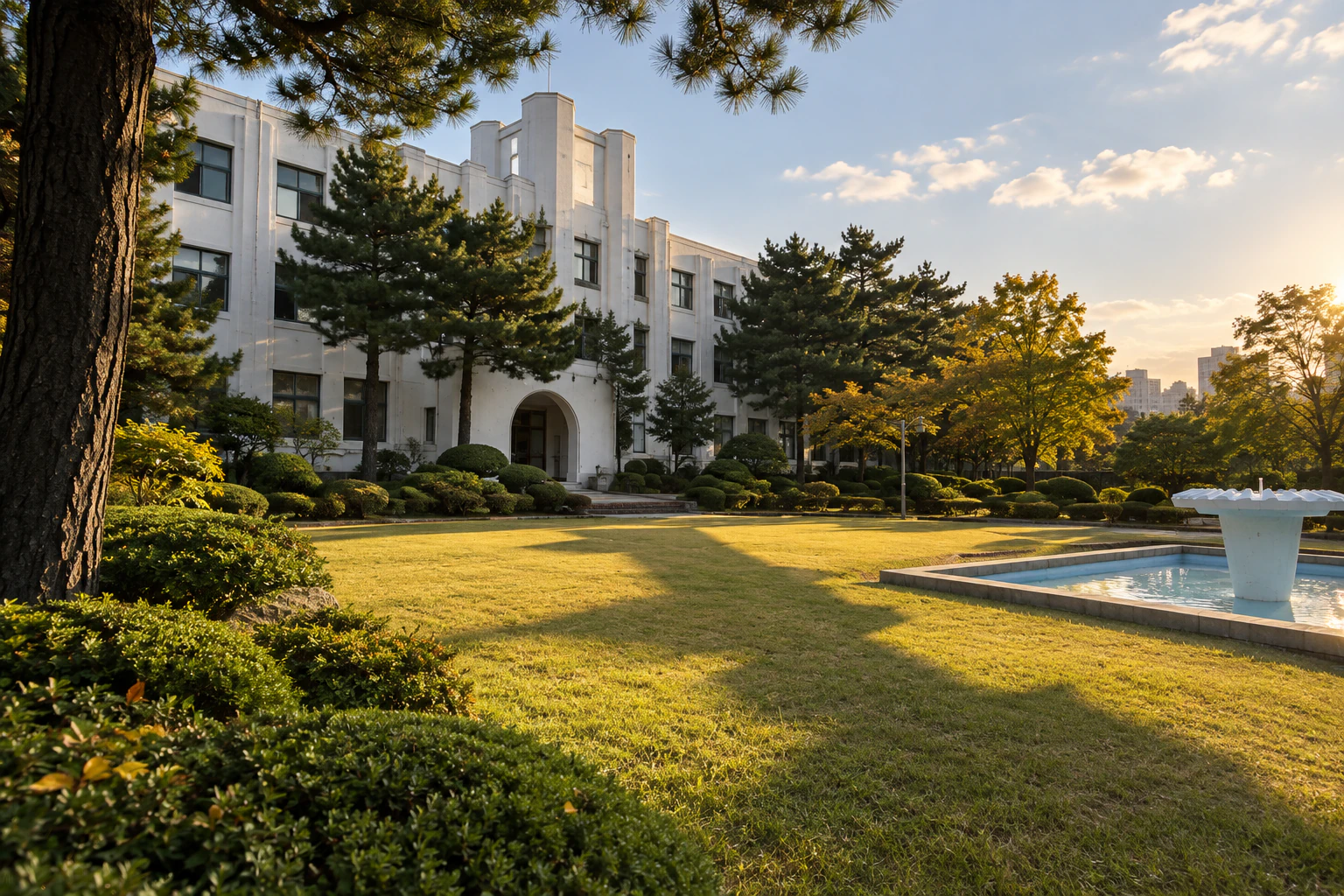
What Noah looks at longest in the garden is not the building but its shadow. The shadow of the tower has come down onto the lawn. As the afternoon tilts, the shadow grows longer. Noah measures time by shadow. “When the tower’s shadow reaches the basin, I get up.”
Closed days — the first and third Wednesdays
At Jeongdok Public Library (Seoul Metropolitan Office of Education), reading rooms open 09:00–20:00 or 09:00–18:00 on weekdays depending on the room and 09:00–17:00 at weekends; the self-study room opens 07:00–22:00 from March to October and 08:00–22:00 from November to February. Closed on the first and third Wednesdays of each month and on public holidays other than Sundays (closed when a holiday falls on a Sunday), plus announced temporary closures. Free. Enquiries +82-2-2011-5799 (library website; Korea Tourism Organization).
Jeongdok Library closes on the first and third Wednesdays of each month. It also closes on public holidays other than Sundays; when a holiday falls on a Sunday, that day is closed too. Noah copies the rule into his notebook. The dates matter to someone coming for the garden as well.
On the same grounds is the Seoul Education Museum, attached to the library: weekdays nine to six, free. Noah does not go in today. Indoors is another day’s work. He notes only that it is on the same grounds.
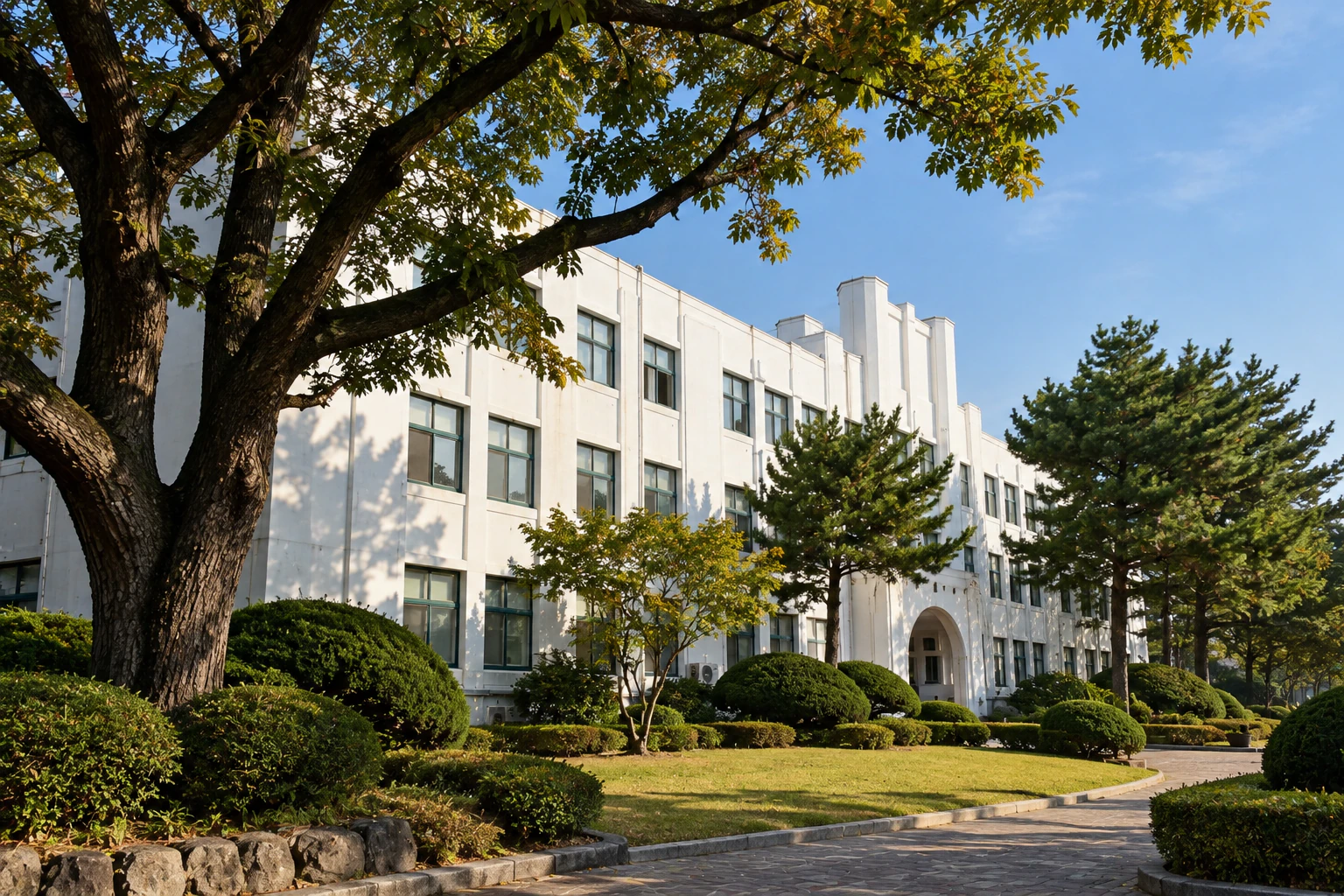
As the tower’s shadow reaches the basin, Noah gets up. Walking out along the drive, he looks back once. The white building has taken on a warmer, yellow tone in the late light, its symmetry unchanged.
The Bukchon series ends here. Three lanes for Rina, one road for Elena, one garden for Noah. All five places are within walking distance of Anguk Station. Noah writes the last line. “Past the lanes, the wall and the road, there is a place to sit on the hill.”
A white building from 1938, a library since 1977, and the garden in front of it. What Noah saw today was not books but the front of a building and a place to sit before it: symmetry and an arch, a fountain basin, pines, a shadow on the lawn.
Noah’s takeaway is simple: if you have walked the lanes of Bukchon, take the ten-minute climb from Exit 1 of Anguk Station and rest a while in this garden. If you plan to use the reading rooms as well, avoid the first and third Wednesdays.
(※ This article includes staged images created with AI.)
Plan your visit
Allow about an hour to climb from Anguk Station to Jeongdok Library, sit in the garden and come back down the same way. Time inside the reading rooms or the museum is not included, and walking times are map-route calculations.
A concept diagram of the order · not to scale, not oriented, not the real shape of the road.
- Anguk Station → Jeongdok Library entrance — About 789 m, 10 minutes from Exit 1 of Anguk Station (Line 3), by map route. The library’s own directions also give about 10 minutes: about 150 m from Exit 1 toward the former Poongmoon Girls’ High School, then about 430 m to the right from its gate. Find on the map
- Entrance drive → garden — From the drive the lawn and the white main building appear together. Sit on the step around the fountain basin in the middle of the garden and the front of the building lines up symmetrically. Find on the map
- Garden → main building front — The former Kyunggi High School main building, built in 1938: a stepped central tower and an arched porch. National Registered Cultural Heritage, registered on 28 February 2002. This piece does not go inside. Find on the map
- Garden → Anguk Station — Back down the same road. The Seoul Education Museum (weekdays 09:00–18:00, free) is for another day. Find on the map
Getting there
TMAPChecked 2026.09.22
From Exit 1 of Anguk Station (Line 3) to the entrance of Jeongdok Public Library, 789 m, about 10 minutes (TMAP pedestrian routing). The library’s own directions also give about 10 minutes from Exit 1: about 150 m toward the former Poongmoon Girls’ High School, then about 430 m to the right from its gate.
Hours & fees
Checked 2026.09.22
At Jeongdok Public Library (Seoul Metropolitan Office of Education), reading rooms open 09:00–20:00 or 09:00–18:00 on weekdays depending on the room and 09:00–17:00 at weekends; the self-study room opens 07:00–22:00 from March to October and 08:00–22:00 from November to February. Closed on the first and third Wednesdays of each month and on public holidays other than Sundays (closed when a holiday falls on a Sunday), plus announced temporary closures. Free. Enquiries +82-2-2011-5799 (library website; Korea Tourism Organization).
Checked 2026.09.22
The Seoul Education Museum, attached to the library, opens 09:00–18:00 on weekdays and 09:00–17:00 at weekends; closed on the first and third Wednesdays of each month and on public holidays; free. Enquiries +82-2-2011-5780 (Korea Tourism Organization; library website).
Background2
Checked 2026.09.22
The former Kyunggi High School, now Jeongdok Public Library, was built in 1938 as a top-grade reinforced-concrete school building of its day with steam heating. Used by a US Army signal unit during the Korean War, it was returned to the school in 1956; after the school moved out in 1976 it has housed Jeongdok Public Library since 1977. Four buildings were registered as National Registered Cultural Heritage on 28 February 2002 (Korea Heritage Service portal).
Checked 2026.09.22
The Korea Tourism Organization describes Jeongdok Public Library as a Seoul public library opened in January 1977 on the former site of Kyunggi High School in Bukchon, Jongno-gu, and notes that cherry blossoms fill the area around the library in spring, when the Samcheong-dong cherry blossom festival is held in nearby Samcheong Park.
- Jeongdok Public Library is closed on the first and third Wednesdays of each month and on public holidays other than Sundays (closed when a holiday falls on a Sunday). Reading rooms open 09:00–20:00 or 09:00–18:00 on weekdays depending on the room and 09:00–17:00 at weekends; the self-study room opens 07:00–22:00 from March to October and 08:00–22:00 from November to February. Free. Enquiries +82-2-2011-5799 (library website, checked 22 September 2026).
- The Seoul Education Museum opens 09:00–18:00 on weekdays and 09:00–17:00 at weekends, closed on the first and third Wednesdays and on public holidays, free, enquiries +82-2-2011-5780. Its exhibitions are outside this piece.
- Parking is 54 spaces; fees follow the library’s notice.
- This piece does not cover the reading rooms or the museum interior, and no nameplates or signboard text appear in the images. The cherry blossom note is the Korea Tourism Organization’s wording (spring) only; no dates or festival schedule are given.
More from this area

MMCA Seoul: The White Courtyard in the Photograph, and the One Beside the Street
Part six of “Bukchon, Where the Alley Becomes a Hill.” The Seoul branch of the National Museum of Modern and Contemporary Art (MMCA) opened in November 2013 in Sogyeok-dong, on the former site of the Defense Security Command. The Korea Tourism Organization describes it as a museum built around the idea of the madang, the Korean courtyard. Elena, who reads scenes, knew it only as a single photograph of a pale, empty courtyard. This time she looks at it from the street. On Wednesdays and Saturdays it stays open until 9 p.m., and admission is free from 6 p.m.
Walking the Lanes of Bukchon Hanok Village
From Anguk Station past the Bukchon Cultural Center and up the Gahoe-dong lane, then back down.