
SEOUL · OLYMPIC PARK
Olympic Park: A Hill with a Pavilion on Top, and a Tree on Its Own
Lulu walks from Olympic Park Station Exit 3 to South Gate 1, climbs Deulkkot Maru beside the Rose Plaza, follows one line of the park map to the lawn of the lone tree, and picks two photos for a friend who is coming next month
An extra piece for “Gangnam and Songpa”. Olympic Park groups its nine most beautiful spots as the “Nine Scenes”, all photography spots recommended by Korea’s association of photographic artists. Scene 8, Deulkkot Maru, is a wildflower garden beside the Rose Plaza with a pavilion on top of its hill; the lawn of Scene 6, the lone tree, is open all year round. Lulu walks both hills to choose a place to take a photo for a friend arriving in Seoul next month.
How to get there
Pedestrian route calculated by a map app (TMAP); the end point is the park’s South Gate 1. The park website lists Olympic Park Station Exits 3 and 4 (Lines 5 and 9), Mongchontoseong Station Exit 1 (Line 8) and Hanseong Baekje Station Exit 2 (Line 9).
This is a new piece for “Gangnam and Songpa”. In the fourth piece of this issue, Rina passed through the World Peace Gate, walked along the top of Mongchontoseong, and wrote down why one tree on the lawn inside the walls came to stand alone. Today we enter the same park by a different gate and look at two hills as places to take a photo.
Lulu is always choosing places to show someone. A friend who is coming to Seoul next month sent her a message: “I want to take one photo in Olympic Park. Where should I go?” Instead of naming a spot straight away, Lulu decides to walk two hills herself and then choose.
One o’clock on a weekday afternoon. Lulu hangs her camera around her neck and writes on the first line of her notebook: “Two hills, for one photo.”
513 metres from Olympic Park Station, Exit 3, to South Gate 1
From Olympic Park Station Exit 3 to Olympic Park South Gate 1: 513 m, 7 minutes by map route (TMAP pedestrian route calculation). The park map on the Olympic Park website gives the Rose Plaza as “570 m from Olympic Park Station Exit 3, South Gate 1”.
By the pedestrian route of a map app, it is 513 m, or 7 minutes, from Exit 3 of Olympic Park Station to the park’s South Gate 1. The park website’s directions list Olympic Park Station Exits 3 and 4 (Lines 5 and 9), Mongchontoseong Station Exit 1 (Line 8) and Hanseong Baekje Station Exit 2 (Line 9). The park map on the website puts the Rose Plaza 570 m from Exit 3 of Olympic Park Station, by South Gate 1. Find on a map
On the walk from the exit, Lulu doesn’t raise her camera. She looks first at what her friend will see first on this walk. Through the gate, the first hill of the day is beside the Rose Plaza.

On the park map, the gates carry a direction and a number: South Gate 1, South Gate 2, East Gate 1. At the top of the note for her friend, Lulu writes the exit number and the gate name side by side. “Exit 3, South Gate 1.” In a park this big, the gate you came in by becomes your way back.
“Maru” means the top
Olympic Park website (Nine Scenes): Scene 8, Deulkkot Maru, is a 2,800 m² wildflower garden laid out together with the Deulkkot Maru rest area beside the Rose Plaza and the Olympic Culture Center. “Maru” is a native Korean word meaning the top or the best, and there is a pavilion (wondumak) on top of the Deulkkot Maru hill. From spring to autumn, wildflowers of many kinds line the slopes on both sides. Its story heading calls it a garden in the city where a festival of flowers comes with every season.
In the website’s Nine Scenes, Scene 8 is Deulkkot Maru — called “Wild Flower Garden” on the English home page and “Flower Garden” on the English Top 9 page — a 2,800 m² wildflower garden laid out together with the Deulkkot Maru rest area beside the Rose Plaza and the Olympic Culture Center. “Maru” is a native Korean word for the top, or the best, and the site says there is a pavilion (wondumak) on top of the hill. From spring to autumn, it goes on, wildflowers of many kinds line the slopes on both sides. Find on a map
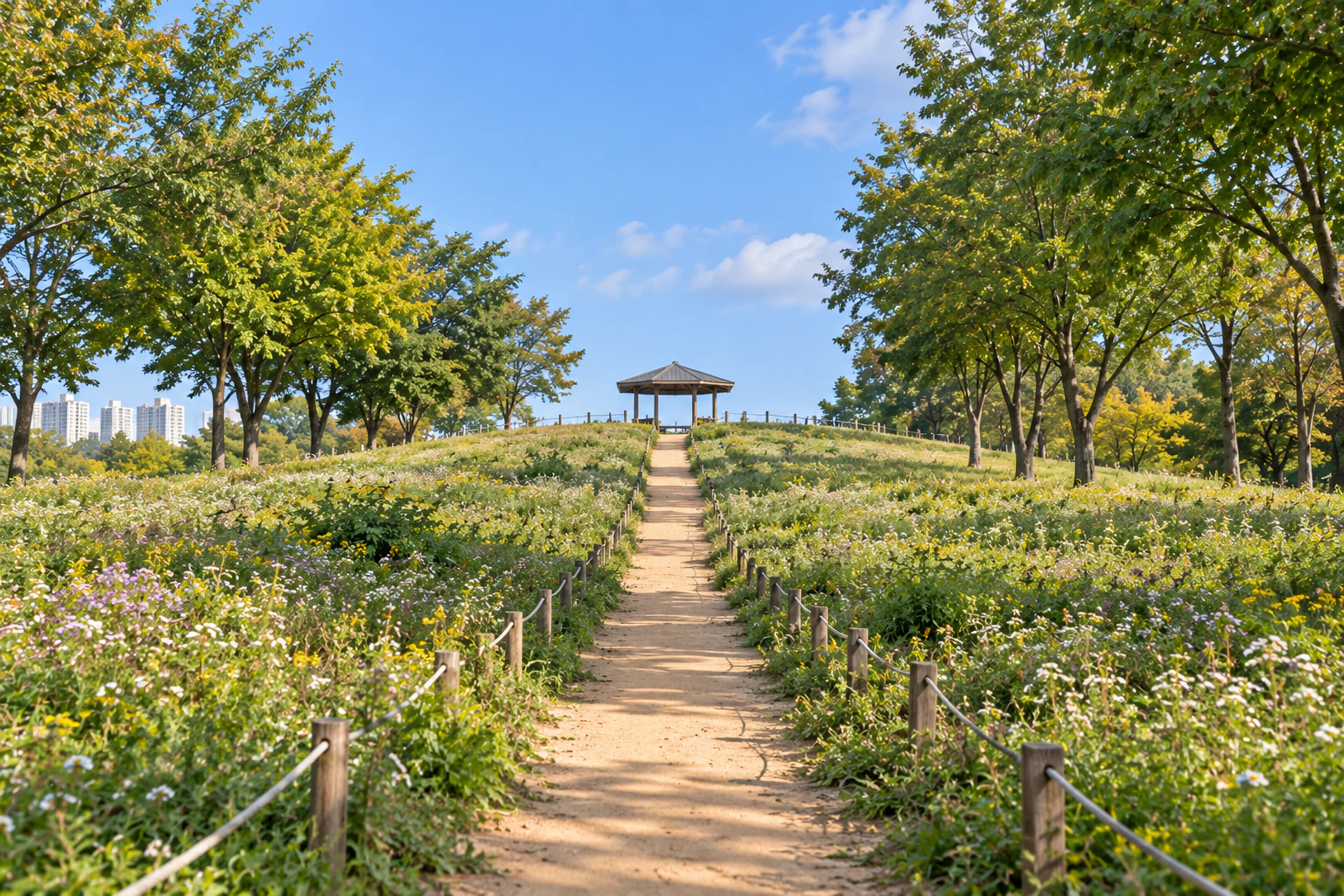
The Korea Tourism Organization describes the same place a little differently: a large wildflower garden set on the slope of a small hill, with the pavilion at the very top and a narrow footpath running up between wide flower beds on either side. The park map gives the pavilion’s position in a single line: beside the Rose Plaza, at the top of Deulkkot Maru.
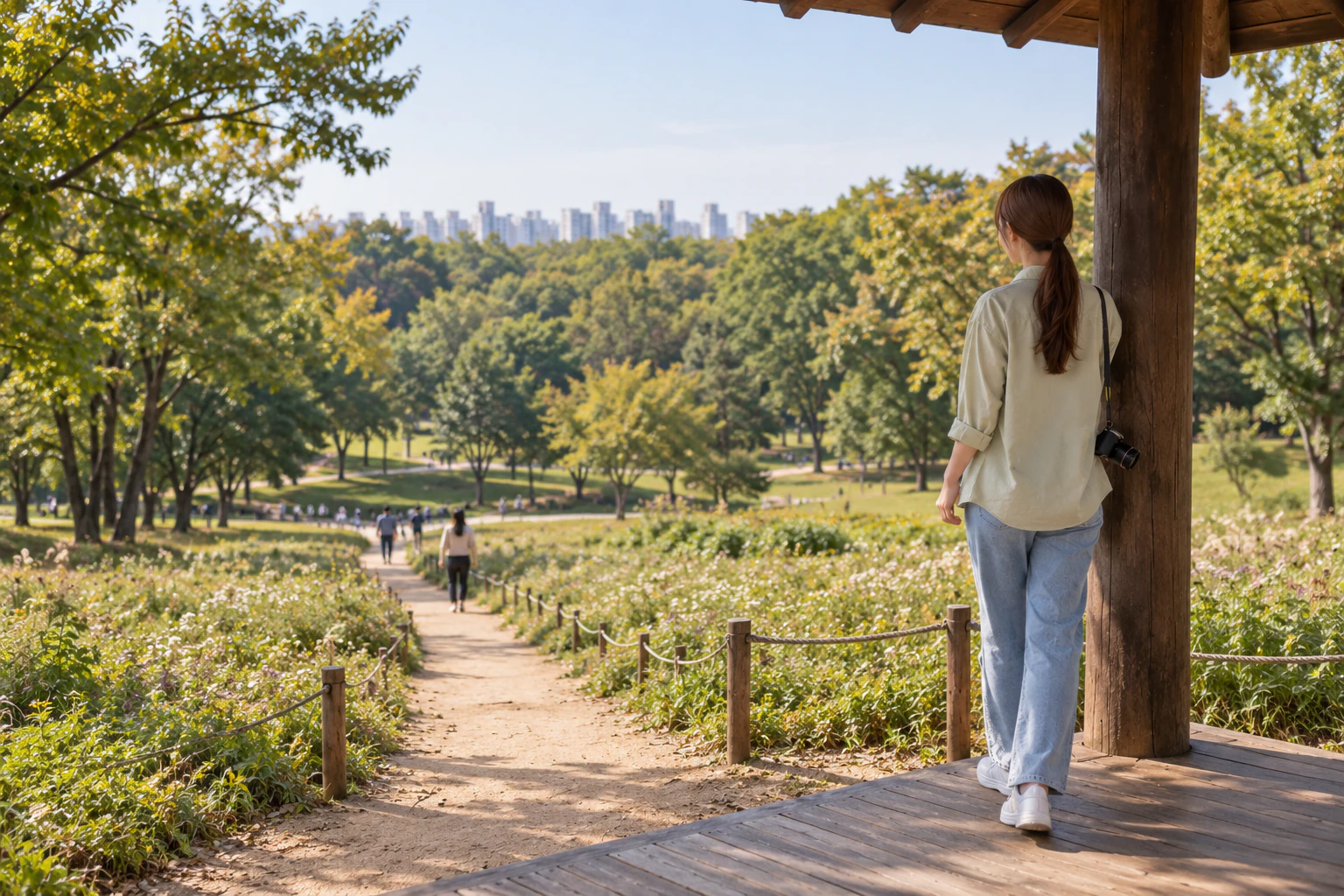
Lulu raises her camera once at the bottom of the footpath. Looking up, the path runs towards the pavilion at the top. Then she climbs slowly and, beside the pavilion, turns around. The slope she has just come up lies below her in one view.
In the note for her friend, Lulu writes: “Climb up to the pavilion, then turn around.” On a hill whose name means the top, she thinks the real picture is the one you see after you’ve got there.
Flowers and the lines of the slope
Olympic Park website (Nine Scenes): Deulkkot Maru’s seasonal flower guide covers field poppies and rapeseed in spring (May–June), and yellow cosmos in autumn (September–October).
Deulkkot Maru’s seasonal flower guide covers field poppies and rapeseed in spring (May–June), and yellow cosmos in autumn (September–October). Find on a map
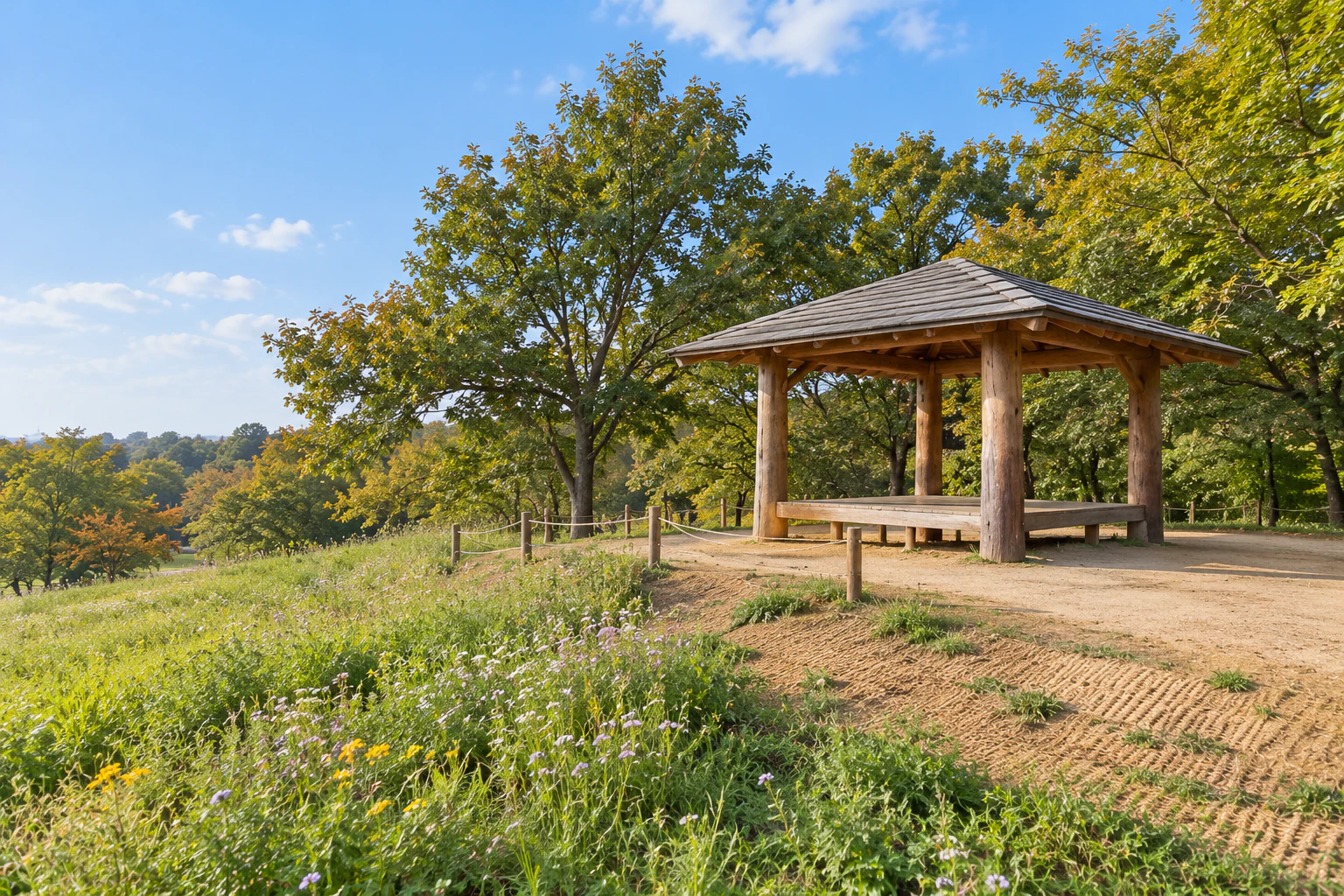
Her friend is coming next month. The autumn flower guide covers September and October. Lulu changes her note: “Frame the pavilion and the lines of the slope together.” However many flowers there are, the pavilion at the top and the line of the slope still make a photo.
Lulu copies down the spring line too: poppies and rapeseed, May to June. That one is for whenever her friend comes back in spring. The website calls Deulkkot Maru a garden in the city where a festival of flowers comes with every season. Lulu takes the name to mean that the same slope changes its flowers with the seasons.
One Tree Hill: a lawn listed as open all year
Olympic Park website (lawn facilities): lawns open all year round — the picnic area, the family playground and the lone tree; lawns open 1 June to 31 October — 88 Madang, Jiguchon Park and Exhibition Madang. Lawns are closed during the new-shoot and dormant period (1 November to 31 May of the following year), while damaged areas recover, and in other special circumstances. Pets are not allowed on the lawns, and sunshades, tents and other activities that damage the grass are not permitted.
The way to the second hill follows one line of the park map. It places the lone tree — Nahollo Namu in Korean — on the right as you go up along the Mongchontoseong walking path, after crossing Gommal Bridge from the Seoul Olympic Parktel. The park’s English pages call the spot “One Tree Hill”. Find on a map
Why this tree came to stand alone is something Rina wrote about in the fourth piece. Lulu is noting a different line today. In its table of opening periods, the website’s guide to the lawns lists the lawns at the picnic area, the family playground and the lone tree as open all year round. The 88 Madang, Jiguchon Park and Exhibition Madang lawns are open from 1 June to 31 October.
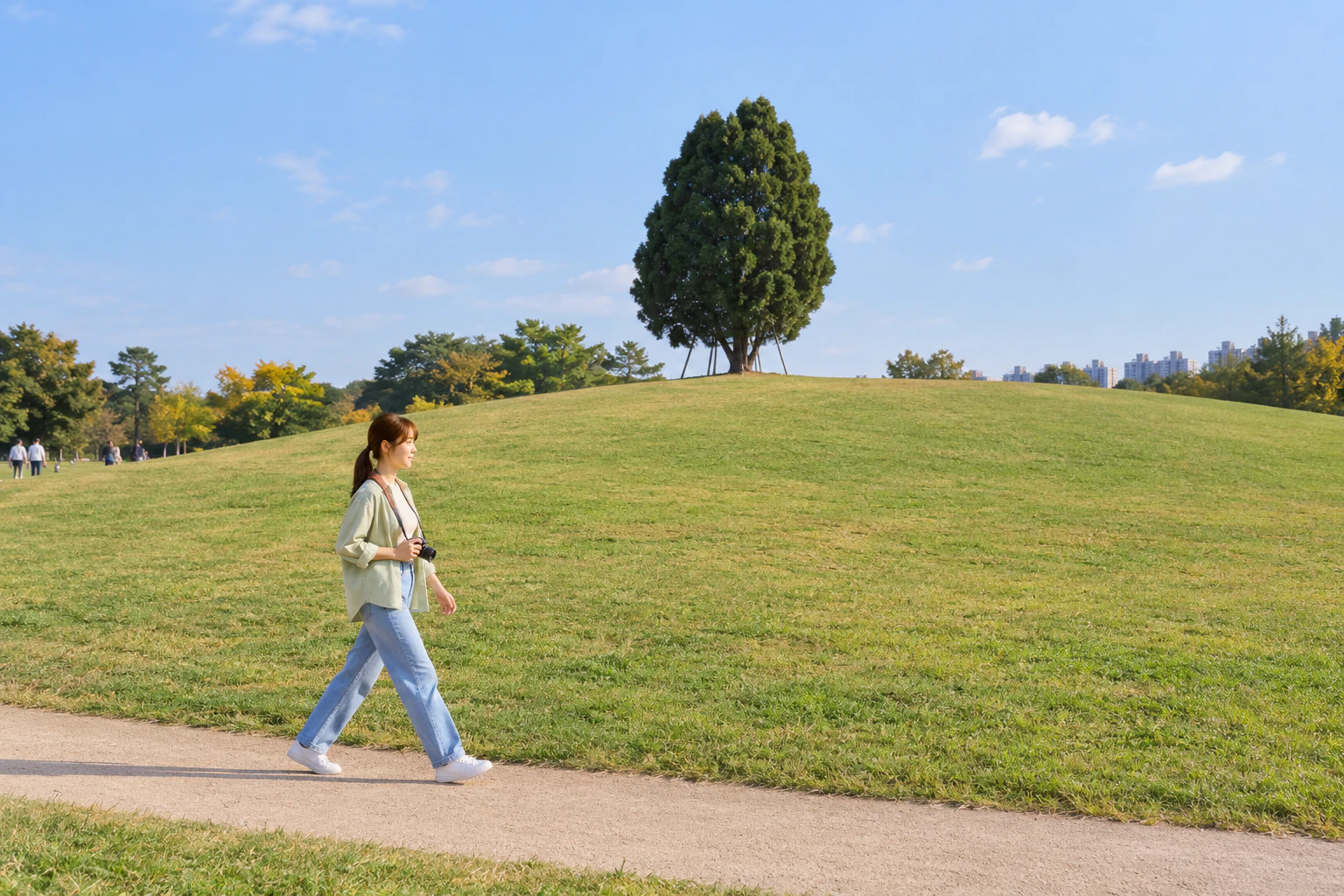
Her friend is coming in November. Lulu stops her pen at this line. The opening-period table lists the lone-tree lawn as open all year. The same page also lists 1 November to 31 May as a lawn-control period, but it does not state whether that line also applies to the lone-tree lawn. It also says lawns are closed while damaged grass recovers and in special circumstances. Lulu writes in her note: “November: listed as open all year. Check the latest notice before going.” Pets are not allowed on the lawns, and visitors are asked not to put up sunshades or tents.
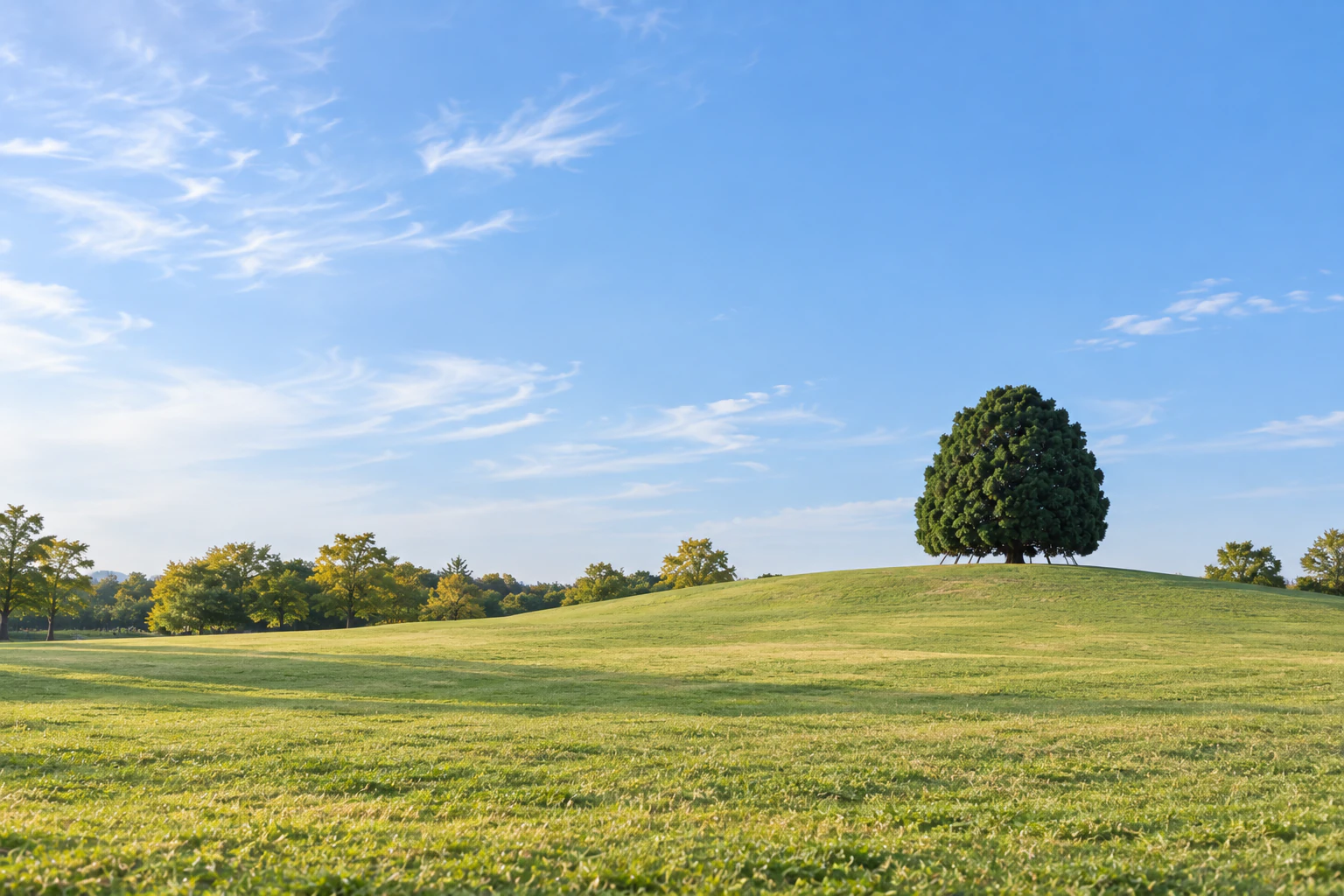
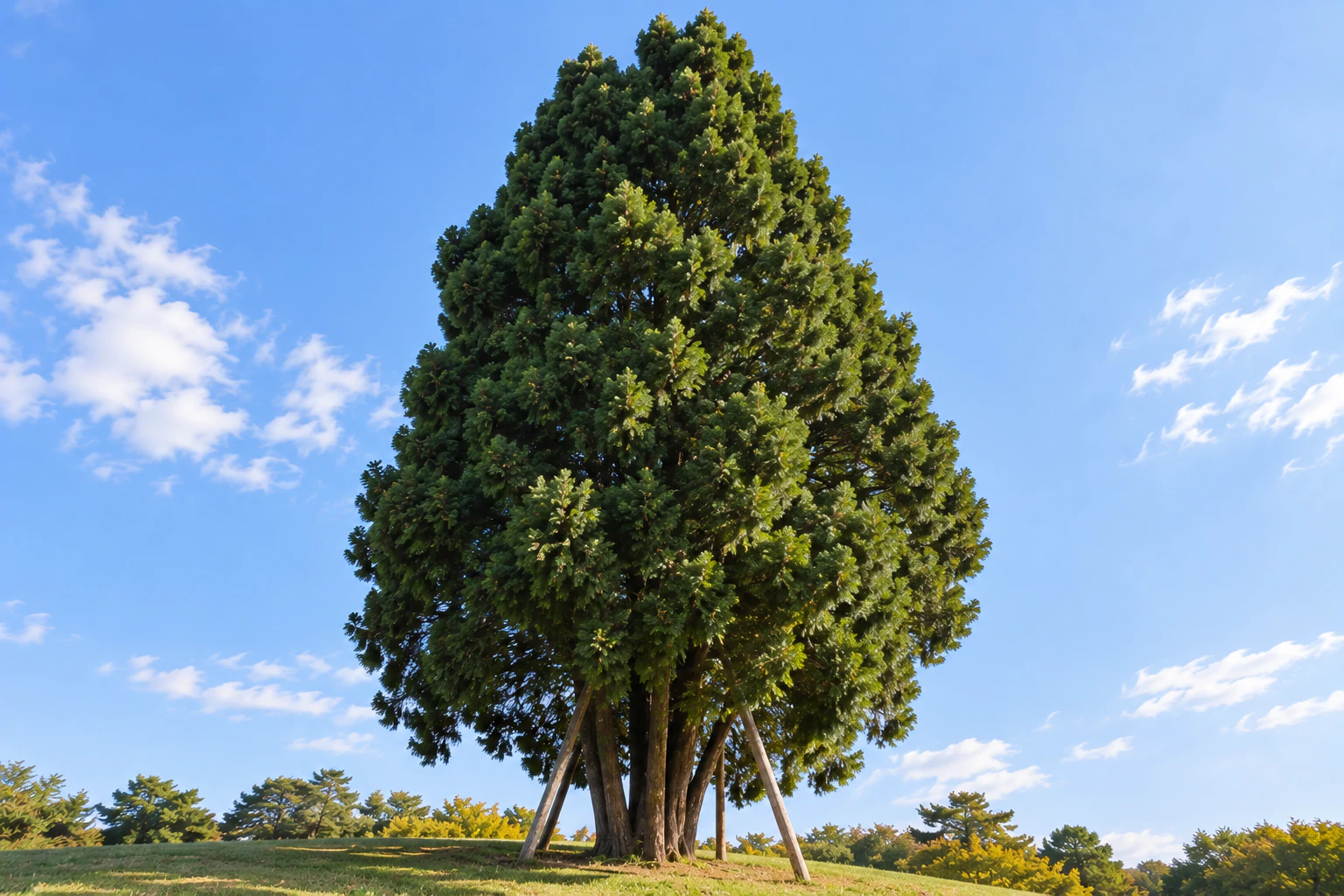
From the edge of the lawn, Lulu looks at the tree for a long while. In the photo on the website’s Nine Scenes page, it is a dense, rounded mass of green standing alone on a gentle grassy rise. So as not to stand exactly where that photo was taken, Lulu steps a few paces to the side.
Two photos out of nine scenes
Olympic Park website: “The most beautiful places in Olympic Park, the Nine Scenes” — the nine most beautiful places in the park, with a name (gugyeong, 九景) that also carries the Korean sense of “going sightseeing”, are photography spots recommended by Korea’s association of photographic artists. Scene 6 is the lone tree; Scene 8 is Deulkkot Maru.
The website introduces the Nine Scenes as the nine most beautiful places in the park, with a name that also carries the Korean sense of going sightseeing. It adds that they are photography spots recommended by Korea’s association of photographic artists. Deulkkot Maru is Scene 8; the lone tree is Scene 6. Find on a map
As the afternoon wears on, the tree’s shadow stretches out across the grass. Lulu doesn’t put the tree in the middle of the frame. She puts it to one side and leaves plenty of sky and grass for the rest. A tree on its own looks alone when there is space around it.
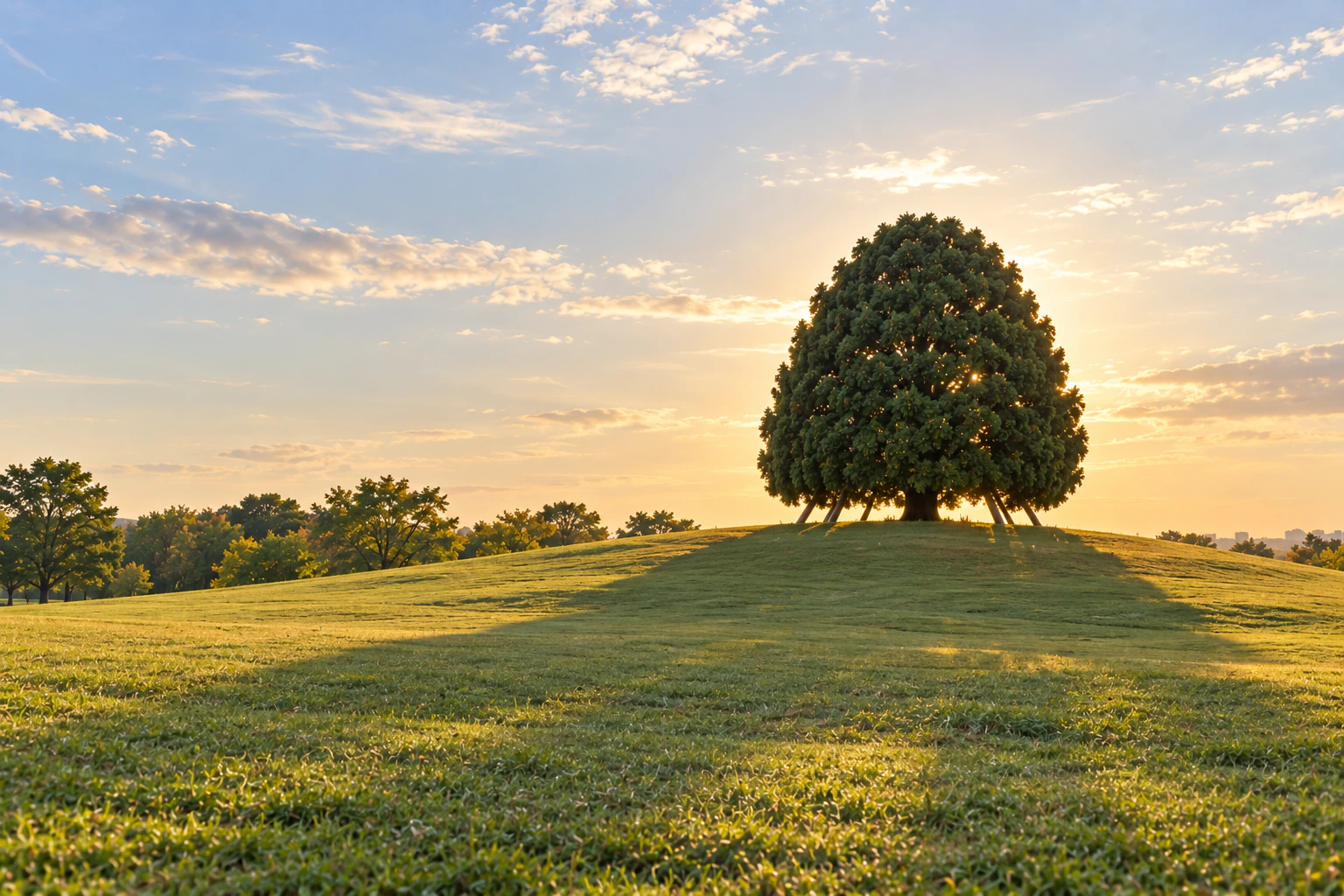
Commercial photography and film or advertising shoots require prior approval, and unauthorised drone flights are restricted.
Lulu’s camera is small, and she doesn’t use a flash.
Lulu scrolls back through the photos from Deulkkot Maru. There, a line made the picture: the footpath running up to the pavilion at the top. Here, empty space makes it. Two hills in one park, each a photo for the opposite reason — that is what Lulu wants to tell her friend.
Late in the afternoon, at the edge of the lawn, Lulu opens her notebook. She has two photos for her friend: the slope of Deulkkot Maru seen from beside the pavilion, looking back down, and the lone tree with plenty of sky left around it. On the first she writes, “The pavilion and slope together.” On the second, “Listed as open all year; check before a November visit.”
Lulu’s quiet recommendation comes in two parts. At Deulkkot Maru, climb up to the pavilion at the top and look back. In front of the lone tree, leave a tree’s worth of empty space around it. For the story of how the tree came to stand alone, and the path along the top of Mongchontoseong’s walls, see Rina’s piece in this issue.
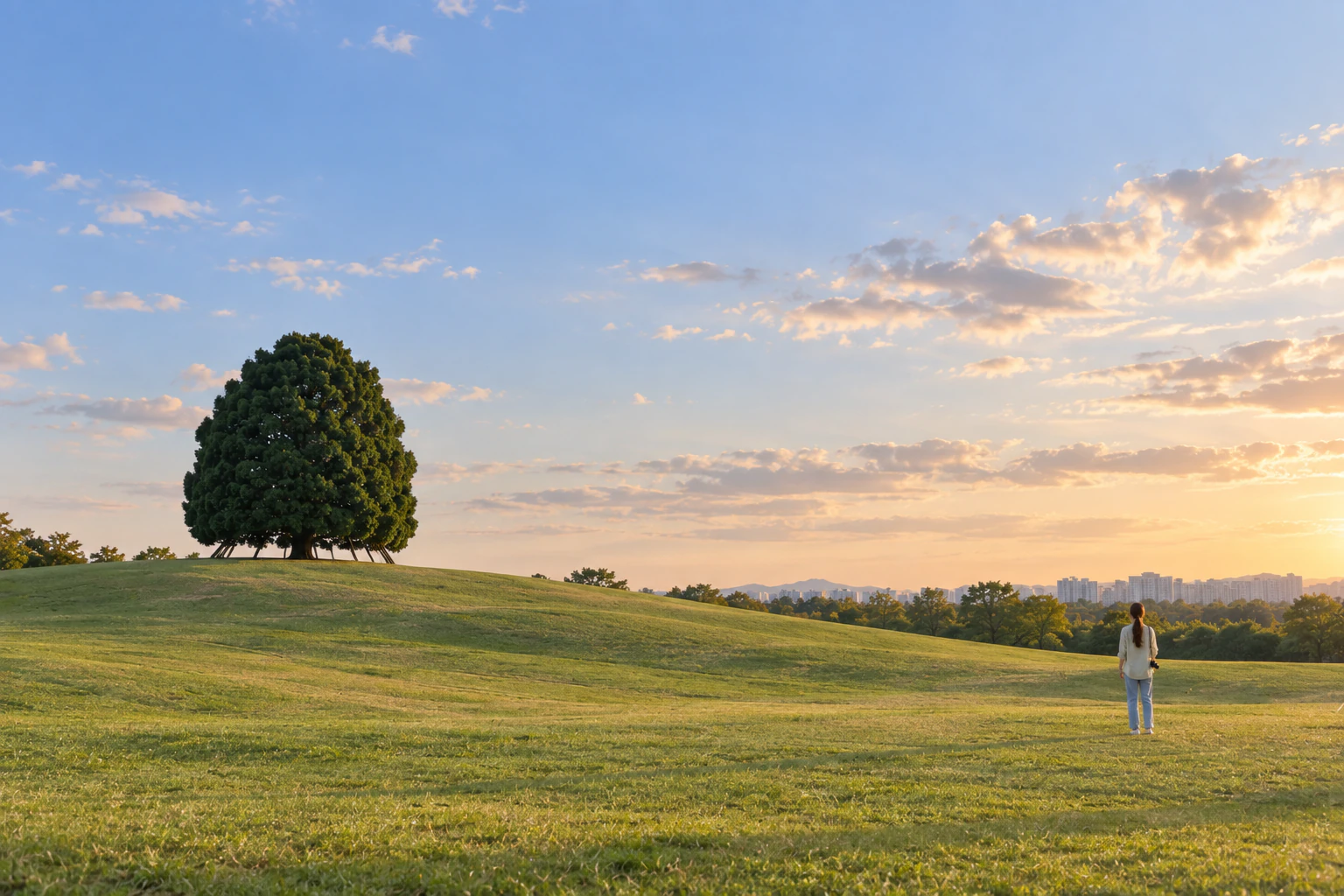
(※ This article includes staged images created with AI.)
Make it your afternoon
An editorial suggestion: go in through South Gate 1 from Olympic Park Station Exit 3, climb to the pavilion at Deulkkot Maru beside the Rose Plaza, follow the park map’s directions to the lawn of the lone tree, and choose your photos as the afternoon wears on.
A diagram of the order only · not to scale, orientation or the actual shape of the paths.
- Olympic Park Station Exit 3 to South Gate 1 — 513 m, 7 minutes (TMAP route calculation). The park map puts the Rose Plaza 570 m from Exit 3. Find on a map
- Deulkkot Maru, beside the Rose Plaza — According to the website, a 2,800 m² wildflower garden with a pavilion on top of the hill. Find on a map
- To the lone tree — Park map: on the right as you go up along the Mongchontoseong walking path after crossing Gommal Bridge from the Seoul Olympic Parktel. Find on a map
- On the lawn of the lone tree — Listed as open all year round in the table of opening periods in the website’s guide to the lawns. Find on a map
Getting there
TMAPChecked 2026.10.02
From Olympic Park Station Exit 3 to Olympic Park South Gate 1: 513 m, 7 minutes by map route (TMAP pedestrian route calculation). The park map on the Olympic Park website gives the Rose Plaza as “570 m from Olympic Park Station Exit 3, South Gate 1”.
Olympic Park directionsChecked 2026.09.29
Olympic Park Station Exits 3 and 4 (Line 5), Mongchontoseong Station Exit 1 (Line 8), and Olympic Park Station Exits 3 and 4 and Hanseong Baekje Station Exit 2 (Line 9).
Hours & fees
Olympic Park website (lawn facilities)Checked 2026.10.02
lawns open all year round — the picnic area, the family playground and the lone tree; lawns open 1 June to 31 October — 88 Madang, Jiguchon Park and Exhibition Madang. Lawns are closed during the new-shoot and dormant period (1 November to 31 May of the following year), while damaged areas recover, and in other special circumstances. Pets are not allowed on the lawns, and sunshades, tents and other activities that damage the grass are not permitted.
Olympic Park visitor informationChecked 2026.09.29
open every day. Entry on foot or by bicycle 05:00–22:00 (plaza area until 24:00), by car 06:00–22:00. Admission free. To protect the heritage site, entry into the Mongchontoseong area is not allowed outside these hours.
Good to know
Olympic Park English websiteChecked 2026.10.02
Scene 6 of the Top 9 Highlights is “One Tree Hill” (an arbor vitae referred to as ‘One Tree’); Scene 8 is “Wild Flower Garden” on the home page and “Flower Garden” on the Top 9 Highlights page. The rose garden is the “Rose Plaza”.
Checked 2026.09.29
Olympic Park visitor information (etiquette): commercial activity is not allowed in the park, and private lessons and commercial photography or filming need prior approval. Drone flights without prior permission are restricted. Paths on the fortress are pedestrian-priority. Bicycles, inline skates and ride-on electric devices are restricted. No-smoking park.
Checked 2026.10.02
Pinned notices on the Olympic Park website’s park news (checked 2 October 2026): “Olympic Park construction notice” (posted 13 November 2025, image updated 19 August 2026) — upgrades to ageing electrical facilities and sewer repairs marked “completed”; facility improvements at the Peace Plaza and the waterside stage, 7 July 2025 to 31 October 2026 (closed sections: the waterside stage and the Peace Plaza). “Schedule change for the 88 Lawn Madang turf improvement works” (25 February 2026) — works from November 2026 to March 2027 (subject to change).
Background6
Checked 2026.10.02
Place notes on the park map on the Olympic Park website: Deulkkot Maru, “beside the Rose Plaza”; the pavilion (wondumak), “at the top of Deulkkot Maru, beside the Rose Plaza”; the lone tree, “on the right as you go up along the Mongchontoseong walking path after crossing Gommal Bridge from the Seoul Olympic Parktel”. The gates are named by direction and number, such as East Gate 1, South Gate 1 and South Gate 2.
Olympic Park website (Nine Scenes)Checked 2026.10.02
Scene 8, Deulkkot Maru, is a 2,800 m² wildflower garden laid out together with the Deulkkot Maru rest area beside the Rose Plaza and the Olympic Culture Center. “Maru” is a native Korean word meaning the top or the best, and there is a pavilion (wondumak) on top of the Deulkkot Maru hill. From spring to autumn, wildflowers of many kinds line the slopes on both sides. Its story heading calls it a garden in the city where a festival of flowers comes with every season.
Checked 2026.10.02
Korea Tourism Organization (TourAPI, “Olympic Park Deulkkot Maru”): a large wildflower garden on the slope of a small hill between the rose garden near the Olympic Park intersection and the Seoul Baekje Museum. Over 2,800 m², a pavilion stands at the very top of the slope, and a narrow footpath runs between wide flower beds on either side. Different wildflowers are planted each season.
Olympic Park website (Nine Scenes)Checked 2026.10.02
Deulkkot Maru’s seasonal flower guide covers field poppies and rapeseed in spring (May–June), and yellow cosmos in autumn (September–October).
Checked 2026.10.02
Lead photo for Scene 6, the lone tree, on the Olympic Park website’s Nine Scenes page: a single tree with a dense, rounded, dark-green crown standing alone on a gently rising grassy hill under a clear sky, its lower branches propped by a few thin supports, with a few small trees on the far horizon to the left.
Olympic Park websiteChecked 2026.10.02
“The most beautiful places in Olympic Park, the Nine Scenes” — the nine most beautiful places in the park, with a name (gugyeong, 九景) that also carries the Korean sense of “going sightseeing”, are photography spots recommended by Korea’s association of photographic artists. Scene 6 is the lone tree; Scene 8 is Deulkkot Maru.
- Entry on foot or by bicycle is 05:00–22:00 (24:00 for the plaza areas), every day of the year, free of charge. The Mongchontoseong area is closed to entry outside opening hours (Olympic Park website, rechecked on 2 October 2026).
- Deulkkot Maru’s seasonal flower guide covers field poppies and rapeseed in spring (May–June), and yellow cosmos in autumn (September–October).
- Pets are not allowed on the lawns, and sunshades and tents should not be put up. Lawns may be closed while grass recovers or in special circumstances.
- Construction work and closed sections inside the park are posted on the website’s notices. Check before you go.
More from this area
KSPO DOME concert day: planning the hours before and after the show
KSPO DOME (Olympic Gymnastics Arena) is in Olympic Park in Songpa-gu.

Seoul Sky: Reading the City in Lines from 500 Metres Up
Part three of “Gangnam · Songpa.” Seoul Sky’s website calls this a 500-metre observatory. The Korea Tourism Organization’s English guide gives Lotte World Tower as 123 floors and 555 metres. Noah, who reads streets and routes by eye, looks at a city from above rather than from the side for the first time — to see what a string of corners becomes when you rise high enough.