
SEOUL · JEGI-DONG
The day he nearly missed four o’clock: Noah reads herb names like a map legend at the Seoul Yangnyeongsi Herb Medicine Museum
From Jegi-dong Station Exit 2 to Seoul K-Medi Center — about 380 medicinal ingredients on permanent display, the special exhibition The Apothecary’s Bookshelf, the Bojewon experience and herbal footbath, and last admission at 16:00 from November
Stepping out of Jegi-dong Station, the first thing to reach Noah is an unfamiliar smell of dried herbs. He starts copying the Chinese characters on the shop signs into his notebook — and, while filling in the time column, realises he has written down the museum’s October closing time.
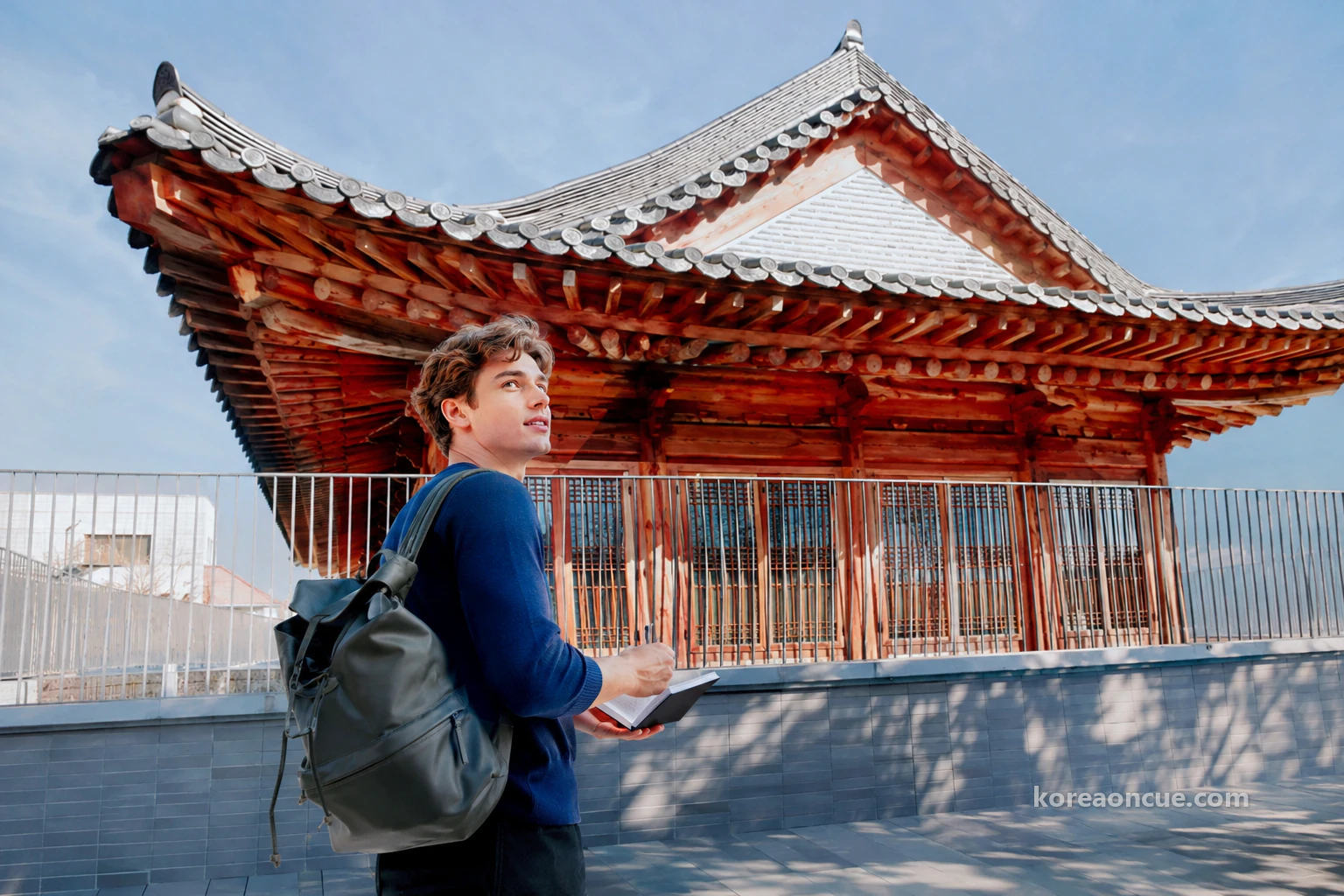
How to get there
On a Wednesday afternoon in early November, Noah stops the moment he comes up out of Exit 2 at Jegi-dong Station on Line 1. The bitter smell of dried herbs on the breeze is unlike any street he has walked in Seoul so far. Noah is twenty, from Canada, and he reads a new neighbourhood through its signs and streets, then draws it as a map in his notebook. So before tracking down where the smell is coming from, he starts copying the unfamiliar Chinese characters mixed in with the Hangeul on the signs in front of him, one stroke at a time.
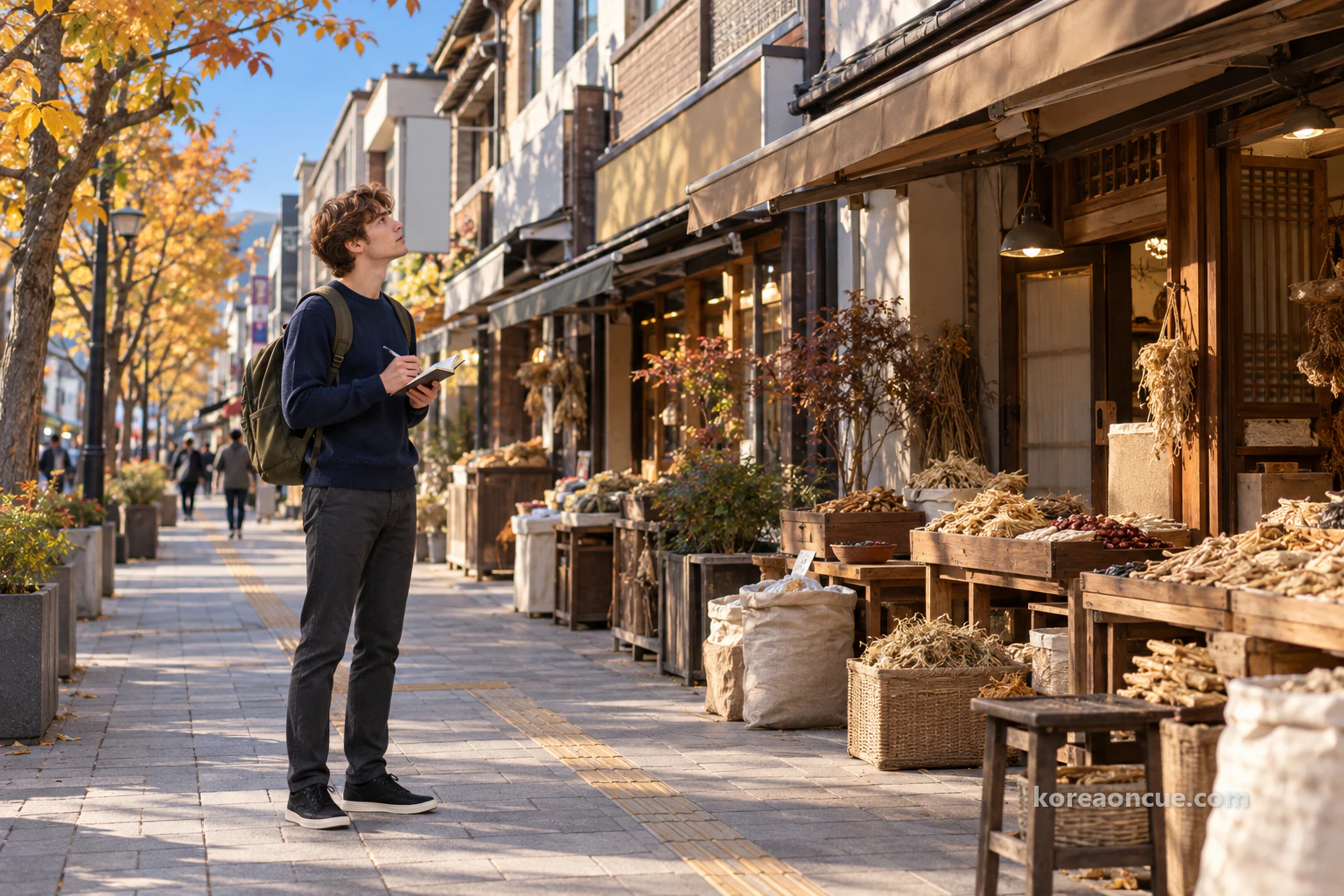
Jegi-dong is home to Seoul Yangnyeongsi, which is described as the largest market for herbal medicine ingredients in Korea. Inside it stands Seoul K-Medi Center, built in hanok style. On its second floor, the Seoul Yangnyeongsi Herb Medicine Museum displays about 380 of the medicinal ingredients traded in this market. That number is exactly why Noah chose the place. To someone who draws maps, a run of display cases holding 380 names side by side feels like the legend of an unknown map laid out all at once.
Noah has one more thing to do today. The map Hina gave him at Ttukseom on Halloween night — the sheet with a line from the exit to the stage and the times written along it — is still tucked into the back of his notebook. After Hina went back to Tokyo, Noah drew his first map with times on it at the Gyeongchun Line Forest Trail and sent it to her, and today is his second. This time he wants to fit the herb-scented streets and the museum’s hours onto a single page.
This piece follows Noah’s afternoon as a guide to the Seoul Yangnyeongsi Herb Medicine Museum. We walk from Exit 2 of Jegi-dong Station on Line 1 to Seoul K-Medi Center, see the permanent exhibition and the newly opened special exhibition The Apothecary’s Bookshelf on the second floor, and cover the Bojewon experience on the third floor and the herbal footbath on the second. At the end you will also find the Yangnyeongsi streets at dusk and a walking route that Dongdaemun-gu uses to string this neighbourhood together. It also includes the moment Noah had to turn his plan around because of the opening hours that change in November, so it is worth reading first to avoid getting caught out in the same spot.
The Cue
The Seoul Yangnyeongsi Herb Medicine Museum is on the second floor of Seoul K-Medi Center, a hanok-style building at 26 Yangnyeongjungang-ro, Dongdaemun-gu. You can see about 380 medicinal ingredients traded at Seoul Yangnyeongsi, traditional medical tools, a herb village diorama and a recreated traditional herbal pharmacy, and the special exhibition The Apothecary’s Bookshelf runs in the second-floor special exhibition room from 23 October 2026 to 31 May 2027. From November to February the museum opens 10:00–17:00, with last admission at 16:00, one hour before closing. Adult admission is ₩1,000, and the Bojewon experience on the third floor (about 30 minutes, ₩5,000 per person) and the herbal footbath on the second floor (about 20 minutes, ₩6,000 per tub for up to two people) are booked first come, first served by time slot at the first-floor information desk. Use Exit 2 of Jegi-dong Station on Line 1.
- Where: Seoul K-Medi Center, second floor, 26 Yangnyeongjungang-ro, Dongdaemun-gu, Seoul (Jegi-dong). Enquiries: 02-969-9241.
- Subway: Jegi-dong Station (Line 1) Exit 2, as given on the centre’s official directions page. From Jegi-dong Station to the centre is about 523 m, roughly a seven-minute walk.
- Hours: November–February 10:00–17:00, March–October 10:00–18:00. Last admission one hour before closing (16:00 in November).
- Closed: 1 January, Seollal and Chuseok. Any other closing days approved by the head of Dongdaemun-gu are announced in advance, so check the centre’s notices before you go.
- Admission: Adults ₩1,000 · students (aged 7–18) and military personnel ₩500 · adult Dongdaemun-gu residents ₩500 · free for those aged 65 and over, preschool children, people with disabilities, national merit recipients and basic livelihood recipients.
- Activities: Bojewon experience ₩5,000 per person (about 30 minutes, at 11:00, 12:00, 14:00, 15:00, 16:00 and 17:00) · herbal footbath ₩6,000 per tub, up to two people (about 20 minutes, eight sessions a day from 10:20 to 16:20). First come, first served at the first-floor information desk.
- Driving: Public car park on basement levels 1–3 of the centre, 196 spaces, open 24 hours.
From Jegi-dong Station Exit 2 — last admission at 16:00 from November
Noah’s original plan was to start with a slow walk through the streets. He would sketch the road lined with herb shops first and leave the museum until last, as the sun began to drop. His notebook said “10:00–18:00”, so he assumed half past four would give him plenty of time. But as he copies the signs and starts writing times next to his map, the way Hina taught him, the closing time in the museum box begins to look wrong.
Open in Kakao Map — Jegi-dong Station
Noah steps to the side of the pavement and opens Seoul K-Medi Center’s visitor information again. Six o’clock was the summer schedule, from March to October. In the winter months from November to February, the centre opens from 10 a.m. to 5 p.m. and takes visitors only until an hour before closing. In early November, that means last admission is at 4 p.m. He copied the hours down in October, and the season has changed since then.
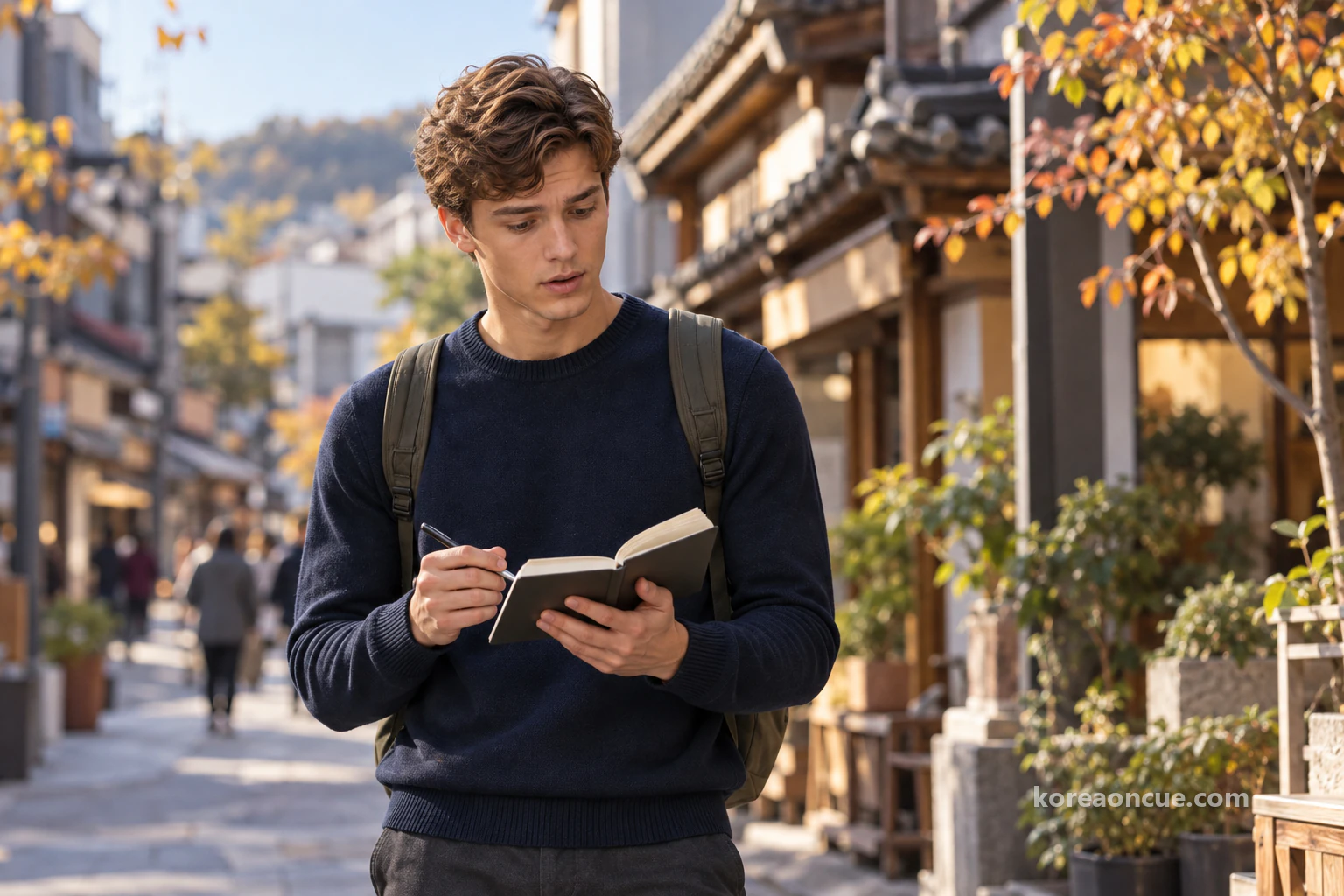
Noah strikes through “18:00” in his notebook and writes “17:00 / last entry 16:00” underneath. Then he turns his plan upside down: museum first, streets later. The signs and roads will still be there after the museum shuts, but miss four o’clock and the museum has to wait for another day. If you come to this neighbourhood on an afternoon between November and February, take the museum first, like Noah, so the time doesn’t slip away in the streets.
The centre’s official directions point visitors to Exit 2 of Jegi-dong Station on Line 1. From Jegi-dong Station to Seoul K-Medi Center is about 523 m, roughly a seven-minute walk. Noah enters the address “26 Yangnyeongjungang-ro” into his map app and picks up his pace. His eyes keep following the signs on the way, but this time the pen stays in his pocket. When he reaches the front of the centre, the time column in his notebook reads a little after 3 p.m.
Seoul K-Medi Center — reception on the first floor, museum on the second, Bojewon on the third
Before going in, Noah stands outside the centre and looks up at the roof. Seoul K-Medi Center is a hanok-style complex devoted to Korean medicine and culture, and it opened in October 2017. The following year it was recognised in the history and culture architecture category of the 2018 Korea Land Awards for its traditional hanok exterior, the craftsmanship of its interior and its role in the local community. The centre’s logo takes in the curves of a hanok and of the Iljumun gate at the entrance to Seoul Yangnyeongsi. Noah traces the line where the tips of the eaves lift slightly towards the sky into a corner of his notebook.
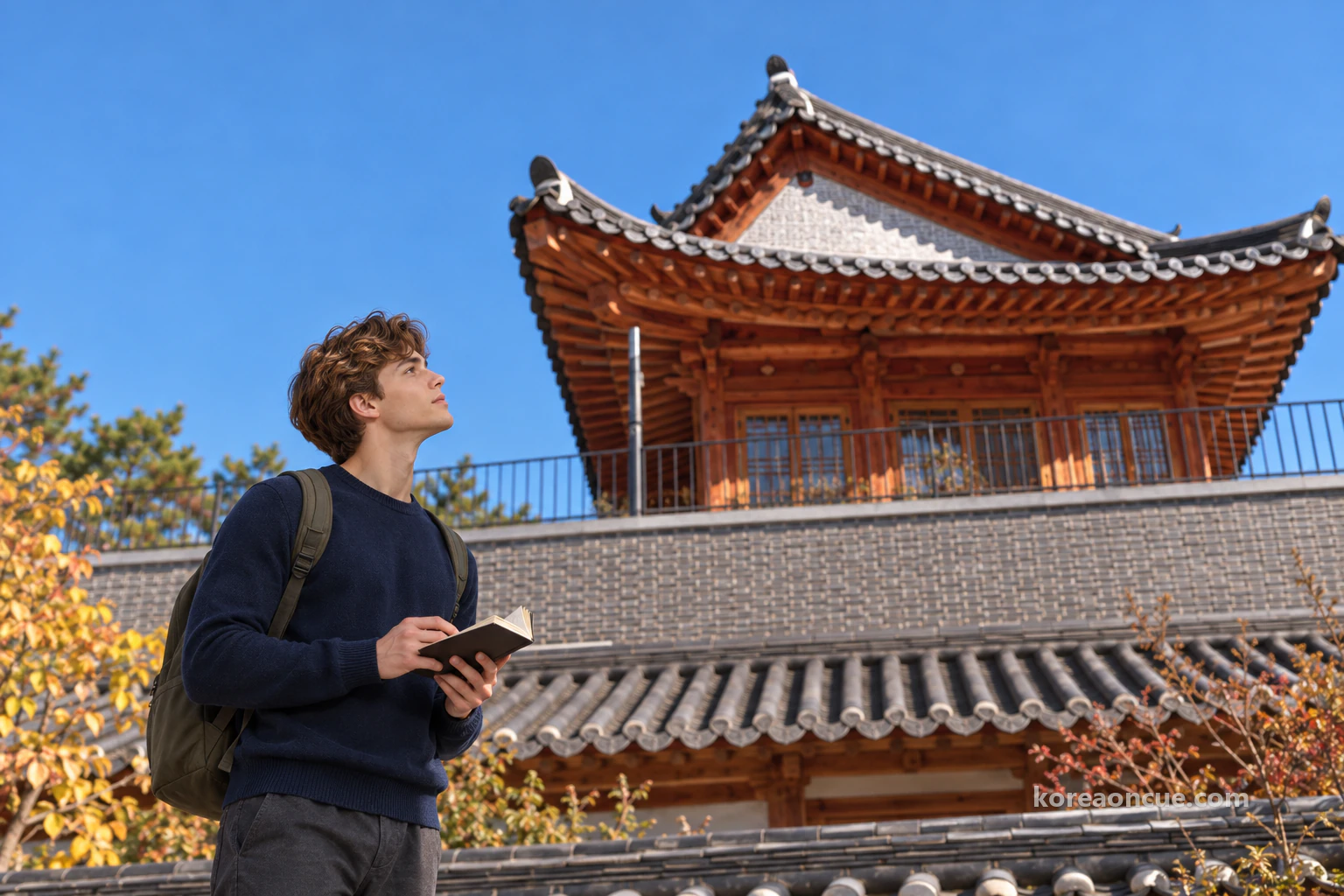
Each floor of the building has its own job. The first floor holds the information desk, a video experience room, a traditional costume room and an education and culture room. The second floor has the Herb Medicine Museum and the herbal footbath area, and the third floor has the Bojewon experience room, a mobile clinic room, a medicinal food room and a multipurpose hall. Basement levels 1 to 3 are a public car park with 196 spaces, open 24 hours. Noah draws the layout in his notebook as three boxes stacked one on top of another, because to someone who draws maps, even a single building looks like a small neighbourhood piled upwards.
Noah heads to the first-floor information desk first because of the activities. The Bojewon experience on the third floor and the herbal footbath on the second are both booked first come, first served by time slot at the first-floor information desk. The Bojewon experience runs at 11:00, 12:00, 14:00, 15:00, 16:00 and 17:00, and the footbath has eight set sessions a day from 10:20 to 16:20. Noah puts his name down for the 16:00 Bojewon session, which lets him go straight upstairs after the museum. He is on his own today, so a session booked per person suits him, and being inside the museum before four means he won’t clash with last admission either.
The second-floor Herb Medicine Museum — reading about 380 ingredients like a map legend
The museum is on the second floor. Individual admission is ₩1,000 for adults and ₩500 for students aged 7 to 18 and military personnel, and adult Dongdaemun-gu residents pay ₩500. Admission is free for those aged 65 and over, preschool children, people with disabilities, national merit recipients and basic livelihood recipients. Walking in with a single ₩1,000 note, Noah thinks it is the lightest ticket of any museum he has been to in Seoul.
What stops Noah the moment he enters is the ingredient display. The museum shows about 380 of the medicinal ingredients traded at Seoul Yangnyeongsi. Alongside the plant, animal and mineral ingredients used in traditional Korean medicine are specialty ingredients, rare ingredients and even toxic ones, with the uses of each explained on information panels. To Noah, the cases with their rows of ingredients look just like the legend box in the corner of a map.

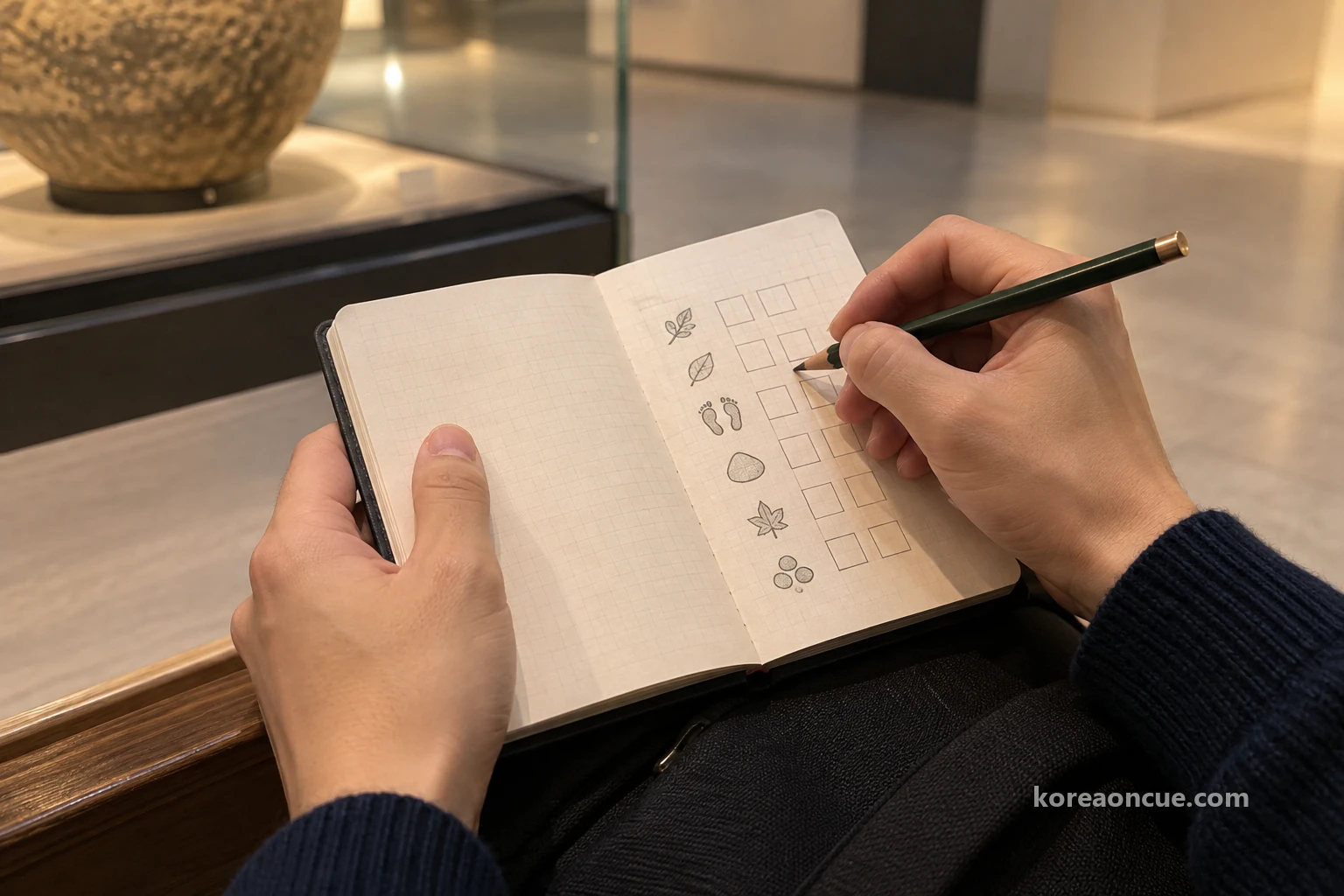
Noah sets up a new legend in his notebook. Plant ingredients get a small leaf, animal ones a footprint and mineral ones a square stone, and toxic ingredients get a thick outline. Sorting the ingredients by where they come from, the way a map separates woods, buildings and rocks with symbols, makes the 380 feel far less daunting. If you are visiting for the first time, rather than trying to read every name, split the cases into plant, animal and mineral first and they become much easier to take in.
Between the cases are spots where you can try things with your hands. The hands-on area uses digital panels to show “Meridians and acupoints”, “Sasang constitution diagnosis”, “Herbal qigong exercises” and “Food pairings for your constitution”, and there are corners for children and teenagers such as a “Herbal quiz”. You can also touch some of the ingredients, so Noah feels the texture of what he had only seen through glass with his fingertips. That is when tactile notes such as “rough” and “light” start appearing next to his legend symbols.
Gun-sin-jwa-sa, the herb village and Yakjeon Hanyakbang — how ingredients become medicine
The museum also has spaces that show how ingredients become a single packet of medicine. In “The secrets of prescription and preparation”, a video experience explains the idea of “gun-sin-jwa-sa”. It refers to a prescription in which the remaining ingredients are chosen to match the character of the main ingredient that does the central work of treatment, so that the whole works better. Watching the video, Noah immediately thinks of his own maps. When he draws one, he puts in a single main road first and then joins the side streets to it.
Noah draws one thick line in his notebook with a few thin lines branching off it, and writes “gun-sin-jwa-sa = main road first” beside it. The discovery that making medicine and drawing a map follow a similar order is his first of the day. If you want to see video experiences like this one too, though, don’t linger too long in front of the cases. In a season when last admission is at four, it helps to divide your time evenly between the cases, the videos and the hands-on panels.
The Herb Village Story is a space that uses dioramas to show the process from gathering herbs to processing them for use as medicine. The panels explain that people who gathered herbs in the mountains were known by names such as simmani and yakchokkun, and that in the Joseon era several medical texts were translated into Hangeul so that ordinary people could learn which herbs and ingredients were easy to find. Noah bends down to look at the little figures handling herbs in the diorama at eye level. Following with a finger where the paths of a model village lead is Noah’s favourite game in any museum.
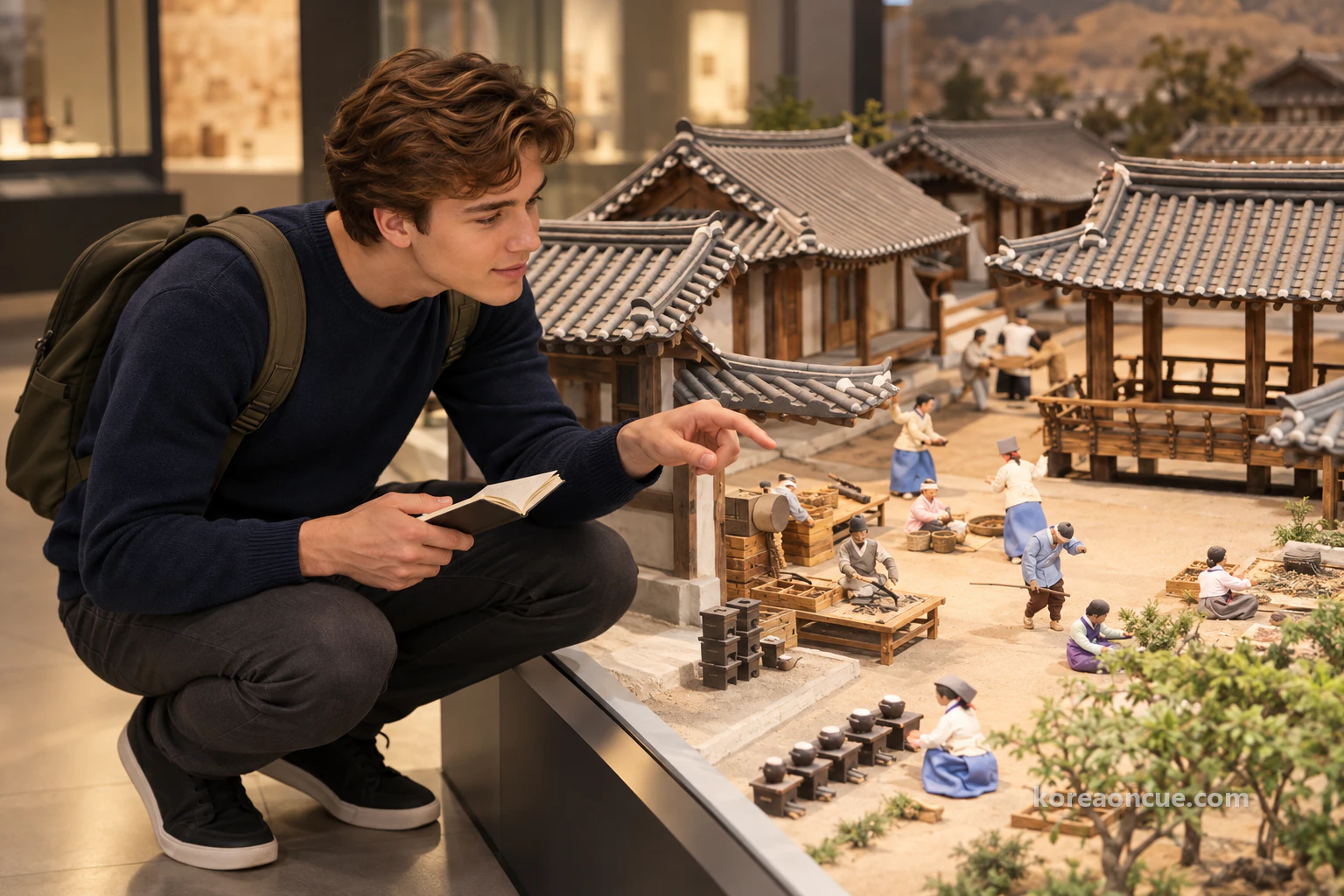
Inside the museum there is also Yakjeon Hanyakbang, a traditional herbal pharmacy recreated as a single scene. The traditional medical tools corner gathers everything from tools for digging up ingredients to tools for measuring quantities, grinding them into powder, processing them, handling liquid medicines and storing them. The donated objects gallery holds items given by Seoul Yangnyeongsi merchants, the Seoul Yangnyeongsi Association and other donors, along with panels on the origins and history of Seoul Yangnyeongsi from the Joseon era to today. Seeing the hall filled with things the market people gave themselves, Noah thinks of this museum as the neighbourhood’s old photo album.
The special exhibition The Apothecary’s Bookshelf and Korean medical books — the pharmacy through drawers and books
The second-floor special exhibition room is showing the special exhibition The Apothecary’s Bookshelf (藥房 書架). It began on 23 October 2026 and runs until 31 May 2027, so winter visitors can see it alongside the permanent exhibition. The Korean title, Yakbangui Seoga, means the bookshelf of a pharmacy. Noah had looked at the poster in the centre’s notices the night before. On a grey background, a medicine cabinet and drawers, medicine bottles, potted herbs and piles of books sat side by side like a folk painting.
What held Noah longest on the poster was that drawers and books shared the same picture. A drawer is where things are divided into compartments, and a book is where you write down what each compartment holds. His notebook works the same way. The maps at the front divide the streets into boxes, and the legend at the back records what is in each box. Outside the special exhibition room, Noah adds a small drawing of drawers next to the ingredient legend he made today.
The theme of books carries on into the permanent exhibition. The “Establishment, development and completion of Korean medicine” space displays Korean medical books from the museum’s collection, and the museum also holds old books such as Jejung Sinpyeon and Donguibogam. In the same museum, the “Policy and future vision of Korean medicine” space looks at the global market for Korean medicine and its modernisation and presents policies and visions for the future. Seeing old books and the market to come on the same floor, Noah feels the whole museum is like a long map drawn along time. A glance at his watch shows ten minutes left until the four o’clock session.
The third-floor Bojewon experience — about 30 minutes, ₩5,000 per person
Noah closes his notebook and goes up to the third floor. The third floor has the Bojewon experience room and the mobile clinic room. “Bojewon” is a name this neighbourhood has had since the Joseon era, but he decides to save that story for the streets after the session. Waiting his turn outside the room, Noah writes “16:00 3F” in the time column of his notebook.
The Bojewon experience is a programme in an aroma-scented room where you get a feel for the meridians and acupoints of Korean medicine with a heated mechanical massage mat and a warming eye mask, then receive a herbal hand pack containing camellia oil and acupressure. It takes about 30 minutes and costs ₩5,000 per person, with up to 20 people per session on a first-come, first-served basis. Preschool children cannot take part, and people for whom the session could cause side effects, such as those with osteoporosis or who are pregnant, may not be able to join. Lying on the warm mat with his eyes closed, Noah thinks back to the “Meridians and acupoints” panel he saw on the second floor.
During the hand pack, Noah lets go of his pen for the first time today. Hands that have been copying things down all day get a short rest in the scent of camellia oil. When he comes out, Noah draws a palm in his notebook and adds a few dots where the acupressure was applied. His habit of dotting maps has turned up on the palm of a hand too, and Noah has a quiet laugh to himself.
The mobile clinic room on the same floor is a different kind of place from the activities for travellers. The Bojewon mobile clinic carries on the role of the historic Bojewon, offering free Korean medicine treatment to people who need care, such as older people, foreign residents and people with disabilities, with appointments by phone and no service on Sundays and Mondays. It is not a programme to drop into out of curiosity but a place for people who need treatment, so Noah only copies its name into his notebook at the door. The work Bojewon once did in this neighbourhood now continues in a corner of the third floor.
The second-floor herbal footbath — about 20 minutes, ₩6,000 per tub for up to two people
Back on the second floor, Noah looks at the herbal footbath timetable again. The herbal footbath lets you soak your feet in warm water infused with seasonal ingredients such as mugwort and chrysanthemum, under a pavilion that keeps the character of a traditional hanok. The programme comes from “duhan jogyeol (頭寒足熱)”, the Donguibogam health principle of keeping the head cool and the feet warm. Sessions run eight times a day, at 10:20, 11:00, 11:40, 13:20, 14:00, 14:40, 15:20 and 16:20, and each takes about 20 minutes.
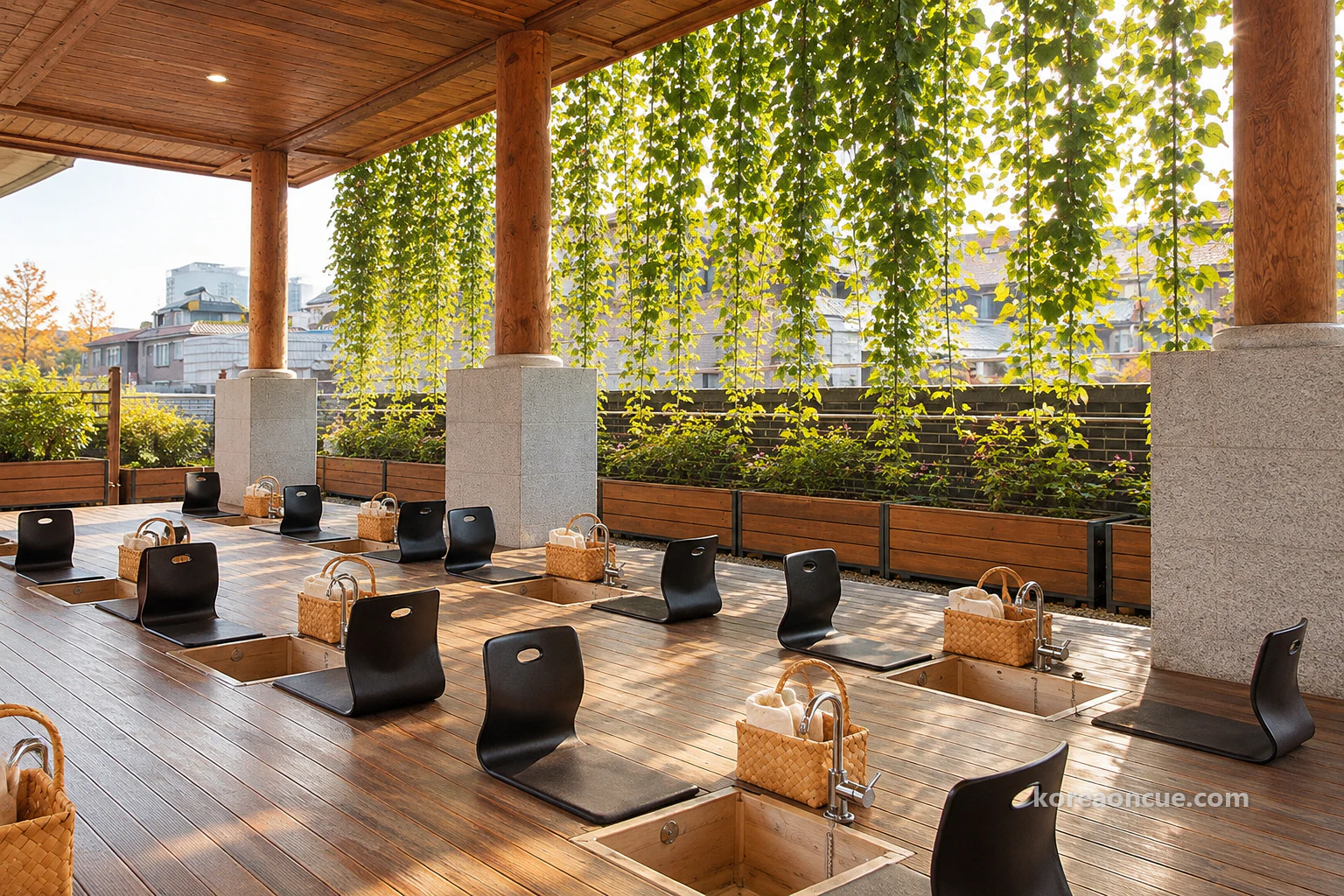
It costs ₩6,000 per tub, with up to two people per tub. Bookings are first come, first served by time slot at the first-floor information desk, with up to 12 tubs per slot. Use may be restricted when operations cannot go ahead, for example during a weather warning, and the layout of the footbath area may also limit access for people with reduced mobility. Children must be accompanied by a guardian. If you are going as a pair, share a tub at the footbath, and if you are on your own, the per-person Bojewon experience keeps the sums simple.
Noah leaves the footbath for another visit. The last session at 16:20 began while he was on the third floor, and the “one tub = two people” note in his notebook was a little generous for someone on his own today. If you want the footbath as well, book an earlier slot before 16:20 rather than arriving late in the afternoon. At around 4:40, Noah steps outside before the centre closes.
The old story of Bojewon and “hancham” — the road outside the East Gate where herb traders gathered
Leaving the centre, Noah opens the Bojewon story he had put off on his phone. The story Dongdaemun-gu tells begins like this. In the Joseon era, Bojewon stood three ri outside Heunginmun, the East Gate, and as its name suggests it was a relief institution that rescued and protected the poor. It served as a relief station that fed the hungry, kept herbal doctors to treat poor people, sheltered those who drifted with nowhere to go and even held funerals for them when they died. Only now does Noah feel he understands why the mobile clinic on the third floor is called “Bojewon”.
The Annals of King Sejong record that Bojewon was set up outside Heunginmun and Hongjewon outside Soeuimun, and that two rooms shaped like the character for earth (土) were built to serve as relief stations for the hungry. The inns near Seoul were Bojewon outside the East Gate, Hongjewon outside the West Gate, Itaewon outside the South Gate and Jeongwanwon outside Gwanghuimun. Noah’s pen stops when he spots “Itaewon” on the list. A neighbourhood name he has heard again and again since arriving in Seoul is right there in a list of old inns. Stories of the same name crossing time and surviving with a different use always end up in the boldest writing in Noah’s notebook.
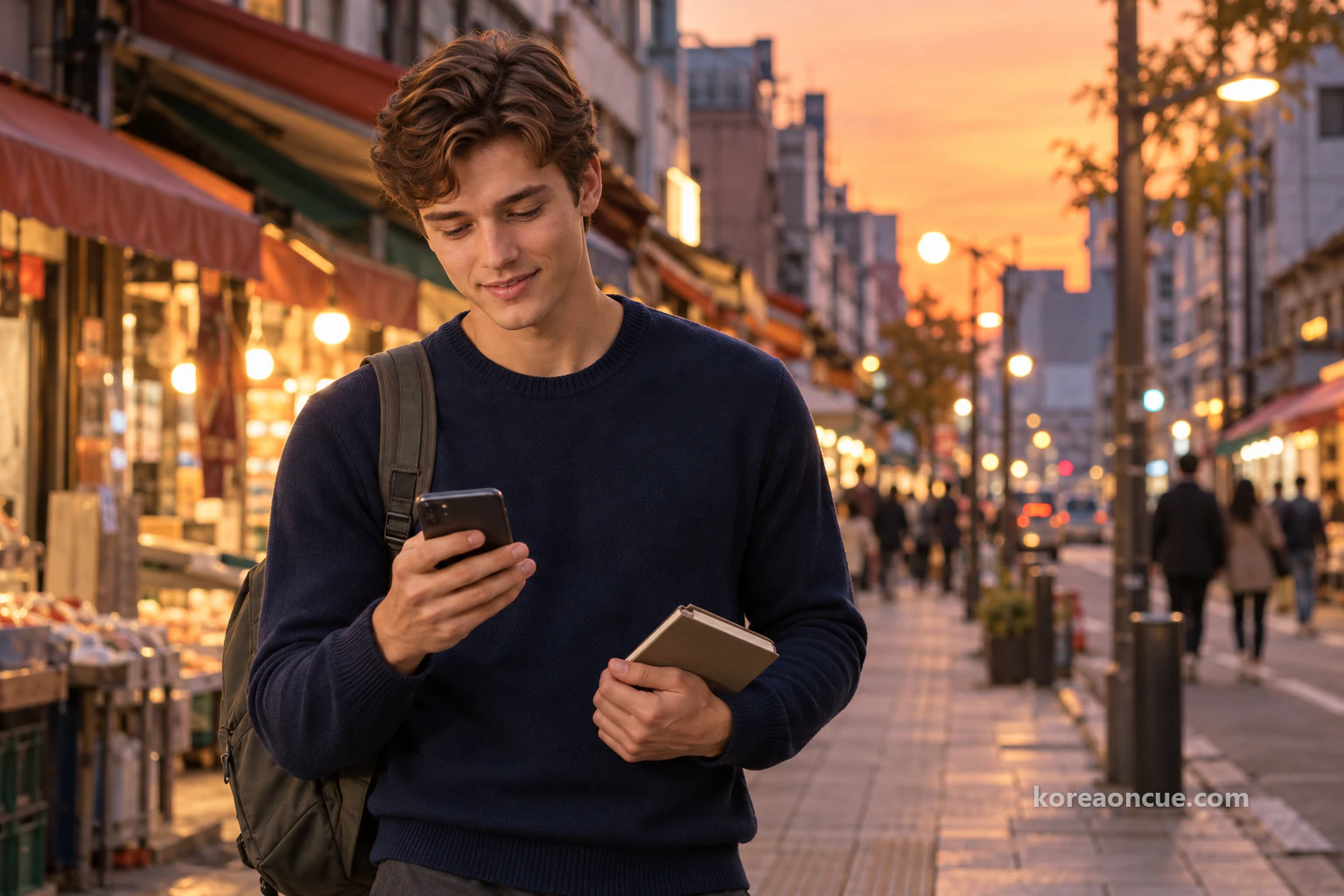
The story also has a part that leads to Yangnyeongsi. For a long time, many herb traders who brought medicinal ingredients from Gyeonggi-do and Gangwon-do gathered around Bojewon outside Heunginmun, and Dongdaemun-gu writes that it is no coincidence that the Gyeongdong herbal medicine shopping area, now designated as Seoul Yangnyeongsi, flourished near Bojewon. Seoul K-Medi Center likewise presents Seoul Yangnyeongsi as a market on the old site of Bojewon, where the relief institution once stood. Another explanation adds that the market grew naturally as herb dealers from across the country gathered here via Cheongnyangni Station and the Majang-dong express bus terminal. Noah draws a cluster of arrows in his notebook, showing ingredients heading into Seoul and meeting at this junction.
At the very end of the story, Noah finds his favourite word of the day. On the old roads, a “cham (站)” stop was placed every day’s walk, and the “hancham” in the Korean expression for “keep walking for a good while and you’ll see it” is said to come from this cham. For someone who walks and draws roads, there could be no friendlier root for a word. Noah thinks back to the seven-minute walk from Jegi-dong Station to the centre and smiles. Next to a full day’s walk, today’s was less a hancham than a few steps.
The Yangnyeongsi streets at dusk and Dongdaemun-gu’s “Jegi-dong alley stories” route
Only now does Noah walk the Yangnyeongsi streets as he first planned. Following Yangnyeongjungang-ro slowly from the front of the centre, he fills in the characters from the signs he left half-copied earlier. Seoul Yangnyeongsi was approved by the Seoul Metropolitan Government as a traditional herbal medicine market district, and on 5 July 2005 it was also officially designated as the Seoul Yangnyeongsi Korean Medicine Industry Special Zone. Noah starts counting how many times today he has copied “藥”, the first character of “藥令市”, then gives up.
The neighbourhood name Jegi-dong has a story too. The ritual ground of Seonnongdan, where the king worshipped Sinnong and Hujik and prayed for a good harvest in the Joseon era, was called “Jeteo”, and the name was later changed to its Sino-Korean reading, “Jegi (祭基)”. Seonnongdan, Historic Site No. 436, is where Joseon’s kings held rites to pray to the gods of farming and grain for a good harvest each year, and the Chinese juniper beside it, grown straight upwards, is Natural Monument No. 240. Dongdaemun-gu also says the name seolleongtang comes from “seonnongtang”, after Seonnongdan. Noah’s notebook, which collects stories that survive name changes, gains two lines today alone.
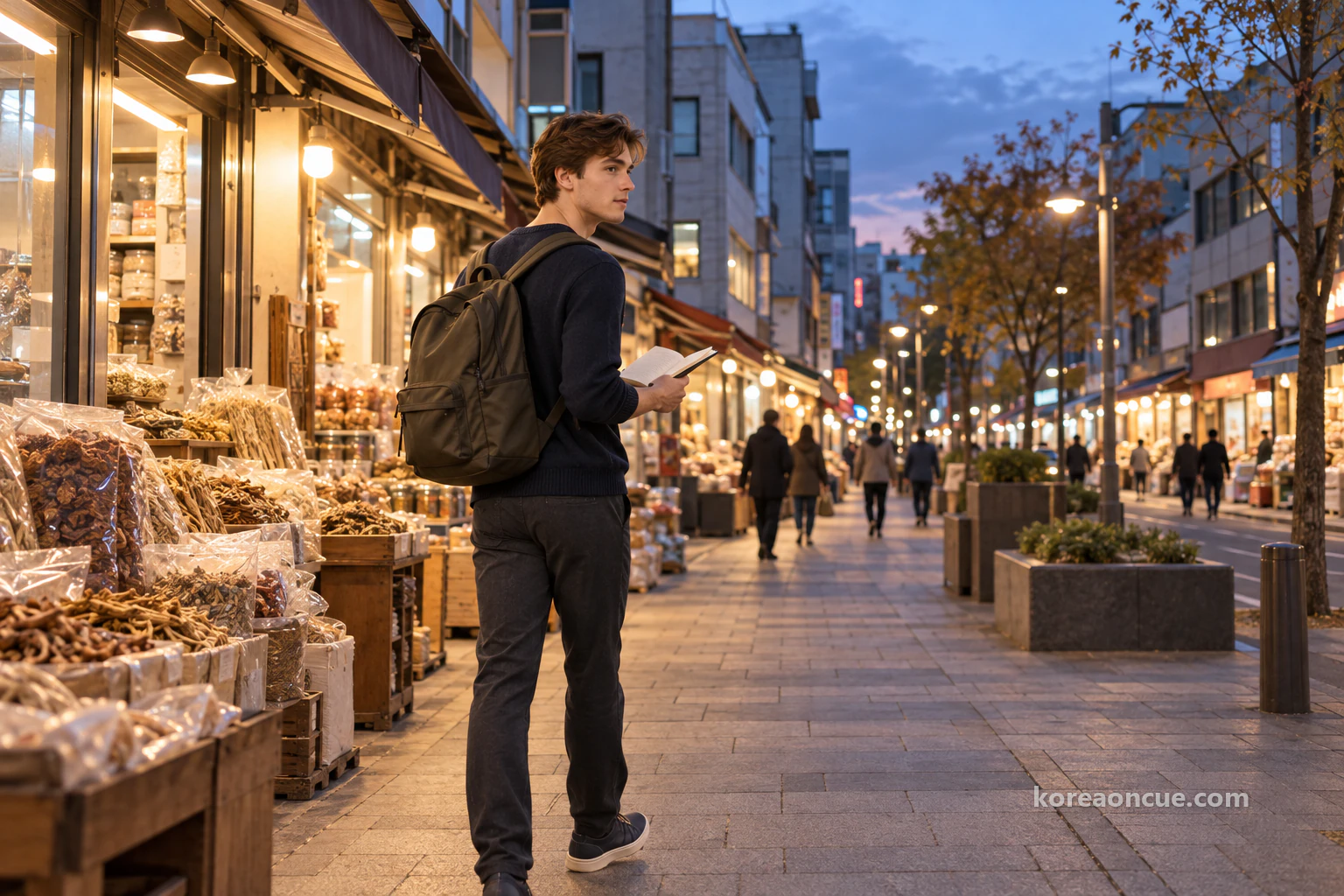
Dongdaemun-gu also suggests a walking route that links this neighbourhood in one line. The self-guided “Jegi-dong alley stories” route starts at Seonnongdan, passes Jegi-dong Catholic Church and Bangadarigyo Bridge, and reaches Seoul Yangnyeongsi and the Herb Medicine Museum. It takes in Seonnongdan, where kings prayed for good harvests, Jegi-dong Catholic Church, a Seoul Future Heritage site, and the commercial hanok district of Jegi-dong, before ending with history and health at the market and the museum. Noah’s route today looks like that course walked backwards from the end and stopped halfway.
In distance terms, Seonnongdan History and Culture Museum is about 655 m from Jegi-dong Station, roughly a nine-minute walk, and about 874 m, roughly 11 minutes, from Seoul K-Medi Center. From the same station, Gyeongdong Market is about 472 m away, roughly a seven-minute walk. To link several places in one day, pin the museum’s 16:00 last admission in your notebook first and arrange the rest around it. Noah marks the way to Seonnongdan on today’s map with a dotted line only. The sun is going down, and he has decided to finish today’s map here.
A Yangnyeongsi map with times on it — heading back to Jegi-dong Station and a message to Hina
On the way back to Jegi-dong Station, Noah steps to the side of the pavement and runs his eye over today’s map from the beginning. The line that starts at Exit 2 hesitates in front of a few signs, then bends beside the crossed-out “18:00” and runs straight to the centre. The centre box is three floors tall, with the leaf, footprint and stone legend on the second floor and a single palm on the third. Along the line are the times he passed, and beside the boxes are the closing times.
There is one difference from the Gyeongchun Line Forest Trail map. That time he wrote down all the closing times before drawing the route, whereas today he was drawing the route when a closing time caught him and he had to redraw it. With the erased line and the corrected one on the same page, the map is a bit messy, but it shows much better what happened today. Noah takes a photo of the page and sends it to Hina in Tokyo. “This time it’s a map I rubbed out once and drew again.”

The reply arrives before Noah reaches the ticket gates. “The crossed-out 18:00 stands out the most — that’s a real time map.” Before closing his notebook, Noah opens Hina’s sheet from the back of it side by side with today’s page. From November to February, the Seoul Yangnyeongsi Herb Medicine Museum takes its last visitors at 4 p.m., so if you go on an afternoon in this season, see the museum first and walk the streets afterwards. The signs and roads will still be waiting after dark.
Common Mistakes
Going late on summer hours
18:00 closing applies from March to October. From November to February the museum closes at 17:00.
Arriving at 16:30 because it closes at 17:00
Last admission is one hour before closing, so from November to February it is 16:00.
Walking the streets first and missing the museum
On an afternoon in this season, see the museum first and walk the Yangnyeongsi streets afterwards.
Assuming it closes on Mondays
The regular closures are 1 January, Seollal and Chuseok. Any other closures are announced in the centre’s notices.
Mistaking the mobile clinic for a visitor activity
The third-floor mobile clinic offers free treatment by phone appointment for people who need care. The activity for travellers is the Bojewon experience (₩5,000 per person).
Thinking the footbath can wait until late
The last session is at 16:20, booked first come, first served at the first-floor information desk.
FAQ
How do I get there?
Take Exit 2 at Jegi-dong Station on Line 1. From Jegi-dong Station to Seoul K-Medi Center (26 Yangnyeongjungang-ro, Dongdaemun-gu) is about 523 m, roughly a seven-minute walk.
What time is last admission?
November–February: 10:00–17:00, last admission 16:00. March–October: 10:00–18:00, last admission one hour before closing.
Is there an admission fee?
Adults ₩1,000, students (aged 7–18) and military personnel ₩500. Free for those aged 65 and over, preschool children, people with disabilities, national merit recipients and basic livelihood recipients.
How many ingredients are on display?
About 380 medicinal ingredients traded at Seoul Yangnyeongsi, covering plant, animal and mineral ingredients as well as specialty, rare and toxic ones.
How long does The Apothecary’s Bookshelf run?
From 23 October 2026 to 31 May 2027, in the second-floor special exhibition room.
How do I book the activities?
First come, first served by time slot at the first-floor information desk. The Bojewon experience takes about 30 minutes and costs ₩5,000 per person, and the herbal footbath takes about 20 minutes and costs ₩6,000 per tub (up to two people).
When is it closed?
1 January, Seollal and Chuseok. Other closing days approved by the head of Dongdaemun-gu are announced in the notices.
Can I drive?
There is a 196-space public car park on basement levels 1–3 of the centre, open 24 hours.
Recap — 30 seconds before you go
- Jegi-dong Station (Line 1) Exit 2 → Seoul K-Medi Center (26 Yangnyeongjungang-ro), second floor, about 523 m and seven minutes from the station
- November–February 10:00–17:00, last admission 16:00 → museum first, streets afterwards
- Adults ₩1,000 · free for those aged 65 and over and preschool children
- About 380 medicinal ingredients on permanent display + The Apothecary’s Bookshelf (until 31 May 2027, second-floor special exhibition room)
- Bojewon experience ₩5,000 per person · herbal footbath ₩6,000 per tub (up to two people), first come, first served at the first-floor information desk
Sources
- Seoul K-Medi Center — Visitor informationMarch–October 10:00–18:00 · November–February 10:00–17:00 · last admission one hour before closing · closures on 1 January, Seollal, Chuseok and separately designated dates · individual adult admission ₩1,000, students and military personnel ₩500 · district resident discounts and admission exemptionschecked 2026-10-26
- Seoul K-Medi Center — DirectionsJegi-dong Station, Line 1, Exit 2 · 26 Yangnyeongjungang-ro, Dongdaemun-gu · main telephone 02-969-9241 · 196 public parking spaces on basement levels 1–3, open 24 hourschecked 2026-10-26
- Seoul K-Medi Center — Permanent exhibitionAbout 380 medicinal ingredients and plant, animal and mineral categories · video experience on the gun-sin-jwa-sa prescription principle · herb village diorama · traditional herbal pharmacy · medical tools and donated objects · tactile and digital activities · medical books and future visionschecked 2026-10-26
- Seoul K-Medi Center — Herbal footbathSeasonal ingredients and the principle of keeping the head cool and feet warm · about 20 minutes · ₩6,000 per tub for up to two people · eight sessions from 10:20 to 16:20 · first-come registration at the first-floor information desk, up to 12 tubs per session · restrictions and adult accompaniment for childrenchecked 2026-10-26
- Seoul K-Medi Center — Bojewon experienceHeated massage mats, warming eye masks, camellia-oil hand packs and acupressure · about 30 minutes · ₩5,000 per person · 20 people per session, first-come registration at the first-floor information desk · no preschool children and other participation restrictionschecked 2026-10-26
- Seoul K-Medi Center — The Apothecary’s Bookshelf exhibition noticeExhibition title and English title in the notice and attached poster · 23 October 2026–31 May 2027 · second-floor special exhibition room · medicine cabinets, drawers, bottles, herb pots and books illustrated on the posterchecked 2026-10-26
- Dongdaemun-gu Culture and Tourism — Spend a night at BojewonBojewon’s relief, medical care, shelter and burial roles · account of the Annals of King Sejong and four inns near Seoul · ingredient traders from Gyeonggi and Gangwon and herbal shops near Bojewon · the account linking hancham to cham stops a day’s walk apartchecked 2026-10-26
- Dongdaemun-gu Culture and Tourism — Jegi-dong alley storiesSelf-guided route: Seonnongdan → Jegi-dong Catholic Church → Bangadarigyo Bridge → Seoul Yangnyeongsi → Herb Medicine Museum · route description linking Seonnongdan, the church designated as Seoul Future Heritage and the commercial hanok districtchecked 2026-10-26
A Seoul story told with our AI characters. Place details are checked against public sources; the photos are AI-made illustrative images. How we use AI
More from this area

Gyeongdong Market: how many grams is “한 근”?
Gyeongdong Market is a large traditional market in the east of Seoul that opened in 1960.
Mali’s fourth work trip to Seoul: walking upper Cheonggyecheon with Rina and a shared notebook page
When they last parted, Mali put their next plan in her calendar: “Cheonggyecheon — Gyeongdong”.