
SCENE · SEOCHO
Goto Mall: how to choose just one thing without losing your way
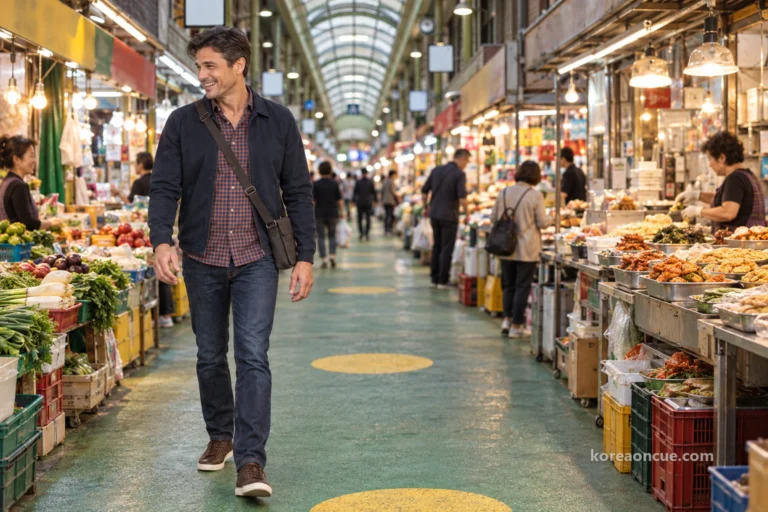
Mali enters from the Exit 8-1 side of Express Bus Terminal Station, walks the mall’s two long corridors, chooses one small item and heads towards the Han River for the evening.
Goto Mall is an underground shopping centre that runs for about 880 m. Mali writes down the shop number of each place she wants to come back to, along with her reason for choosing it. Once she has picked the one hat she takes home today, she follows the signs towards Banpo Hangang Park.

How to get there
On work trips, Mali usually finishes work in the evening. When a meeting runs late, there’s no time left to walk the streets in daylight. That’s when Mali goes underground. Seoul has routes below the street too, where you can walk whatever the weather and however early the sun sets.
Today she has chosen Goto Mall, beneath Express Bus Terminal Station. Of the underground shopping centres run by the Seoul Facilities Corporation, it covers the largest area, with 620 shops stretching for about 880 m. There are clothes, shoes, bags, accessories, cosmetics, homeware and even flowers. There is one moment Mali watches out for here. Once the displays catch her eye, it’s easy to lose track of both where she came from and what she was looking for. So she keeps her way back and her reasons for choosing in the same note.
This guide is for anyone who wants to shop at Goto Mall but worries about losing both their way and their focus. Decide which exit you’ll use, how you’ll note the shops you want to see again, the one thing you’ll buy today and which way you’ll leave. Mali works through each in turn.
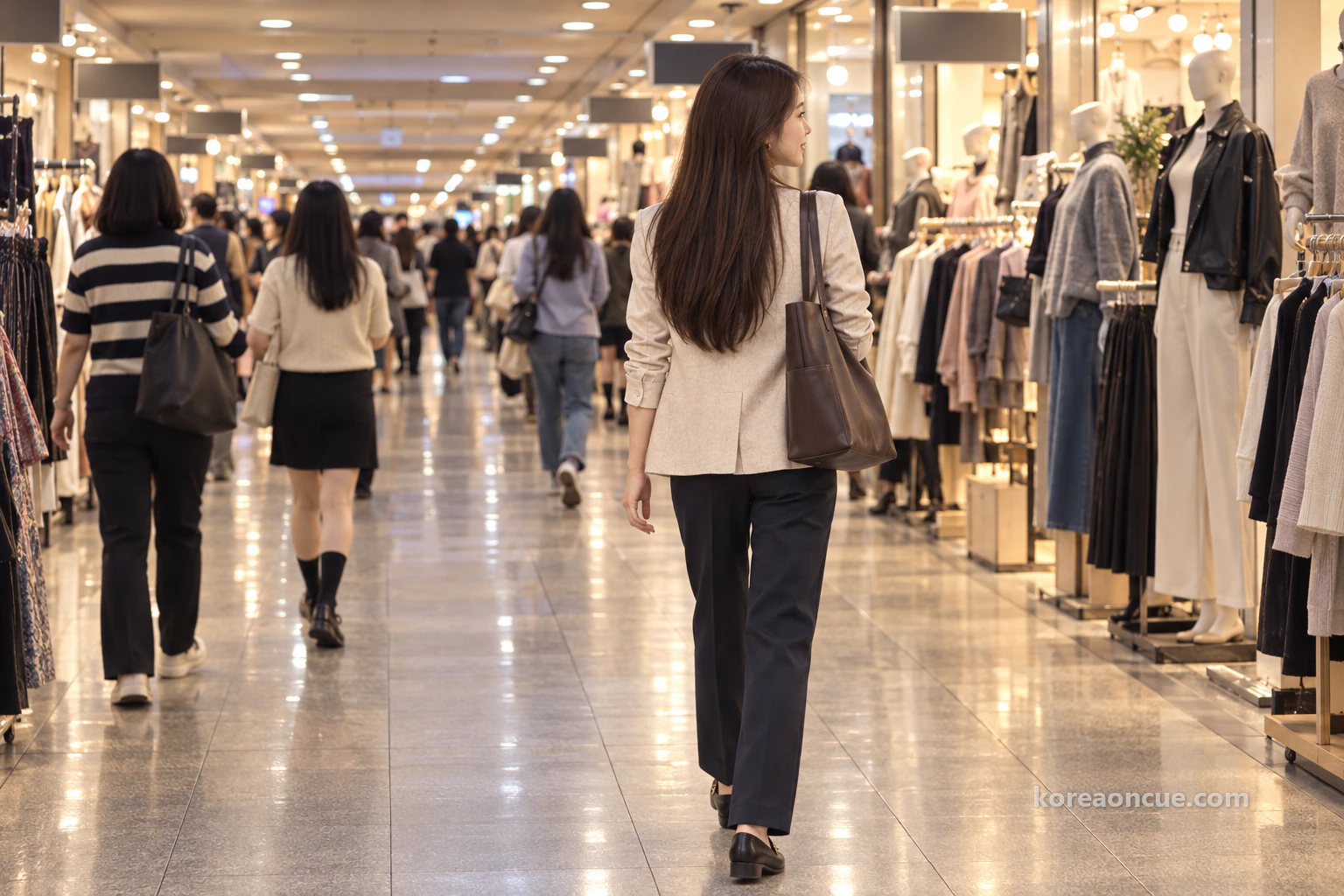
The Cue
Mali writes down the shop number of every place she wants to come back to, letter included. Next to the number, she adds one line on why she liked it. It’s a habit for remembering both the shop to go back to and the reason for going back.
- It’s 137 m from Exit 8-1 of Express Bus Terminal Station, served by Lines 3, 7 and 9.
- The listed shopping hours are 10:00–22:00. The mall is closed for shopping on Seollal (Lunar New Year’s Day) and on Chuseok itself. For individual shop hours, go by each shop’s own information.
- The mall’s walkways are open 24 hours.
- Write down the one thing you’re looking for today and your budget. Decide you’ll take home just one.
- If you plan to claim a tax refund, bring your passport and ask each shop whether it takes part in the refund scheme.
- For a production shoot involving video, photography or interviews, check Goto Mall’s procedure for arranging the shoot in advance.
01Go in by Exit 8-1
Mali gets off at Express Bus Terminal Station, where Lines 3, 7 and 9 meet. Transfer passages and exit signs branch off in many directions here, so before leaving the train she writes just one thing at the top of her notes: “8-1”.

Where she came in is her reference point for getting back. Where she goes after shopping is a separate decision. At the top of her notes Mali writes “Came in — Express Bus Terminal Station Exit 8-1”, and underneath, “After shopping — Banpo Hangang Park”. Remembering where you came in isn’t the same as leaving the same way.
There’s a reason she writes the two lines separately. By the time she finishes shopping, Mali is usually standing somewhere deep inside the mall. If “Which way out?” and “Where did I come in?” both come to mind at once, it’s easy to pick the wrong one. Where she came in is the reference in case she needs to go back. Her next destination tells her which way to head after shopping. With the two on separate lines, she only has to read the one she needs at that moment.
On days when she’s browsing separately from others, she agrees on the exit number, whether to meet above ground or below, and a time. Mali sends all three in a single line, like “Exit 8-1, underground side, 7 p.m.” In a mall full of similar shops, “outside that shop” can easily mean different places to different people.
- At Express Bus Terminal Station, head for Exit 8-1.
- Write down where you came in and where you’re going next on separate lines.
- Meet others by exit number, above or below ground, and time.
02Two corridors — write the shop number in full
Goto Mall’s shops line both sides of two long corridors. When Mali finds a shop she likes, she checks its shop number. She doesn’t write down just the digits — she copies the letter too. If several unit numbers are shown together, she notes them exactly as written.
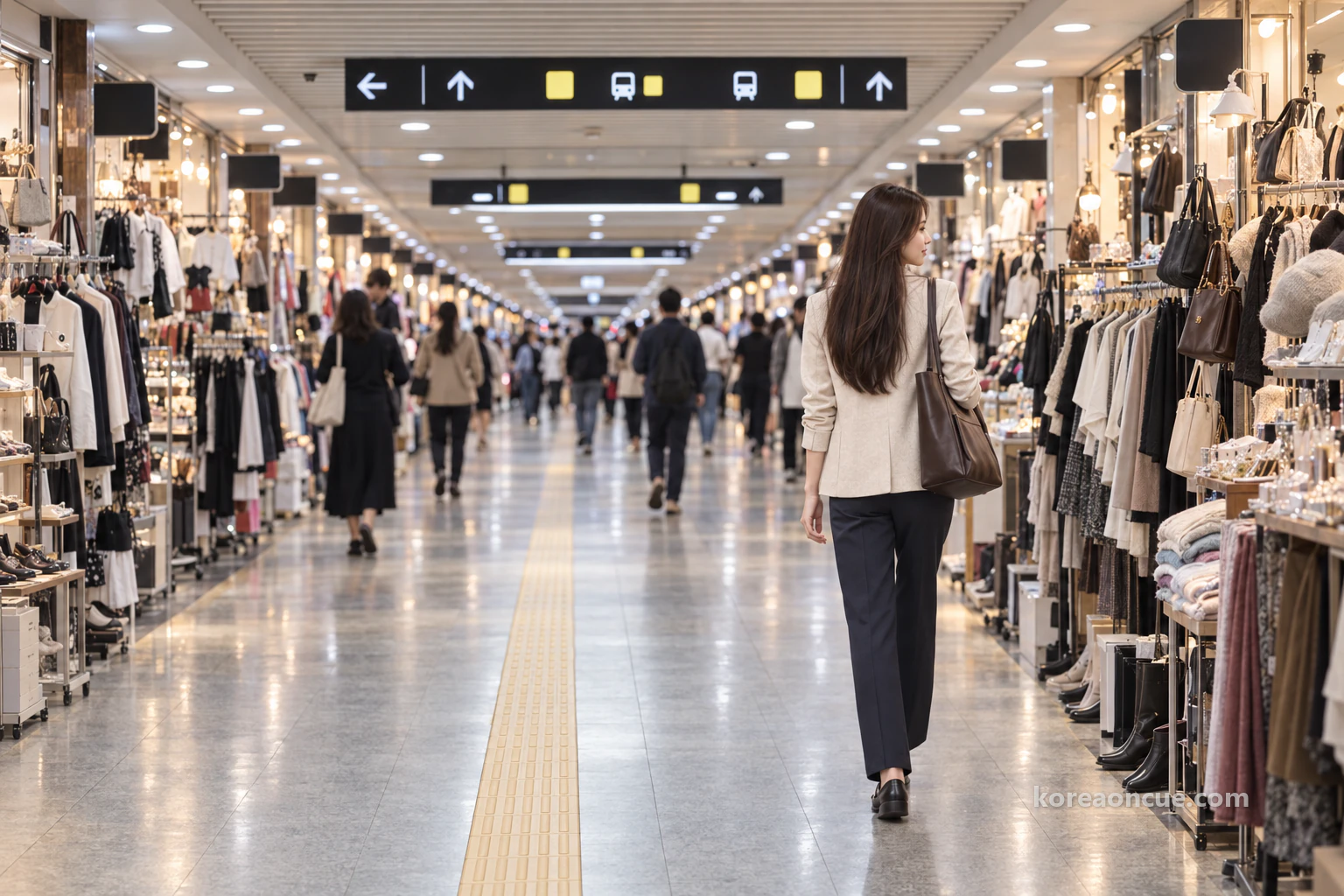
The number is for confirming the shop when she looks for it again. She records the route separately. Wherever she changes direction, she jots down the sign that caught her eye and which way she went. When she comes back, she checks the number in her notes before trusting her memory of the display.
Mali keeps clues for finding the shop apart from clues for remembering the item. The number confirms which shop to go back to. Colour and shape remind her what she meant to look at there. Instead of writing only “the shop with the pink hat”, she adds “pink, brim shape — look again” next to the shop number. When she comes back, she matches the number displayed at the shop with the one in her notes, then looks at the hat again.

Even so, sometimes the layout gets confusing. Then Mali shows her notes to someone at a nearby shop. She points to the number of the shop she’s standing at and the number of the one she’s looking for, and asks, “Which way is this shop?” Showing where you are along with the number you want makes it easier for someone to explain the way than showing the number alone.
Even after she’s been told the way, Mali doesn’t set off straight away. “Right” and “left” depend on which way you’re facing. She points in the direction she was given and asks again: “Is it this way? What should I look out for next?” She writes down the sign she was told about and the direction, then sets off. On the way she looks for that sign, and when she reaches the shop she was after, she checks its number against her notes.
- Write down the shop number with both its letter and digits.
- Note the sign and the direction wherever you change course.
- When you return, compare the displayed shop number with the one in your notes.
03Decide the one thing you’ll buy before you walk
Goto Mall has clothes, shoes, bags, hats and accessories, cosmetics, homeware and even flowers. The more there is to buy, the more Mali makes a point of deciding on one thing before she starts walking. Today her note reads: “One thing to wear on my head — small enough for my travel bag.” She writes her budget next to it.
Mali splits her notes into “to find” and “seen”. When she slows down in front of flowers or tableware, she adds a line to “seen” about the colour or shape she liked. If she wants a photo of a display, she asks the shop first. What goes in the shopping bag today is still the one thing under “to find”.
Goto Mall has a procedure for creators to arrange video shoots, photography and interviews in advance. On days when Mali comes to shoot for the magazine, she starts with that procedure.
She settles on a size in advance, too. Once again, she isn’t checking in any luggage on this trip. Her travel bag holds a laptop, meeting papers and a change of clothes, and the space left is about one side pocket. Mali measures that pocket roughly with her hand before she sets off. However much she likes something, if it won’t fit there, it can’t be today’s one thing.
She also keeps the pleasure of looking at colours she likes apart from choosing the hat she actually needs. Mali tends to linger in front of colours, and she doesn’t count that as wasted time. But liking a colour isn’t enough to make something a candidate. She writes the colour’s name under “seen”, and under “to find” she keeps hats that look as if they’d fit the bag and suit the moments she’d wear them. Whether they really fit, she checks when she comes back to look again.
- Before you start walking, write down the one item you’ll buy today and your budget.
- Keep colours and shapes that catch your eye in other displays under “seen”.
- Decide in advance how big it can be to fit your bag.
04Up to three candidates, each with its number
As she browses, Mali keeps up to three candidates. Under each shop number she writes the price of one hat, and adds her reason for choosing it and anything to check, like “brim looks soft — ask if it folds”. If a fourth candidate turns up, she compares it with the others, keeps one and crosses one out.
Three is a number Mali finds easy to check again. She isn’t trying to fill all three slots. So that she doesn’t spend all her time hunting for new candidates, today she will stop collecting them at some point and go back to the shops she noted.
When a fourth hat catches her eye, Mali doesn’t start by adding another line. First she writes down what makes it better than the ones she already has. Is it only that she likes the colour more, or is it the same size but easier to put away and take out? She crosses out an existing candidate only when she can put the reason to swap in one line. Today that line is just “brighter colour”, so the fourth hat goes under “seen”.
She notes each candidate in the same order: shop number, price, what to check when packing it, and why to look again. If she hasn’t yet found out whether it folds, or how small it folds, she notes it as “ask the shop” rather than writing it down as a known fact. That way, no candidate ends up with only a price, or only a colour.
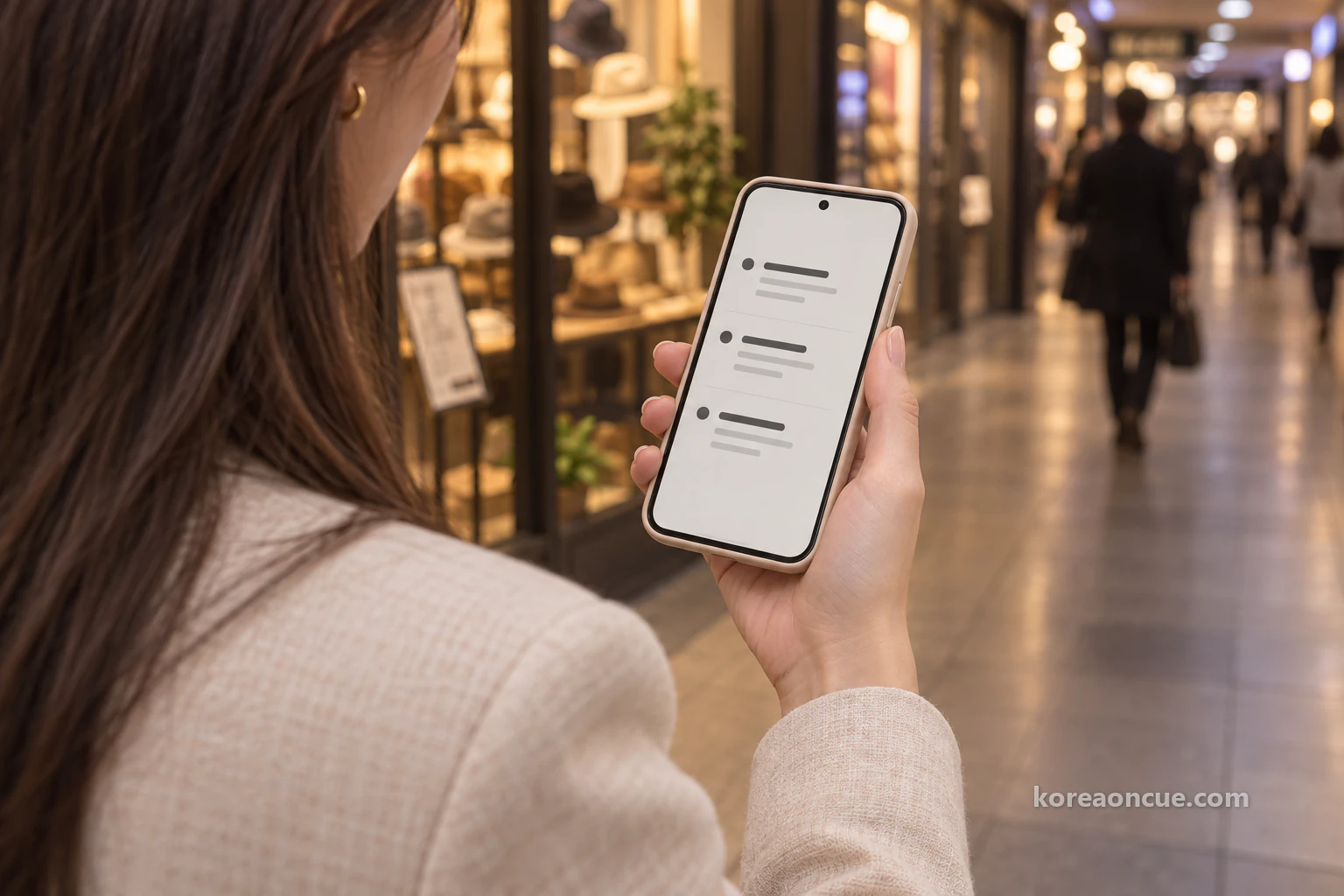
When she writes down a price, she also checks what it’s for. Is it for one, or for a pack of two? If the label is unclear, she asks the shop directly. Mali doesn’t fill in prices in her notes by guesswork.
Mali also decides in advance when to stop collecting candidates. What decides it isn’t how many she has, but how much of the evening is left. She writes at the top of her notes the time she wants to head out towards the river, and counts back from there. First she sets aside time to revisit the shops she noted, and time to ask about refunds and pay. If what’s left barely covers those two, she stops browsing even if she has only two candidates. Today, after checking her notes on the three she kept, she looks at the time. It’s just right for seeing all three again and paying. Mali closes her notes and decides that from now on she won’t stop at any new shops. Any display she’d like to see more of gets one line under “seen”. What’s left of the evening isn’t for finding a new hat. It’s for checking the three she has written down.
- Keep as many candidates as you can realistically check again. Mali stops at three.
- For each candidate, note the number, price, what to check and why to look again, in the same order.
- Check what each price is actually for.
05Look again and keep just one
Having browsed as much as she planned, Mali opens her notes without adding any new candidates. She goes back to the shops she noted, checks their numbers, and looks again at whether her first reasons still hold.
Rather than weigh up each candidate’s different strengths, Mali asks the same questions of all of them. Will it fit in her bag today? Does it do a different job from the hats she already owns? Will she actually wear it once she’s home? The hat that looked best at first glance doesn’t have to be the one she takes home. This time she keeps the one she can clearly picture folding away and taking out again.
Looking at the first candidate again, the brim seems too stiff for her travel bag. Mali asks the shop first whether it can be stored folded. Today she would rather choose a hat that folds away easily than one she’d have to force out of shape to pack. The first candidate moves to “seen”. She likes the colour of the second, but it’s almost the same as one she already has. Mali finds a photo from last month’s work trip on her phone and checks that hat. They really are alike. There’s no reason to carry around another hat that does the same job.
The third feels light in her hand and looks small enough for the side pocket of her bag. Mali tries it on in front of the shop’s mirror. There’s something she checks before the colour. Does the brim block her view? Does the hat slip when she turns her head from side to side? In front of the mirror she also takes out her phone and looks down at the screen. On work trips she spends a lot of time walking while reading a map. If she has to keep holding the hat on, it can hardly be today’s one thing, even if it fits in her bag. The third hat stays put when she lets go. When she asks the shop whether it can be stored folded, the answer is that it’s fine. She compares its folded size with her earlier estimate of the side pocket’s size and decides it will fit comfortably. Before noting how it looks in the mirror, Mali writes down how it feels: “Stays in place without holding it · doesn’t block my view · can be stored folded (confirmed with the shop)”. Next to the reason she first wrote, there’s now a second line, confirmed on a second look. It goes with what she wears to morning meetings, and with what she’s wearing tonight, after work. What comes to mind first is reaching for it on the morning of a work trip. Mali chooses the third.

She adds a line to each of the two she didn’t choose: “too stiff for my luggage”, “too like one I have”. When she opens these notes on her next trip, the basis for that day’s choice will still be there.
“I take another look, then pick one. I note why I chose it beside the shop number.”
06Ask about tax refunds before you pay
Before paying, Mali looks for a sign such as “Tax Refund” and checks whether a refund is possible. If it is, she asks whether it’s an immediate refund, where the tax comes off at the shop when you pay, or a refund you claim separately after buying.

If you’re a non-resident foreign traveller who doesn’t earn income in Korea and you’re staying for less than six months, you can claim a refund when you meet the conditions — such as spending KRW 15,000 or more in a single purchase at a participating store. For an immediate refund, a single purchase must be KRW 15,000 or more and under KRW 1 million, and your total immediate-refund purchases during your stay must be no more than KRW 5 million.
For a tax refund claimed after purchase, show your passport at the shop and keep both the purchase receipt and the refund documents. A normal receipt on its own isn’t enough. Goods for which you claim a tax refund must be taken out of Korea unopened and unused within three months of purchase.
Mali checks that the shop has handed her one hat in the colour she chose. She compares the final amount she’s quoted with the budget she wrote down at the start. Refund or not, the one thing she’s buying today is this hat. She doesn’t add anything else to reach the refund threshold. Once she has checked everything, she pays for one hat.
- Before paying, ask whether the shop takes part in the refund scheme and how the refund works.
- If you’re claiming a refund, have your passport and the documents you need.
- Don’t buy more just because of the refund.
07Follow the pink signs towards the Han River
Done with shopping, Mali closes her notes. What she needs to check now isn’t a shop number but her next destination. She follows the pink guide line on the ceiling and looks for the arrow towards the Han River.

An underground public walkway links Goto Mall with Banpo Hangang Park. Mali follows the signs for Banpo Hangang Park through the walkway and out to the riverside. Coming from the riverside towards Goto Mall, the pink arrows on the piers of Banpo Bridge also show the way.
- To head out towards the Han River, follow the pink guide line on the ceiling and look for the arrow.
- Coming in from the river, look for the pink arrows on the piers of Banpo Bridge.
If you need help
- Goto Mall enquiries — 02-535-8182.
- Phone — Tourist information and interpreting 1330 · crime reports 112.
After the Cut
Standing by the river at Banpo, Mali opens her notes again. Where she came in, the numbers of the shops she went back to, three candidates and the reasons for each are all still there. At the bottom, next to the hat she chose, it says: “Fits in my bag, and I’ll still wear it back home.” Mali closes her notes and picks up her shopping bag. Inside is one folded hat.
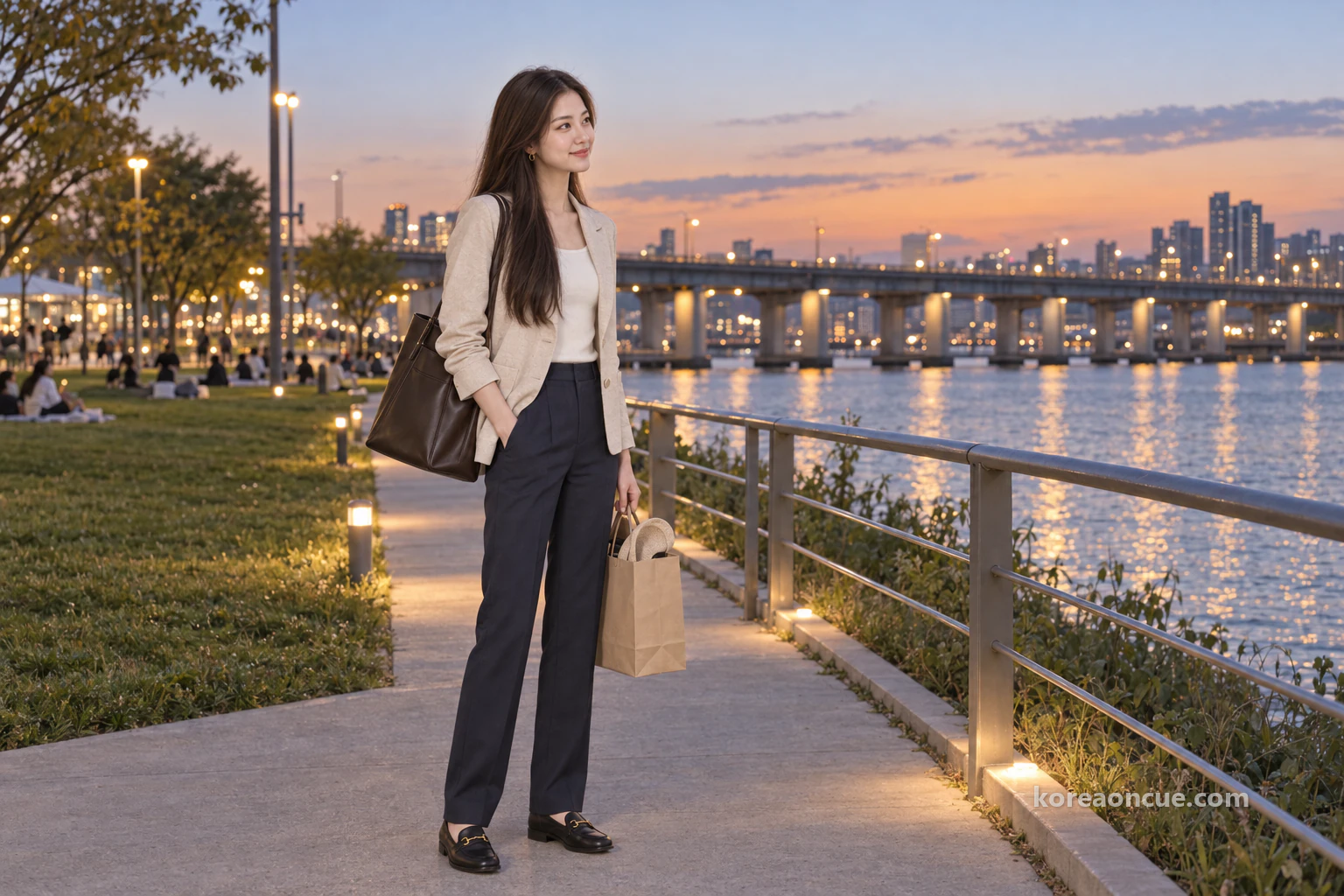
(※ This article includes staged images created with AI.)
Common Mistakes
- Not keeping apart the exit you came in by and where you’re going after shopping, then mixing the two up on the way out.
- Agreeing to meet your companions “outside that shop” without making sure you all mean the same shop.
- Deciding you’ve found the shop you were looking for just because the display looks similar.
- Writing down only the digits of a shop number and leaving out the letter.
- Buying on colour alone, without checking the size, when you plan to fit it into the space left in your bag.
- Comparing prices without checking whether each is for one item or a pack.
- Planning to claim a tax refund without checking whether the shop participates in the scheme and how the refund is handled.
- Buying things you don’t need just to reach the refund threshold.
FAQ
How late is Goto Mall open?
The listed shopping hours are 10:00–22:00. The mall is closed for shopping on Seollal (Lunar New Year’s Day) and on Chuseok itself. For individual shop hours, go by each shop’s own information.
Which exit should I use?
At Express Bus Terminal Station on Lines 3, 7 and 9, follow the signs for Exit 8-1.
How do I avoid getting lost?
Write down the shop number of each place you want to see again, letter included, and also note the sign and direction wherever you change course.
Can I get a tax refund?
First check whether the shop takes part in the refund scheme. You need to meet the traveller eligibility and export conditions as well as the purchase amount, and a tax refund claimed after purchase requires refund documents.
Can I walk to the Han River?
Yes — you can use the underground public walkway between Goto Mall and Banpo Hangang Park. Follow the pink guide line on the ceiling and look for the arrow towards the Han River.
Recap — 30 seconds before you leave
- Express Bus Terminal Station, Exit 8-1 · listed shopping hours 10:00–22:00
- One item to buy today · budget · a size that fits your bag
- Shop numbers with the letter · Mali keeps up to three candidates
- Check the refund and how it works · follow the pink ceiling line to the river
Reality Check
Last checked: 13 October 2026 — transport, listed shopping hours and tax refund conditions. Check each shop’s own information for its opening hours, payment methods and participation in the tax refund scheme. For production shoots, follow Goto Mall’s procedure for arranging the shoot in advance.
Sources
- Visit Seoul — Goto Mall — Exit 8-1 of Express Bus Terminal Station (Lines 3, 7, 9), 137 m · listed shopping hours 10:00–22:00 · closed on Seollal and Chuseok checked 2026-10-13
- Seoul Facilities Corporation — Express Bus Terminal underground shopping centre — 620 shops · managed by Goto Mall Co. · walkways open 24 hours checked 2026-10-13
- Seoul Facilities Corporation — Underground shopping centres overview — Largest by area of the corporation’s underground shopping centres (31,566 m²) checked 2026-10-13
- Seoul Media Hub — Goto Mall and Banpo Hangang Park wayfinding — Total length about 880 m · range of goods · pink ceiling signs · pink arrows on Banpo Bridge piers checked 2026-10-13
- Seoul Media Hub — Underground walkway between Banpo Hangang Park and the Express Bus Terminal — Underground public walkway between Banpo Hangang Park and the Express Bus Terminal checked 2026-10-13
- Goto Mall — Notices — Enquiries 02-535-8182 · letter-and-number shop numbering checked 2026-10-13
- Goto Mall — Filming guide — Advance request procedure for filming video, photos and interviews checked 2026-10-13
- VISITKOREA — Goto Mall — Shops on both sides of two long, parallel corridors · range of goods checked 2026-10-13
- VISITKOREA — Comprehensive Tax Refund Guide — Eligibility (non-residents staying under six months), KRW 15,000, immediate refund limits, documents for a tax refund claimed after purchase, three months from purchase, unopened and unused checked 2026-10-13
- VISITKOREA — Duty Free & Tax Refunds — “Tax Refund” signs, showing your passport at the till, immediate refund limits checked 2026-10-13
- Visit Seoul — Tax Refund — Minimum purchase, stays under six months, immediate refund limits checked 2026-10-13
- Visit Seoul — Safety — 1330 tourist information and interpreting · 112 crime reports checked 2026-10-13
Next Cue

Dongdaemun Shopping Complex: Start with the 2nd and 3rd Floors for Fabric
Rina walks straight into the market through the underground link at Exit 9 of Dongdaemun Station.

Noryangjin Fish Market: reading “미” and “kg” together
Noryangjin Fish Market is Seoul’s central wholesale market, where wholesalers and retailers trade side by side.
Mangwon Market: read the unit on the price tag first
At Mangwon Market, shops selling ingredients stand alongside stalls selling food to eat.