
SEOUL · YONGSAN FAMILY PARK
Yongsan Family Park: A Picnic, Chosen Again Without the Lunch
Maya Walks Over from Exit 2 of Ichon Station and Re-picks a Picnic Scene She Found on Screen, This Time to Fit the Park’s Own Rules, on a Weekday Afternoon
The third part of “Yongsan.” Yongsan Family Park opened on 5 November 1992 on land once taken up by a golf course. On Maya’s list of scenes was a picnic: a mat spread on a wide lawn and a packed lunch opened on it. But to protect wildlife, the park does not allow visitors to bring in food. So this time Maya takes the lunch out of the scene and chooses it again.
How to get there
Yongsan-gu Office lists Exit 2 of Ichon Station on Line 4, and Ichon and Seobinggo stations on the railway line.
This is the third part of “Yongsan.” In part one Lulu walked through the National Museum of Korea, and in part two Rina lingered in a quiet room inside it. Today Maya heads for the wide lawns to the east of the museum: Yongsan Family Park.
Maya is someone who chose Seoul on screen first. She keeps a list of scenes from dramas and videos, then goes to each place on foot and chooses again. One line on this list reads: “wide lawn, picnic mat, packed lunch.” She stitched it together from all the scenes of people in Seoul spending a slow afternoon on the grass.
Reading up on the park before she sets off, Maya strikes through the last item on that line. One o’clock on a weekday afternoon, and on the first line of her notebook she writes: “Re-pick the picnic. Not the eating — the sitting.”
From Ichon Exit 2
Yongsan-gu Office website: by subway, use Exit 2 of Ichon Station on Line 4, or Ichon or Seobinggo stations on the Korail line.
For Yongsan Family Park, use Ichon Station Exit 2 on Line 4, or Ichon or Seobinggo stations on the railway line. Find on a map
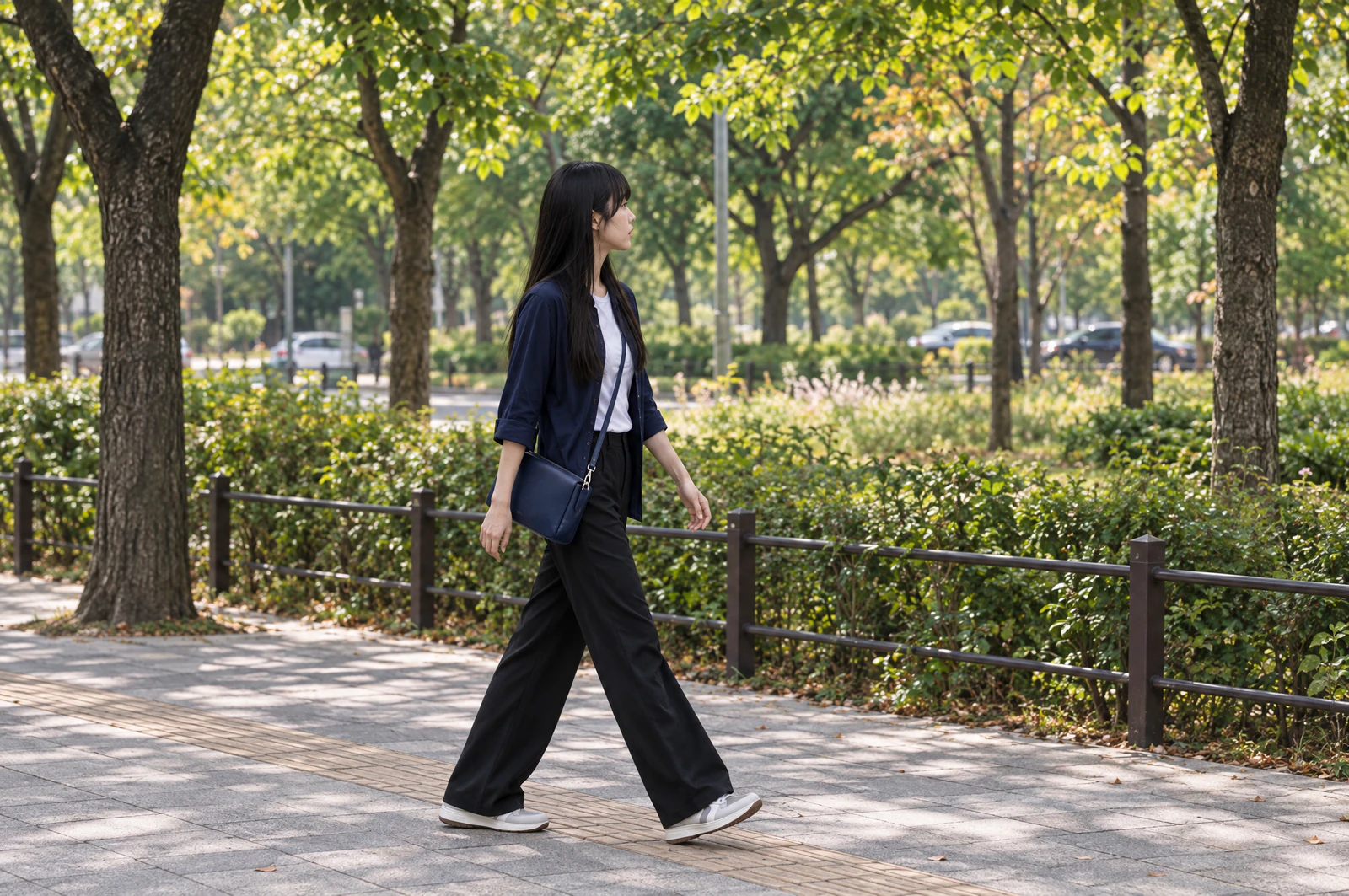
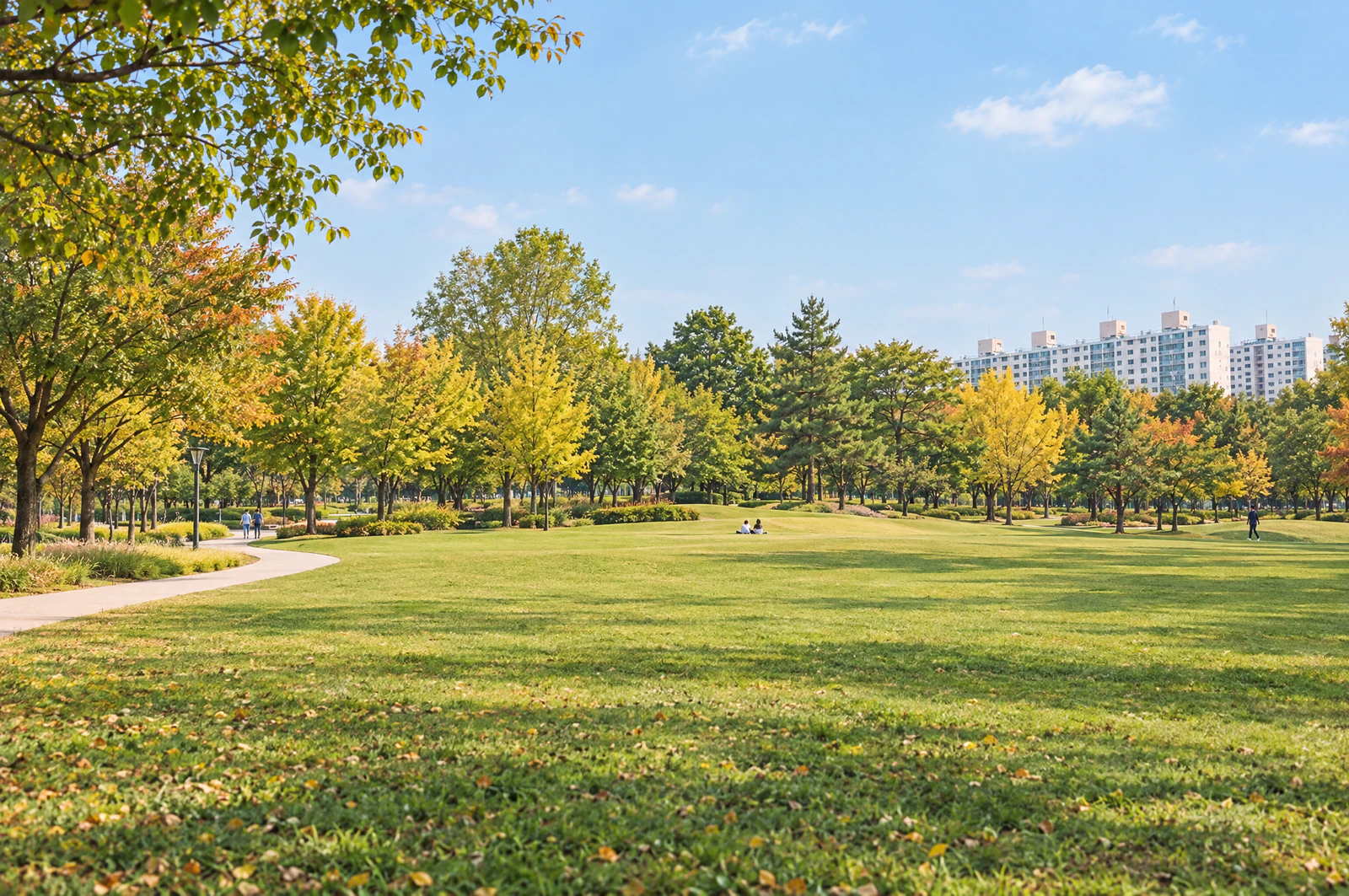
Walking east from the exit, Maya keeps glancing between her list and the street in front of her. The lawns on screen never had edges, because the camera only ever held grass and sky. Arrive on foot and the park begins slowly, somewhere between the main road, the apartment blocks and the museum. In her notebook she writes her first correction: “Even a lawn has an edge.”
The park is open at all times, year-round, and admission is free. Maya notes the opening hours and admission in her notebook.
Where the golf course was
Seoul parks website: during the Imjin War (1592–1598) Japanese forces used the site as a supply base. In the Imo Incident (1882) Qing troops occupied it, and through the Gapsin Coup (1884), the Russo-Japanese War (1904) and from 1906 until liberation in 1945, Japanese used it for military facilities and housing. The UN forces and the US Forces Korea command were set up here during the Korean War, and the Seoul Metropolitan Government took over the land in 1992 and made it a park. Lying between Namsan and the Han River, it links Seoul’s north–south green axis and serves as a central park.
Standing in front of the lawn, Maya starts with the history of the ground itself. According to Seoul’s parks website, Japanese forces used the site as a supply base during the Imjin War (1592–1598), and Qing troops occupied it during the Imo Incident of 1882. Through the Gapsin Coup (1884), the Russo-Japanese War (1904) and from 1906 until liberation in 1945, Japanese used it for military facilities and housing. The UN forces and the US Forces Korea command were set up here during the Korean War, and in 1992 the Seoul Metropolitan Government took over the land and made it a park. Find on a map
The Yongsan-gu Office website gives a little more detail on how it became one. After the Eighth US Army golf course moved out on 31 May 1991, the park opened as a temporary park on 5 November 1992. On 15 November 1997 it was made smaller for the construction of the national museum, and it has stayed that way since. That’s why part one’s museum and this park turn up in the same sentence.
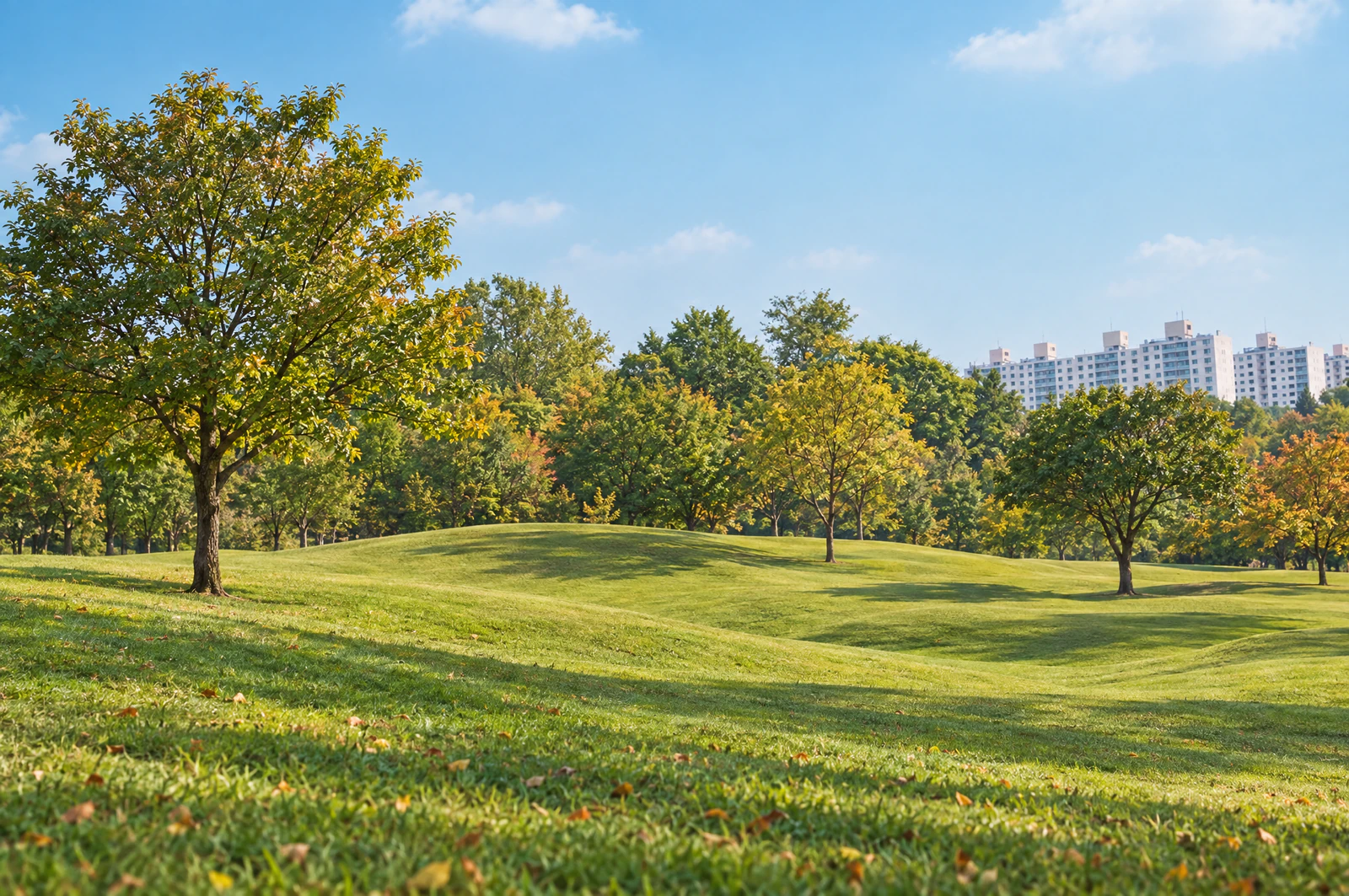
The city’s website explains that on the part of the site once taken up by the golf course, the park was laid out as an open, friendly space built mainly around hills, a lawn plaza and ponds. So the “wide lawn” on Maya’s list was the backbone of this park from the start. Looking towards where the grass rolls along a gentle rise, she copies it into her notebook in shorthand: “Golf course → hills, lawn, ponds.”
The same description adds that, lying between Namsan and the Han River, the park links Seoul’s north–south green axis and serves as a central park. Maya zooms out on her map app for a moment. To the north is the green of Namsan, and to the south, the blue band of the river. A place she only ever saw as a single cropped shot of grass shows up on the map as one square between two greens.
A picnic without the packed lunch
Seoul parks website, general visitor notes: to protect wildlife, bringing in food is prohibited. No camping, cooking or lighting fires. No drinking, singing and dancing, or rowdy behaviour. Take your rubbish home.
The general visitor notes on Seoul’s park page say that bringing in food is prohibited to protect wildlife. The same notes ask visitors not to camp, cook or light fires, to avoid drinking and rowdiness, and to take their rubbish home. Seoul’s public wedding venue page, however, lists packed meals, nearby restaurants or catering as reception options for weddings at the park’s pond plaza, so separately authorised events do have exceptions. Check the latest on-site notice or ask the park office before a regular visit. This time, Maya chooses to go without food. The “packed lunch” on her list is a scene she leaves out today. Find on a map

So Maya chooses the scene again. Thinking it over, what stayed with her from those on-screen picnics wasn’t the food. It was people on the grass in no hurry, and an afternoon where the shadows lengthened as the sun went down. She decides to bring only that. In her bag, just her notebook and a pen: a picnic where nothing gets spread out.
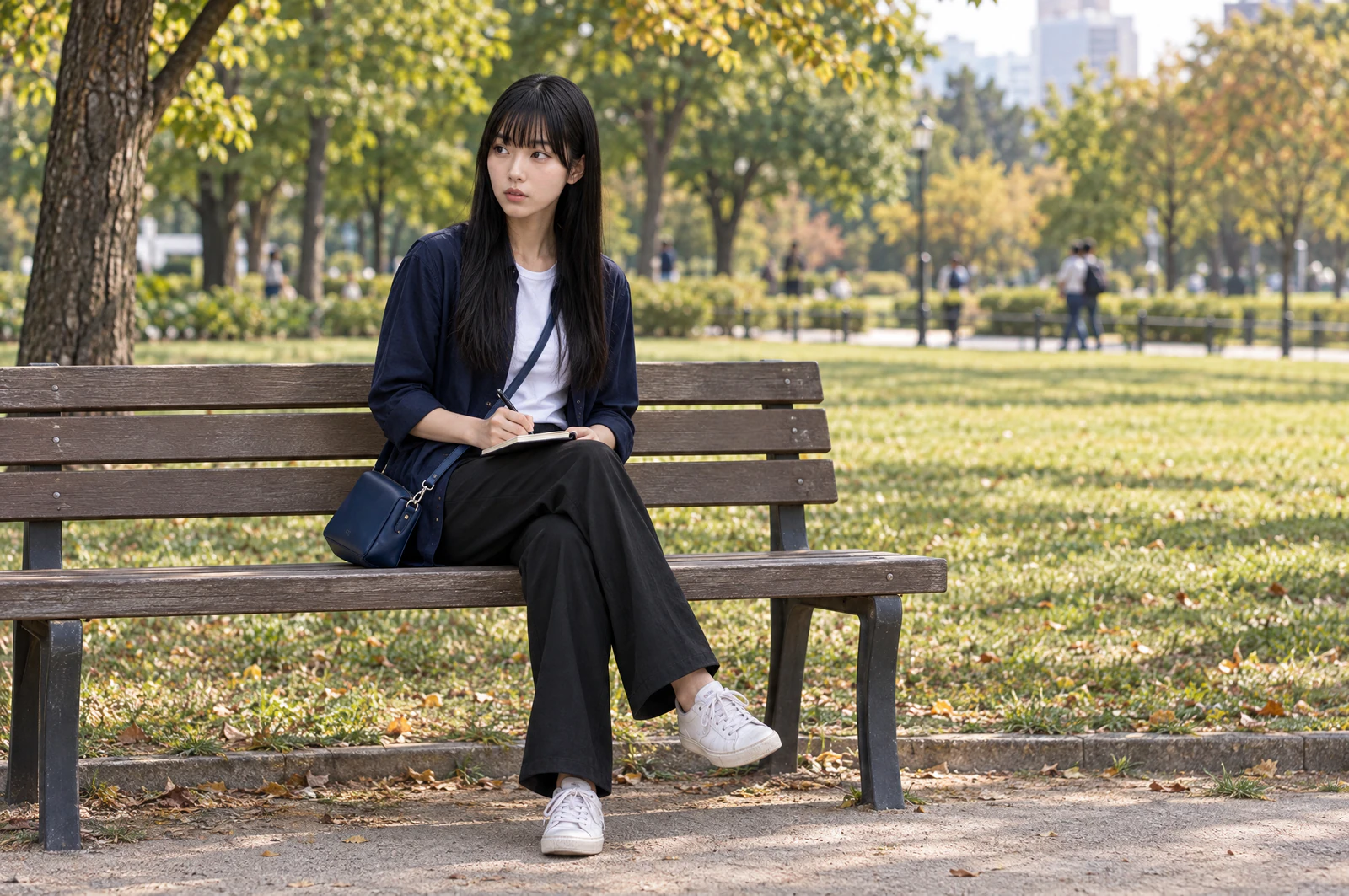
Maya chooses a bench at the edge of the lawn plaza.
Sitting on the bench, the scene on her list looks a little different. With the eating taken out, the breadth of the grass, the breeze and the pace of the occasional passer-by move into the middle of the frame. Maya writes: “Picnic = time spent sitting.”
Four ponds, three pavilions, two raised shelters
Seoul parks website, main facilities. Landscaping: a lawn plaza, four ponds, three pavilions, two raised wooden shelters, a nature study area, a barefoot park and Taegukgi Park. Culture: nine international sculptures. Amenities: drinking fountains, toilets, benches and more.
The city’s website lists the park’s landscaping as a lawn plaza, four ponds, three pavilions, two raised wooden shelters, a nature study area, a barefoot park and Taegukgi Park, with nine international sculptures under culture and drinking fountains, toilets and benches among the amenities. The Yongsan-gu Office website warns that the ponds are deep and asks visitors to take care to keep children safe. Find on a map
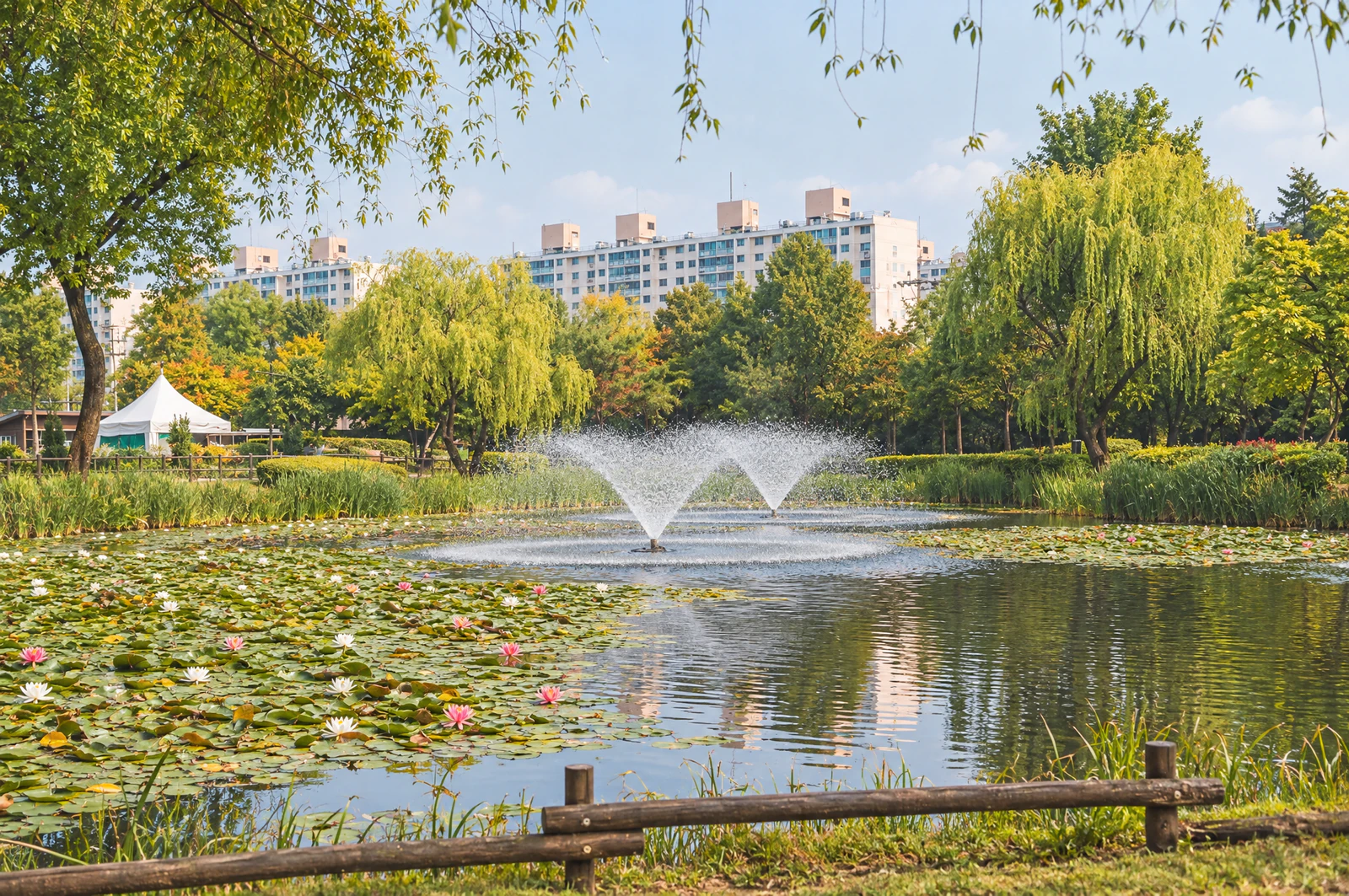
Maya gets up from the bench and heads towards the ponds. In a photograph published by the Korea Tourism Organization, water-lily leaves cover the surface of a pond, a fountain sprays in the middle and willows hang over the edges. It looks a lot like the Seoul park ponds she has seen on screen again and again.
The Yongsan-gu Office website also says cycling isn’t allowed in the park. The paths round the ponds move at walking pace. Maya starts to count the pavilions and shelters one by one, gives up, and instead picks the one spot by the water where she’d most like to sit for a long time. For the first time, her list grows by a scene it didn’t have.
Seventy kinds of tree and a 146-metre barefoot path
Seoul parks website, animals and trees. Trees: ginkgo, zelkova, plane, Korean pine, hawthorn, Korean fir and others, 70 species and 45,000 trees in all. Animals: guineafowl, peafowl, rabbits and others, 33 animals of five species.
There are figures that the city and district websites both give in exactly the same terms: 45,000 trees of 70 species, including ginkgo, zelkova, Korean pine, hawthorn and Korean fir, and 33 animals of five species, including guineafowl, peafowl and rabbits. Find on a map
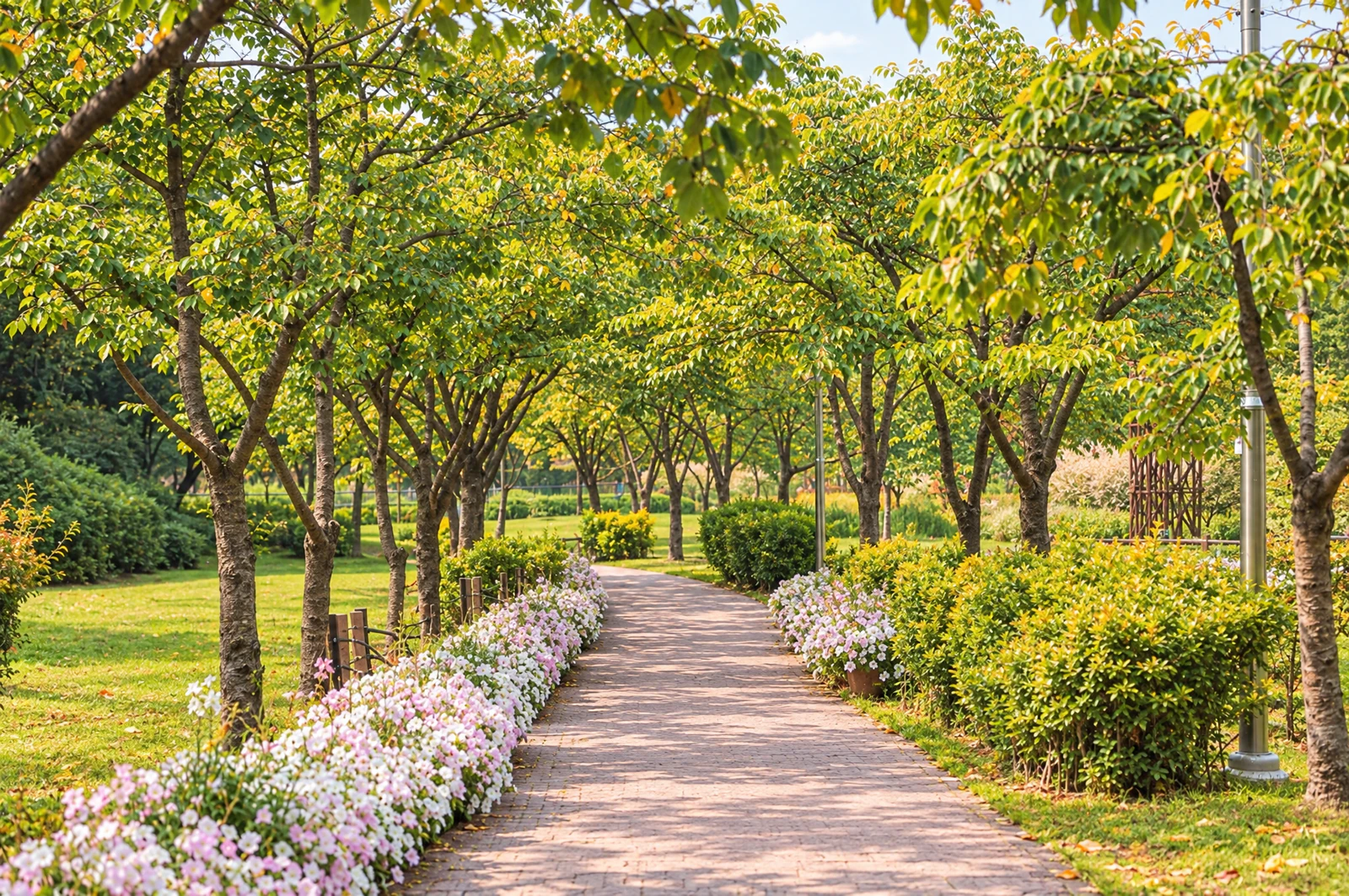
The Yongsan-gu Office website introduces the park as a nature park with lawns, woods, ponds, 2.0 kilometres of walking paths and a nature study area. According to the city’s website, the barefoot park has separate beginner and experienced courses and is 146 metres long. Maya wonders for a moment about taking her shoes off, then decides to walk the earth path alongside it today.
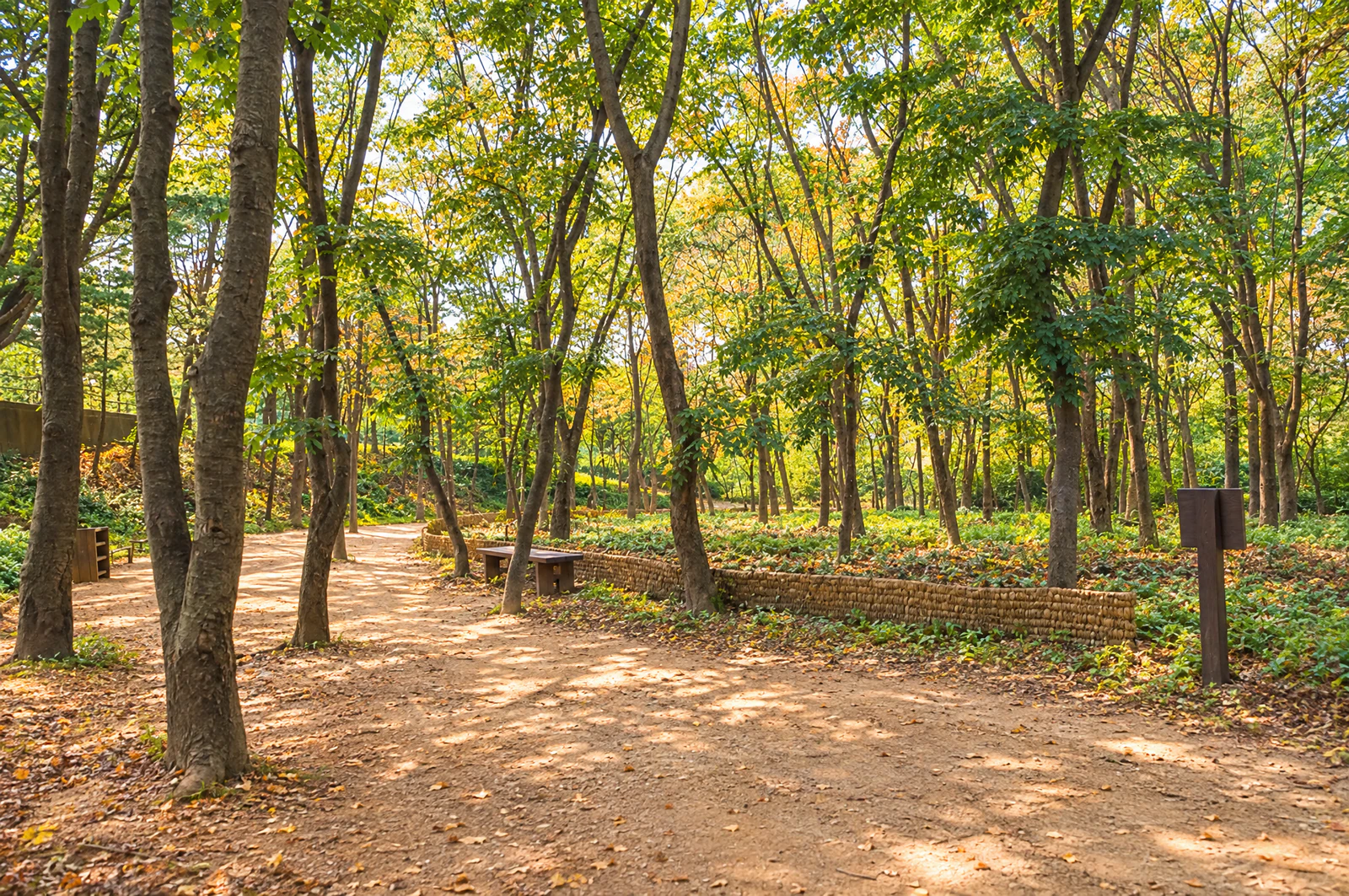
Step in among the tall trees and the sky you saw from the lawn narrows, and the colour of the earth underfoot is the first thing you notice. On screen she had only ever chosen open lawns. On foot, there is shade right beside them. Maya writes her second correction: “Next to the lawn, there’s a wood.”
As the sun gets low, Maya looks back over the lawn once more from the end of the path by the ponds. “Wide lawn, picnic mat, packed lunch” has changed today to this: wide lawn, a bench at the edge, empty hands. The eating is gone, but the long afternoon she loved on screen is still there.
In the fourth part of “Yongsan,” Noah heads to the nearby War Memorial of Korea. The names of wars Maya read in this park’s history today come up again there, in a different way.
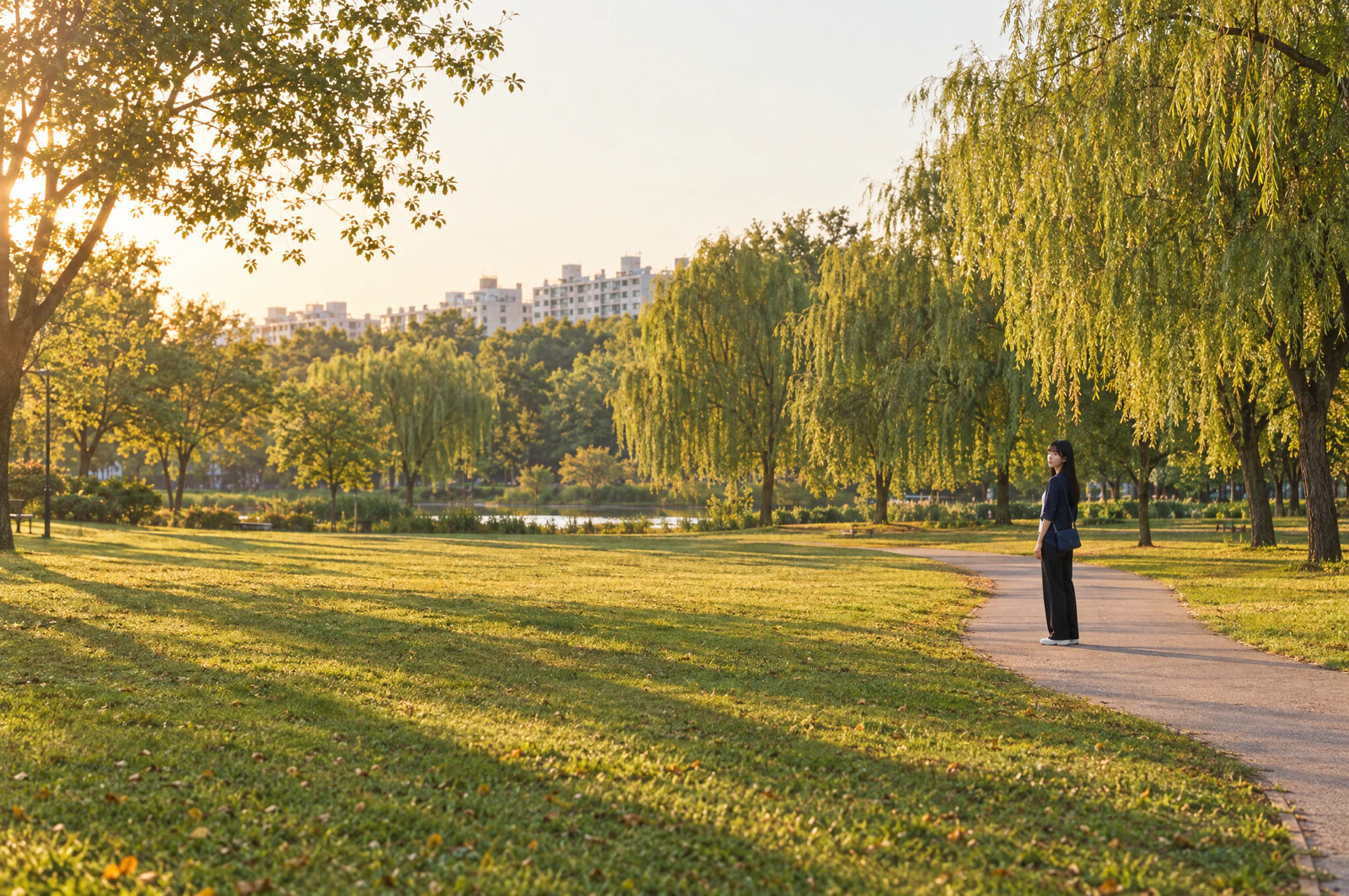
(※ This article includes staged images created with AI.)
Try it on your own afternoon
An editorial suggestion: walk over from Exit 2 of Ichon Station, take in the size of the park from the edge of the lawn plaza, rest on a bench without food, then walk round the ponds and along the woodland path.
A diagram of the order only · not to scale, orientation or the actual shape of the streets.
- From Ichon Exit 2 to the park — Yongsan-gu Office lists Exit 2 of Ichon Station on Line 4, and Ichon and Seobinggo stations on the railway line. Find on a map
- A bench at the edge of the lawn plaza — The general visitor notes on Seoul’s parks website prohibit bringing in food. This time, make it time to sit and rest rather than a picnic lunch. Find on a map
- Round the ponds — The city’s website lists four ponds. Yongsan-gu Office asks visitors to take care with children, as the ponds are deep. Find on a map
- The woodland path and the barefoot park — The barefoot park has separate beginner and experienced courses and is 146 m long (Seoul parks website). Find on a map
Getting there
Yongsan-gu Office websiteChecked 2026.09.29
by subway, use Exit 2 of Ichon Station on Line 4, or Ichon or Seobinggo stations on the Korail line.
Hours & fees
Yongsan-gu Office websiteChecked 2026.09.29
admission to the park is free.
Checked 2026.09.29
Seoul Metropolitan Government, Seoul parks website, Yongsan Family Park overview: hours of use “상시개방” (open at all times).
TourAPIChecked 2026.09.29
Korea Tourism Organization tourist information (TourAPI): open at all times, every day of the year.
Yongsan-gu Office websiteChecked 2026.09.29
after the Eighth US Army golf course moved out on 31 May 1991, the park opened as a temporary park on 5 November 1992. It was reduced in size for the construction of the national museum on 15 November 1997 and has remained so since.
Good to know
Checked 2026.09.29
Seoul parks website, general visitor notes: to protect wildlife, bringing in food is prohibited. No camping, cooking or lighting fires. No drinking, singing and dancing, or rowdy behaviour. Take your rubbish home.
Checked 2026.09.29
Yongsan-gu Office website, park information: cycling is not allowed in the park. The ponds are deep, so take care to keep children safe.
Background7
Seoul parks websiteChecked 2026.09.29
during the Imjin War (1592–1598) Japanese forces used the site as a supply base. In the Imo Incident (1882) Qing troops occupied it, and through the Gapsin Coup (1884), the Russo-Japanese War (1904) and from 1906 until liberation in 1945, Japanese used it for military facilities and housing. The UN forces and the US Forces Korea command were set up here during the Korean War, and the Seoul Metropolitan Government took over the land in 1992 and made it a park. Lying between Namsan and the Han River, it links Seoul’s north–south green axis and serves as a central park.
Seoul parks websiteChecked 2026.09.29
on the part of the site once occupied by a golf course, the park was laid out as an open, friendly space built mainly around hills, a lawn plaza and ponds. Opened 5 November 1992.
Checked 2026.09.29
Seoul Metropolitan Government public wedding venue page (The More Beautiful Wedding), Yongsan Family Park pond plaza: for weddings held at the pond plaza, the page lists packed meals, nearby restaurants or catering as reception options.
Checked 2026.09.29
Seoul parks website, main facilities. Landscaping: a lawn plaza, four ponds, three pavilions, two raised wooden shelters, a nature study area, a barefoot park and Taegukgi Park. Culture: nine international sculptures. Amenities: drinking fountains, toilets, benches and more.
Seoul parks websiteChecked 2026.09.29
the barefoot park has separate beginner and experienced courses (146 m long).
Checked 2026.09.29
Seoul parks website, animals and trees. Trees: ginkgo, zelkova, plane, Korean pine, hawthorn, Korean fir and others, 70 species and 45,000 trees in all. Animals: guineafowl, peafowl, rabbits and others, 33 animals of five species.
Yongsan-gu Office websiteChecked 2026.09.29
a nature park with lawns, woods, ponds, 2.0 km of walking paths and a nature study area.
- Admission to the park is free (Yongsan-gu Office website, checked 29 September 2026).
- Seoul’s parks information lists Yongsan Family Park as open at all times. The Korea Tourism Organization’s tourist information (TourAPI) also lists it as “open at all times” and “open every day” (checked 29 September 2026).
- The general visitor notes on Seoul’s park page say that bringing in food is prohibited to protect wildlife. Seoul’s public wedding venue page, however, lists packed meals, nearby restaurants or catering as reception options for weddings at the park’s pond plaza, so separately authorised events do have exceptions. Check the latest on-site notice or ask the park office before a regular visit. The same notes ask visitors not to camp, cook or light fires, and the Yongsan-gu Office website says cycling is not allowed in the park.
More from this area
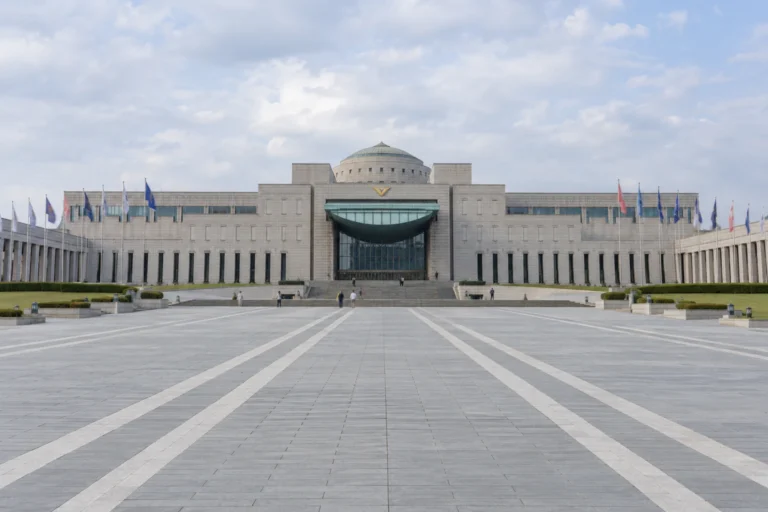
The War Memorial of Korea: One Straight Line from the Plaza to the Door
The War Memorial of Korea’s permanent exhibition halls are free.
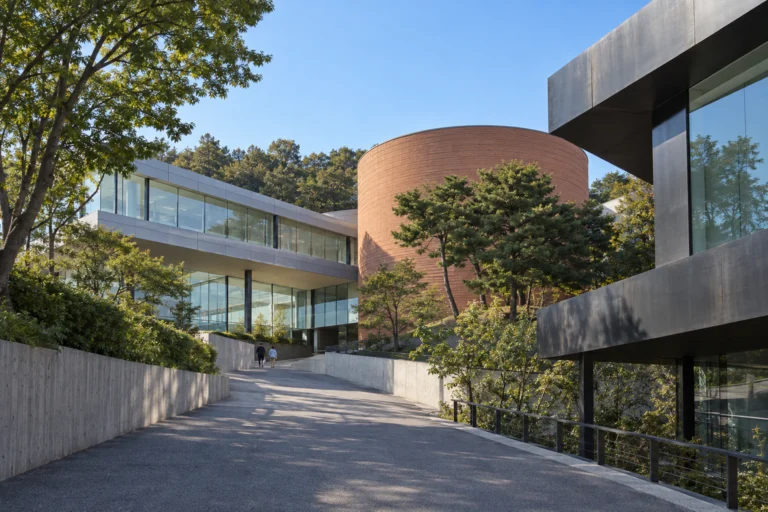
Leeum Museum of Art: Three Scenes on One Hill
The last part of “Yongsan.” Leeum Museum of Art opened in Hannam-dong, Seoul, in 2004, in buildings designed by three architects: Mario Botta, Jean Nouvel and Rem Koolhaas. In photographs it always looked like a single picture. Elena, who reads scenes, climbs the hill and takes it apart into three. The traditional art collection is free, and the museum is closed on Mondays.