SEOUL · SEOCHON
Elena and the day after the snow at Seokpajeong Seoul Museum of Art: the Wednesday the garden was closed, and the Thursday she came back
Closed Mondays and Tuesdays · combined ticket 20,000 won for adults · last admission 17:00 · bus from Exit 3 of Gyeongbokgung Station, get off at Jahamun Tunnel Entrance.Seokpajeong
Elena goes to Buam-dong to see one scene: a snow-covered pavilion. The Wednesday she picks by matching the calendar to the forecast turns out to be a day the garden is shut, so she spends it in the museum, then rings first and comes back the next day.
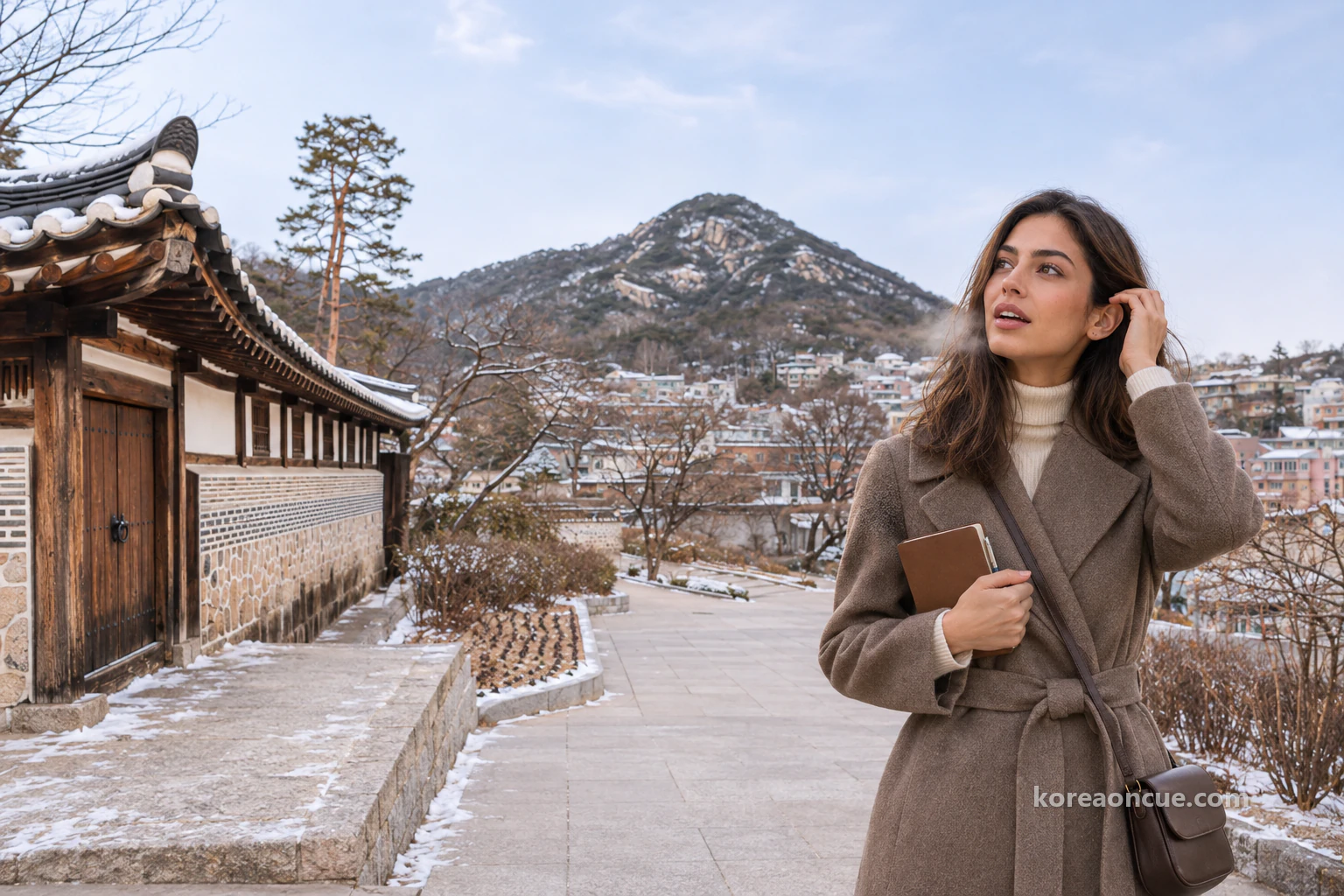
How to get there
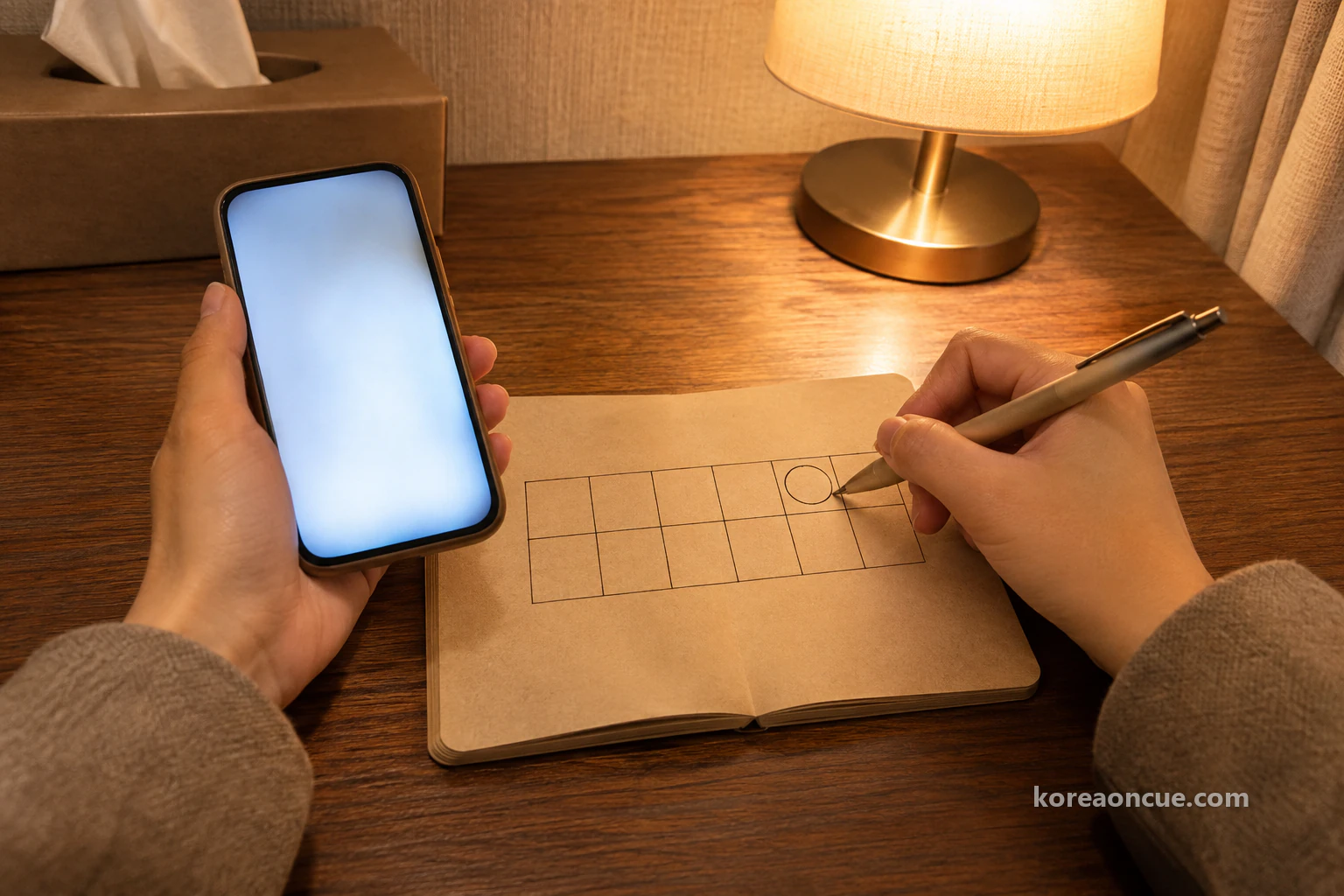
On the night of Sunday 29 November, Elena was looking at the weather forecast at the table in her lodging when she opened her notebook. It had turned cold, and she had only just got out her heavy coat. Elena is 27 and comes from Spain, and she is someone who holds scenes on a screen up against the real Seoul. Snow-covered roof tiles and pine trees turned up all the time in the winter scenes of Korean dramas, and she had always wondered whether that stillness truly existed. At the top of a fresh page she wrote “[S#1. Morning after the snow — pavilion, no footprints]”.

The set Elena had chosen was Seokpajeong Seoul Museum of Art in Buam-dong. On one ticket you see the Seokpajeong garden, once the country villa of Heungseon Daewongun, together with the museum that opened in 2012. A single photo on Seoul’s tourism website had settled it. It showed a small pavilion buried in snow beside a great pine trunk. If the winter she had watched on screen really existed in Seoul, she thought, this was where it would be.
The trouble was that snow doesn’t check the calendar before it falls. When it opens, what it costs, which bus to take and whether you can see the garden in winter: we’ll go through them in the order Elena worked them out, holding the snow forecast against the opening days. Fair warning: Elena went to Buam-dong twice to shoot this one scene. And the second ticket was the price of one phone call she didn’t make.
The Cue — At a glance
Seokpajeong Seoul Museum of Art opens from Wednesday to Sunday, and the only ticket is a single one that combines the museum and the garden. If the garden is the point of your winter visit, choose your day twice. The night before, avoid the garden’s closed days using that month’s operating notice, and on a morning after snow or rain, ring before you leave and ask whether you can see the garden. If it is shut, decide after that call whether to go anyway for the exhibitions or to move your day.
- Station and bus: From Exit 3 of Gyeongbokgung Station on Line 3, branch bus 1020, 1711, 7016, 7018, 7022 or 7212. From Exit 2 or 3 of Gwanghwamun Station on Line 5, 1020, 1711, 7016 or 7018. Get off at Jahamun Tunnel Entrance.Seokpajeong (자하문터널입구.석파정).
- Address and phone: 4-1 Changuimun-ro 11-gil, Jongno-gu, Seoul, 02-395-0100.
- Days and hours: Wednesday to Sunday from 10:00, last admission 17:00. The museum closes at 18:00, and it is closed on Mondays and Tuesdays.
- Ticket: Combined ticket, 20,000 won for adults. The other categories are in the admission table below.
- Bags: You can’t take food or drink inside, water included. Leave umbrellas and backpacks in the storage room next to the information desk.
When is Seokpajeong Seoul Museum of Art closed? Mondays and Tuesdays, and some days just the garden
Seokpajeong Seoul Museum of Art closes every Monday and Tuesday and opens from Wednesday to Sunday. The first forecast Elena saw had snow on Monday night. That would make the morning after the snow a Tuesday, and Tuesday was a day the set was closed. “The weather hasn’t read the shooting schedule,” she said, tapping the Tuesday box with the end of her pen. A few days earlier she had been caught out by a single Monday when trying to ride the City Tour Bus, and this time two days were blocked.
Open in Kakao Map — Gyeongbokgung Station
The next evening the forecast changed, and the snow slid back to Tuesday night. Snow on Tuesday night meant the next morning would be Wednesday, a day the doors open. If it fell on the night of a closed day, the first person through the doors when they opened would get the first scene. Elena drew a circle round Wednesday 2 December. Snow falling while the set was closed and a shoot the moment it opened: it looked like a schedule someone had arranged on purpose.
But this place’s calendar had two lines. On the museum website’s NOTICE board, Elena found a post called 운영 안내, the operating notice. It listed days when the museum opens as normal but the Seokpajeong garden alone is closed. The reason given was an internal event, and in the notices for May and June 2026 the list included Saturdays and Sundays. So “it’s the weekend, the garden must be open” doesn’t work here.
The table below is the calendar Elena copied into her notebook, and the column to look at first is the one on the far right. Even on the same Wednesday, that column decides whether you can see the garden. The notices for May and June 2026 also had a line giving 20% off a museum ticket on the garden’s closed days. That line was no great comfort to Elena. For someone going to see one pavilion, a day the garden is closed was simply a day to move.
| Day | Museum | Seokpajeong garden | What to look at before you leave |
|---|---|---|---|
| Wednesday to Sunday | Opens 10:00, last admission 17:00 | Opens 10:00, last admission 17:00 | That month’s operating notice |
| Monday, Tuesday | Closed | Closed | — |
| A Monday or Tuesday that is a public holiday | As that month’s notice says | As that month’s notice says | That month’s operating notice |
| Garden closed day | Open | Closed | That month’s operating notice |
| Snow or rain on a normal opening day | Open | May be restricted | Phone on the day, 02-395-0100 |
Elena went through the board reading only the posts titled ○년 ○월 운영 안내, the operating notice for a given year and month. There are two lines to look for inside. Dates after 석파정 휴관일 are days the garden is closed, and dates after 정상개관 are days that open even though they may look like closed days. Elena copied them onto the calendar in her notebook, a cross for closed and a circle for open. As she moved them from the screen to the page, she felt the days she could stand in front of the pavilion narrowing little by little.
Public holidays are the one place you can’t trust the closed-day boxes as they stand. Children’s Day on 5 May 2026 was a Tuesday, and it appeared in that month’s operating notice as a normal opening day. So in a week with a holiday on a Monday or Tuesday, look at that month’s notice first. If that month’s post isn’t on the board, ring 02-395-0100. Elena wrote “[2 Dec, morning — one call to the museum]” and closed her notebook, pleased with herself.
The snow-covered pavilion wasn’t just Elena’s imagination. On Seoul’s tourism website, a photo of the pavilion under snow sits right alongside one of autumn leaves. The front page of the museum’s website also carries a video called 석파정 겨울산책, a winter walk at Seokpajeong, next to its spring videos. A place that goes by the name “the garden the king loved” had given winter walks a billing of their own. Seeing that title, Elena felt surer about her plan to come in winter.
How much is Seokpajeong admission? One combined ticket, and you can’t buy the garden alone
Admission is one combined ticket, 20,000 won for adults. At first Elena meant to buy only a garden ticket, stand in front of the pavilion for a bit and leave. She saw it as a shoot that needed just one lead actor. But the visitor information had a line saying there was no separate entry to Seokpajeong. This one ticket covers Seokpajeong and the whole museum, and there is no way to go into Seokpajeong by itself.
| Category | Who | Price |
|---|---|---|
| Adult | — | 20,000 won |
| Student | Aged 13 to 18 | 15,000 won |
| Child | Aged 12 and under | 13,000 won |
| Concession | People aged 65 and over, national merit recipients and their bereaved families, serving military personnel, holders of a disability welfare card | 13,000 won |
| Under 36 months | Bring proof | Free |
The rows to take care with are Concession and Under 36 months. Both need ID or proof. The timetable isn’t split by season and the price doesn’t change in winter either, so even if you only meant to see the garden, count the museum in and allow half a day. Elena crossed out her plan to book just one lead and drew an extra museum box in that day’s schedule. Thinking of it not as a bit part thrown in free but as a second lead made her feel a little better.

She read the rule on drinks at the same time. You can’t take any food or drink into the museum or Seokpajeong, water included. Having downed a hot coffee in three gulps and burnt her tongue the week before, Elena now looks for this line first wherever she goes. The flask she had meant to drink from in front of the snow-covered pavilion would stay on the table at her lodging. Don’t bring lunch in either: it’s better to eat before you go in.
How to get to Seokpajeong Seoul Museum of Art: bus from Exit 3 of Gyeongbokgung Station to Jahamun Tunnel Entrance.Seokpajeong
The easiest way is to come out of Exit 3 of Gyeongbokgung Station on Line 3 and take a branch bus. It is 2.3 km from Exit 3 to the museum, and the bus fills in this stretch over to Buam-dong. On Tuesday afternoon at her lodging, Elena copied this table into her notebook before anything else. She had picked Gyeongbokgung Station because Line 3 was close, and it was only then she learned that the bus numbers differ by starting station.
| From | Exit | Bus | Get off at |
|---|---|---|---|
| Line 3 Gyeongbokgung Station | Exit 3 | 1020, 1711, 7016, 7018, 7022, 7212 | Jahamun Tunnel Entrance.Seokpajeong (자하문터널입구.석파정) |
| Line 5 Gwanghwamun Station | Exit 2 or 3 | 1020, 1711, 7016, 7018 | Jahamun Tunnel Entrance.Seokpajeong (자하문터널입구.석파정) |
Elena underlined the Gyeongbokgung Station row and decided to take whichever of those buses came first. From Gwanghwamun Station there are only four numbers, but you get off at the same place from either station. So Elena put the stop’s name into her map app before she thought about bus numbers. For someone who forgets where to get off once she starts looking out of the window, that was the safer way. If Buam-dong is new to you, do the same before you board.
There is one spot here where the names get confusing. Seoul’s bus stops include both 자하문터널입구.석파정 (Jahamun Tunnel Entrance.Seokpajeong) and 석파정.서울미술관 (Seokpajeong.Seoul Museum). The second sounds more likely, but the stop the museum gives for its bus numbers is the first one, Jahamun Tunnel Entrance. Elena too wrote the second name in her notebook at first, then struck it out and corrected it to the first. A name that looks right on a screen isn’t always the right name: she had lost count of how many times this trip had taught her that.

If you come by car, head from Gyeongbokgung Station towards Segeomjeong Junction and Sangmyung University, then turn left at the entrance to Jahamun Tunnel. The car park is very small, so the museum itself asks people to use public transport. Parking is for exhibition visitors only. It’s free for 2 hours on weekdays and 1 hour 30 minutes on weekends and public holidays, then 1,000 won for every 10 minutes after that. The car park closes at 18:10 and you can’t take your car out after that, so if you drive, keep an eye on the clock.
Can you see the Seokpajeong garden the day after snow? Ring before you leave
If you want to see the garden the day after snow, ring 02-395-0100 before you leave home. On days of snow or rain, visits to the outdoor areas may be restricted, and you’re meant to ask the museum on the day how things stand. Elena had read this line and even written it in her notebook. And yet on Wednesday morning, she didn’t make the call.
On Tuesday night the snow came down even harder than forecast. Opening the window before dawn, Elena said a quiet “Action” to the white rooftops. A few flakes were still falling, so she grabbed just her umbrella, threw on her coat and ran out. She meant to ring from the bus, then clean forgot, staring out at the snow-covered houses. From Exit 3 of Gyeongbokgung Station she rode the 7018 to Jahamun Tunnel Entrance.Seokpajeong, and the notebook never opened once.

At the information desk, Elena held out her translation app and asked how things were on the garden side today. The answer was short. Because of the heavy snow overnight, the outdoor areas were closed today, and there would be no 15:00 Seokpajeong talk either. The very snow she had waited three days for had shut the garden, and even after hearing that, Elena stood gazing for a while at the white light outside the window.
In dramas, when it snows, the lead turns up a coat collar and walks out into the garden. On a real snowy morning visitors’ safety came first, and that was something not even the scriptwriter could do anything about. When she opened her notebook, her own handwriting looked back up at her: “[2 Dec, morning — one call to the museum]”. Beside it, in very small letters, Elena wrote “[director’s error]”.

Among the days the garden shuts, some you can see coming and some you can’t see until the day itself. Days closed for an internal event go up in the operating notice, while days closed by snow or rain you have to ask about on the day. So look at the calendar once the night before, and make one call in the morning. Elena had done the first carefully and skipped the second. Belatedly, her notebook gained one more line: “[script the day before, weather on the day]”.
There is one lesson to take from Elena’s mistake. If you ring in the morning and the garden is shut, the museum is your only reason to go that day. If it’s an exhibition day, go as planned, and if it’s a garden day, move it. Even if the snow has stopped, you can’t tell how the garden is just by looking out of the window, so make the morning call all the same.
When you ring, one sentence will do: “오늘 석파정 정원 관람할 수 있나요?” (“Can I visit the Seokpajeong garden today?”). If your Korean is shaky, it’s fine to put it in a translation app ahead of time and read it off the screen. Make this one call in the morning and your day is settled before you board the bus. The shortest line in Elena’s notebook turned out to be the most expensive.
What can you do at the museum when the garden is closed? Talk times and what to leave at the desk
Instead of heading back, Elena decided to stay at the museum. The ticket combined the garden and the museum, so all she had to do was turn today into a day for shooting the indoor sets. In her notebook she wrote “[wet-weather cover — interiors]”. She left her wet umbrella in the storage room next to the information desk. Items that get in the way of visiting, such as backpacks, hiking gear and umbrellas, have to go there.
Before going into the galleries, Elena read the museum’s introduction on her phone. Seokpa Munhwawon, the cultural body behind it, had acquired Heungseon Daewongun’s villa in 1997, and in 2012 it opened the museum. So the body that took on the garden first went on to open the museum, which meant the garden shut to her today and the galleries in front of her had been one household from the start. Thinking of it that way, a day spent in the museum instead of the garden felt less unfair.
Now it was time to walk with the notebook. You can take photos in the galleries, as long as you don’t use flash. The museum holds many works by Lee Jung-seop, Chun Kyung-ja, Na Hye-seok, Park Soo-keun and Shin Saimdang, and since one ticket covers the whole museum, put the annexe, M2, in your plan too. Exhibitions change from time to time, so see what’s on under EXHIBITION on the website before you go.
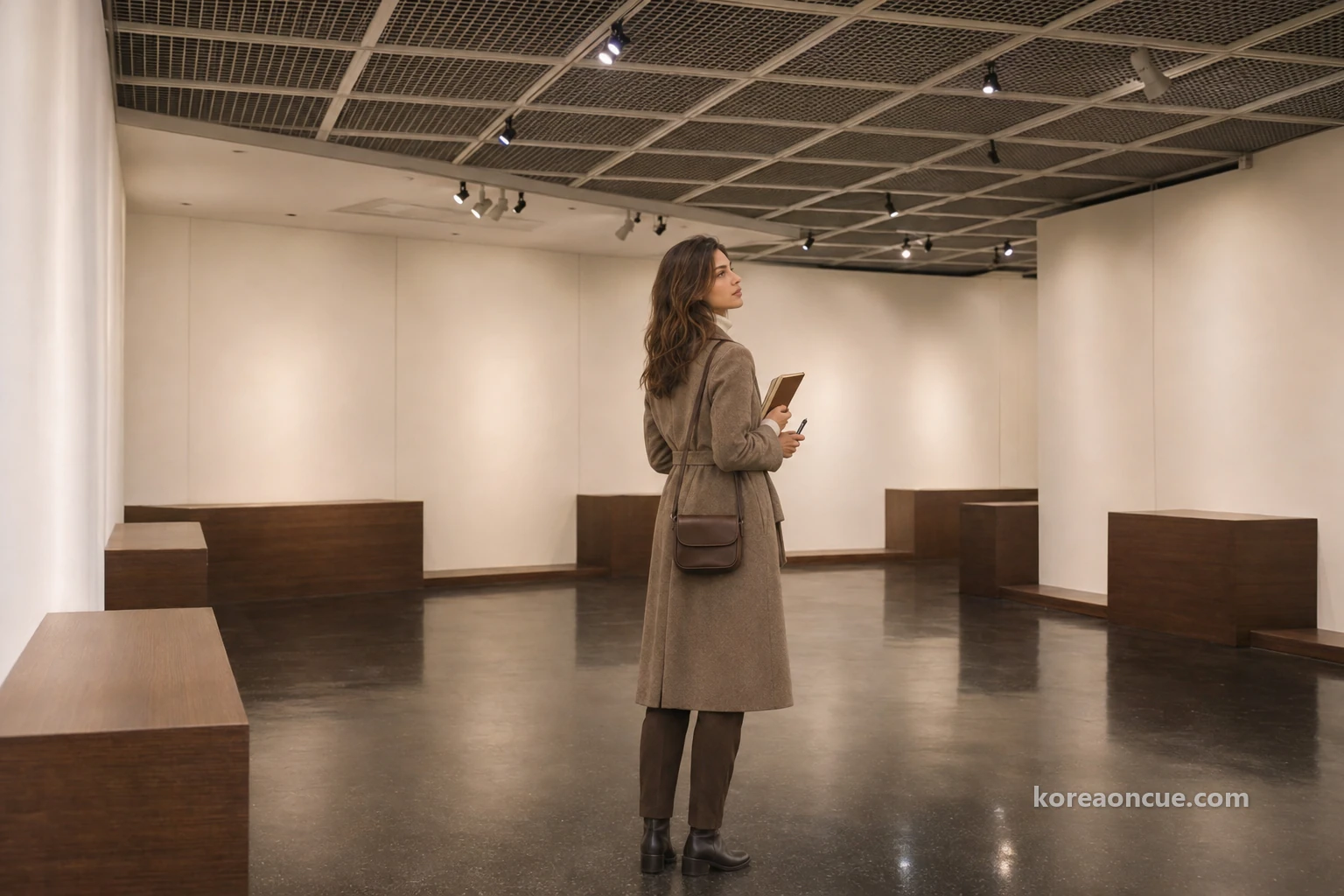
That day Elena measured how long she stood in front of the paintings in cut lengths. She walked slowly, noting rooms where she found herself lingering as “[long take]” and rooms she passed quickly as “[jump cut]”. It was a little funny that someone who had come to see one snow-covered pavilion was now editing every gallery. Still, it wasn’t bad. Elena had seen plenty of dramas where a scene shot as plan B ended up in the final cut.
If you’d like to hear a talk, look at the timetable first. The regular talks run from Wednesday to Sunday and go ahead only when three or more people gather. So it helps to plan your day so you can see things on your own even if a talk doesn’t happen. Elena also looked up this timetable on her phone and copied it into her notebook. In the table below, the column to look at first in winter is the one on the far right.
| Talk | Time | Where it starts | When it is cancelled |
|---|---|---|---|
| Exhibition talk | 11:00, 14:00 | Entrance of the exhibition hall | Depending on conditions on site |
| Seokpajeong talk | 15:00 | Seokpajeong entrance | Depending on conditions on site, or in rain, extreme heat, heavy snow or a cold snap |
The 15:00 slot in the table is especially fragile in winter. A cold snap cancels it even with no snow, so don’t stake your day on this one talk. If you really want to hear the story of the garden, pick a day when the weather has eased. The exhibition talks have no weather condition, but they still need three people and can drop out depending on conditions on site, so plan them as nice to have and fine to miss. Elena struck out that day’s 15:00 box and moved over to the 14:00 box.
If you arrive late in the afternoon, count back from last admission first. Last admission is 17:00 and the museum closes at 18:00, so if you go in right at the cut-off you’ll have just one hour inside. With an annexe as well, an hour goes quickly. That day Elena didn’t leave the museum until it was nearly 18:00. When she came out with the umbrella she had left, the cold had settled outside, and the top line of her notebook was still unchanged.
Can you go back the next day? Ask by phone, buy one more ticket, and what to see in the garden
Elena went back the next day, Thursday 3 December. This time, before leaving, she brought up the sentence in her translation app and rang the museum. Only after hearing that she could see the garden today did she put on her coat. Buying one more ticket, she wrote in her notebook “[reshoot — extra budget 20,000 won, reason: didn’t call]”. For the price of one phone call she didn’t make, it was rather expensive.
Seokpajeong is a Seoul Metropolitan Tangible Cultural Heritage, designated in 1974. It was the villa of Heungseon Daewongun, father of King Gojong, and it originally belonged to Kim Heung-geun. When Kim lived there it was called Samgyedong Jeongsa, after the characters carved on the rock behind. The name is said to have been changed later to Seokpajeong, with the Daewongun’s pen name becoming Seokpa too. After the Korean War it was also used as an orphanage and a hospital, so this set has changed roles several times.
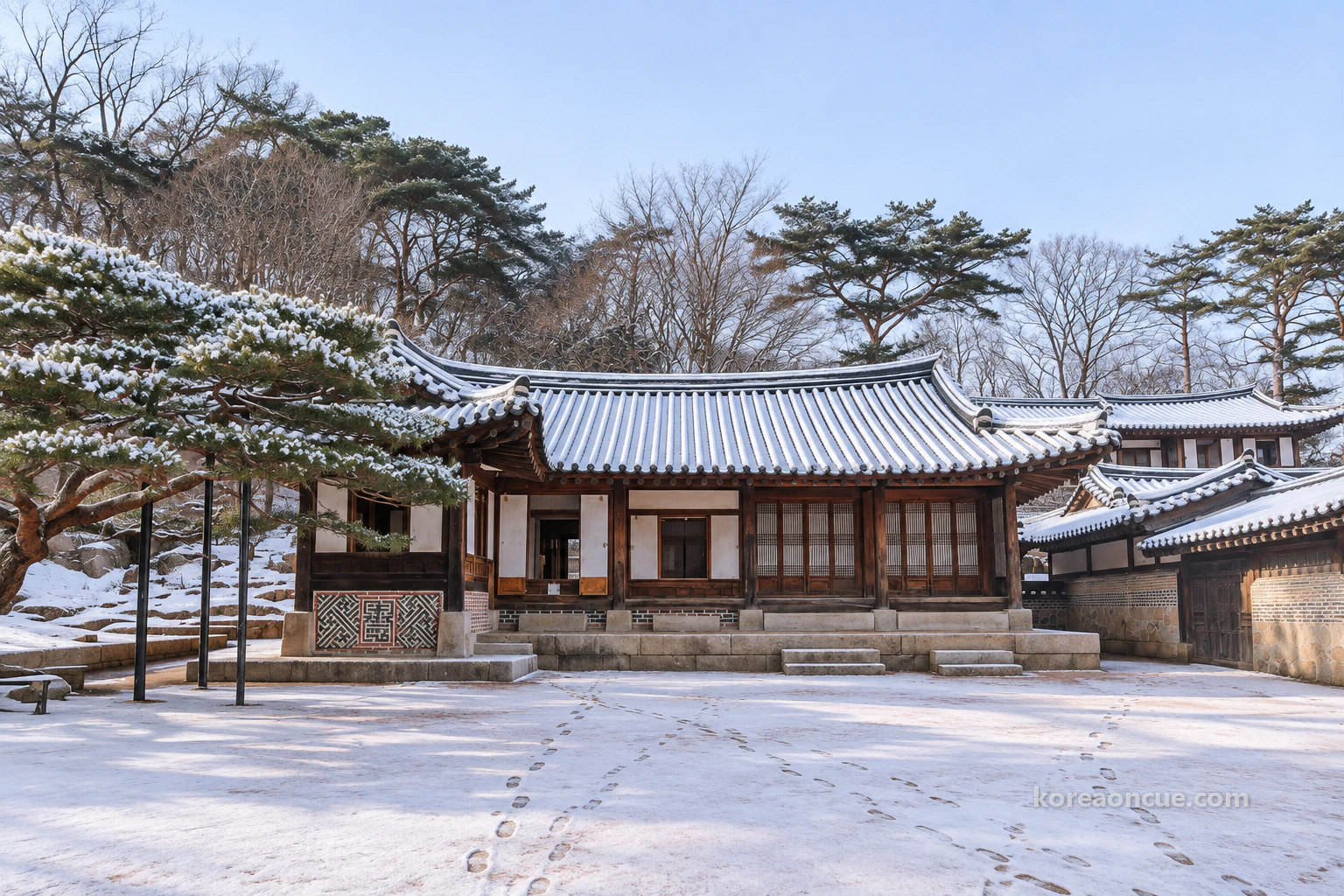
Standing in the front yard, she saw her first stage direction collapse. There was still snow, but several lines of footprints already ran across it. In a drama the lead is the first to step on the snow, but in real life someone had got there first. Elena laughed quietly at the sight and looked up. From this front yard you can see out over the Buam-dong area, so she added the snow left on the roofs to her notebook as an unscheduled scene.
In the yard, old pines spread their branches like an awning. In the middle of the stream coming down from the rocky hill to the west, a platform called a pyeongdae was built up, and the building raised on it is Yususeongjunggwanpungnu. The pavilion Elena had come to find also stood beside a great pine, between the rocks and the stream. The pavilion in this garden goes with a phrase about scenery that “embraces the water, with clouds for a blind”. Elena copied the phrase into her notebook and read it twice under her breath.
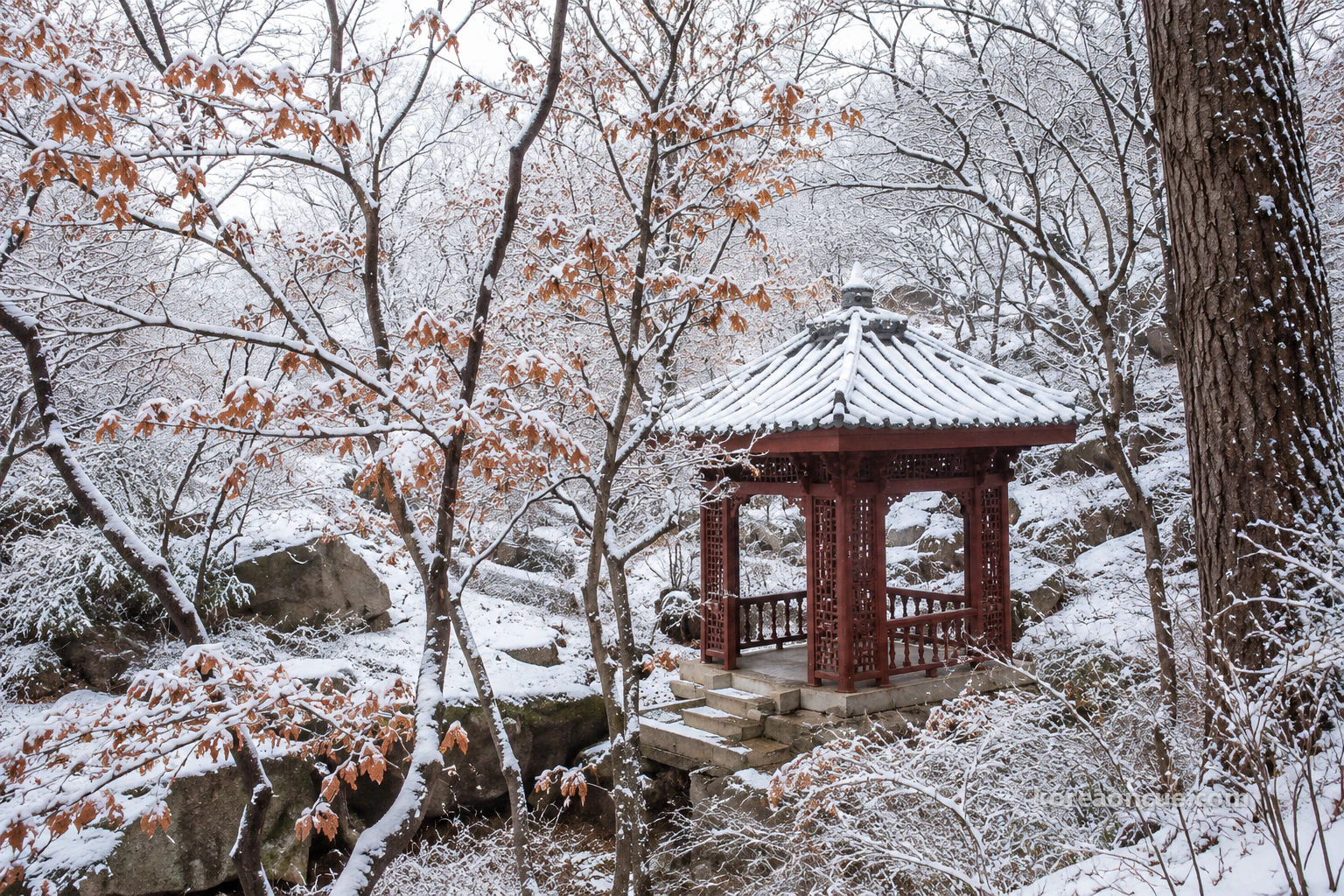
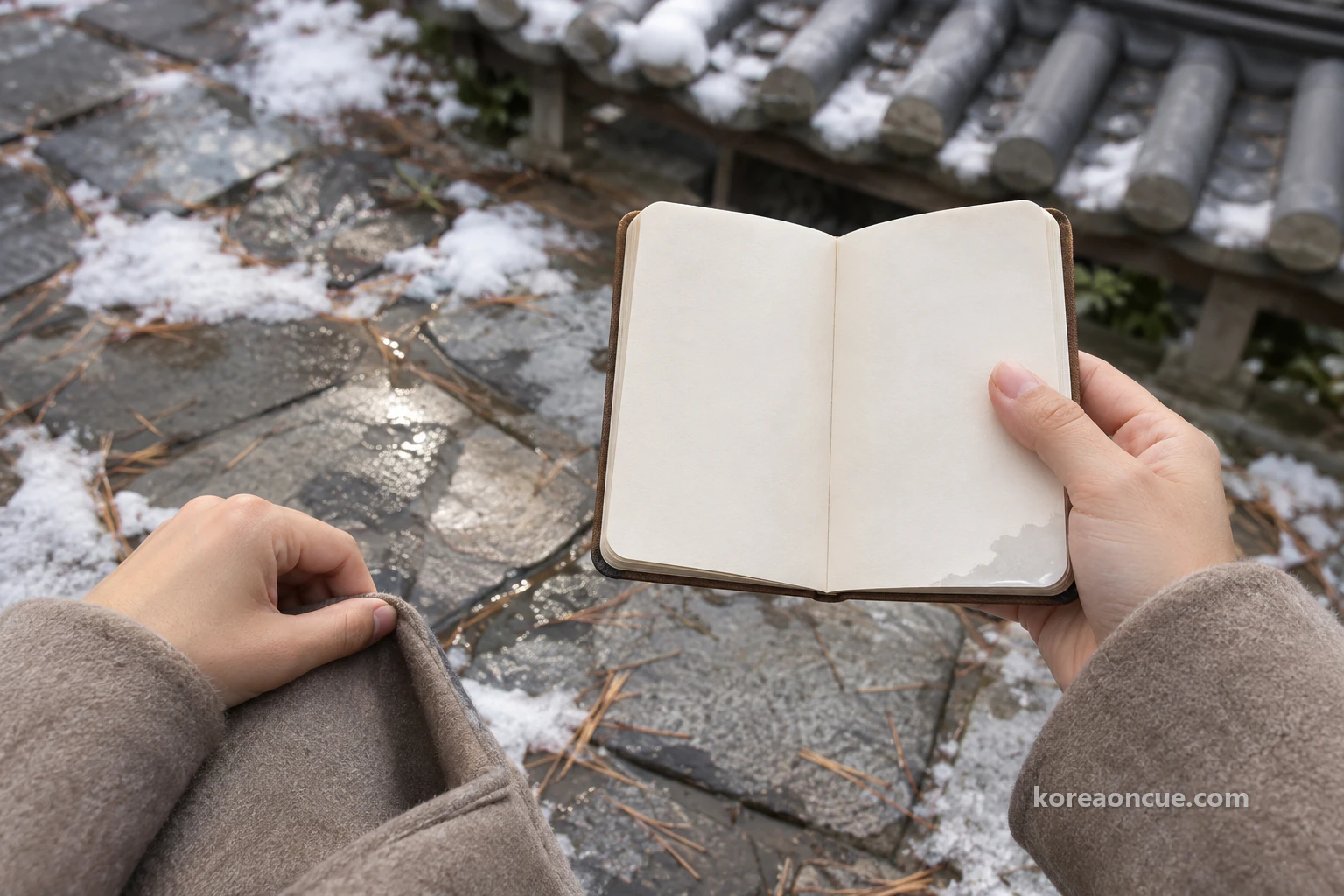
Elena found a spot like the one in the photo, opened her notebook and took out her pen. Just as she was finally about to put a tick beside “[S#1]”, a lump of snow dropped from the pine branch above her head. It landed exactly in the middle of the notebook, and the writing spread in blue. “Cut! Who just threw snow!” Elena shouted, and then she laughed by herself for a long while. One pine tree had ruined the scene she had waited four days for.

In the garden, look too for the three characters “三溪洞 (Samgyedong)” carved into the rock behind the old site. It is the name from before it became Seokpajeong, still there on the rock, and Elena stood in front of it for a long time. There is also one thing you won’t see here. The detached hall that served as the sarangchae, the Seokpajeong annexe, was moved to Hongji-dong in Jongno-gu in 1958. Elena, who had expected everything to be gathered in one place like a scene on screen, read that part and nodded.
Leaving the garden, Elena still had some of her ticket’s worth left. A room she had passed yesterday as a “[jump cut]” was on her mind, so she went into the museum. The museum describes itself as aiming to be a museum where the viewer becomes the creator. To Elena, who had been going round editing every gallery, that was rather nice to hear. Standing longer today in front of the room she had seen only briefly yesterday, she changed that box to “[re-edit]”.
Garden or museum first in winter? The garden first, with last admission at 17:00
In winter, see the garden first and the museum afterwards. The garden depends on the weather and the light, while the galleries stay the same after dark. Winter afternoons get dark quickly. If you arrive for 10:00 and walk the garden first, you can make the most of the daylight outdoors. On her second day Elena too went into the museum only after she had walked all of the garden.
Only on a day when you want the 15:00 Seokpajeong talk should you flip the order. Arrive in the morning, begin with the 11:00 exhibition talk or the galleries, and head to the Seokpajeong entrance in time for 15:00. For that to work there can’t be rain, heavy snow or a cold snap that day, so ask in your morning call whether the talk is on as well. Elena wouldn’t choose this order herself. She is someone who would find it more of a pity to lose the morning light waiting for one talk.
On a day with a cold wind, wrap up warm. You can’t have hot drinks inside, so look to your gloves and pockets for warming your hands. Elena briefly regretted leaving her flask behind, then remembered burning her tongue the week before and changed her mind. The museum also asks visitors to take extra care on days of snow or rain, so wear shoes that won’t slip if there’s snow on the ground.
If you’re coming with a wheelchair or pushchair, the museum has a lift, an accessible toilet and a baby-changing table, plus an audio guide service. For nursing and nappy changing, ask at the information desk. If you want to go as far as the garden with a wheelchair or pushchair, ask about the way during your morning call too. Just as Elena’s day turned on one phone call, this is also a question best asked before you set out.
The order for choosing your Seokpajeong day: weekday, operating notice, phone call on the day
You can choose your winter day for Seokpajeong in three steps. First, pick a day between Wednesday and Sunday. Next, cross off the garden’s closed days using that month’s operating notice, and if the notice isn’t there, ask by phone. Finally, if there has been snow or rain, ring again that morning before you leave. Outdoor restrictions for rain don’t depend on the season and the talk’s cancellation conditions include extreme heat too, so this same order works in summer as well.
Coming out of the museum, Elena spread open her smudged notebook as if to dry it. The writing had blurred, but the words “no footprints” could still be read. In two days, not a single cut had been shot as directed. On the first day the set was shut, on the second day the footprints got there first, and a pine tree threw snow that wasn’t in the script. Even so, Elena decided not to tear out the page.
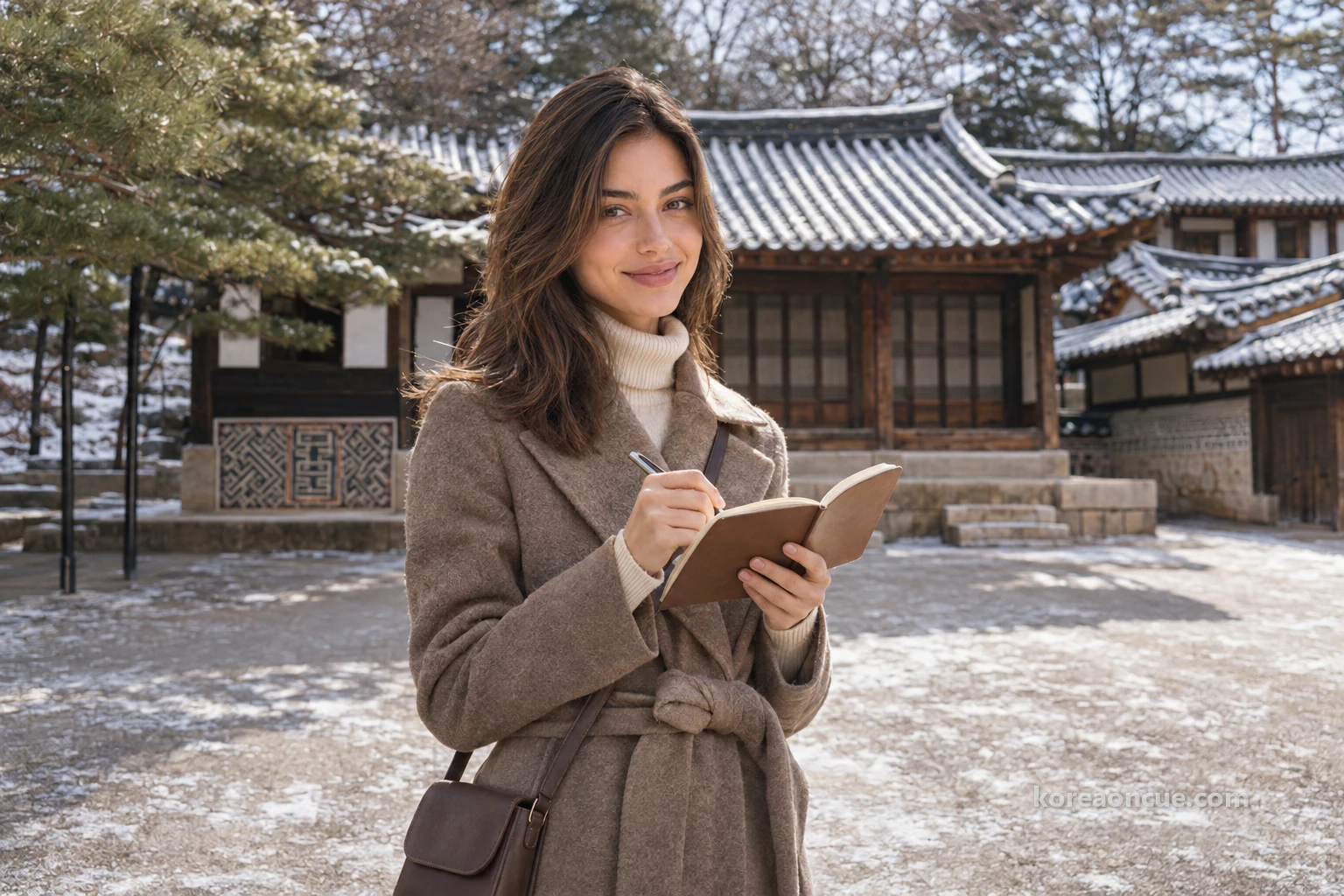
Elena struck through “no footprints” on the first line and wrote beside it “plenty of footprints — this one’s the real one”. The winter on screen had been silent, but real winter held people who got there first, a wet umbrella and one phone call. Waiting for the bus back, Elena drew a box for the next scene. If she came again in spring, she wanted to see how the same spot would change. Next time she would ring before she left, and open her notebook a little less under the pine.
Common Mistakes
Assuming the weekend means the garden is open
The garden’s closed days in the May and June 2026 notices included Saturdays and Sundays.
Writing it in your notebook and not calling
That is where Elena’s second ticket came from.
Looking for a garden-only ticket
Elena too had to rewrite her plan to book just one lead.
Noting down the more likely-sounding stop name
Elena also wrote 석파정.서울미술관 and then struck it out.
Packing a flask
If you meant to drink in front of the pavilion, leave it on the table where you’re staying.
FAQ
Can I bring a pet?
No. Pets can’t enter the museum, Seokpajeong or the car park. Guide dogs are the exception.
Can I use a kick scooter or a drone?
No. Kick scooters, electric scooters and drones aren’t allowed.
Is there somewhere to smoke?
Every space is non-smoking.
Recap — 30 seconds before you go
- Decide first whether today is about the garden or the exhibitions
- If it’s the garden: the operating notice the night before, a phone call on a morning after snow or rain
- In winter, arrive at opening time and walk the garden first
Sources
- Seokpajeong Seoul Museum of Art — Visitor information (Korean)Open Wednesday to Sunday, closed Monday and Tuesday · 10:00–18:00, last admission 17:00 · combined ticket prices and concessions, no separate entry to Seokpajeong · outdoor restrictions in rain or snow and asking on the day · no food or drink, storage room · photography and parkingchecked 2026-11-06
- Seokpajeong Seoul Museum of Art — CONTACT (Korean)Branch bus numbers from Gyeongbokgung Station Exit 3 and Gwanghwamun Station Exits 2 and 3 · getting off at Jahamun Tunnel Entrance · address · route by carchecked 2026-11-06
- Seokpajeong Seoul Museum of Art — Regular talks (Korean)Wednesday to Sunday, exhibition talks at 11:00 and 14:00, Seokpajeong talk at 15:00 · three or more people needed · cancellation depending on conditions · weather cancellations for the Seokpajeong talk · starting pointschecked 2026-11-06
- Seokpajeong Seoul Museum of Art — May 2026 operating notice (Korean)Partial closure of Seokpajeong for internal events, closed days including weekends and the 20% ticket discount on those days · normal opening on Tuesday 5 May (a past schedule, used to show how the notice reads)checked 2026-11-06
- Seokpajeong Seoul Museum of Art — About (Korean)Seokpa Munhwawon’s acquisition of the Heungseon Daewongun villa in 1997 and the opening of Seoul Museum of Art in 2012 · a museum where the viewer becomes a creatorchecked 2026-11-06
- Seoul Tourism Organization — Seokpajeong Seoul Museum of Art, Buam-dong (Korean)2.3 km from Gyeongbokgung Station Exit 3 · the same prices · a photo of the snow-covered pavilion · phone 02-395-0100checked 2026-11-06
- Korea Tourism Organization, Accessible Tourism — Seokpajeong Seoul Museum of Art (Korean)Holdings by Lee Jung-seop, Chun Kyung-ja, Na Hye-seok, Park Soo-keun and Shin Saimdang · the view of Buam-dong from the front yard · lift, accessible toilet, baby-changing table, audio guidancechecked 2026-11-06
- Korea Heritage Portal — Seokpajeong (Korean)Seoul Tangible Cultural Heritage, designated in 1974 · villa of Heungseon Daewongun, originally owned by Kim Heung-geun · use as an orphanage and hospital after the Korean Warchecked 2026-11-06
- Encyclopedia of Korean Culture — Seokpajeong (Korean)The characters 三溪洞 on the rock and the name Samgyedong Jeongsa · the old pines, the raised platform and Yususeongjunggwanpungnu · the 1958 move of the detached house to Hongji-dongchecked 2026-11-06
A Seoul story told with our AI characters. Place details are checked against public sources; the photos are AI-made illustrative images. How we use AI