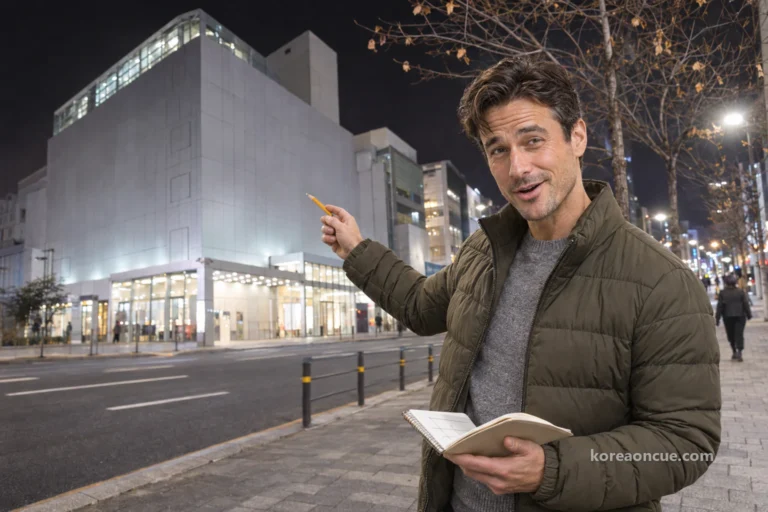
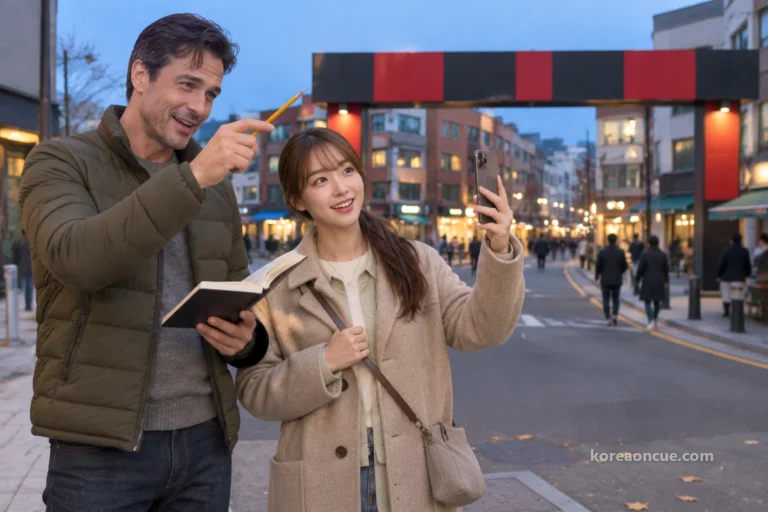
SEOUL · CHANGSIN-DONG TOY MARKET
Sundays differ from shop to shop at the Changsin-dong Stationery and Toy Market, so Lulu moved her shoot to a weekday and filmed “the order before the hand”
Sundays differ from shop to shop, so a weekday is the safe choice · Dongdaemun Station Exit 4, Dongmyo Station Exit 6 · Mon–Fri 08:00–19:00, with hours varying by shop · how to look round the stationery, toys and party goods together
Under a video of nothing but a hand squeezing a malangi, the comments kept asking “Is it open on Sundays?” Lulu decides to film the order that comes before the hand: starting at a subway exit, going through lanes stacked with toys, and ending on that final shot of the hand.
How to get there
Lying on her front in bed at night, flicking through Reels, Lulu felt her finger stop on one video. On screen, a single hand pressed a small, squishy toy and let go, over and over. The only clue to the location was one word: “Dongdaemun”. She opened the comments and found that everyone was asking much the same thing. “Where is this?”, “Which exit?” and “Is it open on Sundays?” ran on down the screen.

When Lulu tells friends about a place, she sends a video before she sends words, so she found this comment thread rather fun to read. The video showed nothing but a hand, yet what people really wanted was the order that comes before the hand. Which station to get off at, which exit to take, when to go so the doors would be open. At the top of a new page in her notes app, Lulu wrote “The order before the hand”.
The place where those toys gather is the Changsin-dong Stationery and Toy Market. It sits in Changsin-dong, right beside Dongdaemun, and it is Korea’s largest wholesale market for stationery and toys, with more than 100 shops packed into its lanes. Even Lulu, born and raised in Seoul, had only ever heard the name. This story follows her order from Dongdaemun Station Exit 4 on the way in to Dongmyo Station Exit 6 on the way out. Whether it opens on Sundays, what to look at first, whether you can buy just one, whether you need cash: we’ll work through them one by one along that route.
The Cue — At a glance
Sundays at the Changsin-dong Stationery and Toy Market differ from shop to shop, so if you want to see the market properly, a weekday is the safe choice. By subway, come out of Dongdaemun Station Exit 4 or Dongmyo Station Exit 6. It’s a wholesale market that sells retail too, and although cards are accepted, it’s a good idea to bring cash.
- Station and exit: Dongdaemun Station (Lines 1 and 4) Exit 4 · Dongmyo Station (Lines 1 and 6) Exit 6. The address is 36 Jong-ro 52-gil, Jongno-gu, Seoul.
- Days and hours: The market’s opening days are Mon–Fri, 08:00–19:00. Hours vary from shop to shop.
- Sundays: They differ from shop to shop, so a weekday is the safe choice. Try to avoid public holidays when you plan.
- Looking round: You can browse stationery, toys and party goods together.
- How to buy: Shops sell retail too. When you’ve picked something, ask, “Can I buy just one?” Cards are accepted, but bringing cash is recommended.
- What to look out for: The yellow pillar at the market entrance · toys piled up by the box outside the shops · the popular malangi and wakppu balls.
- Car: There is no dedicated car park. Public transport is the easy way.
- Enquiries: 02-743-7424.
Is the Changsin-dong Stationery and Toy Market open on Sundays? — It differs by shop, so a weekday is safest
Sundays differ from shop to shop. With more than 100 shops in one market, opening and closing is each shop’s own affair. The market’s opening days are Monday to Friday. If you want plenty of time to look round in a single visit, the daytime between Monday and Friday is the safest slot. This was also the point where the first version of Lulu’s plan, built around a Sunday shoot, changed.
Open in Kakao Map — Dongdaemun Station
Lulu had originally meant to film on a Sunday afternoon. Ever since she filmed Gwangjang Market on a Sunday, she had got into the habit of looking up the days first, whatever the market. There, the open side and the closed side had been separate areas, so she could tell people where to go. Here, though, every shop was different, so she couldn’t point and say, “Go down this lane.” If a friend trusted her video, came along and had to turn back at a closed shop, Lulu reckoned, that video would have failed as an answer.
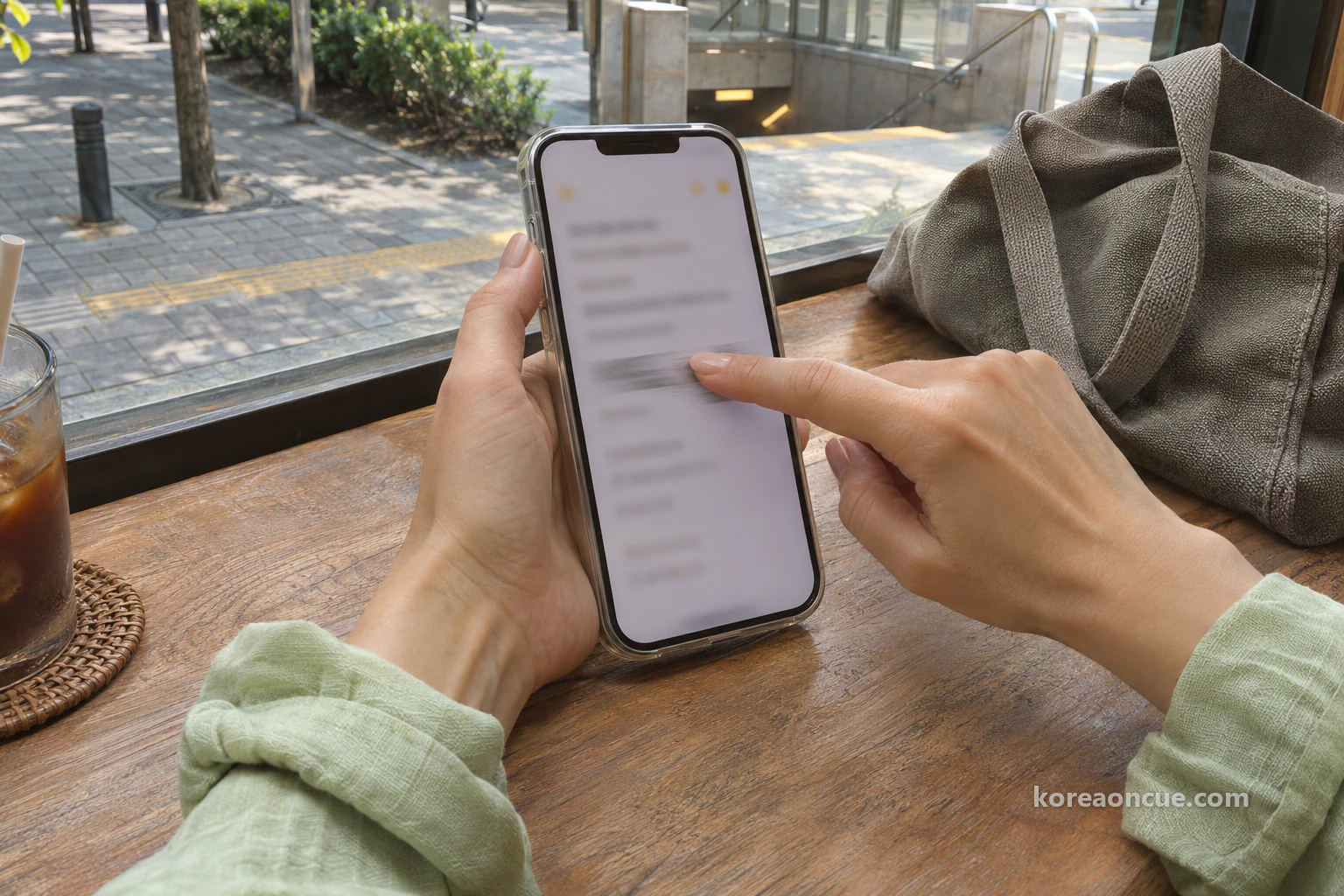
So Lulu sat by a café window, swiped Sunday out of her notes with one finger and typed Wednesday. One line now read “Sunday → Wednesday, weekday if you want to film open shops”. Even with the shoot day changed, she didn’t feel she had lost anything. Some travellers will have only a Sunday free, of course. If that’s your day, treat it as a light stroll round the lanes, not a plan to see the whole market.
Even on a weekday, try to avoid public holidays when you plan. Pick a day between Monday and Friday that isn’t red on the calendar. If you still have questions, you can ring the enquiries number, 02-743-7424. Lulu decided to put that number at the very bottom of her video description too, for friends who got stuck while planning.
If your trip to Seoul wraps around a weekend, look at Friday and Monday first. Friday is the last of the market’s opening days, and Monday is the first. If you land in Seoul around midday on a Friday, work out whether you can drop your bags and get there before 7 p.m. If you’re leaving on a Monday, a short walk round in the morning before heading to the airport is worth thinking about. Toys take up room, so if you’re visiting on the day you leave, make space in your bag first.
What time does it open? — From 8 a.m. to 7 p.m., with hours varying by shop
Weekday hours run from 8 a.m. to 7 p.m. Even so, the hours differ from shop to shop. Lulu wrote the two numbers in her notes as “8–19” and left a gap at each end. Since every shop keeps its own hours, she decided to leave herself some slack. The time she settled on was 10.30 a.m. on Wednesday.
There was a filming reason for the morning as well. Lulu chose the morning so she could concentrate on filming the goods. The stars of this video weren’t people but the things outside the shops, after all. Film early, and she could go back over the shots at lunch and still have time to reshoot anything she had missed that same day. She wanted to be at her desk at home stitching the shots together in the evening, so beside the time box in her notes she wrote “Film in the morning, cut in the evening”.
Which exit to use — Dongdaemun Station Exit 4 or Dongmyo Station Exit 6
By subway, come out of Dongdaemun Station Exit 4 or Dongmyo Station Exit 6. Lines 1 and 4 run through Dongdaemun Station, and Lines 1 and 6 run through Dongmyo Station. If you’re on Line 4, get off at Dongdaemun, and if you’re on Line 6, get off at Dongmyo, and you won’t need to change. On Line 1, pick whichever of the two suits your hotel. Should you need to ask the way, the only exit numbers to remember are 4 and 6.
| Your line | Get off at | Exit |
|---|---|---|
| Line 4 | Dongdaemun Station | Exit 4 |
| Line 6 | Dongmyo Station | Exit 6 |
| Line 1 | Whichever of the two suits your stay | Exit 4 or Exit 6 |
Lulu decided to use both exits. She would go in by Dongdaemun Station Exit 4 and come out by Dongmyo Station Exit 6. Walking back the way she came makes the start and end of a route identical, and where’s the fun in that? And if she walked both exits, she could tell her friends about their side of the route whichever station they used. A new line appeared in her notes, “In by 4, out by 6”, with empty boxes for shots left beneath it.
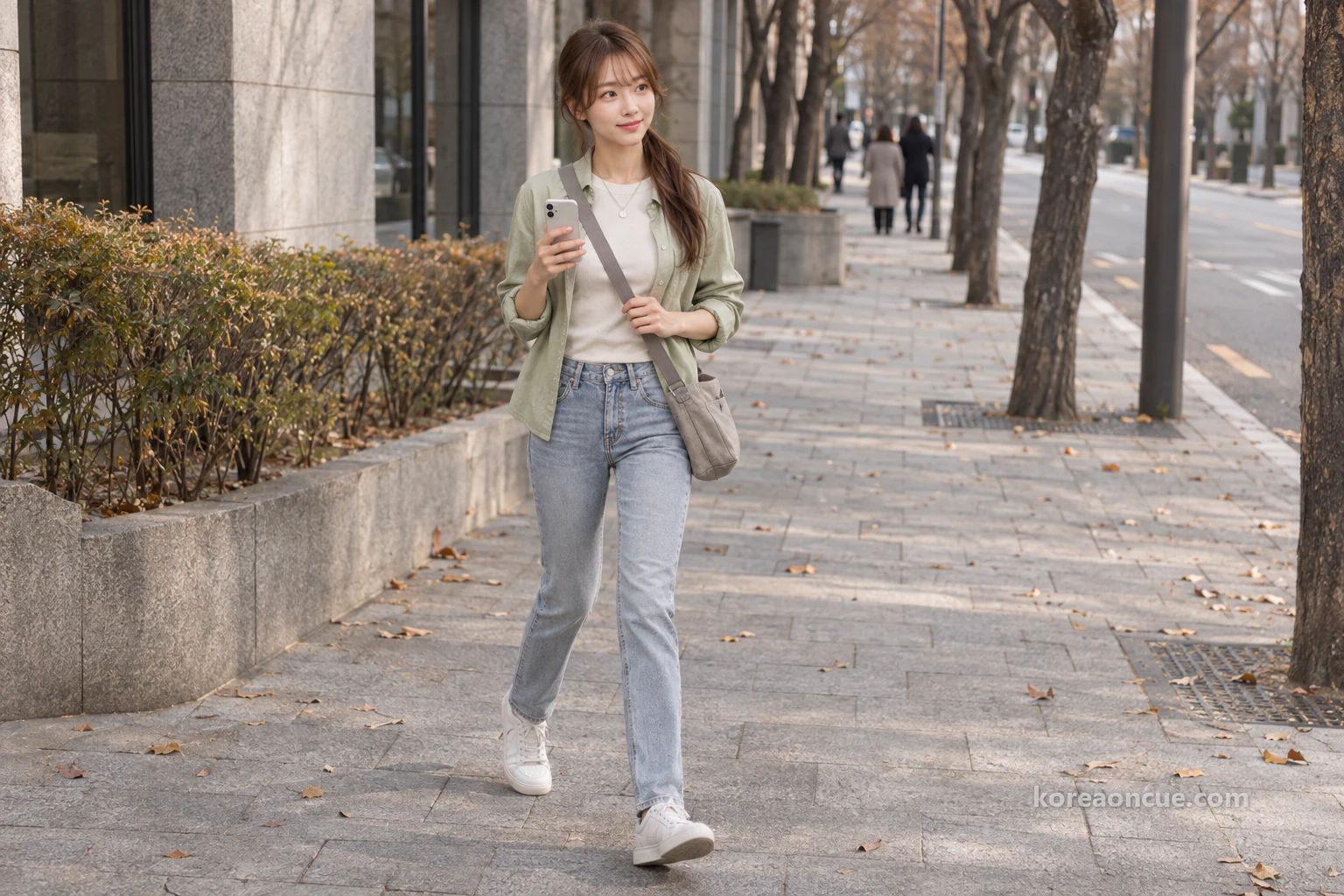
Leave the car behind. Like most of the shopping buildings around Dongdaemun, this market has no dedicated car park. Coming by public transport is far easier than spending your time hunting for a space outside the market. Toys are bulkier than you’d think, so it helps to arrive having decided to buy only what you can carry on the subway. That was why Lulu packed just the small shoulder bag she always wears, not a big one.
What to type into the map — 36 Jong-ro 52-gil, and the entrance is the yellow pillar
The easiest thing to put into a map app is the address, 종로52길 36 (36 Jong-ro 52-gil). This market goes by several names. 창신동 문구완구시장, 동대문 문구완구 거리, 창신동 완구거리, 창신동 완구 도매 시장 and 동대문 문구·완구 도매종합시장 all point to the same place. Don’t be surprised if a different name comes up each time you search. Enter the address once and the names stop being a source of confusion.
This was exactly where Lulu stumbled for a moment. Coming up from Exit 4, she typed 동대문 시장 (Dongdaemun Market) into her map and got a long list of clothing names. Dongdaemun is one of Seoul’s best-known fashion districts, so it made sense for clothes to come up first. After a puzzled tilt of the head, she typed the address in again and only then got her bearings. Right there she decided that the first line of her video description would be the address, not the market’s name.
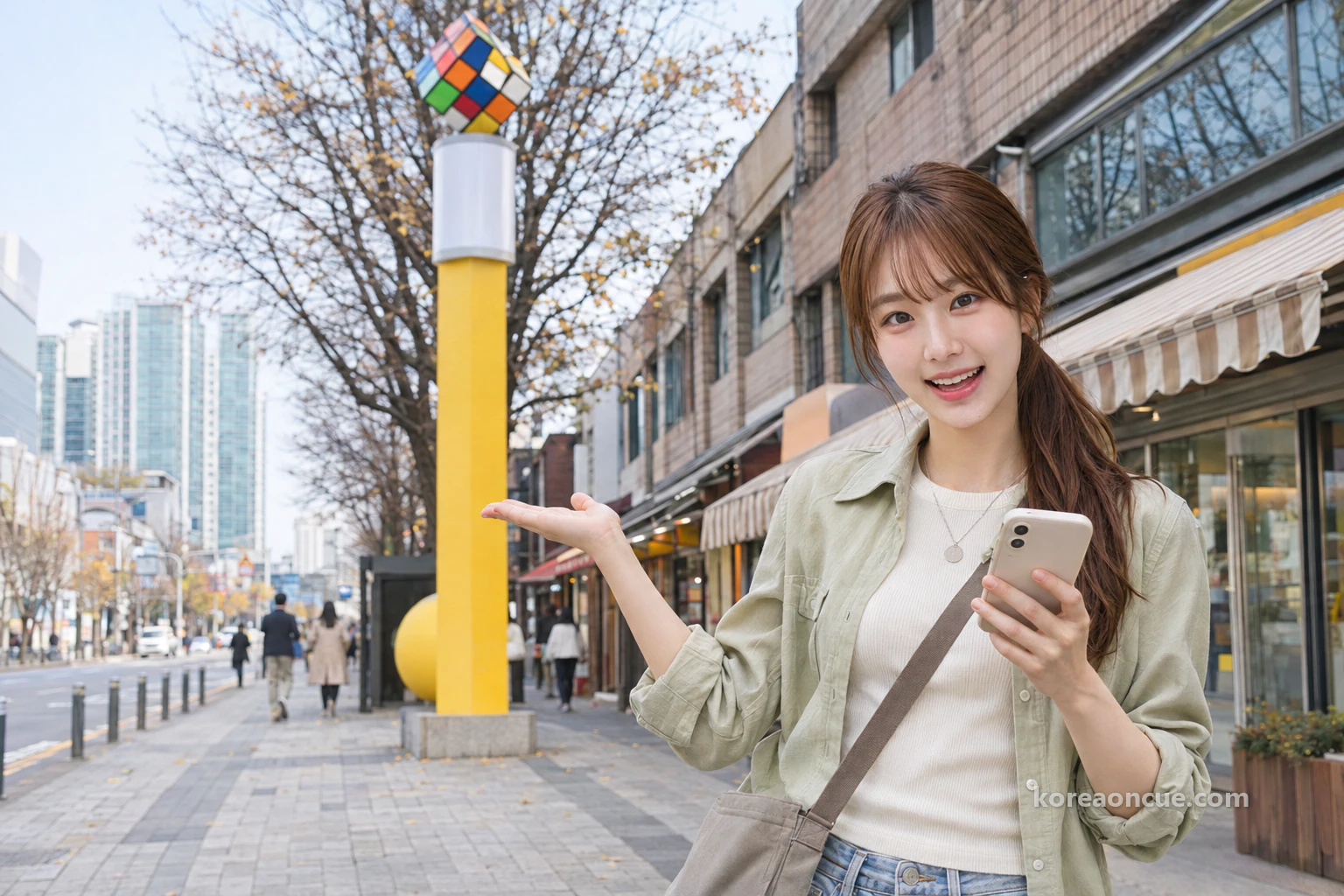
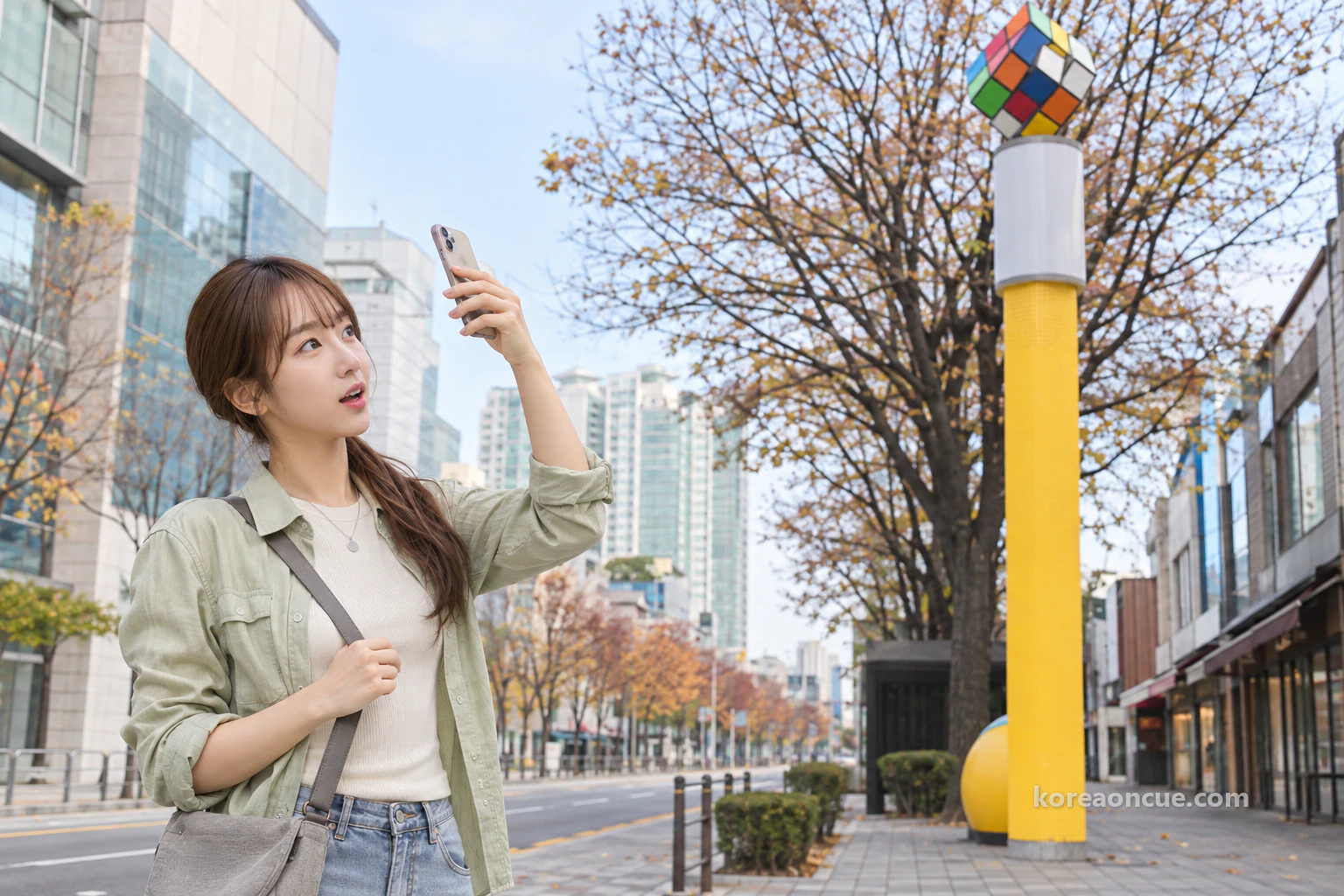
The marker for the market entrance is a yellow pillar. A tall yellow pillar stands under a street tree, with a cube-shaped sculpture balanced on top. On the pillar are the words 문구·완구 도매 종합 시장 (stationery and toy wholesale market) and an arrow. Yellow catches the eye from a distance, so once you can see this pillar, you’re in the right place. The shops gather along Jong-ro 52-gil and Jong-ro 54-gil, and from here it’s easier to follow your eyes than the map.
Lulu filmed the first shot of the video in front of the pillar. As she always does in a new place, she started at her feet, then slowly tilted her phone up from the pavement along the pillar. When the cube came into the top of the frame, tall glass buildings in the distance came in with it. She rather liked the sight of those glass towers and a toy market’s yellow pillar standing in one frame. The first box in her notes was now filled in: “Address → yellow pillar”.
What to look at first — you can browse stationery, toys and party goods together
You can browse stationery, toys and party goods together. With more than 100 shops, it’s hard to decide everything you’ll see in advance. Wandering slowly and stopping at whichever shop catches your eye suits this market better. So even if you know exactly what you’re after, give yourself plenty of time and come expecting a slow walk through the lanes. Before she set out, Lulu had also thought she could sort these lanes into a single table.
The truth is, Lulu had worked out an order in advance. Her notes held three boxes: “Toys → stationery → party”. One shot per category, three shots, nice and tidy, that was the idea. But the moment she stepped into the lane, her eyes got busy first. Soft toys stacked almost to the ceiling, glittering stickers, palm-sized figures and pens and notebooks in every colour all hit her at once.
The three boxes fell apart on the spot. There was simply too much in view to give each frame just one category. Lulu looked ready to burst out laughing as she muttered to herself, “This won’t fit in boxes.” After standing and thinking for a moment, she gave up dividing the market sideways and decided to divide it upwards. Whatever a shop sold, and whichever shop she stood in front of, the one thing that stayed the same was the height from her feet to above her head.
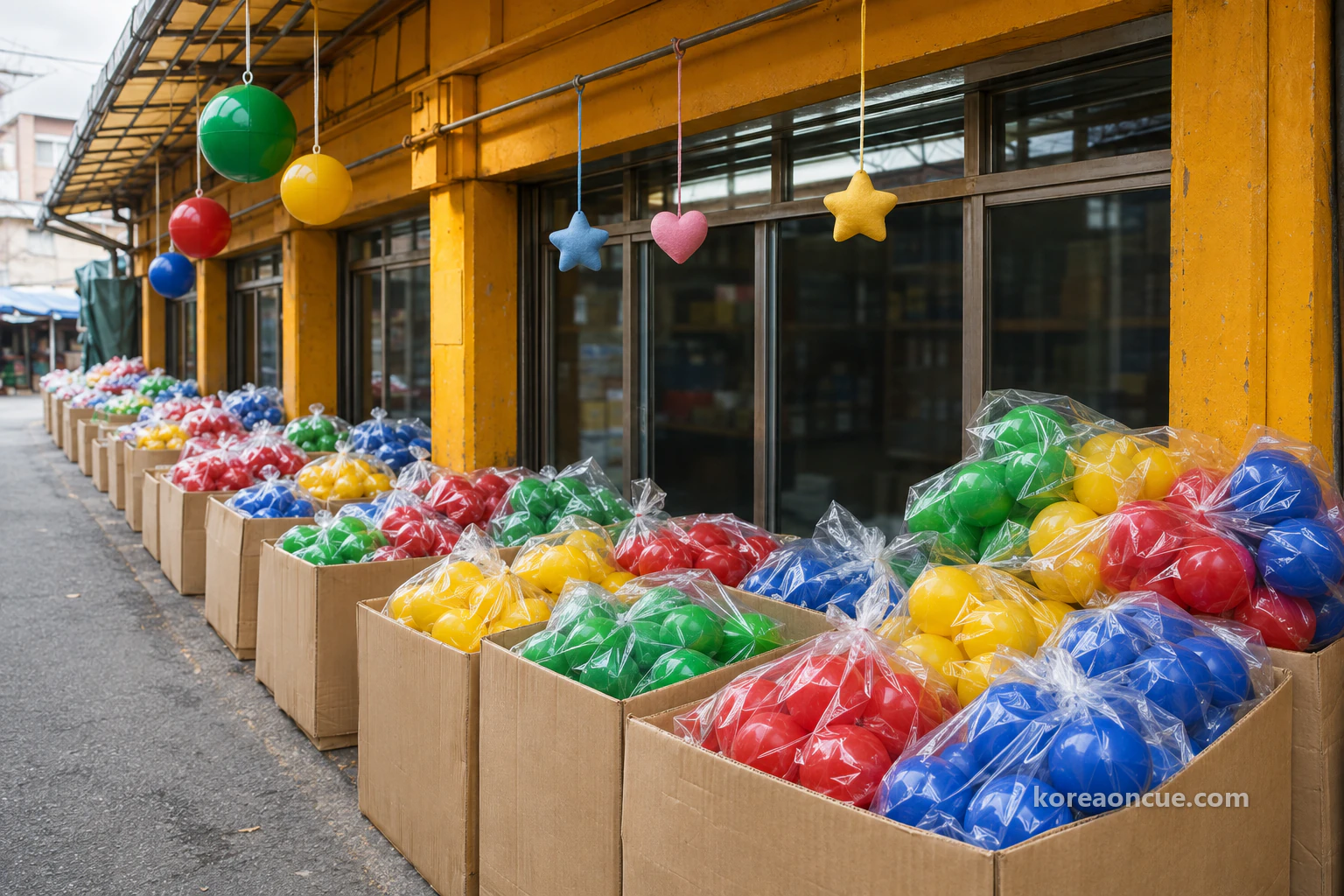
The new order was “Feet → eye level → overhead”. On the ground outside the shops, colourful balls were piled up by the box. At eye level there were glass display cases, and overhead, balls and soft-toy decorations hung from the eaves. Lulu raised her phone from the ground to the eaves in one go and filmed three shops in a row. Shot this way, everything she had failed to fit into three boxes became a scene only this market could give her.
Walk among more than 100 shops and a first-timer runs into something else. It’s hard to find a shop you’ve already passed. If you see something you like and walk on meaning to buy it later, take a photo of the shopfront. The shops line Jong-ro 52-gil and Jong-ro 54-gil, so checking on your map which of the two you’re on makes it easier to get back. Lulu, too, took a photo first whenever she came to a shop she wanted to film.
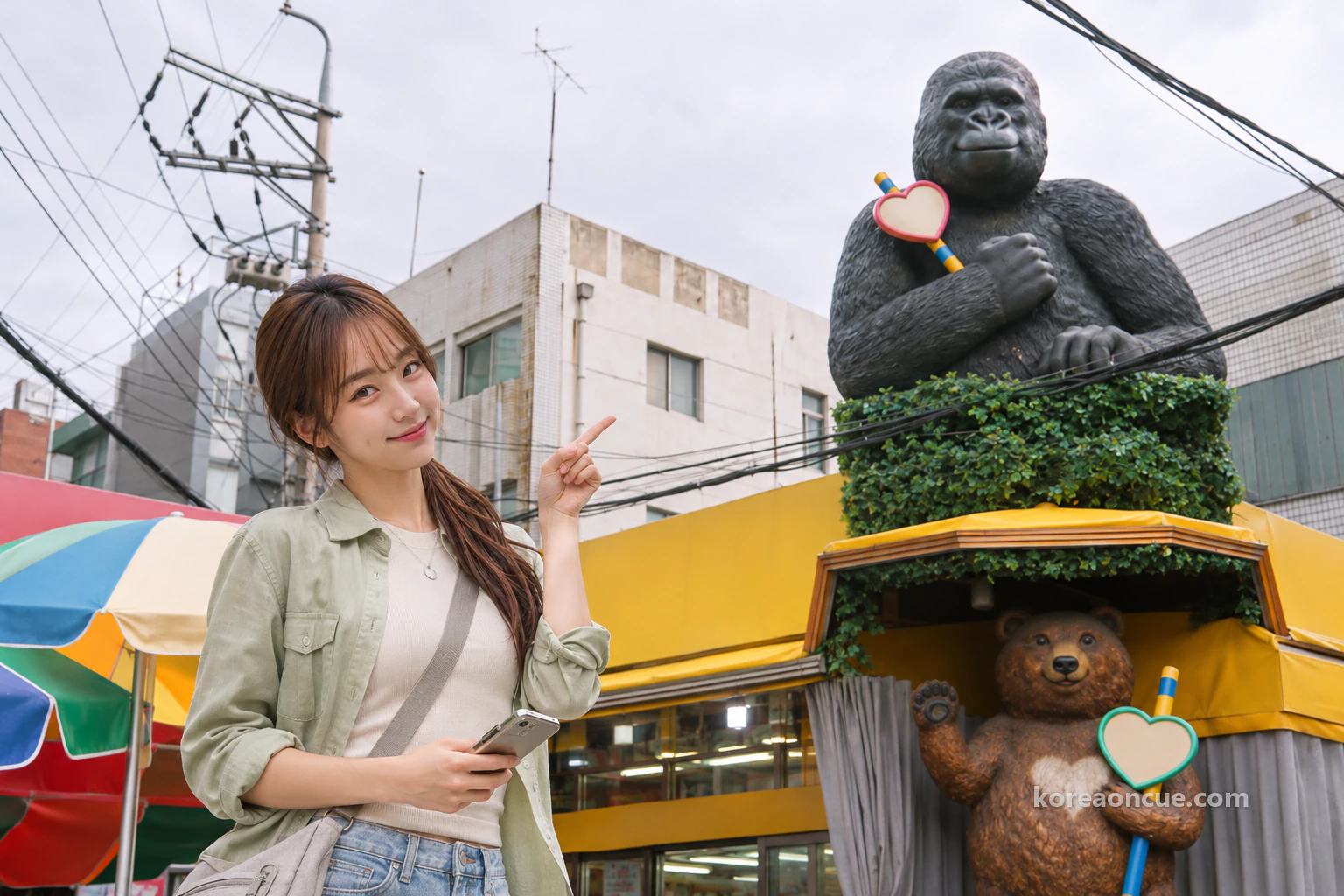
There’s one handy landmark as well. In a corner of a lane tangled with overhead wires stands a big gorilla model, with a bear model below it, outside a toy shop. The gorilla holds a heart-shaped sign and a pencil, so it’s easy to spot from a distance. This is the oldest shop on the street, and it has plenty of educational toys such as Lego, play kitchen sets and car toys such as miniature cars. If you and your companions split up to browse, Lulu noted, this gorilla would make a handy meeting point.
What does it sell? — From robots and Lego to party goods and figures for grown-ups
If you come expecting only stationery and toys, you’re in for a surprise. Robots and soft toys are a given, and there are construction toys, Lego sets, play kitchen sets and educational toys too. Stationery such as colourful pens, notebooks and stickers is plentiful too. Prices tend to be lower than in ordinary shops. So even on a day when you have nothing to buy, your eyes never get a rest, and a small gift or two will come to mind by itself.
Nor is this a market only for children. It’s full of party goods: all kinds of masks and cosplay items, firecrackers and fireworks, and Halloween decorations. It’s also a good place to find event supplies for a company do or for cheering at a match. If you’re a traveller planning to mark a friend’s birthday at your accommodation, you can get the whole party sorted in these lanes. Lulu held a mask hanging outside a shop up to her face and ended up laughing out loud on her own.

It’s a market where grown-ups linger too. It’s famous as a market for toy-loving “kidults”, and for figure collectors there’s real pleasure in sniffing out hidden finds. So there’s nothing odd about coming alone without a child. Lulu stood there for quite some time herself, choosing what to film for her eye-level box. When she found a small car like one she used to play with as a child, she couldn’t help taking a second look.
If you’ve come for a present, it’s easier if you decide who it’s for first. For a child, your eye will go to Lego sets, play kitchen sets and educational toys, and for a grown-up friend, small things you can hold in your hand, such as figures or malangi, work well. If you’re planning a party, start with the masks and cosplay items. With so many shops, walking with the person in mind is less tiring than hunting by category. Lulu, too, walked the lanes picturing her group-chat friends’ faces one by one.
| Who it’s for | Look at first |
|---|---|
| A child | Lego sets, play kitchen sets, educational toys |
| A grown-up friend | Small things you can hold, such as figures or malangi |
| A party | Masks and cosplay items |
As she filmed, Lulu started to notice things to be careful about. Before it’s a place to browse, this is a working wholesale market. To keep the middle of the passage clear, she stepped aside to the edge of the shopfront to film. She kept her phone on the boxes and goods, not on people’s faces, and lowered it as soon as a shot was done. If you’re coming to film, keep these three in mind as well: step aside, film only the goods, lower your phone straight away.
What are malangi and wakppu balls? — Two of the market’s popular items
Malangi (말랑이) and wakppu balls (왁뿌볼) are popular items. A malangi is just what its name suggests, a toy that squashes softly in your hand. A wakppu ball is a toy known for the feel of breaking through its hard wax shell. Some foreign travellers even come all the way to Dongdaemun for a malangi after seeing one on Instagram Reels. The star of the video Lulu saw that night was this very malangi, so it was no great mystery that people asked where it was even with only a hand on screen.
Lulu had decided from the start that this shot would close the video. When she finally held a malangi and gave it a good squeeze, she felt she half understood why everyone films only their hands. It was a toy whose feel in the hand got across faster than words. To film the way it slowly came back after she let go, she held her phone close and kept her breathing even for a while. It was the same shot she had seen on Reels that night, but after walking there all the way from the exit, it felt different.
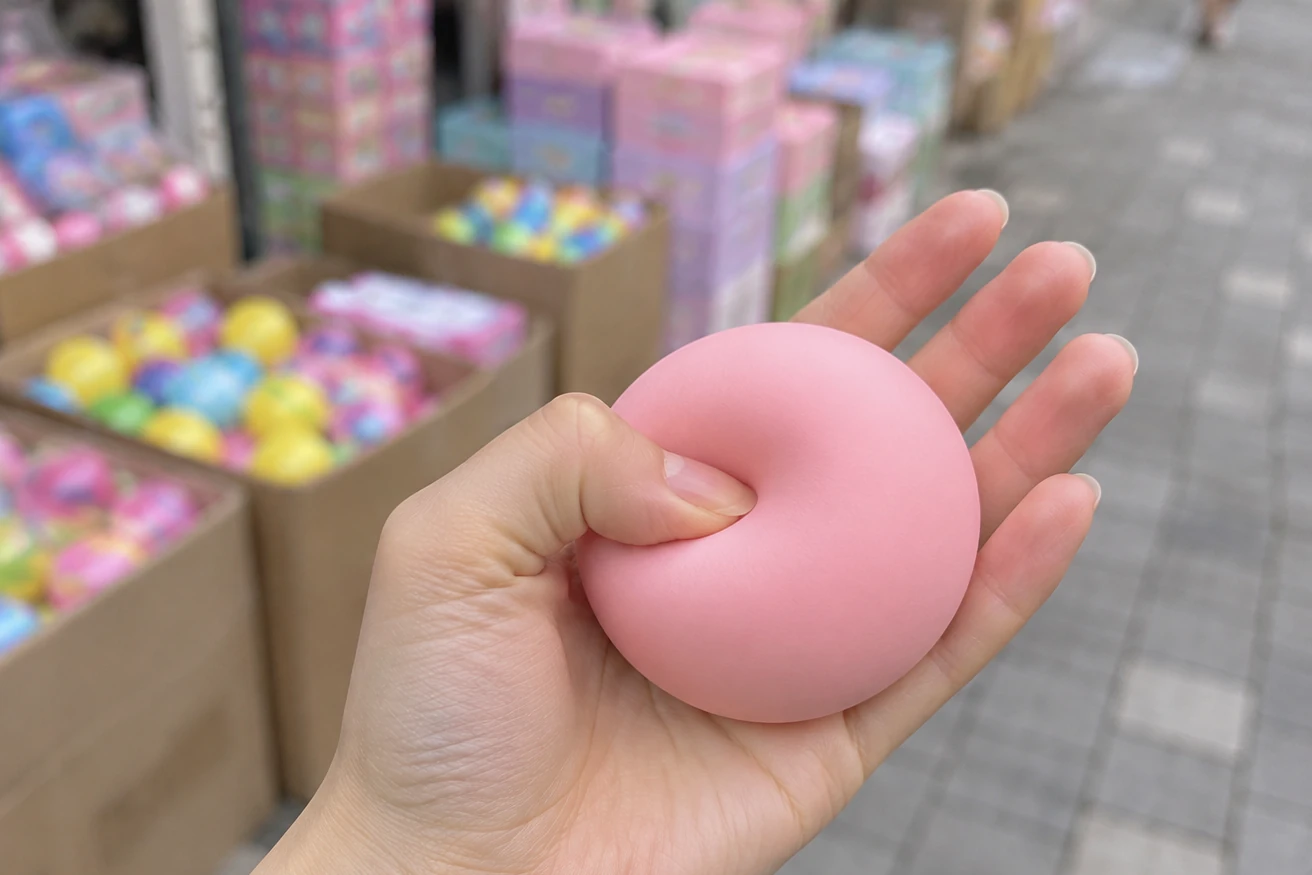
The wakppu ball offered the opposite kind of fun. If a malangi is a toy you press and let spring back, a wakppu ball is one you break open bit by bit. Lulu copied just the name of the wakppu ball into her notes. If both went into the video, the final shot of the hand would run long and the ending would lose its edge. She wrote down “Wakppu ball — sound first” as a candidate for the opening shot of her next video.
Deciding in advance which item you’ll buy at which shop actually makes this market harder. With so many shops, you end up walking the lanes even if you came only to see a malangi. In return, you get the fun of meeting something you never thought of right next to the thing you were after. Most of the things that made Lulu stop outside a shop weren’t what she had come for. So even on a malangi day, leave yourself time to wander a little.
Can you buy just one, and do you need cash? — Shops sell retail too, and bringing cash helps
Shops sell retail too. When you’ve picked something, ask, “Can I buy just one?” The word “wholesale” can make you worry about having to buy by the box, but this is a general market that sells stationery and toys both wholesale and retail. There are small items such as the “Life Humour Collection” (인생유머집), which costs 1,000 won, and the lanes are full of things that fit in your palm, such as little toys, pens and stickers. It’s a good match for anyone looking for small gifts to slip into a suitcase.
Cards are accepted, but it helps to bring cash. Lulu, who normally pays with her phone, saw this line in a guide to the market and put a few 1,000-won notes in her wallet the day before. She could hardly remember the last time she had carried cash. Yet when buying one small thing, handing over a single note actually felt natural. Put a few 1,000-won notes aside before you set out, and you’ll feel easier in this market.

Lulu picked out a malangi and the “Life Humour Collection”. Next to them sat the “Magic Solution Cards”, said to solve all your worries. Lulu gave a little snort at the name and wondered for a moment whether they would solve her running-order problem too. She thought about filming her hand taking a note out of her wallet, but left the cash story for the video description instead. In her notes she wrote “Cards OK, but bring cash”.
There’s no need to get greedy here. With so much on offer, this is a market where your hands tend to move faster than the plan you came in with. Think first about the size of the bag you’ll be carrying, and do a full lap before choosing, rather than buying in the first lane, and you’ll have fewer regrets. The shop photos you took earlier come in useful at this point. Lulu, too, flicked through her photos at the end of a lane and cut the things she was keeping in mind down to two to buy that day.
When does it get crowded? — Around Christmas, Children’s Day, the new school term and Halloween
The busy times are fixed each year. Around Children’s Day and Christmas it gets crowded, centred on the toy shops, and at the start of the school term the stationery side fills up. The period around Halloween is another peak season for the market. So when to stay away depends on whether you’re coming for toys or stationery. If you’d like to stand outside the shops and choose at your own pace, try to avoid these times.
If you’re coming for Christmas presents, steer clear of public holidays and choose your gifts early. The Wednesday in November when Lulu walked here fell after Halloween, with Christmas still a long way off. So she could stand outside the shops and film slowly, in no hurry. Presents for her group-chat friends she only chose by eye that day, and she circled a weekday on her calendar to come back on as Christmas drew closer. One more line went into her notes: “Presents: weekdays before the red days”.
Where to go after the market — Dongmyo Station Exit 6, or the village bus to Naksan Park
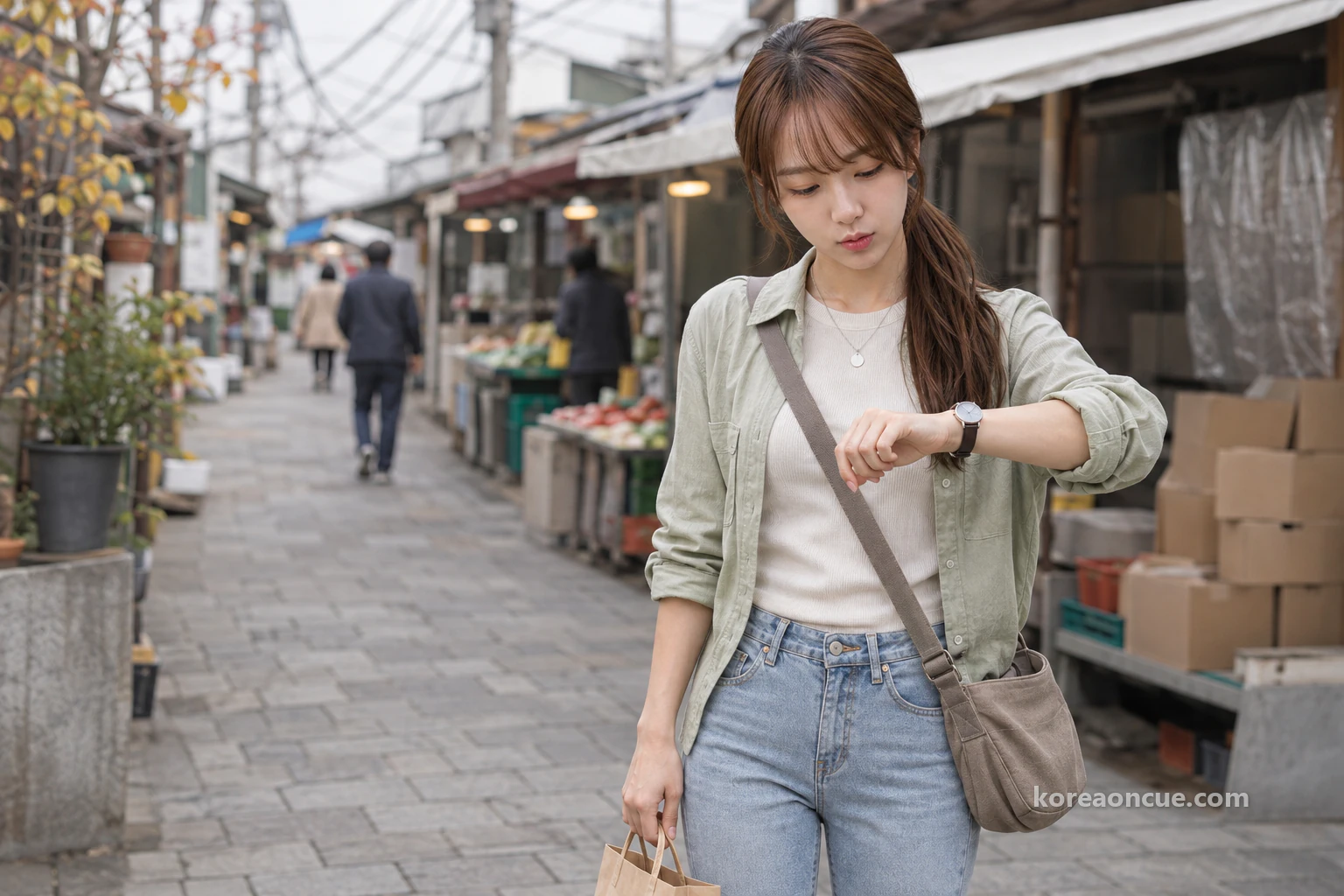
Lulu’s walk through the market ends at Dongmyo Station Exit 6. Coming out by a different exit from Exit 4, where she went in, made the start and end of her route different. For anyone heading home on Line 6, this is the exit you’ll use anyway. Walking towards it, Lulu read through the boxes in her notes from the top. “Address → yellow pillar → feet, eye level, overhead → gorilla → cash → hand”: every one was filled.
If you have time left, you can carry on to Naksan Park. Take village bus Jongno 03 from the bus stop in front of Dongdaemun Station and the last stop is Naksan Park. The little bus winds up steep lanes, and watching the neighbourhood through the window is part of the fun. Naksan Park is where walking paths follow the Seoul City Wall, and it’s also known for its night views. Moving from the toy lanes to the wall path ends the same Changsin-dong day on a completely different scene.
If you plan to go on to Naksan Park, it’s easier to flip Lulu’s order. The village bus leaves from in front of Dongdaemun Station, after all. Come in by Dongmyo Station Exit 6, look round the market, then leave towards Dongdaemun Station, and you’ll reach the bus without doubling back. If you shop first you’ll be walking the path with your bags, so stick mainly to light things. For anyone arriving on Line 6, this order feels more natural.

Putting “the order before the hand” into a video — why it starts at an exit and ends on a hand
That evening, at the desk at home, Lulu put the shots she had filmed in order. First came the map screen showing the address, then the shot climbing the yellow pillar. The sweep from the ground to the eaves outside a shop came next, followed by a pause in front of the gorilla. The hand pressing the malangi went at the very end. If the Reel she had seen that night began and ended with a hand, Lulu’s video was one that walked until the hand appeared.
She put in only two lines of captions. The first was “Sundays vary by shop, weekdays are safe”, and the second was “Exit 4 or 6, address 36 Jong-ro 52-gil”. At first she tried listing everything on sale, but the screen disappeared under the words, so she deleted it. Showing the ground and the eaves told people what was sold without any captions. What people had asked was where to go and when, so two captions were enough.

When she posted the video to the group chat the four of them share, Maya’s reply came first. “You made me watch right to the end for that hand.” Lulu read the line and laughed to herself. Then she opened the Reel she had seen that night again. “Where is this?”, “Which exit?” and “Is it open on Sundays?”: the answers to all three lines now sat inside the order of her own video. Lulu gave the malangi on her desk one good squeeze and closed her notes.
Common Mistakes
Going on a Sunday to see the whole market
Sundays differ from shop to shop. Choose a weekday daytime.
Assuming any weekday will do and going on a public holiday
Avoid the red days on the calendar.
Typing only 동대문 시장 into the map
Enter the address, 종로52길 36.
Rushing through the stationery, toys and party goods
Give yourself plenty of time and walk the lanes slowly.
Trying to find a shop you passed later on
Take a photo of any shopfront you like.
Coming without cash
Cards are accepted, but bring cash.
Bringing a car
There’s no dedicated car park. Come by subway.
FAQ
Is the Changsin-dong Stationery and Toy Market open on Sundays?
It differs from shop to shop. A weekday is the safe choice.
What time does it open?
08:00–19:00, varying by shop.
Which exit do I use?
Dongdaemun Station Exit 4 or Dongmyo Station Exit 6.
Can I buy just one?
Shops sell retail too. When you’ve picked something, ask, “Can I buy just one?”
Are cards accepted?
Cards are accepted, but bringing cash is recommended.
What can I see there?
You can browse stationery, toys and party goods together.
Recap — 30 seconds before you go
- Dongdaemun Station Exit 4 or Dongmyo Station Exit 6 → 36 Jong-ro 52-gil → the yellow pillar
- Go on a weekday daytime · avoid public holidays
- Allow plenty of time, and photograph any shopfront you like
- Bring cash · leave the car behind
Sources
- Jongno-gu Office — Stationery and toy market, Jongno-Cheonggye Special Tourist ZoneA general market selling stationery and toys wholesale and retail · Dongdaemun Station Exit 4, Dongmyo Station Exit 6 · 36 Jong-ro 52-gil · no dedicated car park · firecrackers, Halloween decorations, party goodschecked 2026-11-04
- Jongno-gu Tourism — Dongdaemun stationery and toy streetHours 08:00–19:00 · Dongdaemun Station Exit 4, Dongmyo Station (Line 6) Exit 6checked 2026-11-04
- Seoul Tourism Organization, Visit Seoul — Changsin-dong toy wholesale market, Dongdaemun StationOpen Mon–Fri, 08:00–19:00, varying by shop · Dongmyo Station Exit 6 and Dongdaemun Station Exit 4 · phone 02-743-7424 · busy periods · party goods, figures for grown-upschecked 2026-11-04
- Seoul Tourism Organization editors’ pick — Changsin-dong, a day walking after a soft childhoodPopular items malangi and wakppu balls · cards accepted, cash recommended · 1,000-won small items · village bus Jongno 03 to Naksan Parkchecked 2026-11-04
- Seoul Tourism Organization, Visit Seoul — the oldest shop on the Changsin-dong toy streetEducational toys such as Lego, play kitchen sets, car toys such as miniature carschecked 2026-11-04
- Seoul’s monthly magazine 서울사랑 — New school term issue (2021)A market for toy-loving “kidults”checked 2026-11-04
A Seoul story told with our AI characters. Place details are checked against public sources; the photos are AI-made illustrative images. How we use AI