LOOK
Autumn Clothes for a Long Walk in Seoul
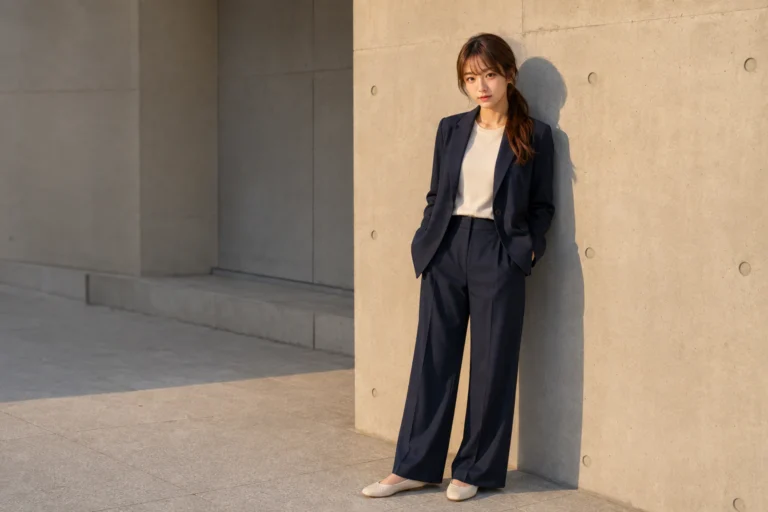
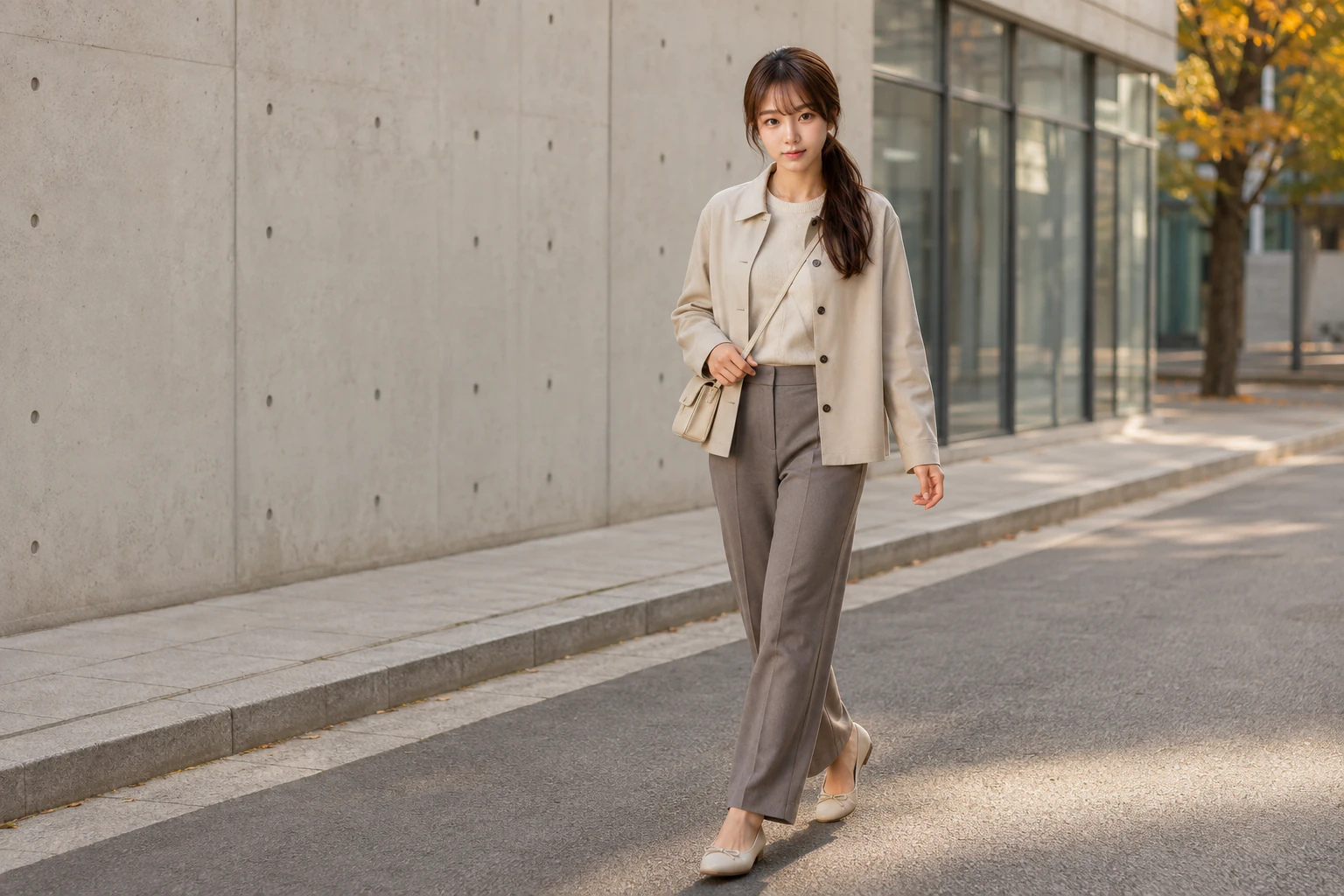
What to wear in Seoul in autumn can begin with a drama-inspired look and still be planned around a long day on foot. Consider how much walking you have planned first, then choose the fit and colour and decide what you would change if it rains or the day runs long.
How to get there
Walking distance and time are map-route estimates; exit numbers are as of the check date.
- Decide first whether today is a half day or a full day. A half day and a full day are different looks.
- Move the reference hour for every choice to the last hour of the day. Not the first.
- On a full day, use grip rather than heel height as the shoe-planning standard. Actual endurance stays a FIELD item.
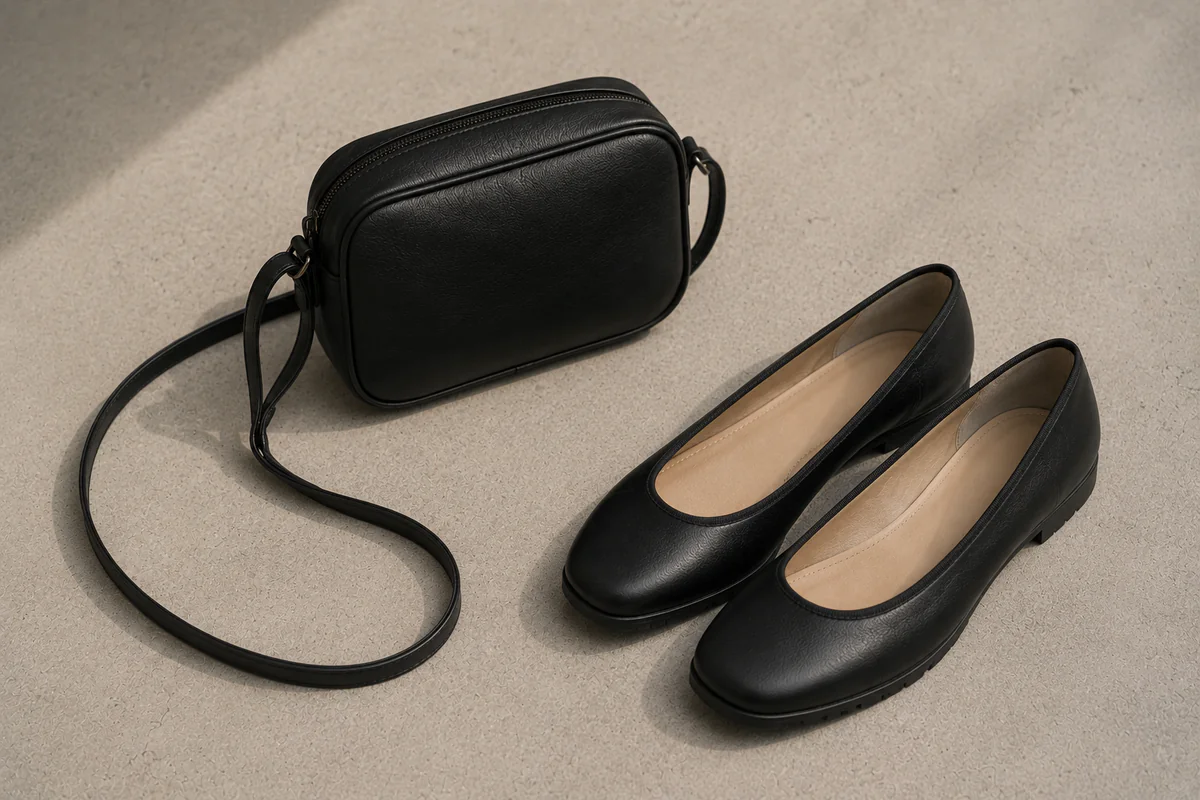
- Keep the bag smaller than the jacket’s silhouette. In this editing frame, a bag that covers the shoulder line competes with the core silhouette.
- Attach a “when this arrives, this changes” to three conditions — shopping bags, rain, evening temperature. It is boundary-setting, not prediction.
The character scenes and outfits are not records of a wear test. Check the forecast and walking distance, then adapt the ideas to your own clothes.
What to consider
An autumn outfit on screen can look light and effortless. On a trip, you may have to walk in it for hours. Keep the muted colours and clean lines you like, but consider the walking time, shoes and bags too. This guide looks at where you can adjust the outfit without losing its appeal.
This guide owns one question: how much of the mood can be kept without concession, and what does the walking distance demand first. Translating one specific scene into an outfit is the scene guide’s job; responding when the plan changes mid-day belongs to the reality check. This guide sits upstream of both — the rules for designing the look itself, before you leave. Five steps. Check how long you will be walking first → set the balance of shape and volume → set the balance of strong colours → check against the day’s plan → attach a response to the conditions that break it.
“In this simulation, the jacket starts as visual structure and ends the day carrying a practical job.”
Planning your outfit
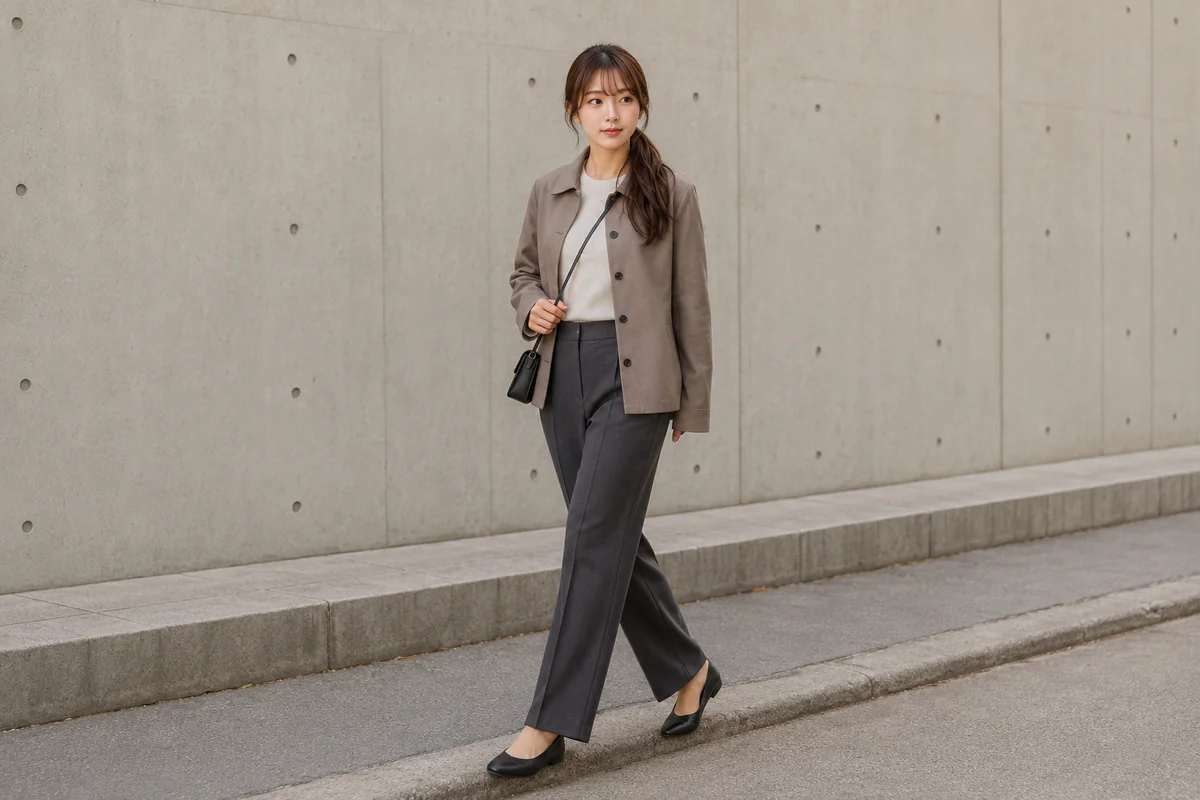
Start with how long you will be wearing the outfit, then consider its shape and colour. Imagine the last hour of the day: would the shoes and clothes still suit your plans? Once you are happy with that, adjust the silhouette and the amount of strong colour. Choosing shoes last can leave you with an attractive outfit that does not suit the walking you have planned.
The grammar of this look lives not in the criteria but in the order they’re applied. If an item fails on one axis, replace it — do not use strengths on the other two axes to cover that failure.
01Check how long you will be walking first
The planned wearing time — the reference hour is the last hour of the day, not the first
The first audit is duration. Move the reference hour for every choice from the first hour of the day to the last one. Of the three budgets, this is the one walking distance bills directly. An item that does not pass this simulation’s last-hour planning screen does not move on to the other two budgets.
- On a full day, put the shoes’ planning standard on grip rather than heel height. This simulation flags shoes as the first redesign-risk candidate on a full day.
- Choose layers not only by how they look worn but by whether they have somewhere to go when taken off. If a shed layer has nowhere to go, this simulation treats it as a friction-risk candidate after the shoe check.
- Ask of every item: “is it still the same in the last hour of the day?” If the answer is no, that item does not move on to the next audit.
- How long this outfit actually holds is a field-visit item. This guide fixes only the audit order.
Photo-first shoes are allowed — that is Plan A in the reality check. A half day and a full day are different looks, so the planned wearing time’s standard also changes with the length of the day. The branch table is in Step 04.
02Decide on the fit
The balance of shape and volume — one structural layer; everything else steps back
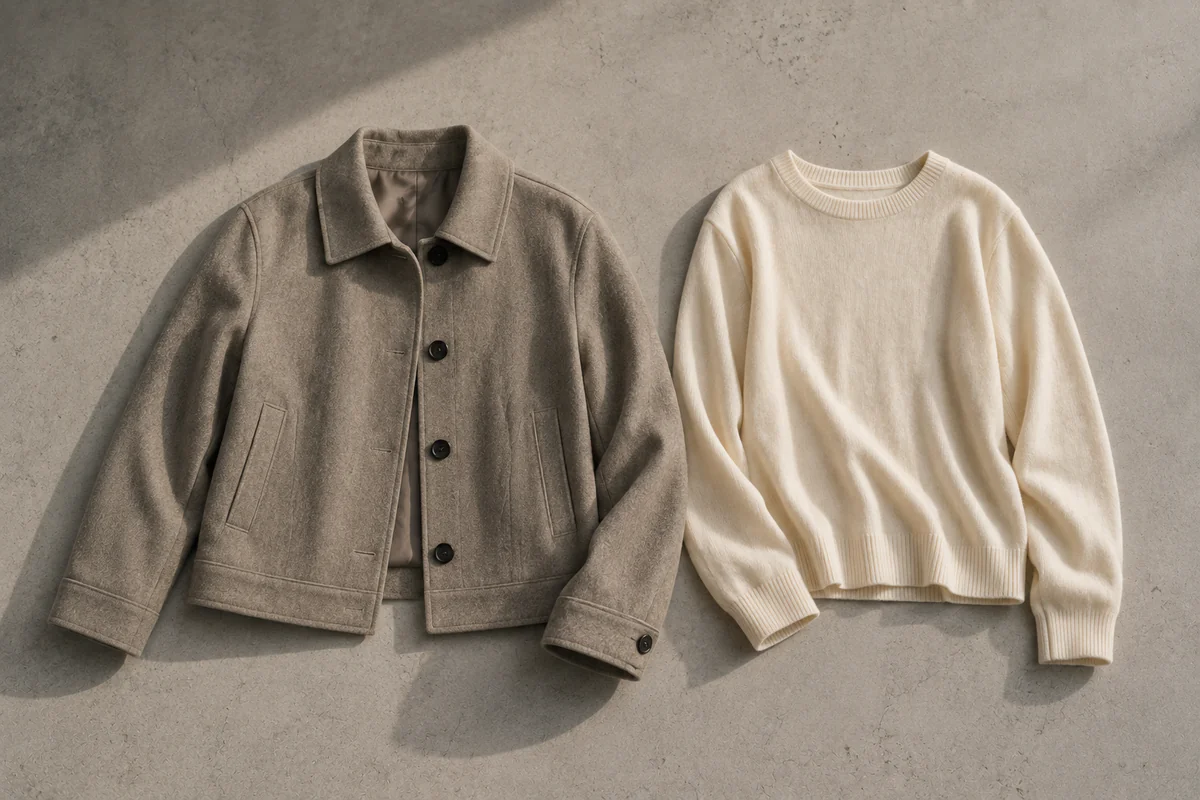
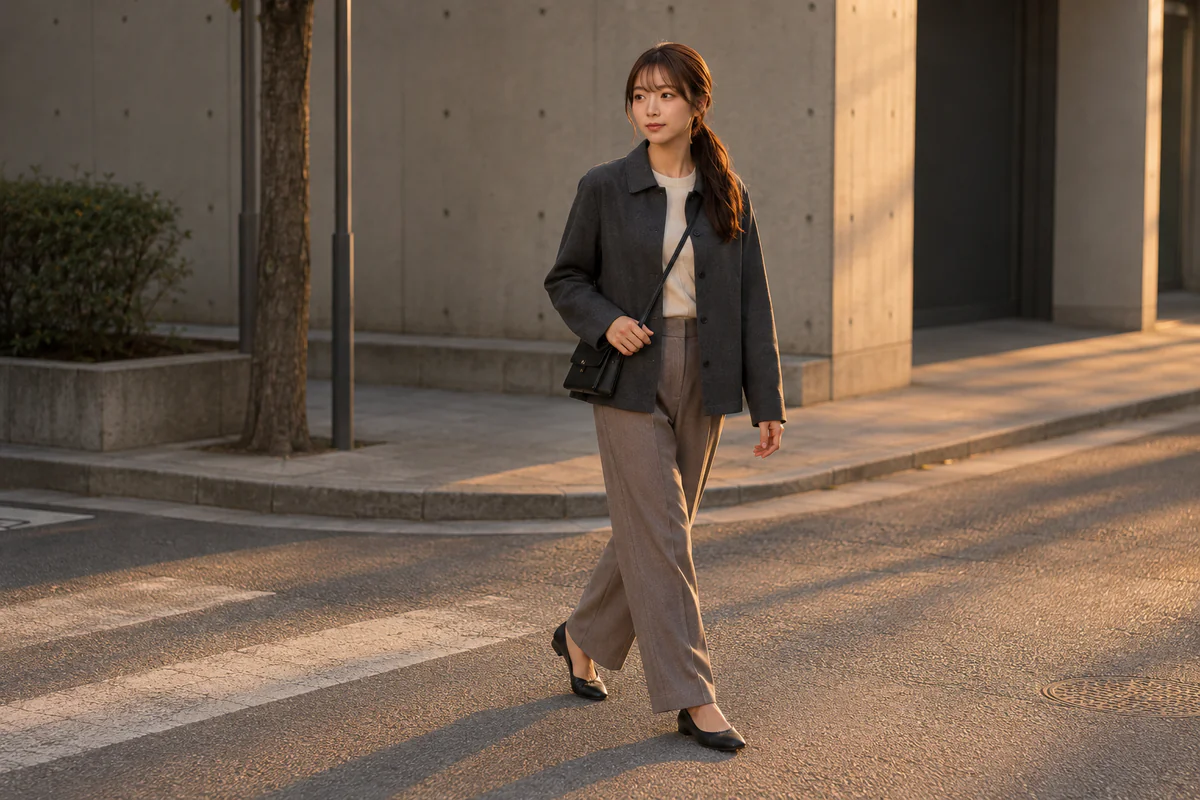
The second audit is silhouette. One structural layer owns the line; everything else steps back into soft bases that don’t compete with it. The bag stays smaller than the jacket’s silhouette — in this editing frame a bag that covers the shoulder line competes with the core silhouette, which is why a bag smaller than the jacket’s silhouette is the default candidate.
- Set one structural layer. It is the outer layer that owns the line.
- Let everything else step back into soft bases. The layer against the body stays soft.
- Keep the bag smaller than the jacket’s silhouette. In this editing frame, a bag that covers the shoulder line competes with the core silhouette.
- Even if the jacket reads as decoration, this simulation sets it as the item that carries a practical job toward sunset. The system for crossing indoor-outdoor temperature zones in one jacket belongs to One Jacket.
Once shopping bags start to cover the jacket’s silhouette, the risk of competing with the silhouette grows. This simulation treats stopping the buying as the least burdensome response. The reduction order when luggage and foot fatigue coincide belongs to Step 03 of the reality check.
03Decide how much strong colour to use
The balance of strong colours — a low-saturation neutral floor + 0–1 accent
The third audit is saturation. Low-saturation neutrals as the floor, one accent allowed. In this simulation, low-saturation clothes are set against the concrete backdrops and the design aim is to let the silhouette read before the colour — how the photos actually read is a field-visit item.
- Lay the floor in low-saturation neutrals (taupe · ivory · charcoal · black).
- Accent allowance 0–1. This look: 0.
- Saturation is the last of the three audits. It applies only to items that have passed duration and silhouette.
- On a day when the three budgets collide, the saturation accent goes first. The look survives without it.
Saturation budget
The design lets the silhouette read before the colour — how the photos actually read is a field-visit item.
One at most. At two, the design tips toward colour reading before silhouette. And the accent is the first thing to drop on a day when the three budgets collide, so put it where the look stands without it.
04Check against the day’s plan
Fit & route — a half day and a full day are different looks
The fourth step is the shape of the day. A half day and a full day are different looks. The look doesn’t follow the day; the shape of the day is the look’s final judge. A check that ends in front of the mirror is not finished — today’s map and timetable judge the rest.
- For a half day built around standing shots, photo-first shoes are allowed. A full day locks grip-first as the default: by the desk-checked figures of the Seongsu full-day route, stop-to-stop walking totals 4.3 km / 67 minutes, with a single longest leg of 1.8km. Against those full-day routed values, this simulation treats heeled shoes as a redesign-risk candidate.
- If you buy along the afternoon shop stretch, luggage appears — and shopping bags can compete with the balance of shape and volume in this editorial frame. A day walked in this look either keeps purchases light or reorders the route so the shops come last.
- The strongest backdrop is saved for the late light, but that closing shot is a conditional item — kept when sunset and stamina allow.
- This simulation assigns stairs, wind and indoor-outdoor transitions as test variables against duration and layer adjustment. Their actual effect and size remain FIELD items. Read which of the three budgets today’s movement will bill first, and leave slack on the axis with the biggest invoice.
A half day and a full day are different looks
| Day | Shoes | Bag | Saturation accent | Closing shot |
|---|---|---|---|---|
| Half day | Photo-first allowed | Still smaller than the jacket silhouette · full-day luggage constraint relaxed | Accent allowed | Built around standing shots |
| Full day | Grip-first, fixed | Smaller than the jacket’s silhouette · purchases kept light | Neutral floor + one accent | The strongest backdrop is saved for the late light |
| Both | Choose every item by the last hour of the day | Kept when sunset and stamina allow | ||
The combination this simulation avoids is applying half-day shoes unchanged to a full-day plan. It is flagged as an afternoon redesign-risk candidate, switching to the reality check’s emergency fix order if needed. The emergency fix order (insoles and socks → delete one later stop → standing shots) is in Step 01 of the reality check.
05Plan what to change if the weather or schedule changes
Failure & exception — not a failure of prediction but a failure to set boundaries
The fifth step is boundary-setting. The failures share one pattern: not a failure of prediction but a failure to set boundaries. This simulation treats rain, luggage and evening conditions as boundary variables, and sees the redesign risk growing when there is no pre-decided response order for “when this arrives, this changes.” The list below is not a list of situations to avoid; it’s the set of conditions to attach a response to before leaving.
- When shopping bags start to cover the jacket’s silhouette — the risk of competing with the silhouette grows. This simulation treats stopping the buying as the least burdensome response.
- Rain — an umbrella claims one hand and rewrites the shooting grammar. The rainy-day formula — switching the axis to a hooded waterproof layer — lives in the scene guide.
- Evening temperature — this simulation scopes the thin-look setup through blue hour. A longer evening requires a new layer check rather than assuming the same setup will carry through. How to adjust one outfit across differing temperatures you may experience is in One Jacket.
- The order of concession on a day when the three budgets collide is fixed too: the saturation accent goes first (the look survives without it), the silhouette second (bags and luggage can be adjusted), and the planned wearing time is protected to the last — because when a shoe problem arrives, what needs adjusting first is the route, not the look.
That is upstream of this guide. Compression, creasing, one pair of shoes and A5 layers are screened by the suitcase test. Only clothes the suitcase passes enter this guide’s three-budget audit.
Things to watch for
- Picking the colour first and fitting the shoes last — you prioritise the photo logic while leaving the duration risk unscreened. The order is duration → silhouette → saturation.
- Walking a full day’s distance in a half day’s shoes — the combination this simulation avoids. It is flagged as an afternoon redesign-risk candidate, switching to the reality check’s emergency fix order if needed.
- Covering a failure on one axis with the other two — if an item fails on one axis, replace it. Strengths do not offset failures.
- A bag that covers the shoulder line — in this editing frame the bag competes with the core silhouette. So a bag smaller than the jacket’s silhouette is the default candidate.
- Not deciding what changes when a condition arrives — in this simulation, rain, luggage and evening conditions are boundary variables, and the redesign risk grows when there is no response order.
FAQ
Can’t I just wear the drama look as it is?
Copying the logic, not the scene, is this guide’s rule. Keep the quiet palette, the clean lines and the backdrop that gives the clothes room; swap what the walking distance outside the screen demands — grip, a destination for the shed layer, bag size — for travel terms. How to translate one scene is in the scene guide.
Which of the three budgets matters most?
It is an order, not a ranking. Duration is audited first, then silhouette, then saturation. On a day they collide, the order of concession runs the other way — drop the saturation accent first, adjust the silhouette, and protect duration to the last.
How many hours does this look hold?
This guide does not answer that. How long it actually holds, and how it feels in wind and on stairs, are field-visit items. Its conclusion stops at “choose in this order, and the duration risk is screened out first and the remaining budgets are audited.”
What if it rains?
An umbrella claims one hand and rewrites the shooting grammar. The rainy-day formula that switches the axis to a hooded waterproof layer is in the scene guide; this guide only says to attach a response to that condition in advance.
Can I stay in this look after sunset?
This simulation scopes the thin-look setup through blue hour. A longer evening requires a new layer check rather than assuming the same setup will carry through, and that system belongs to One Jacket.
Before you go — 30 seconds before you leave
- Today: half day / full day — full day means grip shoes, fixed
- Audit order: duration (the last hour) → silhouette → saturation
- One structural layer + soft bases · bag smaller than the jacket’s silhouette
- Floor in low-saturation neutrals · accent 0–1
- Shop stretch: purchases kept light or moved last · closing shot conditional on sunset and stamina
- Responses attached: shopping bags (stop buying) · rain (hooded waterproof layer) · evening temperature (one extra layer)
What has been checked
This check is a planning exercise, not real wear. The walking figures reuse the route’s existing public-source check (map walking values), and no new numbers were made for this guide. What the simulation cannot answer stays on the record — how long this outfit actually holds, how it feels in wind and on stairs, and how the photos actually read against the concrete backdrops are all field-visit items. Each record keeps its original source tier.
So the conclusion stops short of “this look will hold.” It goes exactly this far: choose in this order, and the duration risk is screened out first and the remaining budgets are audited. The boundary between what was checked and what was assumed stays visible in the sentences above. On the day that line disappears — the day the field visit ends — this guide is rewritten from a simulation record into a wear record.
Putting it into practice
Copy the logic, not the scene — that is this guide’s final rule. On a day when the three budgets collide, the order of concession is fixed: the saturation accent goes first (the look survives without it), the silhouette second (bags and luggage can be adjusted), and the planned wearing time is protected to the last — because when a shoe problem arrives, what needs adjusting first is the route, not the look. The next version chooses shoes by grip instead of heel height — because that fork is where the whole day’s plan splits. How these five steps work over a real day is for the FIELD to answer. Read alongside: the scene guide · the reality check · One Jacket · the suitcase test.
(※ This article includes staged images created with AI.)