LOOK
Why Clothes Look Different Out of the Suitcase
An outfit you love at home can arrive creased or take up more space than expected. Try packing it before you leave, then check the shoes and layers against the weather at your destination.
How to get there
Walking distance and time are map-route estimates; exit numbers are as of the check date.
- Keep this test’s three conditions as they are — two days of suitcase compression (folded in half under everything else), no ironing on location (no steamer, no iron), and a full day on foot (about 4.3 km of stop-to-stop walking).
- One judging standard: can every piece handle “the first shot of the first outing, with no ironing available”?
- Have a book and thirty minutes ready. Those are the press test’s tools.
- Check whether one pair of shoes can be chosen from shoes you have already broken in. Brand-new shoes are out of the running.
- Keep an A5 notebook beside you. It is the gauge for whether a mid layer folds down to that size.
The character scenes and outfits are not records of a wear test. Check the forecast and walking distance, then adapt the ideas to your own clothes.
What to consider
The look on your screen carries an invisible assumption — that outfit came out of a closet, freshly ironed, and only has to survive one day. A travel look plays by different rules. Maya’s question was already on record in the scene guide: “Will it even survive the suitcase uncreased?”
“It can look perfect at home. Then it still has to survive the suitcase and the flight.”
This guide extends that question — from the moment a look comes out of the suitcase to blue hour, it asks only what a look needs to survive. Six steps. Judge before anything goes in (the Pack Test) → press for creases (the Crease Test) → settle on one pair of shoes (the One-Shoe Rule) → judge layers by their volume after they come off (the A5 Test) → fit your departure city’s closet defaults to the destination (the Climate Gap) → spend the first ten minutes after arrival on recovery (the First Ten Minutes). How to translate a scene into an outfit is the scene guide’s job; how to plan that outfit around 4.3 km of walking is the route check’s.
01Judge before anything goes in
The Pack Test — a suitcase is not a closet; it is a compression device
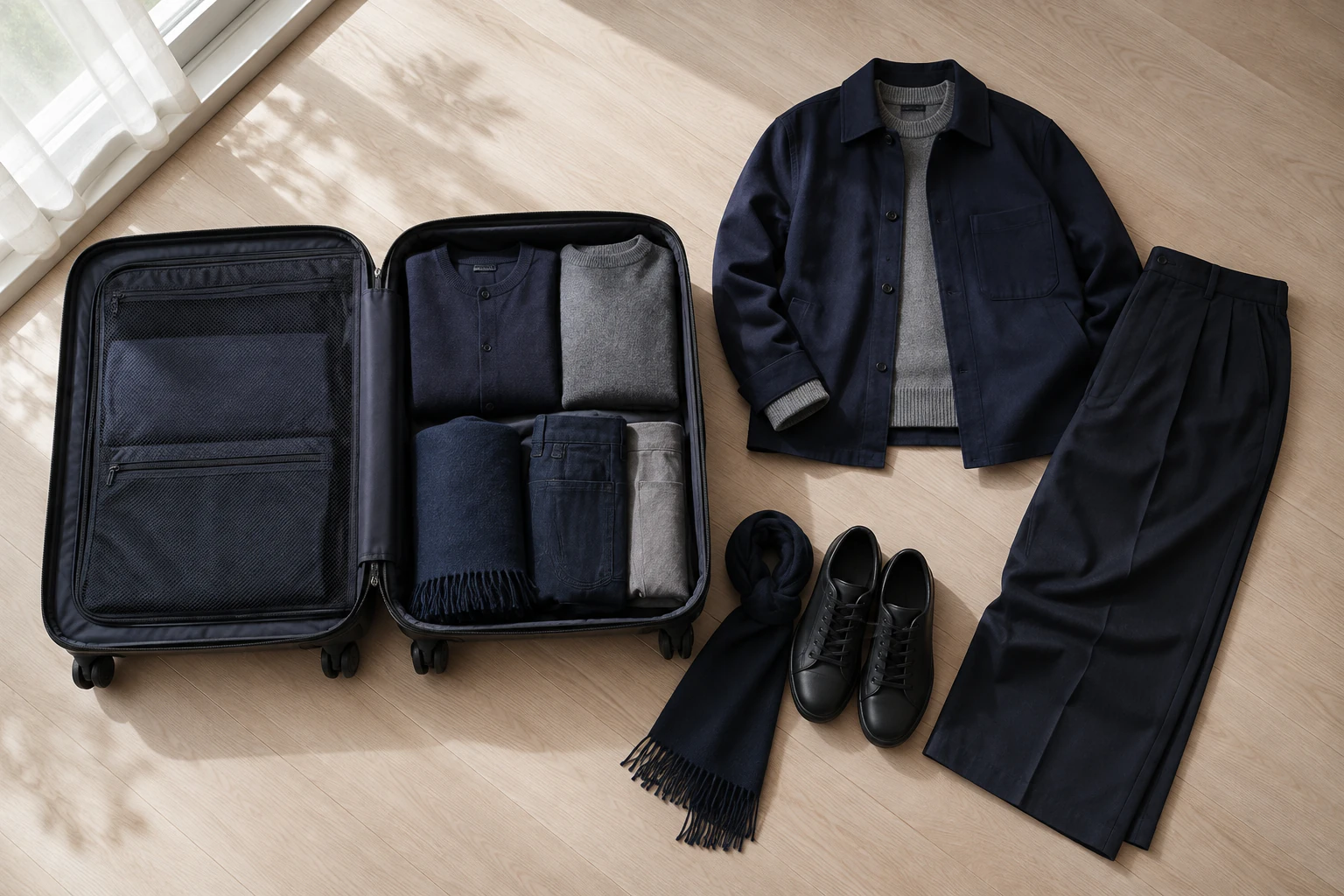
The first screening ends on packing night. A suitcase is not a closet — it is a compression device. In a closet, a jacket hangs with its shoulder line alive; in this test’s carry-on, every piece travels folded in half under the weight of what’s packed above it. Move a screen look straight into luggage, and what comes out on the first morning is not that look — it is the compressed version of it.
- Before anything goes in, ask one thing of each piece — can it spend two days compressed and still carry the first shot?
- Re-judge the scene guide’s three pillars — structured layer, soft base, wide bottoms — by suitcase rules. The ranking flips. This test treats the structured jacket, anything that needs its shoulder line back, as the highest packing risk.
- Whatever needs its structure, wear it on the plane instead of packing it (zero storage). Fill the suitcase mainly with pieces that passed the press test and are lower-risk under this simulation’s packing criteria — this one reordering changes how the first day looks.
- Don’t pass the shacket or the soft base on their names either. Press the actual piece, then check whether the change in shape stays within range — the method is Step 02.
The screening stands on the no-ironing assumption. On a long stay with a steamer available, the no-ironing assumption no longer applies. Re-test the structured jacket under the recovery method you actually plan to use rather than automatically passing it on compression.
02Check how easily the fabric creases
The Crease Test — not clothes that resist creasing, but clothes whose creases read as mood
The second screening is creasing. Don’t look for clothes that resist creasing — pick clothes whose creases read as mood. It’s the suitcase edition of the scene guide’s rule. In this test, creases are not scored as present-or-absent but by how they read inside the first-shot frame.
- The night before packing, fold each piece in half and press it for half an hour (one book is enough). Whatever exceeds the first-shot standard after unfolding stays home. The test ends at home, not in Seongsu.
- For the upper-body first shot, judge the shoulder line and front panel first. If residual creasing there changes the garment’s formal language, it fails; if it reads as texture, it passes. Creases that live outside the frame — inner sleeves, the back panel — are not judged.
- Don’t judge by fabric name. Two garments carrying the same “linen” label can behave differently after pressing depending on blend and finish; two “cottons” hold creases at different depths depending on washing. Tailored surfaces, satin, linen blends, washed cotton — press the actual piece, then judge.
- Thirty minutes is a conservative first screening. In this test, anything that already exceeds the first-shot threshold within thirty minutes is cut.
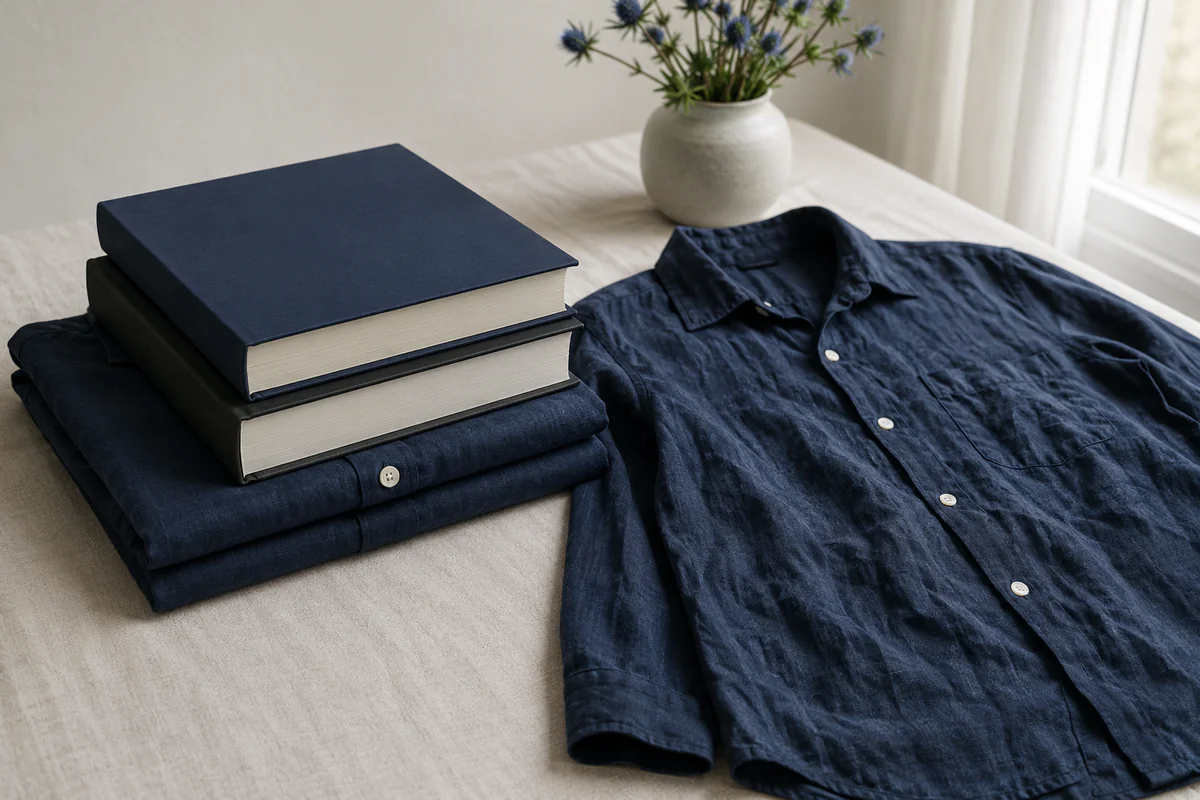
Leaving them home is the answer. If only one pair of bottoms passes, one pair is enough (the scene guide’s packing check). The goal is not to eliminate creasing but to control where it shows, so creases outside the frame are not up for judgement.
03Settle on one pair of shoes
The One-Shoe Rule — that one pair is chosen for the day’s longest leg
The third screening is shoes. If only one pair of shoes travels, choose it for the day’s longest leg. A second pair is extra baggage with a heavy volume cost. The one-shoe rule isn’t minimalism; it’s the arithmetic of storage and stamina.
- The route’s longest walk is 1.8km / 29 minutes, and stop-to-stop walking totals 4.3 km. So this test picks the one pair for the longest 1.8km leg and the 4.3 km total.
- Fly in the one pair chosen by grip and forefoot fit. If a photo pair is truly needed, it rides in the bag — with its weight counted against the 29-minute leg.
- Apply the one-shoe rule only to shoes already broken in. If your feet are sensitive, keep brand-new shoes out of the candidate set, and if one pair is not a reliable default for you, treat that as an exception to the one-shoe rule.
- If prolonged rain is forecast, this simulation adds drying speed to the score sheet and allows a second pair when one worn-in pair is not a reliable rain plan.
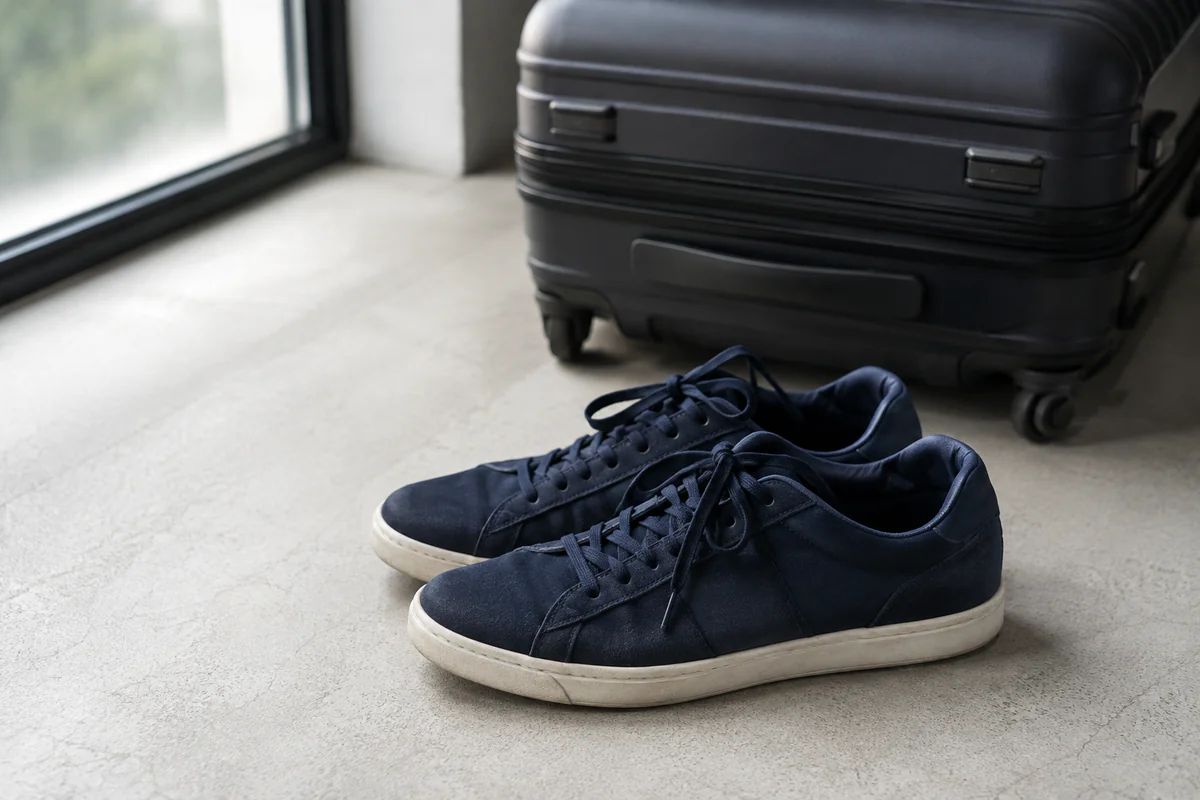
A concert hall, a fine-dining reservation — if even one formal fixture is on the itinerary, the one-shoe rule does not apply to that day. Pack the second pair, and reclaim its volume from the clothing side of the suitcase instead. The exceptions are part of the rule.
04Judge layers by their volume after they come off
The A5 Test — thirty seconds after it comes off, can it disappear into the bag?
The fourth screening is volume. Judge a layer by its volume after it comes off, not by how it looks on. This simulation tests the A5 layer across three transitions — going on in a cool interior, coming off in the afternoon, going back on at the riverside after sunset. These three states are the test conditions.
- Pack only mid layers that fold to A5. The scene guide’s A5 rule is reused as-is.
- The audit item is not the moment of taking it off but the thirty seconds after: can this piece disappear into the bag? Having to keep the shed layer in your hands is logged in this simulation as a friction risk for the shoot and the walking.
- Off the body, it goes into the bag; if it can’t, it shouldn’t have entered the suitcase either.
- Why an interior can feel different from the street, and the climate background, are in the culture note.
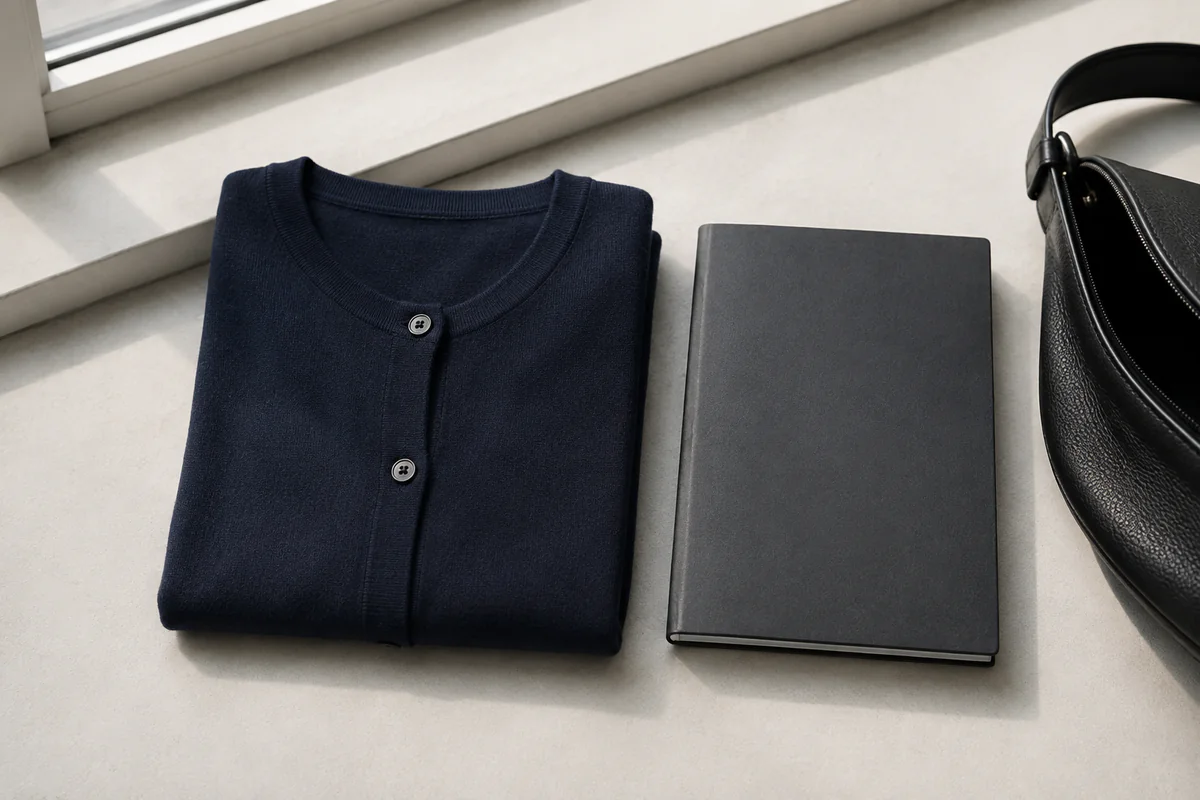
The A5 standard belongs to itineraries where layers may need to come on and off within the same day. On a midwinter itinerary where warmth takes priority and mid-layer transitions are rare, the A5 standard is not applied as-is — the scoring moves from volume to how warmth is layered.
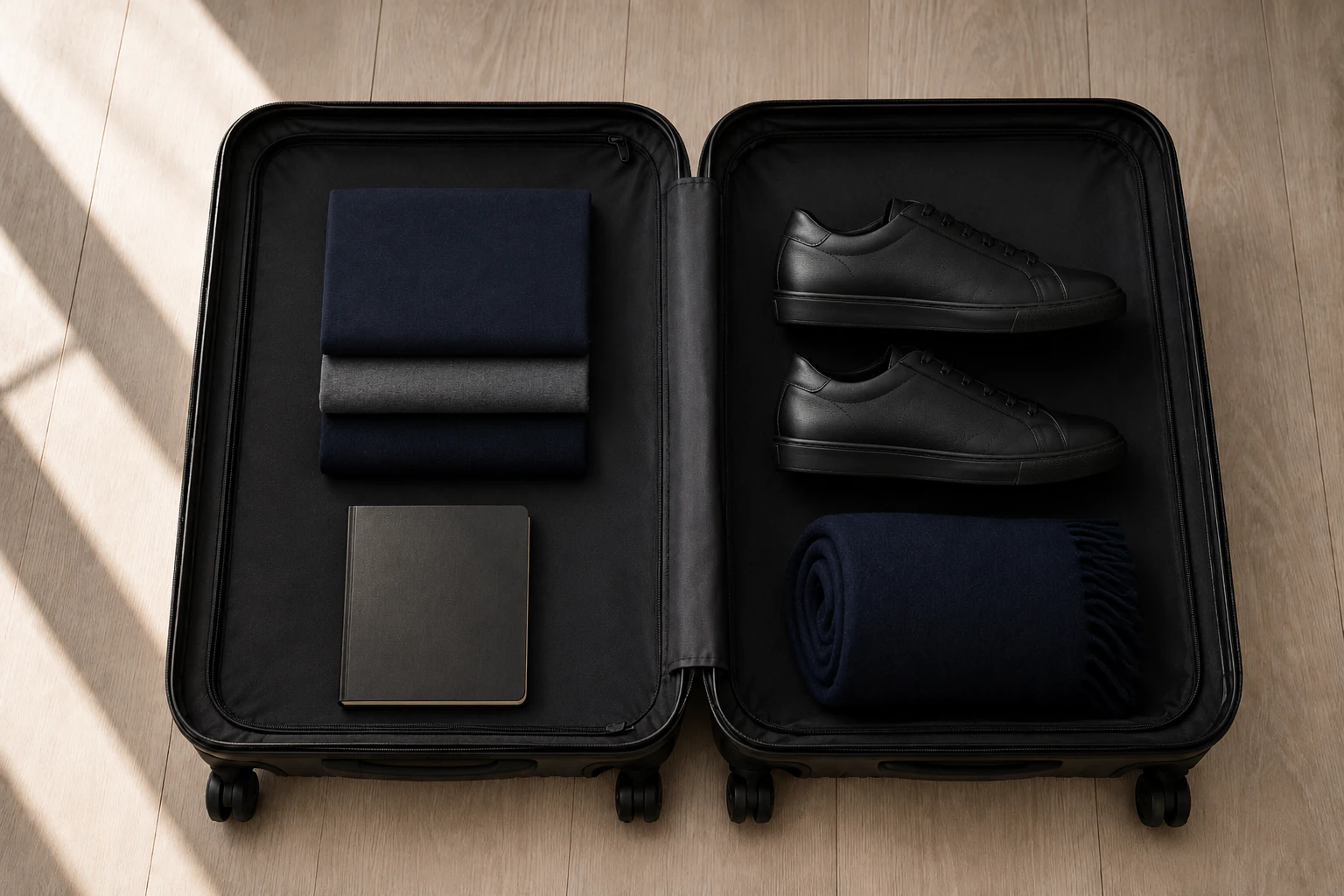
05Pack for the weather at your destination
The Climate Gap — a packing problem, not a nationality trait
The fifth screening is the climate gap. The only question is whether your departure city’s closet defaults work at the destination. This simulation assumes a Singapore-departure suitcase built around thin single layers. In a Seoul autumn, how it feels can change within one day with indoors versus out and the hour, so the test re-screens for an adjustable layer configuration.
- In this simulation, do not default to adding “one thickest item”; re-screen the outfit around two adjustable thin layers and the destination forecast. The per-temperature formulas are in the scene guide.
- The exchange condition is defined inside this test only. An itinerary that assumes “cold all day” prioritises one thick piece; an itinerary that assumes “temperature swings within one day” prioritises two adjustable thin layers.
- Set three states as the test conditions — base plus one thin layer where an interior feels cool, the scene guide’s waterproof-layer formula for rain, and both thin layers used again for the evening riverside.
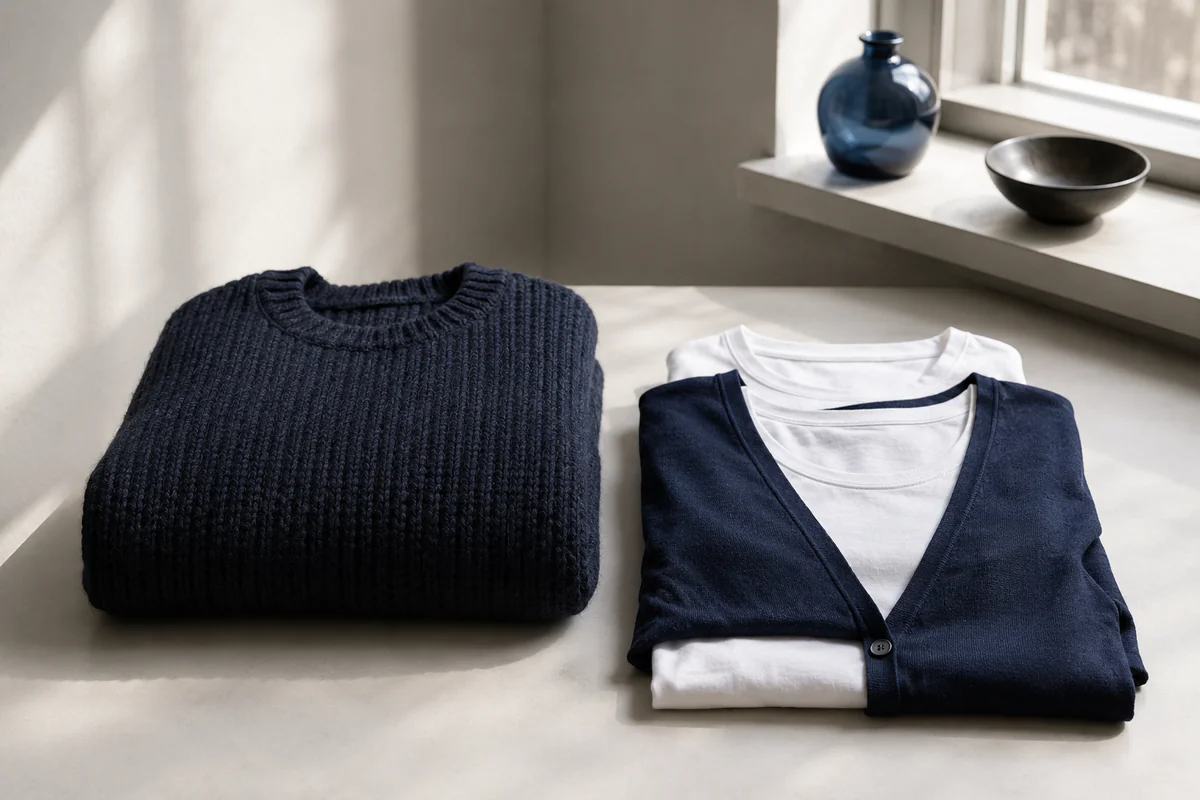
Don’t carry over your departure closet’s defaults as they are — re-screen against the destination’s forecast and schedule conditions. This test takes an adjustable configuration at the destination as its standard, not the departure city itself. Either way the screening standard is the same — does it fold to A5 after it comes off, does it carry the first shot after compression.
06Unpack and smooth out your clothes when you arrive
The First Ten Minutes — first-shot recovery, not unpacking
The sixth step is right after arrival. Don’t leave recovery until right before the first outing — secure recovery time from the moment you arrive. The point is to secure iron-free time first.
- Open the suitcase and hang the first-shot candidates first.
- If a shower is happening anyway, hang them where the steam reaches but the water won’t splash — an attempt that adds no extra tools.
- Stage shoes and bag by the door — one less decision in tomorrow’s morning sequence.
- For these first ten minutes, leave everything else in the suitcase. Finish staging the first-shot candidates, then take out only what the schedule calls for, in order. Define the ten minutes as “first-shot recovery,” not “unpacking” — two garments on hangers, shoes by the door, done.
Even arriving late, keep the order of hanging the first-shot candidates first.
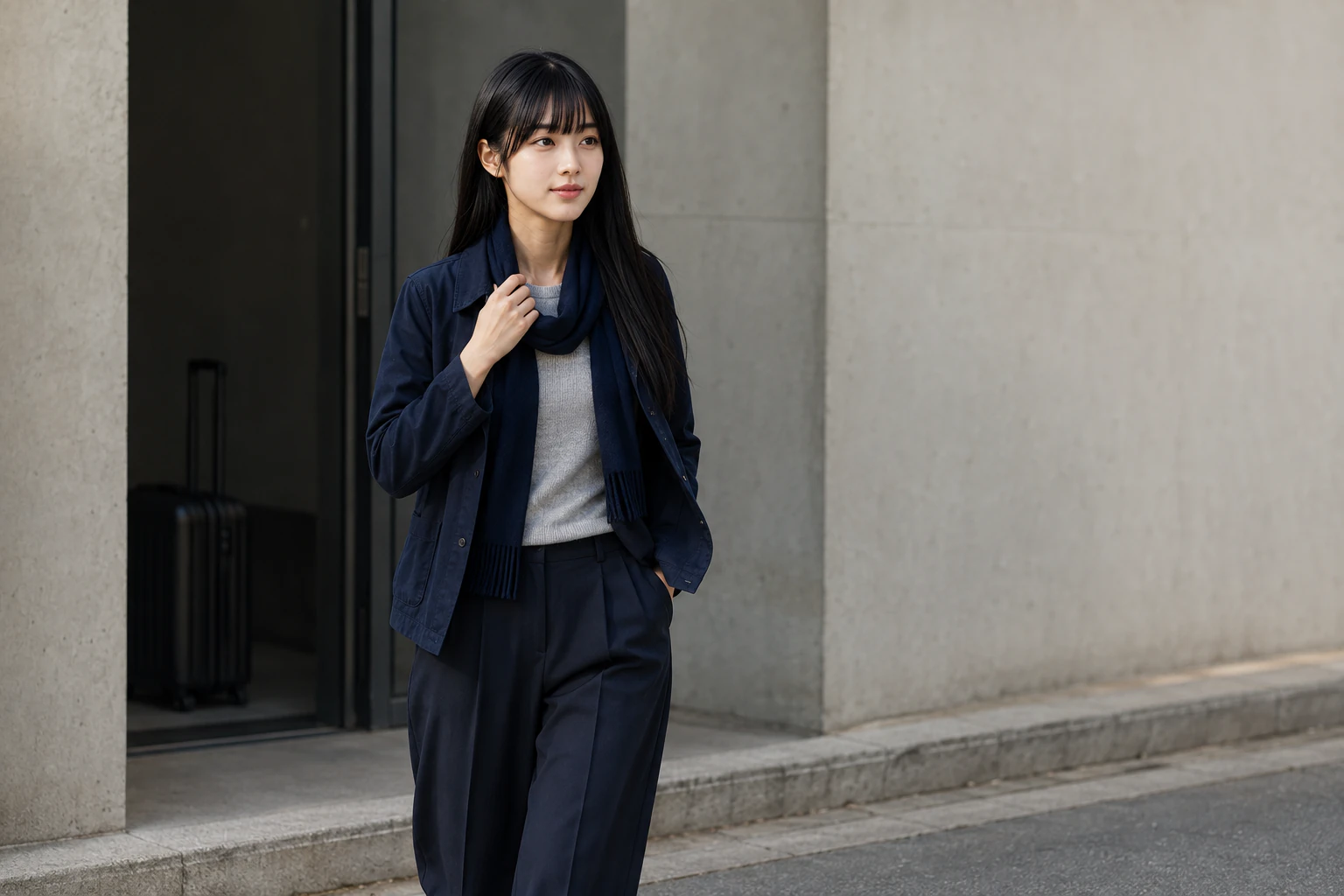
(※ This article includes staged images created with AI.)
Things to watch for
- Moving the screen look straight into luggage — what comes out on the first morning is the compressed version of it. First-round selection ends on packing night, not at the airport.
- Judging by fabric name — the same label recovers differently depending on blend, finish and washing. Verdicts come only after pressing the real garment.
- Packing the structured jacket — in this test, the highest packing risk. Wear it on the plane (zero storage).
- Packing photo shoes as a second pair — extra baggage with a heavy volume cost, and its weight lands on the 29-minute leg. The exceptions: a day with a formal fixture, prolonged rain, or feet for which one pair is not a reliable default.
- Carrying the shed layer in your hands — this simulation logs it as a friction risk for the shoot and the walking. If it doesn’t fold to A5, it doesn’t enter the suitcase either.
FAQ
Which fabrics travel well?
The same linen or cotton recovers differently depending on blend and finish, so names are used only for shortlisting and the verdict comes after pressing the real piece for thirty minutes.
Can a thirty-minute press tell me about two days of compression?
No. Thirty minutes is a conservative first screening. It is for cutting pieces that already exceed the first-shot threshold within thirty minutes.
Do I really have to take only one pair of shoes?
The exceptions are part of the rule. Three of them: a formal fixture on the itinerary (pack the second pair that day and reclaim its volume from the clothing side), prolonged rain when one worn-in pair is not a reliable rain plan, and sensitive feet for which one pair is not a reliable default. Brand-new shoes stay out of the candidate set either way.
Why A5?
It reuses the scene guide’s standard as-is. It is the volume standard for whether a layer can disappear into the bag within thirty seconds of coming off, and a notebook-sized gauge you can measure at home.
Does bathroom steam really take creases out?
It is worth a try for light creases. Hang the clothes where they won’t get wet while you shower.
Before you go — 30 seconds on packing night
- Structured jacket stays out of the suitcase — worn on the plane (zero storage)
- Every piece folded in half and pressed for thirty minutes — if residual creasing on the shoulder line or front panel exceeds the first-shot standard, it stays home
- One pair of shoes: grip and forefoot fit, already broken in — the basis is 1.8km and 4.3 km
- Mid layers only if they fold to A5 — into the bag within thirty seconds of coming off
- Two thin layers instead of the one thickest piece
- First ten minutes after arrival: hang two first-shot tops · shoes and bag by the door · the rest tomorrow
What has been checked
In this guide’s Seongsu stress test, the 1.8km / 29-minute leg comes from the full-day route, and the indoor–outdoor difference in feel is handled in the culture note as general principle and KMA climate-normals background.
To see creases more clearly, extend the press from thirty minutes to overnight, or switch from a half-fold to rolling and compare where the residual creases land.
Putting it into practice
The simulation folds to one conclusion: a travel look starts from conditions, not from styling. Only clothes the suitcase passes deserve to reach the screen — selection ends on packing night; the first ten minutes after arrival are for recovery. Read alongside: the scene guide · the route check · the reality check · Five Gaps.
“I don’t start a travel look at the photo. I first check the clothes that passed the suitcase, and only those go as far as the photo.”