SCENE TO STREET
Five Things to Check Before Your First Seongsu Visit
Your first walk through Seongsu may feel different from the photos you saved. Think about busy hours, walking distances, indoor comfort and the bags you will carry before planning the evening.

How to get there
Walking distance and time are map-route estimates; exit numbers are as of the check date.
- Check that week’s pop-up calendar once. On new pop-up launch days and the like, public reviews report queues forming from the morning.
- Set a start time. 10am on a weekday; 9am on a weekend if alley shots are the goal — possible because the first stop, Onion Seongsu, opens at 09:00 on Sat–Sun.
- Choose shoes by total walking distance. The route’s stop-to-stop walking alone is about 4.3 km.
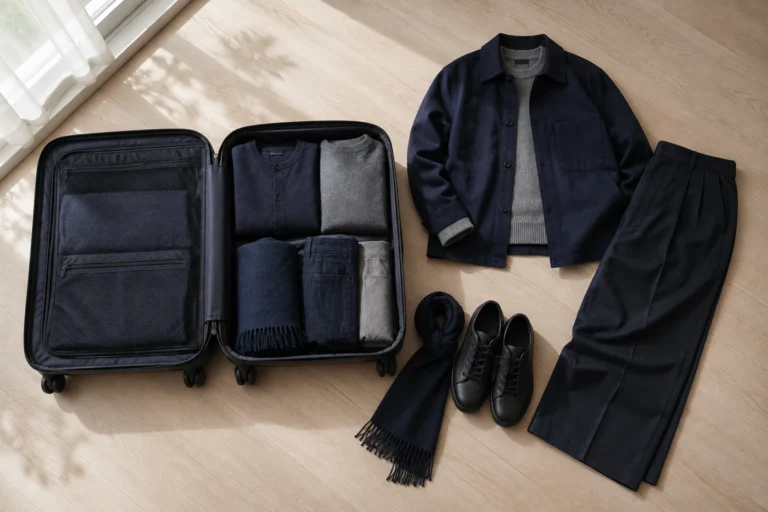
- Make sure two thin layers and an outer layer for after sunset fit in the bag.
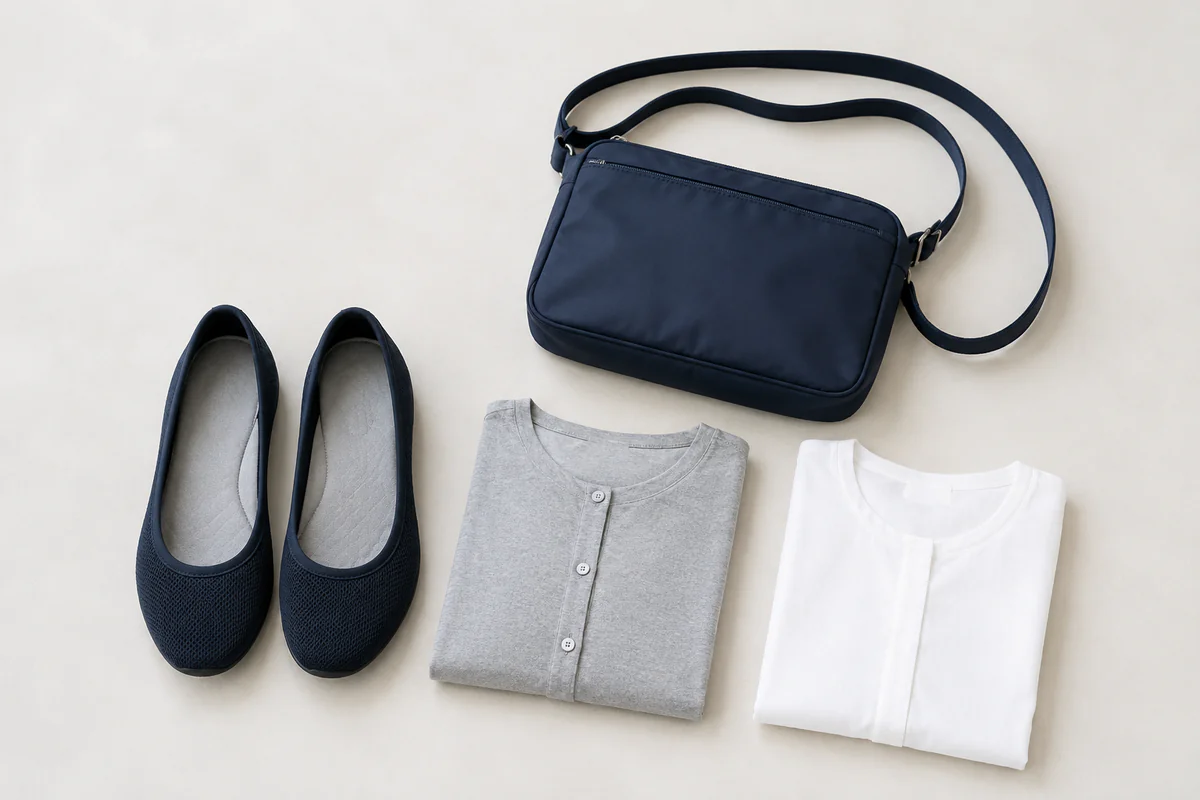
- Make sure the bag is a small crossbody that keeps both hands free. By afternoon, you may also be carrying a phone, an umbrella and shopping bags.
The return visit in this story is imagined. Check opening hours and access before you set out.
What to consider
The Seongsu in a saved folder usually looks like this: an empty red-brick alley, cafes and select shops that sit next door to each other, a light look with only a coffee cup in hand, and blue hour at the end. Maya’s folder, saved from Singapore, looked exactly like that — nine screenshots, all Seongsu.
“When I saved them, I didn’t know how many minutes of walking sat between this photo and that one, or at what hour that alley actually empties.”
This guide starts from that question. Between what a first-timer expects from the screen and what the data of the full-day route says, there are five gaps — we check them one by one, and for each gap, note how to fix the plan. The order is the order the gaps show up in a day: the alley’s hour → the map’s distance → the day’s temperatures → what you will carry in the afternoon → blue hour’s deadline. The outfit side is carried by the scene guide, and what to change when the day goes off plan is handled by the reality check — the three read as one editorial set.

01Place the alley shot by hour, not by place
Gap 1 · A quiet alley is a time, not a place
Saved expectation: the alley in the screenshot is always empty, so it gets saved as “a quiet neighbourhood.” But crowding is a variable shaped not only by the place but by the hour and the day’s conditions. This guide sets the morning as the candidate window for alley shots.
- If alley shots are the goal, pick a weekday morning. Most shops around Yeonmujang-gil open at 11am–12pm — before then, many are simply not yet open.
- If it has to be a weekend, pull the start to 9am — possible because Onion Seongsu opens at 09:00 on Sat–Sun.
- Check that week’s pop-up calendar before leaving. On new pop-up launch days and the like, public reviews report queues forming from the morning.
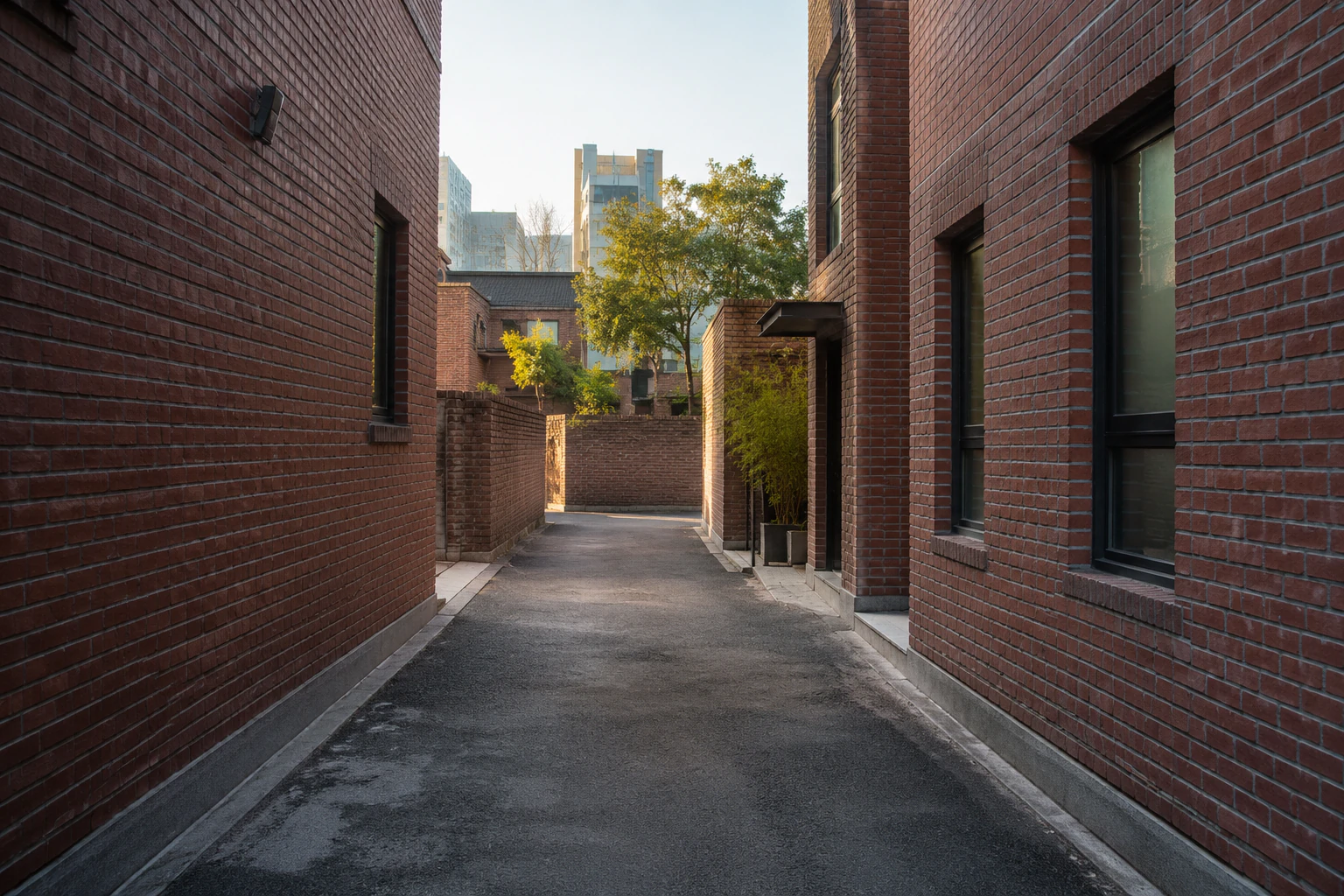
Take the alley shot out of the day’s goals and plan photos around changing the backdrop instead. Not blocking doorways, pavements and alleys comes first. The order of stops to skip when crowding turns into a 30-minute wait belongs to Step 04 of the reality check.
02Build the day on walking time, not on pin count
Gap 2 · The map shows Seongsu smaller than it is
Saved expectation: nine pins fit on one map screen, so it gets saved as “a neighbourhood you walk in one go.” But “same neighbourhood” is an illusion of map scale. Alley wandering and in-store steps are not in the route figure — and the long legs sit, of all places, late in the day.
- Design the day around walking time, not around how many pins were saved. The full-day route’s stop-to-stop walking totals about 4.3 km / 67 minutes (Kakao Map walking routes).
- Write into the plan that LCDC and Point of View, adjacent on screen, are in reality a 19-minute leg that backtracks 1.3km west.
- Point of View to Seoul Forest is 1.8km / 29 minutes — the longest walk of the day sits late in the afternoon. Keep stamina in reserve for that leg.
- Choose shoes by total walking distance. How one pair of shoes rewrites an entire route is in the reality check. The piece that dissects this one map illusion on its own is Maya’s route check.
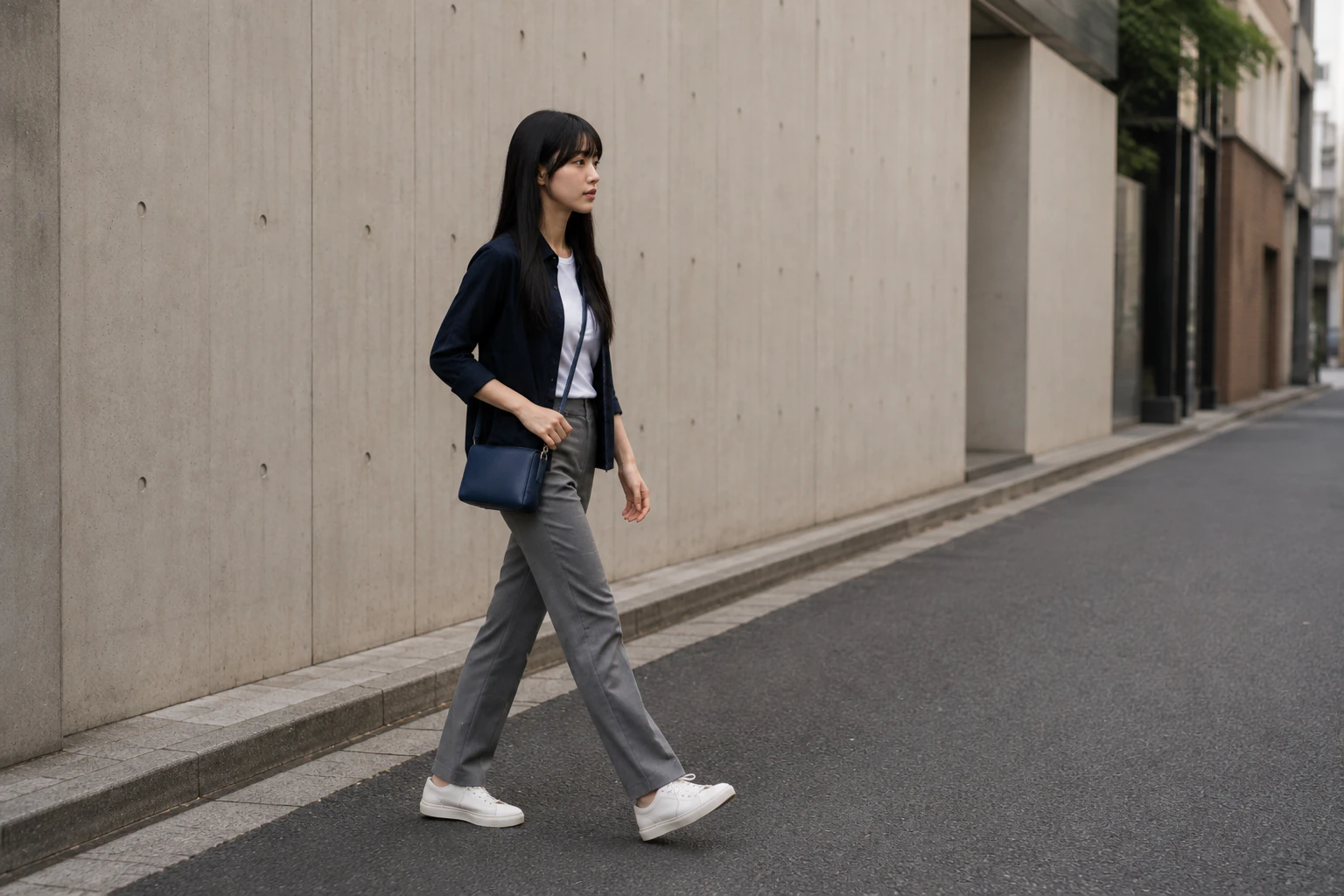
Don’t delete pins — attach walking time to them. The map app’s estimate is a planning value. Leave a margin on the estimates and trim candidates from the long late legs first.
03Dress for three zones, not one number
Gap 3 · One Seongsu day holds several temperatures
Saved expectation: that one forecast number can dress the whole day. Every look in the saved folder is tuned to “that one temperature.” The street, the interiors and the post-sunset riverside can be different conditions in how they feel, even on the same date. One forecast number cannot account for indoor feel and wind exposure at once.
- Dress in two thin layers instead of relying on one thick piece. The per-temperature formulas are in the scene guide.
- In large interiors, variables like airflow, seat position and dwell time can make how it feels differ from the street. The culture note treats the indoor–outdoor difference in feel as its own variable, and the 30-second check before you sit is there too.
- The day’s open final stretch, the Seoul Forest footbridge, is a wind-exposed section. Add the outer layer before the light drops, before stepping onto the bridge.

The thin-double-layer principle stays. Pack one layer that comes off and goes in the bag. If the room feels warm, take it off.
04Plan for what you will carry in the afternoon
Gap 4 · An outfit collects objects as the day goes on
Saved expectation: the on-screen silhouette carries one coffee cup and nothing else — and gets saved as an all-day silhouette. But the screen silhouette is a morning silhouette. By afternoon, a navigation phone, an umbrella and shopping bags can join the morning’s coffee cup — and if you shop, shopping can add both visual load and carrying load as extra variables.
- Default to a small crossbody that keeps both hands free — small enough not to cover the shoulder line.
- Keep purchases light. The route counts on the condition that anything bought at LCDC has to be carried through the later sections. The source record shows the buying window (the select-shop stretch) and the longest leg (1.8km) share the same afternoon.
- If the load grows anyway, use the route’s variation rule — skip the backtracking stop (Point of View) and head straight for Seoul Forest; the adjustment is already written into the route.

Ask first: “can I carry this to blue hour?” If the answer is no, review first the branch that reorders the route to end at the shops instead of Seoul Forest. The reduction order when luggage and foot fatigue coincide in the afternoon belongs to Step 03 of the reality check.
05Plan backwards from blue hour, and cut from the middle if it slips
Gap 5 · Blue hour doesn’t wait
Saved expectation: the last photo in the saved folder is always blue hour — saved as “the shot you get just by going.” The last window, blue hour, moves with the day’s sunset. If lunch slips past 1pm, re-check the gap to the 3pm break, and any delay also shrinks the margin left before blue hour.
- Plan backwards from blue hour. Its timing and length shift with the date — set the target time on the bridge first, from that day’s sunset.
- The middle of the timetable holds Daelim Changgo’s officially confirmed 15:00–17:00 break. Build the morning so lunch does not slip past 1pm.
- If the plan slips, cut from the middle, not the end. The route’s own first candidate is Point of View, the stop that creates the backtrack.
- In this simulation, Seoul Forest and the footbridge are the priority keep candidates, kept only when sunset, the energy to get home and tomorrow’s commitment allow. If the sun is already down, the route even carries the call to hand the footbridge to the next visit.
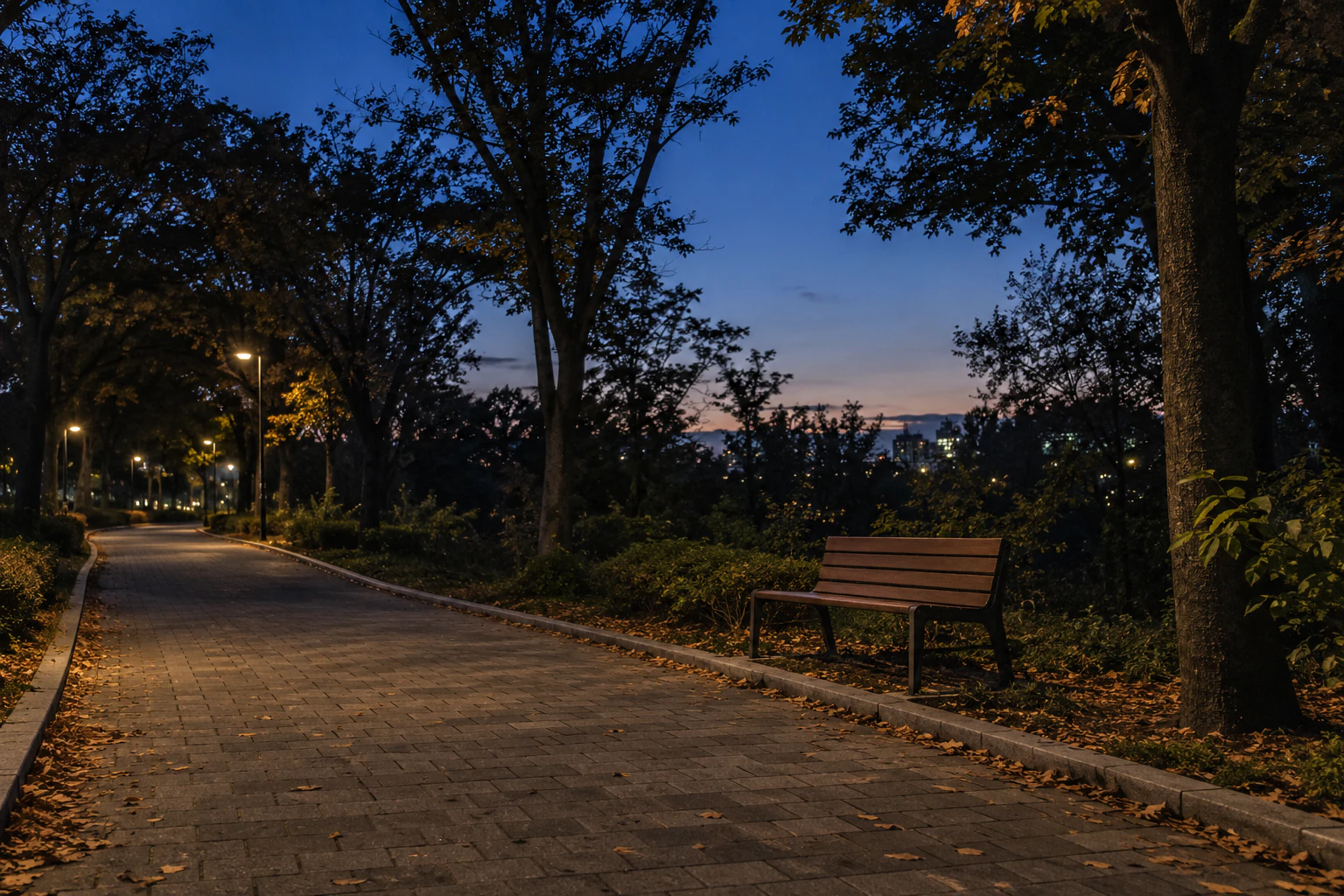
Don’t insist on the bridge. End at Seoul Forest and hand only the footbridge to your next visit’s first slot. If tomorrow starts early or the energy to get home matters more, both can go — a trip has to be planned across the whole itinerary, not just one day.
Things to watch for
- Starting at 11 — this simulation logs it as a risk that the morning window for alley shots shrinks and the lunch margin before the 3pm break shrinks with it (Gaps 1 and 5). The base design is 10am on a weekday, 9am on a weekend.
- Applying photo-first shoes unchanged to a 4.3 km full day — in this simulation, a risk candidate for afternoon redesign (Gap 2).
- Not rechecking saved places’ opening information on the day — On the morning of your visit, recheck opening hours and closure notices on the map listing or the venue’s official channel.
- Dressing by one forecast number — the street, the interiors and the evening riverside can be different conditions in how they feel, even on the same date (Gap 3).
- Planning the afternoon with the morning silhouette — count in your hands and shoulder line after the phone, the umbrella and the shopping bags join in (Gap 4).
FAQ
Can’t I visit all nine places I saved?
Look at walking time rather than pin count and the answer appears. The route’s 4.3 km / 67 minutes is the stop-to-stop walking value; alley wandering and in-store steps are not included in it. Trimming candidates from the long late legs first protects the day’s conclusion, blue hour.
Is the alley really empty?
It depends on the hour. Most shops open at 11am–12pm, so before then many shops are not yet open. If a weekend afternoon is busy, shoot less and just walk.
What if a cafe I saved no longer shows on the map?
Re-check the map listing on the morning you visit, and if it is gone, substitute a stop from the route.
What temperature do I dress for?
Not one forecast number. Thin double layers plus an outer layer for the evening is this guide’s answer, and the per-temperature formulas are in the scene guide.
Is missing blue hour a failure?
No. If the sun is already down, end at Seoul Forest and hand the footbridge to the next visit. Priority protection goes to the energy to get home and tomorrow’s first commitment, not the closing shot.
Before you go — 30 seconds to turn the saved folder into a plan
- Start time: 10am weekday / 9am weekend — check that week’s pop-up calendar
- Stops by walking time: 4.3 km / 67 min + alleys and shop floors — keep stamina for the long late leg (1.8km)
- Shoes by total distance · thin double layers + an evening outer layer · a hands-free crossbody
- Re-check saved places on the morning — if gone, substitute a stop from the route
- Sunset today ____ → target time on the bridge ____ · lunch clear of the 15:00–17:00 break
- If it slips, trim the middle (Point of View) first — keep Seoul Forest and the footbridge as priorities when sunset and stamina allow; if the sun is down, the bridge goes to the next visit
What has been checked
Put Maya’s first plan and her revised plan side by side and you get this guide in summary. The comparison is a planning exercise; its point is the order of decisions, not the numbers.
The saved-folder plan → the revised plan
| Item | Saved-folder plan | Revised plan |
|---|---|---|
| Stops | Nine | Seven (the route as adopted) |
| Start | 11am | 10am (9am on weekends) |
| Shoes | Photo-first | Grip-first |
| Clothes | One thin dress | Thin double layers + an evening outer layer |
| Bag | A large shoulder bag | A hands-free crossbody |
A simulation-based comparison — it shows the order of decisions, not numbers.
The three failures this simulation guards against first come out of the same gaps: starting at 11 and losing both the morning margin for alley shots and the lunch margin before the 3pm break (Gaps 1 and 5); applying photo-first shoes unchanged to a 4.3 km full-day plan (Gap 2); and a saved place that can no longer be found.
Putting it into practice
A saved folder is not a plan; it is material for one. When planning, distinguish the date you saved a place from the date its operating information was checked. Read this guide’s figures with their checked-on dates, and recheck your saved places’ opening information on the morning of your visit. If this is your first visit, read the three pieces in this order: the route first (where, and when), the scene guide next (what to wear and carry), and the reality check last (what to change when the day changes). What goes into the suitcase is the suitcase test’s job.
“A first-visit plan stays a draft. Check dates decide what can remain in it.”
(※ This article includes staged images created with AI.)