
SEOUL · INSADONG
Elena’s Wednesday at the Kyung-In Museum of Fine Art: six galleries off an Insa-dong alley, and the hanok tea house Jeontong Dawon
Anguk Station Exit 6 (towards Jongno Police Station) · free exhibitions, 10 a.m.–6 p.m., new shows every Wednesday · at Jeontong Dawon, in the same grounds, you can have tea between 11 a.m. and 9 p.m.
Elena, who writes her scene directions in square brackets, has picked as her stage this time a museum where the curtain changes every Wednesday. At 11-4 Insa-dong 10-gil she walks round six galleries, then at dusk sits down in the hanok tea house in the same grounds.
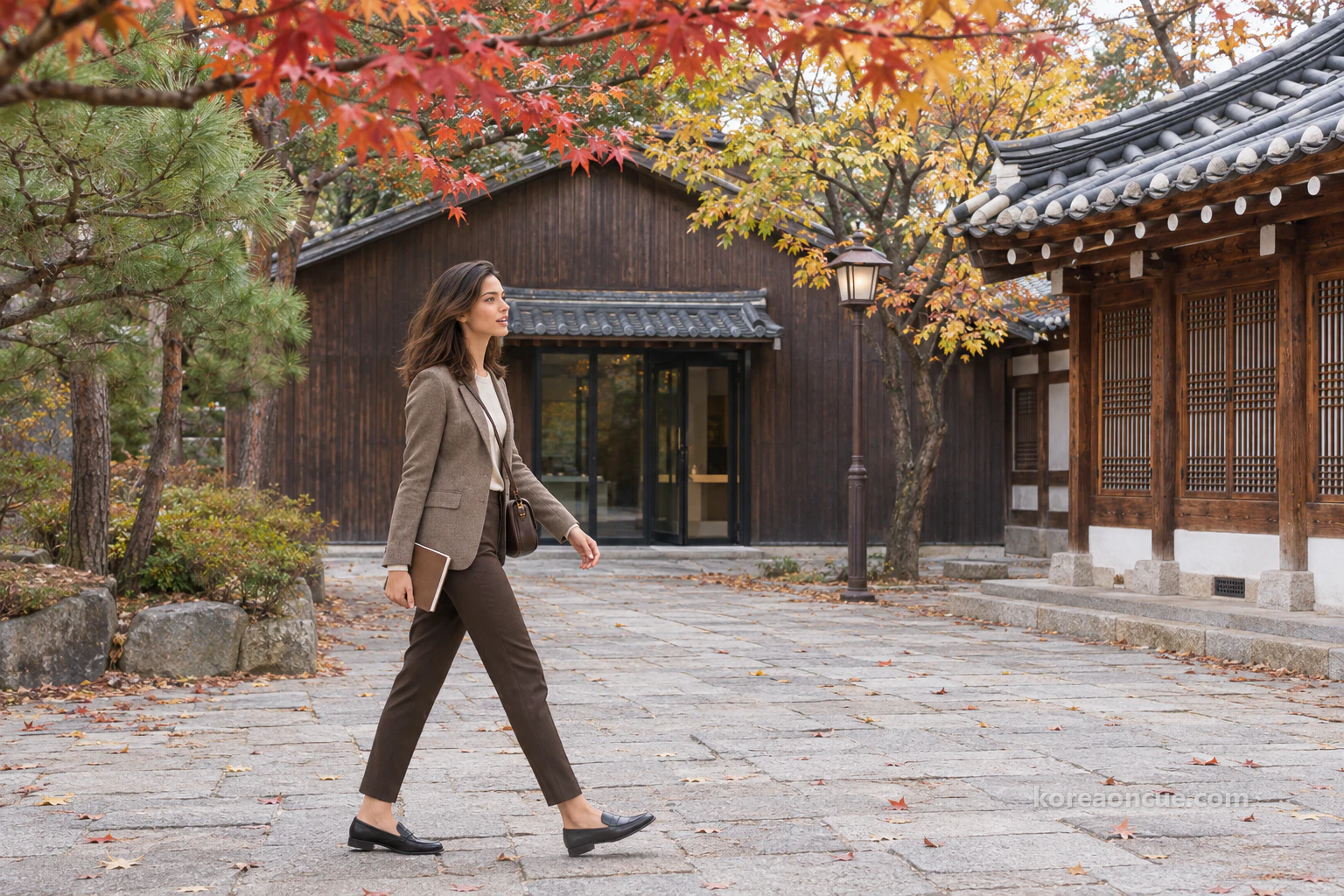
How to get there
At half past one on Wednesday 11 November, Elena came out through the ticket gates at Anguk Station on Line 3 and opened her notebook. Elena, 27 and from Spain, likes to hold the scenes of Korean dramas up against the real Seoul. She reads places as if they were stages, dividing them up, and writes her camera directions inside square brackets. The first line on today’s new page was “[Wednesday — the day the curtain changes]”. It was the day the Kyung-In Museum of Fine Art in Insa-dong opened the week’s new shows.

Elena picked this museum because of a single calendar. Shows at the Kyung-In Museum of Fine Art run in weekly cycles, opening on Wednesday and coming down on Tuesday. To Elena, that calendar looked like the programme of a theatre that swaps out its whole set every week. So she chose a Wednesday on purpose, the day a new curtain goes up, and decided to see all the galleries first, then sit down at dusk in Jeontong Dawon (전통다원), the hanok tea house in the same grounds. The line she wrote as she walked towards the exit was “[Act 1 the walk · Act 2 the shows · Act 3 the tea house]”.
The Cue — At a glance
To reach the Kyung-In Museum of Fine Art, come out of Anguk Station (Line 3) by Exit 6, towards Jongno Police Station, and head for 11-4 Insa-dong 10-gil, Jongno-gu, Seoul. Six free galleries (Galleries 1, 2, 3, 5 and 6 and the Atelier — there is no Gallery 4) share the grounds with the hanok tea house Jeontong Dawon. Shows change every Wednesday and the galleries close at 6 p.m., but you can have tea at Jeontong Dawon until 9 p.m., so see the exhibitions first and leave the tea for later.
- Station and exit: Anguk Station (Line 3) Exit 6, towards Jongno Police Station. From Exit 5, it is 354 m to the museum. On Line 1, it is Jonggak Station Exit 3 (towards the National Tax Service). On Line 5, it is Jongno 3-ga Station Exit 5 (towards Nakwon Arcade).
- Address: 11-4 Insa-dong 10-gil, Jongno-gu, Seoul. Put the street name and the number into your map, and you will wander less in the alleys.
- Exhibitions: Free entry, 10 a.m.–6 p.m., open at weekends too. New shows open on Wednesdays, and Tuesday is changeover day. In November, new shows start on the 4th, 11th, 18th and 25th (all Wednesdays).
- Jeontong Dawon: A hanok tea house inside the museum grounds. You can have tea between 11 a.m. and 9 p.m. Fifteen traditional teas, cards accepted, 02-730-6305.
- Worth seeing: ① six exhibitions, a separate one in each gallery ② Gallery 2, the glass gallery that lets in natural daylight, and Gallery 3, the hanok gallery ③ the room at Jeontong Dawon where the sliding doors open onto the garden.
- Good to know: You need the artist’s consent to photograph the works. Finish any food before going into the galleries. There is a step at the main entrance, and there is no accessible lift or accessible toilet. Eogeomdang (어검당), the sword gallery, is open 10 a.m.–6 p.m. by reservation (02-733-4452). Groups should send an official letter in advance and contact the office (02-733-4448).
Which exit to use — Anguk Station Exit 6, towards Jongno Police Station
Come out of Anguk Station (Line 3) by Exit 6, towards Jongno Police Station. Elena, too, left the ticket gates and walked towards Exit 6. Before going up to street level, she put the address “11-4 Insa-dong 10-gil, Jongno-gu, Seoul” into the map on her phone. With a numbered street name, putting in the number as well means less wandering at the mouth of the alley.
Open in Kakao Map — Anguk Station
Exit 5 works too, and from Exit 5 it is 354 m to the Kyung-In Museum of Fine Art. Elena wrote the two exits side by side in her notebook: “[Exit 6 — towards Jongno Police Station]” and “[Exit 5 — 354 m]”. Today she would go out by Exit 6 and try Exit 5 on the way back. Whichever exit you use, what you are looking for at the end is the same single address, so Elena memorised the address before the exit numbers.
There are ways in from other lines too. On Line 1, it is Jonggak Station Exit 3 (towards the National Tax Service), and on Line 5, Jongno 3-ga Station Exit 5 (towards Nakwon Arcade). If you come by car, use the paid car park at Suun Hall (Cheondogyo Hall), opposite Unhyeongung. From that car park, the museum is a five-minute walk. She would not need any of this today, but thinking of a future visit on another line, Elena wrote these two lines small in the margin of her notebook as well.

Up on the street, Elena slowed down and checked the map screen once more. Today’s Act 1, after all, was finding the way. Alley scenes in dramas usually open on a shot of the lead already standing at the door. For a traveller, though, the few minutes it takes to reach that door feel the longest. Elena didn’t want to skip those minutes, so she walked on, matching the dot on the map to each real street corner, one by one.
Where to go — 11-4 Insa-dong 10-gil
The address of the Kyung-In Museum of Fine Art is 11-4 Insa-dong 10-gil, Jongno-gu, Seoul. Checking the last number of the address, “11-4”, on her map screen as she went, Elena walked into the museum courtyard. The first line she wrote in the courtyard was “[Courtyard — a different scene from here]”. The sounds of the alley outside seemed to have dropped a notch. Elena took the difference down as the cue for a change of scene.

Elena hesitated for a moment, too, as she stepped into the courtyard. With the galleries and the tea house in the same grounds, it could look like a place only for people coming in for tea. The exhibitions have no admission charge. If you have come for the exhibitions, just find the gallery you want to see and go in. Each gallery has its own entrance marked on its floor plan, so you see one, come out and move on to the next.
The Kyung-In Museum of Fine Art was founded on 6 December 1983 by Lee Geum-hong, known as Kyung-in. It opened with the idea that a museum should not belong to any particular person, but should be somewhere friendly and open to everyone, young and old, men and women alike. Reading those words, Elena thought back to the scene a moment earlier, when she had walked into the courtyard without paying anything. She found her own brief hesitation a little funny. In her notebook she wrote “[No admission charge — a stage anyone can walk onto]”.
If you are with someone who has difficulty getting around, there are things to know. There is a step at the main entrance. There is no accessible lift, accessible toilet or accessible parking, and no wheelchair hire. If you are visiting as a group, send an official letter in advance and contact the museum office (02-733-4448). Avoid group visits on busy days such as weekends, and if you want to photograph the works, check first that you may.
When do the shows change? — they open on Wednesday and come down on Tuesday
Exhibitions at the Kyung-In Museum of Fine Art change every week. New shows open on Wednesday, and Tuesday is the day the shows come down and the next ones are prepared. Wednesday to Tuesday makes one week’s exhibition schedule. Wednesday 11 November, the day Elena came, was the first day of a new week. Elena wrote the rule down as “[Wed — curtain up · Tue — the set comes down]”.
On the November calendar, the sums are easy. The 4th to the 10th, the 11th to the 17th and the 18th to the 24th are one week each, and the week starting on the 25th runs to 1 December. So even at the same museum, last week’s shows and this week’s are different. Someone who has visited once and comes back the following week will see new exhibitions. Elena drew these four weeks in her notebook, one box each.

Within a single week, too, each gallery has a show of its own. Galleries 1, 2, 3, 5 and 6 and the Atelier, six spaces in all, each hold a different exhibition. In the last week of October (28 October–3 November), calligraphy, Western painting, ceramics and watercolour shows were all up at once. Thinking of that calendar, Elena wrote “[Six features showing at once today]”. Seeing several shows in different genres one after another, all on one site, is the pleasure of walking round this museum.
When to go follows from this rule. If you want to see a new show on its first day, go on a Wednesday. Tuesday is changeover day, so if you are hoping for new shows, go from Wednesday onwards. The exhibitions are open at weekends too, so travellers walking round Insa-dong at the weekend can still see that week’s shows. Elena drew a long line between Wednesday and Tuesday and called it “[One run — the curtain goes up on Wednesday and comes down on Tuesday]”.
How many galleries are there? — Galleries 1, 2, 3, 5, 6 and the Atelier, and no Gallery 4
There are five galleries plus the Atelier, six spaces in all. Their names are Gallery 1, Gallery 2, Gallery 3, Gallery 5, Gallery 6 and the Atelier. Copying the names down, Elena stopped her pencil when she saw 5 coming straight after 3. Wondering if she had written it wrong, she counted again from the start. These six are the only gallery names at the Kyung-In Museum of Fine Art, and there is no Gallery 4.
Elena found herself drawn to that missing number. Leafing through a script, you sometimes find a scene number skipped as it jumps to the next scene. Elena wrote “[Set 4 — none, straight from 3 to 5]” in her notebook and smiled a little. When you are looking for a gallery, it is easier to go by name than by number order. Count Gallery 5 as the fifth building and you will only get more confused.
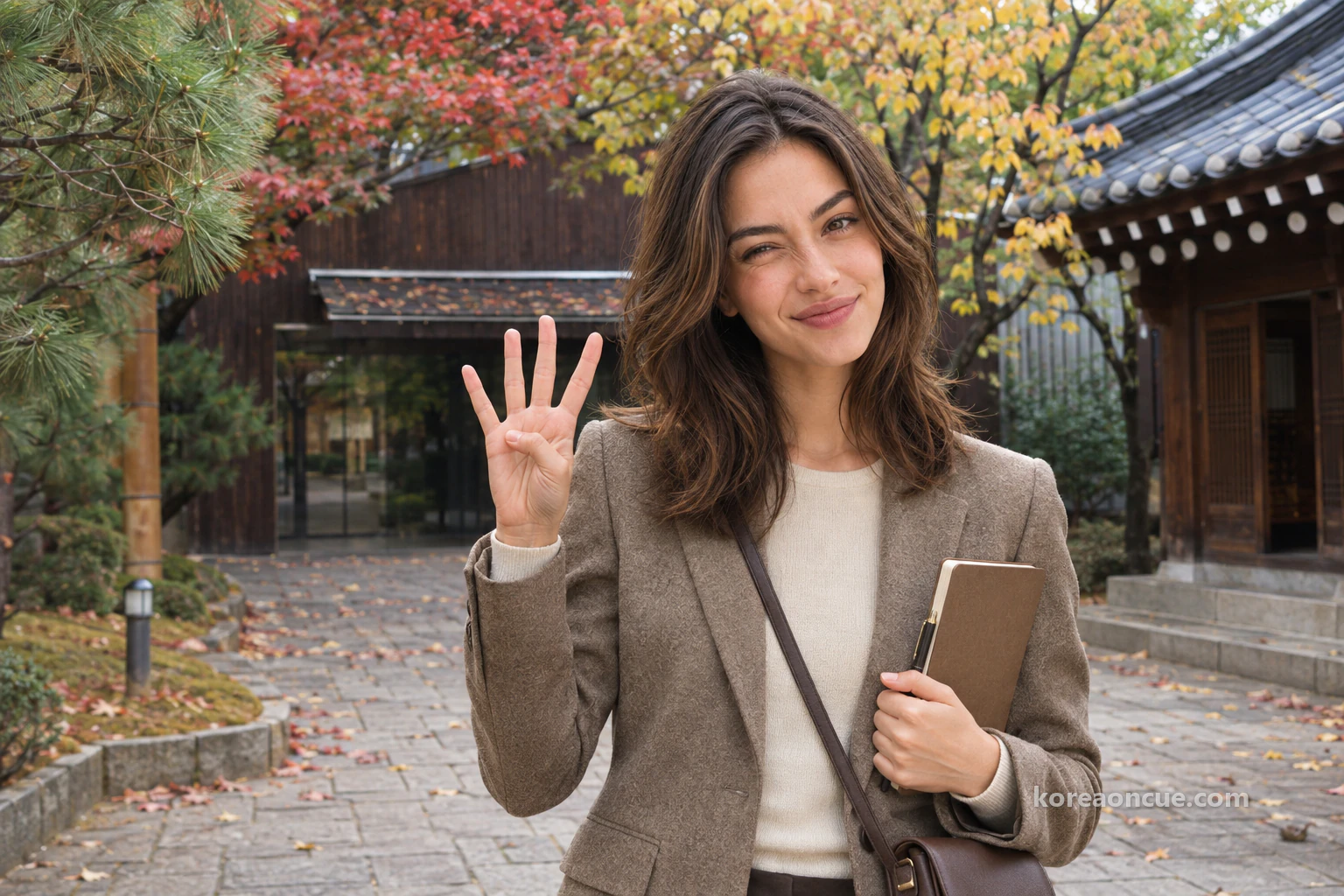
The six spaces all look different. Galleries 1 and 2 are detached buildings on two floors, and Gallery 3 is a single hanok. Galleries 5 and 6 are modern single-storey buildings, and the Atelier is a small gallery on the ground floor of the office building. Because each one looks different, walking all six in a day never feels like walking the same room twice. Elena grouped them as “[Two on two floors · one hanok · two new buildings · one small room]”.
Today Elena decided to walk the galleries in number order, starting at Gallery 1 and finishing at the Atelier. This is not an order the museum sets, but one Elena chose to keep her notebook tidy. She would use one page of her notebook per gallery, and she wrote the gallery’s name at the top of each page first. Elena opened the door of Gallery 1 at 1:50, only a few minutes after stepping into the courtyard.
What are Galleries 1 and 2 like? — two buildings on two floors, and a glass gallery that lets in daylight
Gallery 1 is the largest exhibition space at the Kyung-In Museum of Fine Art. It is a detached building on two floors, so large works, or a great many works, can be hung at once. It was refurbished in January 2000. Under its high ceiling, white walls ran a long way, making a room where even large works could be taken in at a glance. Elena walked slowly round the lower floor, then went upstairs and took a slow turn round the exhibition space there too.
Gallery 2 is also a detached building on two floors. This one is a glass gallery that lets in natural daylight. Man-made materials such as glass and steel frames sit together with trees placed indoors, and it was refurbished in February 2005. Even on a cloudy day the room wasn’t dark, and Elena found herself wondering what the light would be like on a clear one. Looking up at the cloudy afternoon light coming through the glass, she wrote “[Lighting — the sky’s job today]”.
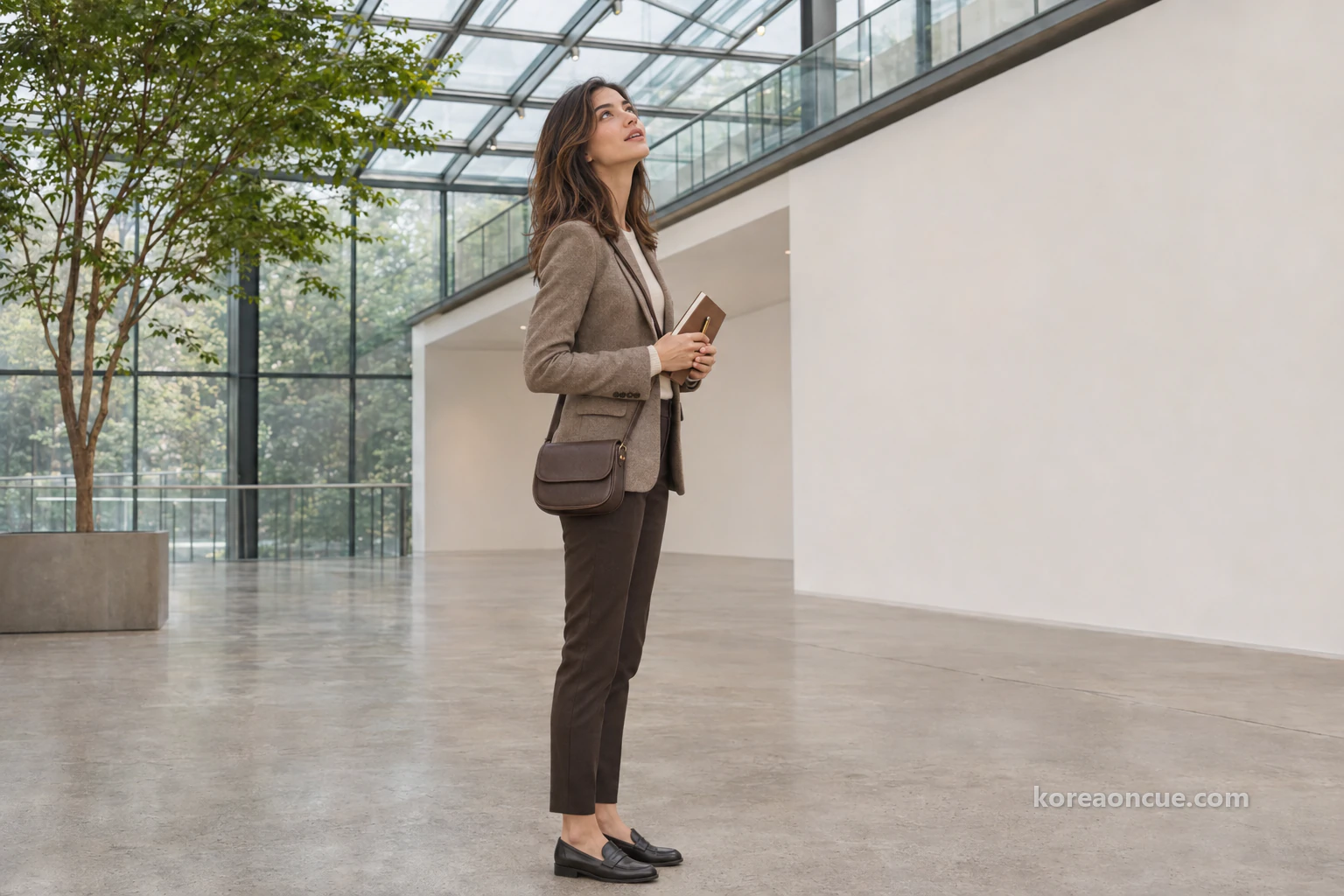
From these galleries on, Elena had to think about photographs. The museum’s gallery etiquette asks visitors not to take photographs without the artist’s consent. It also asks you not to touch the works, and to finish any food before coming in. Elena put her phone in her bag and decided to record the spaces in her notebook instead of the works. If there is a work you want to photograph, ask for the artist’s consent before you raise your phone.
Instead of writing about the works, Elena wrote down the places where she had stopped for a long time. Upstairs in Gallery 1, by the glass wall in Gallery 2, places like that. For Elena, a museum notebook is not a list of works but a record of “where I looked at what for a long time”. As the shows change every week, she thought, next time she would see a different scene from the same spot. Picturing different actors playing on the same set, Elena was already curious about next week.
Gallery 3 is a hanok, Galleries 5 and 6 are new buildings — different eras on one site
Gallery 3 is the hanok gallery. It is a traditional single-storey building that can take large works too, and crafts, painting and Korean painting suit it especially well. From outside, the roof tiles and wooden pillars are just as they always were, but the walls inside have been left white for exhibitions. Stepping in, Elena gazed for a long time at the room where white walls and a wooden floor sit together. Then she wrote “[Period-drama set — but with white walls]”.
This site has one more hanok story. An old hanok that originally stood here was donated by the museum to the city of Seoul and moved to Namsangol Hanok Village. Today’s Gallery 3 hanok was built new on this spot afterwards, and was extended once more in January 2018. Elena remembered walking round Namsangol Hanok Village last Thursday night. She had ended up seeing the before and after of the same site in two different parts of Seoul, so she wrote “[Same site — the earlier story is at Namsangol]” in her notebook.
The house that moved to Namsangol is a timber building from the 1800s, originally the home of a scholar-official family, made up of the anchae (inner quarters), the sarangchae (outer quarters), a byeoldang annex, a gatehouse and servants’ quarters. Only the anchae was left here, and when it was moved to Namsangol Hanok Village, the sarangchae and the byeoldang were rebuilt. Before that, during the Japanese colonial period, the house passed into Japanese hands, and after liberation it was used as staff housing for the Korea Development Bank, among other things. Lee Geum-hong, who founded the museum, bought the house, tore out the glass windows and the briquette-fired kitchen added by its Japanese owners to bring back its original form, and laid out a garden around it. Thinking of the anchae she had seen at Namsangol last week, Elena pictured the house standing in this courtyard.

Galleries 5 and 6 are modern single-storey galleries, each a detached building. Gallery 5 was built new in April 2008 and Gallery 6 in January 2011. Right next to Gallery 5, with its dark timber walls, stands a hanok with a tiled eave, so two eras come into the same shot. To Elena, it looked like a set where buildings from different times stand side by side on one stage. In front of that corner, she wrote “[Two-shot — roof tiles and a timber wall]”.
The Atelier is a small gallery on the ground floor of the office building. It suits small works, and crafts, painting and three-dimensional pieces all fit there. It was refurbished in July 2004. Elena had set it aside as her last gallery of the day. Coming into the small room after all the large galleries felt like the short close-up tacked on at the end of a long scene.
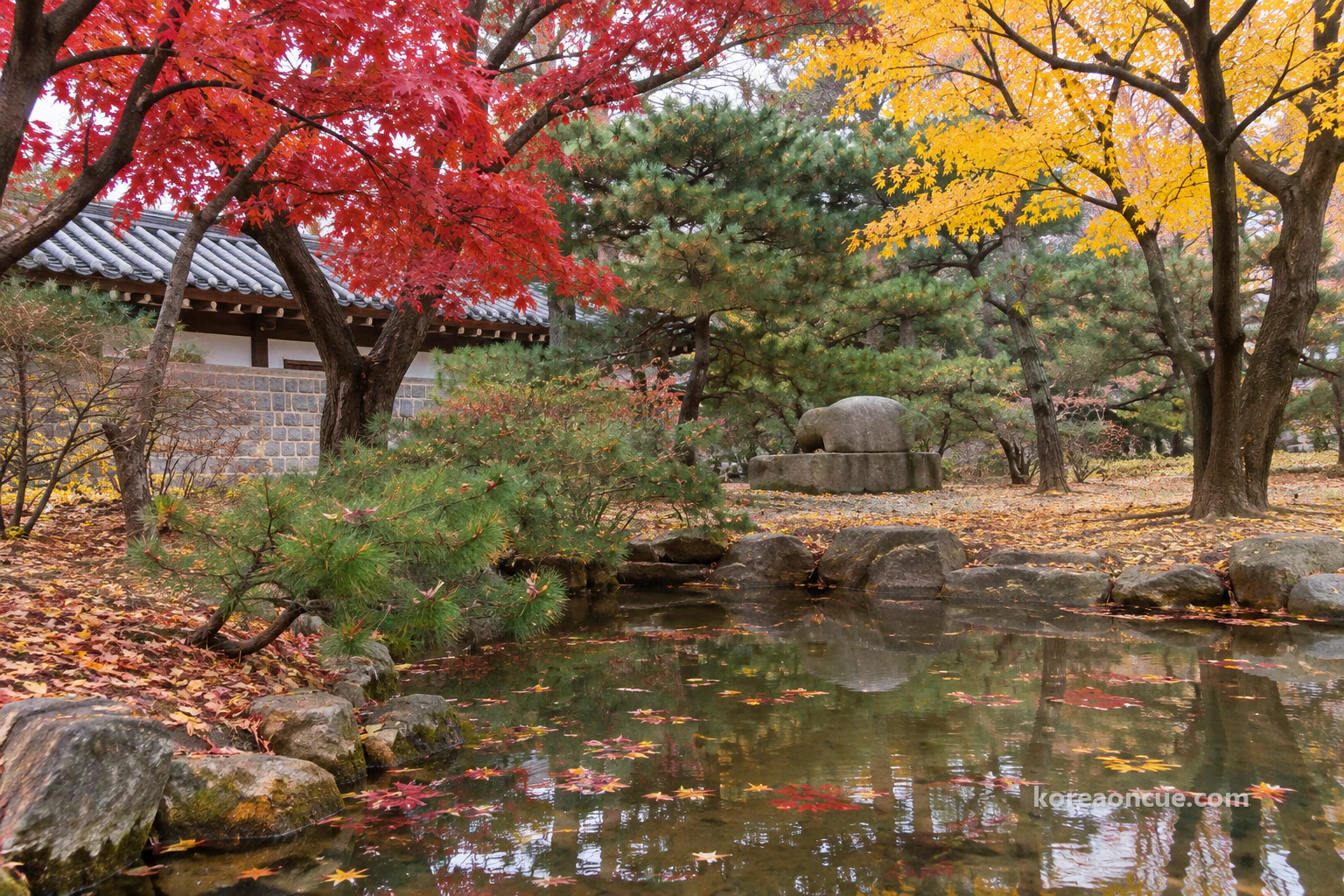
Don’t just walk straight through the garden between the galleries, either. There is a small pond and trees that suit the hanok, and sculptures, three-dimensional works and installations stand here and there in the garden, so there is more to see outside the galleries too. Each time she moved between galleries, Elena slowed down in front of the pond. A few dry red and yellow leaves floated on the water. If the galleries are the stage, Elena thought, the garden is like the corridor that links one scene to the next.
How late can you visit? — free exhibitions, 10 a.m. to 6 p.m.
The exhibitions are open from 10 a.m. to 6 p.m. There is no admission charge, and they are open at weekends too. When Elena came out of the Atelier, her last stop, it was half past four. She had opened the door of Gallery 1 at 1:50, so walking all six at her own pace had taken a little over two and a half hours. Filling a page of her notebook for every gallery, Elena had stayed quite a long time.
If you are coming late in the afternoon, remember 6 p.m. The galleries close at six, but Jeontong Dawon, in the same grounds, stays open after that. That is why Elena chose to see the exhibitions first and go to the tea house later. As visitors are asked to finish any food before entering the galleries, it is neater to see all the exhibitions first rather than go back to them after tea. Elena wrote “[End of Act 2 — curtain before six]” and closed her notebook.
When to drop in at Jeontong Dawon — the hanok tea house in the same grounds, between 11 a.m. and 9 p.m.
Jeontong Dawon is a hanok tea house inside the grounds of the Kyung-In Museum of Fine Art. Since it shares the grounds with the galleries, you can also look round the museum while you are there for tea. The exhibitions are free to see, but the tea house is a place where you order tea and sit down. To Elena, the two looked divided like the stage and the green room of the same theatre. In her notebook she wrote “[Stage — six galleries · green room — one tea house]”.
At Jeontong Dawon, you can have tea between 11 a.m. and 9 p.m. That means you can drop in during the evening, after the galleries close at six. You can see the exhibitions in the afternoon and have tea at dusk, as Elena did, or start the day with a cup of tea in the morning. You can pay for tea by card, and the tea house’s phone number is 02-730-6305. Because the hours are this separate even within the same grounds, Elena wrote the gallery hours and the tea house hours in her notebook as two lines, one above the other.
If you come in the morning, you can switch the order around a little. The galleries open at 10 a.m., and you can have tea between 11 a.m. and 9 p.m. Start the exhibitions at ten, see one or two galleries, sit down in the tea house, then go back for the rest. As you need to finish any food before entering the galleries, just make sure your hands are empty when you leave the tea house. Elena decided to try this morning order next Wednesday.
As Elena reached the tea house, a wind chime rang at the end of the eaves. She stopped for a moment at the sound, thinking it felt like visiting a temple in the mountains. Stepping inside, she found traditional music playing along with the soft scent of tea. Elena took out her notebook and wrote “[Act 3 — sound effect: the wind chime]”. The smallest sound she had heard all day had become the cue for the curtain to go up.
There are two kinds of seat, inside the hanok rooms and out in the garden, and you sit on whichever side you like. Garden seats bring you close to the trees and the breeze, and in the rooms the door frame crops the garden like a picture frame. Slide the doors open and you look straight out onto the wooden veranda and the garden. The late-afternoon November wind was chilly, so Elena chose a room. She left the sliding door open about a hand’s width and settled where the garden would sit inside the door frame.
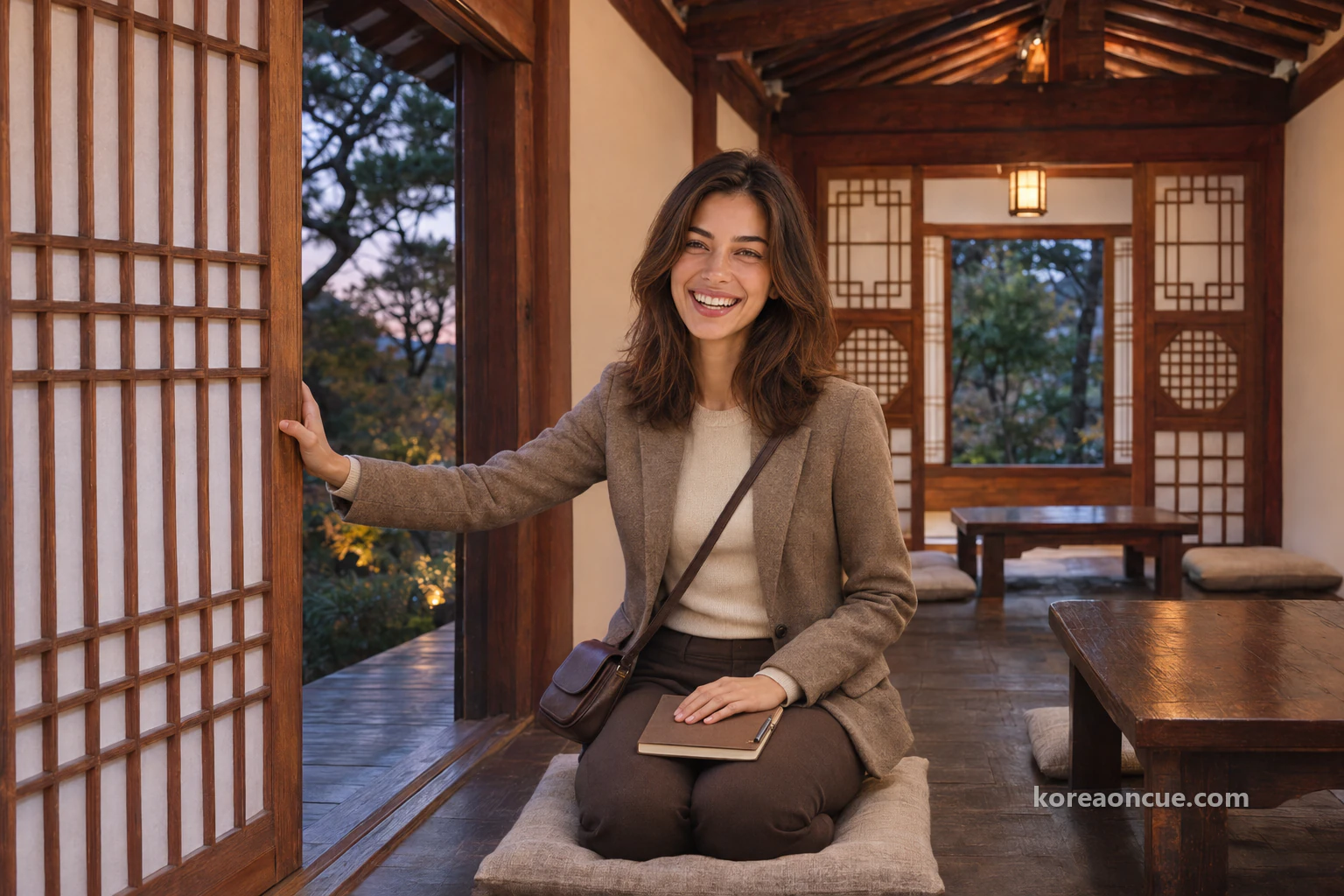
What to drink at Jeontong Dawon — 15 traditional teas, ssanghwacha, jujube, ginger and omija teas, and yugwa
Jeontong Dawon serves 15 traditional Korean teas. The house tea is ssanghwacha. There are also jujube tea, ginger tea and omija tea, and you can have traditional sweets such as yugwa alongside. Ssanghwacha is a tea brewed from several medicinal herbs, and yugwa is a sweet, fried rice confection. After studying the menu for a while, Elena decided that as this was her first cup of the day she would start with the house tea, and chose ssanghwacha.
Elena had a way of choosing from the menu that was very much her own. She read the tea names like scene titles. Ssanghwacha was “[A weighty opening scene]”, and omija tea “[A twist where five flavours mix]”. Playing this game on her own, Elena bit her lip to keep from laughing. She decided to pick a different scene next time, jujube tea or ginger tea, and wrote both names in a corner of her notebook.
When the tea came, Elena wrapped both hands round the cup and sat like that for a while. Cool air came in through the gap in the open door, and her fingertips were warm. She opened her notebook again and went over the six galleries she had seen today, one line at a time. The long white walls upstairs in Gallery 1, the cloudy light in Gallery 2, the wooden floor in Gallery 3 and the timber wall of Gallery 5 came back to her in turn. Only after going over all six lines did Elena raise the cup to her lips.
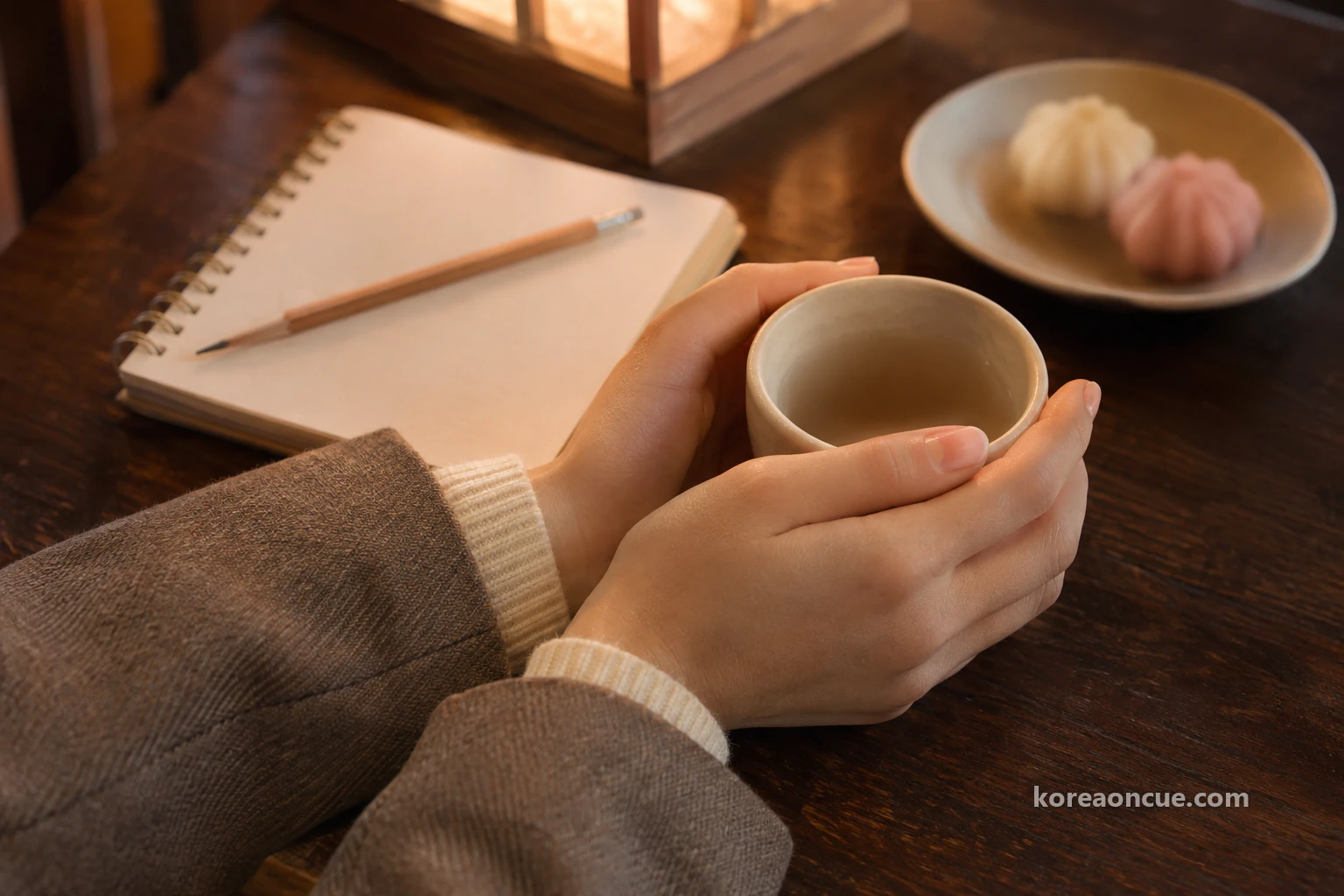
After sunset, raindrops began to fall, a few at a time, beyond the gap in the door. Gentle gugak, traditional Korean music, layered over the sound of the rain, and Elena slid the door open a little further. On a rainy day, choose a seat inside and listen to this. Beyond the veranda on the garden side, the trees getting wet sit right inside the door frame. Elena put her pencil down, as if this scene needed no directions.
Eogeomdang is by reservation, and the way back via Exit 5
Inside the Kyung-In Museum of Fine Art there is also Eogeomdang, a specialist sword gallery holding fine imported swords. It opened in February 2003 and runs by reservation from 10 a.m. to 6 p.m. Elena hadn’t booked today, so Eogeomdang went only into her notebook. If you want to see it, book ahead on 02-733-4452. Elena decided that next Wednesday she would make the booking first.
When Elena left the tea house, it was a little after six. The galleries had already closed, and warm light spilled only from the tea house. Elena looked round the courtyard once and wrote “[End of Act 3 — the stage goes dark, only the green room is lit]”. Set beside the first line she had written in the courtyard that afternoon, the whole afternoon fitted together like a short play. The rain had grown a little heavier in the meantime.
For the way back, she decided to try Exit 5, which she had noted earlier in the day. From the museum to Exit 5 is 354 m, so if you came by Exit 6, it is nice to walk a different way back. Elena opened her umbrella, put the station name and exit number into her map and walked out of the alley. As she walked, she thought about tomorrow’s plans. Tomorrow was Thursday night, and another stage was waiting for her at a night event linking two palaces.

Before going down into the station, Elena opened her notebook once more under the eaves. In the bottom box, she wrote next Wednesday’s date, “18 November”. Same museum, same courtyard, but on that day all six galleries would have new shows hung. It was like the day a theatre puts up next week’s programme, she thought, and she was already looking forward to it. Elena added one more line, “[Next Wednesday — same set, new show]”, and closed her notebook.
Common Mistakes
Going on a Tuesday expecting new shows
new shows open on Wednesdays. Tuesday is the day the shows come down and the next ones are prepared.
Hunting for Gallery 4
the galleries are Galleries 1, 2, 3, 5 and 6 and the Atelier, and that is all. Look for them by name, not by number order.
Photographing the works first
gallery etiquette is not to take photographs without the artist’s consent.
Going to see the exhibitions after 6 p.m.
the galleries close at 6 p.m. Between 6 p.m. and 9 p.m., drop in at the tea house instead.
Taking tea or snacks into the galleries
finish any food before going in. Seeing the exhibitions first and going to the tea house afterwards keeps it simple.
Turning up at Eogeomdang without a booking
Eogeomdang, the sword gallery, is by reservation (02-733-4452).
FAQ
Which exit should I use?
Anguk Station (Line 3) Exit 6, towards Jongno Police Station. From Exit 5, it is 354 m to the museum.
What about admission and hours?
The exhibitions are free and open 10 a.m.–6 p.m., weekends included. Jeontong Dawon is a tea house where you order tea and sit down.
When do the shows change?
New shows open every Wednesday and come down on Tuesday.
Is there anywhere to go after the exhibitions close?
You can have tea at Jeontong Dawon until 9 p.m. The phone number is 02-730-6305.
What does Jeontong Dawon serve?
Fifteen traditional teas, with ssanghwacha as the house tea. There are also jujube, ginger and omija teas and yugwa, and cards are accepted.
Can I visit in a wheelchair?
There is a step at the main entrance, and there is no accessible lift or accessible toilet. Ask the museum office (02-733-4448) in advance about the way in for wheelchairs.
Can I come by car?
Use the paid car park at Suun Hall (Cheondogyo Hall), opposite Unhyeongung, and the museum is a five-minute walk.
Recap — exhibitions first, tea later
- Anguk Station Exit 6, then to 11-4 Insa-dong 10-gil
- New shows on Wednesdays, in Galleries 1, 2, 3, 5 and 6 and the Atelier (no Gallery 4)
- After the galleries close, the hanok tea house Jeontong Dawon in the same grounds
- The artist’s consent before photographing works, finish food before going in, book Eogeomdang ahead
Sources
- Kyung-In Museum of Fine Art website — DirectionsAnguk Station (Line 3) Exit 6, towards Jongno Police Station · Jonggak Station (Line 1) Exit 3, towards the National Tax Service · Jongno 3-ga Station (Line 5) Exit 5, towards Nakwon Arcade · paid parking at Suun Hall (Cheondogyo Hall) opposite Unhyeongung, 5 minutes on foot · 11-4 Insa-dong 10-gil, Jongno-guchecked 2026-11-03
- VisitSeoul (Seoul Tourism Organization) — Kyungin Museum of Fine ArtSubway Line 3 Anguk Station Exit 5, 354 mchecked 2026-11-03
- Kyung-In Museum of Fine Art website — Visitor information10:00–18:00 · open at weekends · Tuesday is the day shows come down and the next ones are hung, Wednesday the opening day · free admission · Jeontong Dawon 730-6305 · Eogeomdang 733-4452 (by reservation) · groups contact the officechecked 2026-11-03
- Kyung-In Museum of Fine Art website — Exhibition calendar (November 2026)4–10 Nov · 11–17 Nov · 18–24 Nov · 25 Nov–1 Dec · a different show in each gallery · dates may change at the artist’s requestchecked 2026-11-03
- Kyung-In Museum of Fine Art website — About the museumFounded by Lee Geum-hong on 6 December 1983 · Galleries 1, 2, 3, 5, 6, the Atelier, an outdoor exhibition space, gardens and Jeontong Dawon · the original hanok was donated to the city and moved to Namsangol Hanok Villagechecked 2026-11-03
- Kyung-In Museum of Fine Art website — GalleriesGalleries 1 and 2: detached two-storey buildings · Gallery 2: glass gallery using natural light (renovated February 2005) · Gallery 3: single-storey hanok · Gallery 5 built April 2008, Gallery 6 January 2011 · the Atelier: ground floor of the office buildingchecked 2026-11-03
- Kyung-In Museum of Fine Art website — Gallery etiquetteFinish food and drink before entering · no photography without the artist’s consent · do not touch the workschecked 2026-11-03
- Kyung-In Museum of Fine Art website — Jeontong DawonWind chimes at the eaves · 15 traditional Korean teas · a room whose sliding doors open onto the veranda and garden · rain and gugak music on wet dayschecked 2026-11-03
- VisitKorea (Korea Tourism Organization) — Jeontong Dawon (전통다원)Operating hours 11:00–21:00 · seats inside the hanok and in the garden · main menu ssanghwacha, also jujube, ginger and omija teas, yugwa · cards accepted · +82-2-730-6305checked 2026-11-03
- Kyung-In Museum of Fine Art website — EogeomdangSpecialist sword gallery · opened February 2003 · imported fine swordschecked 2026-11-03
- Korea Tourism Organization (Korean site) — Kyung-In Museum of Fine ArtStep at the main entrance · no lift, accessible toilet or accessible parking · no wheelchair hirechecked 2026-11-03
A Seoul story told with our AI characters. Place details are checked against public sources; the photos are AI-made illustrative images. How we use AI
More from this area
Museum Kimchikan: finding the Insadong Maru entrance
Rina had been writing down every kimchi she was served as “the red one” and nothing more, so she went to Museum Kimchikan to fill in the names.

Insadong: things to do in one visit
From Ssamziegil’s rising walkways to the courtyard at Kyung-In Museum of Fine Art, Maya has come to look for one souvenir.