
SEOUL · JEONGDONG
A Walk Along Jeongdong-gil’s Red-Brick Streets
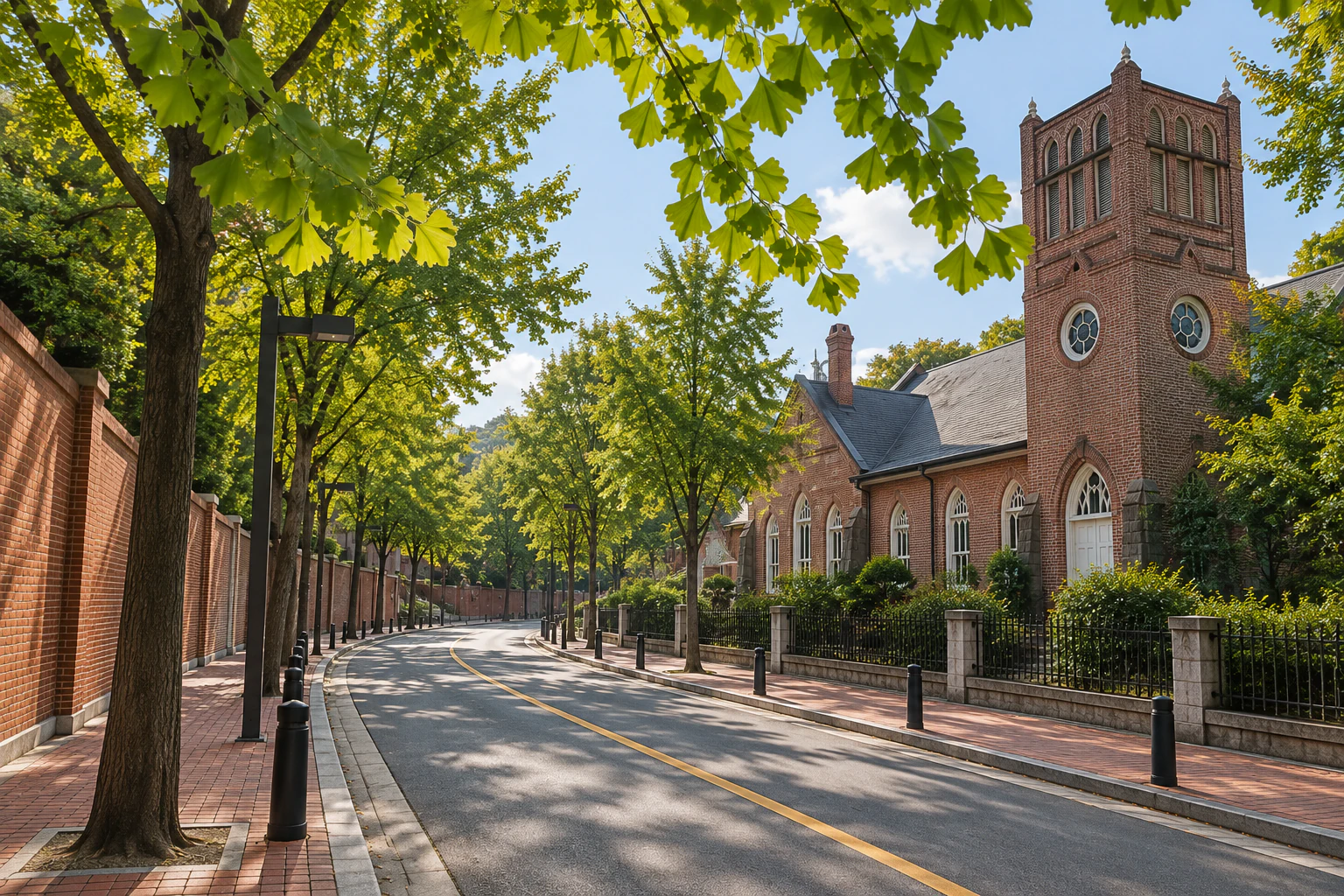
Jeongdong-gil begins where the stone wall road ends. Red-brick buildings from different years stand beneath the ginkgo trees.
How to get there
Walking distance and time are map-route estimates; exit numbers are as of the check date.
In the first, Elena walked Deoksugung Stone Wall Road; in the second she looked at the museum where it ends. Today, at the corner in front of the museum, she turns the other way. The street that begins where the wall ends and climbs north is Jeongdong-gil. Seoul’s tourism guide presents Jeongdong-gil and Deoksugung Stone Wall Road together as representative walking streets in the city centre. Today Elena walks that one street and nothing else: four minutes from the museum to Chungdong First Methodist Church, the map says, and five more from there to the entrance of Jeongdong History Park at the top.
On screen, Jeongdong-gil was always autumn. Yellow ginkgo leaves covering the road, two people walking slowly over them, a red-brick building behind. The titles differed; the colours did not. Yellow and reddish brown. Elena remembers those colours. But today is September and the leaves are still green. She sets off with the season on screen and the season underfoot already out of step.
So today’s question is not colour but years. On screen this street was one scene and one season. Walk it, and the signboards and heritage records tell you that each building was built in a different year. Elena decides to count those years today, not in order but as she meets them, walking. To see how a hundred years lie along a single street.
From the museum corner — where the wall ends and the brick begins
Seoul's official tourism site (Visit Seoul) presents Jeongdong-gil and Deoksugung Stone Wall Road as representative walking streets in the city centre, explaining that they are designated as pedestrian-first one-way streets, laid out with curves so that cars cannot pick up speed, with carriageway and pavement set at the same level. It also notes that the name 'Jeongdong' comes from Jeongneung, the tomb of Queen Sindeok, the second consort of King Taejo.
Look north from the corner by the museum and the street curves away. The palace wall that stood on the right through the last two pieces ends here. In its place, street trees line both sides, and behind them red brick begins to show. Within a few steps Elena has noticed: the colour of this street is not the grey of a wall but the reddish brown of brick. Find on the map
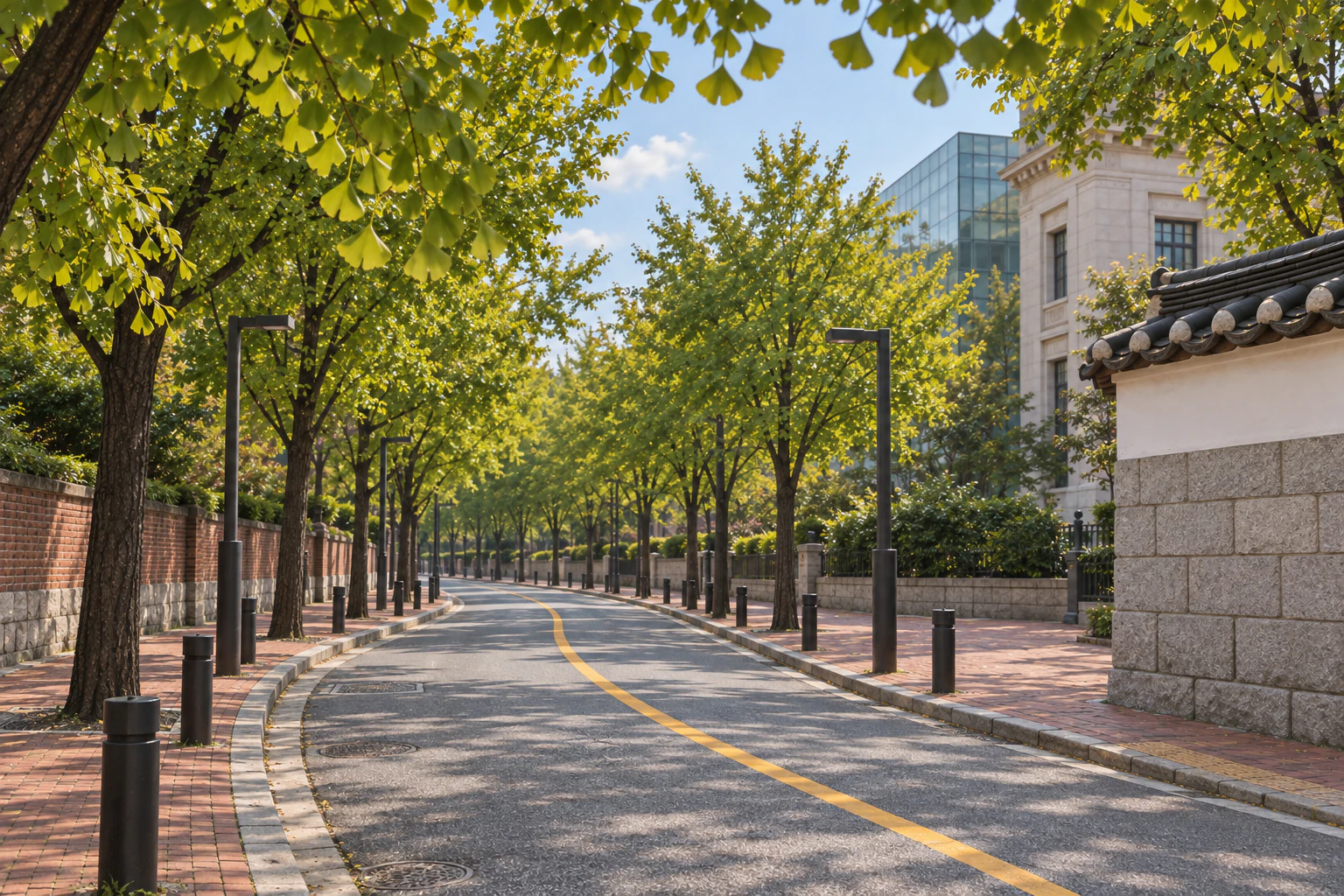
The street is not narrow. Two lanes, a yellow line down the middle. And yet it feels as if the people walking own it. Seoul’s tourism guide says the street is designated as pedestrian-first and one-way, laid out with curves so that cars cannot pick up speed, with carriageway and pavement set at the same level. The boundary between pavement and carriageway is shallow. It brings to mind the guide’s note that the two were set at the same level.
Large letters are painted on the road surface: the street’s name, and a marking that says bicycles have priority. The street says its own name. On screen the name of a street was never visible; the camera filmed leaves and faces, never the ground. Elena stands on the lettering for a moment and reads it. The first thing to do on this street, she writes, is to read its name.
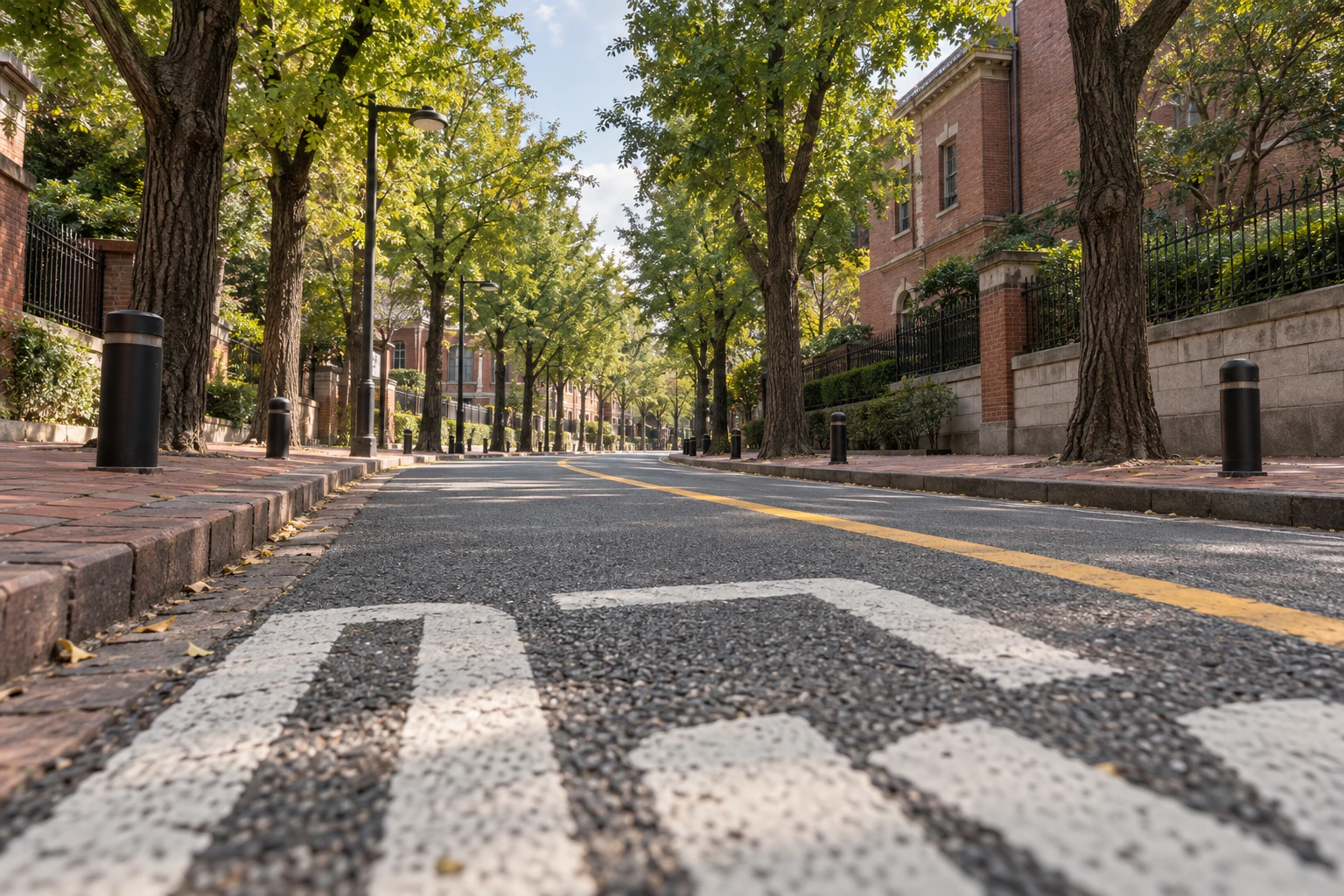
Both pavements are reddish-brown block. On the stone wall road only the pavement beside the wall was red; here both sides are. And the street trees are ginkgo. The fan-shaped leaves give them away even in green. She guesses in advance where the yellow on screen comes from, by looking at the green leaves. She is seeing the scene before its colour has arrived.
On the left a red-brick wall runs for some way, with trees showing above it. Four columns stand in the wall. According to the guide this is Jeongdong Theater, opened in 1995 with the aim of reviving Wongaksa, Korea’s first modern theatre; the auditorium is below ground and an open courtyard sits above it. In front of the wall Elena writes down the first year. 1995.
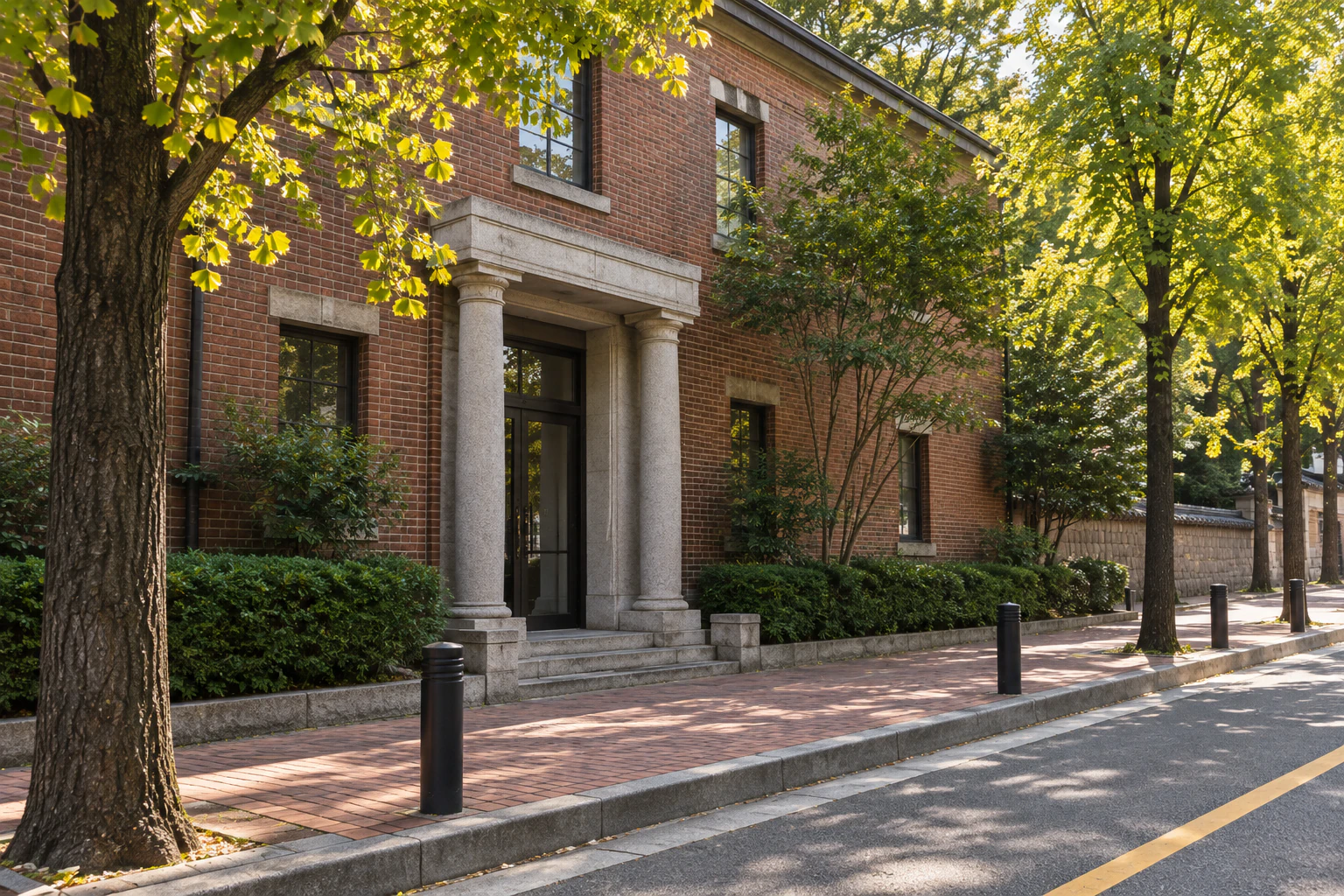
On screen all red brick was the same red brick. Old and new were not told apart within one scene. Elena looks closely at the theatre’s bricks. They look more even in colour and sharper at the edges than the church wall she will meet further on. By building date, this is the latest of today’s four stops: 1995. The rest come a little further on.
If the stone wall road was the quiet kind, Jeongdong-gil has a little more sound. There is a bus stop, a crossing, and schools and other places strung along it. It is a street with more everyday movement than the one on screen. Elena does not mind. The street on screen was always empty, but a street you walk should have people in it. That is what makes a street a street.
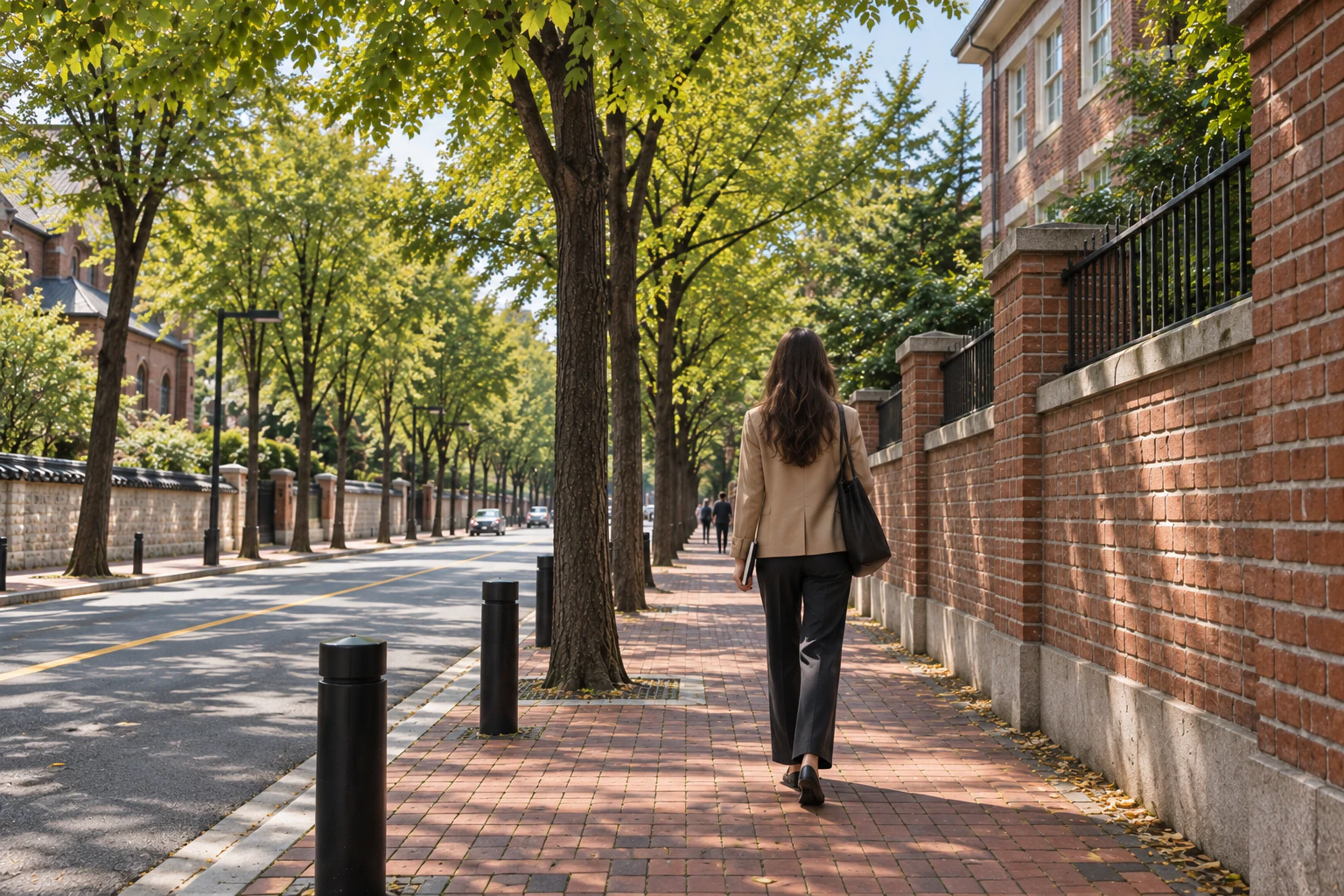
In front of Chungdong First Methodist Church — the red brick of 1898
Chungdong First Methodist Church is listed on the Korea Heritage portal as 'Chungdong Church, Seoul', a Historic Site designated on 22 November 1977. Completed in 1898, it is described as Korea's first full-scale Protestant church building: brick, with arched windows in a simplified Gothic style; the original cruciform plan was widened at both wings in 1926 into today's squarer shape, and its base of neatly dressed stone is said to carry the skill of Joseon timber architecture.
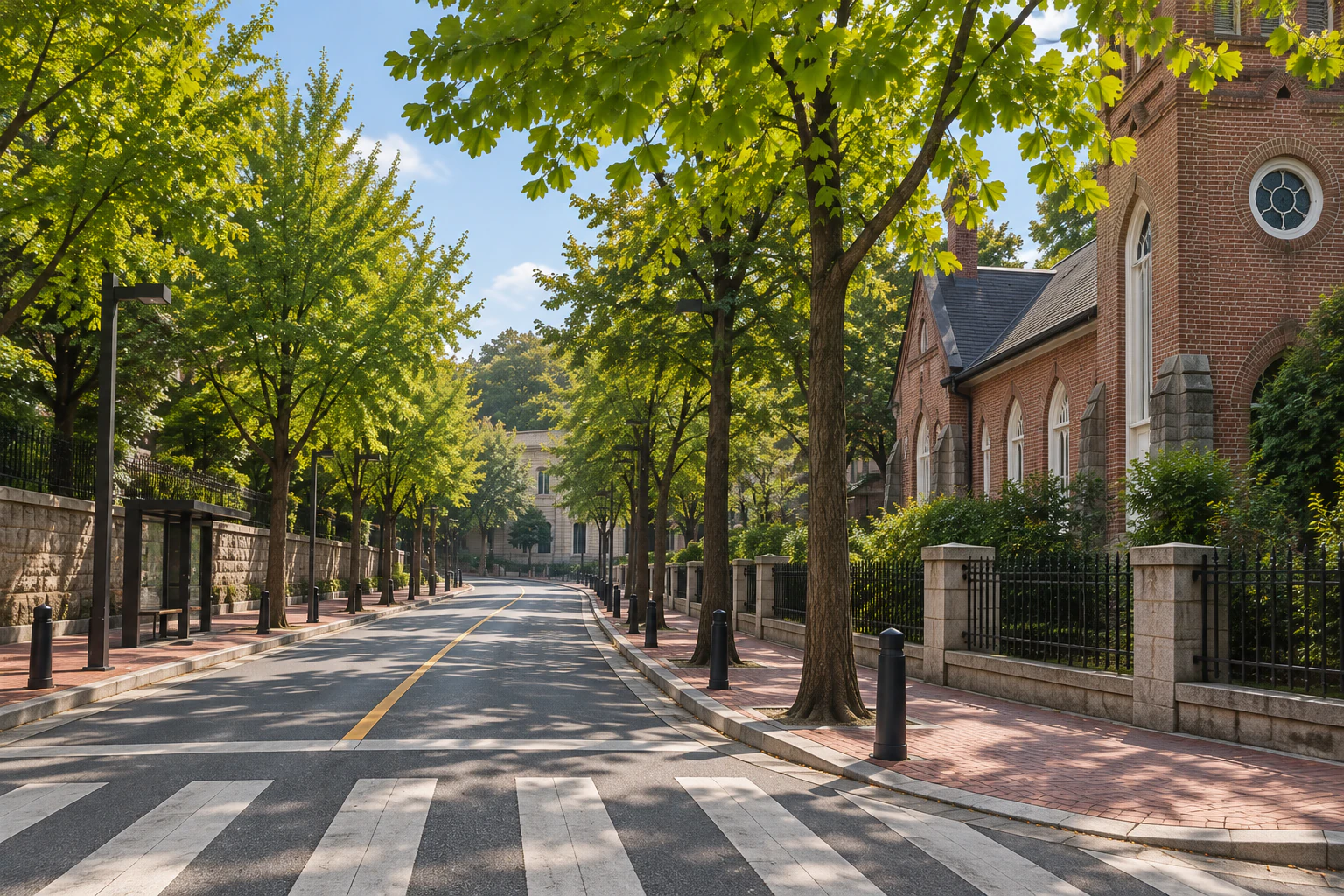
Before crossing, she looks to the right. A red-brick building stands behind a low black iron fence. The windows are arched. The brick is a different colour from the theatre’s: it looks darker and less even. Elena stops at the fence. This is Chungdong First Methodist Church. Find on the map
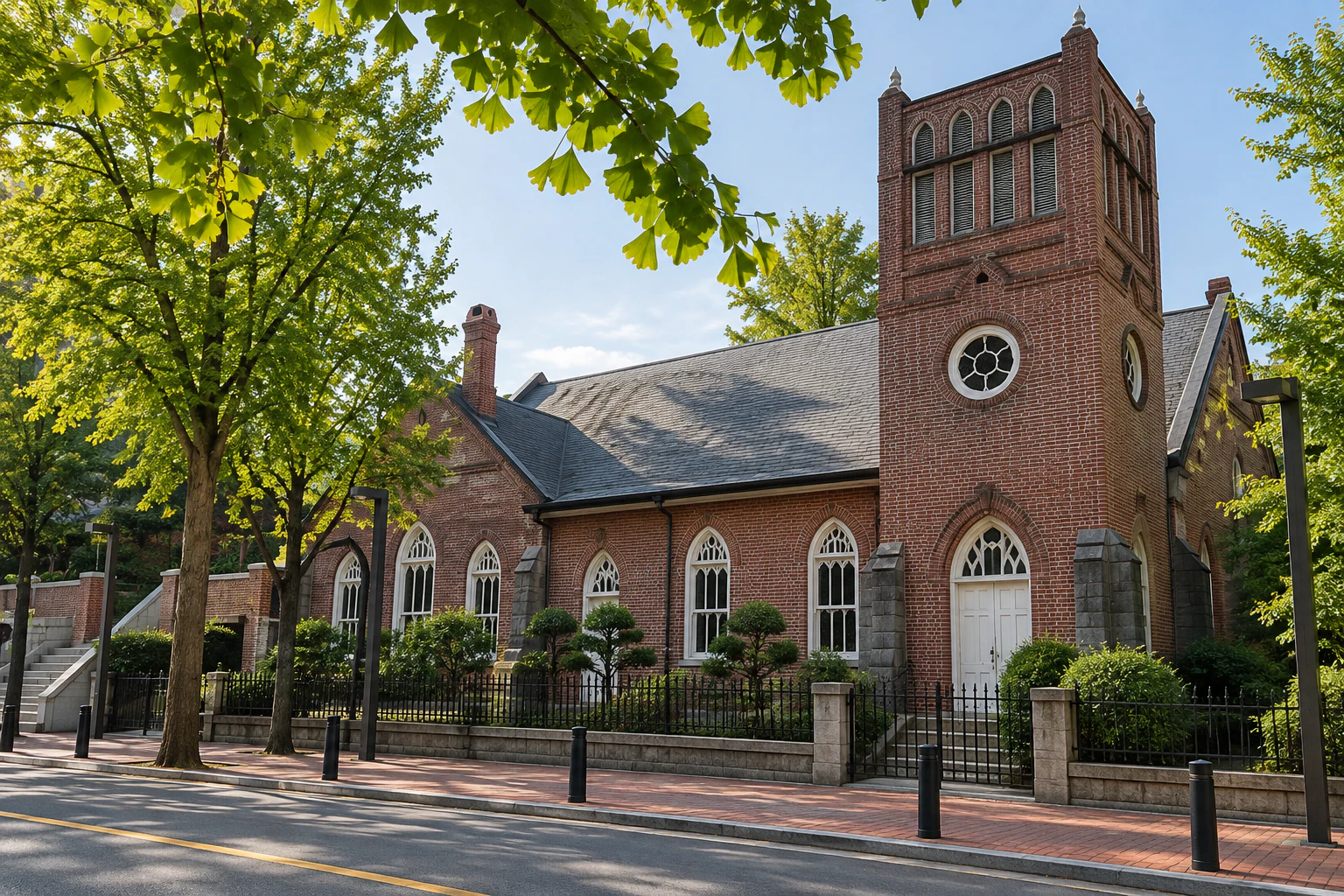
The heritage record says the building was completed in 1898, the second year of Gwangmu in the Korean Empire, and describes it as Korea’s first full-scale Protestant church building: brick, with arched windows here and there, a simplified Gothic style. Elena counts the windows one by one. The arches repeat. She tries to recall whether the church windows in the scenes she saw were this shape, but the screen never left her time to count windows.
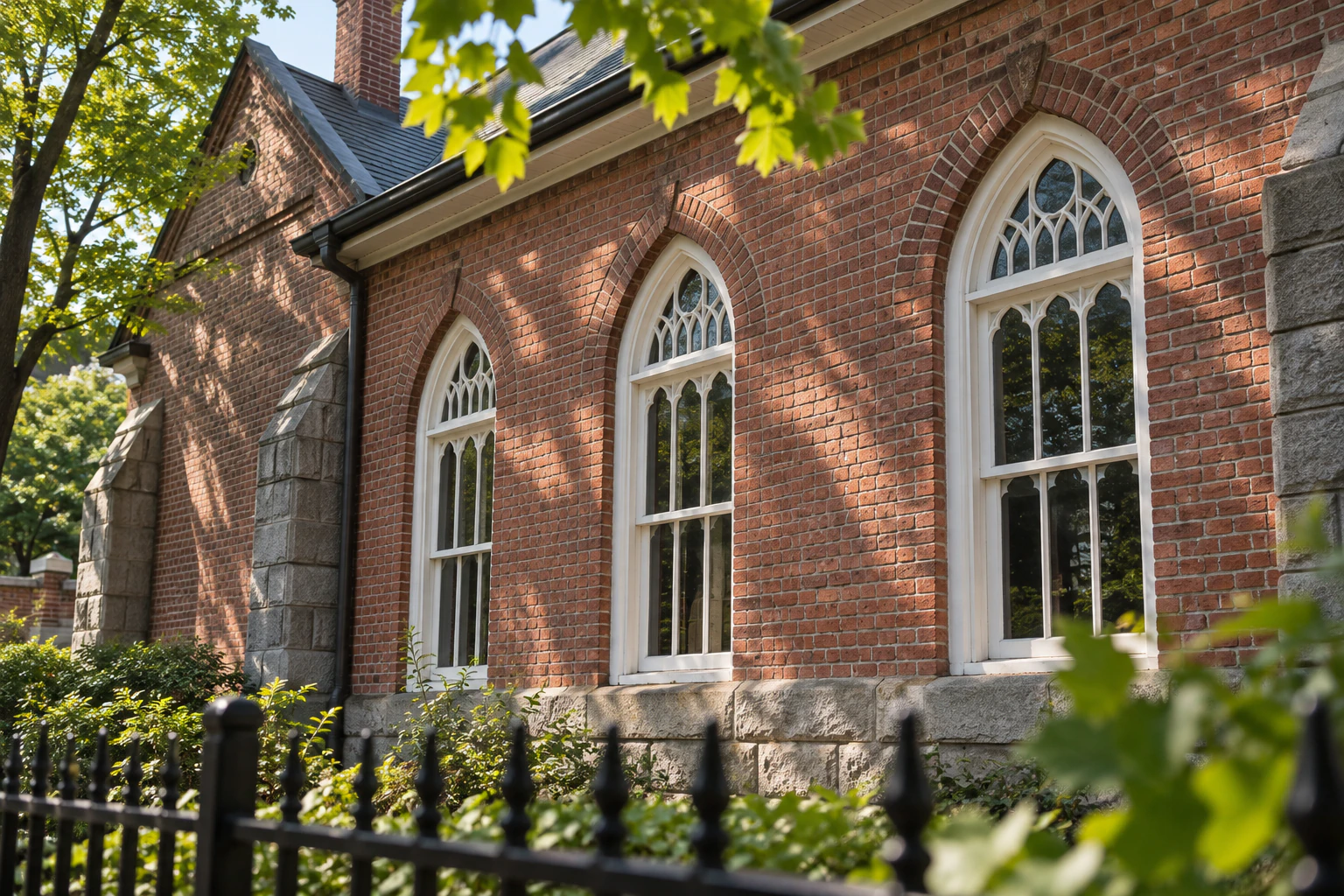
According to the record, the original cruciform building was widened at both wings in 1926 into today’s squarer shape, and the original building was left as it was. From outside Elena cannot tell where 1898 ends and 1926 begins. But she looks knowing that two years live in one building. That alone makes the wall look a little different.
She looks at the base. Below the brick, a course of neatly dressed stone. The record says the skill of Joseon timber architecture is carried in it. A Western brick building standing on Joseon stonework — Elena reads the sentence twice. On screen the building was simply ‘an old building’, all of a piece. After reading the record, she starts to see the brick above and the stone below as separate details.
The church scenes Elena remembers from the screen were usually a wedding, or someone sitting alone inside. Scenes filmed from within. There was never a scene of standing outside, beyond a fence, counting arched windows. Elena feels she is making that scene herself today. She does not go in. The sanctuary is for another day; today’s place is the street.
The fence is low, low enough to rest a hand on. Elena does not. For the same reason she did not touch the wall on the stone wall road: looking for a long time suits this brick better. She writes the second year. 1898. And, in brackets, 1926.
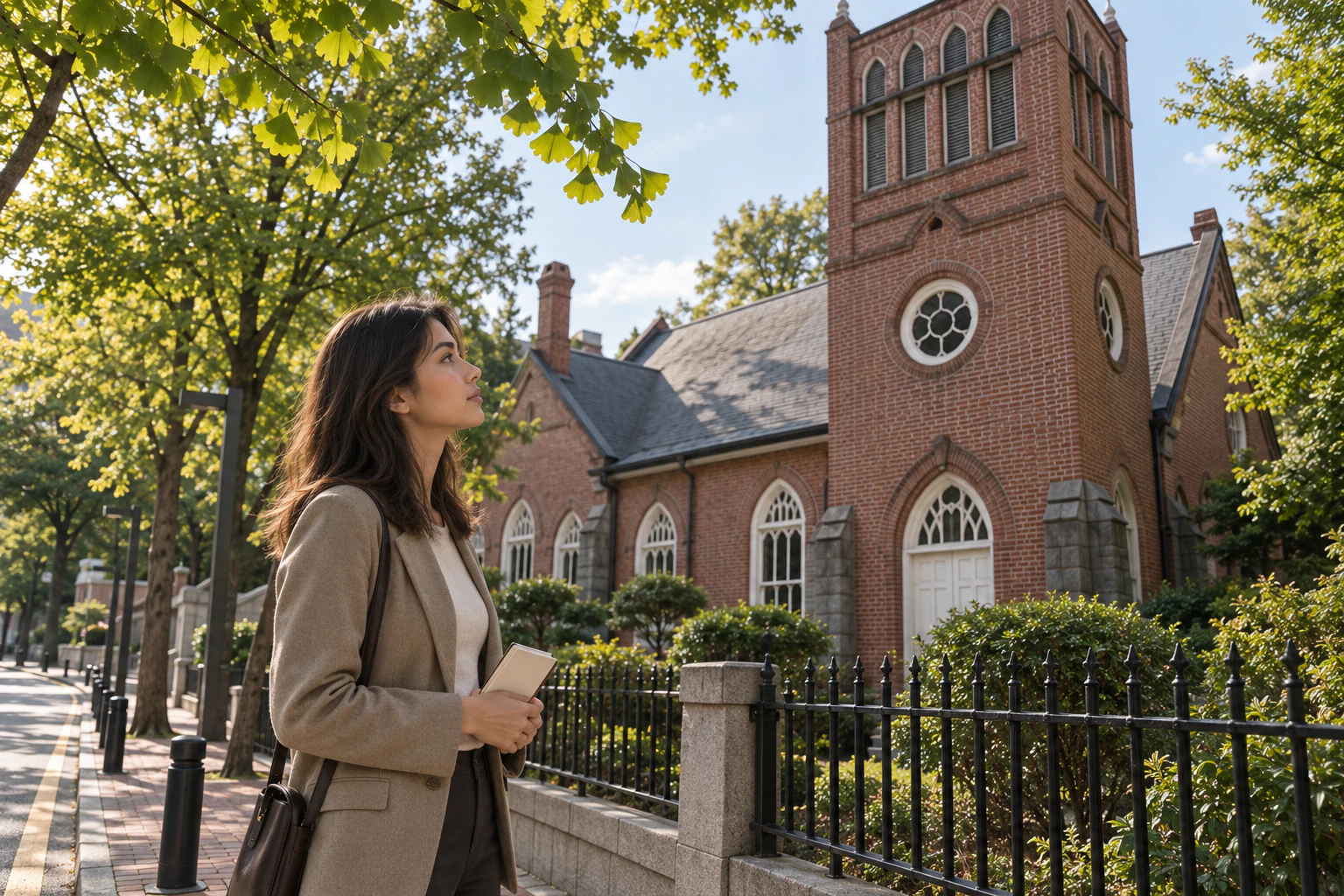
She crosses. From the other side she looks at the church once more. Ginkgo branches overlap the red brick. This is the angle closest to the screen. If the leaves were yellow it would be that scene exactly. Green, it is a scene that stops short of completing itself. Elena prefers it that way. The finished scene already exists on screen.
In front of the church she turns round. The flow of the street she has just come up reads as one line. She writes down the order in which it changed, from wall to museum to theatre to church: grey, white, the brick of 1995, the brick of 1898. The order in which the street changes colour.
In front of Ewha Girls’ High School — tiles on the wall, red brick behind it
The red-brick building at 26 Jeongdong-gil is Simpson Memorial Hall of Ewha Girls' High School, a National Registered Cultural Heritage (registered 28 February 2002). Built in 1915 with funds entrusted by the American Sarah J. Simpson, it is the oldest building on the school's campus; it collapsed in the Korean War and was rebuilt in the early 1960s with the south elevation restored to its original appearance. Today it houses the Ewha Museum.
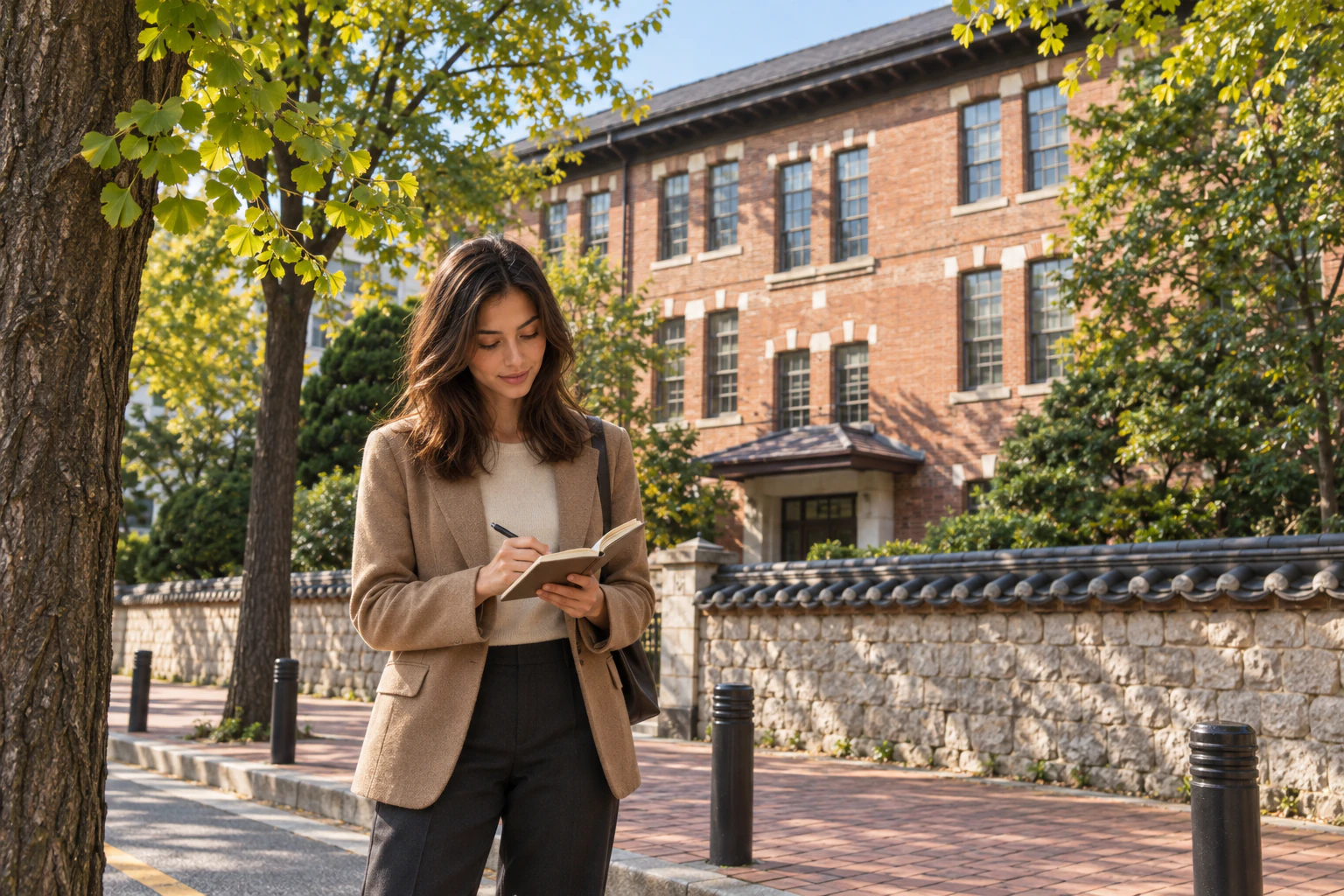
A little beyond the church, a wall appears on the left: low, built of stone, with roof tiles laid along the top. It looks like the palace wall shrunk to a smaller scale. Behind it rises a red-brick building, three storeys, with white window frames. According to the guide it is Simpson Memorial Hall of Ewha Girls’ High School. Find on the map
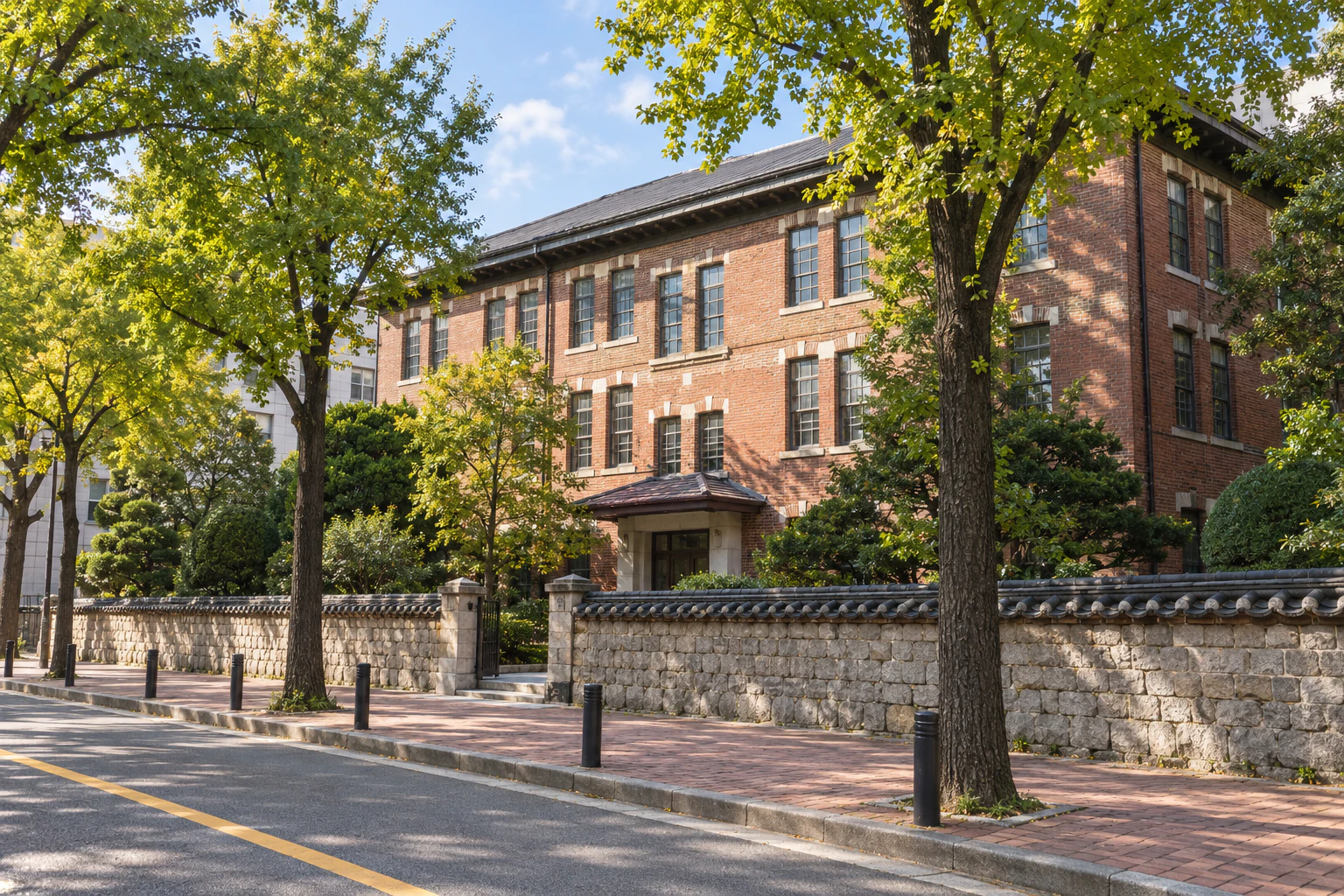
The heritage record says it was built in 1915 with funds entrusted by the American Sarah J. Simpson and is the oldest building on the school’s campus; it collapsed in the Korean War and was rebuilt in the early 1960s, with the south elevation restored to its original appearance. Today it houses the Ewha Museum. Elena writes the third year. 1915.
Here she stops and looks at her notebook. 1995, 1898, 1915. Three red-brick buildings, three years. On screen red brick was a single colour; on this street the colour is one but the years are not. Nearly a century of difference sits inside the same colour. This, she thinks, will be the sentence that stays with her from this street.
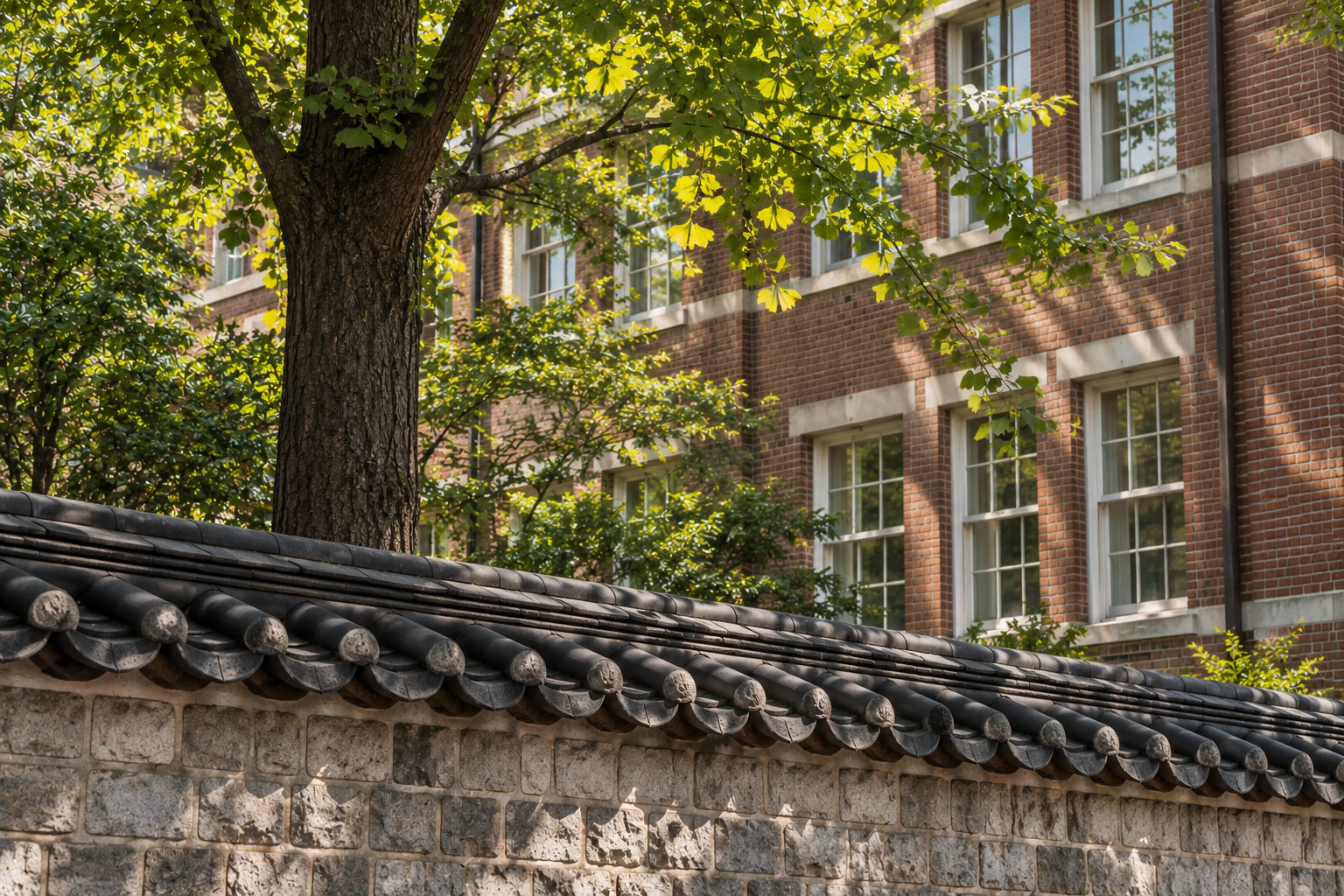
Between the wall and the brick building there are trees. Green enters between the tiles on the wall and the white frames of the building. In one view: dark roof tiles, Western brick, and a tree. Standing here on foot, all three are present at once. Elena likes this ‘at once’.
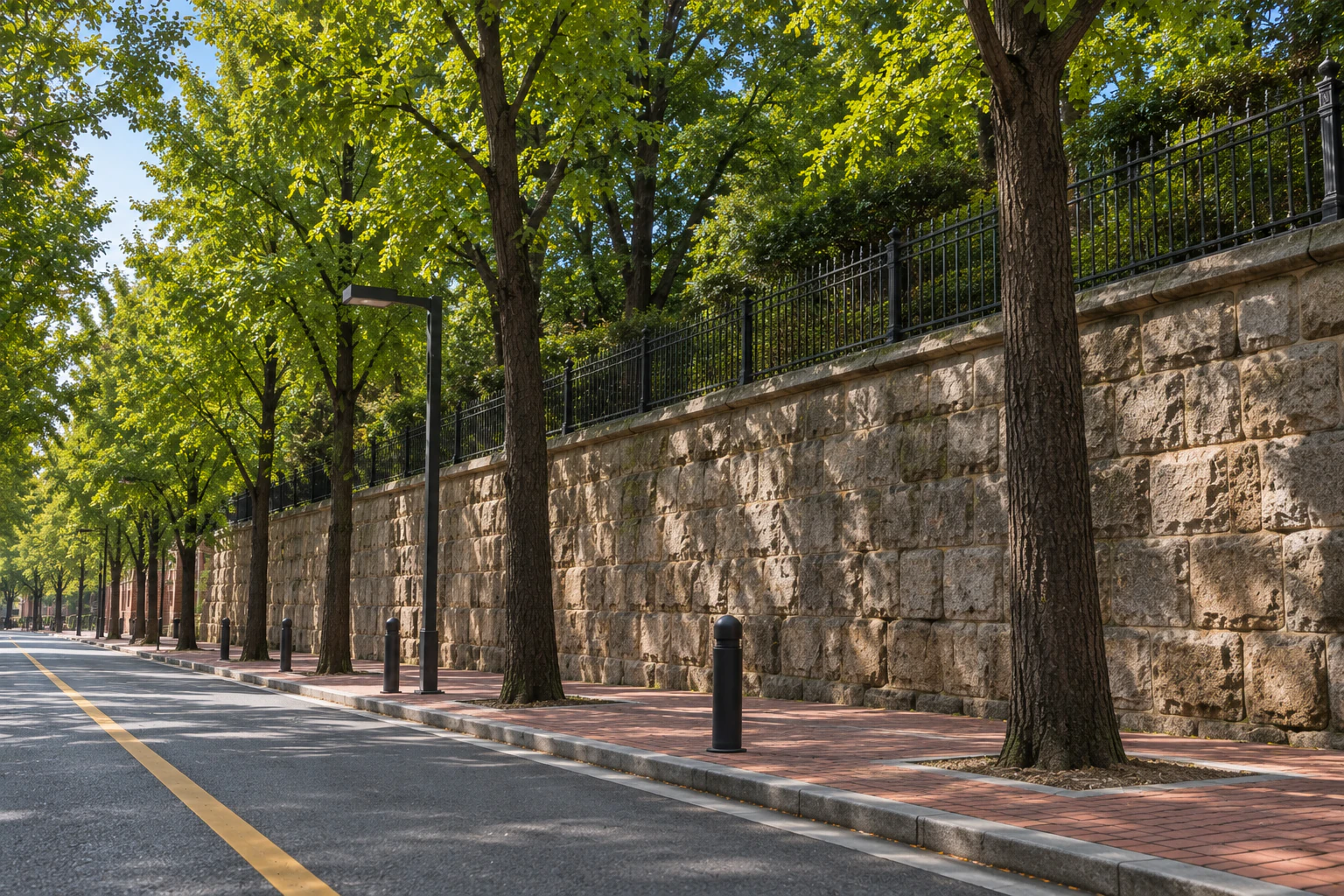
The other side of the street is different. A high retaining wall of stacked stone, an iron railing on top, trees behind the railing. If the left is a wall you can see over, the right is a wall you have to look up at. The street passes between two kinds of stone. Elena feels the difference in how far her head has to tilt back.
The ginkgo trees stand on both sides here too, but their branches do not meet overhead. There is no tunnel like the canopy on the stone wall road; instead there is more sky. On screen, yellow leaves filled the street. Today the sky shows between green ones. Elena accepts that difference as today’s Jeongdong-gil.
The building behind the wall is a school, so she does not go in. The record says it is used as a museum. Elena counts the windows from outside the wall, counts the tiles, and walks on.
The white tower at the end — 1890, and the next piece’s place
The white tower inside Jeongdong History Park is what remains of the Former Russian Legation, Seoul, a Historic Site designated on 22 November 1977. Built in 1890 as a two-storey Renaissance-style brick building, it was badly destroyed in the Korean War, leaving only the tower and two basement levels, restored in 1973. From February 1896 to February 1897 King Gojong took refuge here with the crown prince.
Past the school the street bends once more. It begins to climb, and the road surface turns red. The grey-panelled building on the left and the fence of trees on the right draw closer, and the last stretch looks narrower still. This is the last stretch of Jeongdong-gil. Find on the map
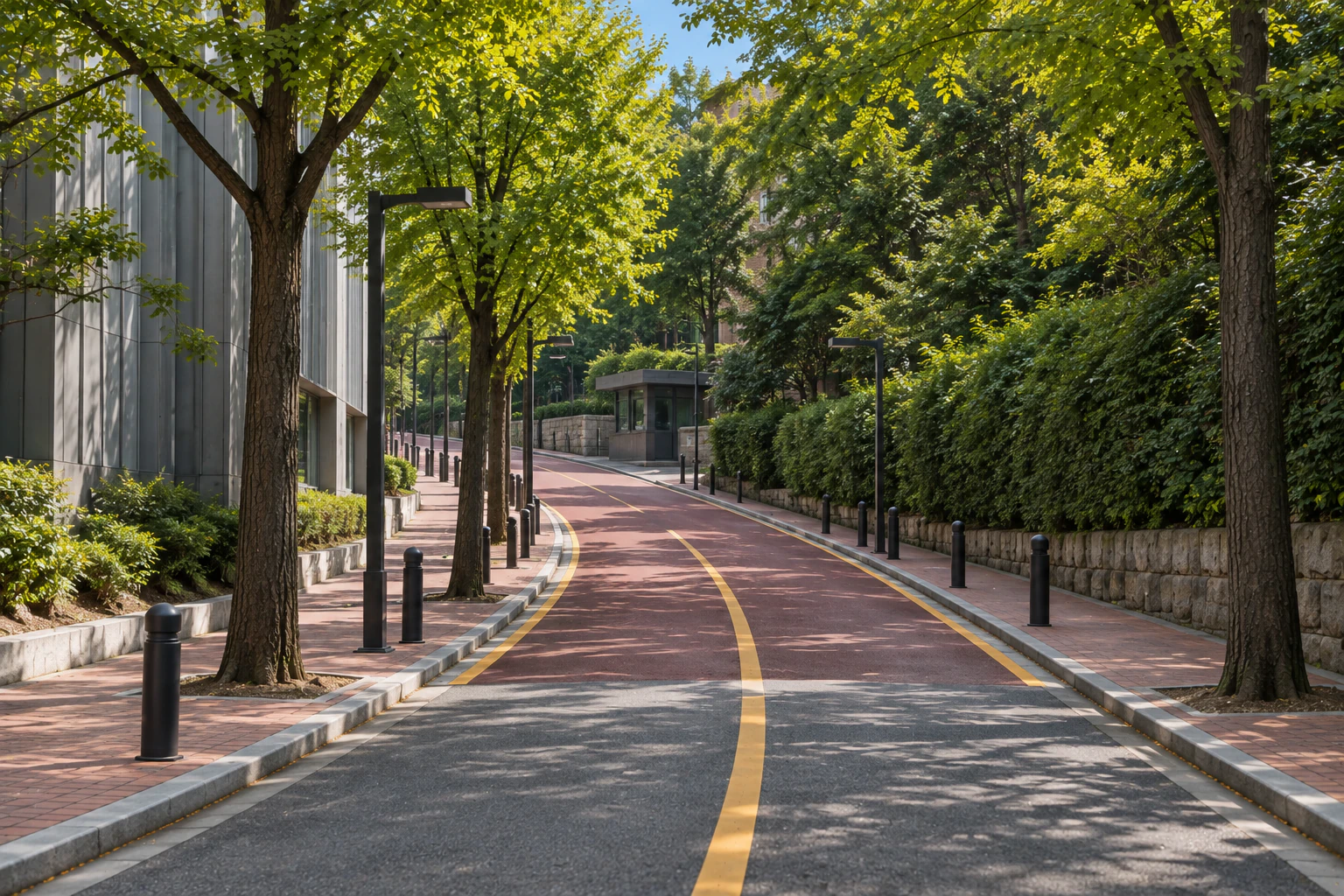
At the top of the rise is the entrance to a park. According to the guide it is Jeongdong Park, also called Jeongdong History Park: the site of the former Russian Legation, of which only a white tower remains, says Seoul’s tourism guide. From the street the tower is not immediately visible; trees and the slope hide it. Elena stops at the entrance.
The heritage record says the tower is what remains of a two-storey Renaissance-style brick building put up in 1890. It was badly destroyed in the Korean War, leaving only the tower and two basement levels, restored in 1973. And from February 1896 to February the following year, the record says, King Gojong took refuge here with the crown prince. Elena writes the fourth year. 1890. The oldest of the four years she has written today.
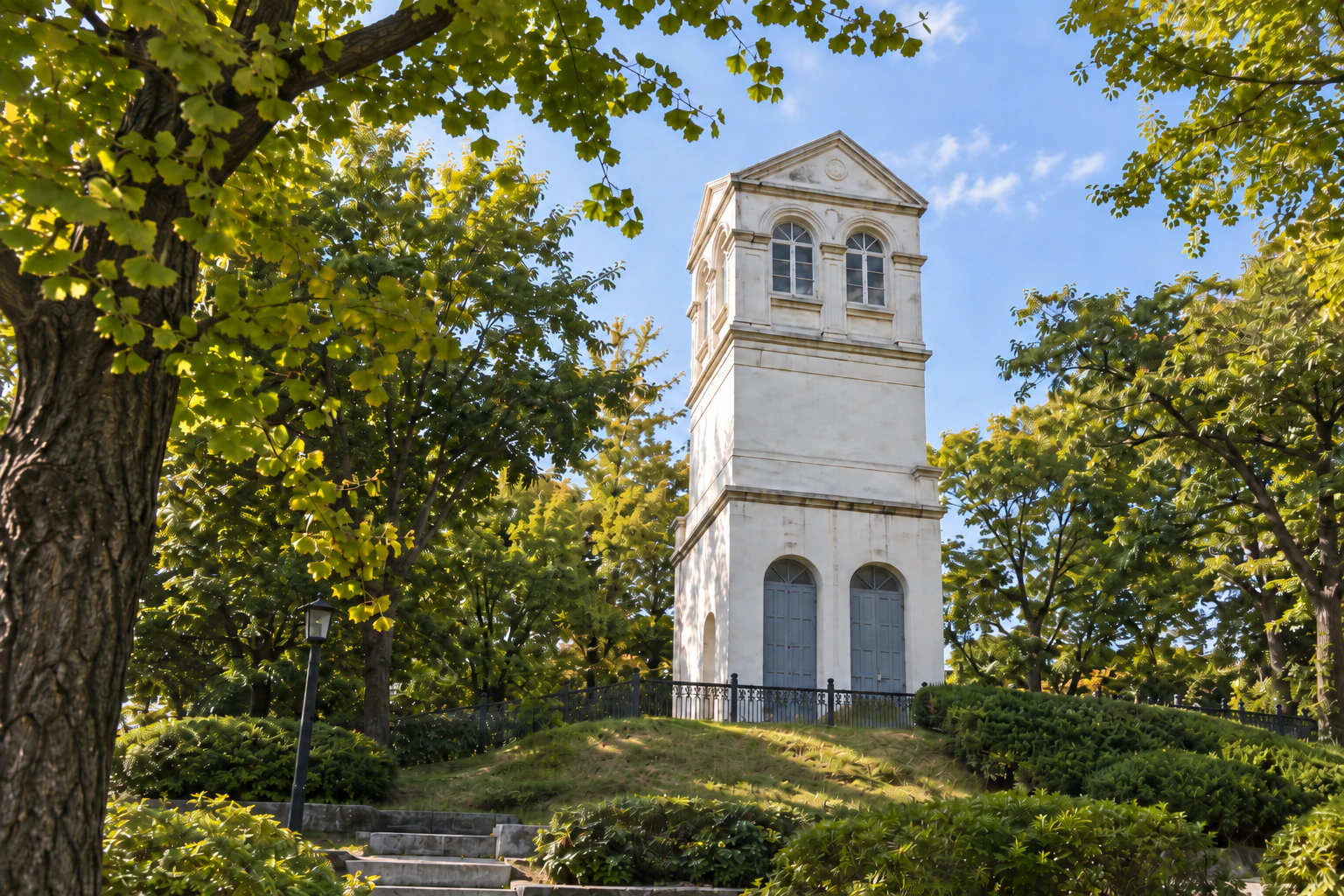
The oldest year sits at the very end of the street. And that building survives not as red brick but as a white tower. Elena looks at her notebook again. Put the years in order and they read 1890 — 1898 — 1915 — 1995. But the order she met them in was 1995 — 1898 — 1915 — 1890. A timeline and a walk do not run in the same order.
From the park, the guide says, ‘Gojong’s Road’ leads towards Deoksugung Stone Wall Road, formally opened in 2018. Elena does not take it today. That road goes back to the wall of the first piece, and today’s way back is another one. She only notes that a restored path now leads from the park towards the stone wall road.
From the church to Jeongdong Observatory is about 340 metres, four minutes, the map says: the observation deck on the 13th floor of Seoul City Hall’s Seosomun annex. From there, the guide says, you can look down at today’s street, the wall of the first piece and the museum of the second, all at once. That is the next piece’s place — the place where three walks can be seen in one view.
Elena closes her notebook under a tree at the park entrance. Four years written today. A street that was one scene on screen has split into four years. Splitting is not a bad thing. The screen gives you one scene; the street gives you four years. Both are this street.
What Elena wants to pass on is ‘walking while counting years’. Read the street’s name on the road; compare the brick of the 1995 theatre and the brick of the 1898 church up close; turn round once in front of the church; put the tiles on the school wall and the brick behind it into one view; and at the rise at the end, stand for a moment facing where the white tower is. Even without yellow leaves, this street is a whole piece in itself.
One more thing. Inside the church, inside the museum, inside the theatre — leave each for another day. All this piece can record is what the street shows, and what the street shows already spans more than a hundred years.
(※ This article includes staged images created with AI.)
Plan your visit
Allow 30 to 50 minutes: from the corner by the museum along Jeongdong-gil past Chungdong First Methodist Church to the entrance of Jeongdong History Park, then back the same way or on to Jeongdong Observatory. Walking times are map-route calculations; time spent stopping in front of buildings is not included.
A diagram of the order only · not to scale, not oriented, not the real shape of the streets.
- Museum → Chungdong First Methodist Church — From the corner in front of the Seoul Museum of Art, Seosomun Main Branch, about 300 m along Jeongdong-gil, 4 minutes. When the theatre’s red-brick wall is on your left and the church on your right, you are there. Find on the map
- Church → Jeongdong History Park entrance — Past Simpson Memorial Hall of Ewha Girls’ High School to where the street bends uphill, about 360 m, 5 minutes. The white tower of the former Russian Legation is inside the park. Find on the map
- Church → Jeongdong Observatory — About 340 m, 4 minutes, to the 13th floor of Seoul City Hall’s Seosomun annex — the next piece’s place. Find on the map
Background3
TMAPChecked 2026.09.18
From the front of the Seoul Museum of Art along Jeongdong-gil to Chungdong First Methodist Church is about 300 m, roughly 4 minutes on foot
TMAPChecked 2026.09.18
From Chungdong First Methodist Church along Jeongdong-gil to the entrance of Jeongdong History Park is about 360 m, roughly 5 minutes on foot
Checked 2026.09.18
Jeongdong Park (Jeongdong History Park, 21-18 Jeongdong-gil) at the northern end of the street is the site of the former Russian Legation, of which only the white tower remains. 'Gojong's Road', which links the park towards Deoksugung Stone Wall Road, was formally opened in 2018, according to Seoul's official tourism site.
- Jeongdong-gil is a public street, open all year with no charge. Cars and bicycles do use it, so walk on the pavement and avoid standing in the road for long when photographing the lettering or the buildings.
- If you plan to go in, check service, museum and performance times with each institution’s official notices. The school grounds are not entered.
- The white tower in Jeongdong History Park (Former Russian Legation, Seoul, a Historic Site) is inside the park. ‘Gojong’s Road’ leads from the park towards Deoksugung Stone Wall Road.
- The timing of the yellow ginkgo leaves varies from year to year and is not specified here. The street can be walked without them.

