
SEOUL · GANGSEO
Ethan measured 170 minutes before his flight home at the National Aviation Museum of Korea: free exhibitions, a walk-up experience ticket and the fourth-floor observatory
The exhibitions are free and the experiences are paid — online booking opens at 9:00 on alternate Fridays, the kiosk at 10:00 sells the walk-up places if you missed it, and on foot it is 400 m to the museum from the gate towards Parking Lot 2 on the first floor of the Domestic Terminal
On the day he flies home, Ethan measures the empty time before his flight at 170 minutes and heads for the National Aviation Museum of Korea beside Gimpo Airport. The online experience slots are already full, so what he has left is the 10 a.m. kiosk and the walk-up places the museum keeps back for every session.
How to get there
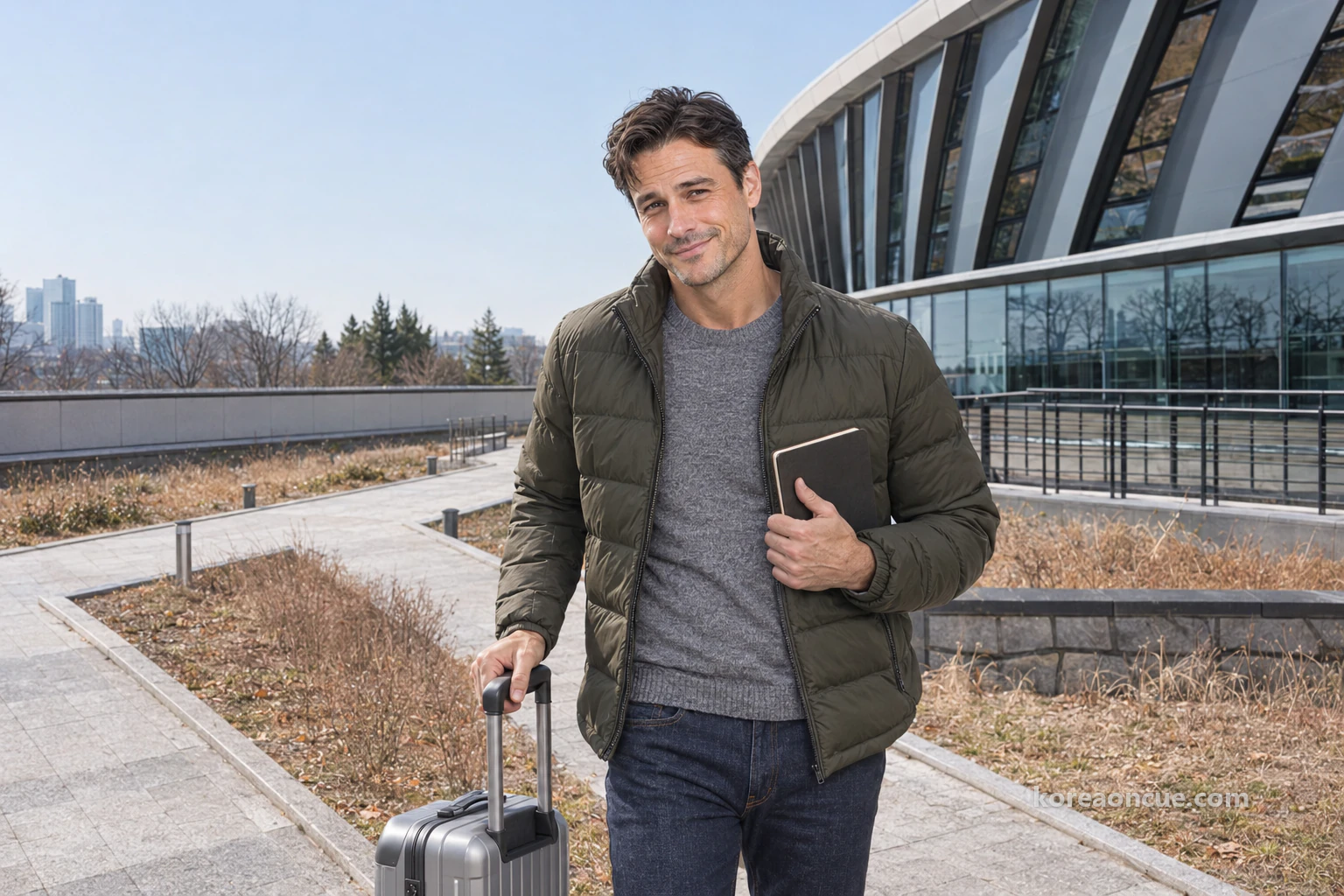
At 9:40 on the morning of Tuesday 22 December, Ethan wheels his suitcase out through the ticket gates at Gimpo Airport Station. It is the last day of his fifth business trip to Seoul, and the first flight of his journey home leaves Gimpo at half past three. He stops and writes “Leave 12:50” at the top of his notebook. That is the time he has given himself for walking out of the museum doors. From 10 o’clock, when the museum opens, until then, the empty time before his flight comes to exactly 170 minutes.
Ethan is 44, designs machines in Seattle and lived in Seoul for six years. Even so, it was only on this trip that he learned the National Aviation Museum of Korea sits right beside Gimpo Airport. Last Thursday he flew a domestic return to Busan with his colleagues, and on the first floor of the Domestic Terminal he saw a sign that read “National Aviation Museum of Korea”. For someone whose job includes poring over drawings of wings and engines, that sign was not something to walk past. In the pocket of the winter coat he has worn every day since the weather turned cold, the paper boarding pass for that Busan flight is still tucked away.
His first plan was yesterday, Monday afternoon. His meetings were finishing early that day, so he put the museum in that slot, then read the line about closing days and drew a line through it. That left this morning, the day of his flight. Looking at the crossed-out line again, Ethan decided that a morning whose end is fixed by a departure time is, if anything, an easier slot to plan.

The Cue — At a glance
Seeing the exhibitions at the National Aviation Museum of Korea costs nothing, so as long as you avoid Mondays it is an easy place to fit into the empty time before a flight. If you want to add an experience, there is a second route even when the online booking calendar is full: the kiosk at 10 in the morning. With a suitcase, all you need to decide before you arrive is whether to walk or take the shuttle, and leave the planes for last, on the 3rd and 4th floors.
- Getting there: Gimpo Airport Station → the “National Aviation Museum of Korea” sign on the first floor of the Domestic Terminal → the gate towards Parking Lot 2 → straight on for about 400 m. If you’d rather not walk, take the airport circulator bus (Passenger and Cargo Terminal Route) from Gate 4 on the first floor of the Domestic Terminal.
- When to go: The museum is closed on Mondays.
- Luggage: You can leave a suitcase in the lockers on the 1st and 3rd floors.
- What to bring: A boarding pass from a Korean airline flying from Gimpo Airport, used within the last month, and gloves and a hat in winter.
- Enquiries: Main number 02-6940-3195.
Is the National Aviation Museum of Korea free, and when is it open? The exhibitions are free, and you pay only for the experiences
The exhibitions at the National Aviation Museum of Korea are free, and the only things you pay for are the experiences and the classes. The doors open at 10 a.m. and close at 6 p.m. from Tuesday to Sunday, with last admission at 5:30 p.m. The museum is closed every Monday, on 1 January, and on the day of Seollal and of Chuseok. If a Monday is a public holiday, the museum opens that day and closes on the following weekday instead. That first line is exactly why Ethan crossed out yesterday afternoon.
Open in Kakao Map — Gimpo Airport Station
What surprised Ethan when he first read the information was that there was more than one timetable. Seeing the exhibitions, booking an experience and buying a ticket for each experience all run on separate tracks. Ethan drew three lines across his notebook and filled each row with the price and the method. It is the same habit as never cramming parts with different tolerances onto a single line of a drawing. Once he had filled it in, he saw that “free” here did not mean “everything free, any time”. It meant “looking is free”.
| What | Price | How to get in |
|---|---|---|
| Permanent and outdoor exhibitions | Free | Walk in with no booking |
| Pilot and air traffic control, cabin training, aviation leisure sports and children’s airport experiences | Paid | Book online in advance; remaining places at the on-site kiosk |
| Black Eagles Flight VR Experience | Paid | On-site kiosk only |
| Regular exhibition tours, sensor drone and piloting drone classes | Free | Tours: sign up on site; drones: on-site kiosk |
If you only want to look round, the first row is all you need: walk in with no booking. If you want to add even one experience, first note that the second and third rows work differently. Tickets for the Black Eagles flight are sold only at the on-site kiosk, so you can’t reserve one online in advance. Experience tickets can be refunded with no fee until the experience starts. Ethan wrote “on site only” in small letters next to the third row, and those three words slipped his mind until they came back to him in front of the kiosk this morning.
The museum’s three suggested routes divide up how long to stay. For airport users it is about 1 hour, for a family day out about 1 hour 30 minutes, and for real aviation enthusiasts about 2 hours. Going round the permanent exhibitions alone takes around 1 hour 30 minutes to 2 hours. Ethan naturally put himself in the first row and wrote “110 min spare” next to the 170 minutes.
How to get from Gimpo Airport Station to the National Aviation Museum of Korea: the 400 m starts at a gate on the first floor of the Domestic Terminal
From Gimpo Airport Station, go to the first floor of the Domestic Terminal and follow the “National Aviation Museum of Korea” signs. The signs lead to the gate towards Parking Lot 2, and from that gate it is about 400 m straight on to the museum. Lines 5 and 9, AREX, the Gimpo Goldline and the Seohae Line all stop at Gimpo Airport Station, so whichever line you come on, the way is the same. Ethan finds the sign he saw last week again and turns his suitcase towards it, pleased.
Ethan counts before he walks. At 193 cm, his stride is about 80 cm, as he measured long ago, so 400 m should come to 500 steps. But by the time he reaches the first floor of the Domestic Terminal from the station, the count has already run well past that. The 400 m turns out to be measured not from the station but from the moment you leave the terminal through the gate. Ethan writes “from the gate” next to the “500” in his notebook and resets the count to 0 at the gate.
So from the station to the museum, count on 400 m plus the walk through the terminal. If your bags are light, you can simply walk, and if your suitcase is heavy, the shuttle is easier. Go out of Gate 4 on the first floor of the Domestic Terminal and the yellow airport circulator bus runs every 15 to 20 minutes, free of charge. There are two routes, though, so check once more before you choose. They are the same yellow buses, so if you board by colour alone you will get off in the wrong place.
The bus that stops in front of the museum is the route that covers both the passenger and cargo terminals, and you get off at “National Aviation Museum of Korea”. The route that only circles the passenger terminals drops you at “Domestic Terminal Parking Lot 2”, which is not in front of the museum. Ethan glances out towards Gate 4 once and decides to walk. Rather than wait out an interval of up to 20 minutes, he reckons that 500 steps at 80 cm a stride will get him there first. The wheels of his suitcase make a steady sound on the cold pavement of the winter morning.
| From | How | Distance and frequency |
|---|---|---|
| Gimpo Airport Station | Domestic Terminal 1st-floor signs → gate towards Parking Lot 2 → straight on | About 400 m from the gate |
| Gate 4, Domestic Terminal 1st floor | Yellow airport circulator bus, Passenger and Cargo Terminal Route → get off at “National Aviation Museum of Korea” | Free, every 15–20 min |
| Songjeong Station (Line 5) | 300 m straight on → pedestrian crossing at Gimpo Airport Entrance Intersection → 600 m to the left | About 900 m |
| City buses 3, 12, 50 and 50-1 | Get off at “Gimpo Customs Office and National Aviation Museum of Korea” | The museum is in the stop’s name |
Ethan only copied the first row into his notebook, but on a day when you don’t need the airport, another row is simpler. On Line 5, get off at Songjeong Station, walk 300 m straight on, cross at the pedestrian crossing at Gimpo Airport Entrance Intersection and carry on 600 m to the left. That way you don’t walk through the terminal at all. If you are coming by city bus, look first for the 3, 12, 50 and 50-1, whose stop has the museum in its name. For Ethan, pulling a suitcase on his way to a flight, the first row was the only answer.
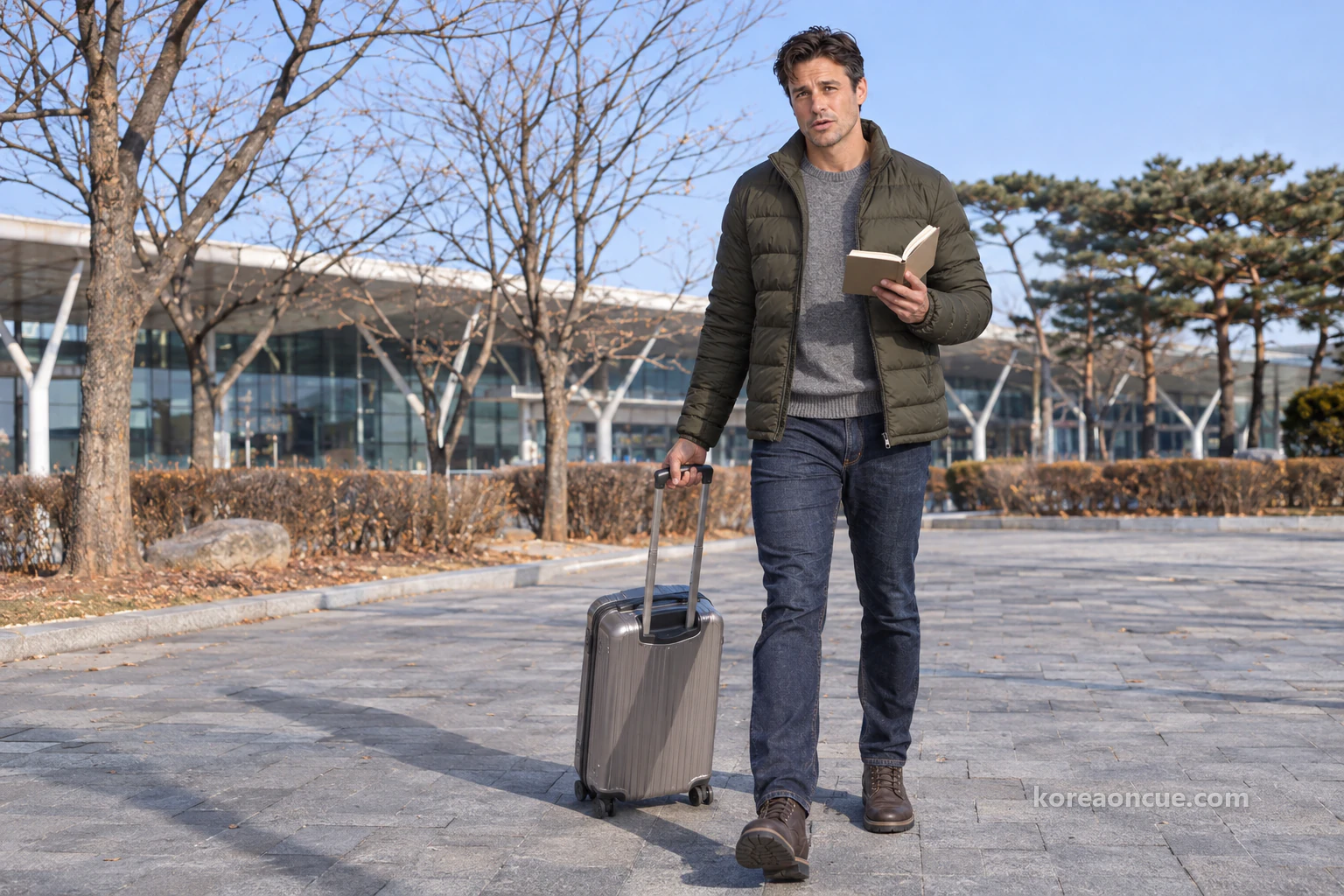
When Ethan reaches the front of the museum, his watch shows a few minutes to 10. If you are after a walk-up experience ticket, the kiosk comes before your luggage. The lockers on the 1st and 3rd floors take travel suitcases too, so leaving yours after you have your ticket is soon enough. Ethan keeps hold of the suitcase handle and walks straight towards the kiosk. To a designer’s eye, an airport museum that had made room for travellers’ luggage looked rather well thought out, but in today’s order the lockers were the second line.
How to book an experience at the National Aviation Museum of Korea: online at 9:00 on alternate Fridays, and the 10:00 kiosk if you miss it
Online booking for the four experiences — pilot and air traffic control, cabin training, aviation leisure sports and the children’s airport — opens two weeks at a time at 9 a.m. on alternate Fridays. Each block that opens on a Friday runs from the following Tuesday to the Sunday two weeks later. Because the museum is closed on Mondays, a block always starts on a Tuesday. Ethan’s day, 22 December, was in the block from 15 to 27 December that opened at 9 a.m. on Friday 11 December. At 9 that Friday morning, Ethan was packing for home in his hotel in Myeongdong at the end of his previous trip.
Ethan opened the booking page on Thursday night, back from Busan. At the top of his list was the pilot and air traffic control experience, which recreates a Boeing 747 cockpit and the Incheon Airport control tower with simulators. It lets you try a pilot’s job and an air traffic controller’s job in one go, and for someone who builds machines, there could be no better 55 minutes. But the online places for Tuesday the 22nd were already full. Ethan was about to close his laptop when his hand stopped at a line at the very bottom of the information.
| Experience (floor) | Price (standard / concession) | Walk-up places per session | Who |
|---|---|---|---|
| Pilot and air traffic control (2F) | 5,000 won / 3,000 won | 3 of 8 | Year 5 of primary school and up |
| Cabin training (2F) | 3,000 won / 2,000 won | 8 of 30 | Year 1 of primary school and up |
| Aviation leisure sports (3F) | 5,000 won / 3,000 won | 2 of 6 | Primary pupils, 140 cm and taller |
| Children’s airport | 2,000 won | 5 | 48 months to pre-school |
| Black Eagles flight (2F) | 3,000 won / 2,000 won | All on site, 3 at a time | 130 cm or taller and under 190 cm |
That line was the third column of the table: the walk-up places kept back for every session. Even when online booking is full, this many places are sold at the on-site kiosk. On top of that, any places not sold online switch to on-site ticketing from 10 a.m. on the day of the experience. So don’t give up because the booking calendar is full: be at the kiosk at 10, when the museum opens. It was that Thursday night, too, that Ethan decided to come through the ticket gates at 9:40 on Tuesday morning.
Ethan also read the conditions under the table, line by line. The pilot and air traffic control experience lasts 55 minutes, 15 of them a lecture and 40 the experience itself. Cabin training lasts 60 minutes and covers safety drills such as handling the cabin door, emergency landing and ditching. Wearing a dress, a short skirt, shorts or heeled shoes restricts what you can do. Aviation leisure sports gives you three things in 40 minutes: a light aircraft simulator, a helicopter simulator and paragliding. In the children’s airport experience, one adult waits in the waiting area for each child.
At 10, Ethan stands in front of the kiosk screen with his suitcase parked beside him. The walk-up places for the earliest session have already gone to the people ahead of him, but one of the three places for the next session comes to Ethan. Ticket in hand, he counts the 170 minutes again: take away the 55-minute experience and 115 remain, so the “110 min spare” in his notebook is already out. Now it is time to leave his suitcase. But before he heads for the lockers, his finger, flicking through the screen once more, stops on one flight experience.
The Black Eagles flight is sold only at the on-site kiosk, and you can’t ride if you are 190 cm or taller
There is no online booking for the Black Eagles Flight VR Experience, and you buy tickets only at the on-site kiosk. It is a 10-minute gyro VR experience in which you ride along in the co-pilot’s seat of a Black Eagles aircraft. It runs from 10:20 a.m. to the last ride at 5:20 p.m., 43 times a day, with up to 3 people at a time. At 3,000 won standard and 2,000 won concession it is cheap, and it is short too. Ethan meant to put it first, in the empty slot before his pilot and air traffic control session.
The conditions for riding ran to several lines. As soon as he read the one saying you can’t ride if you are carrying things such as keys or coins, Ethan turned out his trouser pockets. Coins gathered over the whole trip and the bunch of keys to his house in Seattle tumbled into his palm. He nodded, satisfied that he could simply take it all off himself and put it in a locker with his suitcase, until he read the next line. It said that you can’t ride if you are under 130 cm or 190 cm or taller, or weigh 100 kg or more.
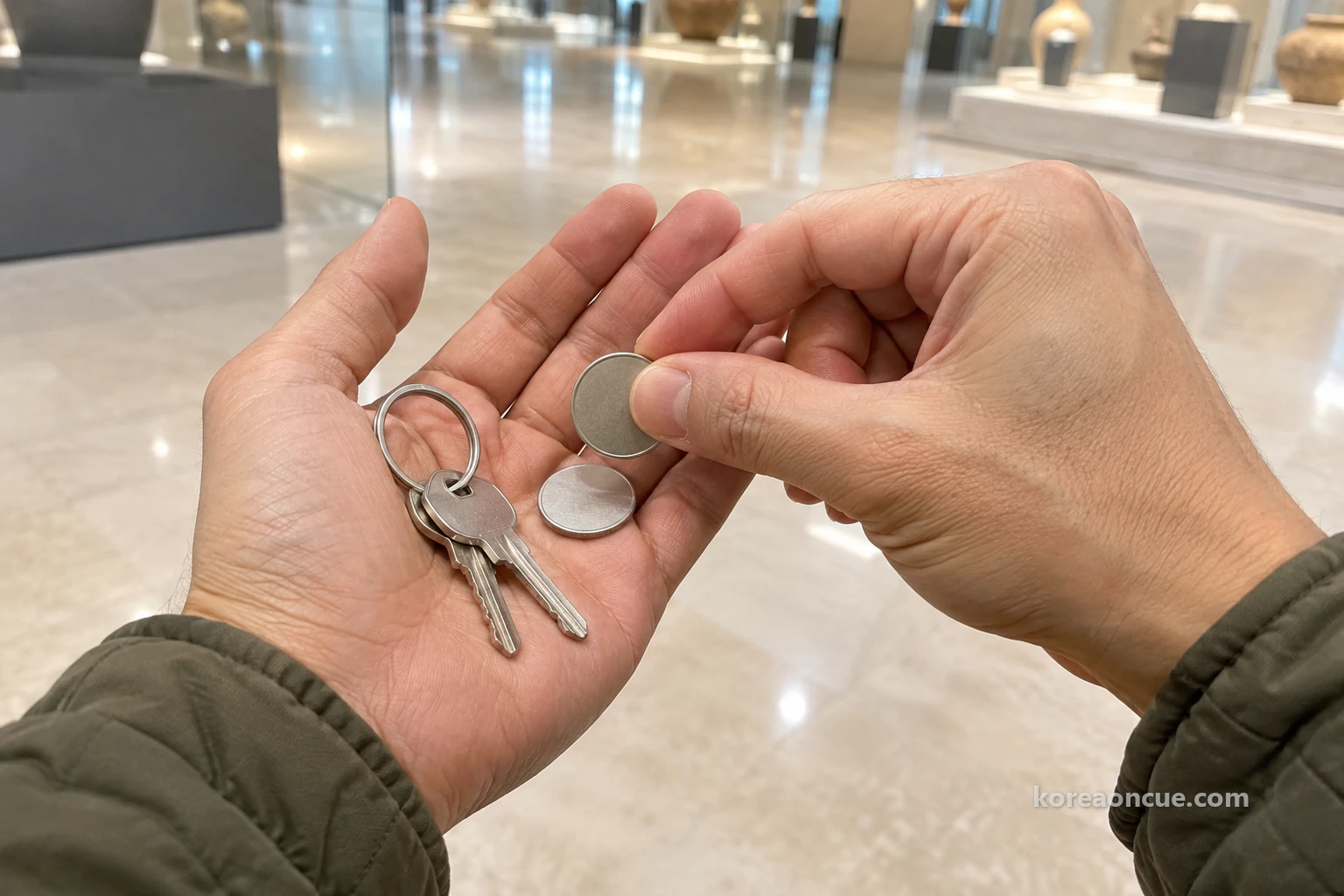
“I can take the coins out, but I can’t take out 3 centimetres,” Ethan mutters, and laughs out loud. Take 190 cm from 193 cm and you get 3 cm: a man who has spent his life checking tolerances on other people’s drawings has failed one on his own height for the first time. Ethan draws a line through the Black Eagles row in his notebook and writes “+3 cm, fail” beside it. A child passing by looks up at how tall he is, and Ethan, who is always the one doing the measuring, has an odd feeling of being measured for once. If you are a tall traveller, read that line before you queue at the kiosk.

Even if you can’t ride, there is still a way to see the Black Eagles. In the Aviation History Hall on the 1st floor you can see the T-50B, the aircraft the Black Eagles fly in their aerobatic displays. On weekends and public holidays, a Black Eagles special docent tour runs three times a day, and the first 30 people aged Year 1 of primary school and up get tickets at the kiosk. Show your ticket after the tour and you can borrow photo props such as a flight jacket, a pilot’s cap, a scarf and sunglasses. This tour is not given in foreign languages, though, so on a weekday like Ethan’s, tilting your head back in front of the T-50B on your own is plenty.
With a boarding pass, weekday experiences are at the aviation discount price, for up to four people a pass
There is one price that applies only to people who fly. If it is less than a month since you flew with a Korean airline that operates from Gimpo Airport, you can show your boarding pass and pay the aviation discount price for the paid experiences. One boarding pass covers up to four people, including you. It applies on weekdays only, though, not on weekends or public holidays. It is a promotion that started on 1 July 2026 and runs until further notice.
The Busan boarding pass from last Thursday was still in Ethan’s coat pocket. Five days had passed since the flight, and today was a Tuesday, so both conditions were met. Ethan took out the slip of paper when he got his pilot and air traffic control ticket, and the price became the aviation discount price. Ethan, who had never imagined that one domestic flight on a business trip would knock money off a museum ticket, slipped the boarding pass carefully between the pages of his notebook. If you are coming at a weekend, leave this box empty and do your sums at the standard price.
Because one pass covers up to four, this discount is worth more if you have company. If you come as a family with children, children and teenagers up to 19 and people aged 65 and over are already eligible for the concession price, so just bring proof. Travelling alone, Ethan felt the four places were a bit of a waste. He wrote “1 boarding pass = 4 people” in the corner of his notebook and decided that if he ever came with his colleagues, he would show them that line first.
What to see on each floor of the National Aviation Museum of Korea: history on 1, industry on 2, everyday flying on 3, the observatory on 4
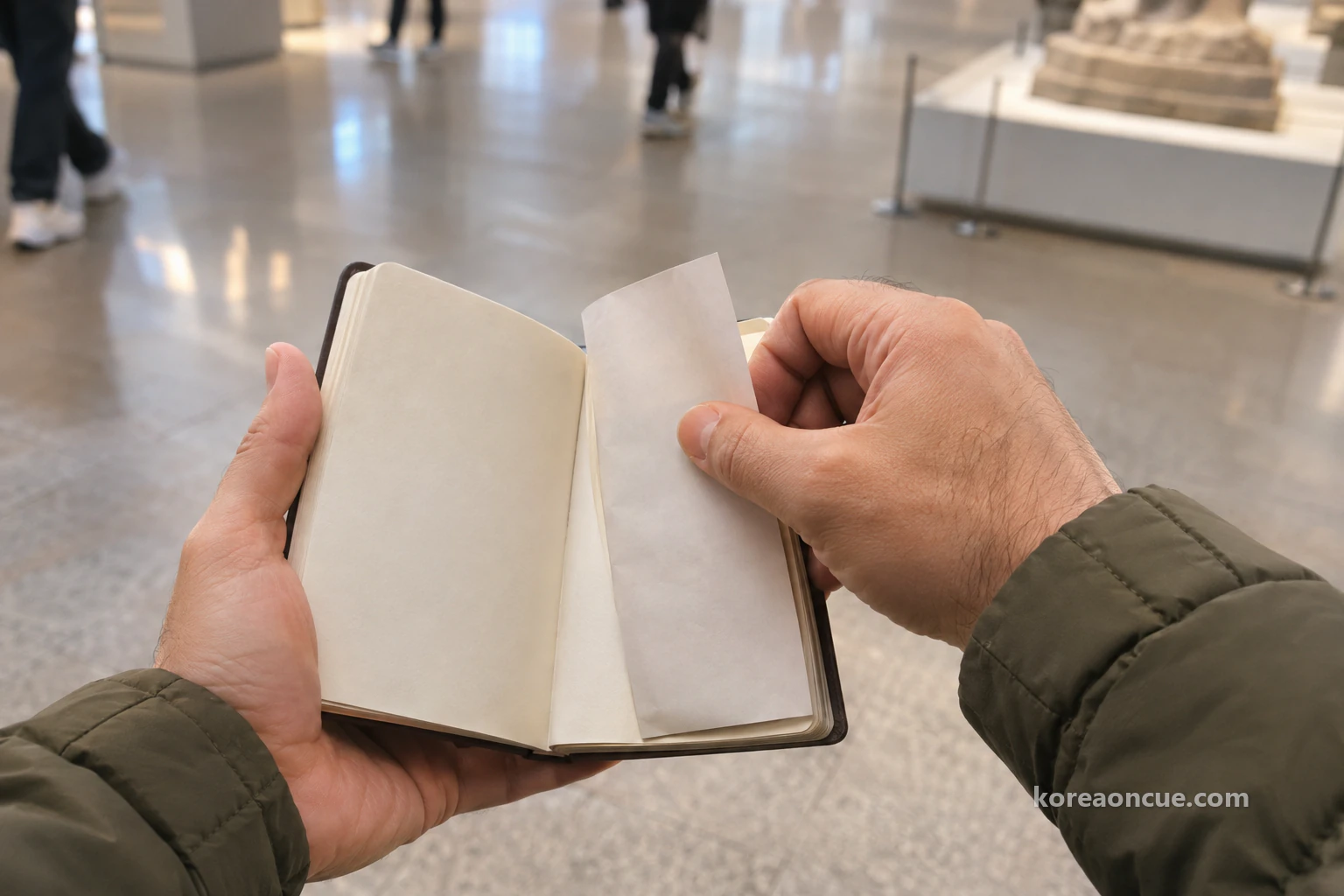
The permanent exhibitions are divided into the Aviation History Hall on the 1st floor, the Aviation Industry Hall on the 2nd and the Aviation Life Hall on the 3rd, and the top floor, the 4th, is a rooftop observatory. Outside, around the circular museum, there are also statues, real aircraft and airport navigation safety equipment. The experience rooms are spread across the 2nd and 3rd floors, so if you have an experience ticket, put that floor in the middle and plan what comes before and after it. Ethan pushes his suitcase into a locker on the 1st floor, shuts the door, copies the table below into his notebook and circles the 2nd floor, where the pilot and air traffic control experience is. He decides to spend the time until his session on the 1st floor and outside.
| Floor | Exhibitions and experiences | Places to rest or watch the planes |
|---|---|---|
| 1F | Aviation History Hall, real aircraft, aviation independence activists, outdoor exhibition | Restaurant, museum shop, lockers |
| 2F | Aviation Industry Hall, immersive film hall, pilot and air traffic control, Black Eagles and cabin training experience rooms, aviation learning playground | — |
| 3F | Aviation Life Hall, special exhibition gallery, aviation library, aviation leisure sports experience room | Outdoor rest area, picnic room, convenience store, lockers |
| 4F | Rooftop observatory | Outdoor observatory with a view of take-offs and landings |
The first place Ethan stops on the 1st floor is in front of the Station Wagon. It was Korea’s first passenger aircraft, and on 30 October 1948 it flew the first service on the scheduled route between Seoul and Busan. That day is why 30 October became “Aviation Day”. Ethan, who flew between the same two cities five days ago, touches the boarding pass in his pocket once more in front of a first flight made 78 years earlier. The thought that the plane he took is something like a distant grandchild of that first flight makes him smile to himself.
The 1st floor also has the Geumgang-ho, the aircraft Ahn Chang-nam took up from Yeouido in 1922 to fly over Namsan and Changdeokgung. A cross-section of the Boeing 747, which first entered service in Korea in 1973, is on this floor too. Ethan stands longest in front of that cross-section. A man who has drawn sectional views on paper all his life is standing before the cut face of a real airliner, and without meaning to, his finger traces the round line of the fuselage in the air.
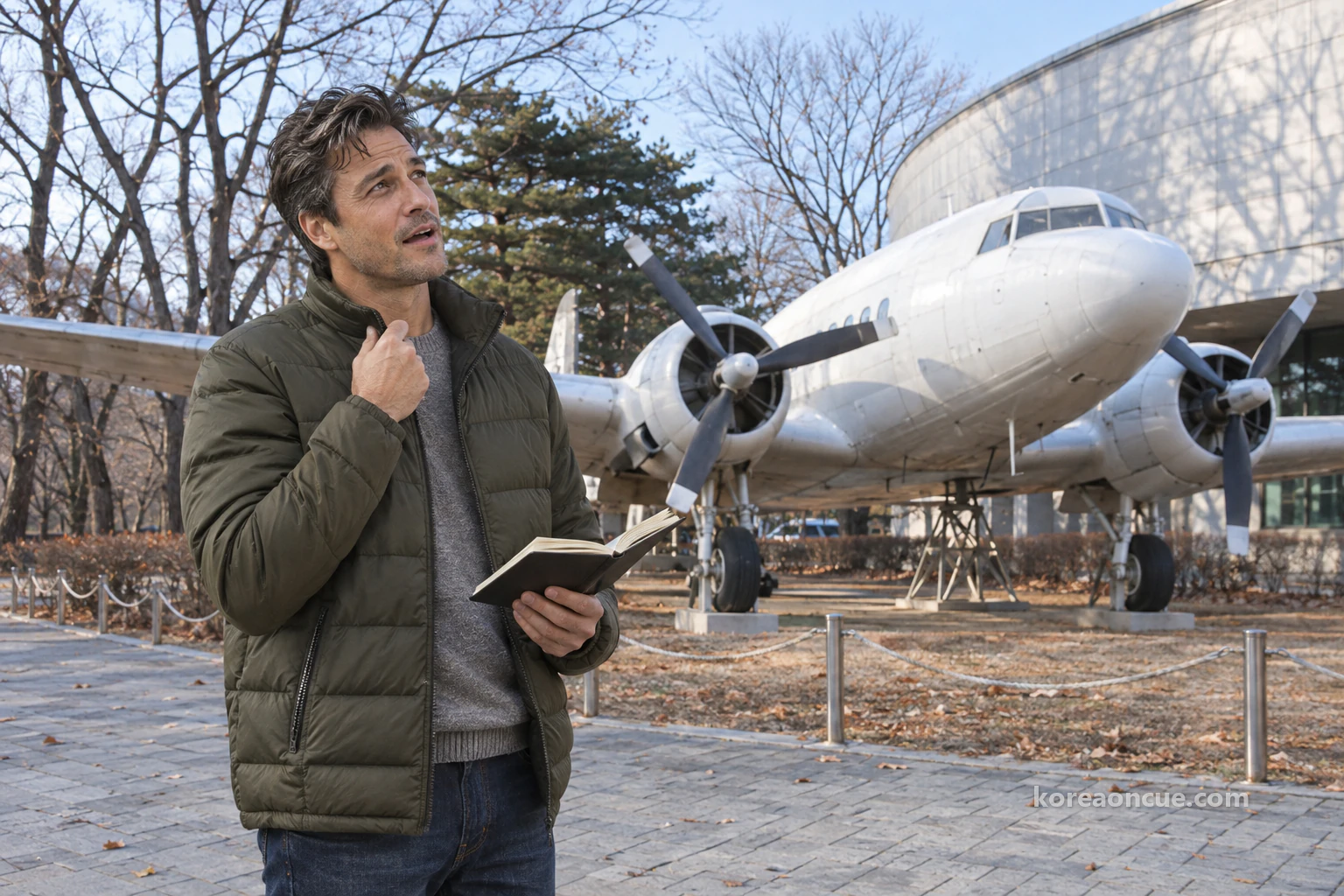
Step outside and the outdoor exhibition wraps around the circular museum. With his coat collar turned up against the cold wind, Ethan counts the time left until his session and cuts what he must see down to three. They are the HS-748, which served as the presidential aircraft from 1974 to 1985 and was retired in 2024, the main wing of a Boeing 757, and an azimuth guidance facility that was actually installed and used at Gimpo Airport before it was taken down. At the Willows Aviation School statue, which depicts six people including Minister of Military Affairs Noh Baek-rin, and the statues of Ahn Chang-nam and Kwon Ki-ok, he only bows his head as he passes. At the last stop, the azimuth facility, Ethan looks back for a long while towards the airport where real planes are taking off.
When it is time for his session, Ethan goes up to the experience room on the 2nd floor. During the 15-minute lecture he keeps his notebook on his knee, trying not to miss a single line. After the 40-minute experience that follows, he comes out and leaves one line in his notebook: “The controller’s side is busier.” Remembering that three of the eight places in the session were the morning’s kiosk places, Ethan quietly gives the 9:40 ticket gates a good mark.
Besides the experience rooms, the 2nd floor has an immersive film hall. It shows “Island of Aeroplanes” for about 15 minutes on a large curved screen with surround sound, a 9-minute film followed by 3 to 6 minutes of interactive play. It loops, so you don’t need to time your visit, which makes it a good fit for a spare moment. In the Aviation Life Hall on the 3rd floor there are drones and the OPPAV. Ethan crosses out the “airport user, 1 hour” line in his notebook and writes “aviation enthusiast, 2 hours” underneath.
Where can you watch the planes? The 3rd-floor outdoor rest area and the 4th-floor observatory, until 6 p.m.
To watch planes taking off and landing, go to the outdoor rest area on the 3rd floor or the rooftop observatory on the 4th. Both are outdoor spaces, and they are open only while the museum is, from 10 a.m. to 6 p.m., Tuesday to Sunday. You can’t go up after the museum closes or on Mondays, so if you are hoping for planes at dusk, you need to plan within that 6 p.m. limit. Coming out of the experience room, Ethan checks the time left on his watch and heads straight upstairs.
The outdoor rest area on the 3rd floor is an outdoor space left open so you can watch planes taking off and landing. The same floor has a picnic room open to every visitor, so with children it is a good place to rest and watch the planes. Ethan catches his breath there and decides to go up one more floor. He is curious to see the take-offs and landings from the top floor. If you want to watch the planes for a long time, it is easier to take a breather on the 3rd floor and then go up to the 4th.
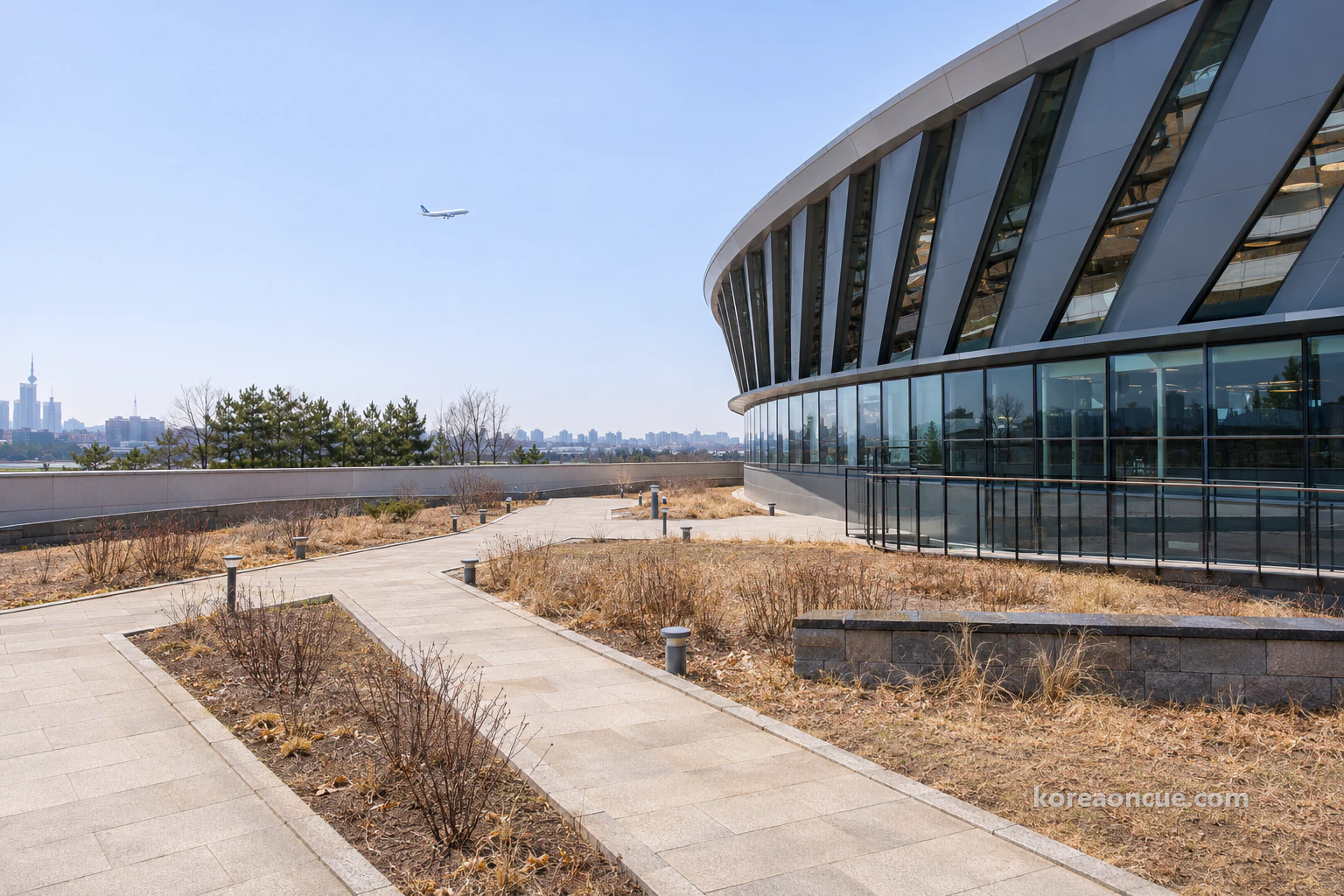
The rooftop observatory on the 4th floor is an outdoor observation deck at the very top of the building. As Ethan steps out, an airliner happens to be leaving the runway and climbing into the sky towards the distant hills. The cold wind blows straight at him, so he buttons his coat up to his neck and looks at the watch on his left wrist. Counting the seconds from the moment the wheels leave the ground until the plane becomes a dot is, for Ethan, the most enjoyable way to watch a plane. If you plan to stand there for long in winter, bring gloves and a hat.
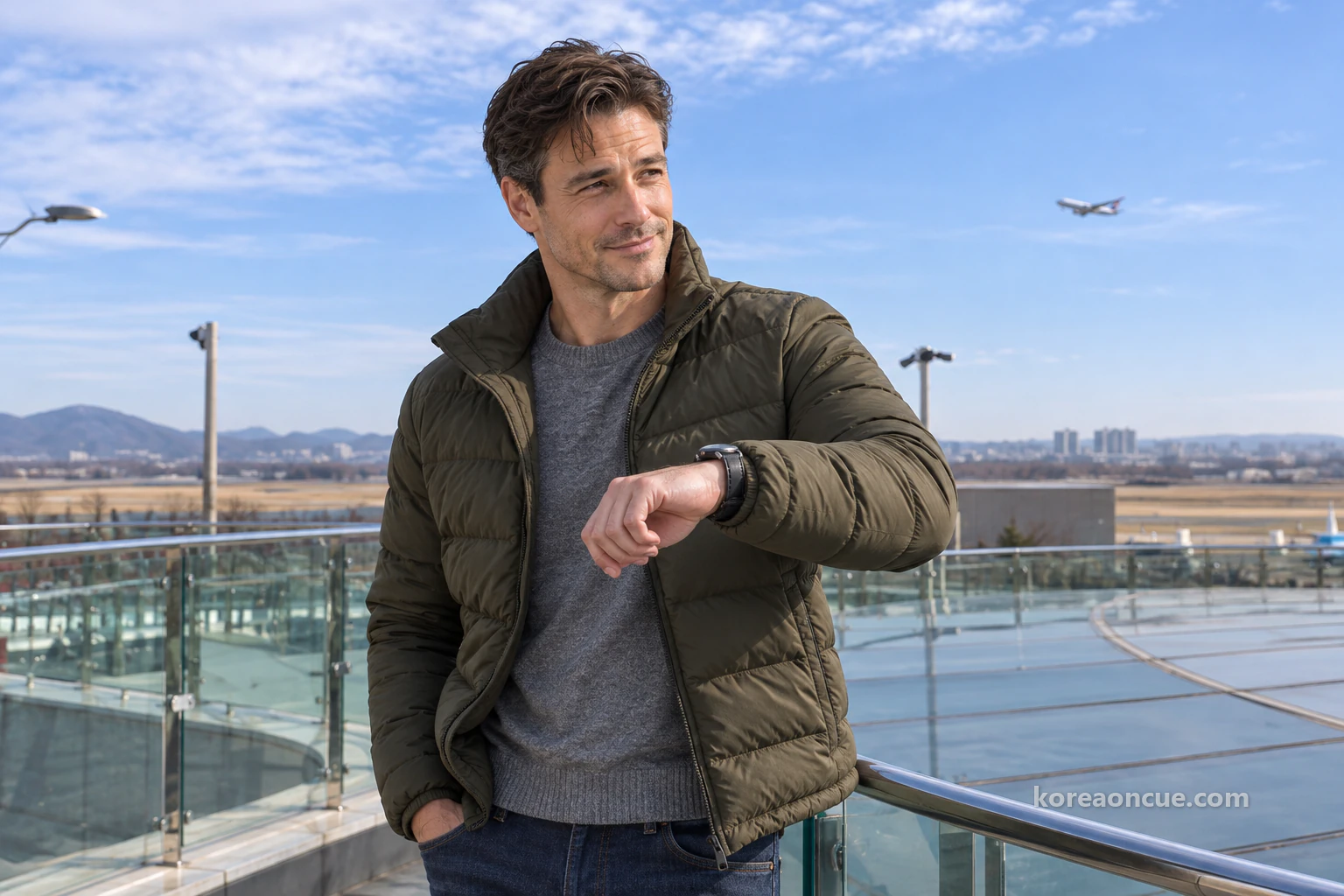
Ethan takes a photo of the take-off and posts it in the group chat of four. The message he sends with it is a single line: “Failed the Black Eagles by 3 cm, but I saw a real take-off instead.” The first to reply is Lulu. When her short answer arrives, “You’re the first person I’ve heard of who couldn’t ride for being too tall,” Ethan laughs out loud on his own in the wind. He puts his phone back in his pocket and looks at his watch again: there is enough time left before 12:50 to sit down on the 1st floor and check his sums.
Food and places to rest at the National Aviation Museum of Korea: you can bring your own food into the 1st-floor restaurant
You can sort out a meal before your flight at the restaurant on the 1st floor. You are free to bring outside food in and eat it there, so a gimbap bought on the way is fine. You can’t take food into the exhibition halls, though, and no pets are allowed apart from guide dogs. There is a convenience store on the 3rd floor, and the museum shop is to the left of the main entrance on the 1st floor. Put souvenirs in the last slot before your flight and you’ll carry less around.
Ethan goes back down to the 1st floor and sits by the long wooden floor in the restaurant. He opens his notebook on a white round table and adds up, line by line, the time he has spent since the morning. The kiosk, the 1st floor and outside, the 55-minute pilot and air traffic control experience, the immersive film hall, the 3rd and 4th floors. With the “airport user, 1 hour” he first wrote down, there would have been plenty of time over, but the corrected “aviation enthusiast, 2 hours” plus one experience fits the 170 minutes almost exactly. Ethan decides to spend the few minutes left taking his suitcase out of the locker.

170 minutes before the flight: the order Ethan rewrote for the National Aviation Museum of Korea
At 12:40, Ethan takes his suitcase out of the locker on the 1st floor. On the way back, he writes an order for whoever comes next on the last page of his notebook. At the top: check it isn’t a Monday. Next, the booking calendar at 9 on Friday, then the 10 o’clock kiosk in case you miss it. Below that come the boarding pass in your pocket and the pockets to empty, and on the last line, “under 190 cm”. That one line is a box Ethan himself can never change, and he laughs to himself again as he writes it.
Walking out of the museum doors, Ethan starts the step count at 0. He wants to know whether the 500 steps that went wrong this morning will come out right this time. When he stops counting in front of the gate towards Parking Lot 2, it is somewhere around 500, and he writes “within tolerance” next to “from the gate” in his notebook. From the museum to the airport, the most accurate thing all along was that one line, 400 m. Through the gate and back on the first floor of the Domestic Terminal, Ethan slips his notebook into the inside pocket of his coat and turns his suitcase towards the international side.
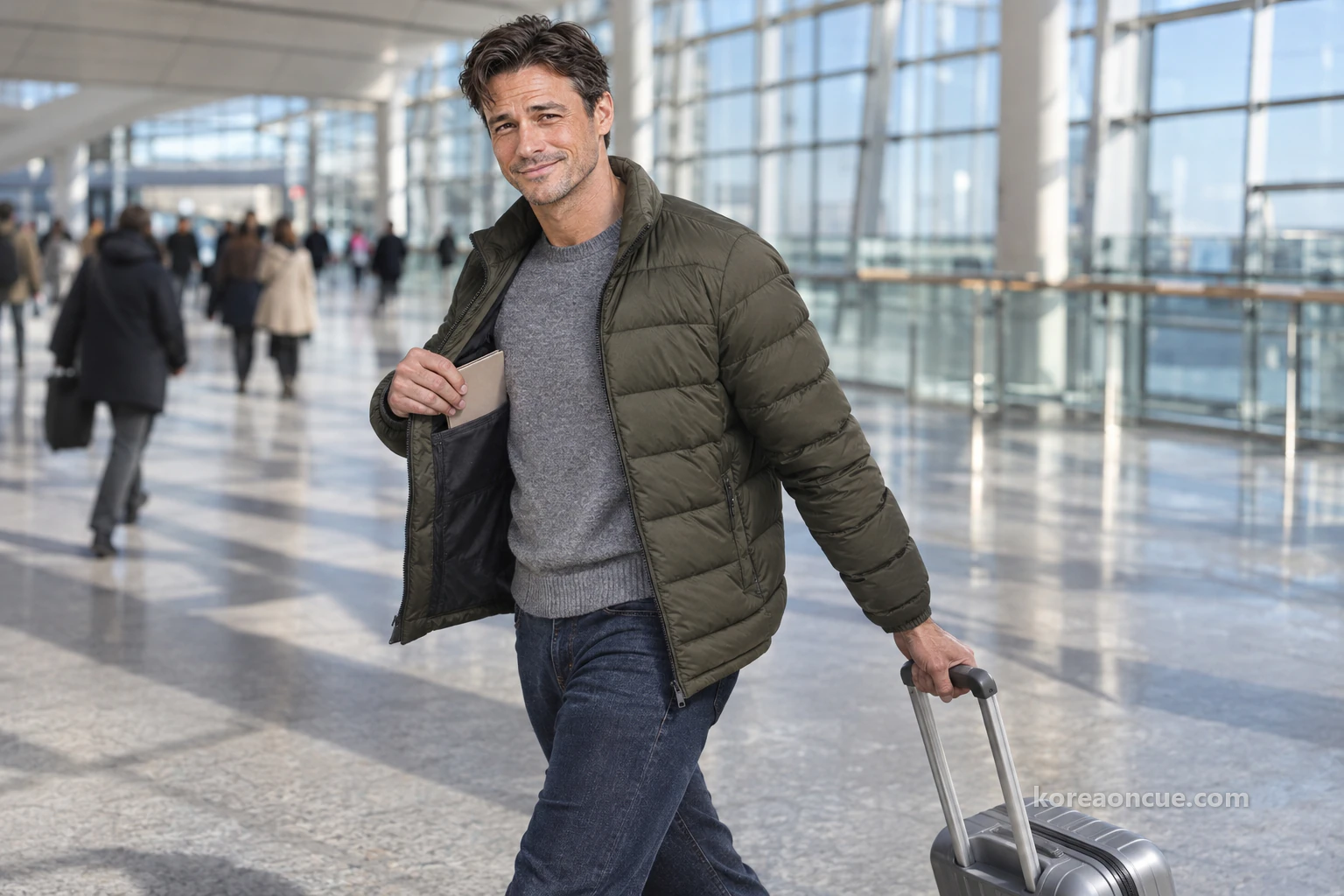
The flight is due to leave Gimpo at half past three as planned, and Ethan’s 170 minutes have not overflowed by a single box. There is a line through the Black Eagles row, but next to it are the seconds he counted for the take-off on the 4th floor. The next time he leaves from Gimpo, Ethan plans to avoid Mondays first and open the booking calendar at 9 on a Friday morning. Even so, he will probably still come through the ticket gates at 9:40 that day. The 10 o’clock kiosk, keeping back three places for every pilot and air traffic control session, turned out to be a box a man who measures things can rely on.
Common Mistakes
Putting it in on a Monday afternoon
Ethan’s first plan was crossed out by a single line about closing days.
Counting the 400 m from the station
Ethan’s 500 steps had run out before he even reached the first floor of the Domestic Terminal. The count should have started at the gate towards Parking Lot 2.
Boarding the yellow bus by its colour alone
Ethan only decided to walk after checking the route once more in front of Gate 4. The route that only circles the passenger terminals doesn’t stop in front of the museum.
Giving up because online booking is full
Ethan nearly shut his laptop on Thursday night, and at 10 on Tuesday he got one walk-up place at the kiosk.
Emptying your pockets before reading the height rule
Ethan took out all his coins and keys before the 190 cm line caught him by 3 cm.
FAQ
Are there tours in English?
Yes. Only foreign visitors can apply, and you need to book in advance. The free regular exhibition tours, which you sign up for on site in the central hall on the 1st floor (seven times a day on weekdays, first 30 people), are a separate programme.
Can I go with children?
Babies and toddlers between 80 and 105 cm tall can do Pureung Pureung Aviation First Steps on the 3rd floor for free, and children from 48 months to pre-school age can do the children’s airport experience.
Can I borrow a wheelchair or a pushchair?
Yes, you can borrow both. The 1st floor also has a nursing room and a health rest room.
Can I go by car?
The car park is not large, with 62 spaces above ground and 109 underground, and you can only pay by card. Small cars park free for the first 30 minutes. Spaces run short, so the underground train is the better choice.
Recap — 30 seconds before you go
- As long as you avoid Mondays, you can see the exhibitions for free with no booking
- For the experiences, online booking at 9:00 on alternate Fridays comes first, and if you miss it, the walk-up places at the 10:00 kiosk
- The 400 m on foot starts at the gate on the first floor of the Domestic Terminal, and leave the planes for last, on the 3rd and 4th floors
Sources
- National Aviation Museum of Korea — Visitor guide (Korean)Tuesday to Sunday 10:00–18:00, last entry 17:30 · closed Mondays, 1 January, the day of Seollal and Chuseok; if a Monday is a public holiday, closed the next weekday · exhibitions free, experiences and classes paid · main number 02-6940-3195checked 2026-11-10
- National Aviation Museum of Korea — Directions (Korean)Gimpo Airport Station (Lines 5 and 9, AREX, Gimpo Goldline, Seohae Line) → sign on the Domestic Terminal 1st floor → gate towards Parking Lot 2 → about 400 m straight on · two airport circulator bus routes from Gate 4, free, every 15–20 minutes · 300 m and 600 m from Songjeong Station · city buses 3, 12, 50 and 50-1 to “Gimpo Customs Office and National Aviation Museum of Korea”checked 2026-11-10
- National Aviation Museum of Korea — 2026 closures and experience booking (Korean)Online booking for experiences every other Friday at 9:00, two weeks at a time · opening dates by periodchecked 2026-11-10
- National Aviation Museum of Korea — Experience booking calendar, pilot and air traffic control (Korean)Pilot and air traffic control 55 minutes (15-minute talk, 40-minute experience) · price and age for each experience · online and walk-up places per session · unsold online places go on sale on site from 10:00 on the daychecked 2026-11-10
- National Aviation Museum of Korea — Black Eagles Flight VR Experience (Korean)Gyro VR, riding in the co-pilot seat · 10 minutes · 3,000 won standard, 2,000 won concession · 43 rides a day, 3 people at a time · on-site kiosk only · no riding under 130 cm, at 190 cm or taller, at 100 kg or more, or carrying keys or coinschecked 2026-11-10
- National Aviation Museum of Korea — Air traveller discount (Korean)Show a boarding pass for a Korean airline serving Gimpo within one month of the flight · air traveller rate for paid experiences · up to 4 people per pass including you · weekdays only · from 1 July 2026 until further noticechecked 2026-11-10
- National Aviation Museum of Korea — Facilities (Korean)3rd-floor outdoor rest area and 4th-floor observatory (Tuesday to Sunday 10:00–18:00) · 3rd-floor picnic room · 1st-floor restaurant (outside food allowed) · lockers on the 1st and 3rd floors (suitcases) · 3rd-floor convenience store · museum shop · wheelchair and pushchair loanschecked 2026-11-10
- National Aviation Museum of Korea — Permanent exhibitions (Korean)Aviation History Hall on 1F, Aviation Industry Hall on 2F, Aviation Life Hall on 3F · immersive film “Island of Aeroplanes” · Station Wagon, Geumgang-ho, Boeing 747 cross-section · statues, real aircraft and air navigation facilities outdoorschecked 2026-11-10
- National Aviation Museum of Korea — FAQ (Korean)English exhibition tours by advance booking for foreign visitors · Black Eagles rides 10:20–17:20 · permanent exhibitions about 1 hour 30 minutes to 2 hours · a carer waits during the children’s airport experiencechecked 2026-11-10
A Seoul story told with our AI characters. Place details are checked against public sources; the photos are AI-made illustrative images. How we use AI
Next Cue — What to read next

The Hyundai Christmas Village: the waitlist for overseas visitors
Hina puts lines like “Booking opens 11:00” on posters for a living, and she missed exactly that 11 o’clock.

Dongdaemun markets on Sunday: open and closed
Lulu had planned to buy wrapping supplies at Bangsan Market on Sunday morning for the small year-end gift boxes she wanted to fill.

Culture Station Seoul 284: getting in without registering in advance
Elena wrote “11 a.m., the door of the old station” on the first line of her scene notes. It was opening day, and on the first day alone the doors opened at 3 p.m. Elena spent the four hours on Seoullo 7017, then put the eye she uses to tell real from fake to the test in front of a deepfake film.