SEOUL · SEOUL FOREST
Seoul Forest: The Waterworks You Only Notice the Second Time
Rina Walks 202 Metres in from Exit 4 of Seoul Forest Station and Goes Looking, in Turn, for the Frames of an Old Water-Treatment Plant, a Mirror Pond Three Centimetres Deep and a Horse Sculpture That Remembers a Racecourse
Part four of “Hangang.” Seoul Forest was once a royal hunting ground, then Seoul’s first water-supply source in 1908, and later a racecourse and a golf course. On an evening walk through Seongsu, Rina only crossed the far edge of this park. This time she comes in daylight and looks for what those earlier lives left behind.
How to get there
Calculated with a map app’s walking route (TMAP). The city’s parks page gives about 2 minutes on foot from Seoul Forest Exit 4 and about 10 minutes from Ttukseom Exit 8.
This is the fourth part of “Hangang.” The issue began in Yeouido, passed through Banpo and Mangwon, and reaches a large forest park in Seongsu, on the north side of the river.
Rina is someone who comes to the same place twice. The first time she takes in the whole. The second time she looks for what she missed. She has been through Seoul Forest once already, in the Seongsu issue: the last few minutes of an evening walk, heading out from the Hill of Wind across the footbridge. She saw almost nothing of what was inside.
Half past ten on a weekday morning. On the first line of her notebook Rina writes: “Daylight this time — start from the inside.”
202 metres from Seoul Forest Exit 4
From Exit 4 of Seoul Forest Station (Suin–Bundang Line) to Seoul Forest Gate 2, the map route is 202 m, about 3 minutes (TMAP pedestrian route calculation).
A map app’s walking route puts Gate 2 of Seoul Forest 202 metres and three minutes from Exit 4 of Seoul Forest Station on the Suin–Bundang Line. The city’s parks page agrees: about two minutes on foot from Exit 4 of Seoul Forest Station, or about ten from Exit 8 of Ttukseom Station on Line 2. Find on a map
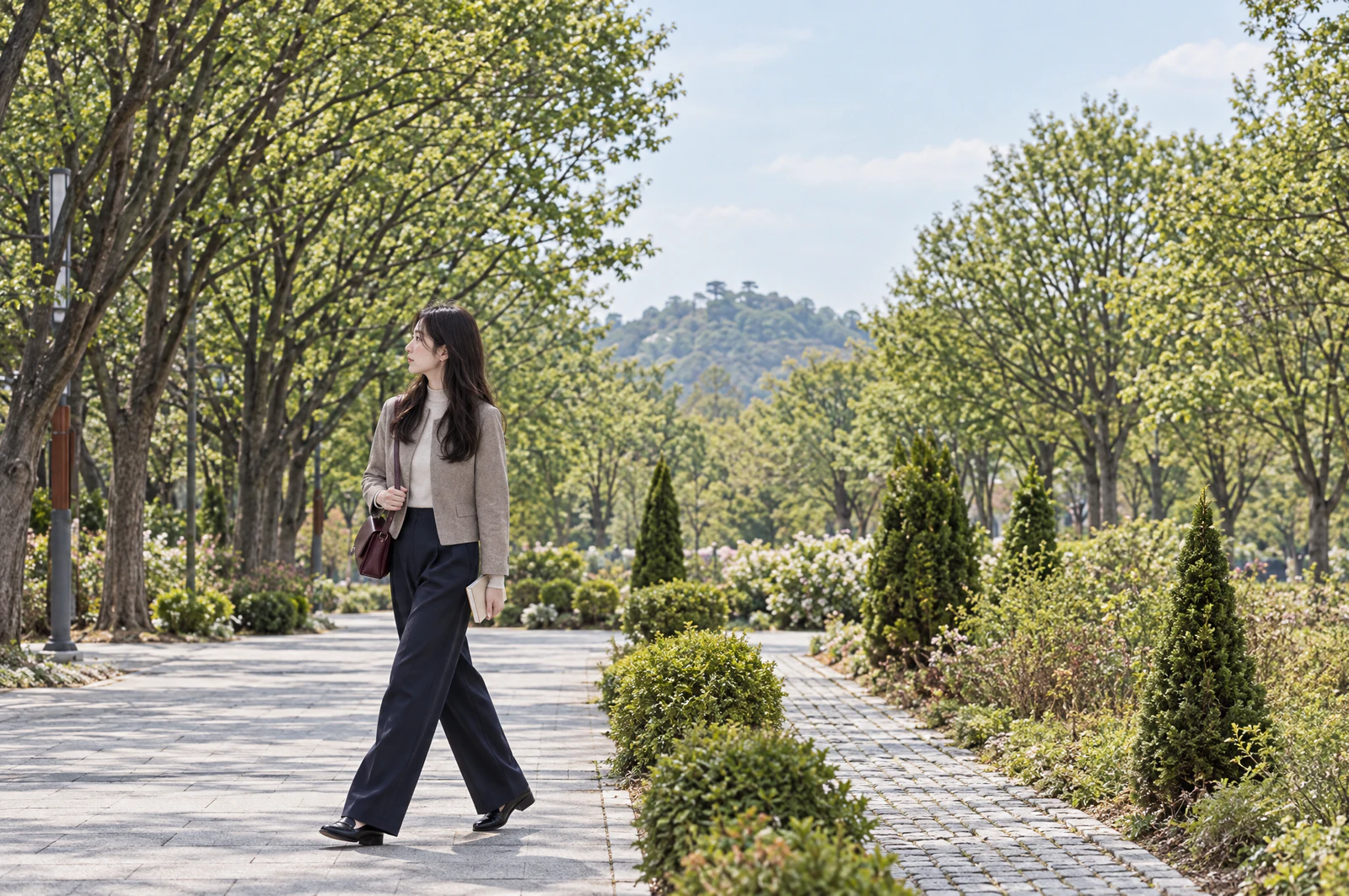
Past the gate, a broad path runs on between rows of trees. Rina slows down. Last time she left by the far end after dark, so this is her first time coming in through this side. It’s the same park, but a different gate makes it feel like somewhere new. On the second line of her notebook she writes last time’s route backwards: footbridge, Hill of Wind, and everything before that — “don’t know.”
Hunting ground, waterworks, racecourse
Seoul Metropolitan Government: Seoul Forest was long ago a royal hunting ground and, from 1908, Seoul’s first water-supply source. It was later used as a racecourse and a golf course. In 2002 the city decided, for citizens’ right to green space, to create a large park instead of the Ttukseom development project.
This is how the Seoul Metropolitan Government tells the park’s story. Long ago it was a royal hunting ground. In 1908 it became Seoul’s first water-supply source, and later it was used as a racecourse and a golf course. In 2002 the city decided to build a large park here instead of going ahead with the Ttukseom development project. Find on a map
The park opened on 18 June 2005. The city says some 5,000 citizens contributed funds and volunteer work while it was being made. It covers 480,994 square metres, divided into four themed areas: the Culture and Art Park, the Eco Forest, the Experiential Learning Park and the Wetland Eco Park. There are 415,795 trees, and the page gives pines, Japanese white pines and katsura trees as examples.
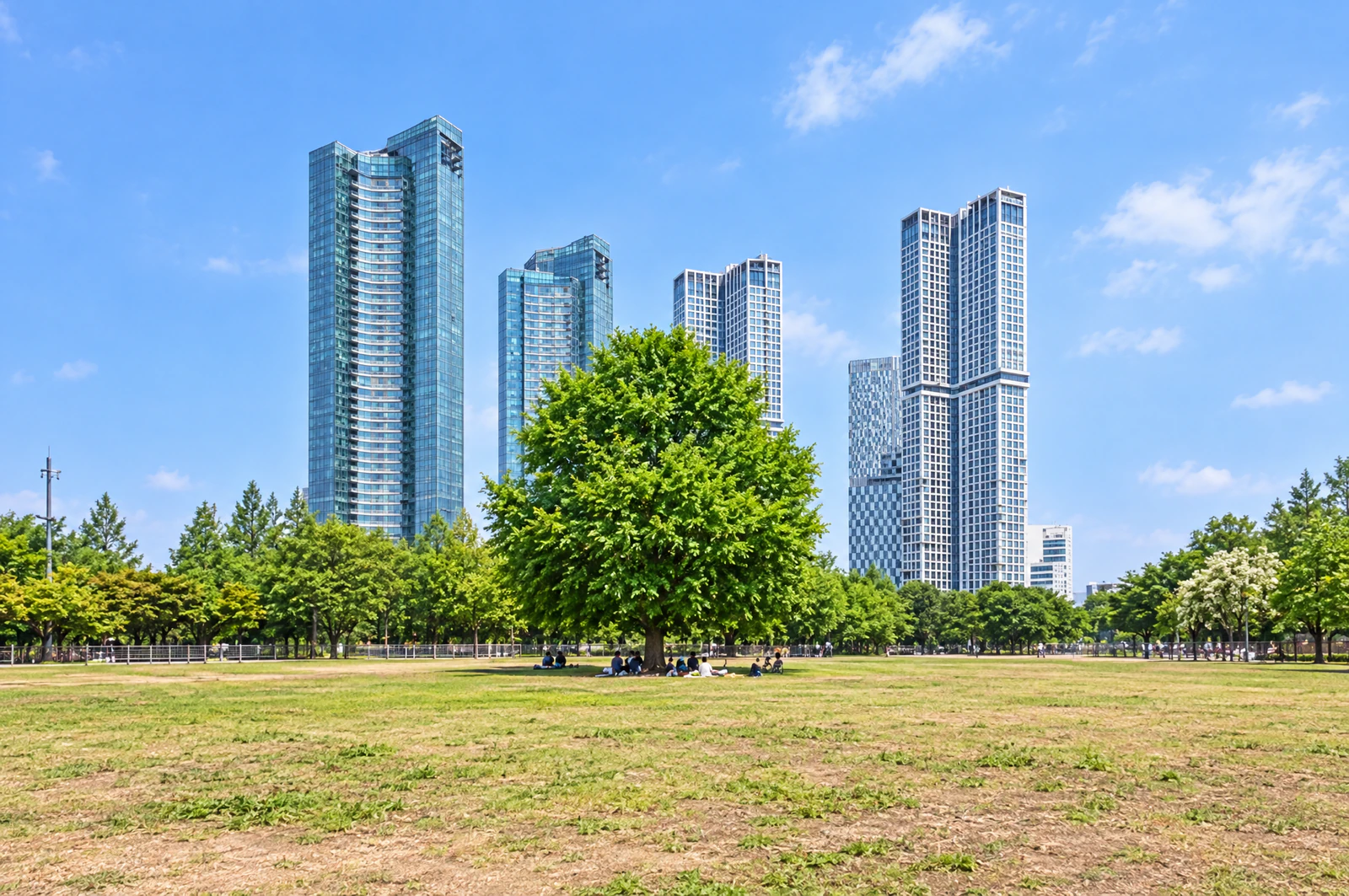
Rina writes four words down the page: hunting ground, waterworks, racecourse, forest. When she passed through in the evening, this was simply a big park. Following the city’s description, water and the racecourse, at least, have left traces inside today’s park. Now she knows what she’s looking for.
Flowers in the frames where water once settled
Seoul Metropolitan Government: the Gallery Garden reuses the structures of the old water-treatment plant’s sedimentation tanks as they were, as a garden of colourful flowers and climbing plants.
The first trace is water. According to the city, the Gallery Garden reuses the structures of the old plant’s sedimentation tanks as they were, planted with colourful flowers and climbing plants. The Insect Botanical Garden is a greenhouse made from the plant’s former rapid-filtration building. Find on a map
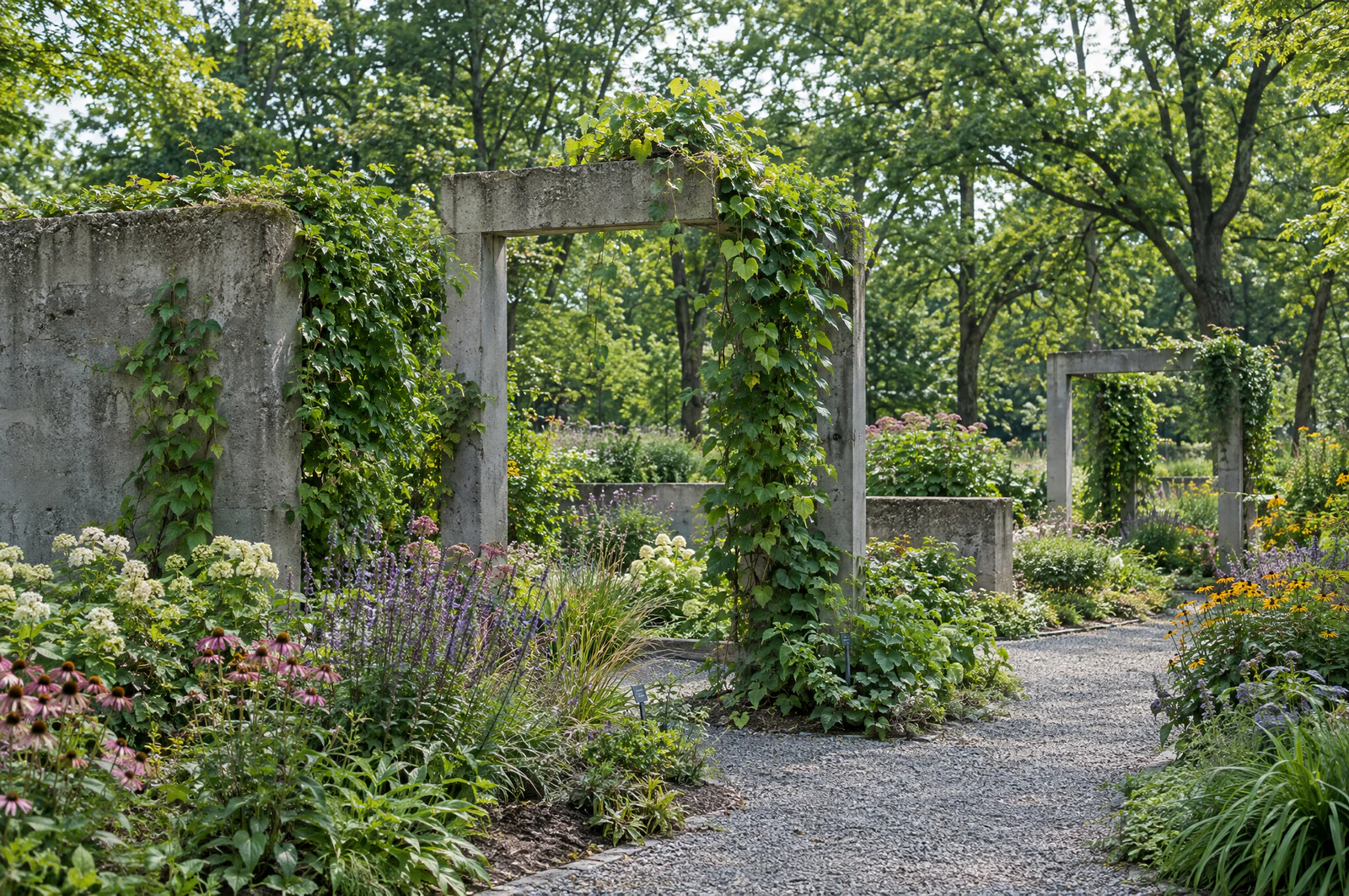
Rina spends a long time looking at the plants growing between the old frames. Where water was once left to settle, the frames now hold flowers and vines. Had she come by in the evening, these frames would just have been dark walls. You need daylight to see what’s inside them. She walks once round the edge, trying to picture which way the water flowed. She adds a question mark in her notebook.
The Insect Botanical Garden is open from 10 a.m. to 5 p.m. (last entry 4.30 p.m.) and closed on Mondays. From November to February it closes at 4 p.m. The Butterfly Garden opens from May to October over the same hours, also closed on Mondays. On her evening visit, both would already have been shut. Sitting on a bench, Rina writes: “Greenhouse — daytime only.”
Three centimetres deep, and a horse called “Start”
Seoul Metropolitan Government: the Mirror Pond, a shallow pond 3 cm deep, holds the surrounding scenery like a painting, and is one of Seoul Forest’s well-known photo spots, always busy with people capturing the metasequoias reflected in it.
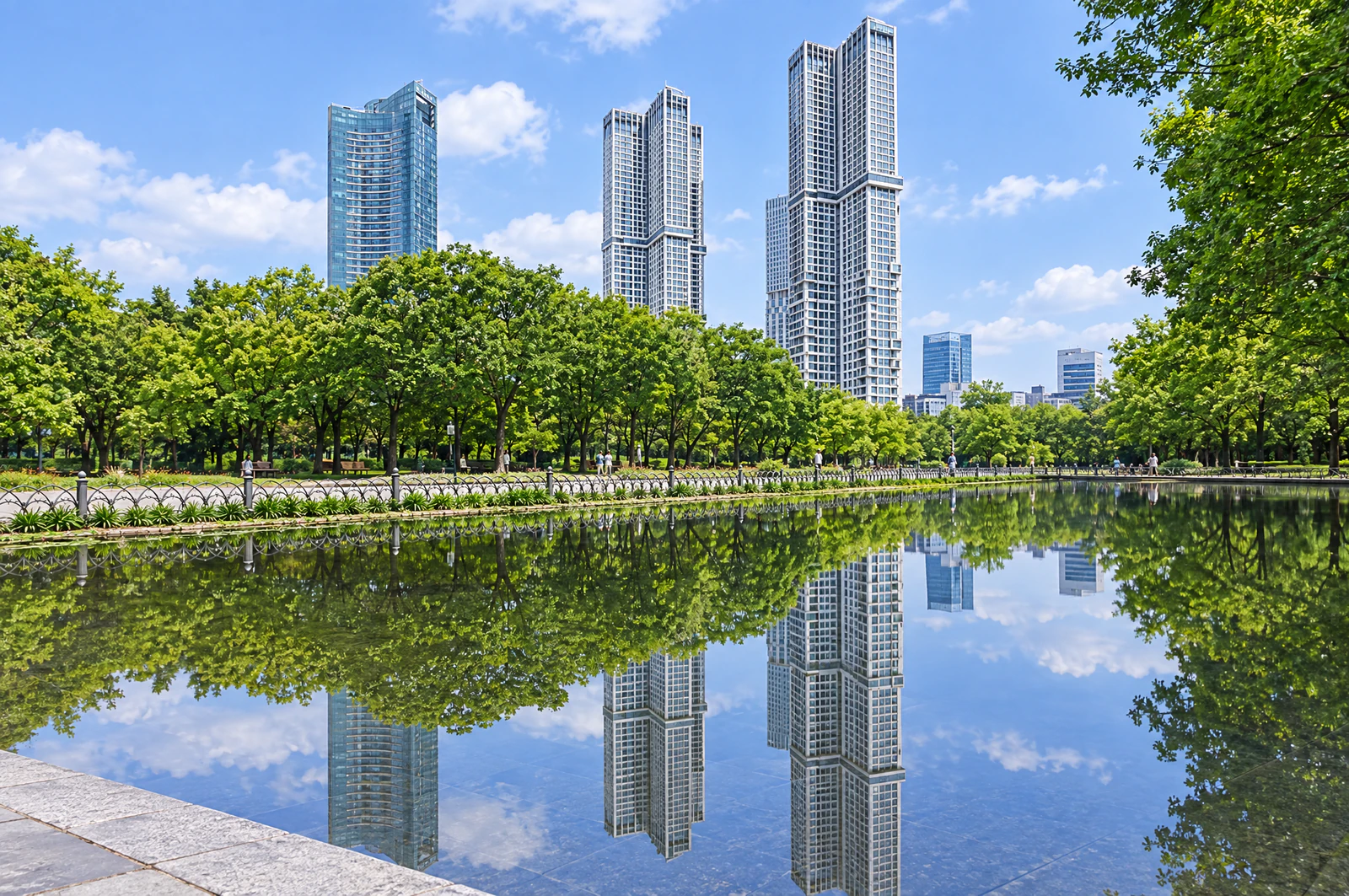
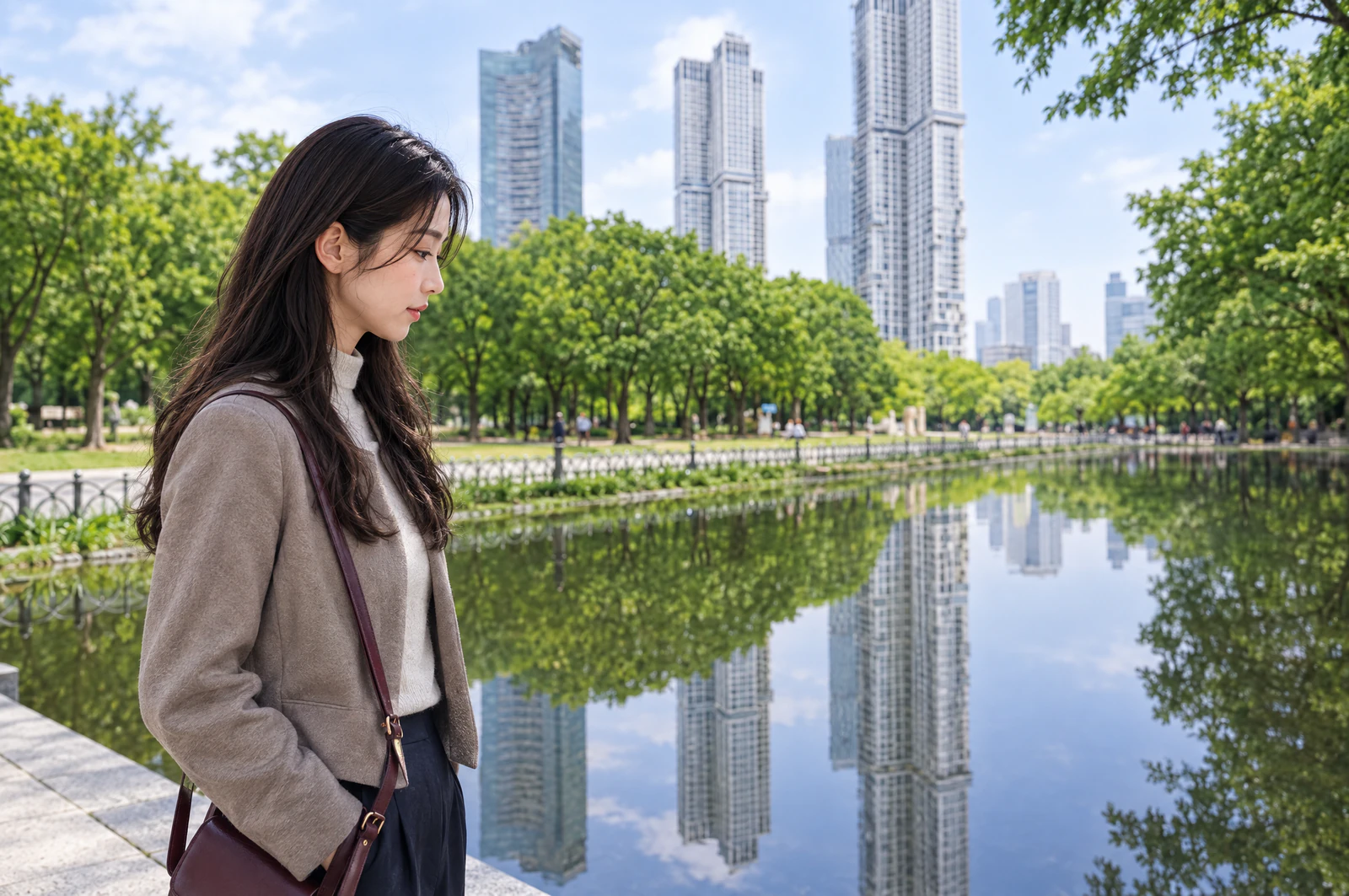
Before looking for the second trace, Rina stops at the Mirror Pond. The city describes it as a shallow pond just 3 cm deep that holds the scenery around it like a painting — one of Seoul Forest’s well-known photo spots, always busy with people trying to capture the metasequoias reflected in it. Find on a map
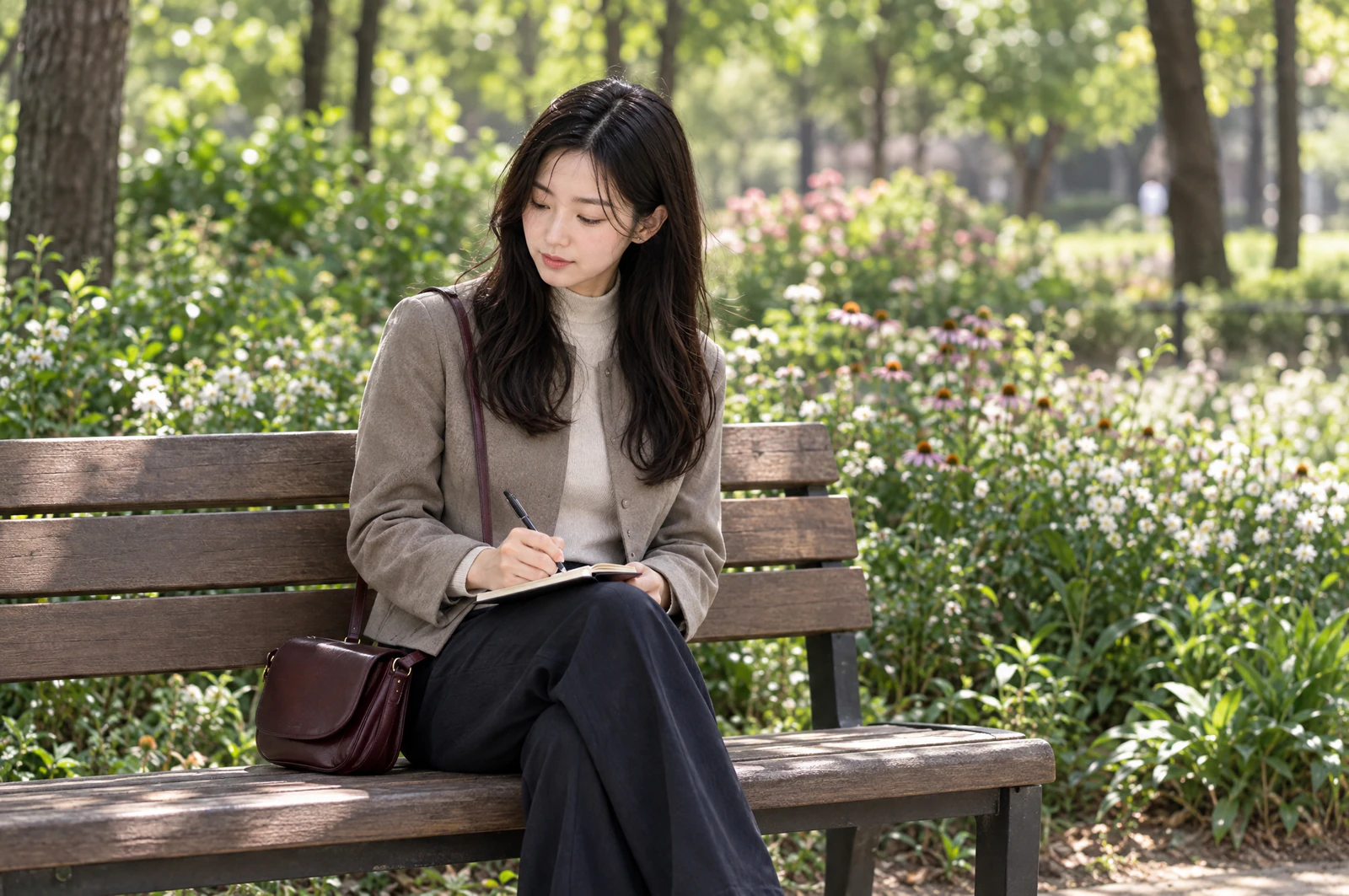
Once you know the number, the pond looks different. It isn’t a pond for depth. It’s a pond for its surface. Rina stands at the edge and looks not into the water but at the trees lying on top of it.
Photography or filming that requires prior coordination comes with place restrictions. For filming that needs prior arrangement, the city’s photography guidelines list the surface of the Mirror Pond as a place where filming isn’t allowed.
The racecourse survives as a sculpture. According to the city, the horse sculpture was made to mark the fact that this land was a racecourse before Seoul Forest existed. It’s titled “Start,” and stands for a new leap forward. Rina writes “racecourse → start” and underlines it.
The deer’s forest and the Hill of Wind
Seoul Metropolitan Government: Eco Forest (deer pen, footbridge) open 5:30–21:30.
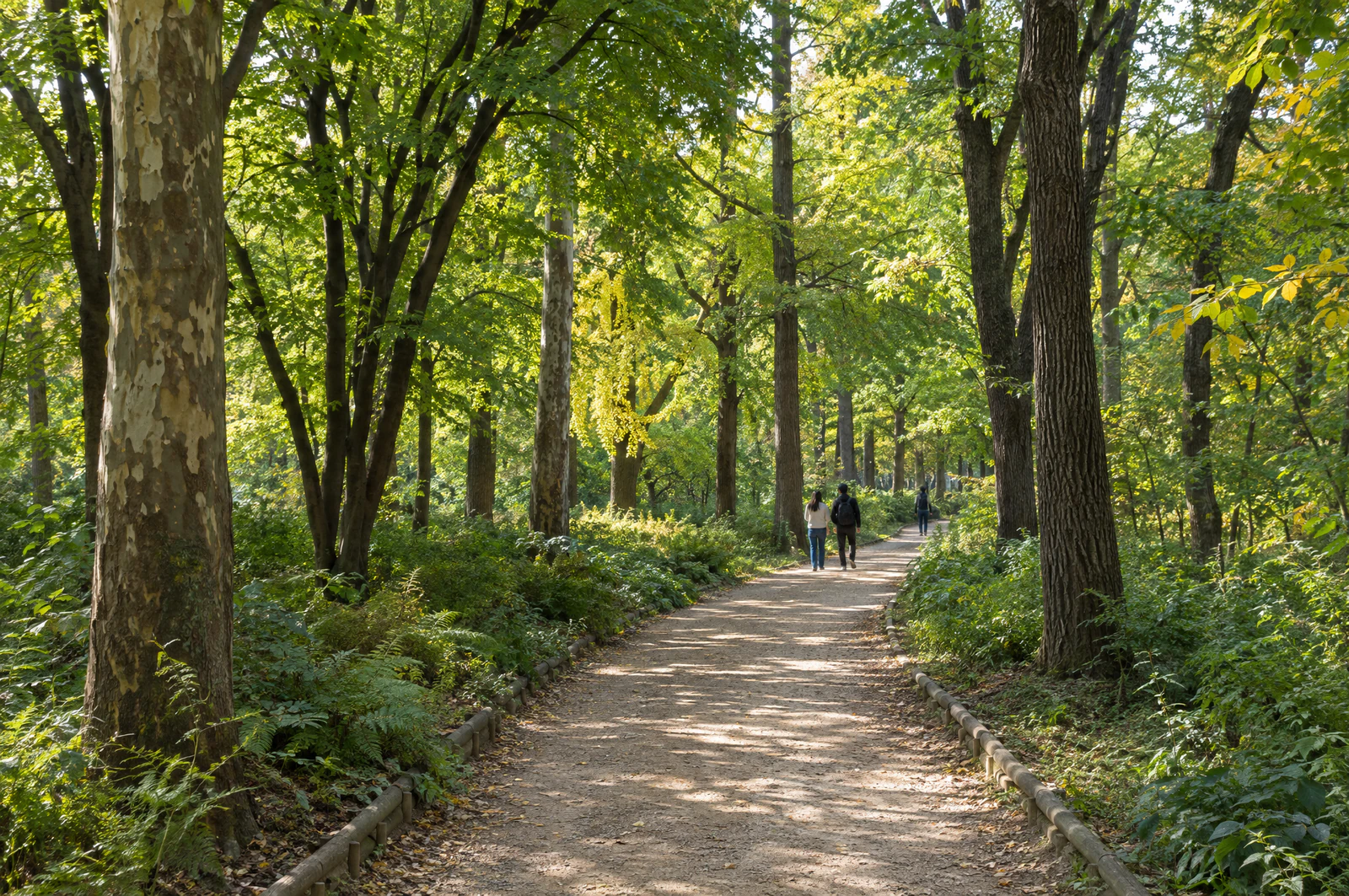
Further in is the Eco Forest. The city introduces the sika deer enclosure as the place to meet the deer that have become a symbol of Seoul Forest. The Eco Forest, with the deer pen and the footbridge, is open from 5.30 a.m. to 9.30 p.m. Seoul Forest itself is open 24 hours a day, every day of the year, but this area keeps its own hours. Find on a map
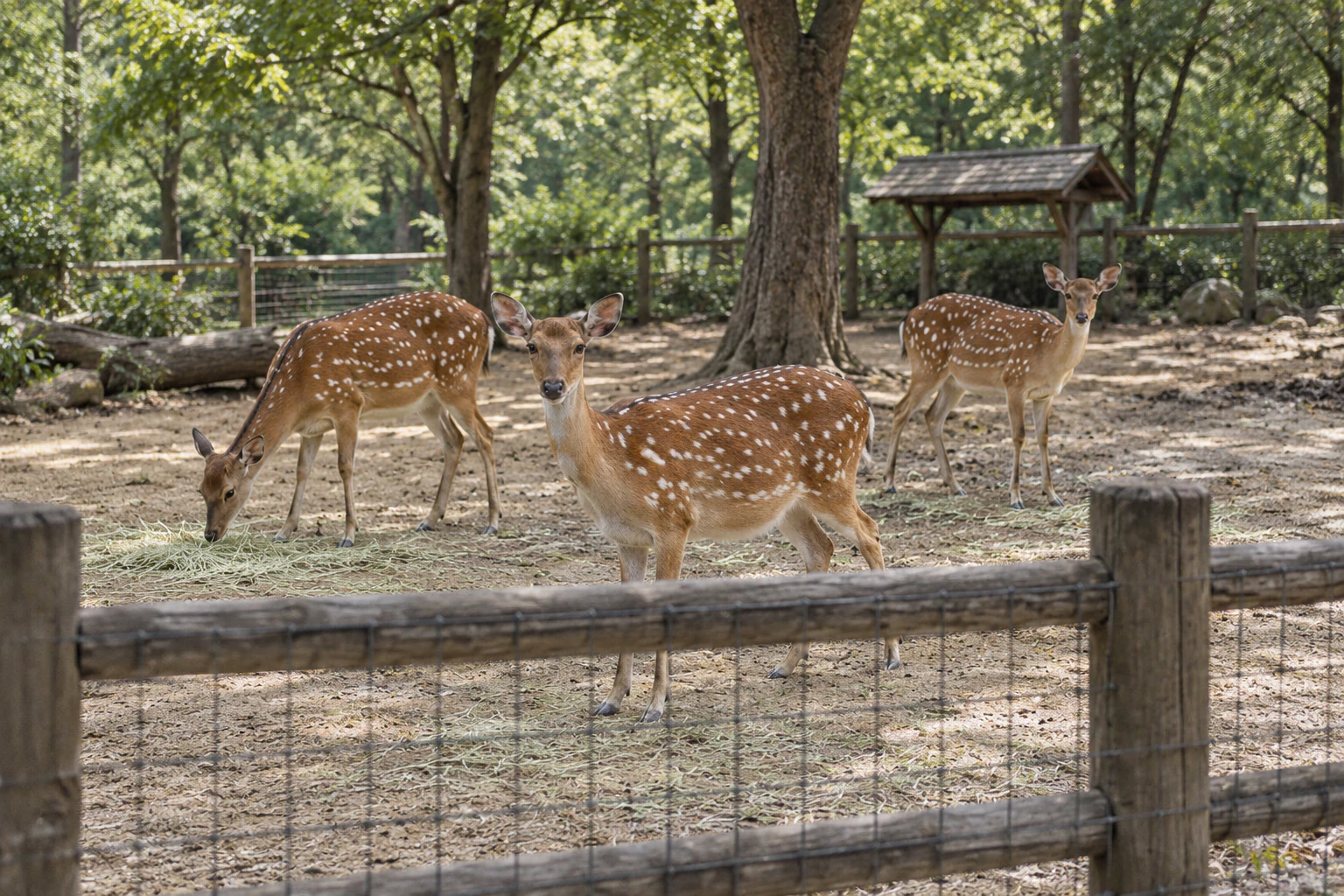
Rina watches quietly, a step back from the fence. In the evening it never occurred to her to come this far in. While she watches, she reads the four words in her notebook again: hunting ground, waterworks, racecourse, forest. Today she found traces of water and of the racecourse. Of the hunting ground there was nothing — not on the city’s page, not on today’s route. She leaves that as a reason to come a third time.
The footbridge crosses Seoul Forest in the air, running from the Hill of Wind to Hangang Park. The Hill of Wind is the highest point in Seoul Forest. That bridge is exactly the way Rina left on her evening walk. She didn’t know then which part of the park it belonged to. The city’s page lists it, together with the deer pen, as part of the Eco Forest.
As midday approaches, Rina closes her notebook at the edge of the big lawn. On this second visit she saw three new things: flowers in the frames where water once settled, a pond only three centimetres deep, and a horse named “Start” standing where a racecourse used to be.
From Yeouido through Banpo and Mangwon to Seoul Forest, four parts following the river and the parks along its banks. Next, the issue continues west to Seoul Botanic Park in Magok. Rina heads towards the Hill of Wind. Last time that bridge was the end of the day. This time it’s the way out to the river.
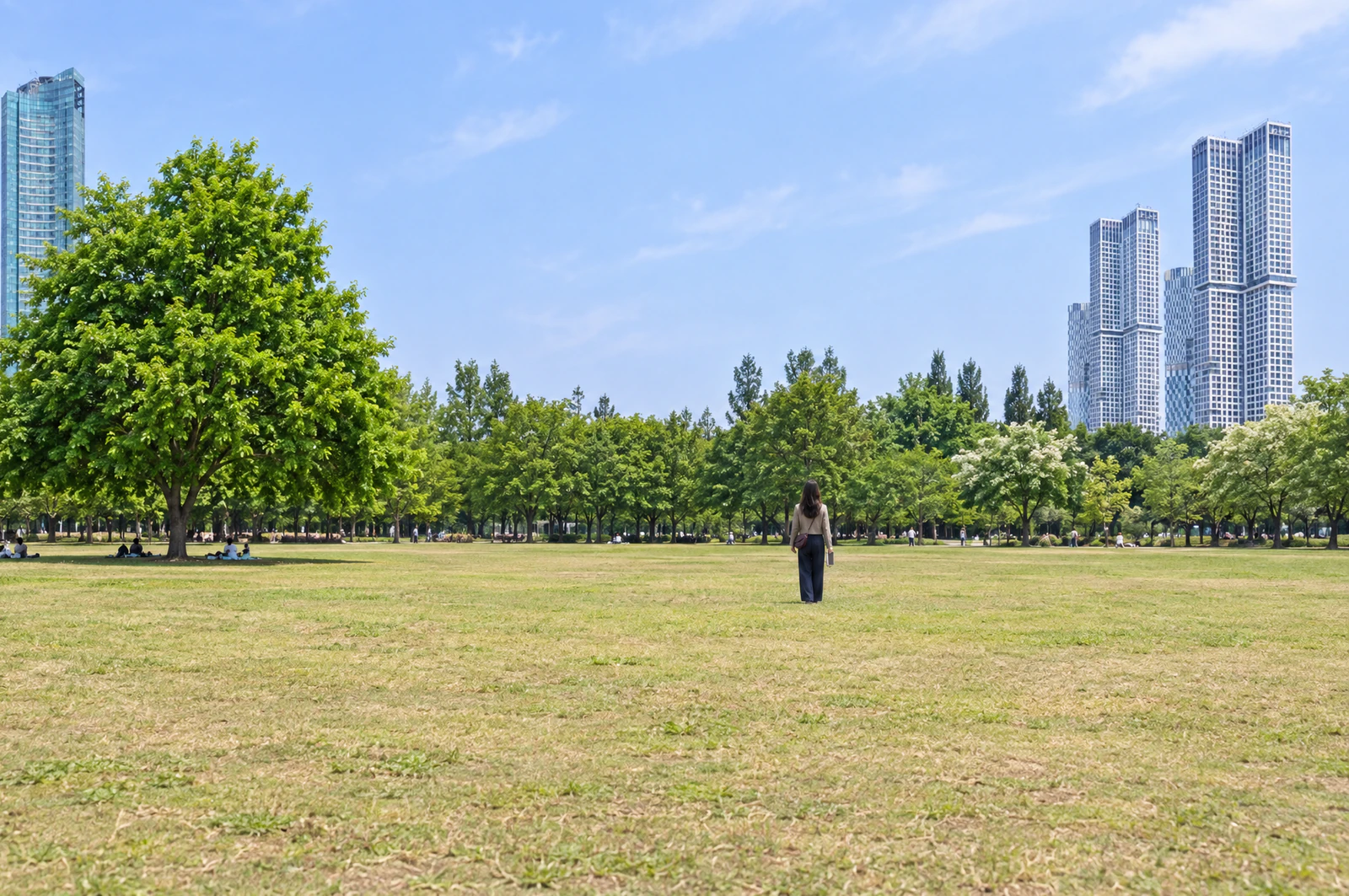
(※ This article includes staged images created with AI.)
Try it on your own morning
An editorial suggestion: go in through Gate 2 from Exit 4 of Seoul Forest Station, see the Mirror Pond and the horse sculpture, then the Gallery Garden and the Insect Botanical Garden, and walk through the Eco Forest to the footbridge on the Hill of Wind to head out towards Hangang Park. Best to avoid Mondays, when the Insect Botanical Garden and the Butterfly Garden are closed.
A diagram of the order only · not to scale, orientation or the actual shape of the streets.
- From Seoul Forest Exit 4 to Gate 2 — 202 m and 3 minutes (TMAP calculation). The city’s page says about 2 minutes on foot from Exit 4. Find on a map
- Mirror Pond and the horse sculpture — A shallow pond 3 cm deep. The sculpture marks the site’s racecourse years. Find on a map
- Gallery Garden and Insect Botanical Garden — A garden and a greenhouse made from the old water-treatment plant. Insect Botanical Garden 10:00–17:00 (last entry 16:30), closed Mondays. Find on a map
- Eco Forest and the footbridge — Eco Forest (deer pen and footbridge) open 05:30–21:30. The footbridge runs from the Hill of Wind to Hangang Park. Find on a map
Getting there
TMAPChecked 2026.09.29
From Exit 4 of Seoul Forest Station (Suin–Bundang Line) to Seoul Forest Gate 2, the map route is 202 m, about 3 minutes (TMAP pedestrian route calculation).
Seoul Metropolitan Government parks pageChecked 2026.09.29
about 2 minutes on foot from Exit 4 of Seoul Forest Station (Suin–Bundang Line), about 10 minutes on foot from Exit 8 of Ttukseom Station (Line 2).
Hours & fees
Seoul Metropolitan GovernmentChecked 2026.09.29
with funds and volunteer work from some 5,000 citizens, the site became an urban forest with dense trees and a lake on 18 June 2005 (opened 18 June 2005).
Seoul Metropolitan GovernmentChecked 2026.09.29
Seoul Forest is open all year round, 24 hours a day (except for some facilities).
Seoul Metropolitan GovernmentChecked 2026.09.29
Eco Forest (deer pen, footbridge) open 5:30–21:30.
Seoul Metropolitan GovernmentChecked 2026.09.29
Insect Botanical Garden 10:00–17:00 (last entry 16:30), closed Mondays. Winter (November–February) 10:00–16:00 (last entry 15:30). Butterfly Garden 10:00–17:00 (last entry 16:30), open May–October, closed every Monday.
Seoul Metropolitan GovernmentChecked 2026.09.29
visitor centre open January–December, 09:00–18:00, every day. Wheelchairs and pushchairs lent free for up to two hours. Enquiries 02-460-2905.
Background9
Seoul Metropolitan GovernmentChecked 2026.09.29
Seoul Forest was long ago a royal hunting ground and, from 1908, Seoul’s first water-supply source. It was later used as a racecourse and a golf course. In 2002 the city decided, for citizens’ right to green space, to create a large park instead of the Ttukseom development project.
Seoul Metropolitan GovernmentChecked 2026.09.29
area 480,994 m². Four themed areas (Culture and Art Park, Eco Forest, Experiential Learning Park, Wetland Eco Park). Trees: 415,795, with pines, Japanese white pines and katsura trees given as examples.
Seoul Metropolitan GovernmentChecked 2026.09.29
the Insect Botanical Garden is a greenhouse made from the former water-treatment plant’s rapid-filtration building.
Seoul Metropolitan GovernmentChecked 2026.09.29
the Gallery Garden reuses the structures of the old water-treatment plant’s sedimentation tanks as they were, as a garden of colourful flowers and climbing plants.
Seoul Metropolitan GovernmentChecked 2026.09.29
the Mirror Pond, a shallow pond 3 cm deep, holds the surrounding scenery like a painting, and is one of Seoul Forest’s well-known photo spots, always busy with people capturing the metasequoias reflected in it.
Seoul Metropolitan GovernmentChecked 2026.09.29
the horse sculpture (Gunmasang) was made to commemorate the site’s use as a racecourse before Seoul Forest was created. Titled “Start,” it symbolises a new leap forward.
Seoul Metropolitan GovernmentChecked 2026.09.29
the sika deer enclosure is where you can meet the sika deer, which are also a symbol of Seoul Forest.
Seoul Metropolitan GovernmentChecked 2026.09.29
the footbridge crosses Seoul Forest in the air, running from the Hill of Wind to Hangang Park. The Hill of Wind is the highest point in Seoul Forest.
Checked 2026.09.29
Seoul Metropolitan Government filming guidelines: using Seoul Forest’s park facilities for photography, video or recording requires prior arrangement, with applications at least three working days ahead (excluding the application day, the shooting day and public holidays). Outdoor places where filming is not allowed: the Eco Forest, the lake, the surface of the Mirror Pond, footpaths and other managed green areas. Filming with drones or flying devices requires advance approval from the military (Capital Defense Command).
- Seoul Forest is open 24 hours a day, all year round, except for some facilities. Insect Botanical Garden: 10:00–17:00 (last entry 16:30), or 10:00–16:00 from November to February (last entry 15:30), closed Mondays. Butterfly Garden: May–October, 10:00–17:00 (last entry 16:30), closed Mondays (Seoul Metropolitan Government parks page, checked 29 September 2026).
- The visitor centre is open every day, 09:00–18:00, and lends wheelchairs and pushchairs free of charge for up to two hours. Enquiries: 02-460-2905.
- According to the city’s photography guidelines, for photography or filming that requires prior coordination, submit an application at least three working days in advance; filming with drones or other flying devices needs advance approval from the Capital Defense Command. The same guidelines list the Eco Forest, the lake, the surface of the Mirror Pond and footpaths as locations where such photography or filming is not permitted.
- Some older guides give Exit 3 of Seoul Forest Station. This piece follows the city’s current parks page, which gives Exit 4.