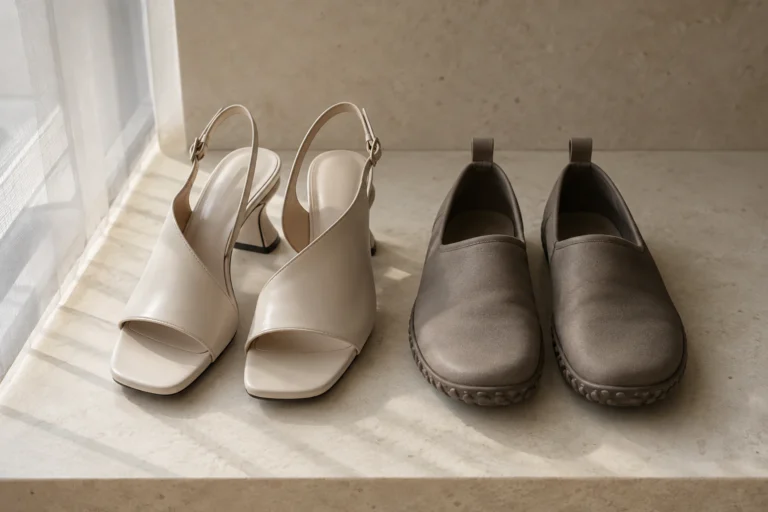
SCENE TO STREET
An Office-Romance Look You Can Walk Seoul In
Bring the muted colours and neat lines of an office romance to a day in Seoul. Choose shoes, a bag and fabrics around the forecast and your walking plans, then check that you can move comfortably.
How to get there
Walking distance and time are map-route estimates; exit numbers are as of the check date.
- Check the temperature band for your travel dates. The formulas in this guide come in three bands: 12–16°C, 17–21°C and rainy days. Use climate normals before you leave and the forecast on the morning itself.
- Decide how much you will walk that day first — a half day, or a day like the full-day route with 4km-plus of walking between stops alone. The formula stays the same; the answers for shoes and layers change.
- Settle on one pair of shoes. In this simulation it is the first item flagged for redesign when a half day stretches into a full one, and the hardest to change once you have left.
- Run the suitcase test’s press test on the clothes you plan to bring first. A fabric whose residual creasing after the test exceeds the first-shot threshold goes on this simulation’s exclusion list. The method is in the suitcase test.
- Only three principles come from the scene; travel decides the materials.
The character scenes and outfits are not records of a wear test. Check the forecast and walking distance, then adapt the ideas to your own clothes.
What to consider
Muted colours and neat lines are part of the appeal of an office-romance outfit. You can enjoy that mood on a trip, but clothes on screen also benefit from lighting and styling. Before looking for the exact items, notice which colours and shapes you like, then consider whether they work for walking and carrying a bag.
The rule of translation is simple. What you take from the screen is the principle (low saturation, composed lines, softness inside); what travel decides is the material (fabric, shoes, bag). Keep the principle and swap the material, and the scene’s mood survives; copy the material too, and what survives is a costume. This guide splits that translation into five steps. Take three principles → pick the formula by temperature → turn the dials in the mirror → swap shoes, bag and fabric for travel → check against the length of your day.
“Will I look overdressed? How much will I actually walk in a day? How do I handle the cafe-to-street temperature gap? If I bring only one pair of shoes, what am I giving up? Will it even survive the suitcase uncreased?”
The questions of Maya, first time in Seoul — this guide answers them in order. The walking answers continue in the route; the suitcase answers in Maya’s suitcase test.
“I don’t wear the scene as it is. I first check why the scene works, and translate only what makes it work into the outfit.”
Planning your outfit
In this planning exercise, the office-romance scene breaks into three elements. One, the low-saturation palette — two colours only, from grey, ivory and navy. In this test, limiting colour to two works as the device that lets silhouette read first. Two, the composed shoulder line — one structured layer, a jacket or a shacket. In this test the shoulder line is set as the look’s “edge” axis — the working assumption is that if it holds, the rest can be worn soft. Three, the soft inner layer — a thin base with an open neckline. In this frame, the inner softness answers the outer edge, tilting the read toward “neat” rather than “clerical.”
The element that fails when copied outright is fabric — tailored surfaces that lean heavily on a pressed finish do not transfer into travel packing as they are. The hands-on fabric audit (press it, then judge) is picked up by the suitcase test.
Three travel outfit formulas — creator-test basis
| Temperature band | Formula | Walkability / photo suitability / storage | Indoor escape hatch |
|---|---|---|---|
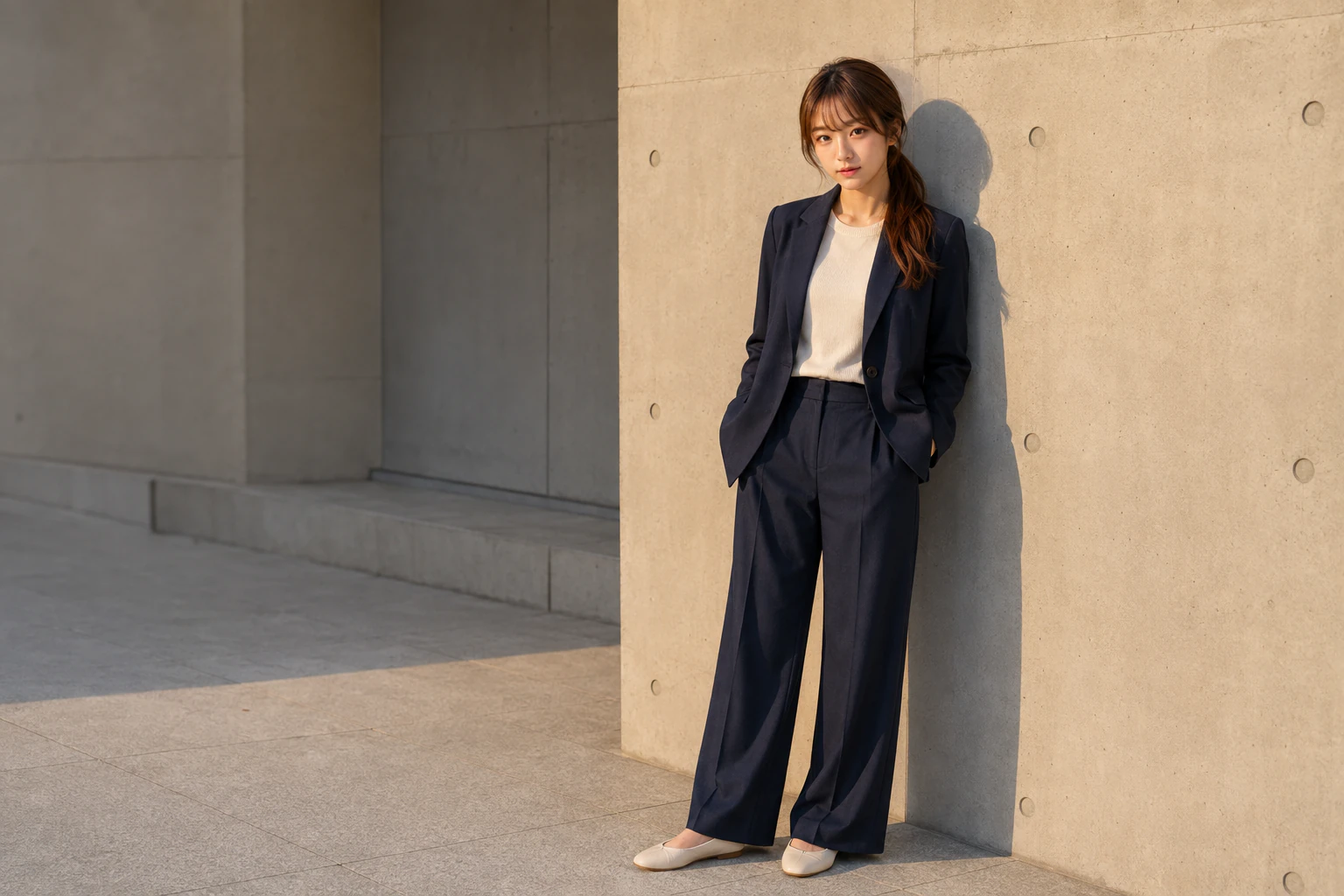
| 12–16°C | Jacket + thin knit + wide trousers + flats | ◎ / ◎ / ○ | A short-sleeve base under the knit |
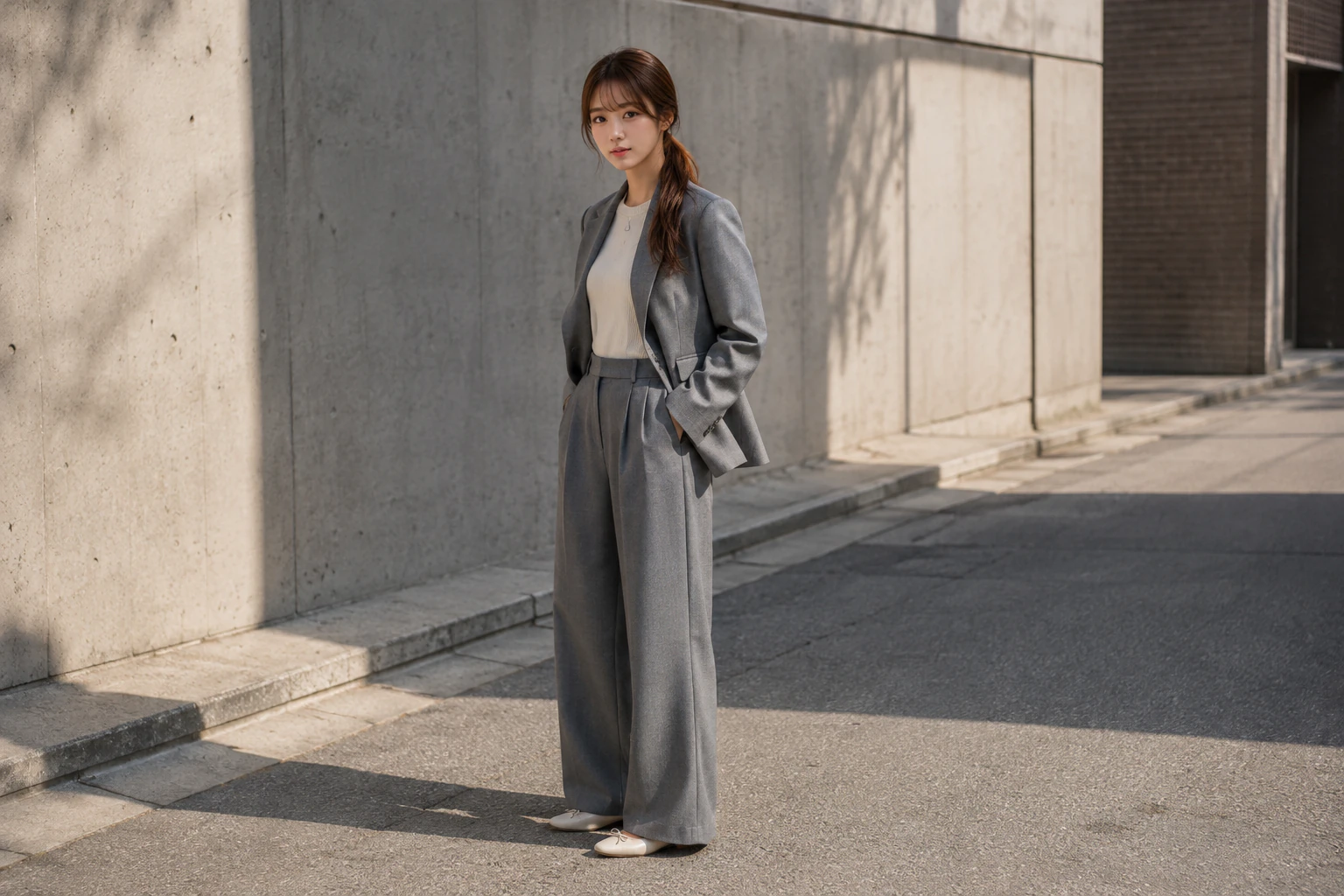
| 17–21°C | Shacket + short-sleeve base + loafers | ◎ / ○ / ◎ | Drape the shacket over the shoulders — choose one whose line survives that |
| Rainy day | Short waterproof outer + crease-resistant bottoms + grippy shoes | ◎ / △ / ◎ | A hood instead of an umbrella — it is easier to keep both hands free |
Each is judged on walkability, photo fitness and bag storage. The marks are this simulation’s editorial calls.
01Take three principles from the scene
Take the principle, not the costume — palette, shoulder line, inner layer
The first step is a choice, not a purchase. Decide what you take from the scene and what you leave behind before anything else, so the next four steps don’t drift into “finding the actor’s clothes.”
- Choose two colours from grey, ivory and navy. Not all three — with two colours, silhouette reads first.
- Pick one structured layer: a jacket or a shacket, whichever composes the shoulder line. This look’s “edge” lives there and nowhere else.
- Put a thin base with an open neckline inside. It is the device that lets softness answer the outer edge.
- Leave the screen’s fabric behind. A tailored surface that depends on a pressed finish cannot hold that condition on the road. Materials get re-chosen for travel in Step 04.
Take two at most and swap the third for travel material. A tailored two-piece, the same colour pairing, heeled shoes and a briefcase-shaped bag carried over as they are — this simulation logs that combination as a risk candidate for reading like “someone who walked off a set.” Two of the three — that is the line this guide draws between translation and cosplay.
02Pick the formula by temperature
Pick the formula by temperature — 12–16 / 17–21 / rainy day
The second step is weather. The same principle needs a different combination of materials at a different temperature. This guide keeps two temperature bands and a rain branch apart, because on the same autumn day the adjustment you need can differ with the temperature and with whether it rains.
- Check the daytime high and whether rain is expected together in the morning forecast. With no rain, pick the base formula from 12–16°C or 17–21°C; if rain is expected, the rainy-day formula takes priority as the branch. Climate normals are the background for planning before the trip; the choice on the day follows the forecast.
- 12–16°C: jacket + thin knit + wide trousers + flats. If interiors run warm, a short-sleeve under the knit is the escape hatch.
- 17–21°C: shacket + short-sleeve base + loafers. Choose a shacket whose line survives being draped over the shoulders.
- Rainy day: short waterproof outer + crease-resistant bottoms + grippy shoes. With a hood up, both hands stay easier to use than when you keep holding an umbrella.
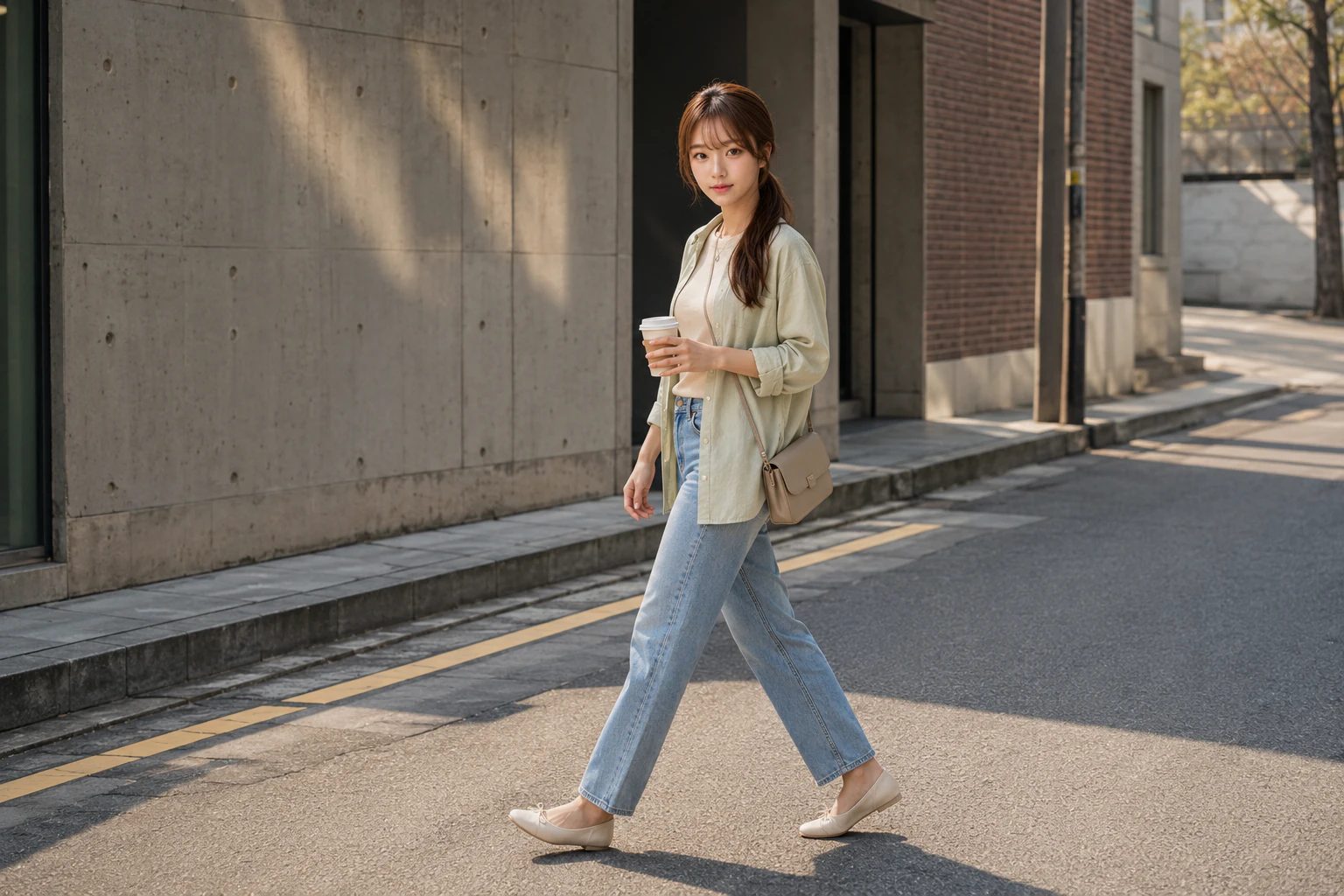
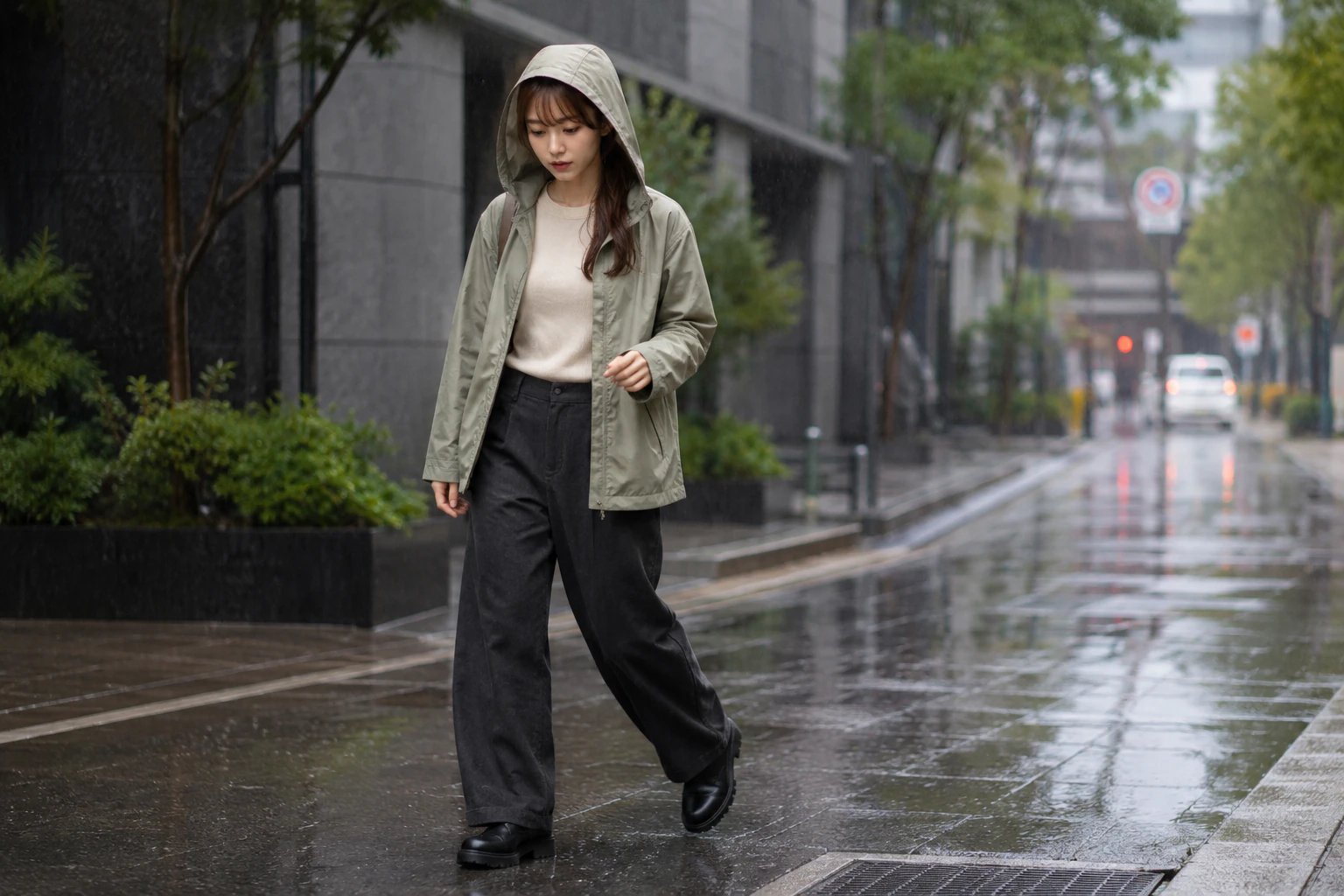
This simulation prioritises two thin layers over one thick one — to leave room to adjust one layer at a time when how it feels indoors and out changes. Why Seoul cafes feel cooler inside is in the culture note.
03Check three aspects of the fit in the mirror
Turn the fit dial — shoulder strength · trouser width · length
The third step is adjustment. A formula is not copied — it is adjusted. Inside the same formula there are three dials, and the answer is in the mirror, not in a body-type chart.
- Shoulder strength: choose between a sharply structured jacket and a relaxed shacket. If the structure feels heavy on you, turn the dial toward the shacket; if the whole look feels slack, turn it toward the jacket.
- Trouser width: in this test, wide goes in as the motion-shot candidate and straight as the standing-shot candidate, compared in the mirror. The deciding question is whether your day holds more walking shots or standing shots.
- Length: the longer end goes in as the formality candidate and the shorter end as the mobility-first candidate, checked against your actual proportions.
- None of the three is about finding “the right answer for your body type.” Each is about standing in front of a mirror and checking which side of the dial balances edge and softness at your own proportions.
04Swap shoes, bag and fabric for travel
Swap the materials — grip and forefoot fit · a bag smaller than the jacket silhouette · the press test
The fourth step is material. The principle came from the screen, but the material is decided by travel. If you leave the shoes, bag and fabric on screen terms, this simulation treats that combination as a risk candidate for an afternoon redesign.
- Choose shoes by grip and forefoot fit, not heel height. One pair of day shoes is the baseline; photo shoes are optional. How shoes change a route is in the reality check.
- The bag is a crossbody small enough not to cover the shoulder line. This look’s “edge” lives on the shoulder, so in this editorial frame a bag that covers it competes with the shoulder line, the look’s core axis. Keep it smaller than the jacket silhouette.
- Audit fabric hands-on, by whether its creases read as mood. If the residual creasing after the suitcase test’s press test exceeds the first-shot threshold, this simulation excludes it. The method is in the suitcase test.
- After swapping all three, check that Step 01’s three principles are still standing: two colours, a composed shoulder line, softness inside. If those three survive the material swap, the translation worked.
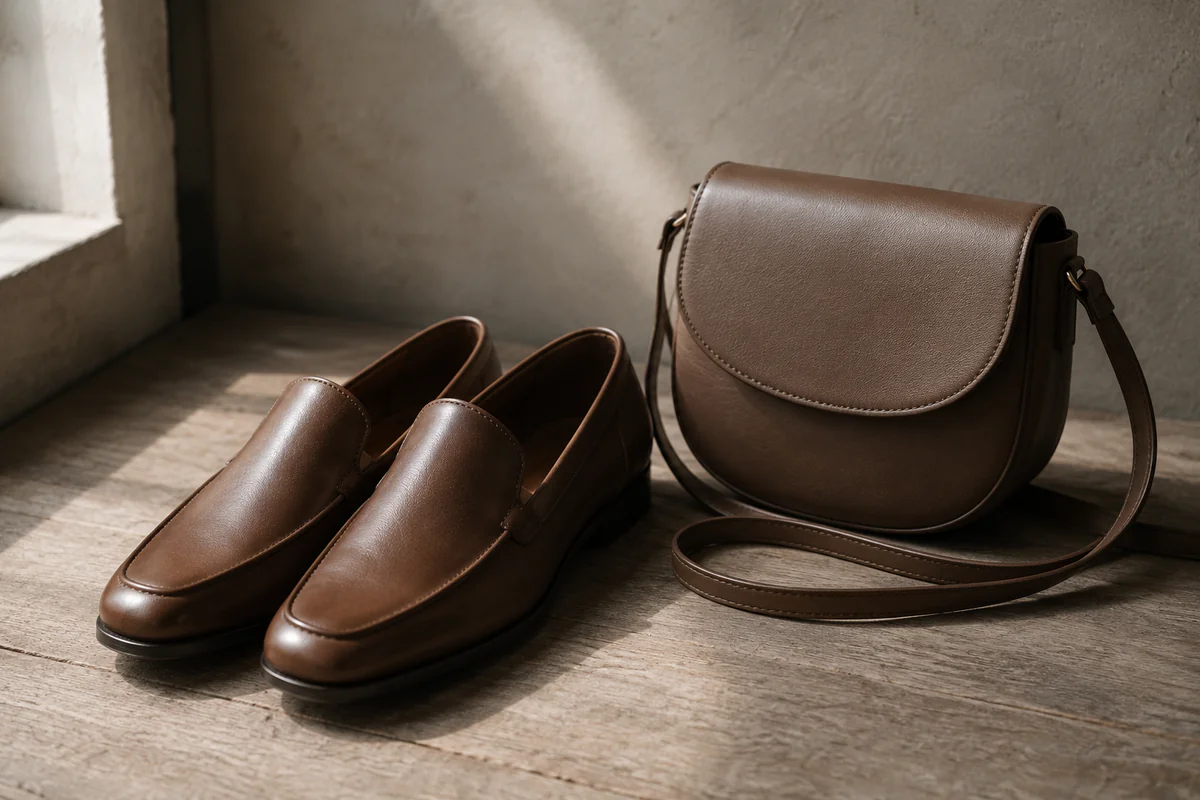
Don’t walk in them — carry them in the bag. Change only for the shot, and accept the weight for the rest of the day. In this simulation a day in photo shoes is classed as an afternoon-replanning risk on a full day.
05Check against the length of your day
Check against the day — a half day and a full day are different worlds
The fifth step is time. This simulation sets the half day as the default range for the formulas above. The moment a day becomes a full day, the items that fail first are already known — so change only those before you leave.
- For a half day, keep Step 02’s formula as the baseline. There is no extra full-day adjustment for the length of the day, but Step 03’s fit dials and Step 04’s fabric, shoe and bag criteria still apply as they are.
- For a full day — on the route, 4.3 km of stop-to-stop walking plus alley strolls and shop floors — change three things. Make grippy flats the default shoes, take only mid layers that fold to A5, and save an outer layer in the bag for after sunset.
- On a day with an evening shot left, put the brighter colour on the outer layer, not the inner one. This palette was chosen against Seongsu’s concrete-and-glass backdrop, and in this simulation the roles are set like this: by day, against grey walls, ivory carries the frame’s bright axis; at blue hour, navy sinks into the same tonal register as the background.
- If you shoot in narrow alleys and doorways, frame without blocking the space. A strong scene doesn’t need to occupy the street.
The moment a plan stretches arrives unannounced — one alley was simply too pretty. That is why this guide says: dress the formula for a half day, but choose the shoes for a full one. With the shoes chosen for a full day, the remaining layers keep room to be adjusted on the spot by taking one off or putting one on.
Packing
The packing check — and what you can leave out. The full suitcase-side audit (compression, one pair, A5) is Maya’s suitcase test’s job.
- 1 jacket or shacket (worn on the plane = zero storage)
- 2 soft bases (one short-sleeve — the indoor escape hatch)
- 1–2 bottoms (ones that passed the suitcase press test — one passing pair is enough)
- 1 pair of day shoes + socks and insoles (photo shoes optional — traded against weight)
- 1 small crossbody
- 1 packable rain layer (only if it folds to A5)
- Leave out: the third base, the second bag, every “just in case” item — leave suitcase slack for the possibility of buying locally
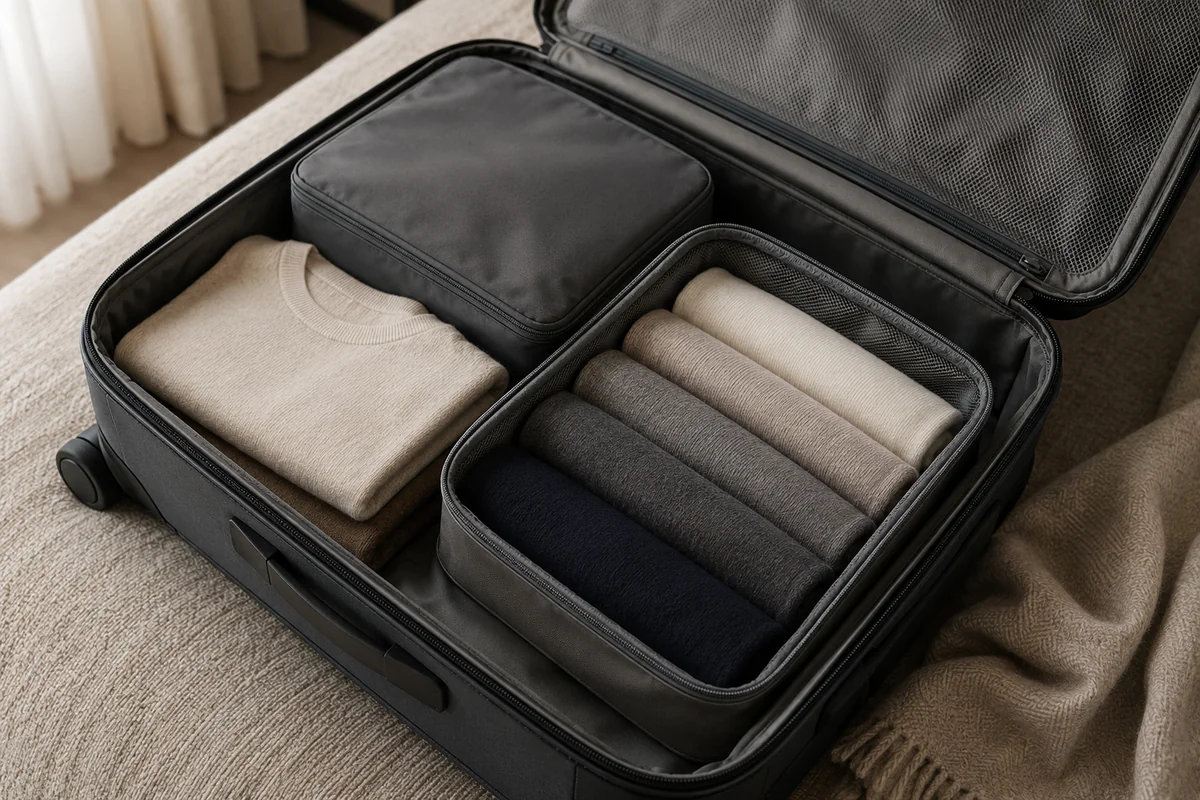
(※ This article includes staged images created with AI.)
Things to watch for
- Wearing the screen verbatim — this simulation logs it as a risk candidate for reading overly formal on the street. Take only two of the three elements (palette, shoulder line, inner layer).
- Photo shoes all day — In this simulation it is classed as an afternoon-replanning risk on a full day. If the shot truly needs them, they ride in the bag.
- A big bag covering the shoulder line — in this editorial frame the bag competes with the shoulder line, the core axis. Keep the crossbody smaller than the jacket silhouette.
- Bringing crease-prone fabric — this simulation excludes it if post-compression creasing exceeds the first-shot threshold. Screen it with the suitcase press test from the start.
- Ignoring how it feels indoors versus out — you lose room to adjust to the temperature. This simulation prioritises two thin layers — the why is in the culture note.
FAQ
Will I look overdressed?
This simulation sets taking two of the three elements and swapping the third for travel material as the default branch for lowering the risk of reading like a costume. If the mirror shows “someone who walked off a set,” go back to Step 01’s If.
If I bring only one pair of shoes, what am I giving up?
The photo shoes. Choose your one pair of day shoes by grip and forefoot fit, and if a shot truly needs the photo pair, carry it in the bag and trade it against weight. How shoes change a route is in the reality check.
How do I handle the cafe-to-street temperature gap?
This simulation prioritises two thin layers over one thick one, leaving room to adjust when how it feels indoors and out changes. Why Seoul cafes feel cooler inside is explained in the culture note.
Will it survive the suitcase uncreased?
Run the suitcase test’s press test before packing. If the residual creasing after the test exceeds the first-shot threshold, this simulation excludes it. The full audit — compression, one pair, A5 — is in the suitcase test.
Can I take the screen’s colour pairing as it is?
Choosing two colours from grey, ivory and navy is still principle. Match the same colours plus the fabric, shoes and bag as they are, and in this simulation the risk of reading like a costume grows. Bring the colours; swap the materials.
Before you go — 30 seconds before you leave
- Today’s daytime high: ____ → formula: 12–16 / 17–21 / rain
- Two colours · one structured layer · a thin base with an open neckline — at most two of the three exactly as on screen
- One pair of day shoes (grip, forefoot fit); photo shoes in the bag or left behind
- Crossbody smaller than the jacket silhouette
- Only fabric that passed the press test — anything that failed comes out of the suitcase
- Full day: grippy flats fixed · A5 mid layers · an evening outer layer in the bag
What has been checked
The temperature bands were set with reference to KMA autumn climate normals for Seoul. The total walking distance between stops, about 4.3 km, is the map walking-route value from the Seongsu full-day route. The sources were checked on 2026-08-31.
Putting it into practice
Two conclusions from this simulation. One — the pressed finish is a screen condition; on the road, swap in materials that passed the press test from the start. Two — the moment a half-day plan becomes a full day arrives unannounced (one alley was simply too pretty). So dress the formula for a half day, but choose the shoes for a full one. For adjusting one jacket across a day’s changing conditions, continue to One Jacket; for the five first-visit gaps, continue to Five Gaps.