
Dongdaemun Shopping Complex: Start with the 2nd and 3rd Floors for Fabric
Rina walks straight into the market through the underground link at Exit 9 of Dongdaemun Station.

Scenes and stories from the cast wandering Seoul’s landmarks.
An added piece for “Jongno & Dongdaemun”.

A new piece for “Jongno & Dongdaemun.” Say Gwangjang Market and most people picture steam rising from the food stalls. Yet the shop-leasing notice on the market’s own website lists bedding and fabric on the first floor and hanbok, traditional cloth, fabric and bedding on the second, and Jongno-gu Office describes it as a market for textiles, cloth, hanbok and bedding. Elena, who reads places as scenes, goes looking for the fabric, hanbok and bedding shops beyond the Food Alley — and reads the colours of cloth folded on their shelves.

The last part of “Jongno & Dongdaemun.” After Heunginjimun, the city wall and DDP, this time it is a market. The Gwangjang Market website says Korean merchants founded the Gwangjang Company in 1905 to keep a market of their own. Today the busiest spot is the food market where three gates meet, and it stays open until 11 p.m. every day. But Visit Seoul lists the market as a whole until 6 p.m. and the vintage arcade upstairs until 7 p.m., both closed on Sundays, and hours at the hanbok and fabric shops vary from shop to shop. Lulu, who is bringing a friend visiting from abroad next week, realises that seeing only the Food Alley means missing half the market.

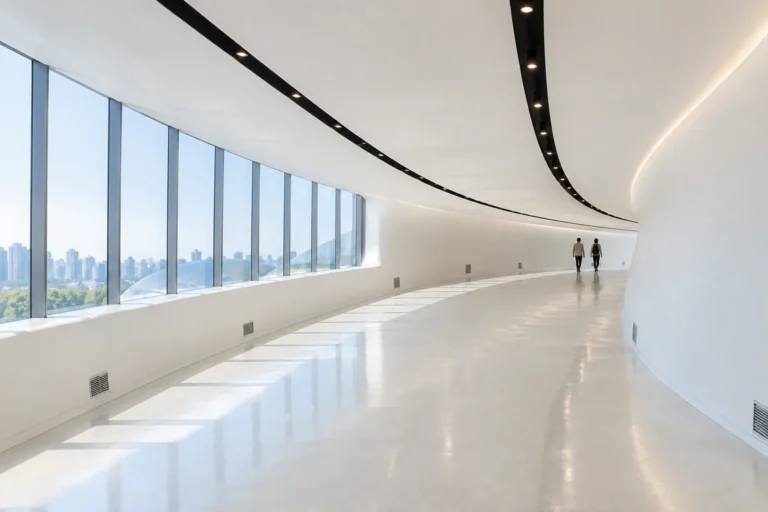
A short walk south of Heunginjimun stands a building of silver curves.

Naksan Park is a hilltop park a 10- to 20-minute walk uphill from Exit 2 of Hyehwa Station on Line 4.

The second part of “Jongno and Dongdaemun.” At the entrance to Heunginjimun Park, where the city wall meets the main road, some of the stones low in its outer face are carved with writing. The Seoul City Wall website calls them gakja seongseok — inscribed wall stones — and says more of them are gathered beside Dongdaemun Seonggwak Park than anywhere else on the wall. The early ones name a section and a county; from Sukjong’s reign on, they name a supervisor, a builder and a date. Maya looks at the stones, then walks up to the Seoul City Wall Museum on the hill to read about the people who defended the wall.
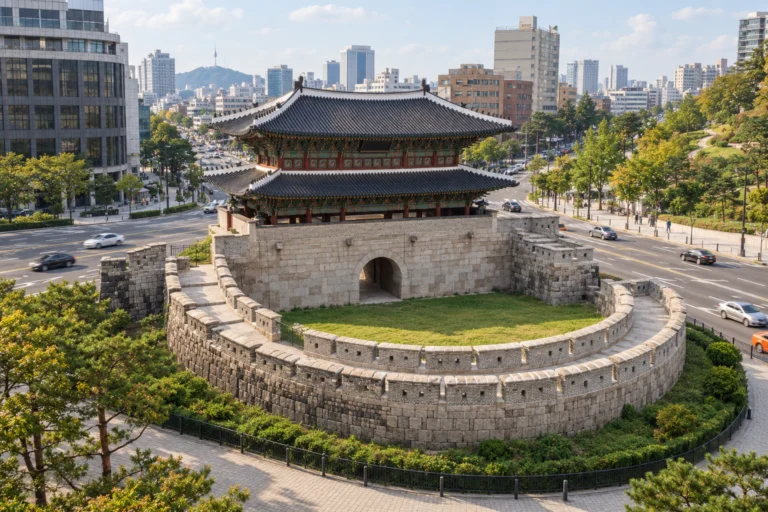
Rina has passed Dongdaemun many times, always through a bus window.