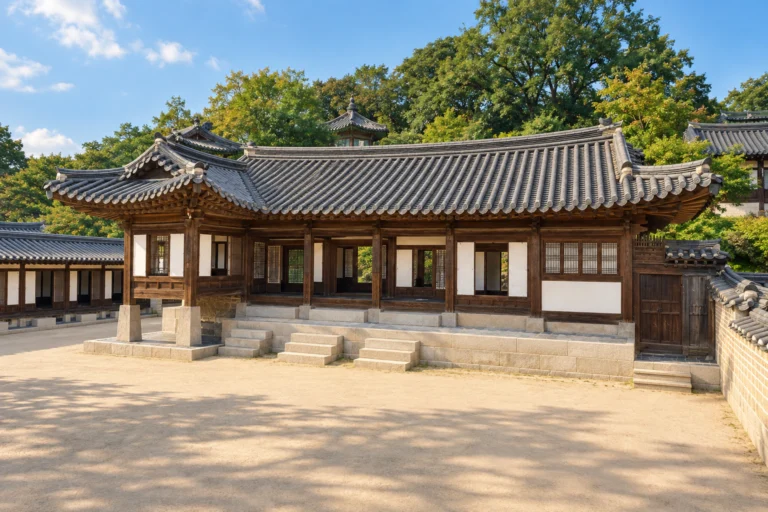
SEOUL · CHANGDEOKGUNG
From Changdeokgung’s Side Gate to Injeongjeon
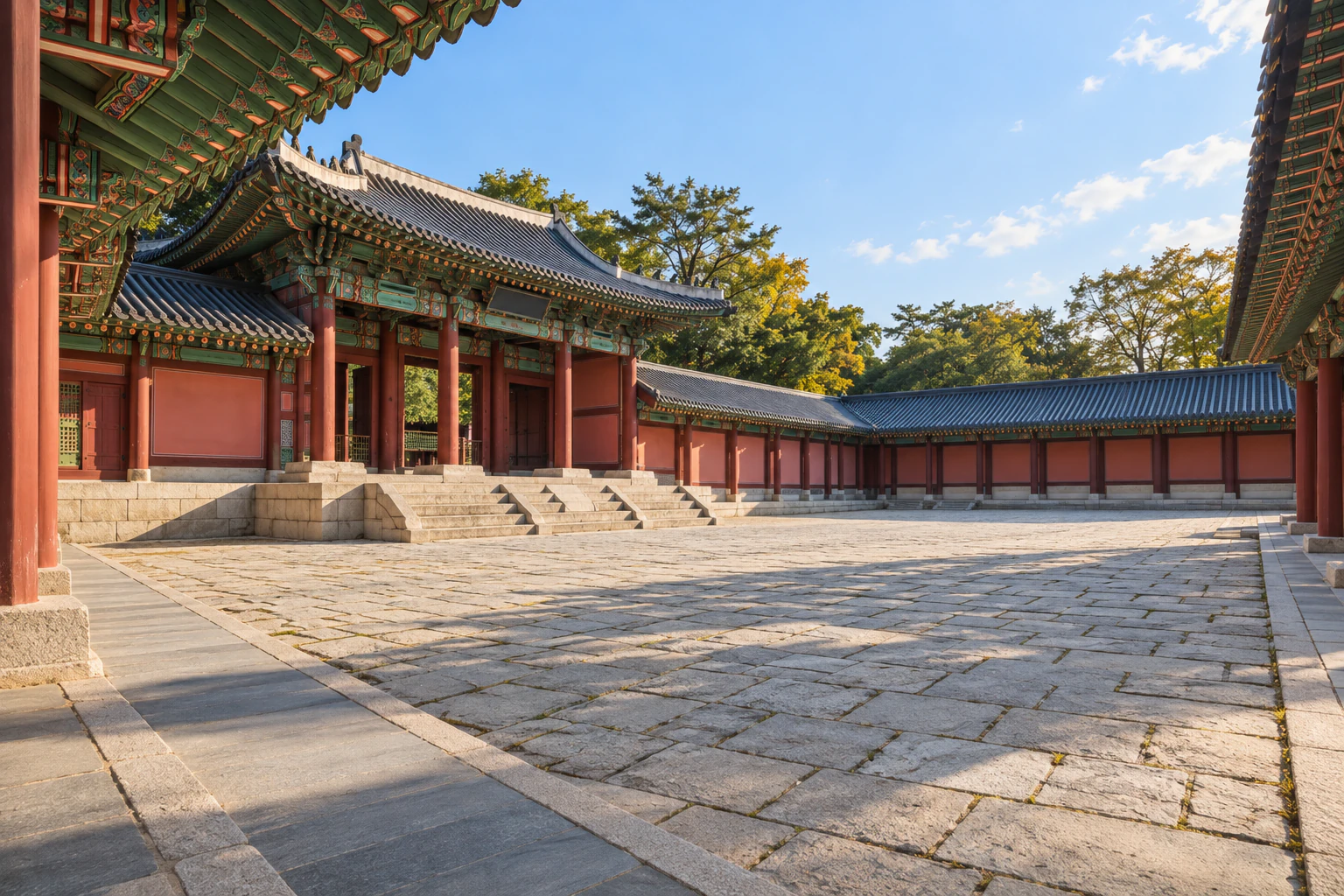
With Donhwamun under repair, enter Changdeokgung through Geumhomun and follow the bent path to Injeongjeon.
How to get there
The 390 m and 5 minutes in the route box are a map-route calculation from Exit 3 of Anguk Station to Geumhomun at Changdeokgung. The Royal Palaces and Tombs Center gives 5 minutes on foot from Anguk Exit 3. While Donhwamun is under repair, Geumhomun is the entrance.
In the Gwanghwamun series Maya and Noah walked Gyeongbokgung and the road in front of it; this issue is about the palaces to the east — Changdeokgung, Changgyeonggung and Jongmyo. The first stop is Changdeokgung’s throne hall, Injeongjeon.
It is Rina’s second time. On her first trip to Seoul she came to Changdeokgung, walked in through the big main gate, took a photo in front of Injeongjeon, and left without seeing the Secret Garden because she hadn’t booked. What she remembers is one picture: a wide courtyard and a big hall. How she got from the gate to the hall, she can’t recall.
She has come back because of one notice: the main gate, Donhwamun, is under repair and the entrance has moved. Reading it, Rina thought that if the way in changes, the walk will change too. At the top of her notebook she writes: “Gate, bridge, gate. How many turns?”
The main gate closed, in by Geumhomun
The Royal Palaces and Tombs Center announced repair work on Donhwamun from 11 November 2024, with Geumhomun as the temporary entrance and the small gate beside it as the exit for the duration of the work. As of 23 September 2026, its visitor guidance still identifies Geumhomun as the entrance to Changdeokgung.
Out of Exit 3 of Anguk Station on Line 3, she walks east along Yulgok-ro: 390 metres, five minutes by map route. The Royal Palaces and Tombs Center also gives five minutes on foot from Anguk Exit 3. There is no parking at Changdeokgung. Find on the map
She reaches Donhwamun. The Royal Palaces and Tombs Center has been repairing this gate since 11 November 2024 and has announced that, for the duration, the entrance is Geumhomun on the west side and the exit a small gate beside it. As of September 2026, the Center’s visitor guidance still names Geumhomun as the entrance to Changdeokgung. Rina looks once at the main gate under repair, then heads for Geumhomun as the notice says.
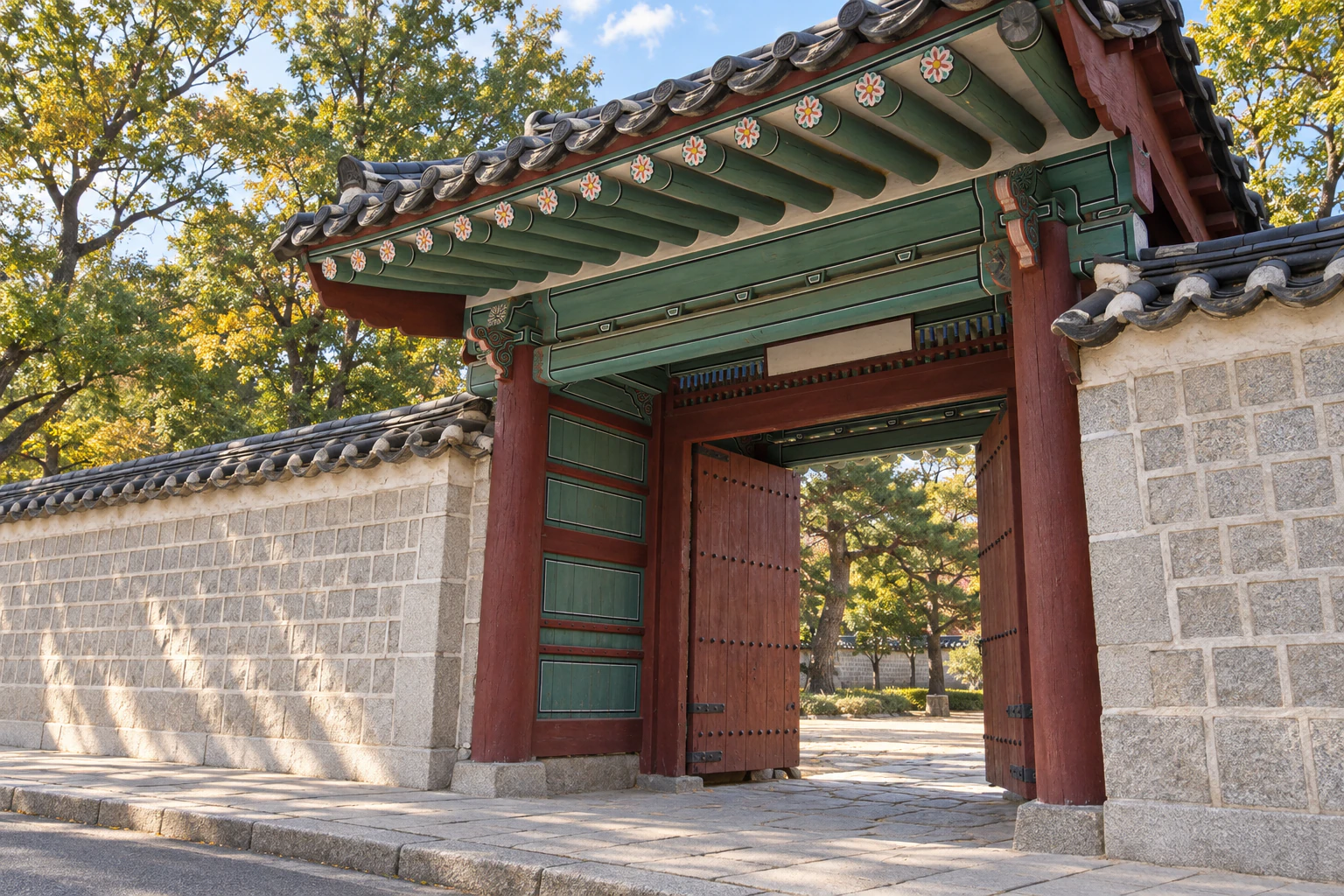
The Korea Heritage Service describes Donhwamun as the oldest surviving wooden palace gate: built in 1412, repaired in 1609. On her first visit Rina walked through it without a thought. She finds out she once passed through the oldest gate on the day she can’t go through it.
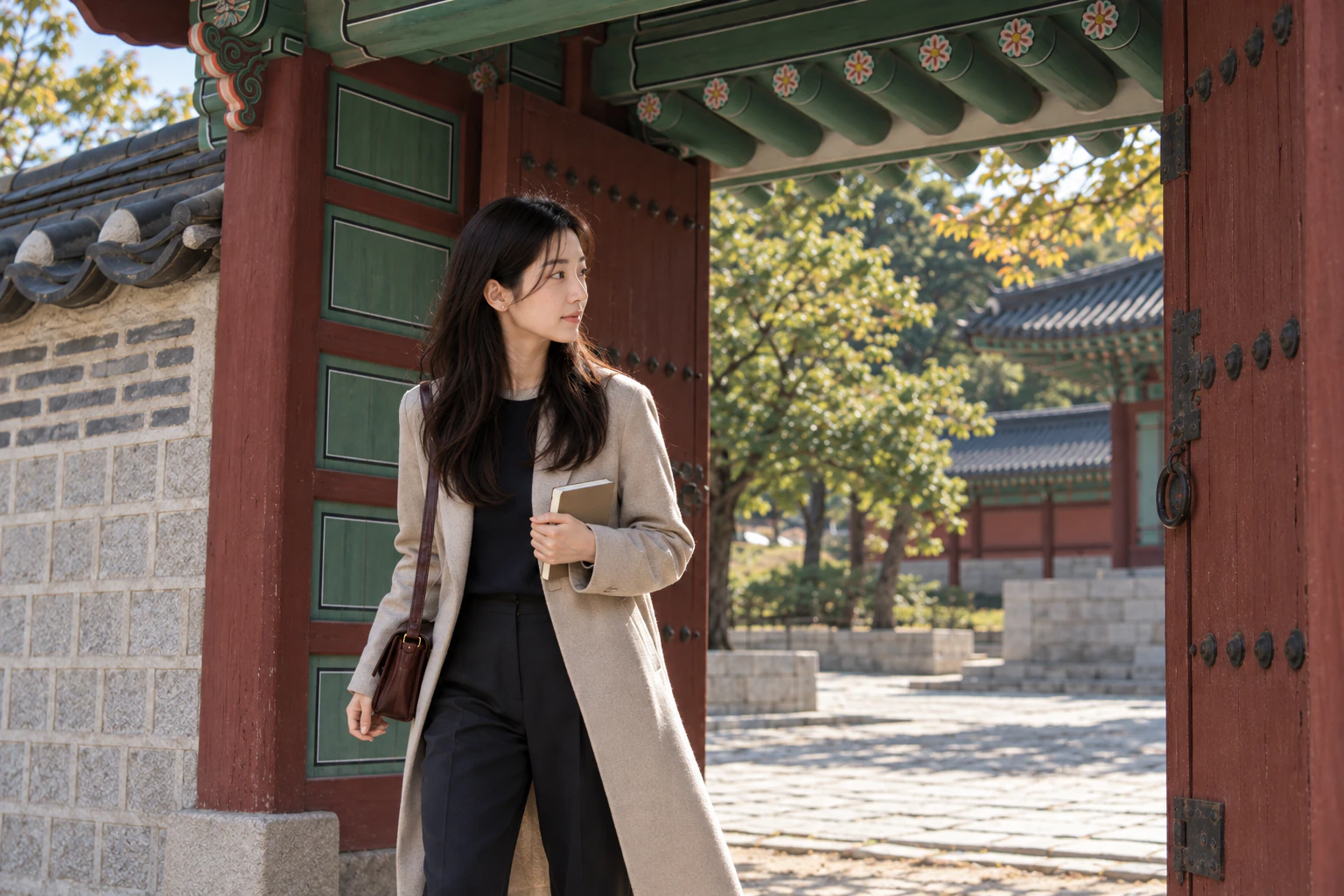
Geumhomun is a side gate in the palace wall. She buys a ticket and goes in. Changdeokgung is closed on Mondays; in September and October it is open until 18:00, with last entry at 17:00. Admission to the palace buildings is 3,000 won for adults.
The oldest stone bridge in Seoul, and one turn
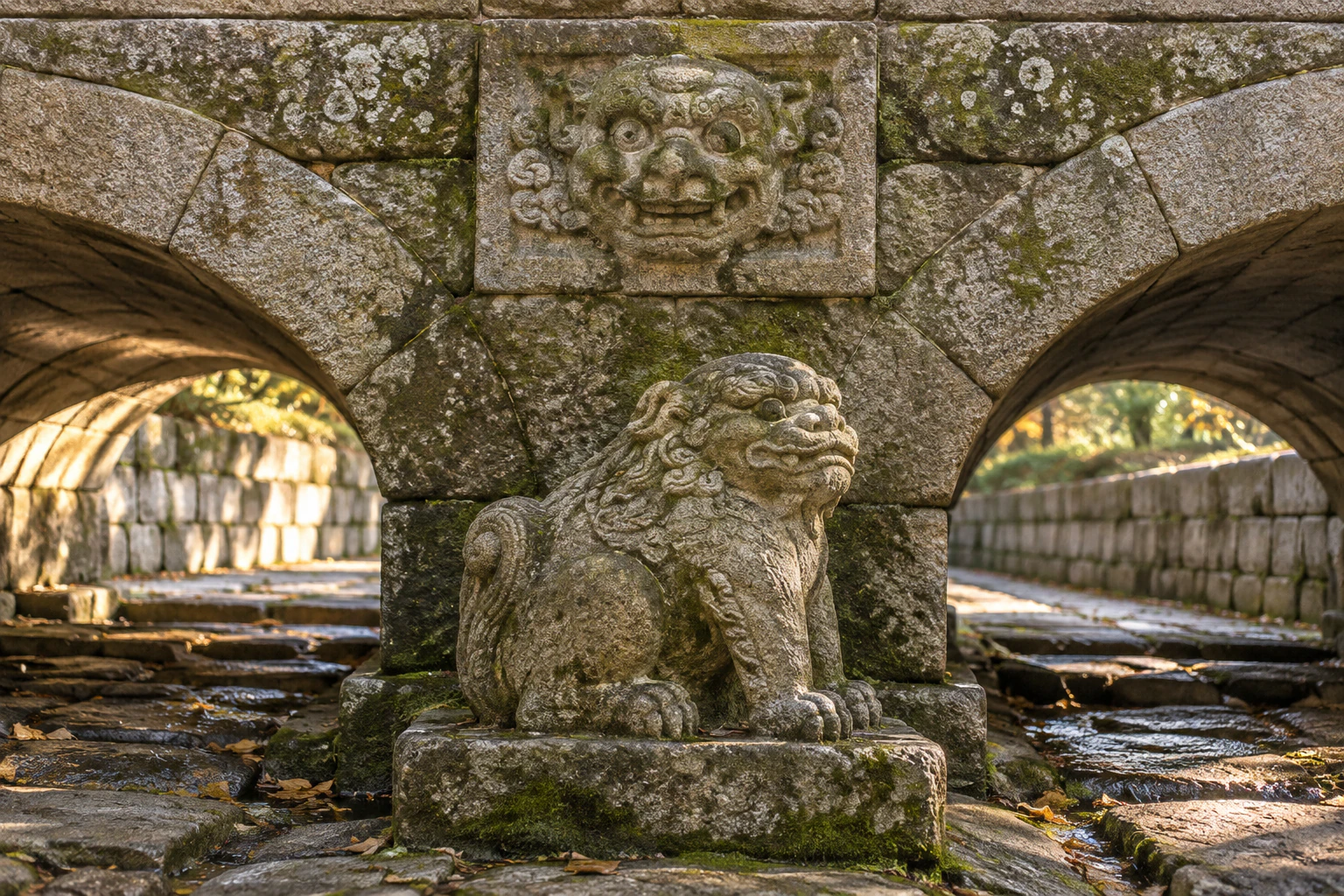
From the Korea Heritage Service’s description of Geumcheongyo Bridge (Treasure): a stone bridge over the Geumcheon, a channel flowing from north to south between Donhwamun and Jinseonmun, built in March 1411, the 11th year of King Taejong. It is the oldest stone bridge inside any palace and the oldest stone bridge surviving in Seoul. It has two arches, with a goblin face carved on the wall between them, and below, a haetae figure on the south side and a tortoise on the north.
A short walk east from the gate brings her to a stone bridge: Geumcheongyo. The Korea Heritage Service places it between Donhwamun and Jinseonmun, over the Geumcheon, a channel that flows from north to south. It was built in March 1411, the 11th year of King Taejong — the oldest stone bridge inside any palace, and the oldest stone bridge left in Seoul. Find on the map
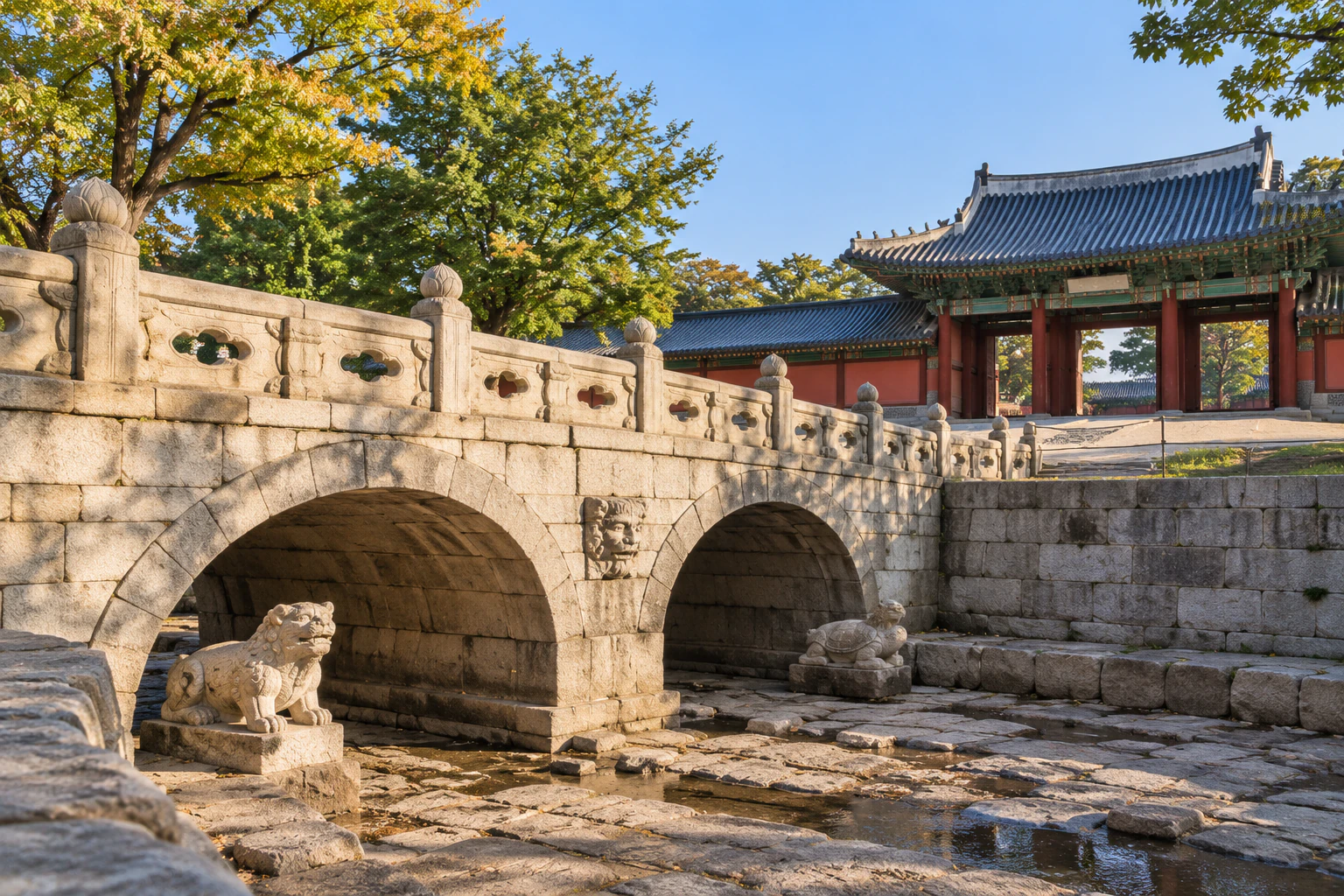
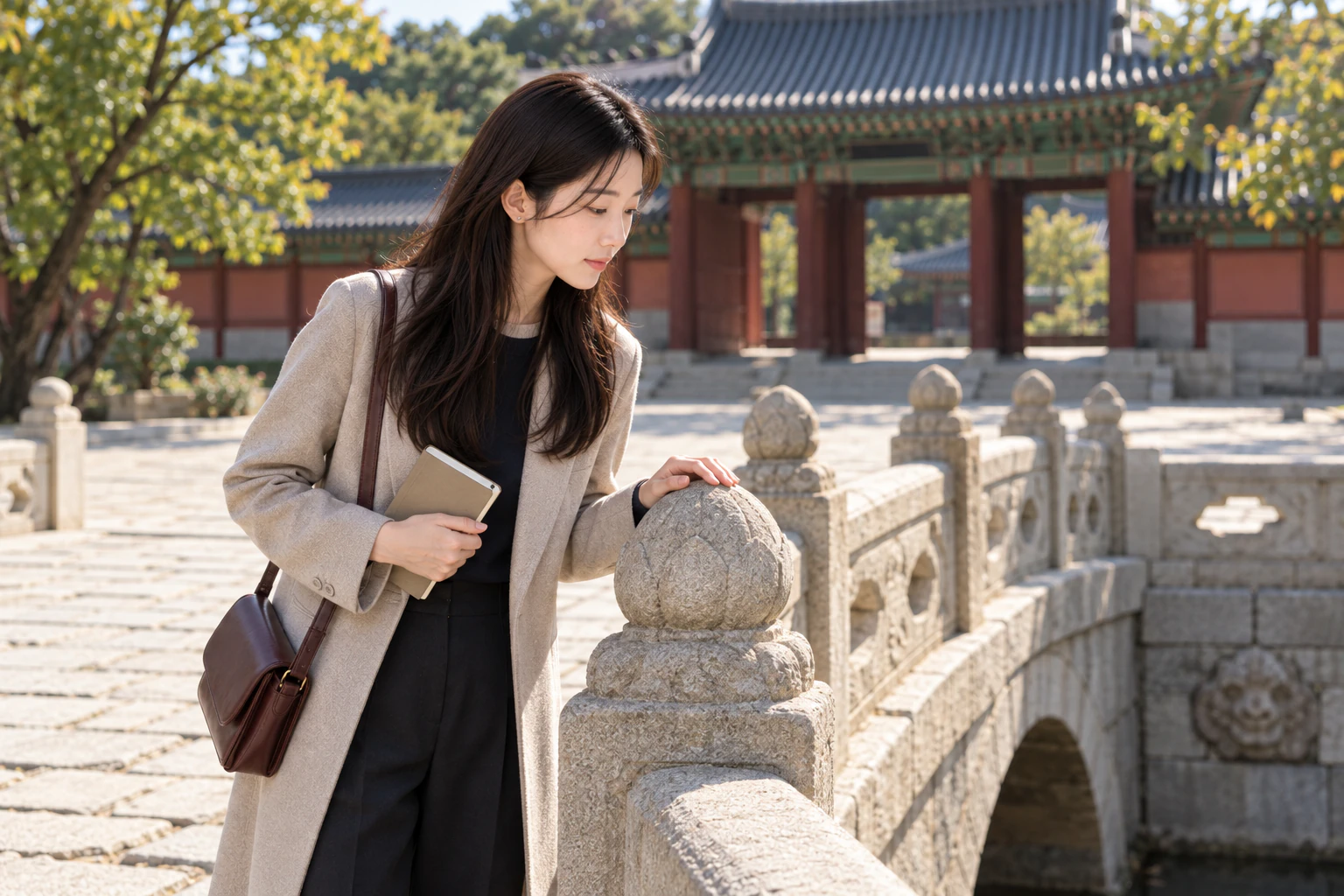
Rina doesn’t stop in the middle; she goes to the edge. According to the guide, the bridge has two arches with a goblin face carved on the wall between them, and below, a haetae sits on the south side and a tortoise on the north. She looks down over the railing. On her first visit this was just part of the path underfoot. She writes: “Under the bridge, a haetae and a tortoise. Opposite sides.”
Across the bridge is Jinseonmun. Beyond it a long courtyard opens sideways, and the gate to Injeongjeon is not straight ahead but on the left. Here Rina turns once: east from Geumhomun until now, north from here.
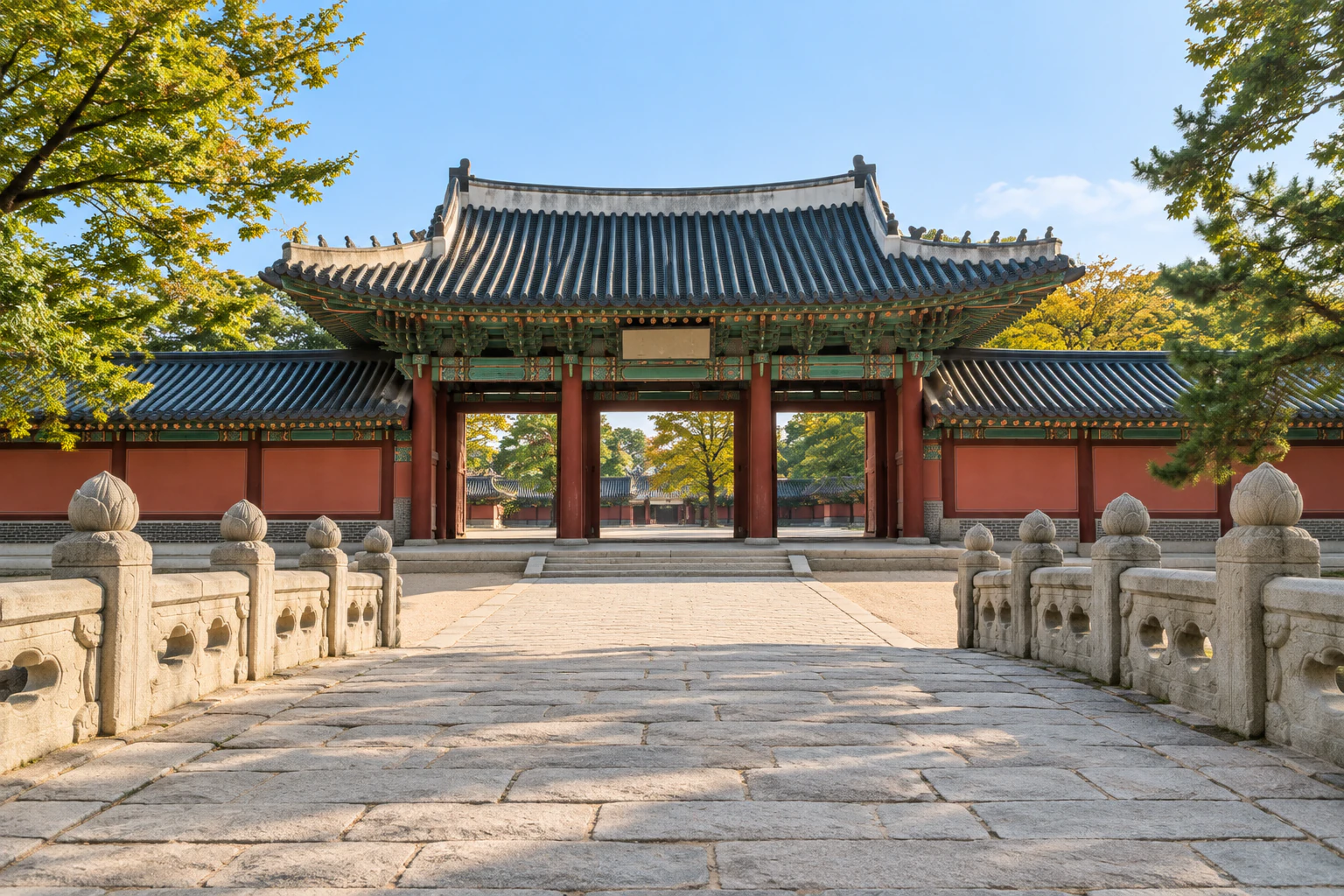
The Korea Heritage Service says that Changdeokgung, unlike Gyeongbokgung, was not laid out in an artificial straight line but built to fit the surrounding hills and ground. In the Gwanghwamun series, Maya’s approach to Geunjeongjeon ran along a central axis. Walking this path, Rina thinks of that description. Rina writes the answer beside her first line: “Turns: one. Coming in by the side gate.”
Through Injeongmun to the courtyard of Injeongjeon
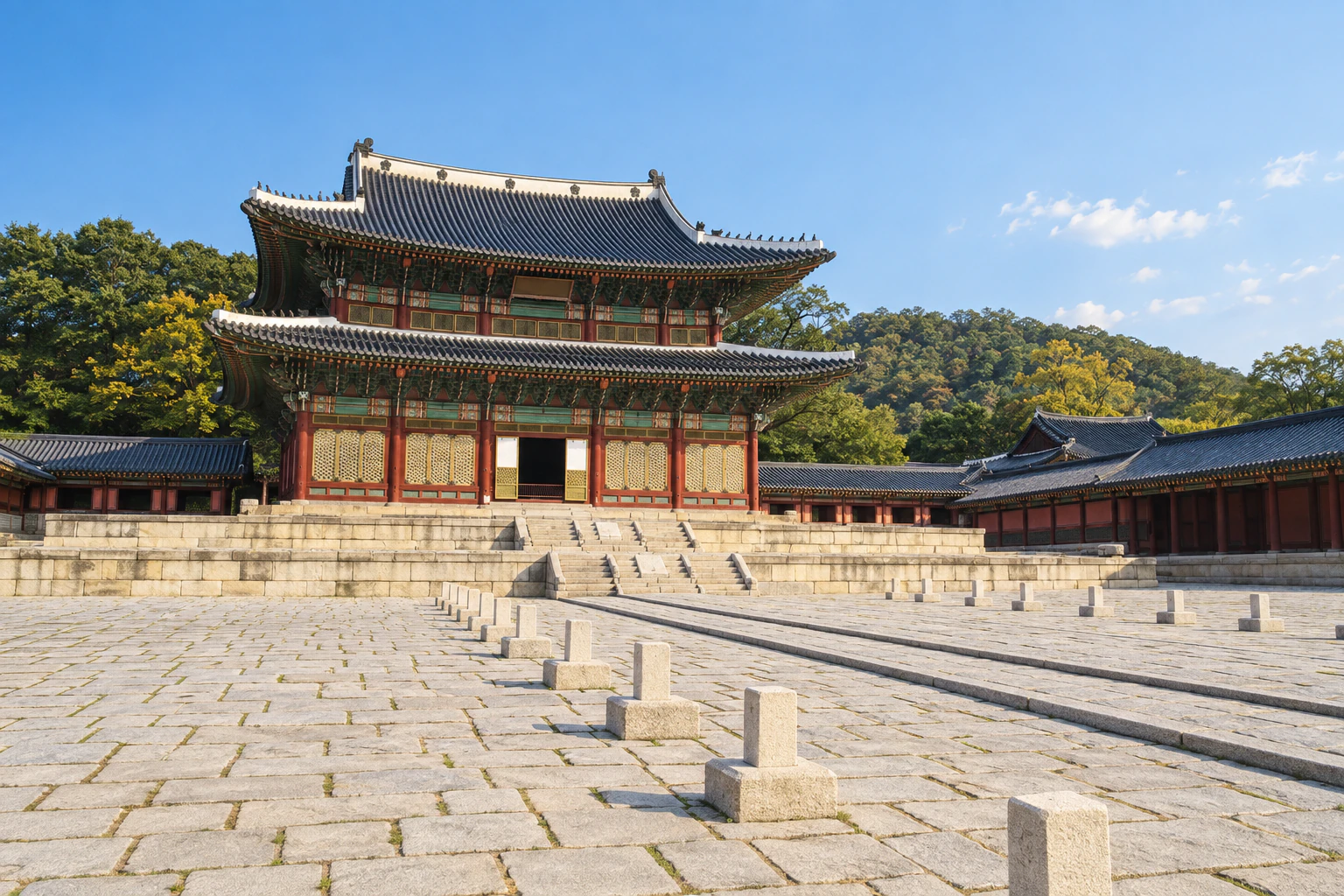
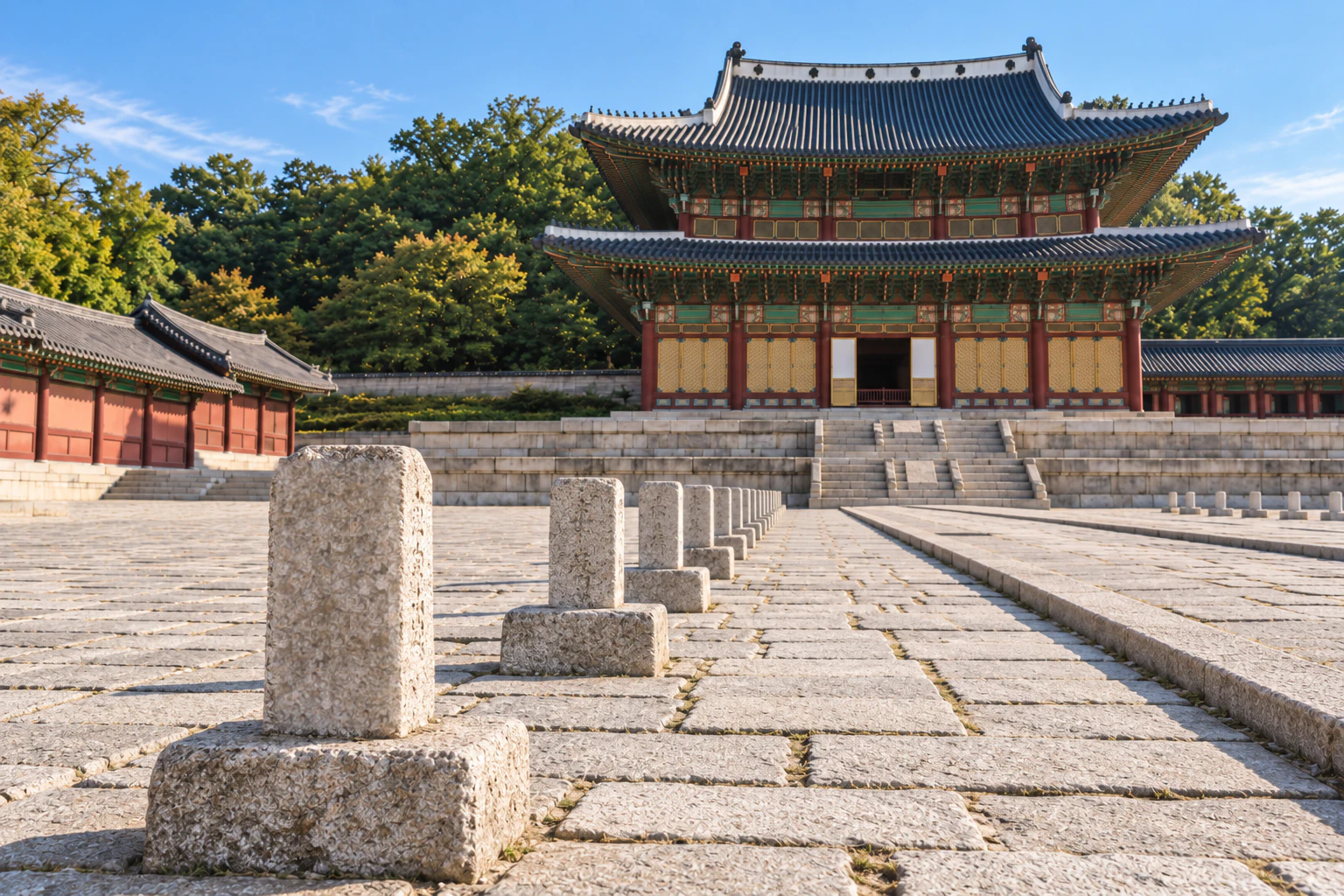
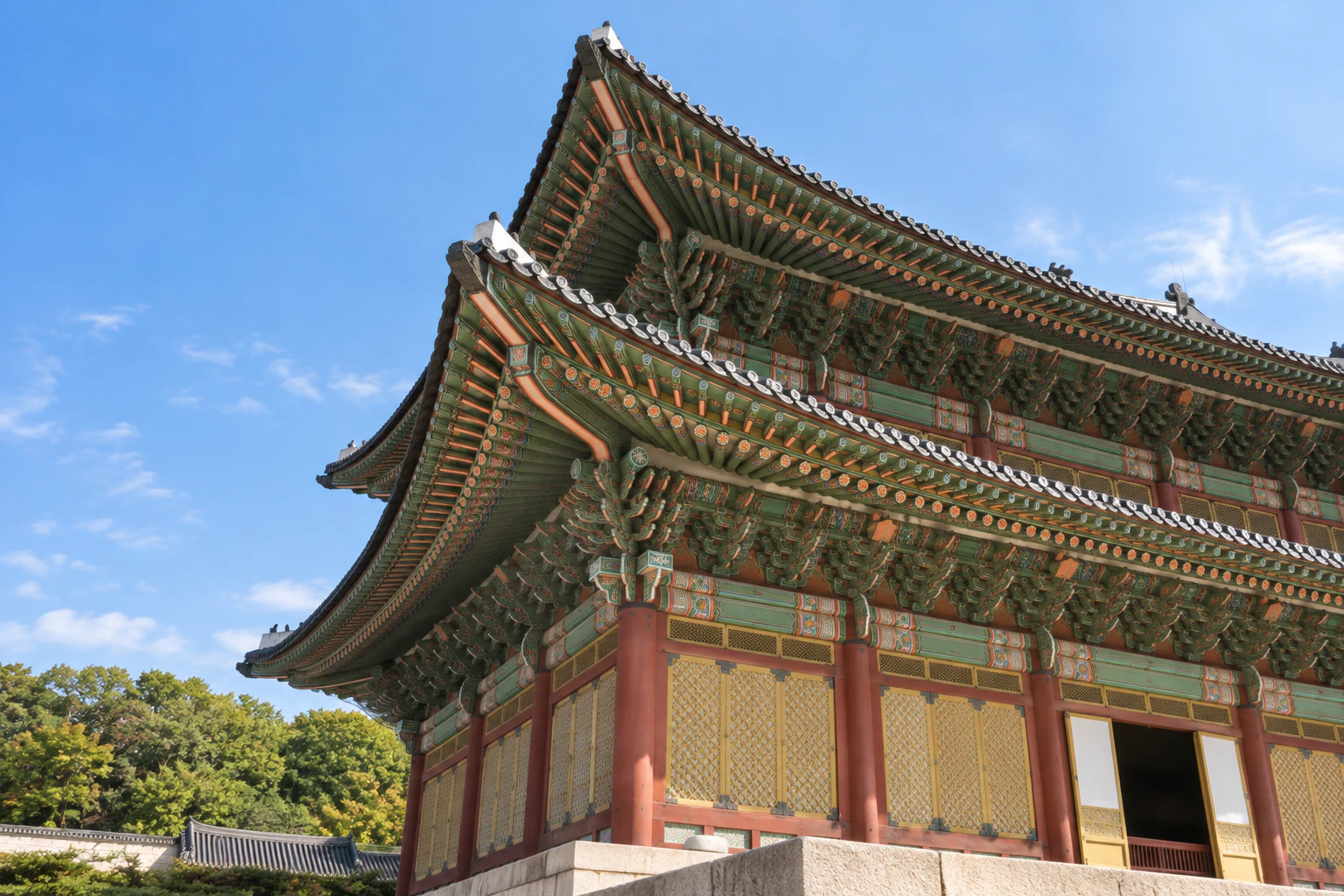
From the Korea Heritage Service’s description of Injeongjeon Hall (National Treasure): the main throne hall of Changdeokgung; “injeong” means benevolent rule. Coronations, royal weddings, the investiture of crown princes and formal audiences were held here. Rebuilt under Gwanghaegun, it was rebuilt again after a fire in 1803, the third year of King Sunjo. The courtyard in front is called the jojeong, with rank stones lined up, twelve on the east and twelve on the west. After Emperor Sunjong moved to Changdeokgung in 1907, Western fittings such as glass windows and electric lights were added and the floor was changed to wood.
Through Injeongmun, the courtyard opens up. This is where she took that first photo. The Korea Heritage Service calls this courtyard the jojeong and says rank stones line the central path, twelve on the east and twelve on the west. This time Rina walks along the line of stones rather than down the middle. Find on the map
At the far end, on a high stone platform, stands Injeongjeon: Changdeokgung’s throne hall. “Injeong” means benevolent rule. Coronations, royal weddings and the investiture of crown princes were held here. The present building was rebuilt after a fire in 1803, the third year of King Sunjo, the guide says.
The guide has one more line: after Emperor Sunjong moved to Changdeokgung in 1907, Western fittings such as glass windows and electric lights were added to Injeongjeon and the floor was changed to wood. Rina looks inside only as far as she can see from the door. That the largest hall of an old palace also holds twentieth-century fittings is something she didn’t know the first time.
Rina walks once round the courtyard and turns back toward Injeongmun. Beyond the gate she can guess where she turned on the way in. Beside that first photo, there is now a path.
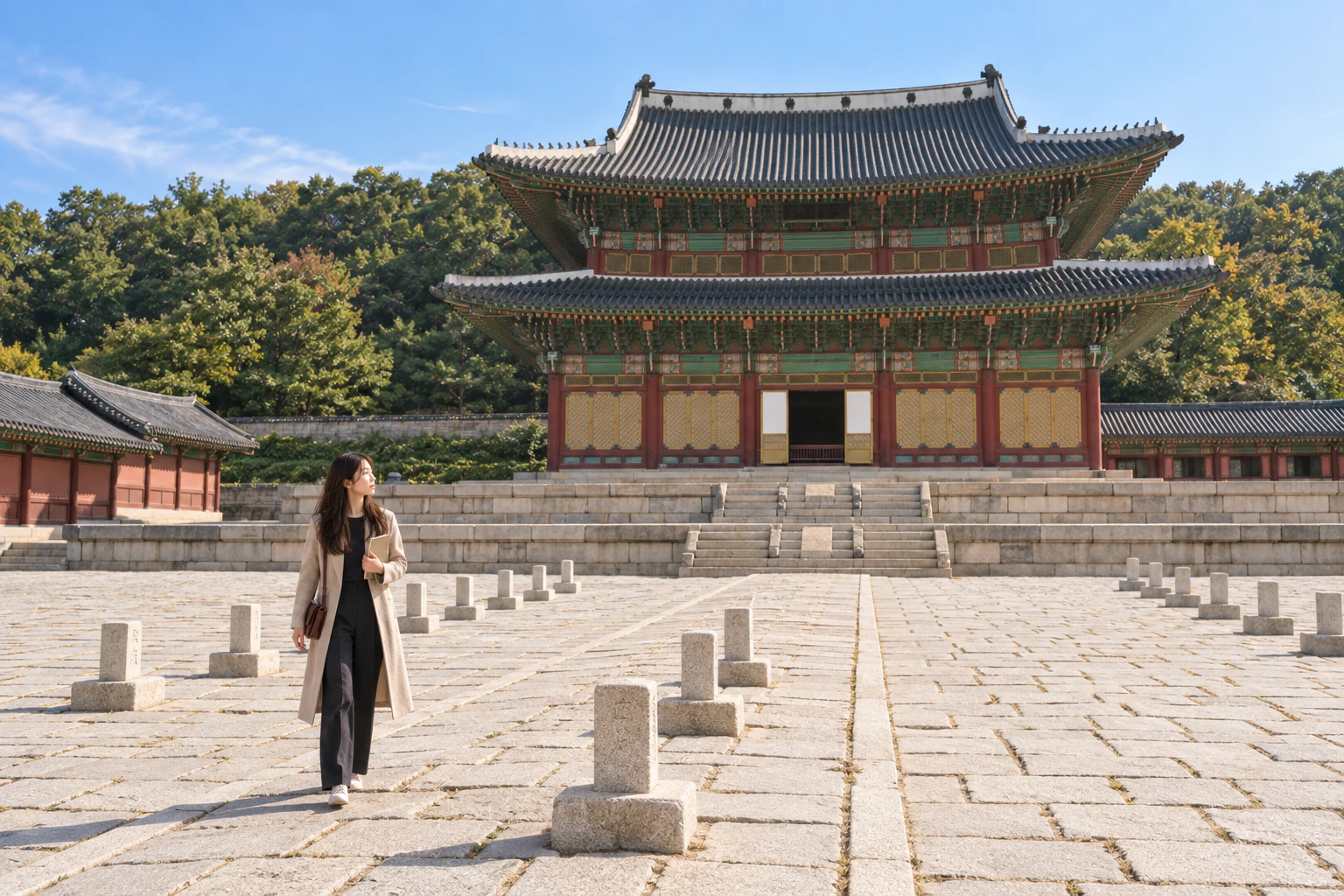
Changdeokgung was built in 1405 as a secondary palace to Gyeongbokgung. After the Japanese invasions it was the first palace to be rebuilt, in 1610, and for some 270 years, until Gyeongbokgung was rebuilt in 1867, it served in practice as the main palace. With Changgyeonggung it was called the Donggwol, and in 1997 it became a UNESCO World Heritage Site. Rina thought of that description today: from the side gate, her route changed direction once after Jinseonmun before reaching Injeongjeon.
Rina has two quiet recommendations. Avoid Mondays, when Changdeokgung is closed. And if you come before the repairs are done, go in by Geumhomun and stop once at the edge of Geumcheongyo. The haetae and the tortoise are under the bridge, not on it.
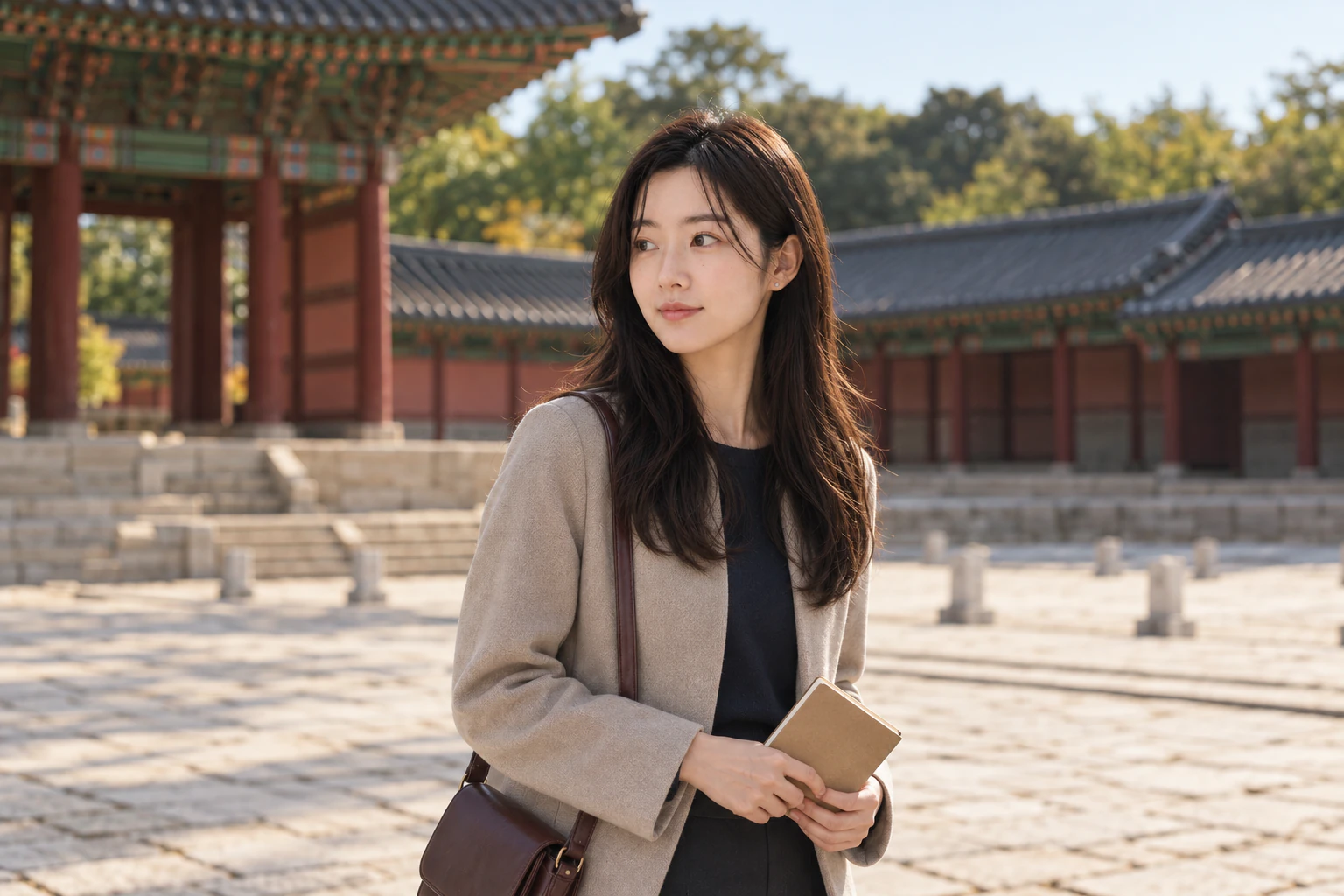
(※ This article includes staged images created with AI.)
Plan your visit
Enter Changdeokgung by Geumhomun from Exit 3 of Anguk Station, then walk past Geumcheongyo and Jinseonmun to the courtyard of Injeongjeon. The 390 m and 5 minutes are a map-route calculation from Anguk Exit 3 to Geumhomun; the Royal Palaces and Tombs Center gives 5 minutes on foot.
A concept diagram of the order · not to scale, not oriented, not the real shape of the road.
- Anguk Station Exit 3 → Geumhomun — East along Yulgok-ro. While Donhwamun is under repair, Geumhomun is the entrance and a small gate beside it the exit. Find on the map
- Geumcheongyo · Jinseonmun — The oldest stone bridge in Seoul, built in 1411, with a haetae on the south side and a tortoise on the north below it. Past Jinseonmun, Injeongmun is on the left. Find on the map
- Injeongmun · courtyard of Injeongjeon — The jojeong courtyard, with twelve rank stones on each side, and Changdeokgung’s throne hall, Injeongjeon. Find on the map
Getting there
TMAPChecked 2026.09.23
From Exit 3 of Anguk Station (Line 3) to Geumhomun, the temporary entrance to Changdeokgung while Donhwamun is under repair, is 390 m, about 5 minutes, by map route (TMAP pedestrian routing). The Royal Palaces and Tombs Center gives 5 minutes on foot from Anguk Exit 3 and 10 minutes from Exit 7 of Jongno 3-ga Station (Lines 1, 3, 5). Address: 99 Yulgok-ro, Jongno-gu; there is no parking.
Hours & fees
Checked 2026.09.23
Royal Palaces and Tombs Center opening hours: Changdeokgung is closed on Mondays (if a Monday is a public or substitute holiday it opens, and closes on the next non-holiday instead). February–May and September–October 09:00–18:00 (last entry 17:00); June–August 09:00–18:30 (17:30); November–January 09:00–17:30 (16:30).
Royal Palaces and Tombs Center feesChecked 2026.09.24
Changdeokgung palace grounds, adults 3,000 won (Korean nationals aged 25–64, foreigners aged 19–64). The Huwon (Secret Garden) is 5,000 won for adults and seniors and 2,500 won for ages 7–18, and a palace-grounds ticket must be bought as well. The 6,000-won integrated pass for the four palaces and Jongmyo does not include the Huwon. Free entry to the palace grounds covers foreigners aged 18 and under or 65 and over and visitors wearing hanbok; free Huwon entry, however, is limited to children aged 6 and under and to Korean national merit holders and Korean nationals with disabilities.
Background5
Checked 2026.09.23
The Royal Palaces and Tombs Center announced repair work on Donhwamun from 11 November 2024, with Geumhomun as the temporary entrance and the small gate beside it as the exit for the duration of the work. As of 23 September 2026, its visitor guidance still identifies Geumhomun as the entrance to Changdeokgung.
Checked 2026.09.23
From the Korea Heritage Service’s description of Donhwamun (Treasure): the main gate of Changdeokgung and the oldest wooden building among surviving palace gates. It was built in May 1412 and repaired in 1609, the first year of Gwanghaegun.
Checked 2026.09.23
From the Korea Heritage Service’s description of Geumcheongyo Bridge (Treasure): a stone bridge over the Geumcheon, a channel flowing from north to south between Donhwamun and Jinseonmun, built in March 1411, the 11th year of King Taejong. It is the oldest stone bridge inside any palace and the oldest stone bridge surviving in Seoul. It has two arches, with a goblin face carved on the wall between them, and below, a haetae figure on the south side and a tortoise on the north.
Checked 2026.09.23
From the Korea Heritage Service’s description of Injeongjeon Hall (National Treasure): the main throne hall of Changdeokgung; “injeong” means benevolent rule. Coronations, royal weddings, the investiture of crown princes and formal audiences were held here. Rebuilt under Gwanghaegun, it was rebuilt again after a fire in 1803, the third year of King Sunjo. The courtyard in front is called the jojeong, with rank stones lined up, twelve on the east and twelve on the west. After Emperor Sunjong moved to Changdeokgung in 1907, Western fittings such as glass windows and electric lights were added and the floor was changed to wood.
Checked 2026.09.23
According to the Royal Palaces and Tombs Center and the Korea Heritage Service, Changdeokgung was founded in 1405, the fifth year of King Taejong, as a secondary palace to Gyeongbokgung. Burned in the Japanese invasion of 1592, it was the first palace to be rebuilt, in 1610, and for some 270 years until Gyeongbokgung was rebuilt in 1867 it served in practice as the main palace. With Changgyeonggung it was called the Donggwol, the Eastern Palace. Recognised for being built in harmony with the surrounding terrain rather than in an artificial straight-line layout, it was inscribed as a UNESCO World Heritage Site on 6 December 1997.
- Changdeokgung is closed on Mondays (if a Monday is a public holiday it opens and closes on the next non-holiday instead). February–May and September–October 09:00–18:00, June–August 09:00–18:30, November–January 09:00–17:30; last entry one hour before closing. Palace buildings 3,000 won for adults; Integrated Palace Ticket 6,000 won (Secret Garden not included). Foreign visitors aged 18 and under or 65 and over, and anyone wearing hanbok, enter free (Royal Palaces and Tombs Center, checked 23 September 2026).
- Donhwamun has been under repair since 11 November 2024; during the work the entrance is Geumhomun and the exit a small gate beside it. Before visiting, check the Royal Palaces and Tombs Center’s Changdeokgung notices for entrance information. There is no parking at Changdeokgung.
- The Secret Garden requires a separate ticket, available through online booking or first-come, first-served purchase on the day. A palace admission ticket is also required.