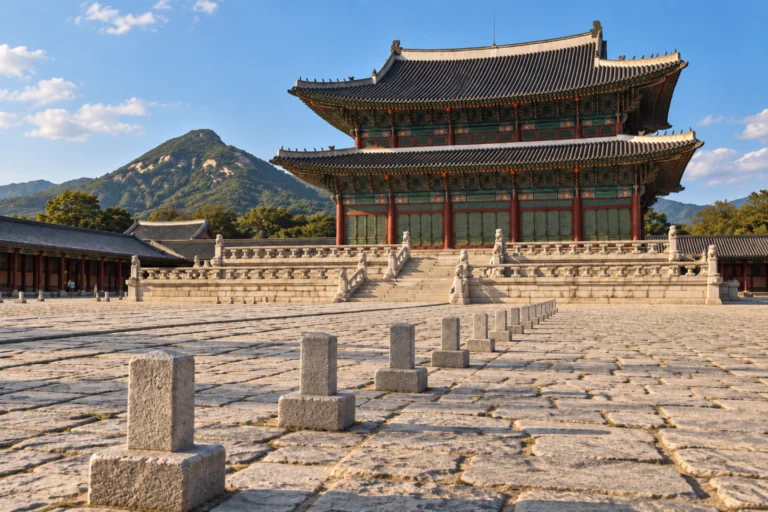
SEOUL · GWANGHWAMUN
Ethan waited for 10 a.m. on suneung day: when Seoul’s palaces open on 19 November 2026, and the 25 afternoon minutes when flights are rescheduled
Every palace and royal tomb under the Royal Palaces and Tombs Center opens at 10 a.m., including Gyeongbokgung’s Gwanghwamun instead of its usual 8 a.m., and Gyeongbokgung’s tour starts at 10.10 a.m. — aircraft take-off and landing times adjusted 13:10–13:35 for the listening test, no vehicles within 200 m of exam sites, and the free period is over, so normal prices apply
A Thursday morning in the week Ethan’s trip ran over suddenly came free. He wrote a plan to pass Gwanghwamun at 8.30, then read a notice saying every palace and royal tomb under the Royal Palaces and Tombs Center would open at 10 that day, and wrote the plan again. “Rev B — slow breakfast, at the gate by 10.”
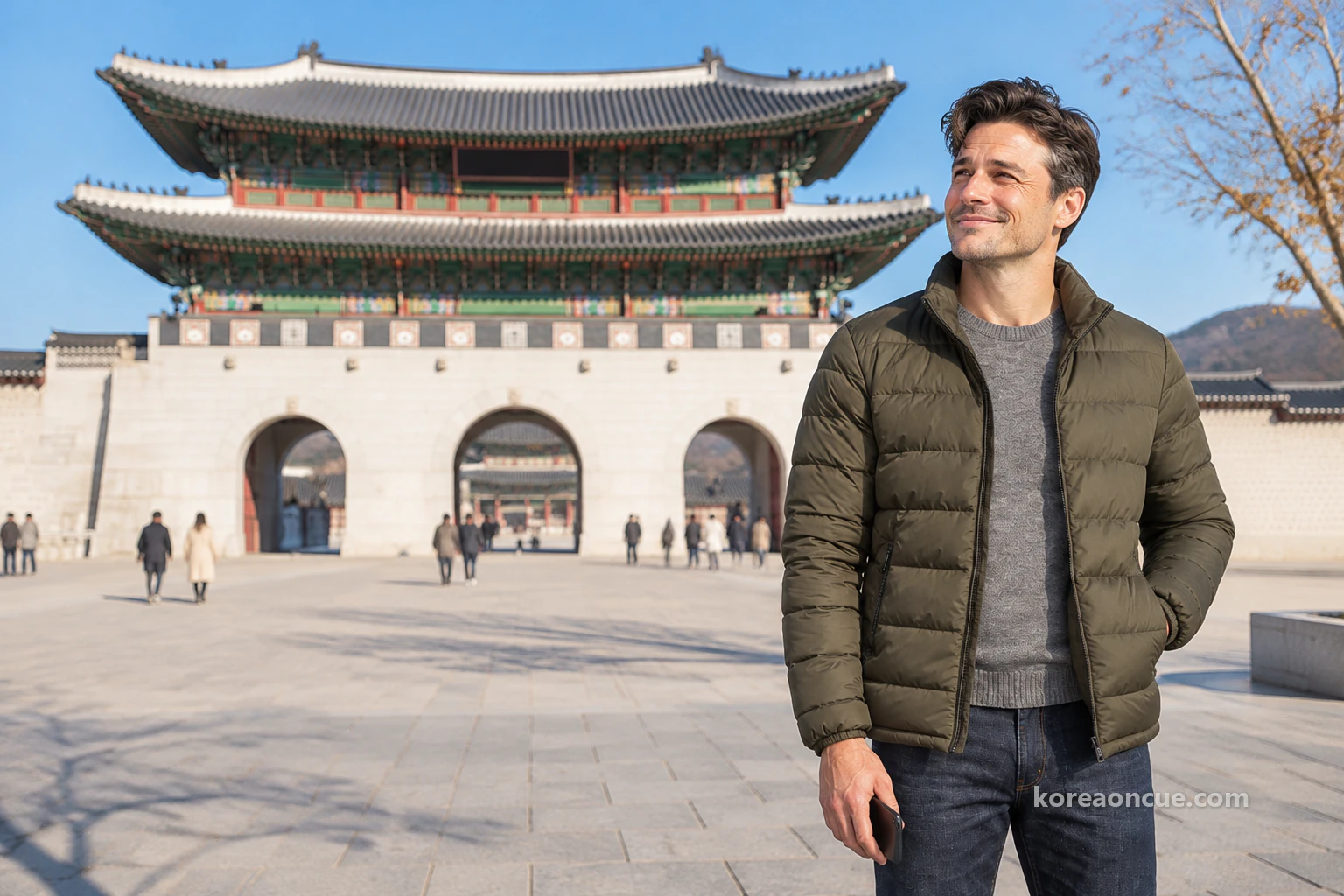
How to get there
On Wednesday evening, Ethan got back to his hotel to find an email from a partner company on his phone. It asked to move Thursday’s 9.30 a.m. meeting to 2 p.m. The reason took one line. Tomorrow was the College Scholastic Ability Test, the exam everyone calls the suneung, so people would be starting work late. It was one of the two meetings that had slid into this week when his trip was extended, and now it had slid again.
Ethan, 44, designs machines in Seattle and lived in Seoul for six years. So he had a rough idea of how big a day the suneung is in Korea. What he had never done was work out, in numbers, how far the city’s timetable changes that day. He quickly wrote a plan into the Thursday morning box that had just come free. “Rev A — 8:00 hotel, 8:30 Gwanghwamun, 9:00 into Gyeongbokgung.” Getting in first, right as the gates open, was the routine he always went for.
This trip was supposed to have been packed up last Saturday. Two meetings got pushed into this week, which added a week, and he had moved his flight home to this Saturday. So this week was about filling the gaps between meetings one by one, and a whole free Thursday morning was the biggest gap of all. Ethan put Gyeongbokgung into it. In six years of living in Seoul, he had only ever gone there in the afternoon.
Before going to sleep, Ethan opened the Royal Palaces and Tombs Center notices to check the palace times once more. At the top was a notice headed “Change to palace and royal tomb opening times”. It said that on Thursday 19 November, suneung day, every palace and royal tomb under the Royal Palaces and Tombs Center would open at 10 a.m. Even Gyeongbokgung’s Gwanghwamun opens at 10 that day, not at its usual 8 a.m. Ethan drew a line through the three lines of Rev A and wrote just “Rev B” underneath.
The Cue — At a glance
On Thursday 19 November 2026, suneung day, the four grand palaces, Jongmyo and the Joseon royal tombs under the Royal Palaces and Tombs Center all open at 10 a.m. Move any early-morning palace plans to after 10, and since each palace starts its first tour at a different time, aim to arrive for that and you will spend less time waiting. Free entry ended on the 15th, so you pay the usual admission. If you are flying in the afternoon, remember the take-off and landing adjustment from 13:10 to 13:35, and if you are taking a taxi, remember that vehicles are kept 200 m back from exam sites.
- Date: Thursday 19 November 2026, suneung day. Candidates must be in by 08:10, and the test ends at 17:45 for most candidates.
- Palace opening time: every palace and royal tomb under the Royal Palaces and Tombs Center opens at 10:00 (Gyeongbokgung’s Gwanghwamun, Hyeopsaengmun and Yongseongmun also 10:00).
- Admission: free entry ended on 15 November, so paid-day adult prices apply (Gyeongbokgung 3,000 won, Deoksugung 1,000 won and so on).
- Getting there: Gyeongbokgung is about a 3-minute walk from Gyeongbokgung Station (Line 3) Exit 5 to Heungnyemun.
- Times to watch: 13:10–13:35, aircraft and helicopter take-off and landing times adjusted (the listening test starts at 13:10 and lasts up to 25 minutes), and no vehicles within 200 m of exam sites.
When is suneung day, and what changes? The timetable for Thursday 19 November 2026
The suneung for the 2027 academic year takes place on Thursday 19 November 2026, from 8.40 a.m. to 5.45 p.m. A total of 551,864 candidates are expected to sit it at 1,312 exam sites in 85 exam districts across the country. With that many exam sites, a traveller getting around Seoul that day is bound to pass a school being used as one at some point. Before closing the notice, Ethan looked up the exam timetable and laid it next to his notebook. It was the same routine as noting the reference dimensions before starting a drawing.
Open in Kakao Map — Gyeongbokgung Station
| Time | Inside the exam site | What changes outside |
|---|---|---|
| 06:00–08:10 | Candidates travel to school | More trains on the Seoul-area subway |
| 08:10 | Candidates must be in | — |
| 08:40–10:00 | Period 1, Korean | 10:00 palaces and royal tombs open, public offices and companies asked to start work after 10 |
| 13:10–13:35 | Within Period 3, English (13:10–14:20), the listening test (from 13:10, up to 25 minutes) | Aircraft and helicopter take-off and landing times adjusted, military training such as artillery fire briefly halted |
| 17:45 | Test ends for most candidates | — |
Candidates have to be in their assigned exam room or waiting area by 8.10 a.m., and the English listening test starts at 13:10, when Period 3 begins, and finishes within 25 minutes. The window for adjusting aircraft and helicopter take-offs and landings, from 13:10 to 13:35, is set to match that listening test. Ethan circled “08:10” and “13:10” together in the left-hand column of the table. He saw them as the two moments in the day when the whole city moves to the rhythm of the exam. Then he decided that Thursday morning’s plans would start after 10, and that nothing noisy would go anywhere near 1.10 p.m.
Looking at the table, Ethan also noticed that one number turned up twice. Ten o’clock, when Period 1 Korean ends, was exactly when the palaces opened. At the very moment the Korean paper that began at 8.40 used up its 80 minutes, the palace gates in the middle of the city would be opening. Ethan drew a short line between the two boxes and wrote “10:00 = end of Period 1 = palace gates”. It felt as good as two drawings whose datum lines match up.
What time do the palaces open on suneung day? Every palace and royal tomb under the Royal Palaces and Tombs Center at 10 a.m.
On suneung day, every palace and royal tomb under the Royal Palaces and Tombs Center opens at 10 a.m. That goes for Gyeongbokgung, Changdeokgung, Changgyeonggung, Deoksugung and Jongmyo, and for Sajikdan, Sungnyemun and the Joseon royal tombs as well. Gyeongbokgung, Changdeokgung, Changgyeonggung and Deoksugung, which normally start letting visitors in at 9, open an hour later. So that morning, you cannot buy a ticket and go into any palace before 10. That one line was why Ethan scrapped Rev A entirely.
Gyeongbokgung is worth thinking through twice, because two of its times move. Not only does visiting start at 10 instead of 9, but Gwanghwamun, Hyeopsaengmun and Yongseongmun, which normally open at 8 a.m., also open at 10 that day. On a normal day you could pass through Gwanghwamun at about 8.30 and wait for 9 in the courtyard in front of Heungnyemun, but on suneung day you cannot even get into that courtyard before 10. That is why the “8:30 Gwanghwamun” Ethan first wrote was wrong twice over. Closing time is the usual 5 p.m., so the only thing the day loses is an hour in the morning.
| Place | Opening time on suneung day | What changes for tours and visits |
|---|---|---|
| Gyeongbokgung | 10:00 (usually 09:00); Gwanghwamun, Hyeopsaengmun and Yongseongmun also 10:00 (usually 08:00) | Gyeongbokgung and Chilgung tours 10:00 → 10:10, closing time 17:00 unchanged |
| Deoksugung | 10:00; Sungnyemun, Jungmyeongjeon and Gojong’s Road also from 10:00 | No 9:30 Seokjojeon tour, from 10:30 |
| Changdeokgung, main palace area | 10:00 (usually 09:00) | No 9:30 Korean tour → 11:30, 13:30, 15:30; English 10:15, 13:15; no 10:00 Chinese tour |
| Changdeokgung, Huwon | No 10:00 entry, from 10:30 | No 10:00 Korean tour → from 11:00; English 10:30, 11:30, 14:30, 15:30 |
| Changgyeonggung | 10:00 (usually 09:00) | No 9:30 Korean tour |
| Jongmyo and the Joseon royal tombs | 10:00 | — |
At Deoksugung, the gates and buildings around it open later too. Sungnyemun, Jungmyeongjeon and Gojong’s Road also open from 10 that day. If you were planning a morning stroll along Gojong’s Road from outside City Hall, that line needs moving as well. Once he had copied out the whole table, Ethan added one more column next to the palace names and wrote the same number in every row: “10”. Even in engineering drawings, a table that repeats the same value six times is rare, and Ethan chuckled to himself.
When do the palace tours start on suneung day? Gyeongbokgung 10.10, Seokjojeon 10.30, Changdeokgung Korean tours 11.30 in the main palace area and 11.00 in the Huwon
Because the gates open late, the tours slip a little at each palace too. Tours at Gyeongbokgung and Chilgung move from the usual 10 a.m. to 10.10, ten minutes later. Deoksugung’s Seokjojeon drops its 9.30 tour and runs from 10.30. Changgyeonggung drops its 9.30 Korean tour. If you want to follow the first tour round, set your arrival time by each palace’s first session rather than by the 10 a.m. opening.
Changdeokgung has the most changes, so it helps to note the main palace area and the Huwon separately. In the main palace area, the 9.30 free Korean tour is dropped, leaving 11.30, 13.30 and 15.30. English tours are at 10.15 and 13.15, and the 10 a.m. Chinese tour does not run. The Huwon has no 10 a.m. entry and starts at 10.30, and its Korean tours lose the 10 a.m. session and run from 11. So even within Changdeokgung, the first Korean tour is at 11 in the Huwon and 11.30 in the main palace area, half an hour apart.
If you want a tour in English, choose one of Changdeokgung’s two: 10.15 in the main palace area or 10.30 in the Huwon. The main palace area tour starts 15 minutes after the gates open, and the Huwon tour 30 minutes after. There are later English tours in the Huwon at 11.30, 14.30 and 15.30, so you can leave it until the afternoon as well. Ethan marked those two lines separately for a colleague from abroad who might come with him next time. When that colleague came, he planned to ask first which they would rather see, the main palace area or the Huwon.
Ethan has no trouble following Korean, so at first he thought about fitting in the Korean tour of Changdeokgung’s main palace area. But with the first session at 11.30, the time left before his 2 p.m. meeting was tight. Gyeongbokgung’s tour started ten minutes after the gates opened, so there would be almost no waiting. Ethan wrote “Gyeongbokgung, 10:10 tour” on the first line of Rev B and moved Changdeokgung to the next box.
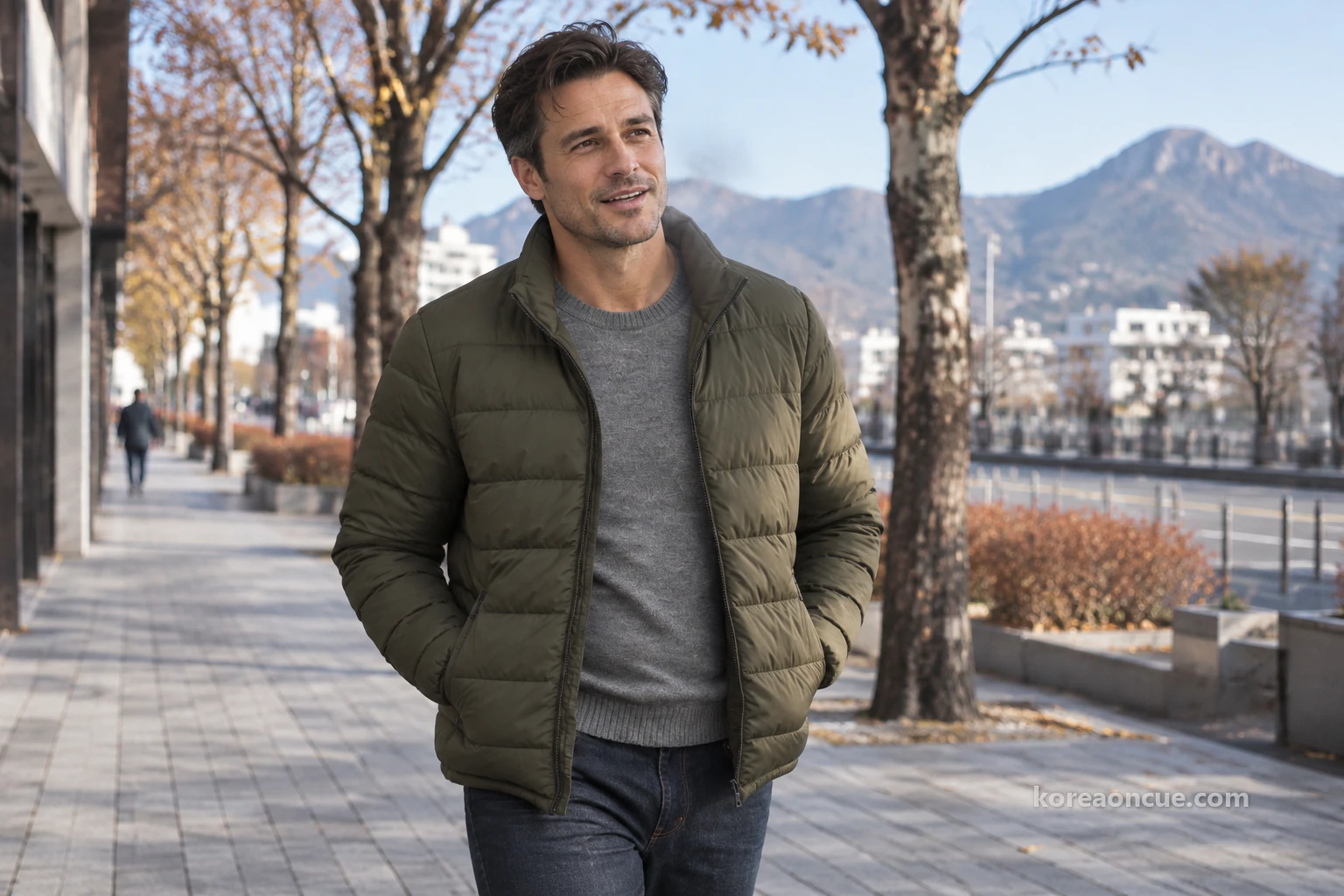
The subway and the commute on suneung day: 6–8.10 a.m. is for the candidates
On suneung day, 6 to 8.10 a.m. is when candidates travel to their exam sites, so the Seoul-area subway runs more trains. Public offices and companies are asked to move their start time to after 10 a.m. Ethan’s partner company moving the meeting to the afternoon was a response to that request, and it was only after reading the notice that Ethan understood what the one-line reason in the email had meant. That morning, then, the palaces open at 10, and public offices and companies are asked to start work after 10 too.
Ethan decided to stay off trains between 6 and 8.10 on purpose. The extra trains in that window were running for the candidates, and the palaces would not open until 10 anyway. There was no reason for a 193 cm business traveller to be standing next to students carrying heavy bags. Ethan wrote “No trains before 8:10” on the second line of Rev B. If you are heading to a palace, there is no reason to rush at that hour.
Ethan worked out the third line of Rev B by counting back from 10. To be at the gate at 10, he had to take off the 3-minute walk from Gyeongbokgung Station Exit 5, the subway ride to the station, and a few minutes’ margin. That put leaving the hotel at a little after 9.30. It was nearly two hours later than a normal morning on a business trip. Ethan wondered what to do with those two hours, and settled on spending them over a slow breakfast.
On Thursday morning, Ethan set his alarm an hour later than usual and ate a slow breakfast near the hotel. On business trips he always gulps his soup with one eye on the clock, but that day he finished every drop. It was a little after 9.30 when he pulled on the winter coat he had been wearing since the weather turned cold and headed out. The streets felt noticeably quieter than the weekday mornings Ethan knew. He started counting on his fingers how long it had been since he last walked through a morning without taking out his notebook, then gave up.
From Gyeongbokgung Station Exit 5 at 10 a.m.: the Gwanghwamun-side gates open at 10 too
Gyeongbokgung is closest from Exit 5 of Gyeongbokgung Station on Line 3. From Exit 5 to Heungnyemun is 192 m, about a 3-minute walk. On suneung day the gate at the end of that short walk opens at 10, so if you come out of Exit 5 at about 9.50, you will not wait long. That was just about when Ethan came up the stairs on the Exit 5 side.
If you are staying around Insadong or Bukchon, you can also walk from Exit 1 of Anguk Station on Line 3. It is a 6-minute walk, only a few minutes longer than from Exit 5. Whichever way you come, if you aim to reach the gate at about 9.50 on suneung day, you will not have to stand around long in the cold wind. Walking the path from Exit 5, Ethan watched the times he had counted back that morning fall into place one by one. With his long stride, the 3-minute walk came out a little shorter.
A few people stood at the gate looking at their watches, just like Ethan. He pushed his sleeve back on purpose to catch the moment the second hand swept past 12. At 10 the gate opened, and Ethan looked up from the second hand and laughed out loud. “Rev B, zero minutes off.” He said it to himself, but louder than he meant to, loud enough for the person next to him to turn round.
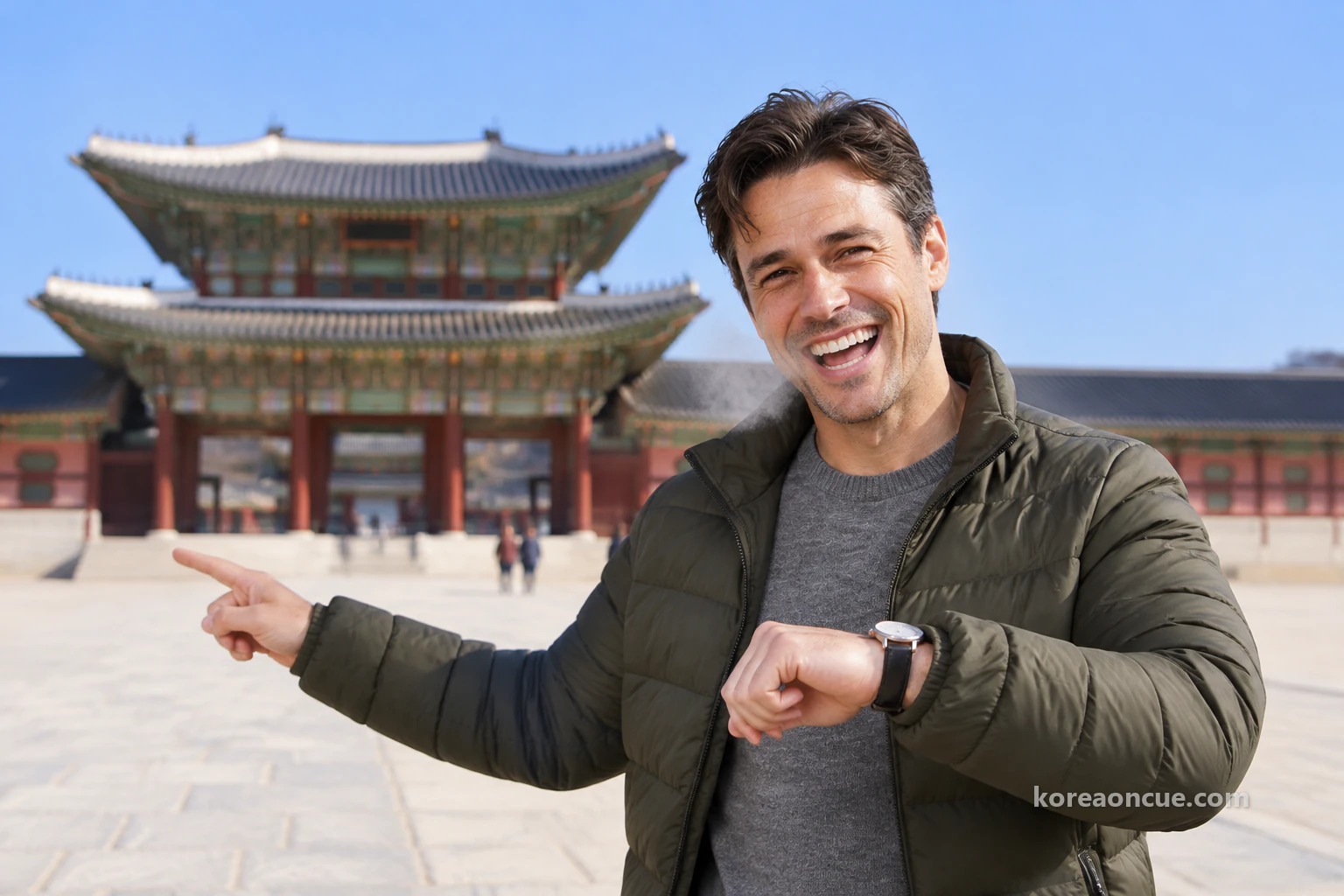
Ethan bought his ticket, went in and headed for the spot where the 10.10 tour started. It was ten minutes after the gates opened, so the tour began before he had even caught his breath. He kept his notebook in his pocket and simply followed the guide, listening. Thanks to the gates opening an hour late, he actually spent less time waiting for a tour. In front of Geunjeongjeon, Ethan posted a single photo of the moment the gate opened to the group chat the four of them share.
The message with the photo was short. “On suneung day all the palaces open at 10. I walked in on the dot.” A little later, a reply came from Rina. “A very Ethan entrance.” Ethan put his phone back in his pocket and fell into step with the guide again. He could have kept the small pleasure of hitting the hour exactly to himself, but it was a little nicer to have someone notice.
When the tour ended, he still had time to walk on his own. The Chilgung tour had also been at 10.10, but Ethan had decided to spend the morning inside Gyeongbokgung only. He walked slowly on purpose from Geunjeongjeon towards Gyeonghoeru, counting the time left until 2 p.m. Gyeongbokgung closed at 5 p.m. that day as usual, so leaving what he had not seen for another day was no loss. Ethan stood for a long time in front of Gyeonghoeru, watching the roof reflected in the pond, and left the palace at 12.30.
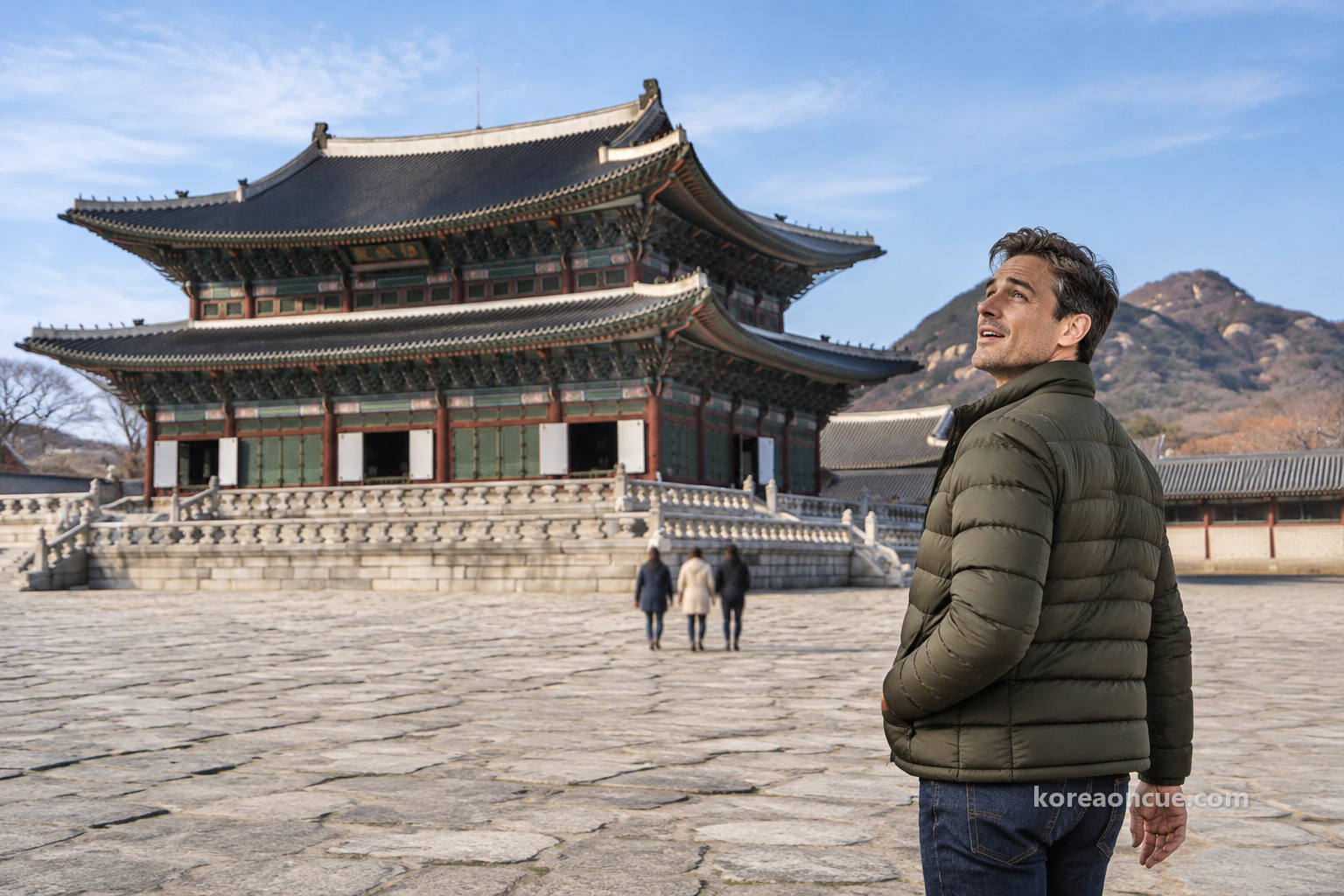
How much is admission on suneung day? Free entry ended on 15 November
On suneung day you pay the usual admission. Free entry to the four grand palaces, Jongmyo and the Joseon royal tombs ran from 29 October to 15 November for the Korea Grand Festival, and even then the closing days and the special Huwon tour at Changdeokgung were not included. That period ended four days before the suneung, and normal prices came back from 16 November. A traveller who only remembers hearing about free entry may stop short for a moment at the ticket office that day. The prices in the table below are for one adult buying an individual ticket on a paid day.
| Place | Admission (paid day, one adult) | Closed |
|---|---|---|
| Gyeongbokgung | 3,000 won | Every Tuesday |
| Changdeokgung (main palace area) | 3,000 won | Every Monday |
| Changgyeonggung | 1,000 won | Every Monday |
| Deoksugung | 1,000 won | Every Monday |
| Jongmyo | 1,000 won | Every Tuesday |
Suneung day is a Thursday. The closing days in the table are only Mondays and Tuesdays, so that day every palace opens late but none is closed. There is also a rule that if a closing day falls on a public holiday, the palace opens that day and closes on the next weekday instead. Paying 3,000 won and taking his ticket, Ethan remembered it had been free until last Sunday. If his trip had not been extended, he would never have had to pay for this ticket at all.
If you are combining two palaces in a day, it helps to add up the cost beforehand. Gyeongbokgung plus Deoksugung is 3,000 won and 1,000 won, so 4,000 won, and Changdeokgung’s main palace area plus Changgyeonggung is 3,000 won and 1,000 won, also 4,000 won. Ethan had only put Gyeongbokgung into his morning, so he spent 3,000 won on admission that day. Gyeongbokgung and Jongmyo close on a different day from the other three, though. If the day you combine two of them is not suneung day, check first that both are open that day.
From 13:10 to 13:35: flights are rescheduled around the listening test, and the streets go quiet too
On suneung day, the English listening test starts at 1.10 p.m. and finishes within 25 minutes, and to match it, aircraft and helicopter take-off and landing times are adjusted from 1.10 to 1.35 p.m. Military training such as artillery fire and tank movements also stops briefly during that time. Buses and trains passing exam sites slow down and keep their horns quiet. Event venues and building sites nearby are asked to keep everyday noise down as much as they can. If you are flying that afternoon, mark 13:10–13:35 separately on your timetable and check your flight times with your airline.
The reason Ethan stared at this row for so long was the flights. His flight home was on Saturday, two days later, so it did not overlap with those 25 minutes. Still, for someone who looks at machine drawings for a living, a whole country adjusting its aircraft take-offs and landings for 25 minutes for the sake of one exam was quite a big number. Ethan wrote just “13:10–13:35” once more, in large figures, next to that line in his notebook.
After leaving Gyeongbokgung, Ethan had lunch and headed for the meeting. At 1.10 he stopped and looked at his watch. However hard he listened, it was hard to tell what had changed in the middle of the city. Still, somewhere inside a school, the first listening question would be playing right about now. For the rest of the walk, Ethan decided to make no phone calls and to spend the next 25 minutes walking quietly.
If you pass a school being used as an exam site that day, please keep your voice down a little, even outside the listening test. The test runs until 5.45 p.m., so near the school it is best to cut down on filming out loud or talking on the phone. If you put quiet places such as museums or the palaces themselves into your afternoon, there is less to worry about. Ethan, too, made no calls until he reached the meeting.
No vehicles within 200 m of exam sites: save the taxi to the school gate for another day
On suneung day, vehicles are kept out from 200 m in front of every school being used as an exam site. That day you cannot take a taxi right up to the school. If your hotel or meeting place is near a school, sketch out the walk from the subway station first. If you really need a taxi, it is easier to plan on getting out on a main road more than 200 m from the school and walking. Buses and trains near exam sites slow down and go easy on their horns that day, so walking the last few blocks is easier on the mind too.
Ethan’s original plan was to take a taxi to the meeting. But looking at the map again, he found a high school on the block right next to the partner company’s office. If that school was an exam site, cars would have to stop 200 m short. Ethan crossed out the taxi line and switched to walking from the nearest station. Choosing the street on the far side from the school, so as not to pass in front of the exam site, was very much an Ethan decision.
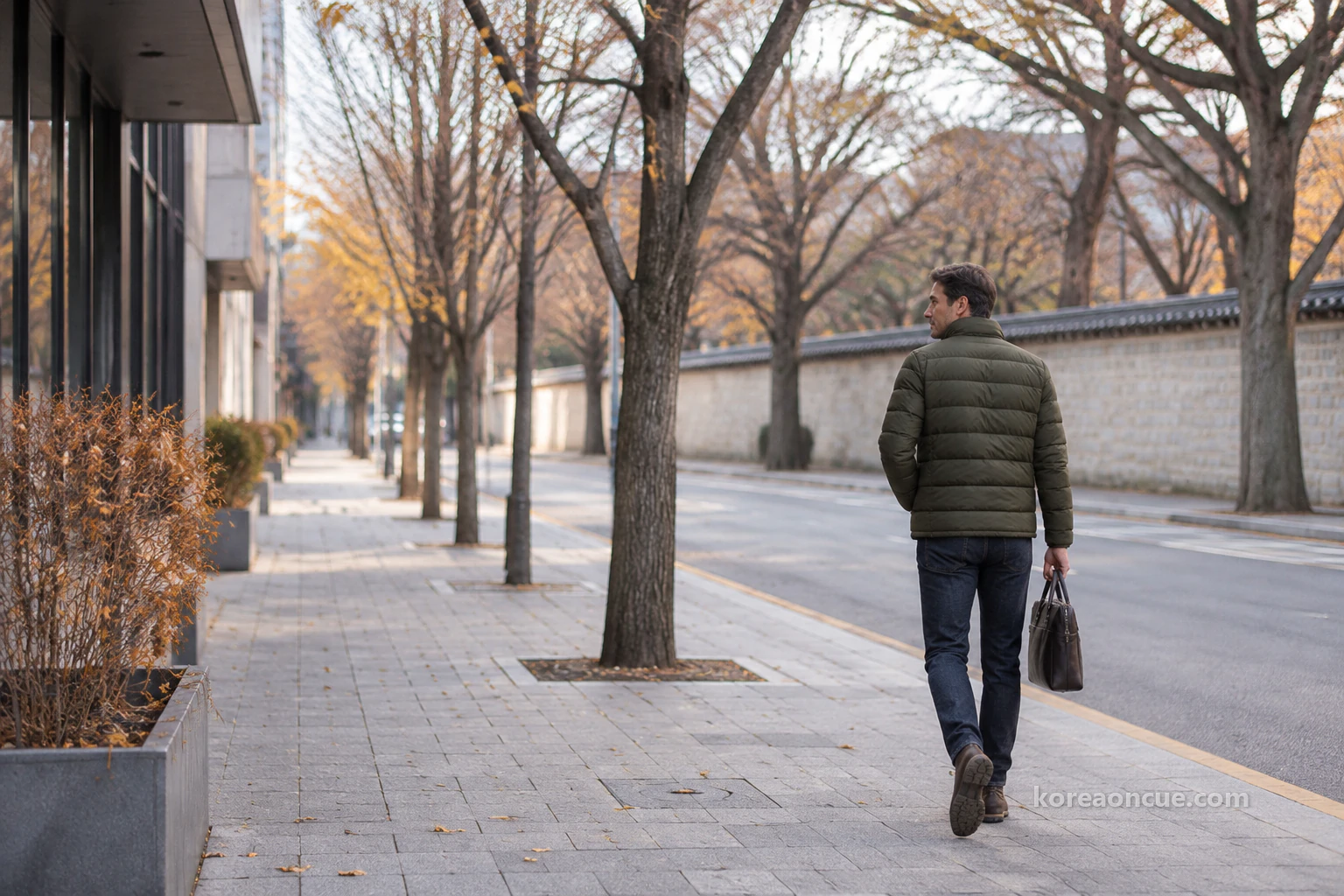
If you need the Bank of Korea’s currency exchange counter on suneung day, there is one more thing to know. That counter also opens from 10 a.m. to 5 p.m. that day instead of the usual 9 a.m. to 4 p.m. It opens an hour later and closes an hour later. Adding that line to the bottom of his table, Ethan felt again that the city’s morning really had been set to 10 that day. At 1.56 p.m., four minutes before his 2 p.m. meeting, Ethan arrived at the meeting room door.
On mornings that are not suneung day: Gyeongbokgung’s Gwanghwamun at 8, visiting from 9, Deoksugung until 9 p.m.
Once suneung day is over, the palaces go back to their usual morning hours. In November, Gyeongbokgung is open from 9 a.m. to 5 p.m., with last entry at 4 p.m. Gwanghwamun, Hyeopsaengmun and Yongseongmun normally open at 8 a.m., so early in the morning you can walk in as far as the courtyard in front of Heungnyemun and wait for 9 there. Gyeongbokgung and Jongmyo close on Tuesdays, and Changdeokgung, Changgyeonggung and Deoksugung on Mondays. Next time you plan a palace morning in Seoul, start by avoiding those two days.
Deoksugung stays open late into the evening, which makes it a good palace for the end of the day. It is normally open from 9 a.m. to 9 p.m., with last entry at 8 p.m. Admission is 1,000 won, so it is an easy short visit after work or after dinner. On a day when you miss the morning, keeping Deoksugung’s evening in reserve is one way to go. Ethan jotted “Deoksugung — till 9 p.m.” in small letters near the next-trip box in his notebook.
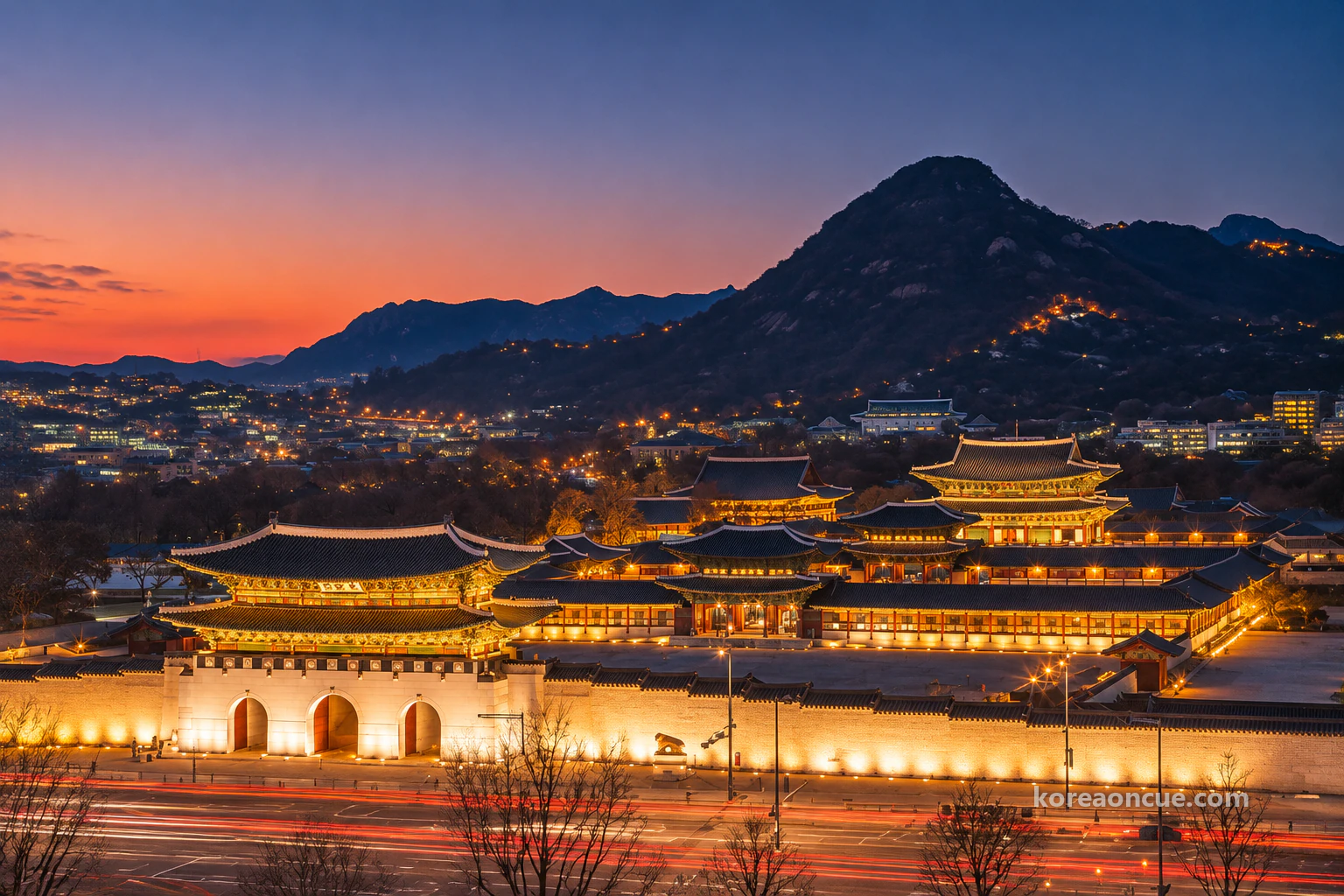
Suneung day in Seoul: the Rev B Ethan wrote again
The meeting ran a little over, but when Ethan left the building after 5.45 p.m., the usual sounds of the evening commute had come back to the streets. It was the time the test ends for most candidates. Only after writing that time down as the last line of the day’s timetable did Ethan really feel that his whole day had run on the exam timetable. 8.10 a.m., 10 a.m., 1.10 p.m., 5.45 p.m. Ethan’s Thursday had been split into four boxes by those four times.
Back at the hotel, Ethan put together the sequence for whoever faces this day next. At the top, move early-morning palace plans to after 10, followed by each palace’s different first tour time, then the fact that the free period is over and the admission prices. Further down he wrote 13:10–13:35 for afternoon flights and the 200 m in front of schools for taxis. And on the last line was “Slow breakfast”.
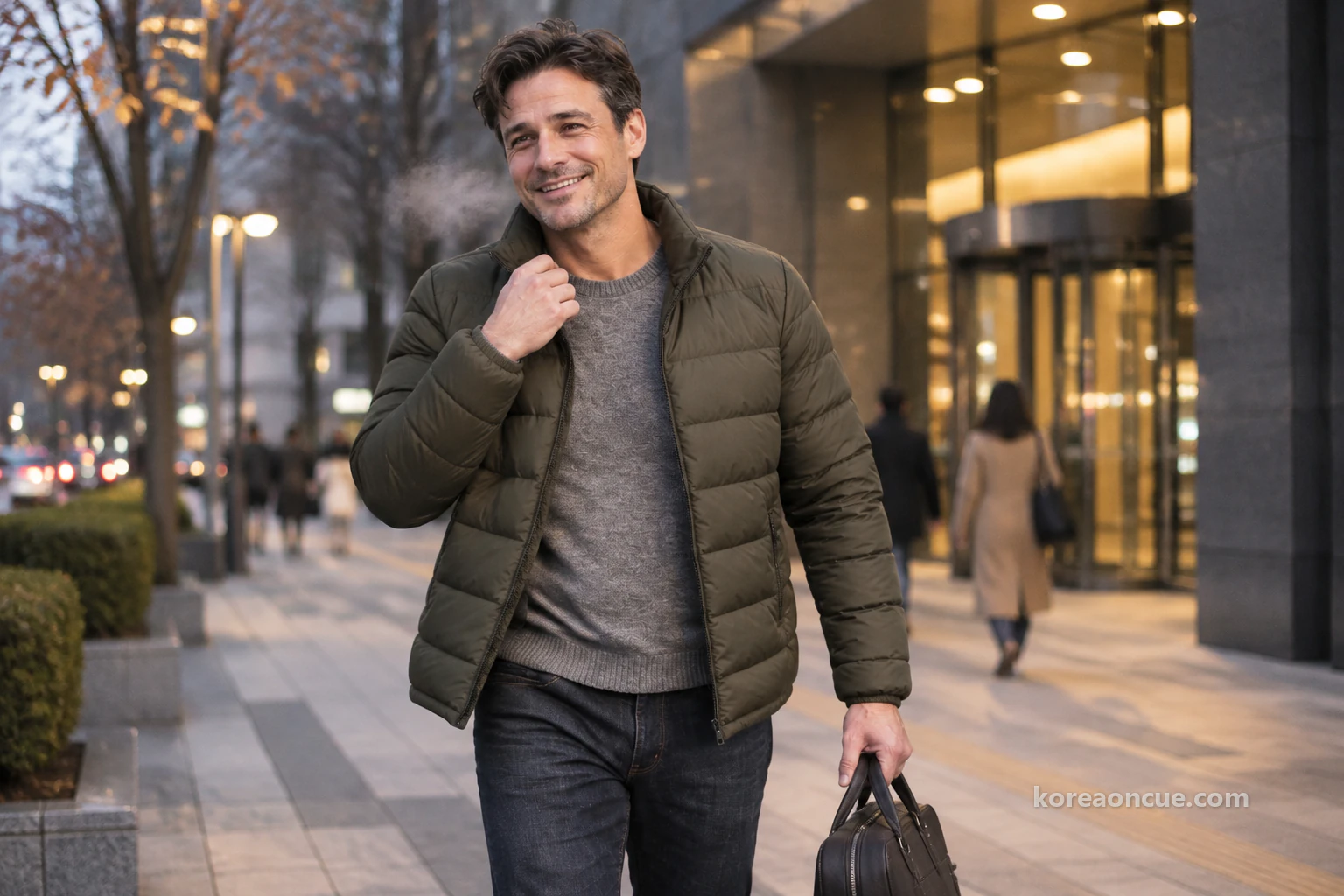
Had he followed Rev A to the letter, Ethan would have waited an hour and a half outside a closed Gwanghwamun from 8.30. Thanks to Rev B, that time turned into a bowl of soup and a quiet walk through the morning. Before closing his notebook, Ethan ran his finger down the lines of Rev B once more. The just-after-9.30 departure he had counted back that morning and the 10 o’clock on the dot at the gate had both come out exactly as written. Then, next to “Slow breakfast” at the bottom, he drew a small circle.
Common Mistakes
Turning up at Gwanghwamun at 8.30
Ethan read one line of the notice and drew a line through Rev A. On suneung day, Gwanghwamun, Hyeopsaengmun and Yongseongmun also open at 10.
Thinking free entry is still on
free entry ended on 15 November. On suneung day you pay the usual prices, such as 3,000 won for Gyeongbokgung.
Timing a tour to the opening time
Ethan chose Gyeongbokgung’s 10.10 tour because the first Korean tour in Changdeokgung’s main palace area was at 11.30. The Korean tours in Changdeokgung’s Huwon start at 11.
Taking a taxi right to a school
Ethan saw the high school next to the office and crossed out the taxi line. Vehicles are kept out from 200 m in front of exam sites.
FAQ
Does Jongmyo also open at 10 on suneung day?
Yes, Jongmyo is also under the Royal Palaces and Tombs Center, so it opens at 10 a.m.
Is there a Japanese tour at Changdeokgung on suneung day?
No. Changdeokgung’s Japanese tours, in both the main palace area and the Huwon, run only on Wednesdays, Fridays and Sundays, so there are none on suneung day, a Thursday.
Does Gyeongbokgung close early?
No, it closes at the usual 5 p.m. Only the opening time moves.
I am flying that afternoon. What should I look at?
From 13:10 to 13:35, aircraft and helicopter take-off and landing times are adjusted. Check your own flight times with your airline.
Recap — 30 seconds before you go
- On Thursday 19 November 2026, the four grand palaces, Jongmyo and the Joseon royal tombs under the Royal Palaces and Tombs Center all open at 10 a.m. Gyeongbokgung’s Gwanghwamun too.
- First tours: Gyeongbokgung 10:10, Seokjojeon 10:30, Changdeokgung Korean tours 11:00 in the Huwon and 11:30 in the main palace area. Normal admission prices.
- Afternoon flights: take-off and landing times adjusted 13:10–13:35. Taxis: no vehicles within 200 m of exam sites.
Sources
- Korea.kr policy news — On suneung day, 19 November, work starts after 10 (Ministry of Education, Korean)Test held 19 November 08:40–17:45 at 1,312 exam sites in 85 districts · public offices and companies asked to start work after 10 a.m. · more Seoul-area subway trains 06:00–08:10 · vehicles kept out from 200 m in front of exam sites · aircraft and helicopter take-off and landing times adjusted 13:10–13:35, military training briefly halted · buses and trains slow down and limit horn use, everyday noise kept downchecked 2026-11-13
- Korea Institute for Curriculum and Evaluation, suneung site — Test times (Korean)All in by 08:10 · Period 1 Korean 08:40–10:00 · Period 3 English 13:10–14:20, listening test from 13:10, up to 25 minuteschecked 2026-11-13
- Royal Palaces and Tombs Center — Gyeongbokgung and Chilgung opening time change (with the palace and royal tomb opening notice, Korean)Thursday 19 November: every palace and royal tomb under the Center opens at 10:00 · Gyeongbokgung 09:00 → 10:00, Gwanghwamun, Hyeopsaengmun and Yongseongmun 08:00 → 10:00, closing 17:00 unchanged · Gyeongbokgung and Chilgung tours 10:00 → 10:10 · no 10:00 Huwon entry at Changdeokgung, from 10:30checked 2026-11-13
- Royal Palaces and Tombs Center — Deoksugung on suneung day, 19 November (Korean)Deoksugung opens at 10:00, Sungnyemun, Jungmyeongjeon and Gojong’s Road from 10:00 · no 9:30 Seokjojeon tour, from 10:30checked 2026-11-13
- Royal Palaces and Tombs Center — Changdeokgung main palace area and Huwon hours, 19 November (Korean)Main palace area 09:00 → 10:00 · main palace area Korean tours 11:30, 13:30, 15:30 (no 9:30), English 10:15 and 13:15, no 10:00 Chinese tour · Huwon Korean tours from 11:00 (no 10:00), English 10:30, 11:30, 14:30 and 15:30 · Japanese tours in both areas on Wednesdays, Fridays and Sundays onlychecked 2026-11-13
- Royal Palaces and Tombs Center — Changgyeonggung opening time change (Korean)19 November opening 09:00 → 10:00 · no 9:30 Korean tourchecked 2026-11-13
- Bank of Korea — Currency exchange hours on suneung day (Korean)Thursday 19 November 2026, 10:00–17:00 (usually 09:00–16:00)checked 2026-11-13
- Royal Palaces and Tombs Center — Opening hours (Korean)Deoksugung 09:00–21:00 (last entry 20:00) · Jongmyo closed on Tuesdays · if a closing day is a public holiday, it opens and closes on the next non-holidaychecked 2026-11-13
- Royal Palaces and Tombs Center — Admission fees (Korean)Adults on paid days: Gyeongbokgung and Changdeokgung 3,000 won, Changgyeonggung, Deoksugung and Jongmyo 1,000 wonchecked 2026-11-13
A Seoul story told with our AI characters. Place details are checked against public sources; the photos are AI-made illustrative images. How we use AI