
SEOUL · ANGUK
Rina walks Unhyeongung on a November evening, from Sujiksa by the gate to Irodang in the inner quarters
A 3-minute walk from Anguk Station Exit 4, free to enter and open until 9 p.m. on Tuesdays, Wednesdays, Fridays, Saturdays and Sundays in November — how to see Unhyeongung in the order Sujiksa → Noandang → Norakdang → Irodang
Rina has got off at Anguk Station more times than she can count, yet she has always walked past the old house outside Exit 4. In November, when it stays open until 9 p.m., she decides to read it in order, from the gate to the inner quarters.

How to get there
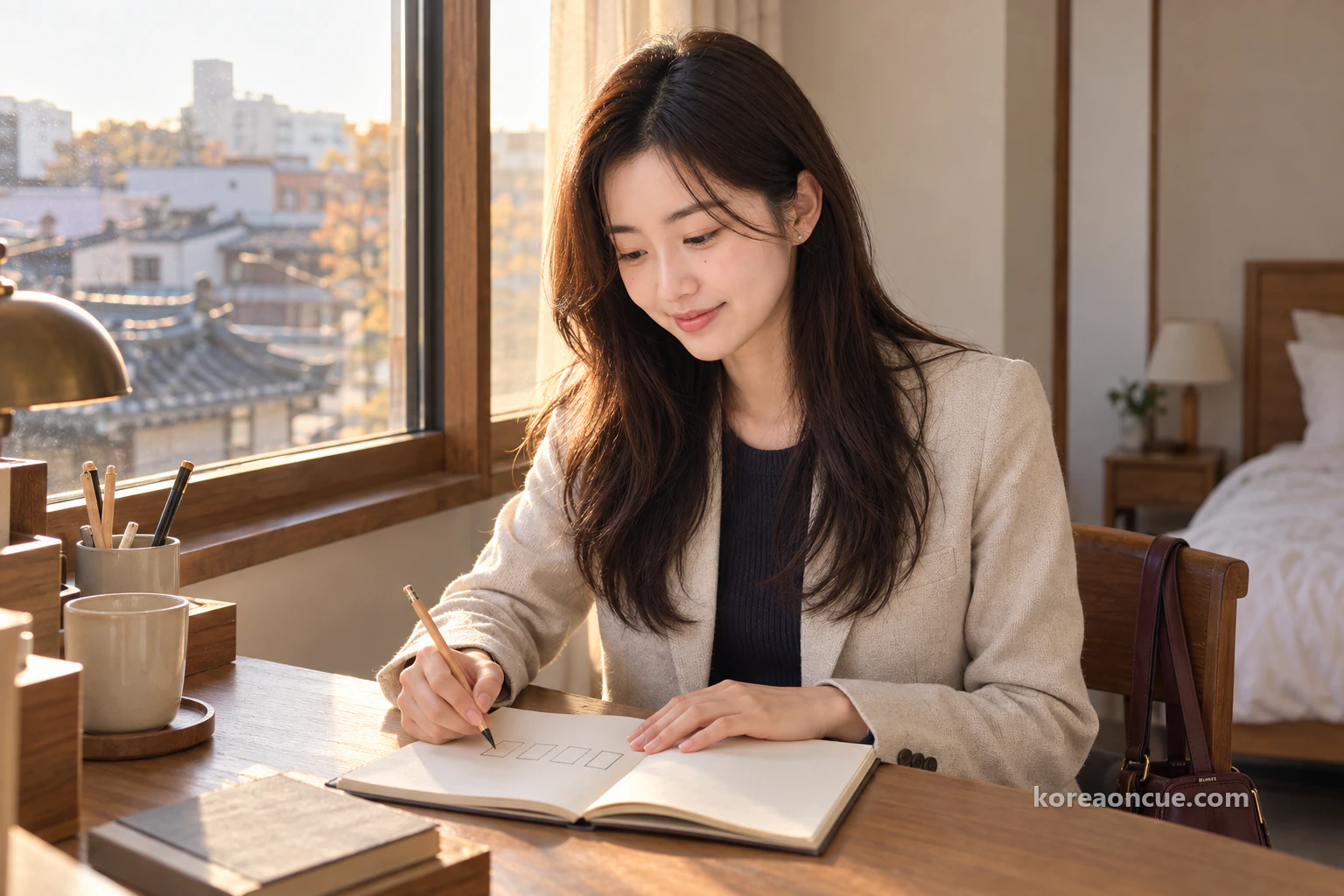
Rina is a traveller who comes back to the same city again and again. She is 23 and from Japan, and each time she visits Seoul, she adds one more box to her notebook. One of the stations that turns up most often in that notebook is Anguk Station on Line 3. She always gets off here, whether she is going to see Injeongjeon at Changdeokgung or walking the alleys of Bukchon. But there is one old house right outside Exit 4 that she has always walked past, telling herself she will see it next time.
That house outside Exit 4 is Unhyeongung. It is the house where Gojong, the 26th king of Joseon, lived before he became king. It was also the home of Gojong’s father, Heungseon Daewongun. Rina has finally decided to go in because of the November evenings. She has seen Unhyeongung’s notice that until 29 November it stays open until 9 p.m. every Tuesday, Wednesday, Friday, Saturday and Sunday.
Today’s walk covers just one place, Unhyeongung. You come out of Anguk Station Exit 4 on Line 3, walk to the main gate and start with Sujiksa, to the right of the gate. From there, you go further into the house in order: Noandang, Norakdang, then Irodang. Following Rina’s notebook, this piece explains the order for the four buildings and why it works. It also covers how late you can stay on a November evening and when this month’s evening programmes take place.
The day Rina chooses is Wednesday 4 November. The next afternoon, she has plans to walk the upper stretch of Cheonggyecheon with Mali. So she decides to spend the evening before on her own, slowly, at a place she has put off for a long time. On a fresh page of her notebook, she has already drawn four boxes side by side. Above them, she has written the buildings in the order Unhyeongung introduces them: “Sujiksa — Noandang — Norakdang — Irodang”.
There is a very Rina reason for choosing the evening too. Rina likes to see places again in a different season or at a different time of day. Seeing somewhere in the evening after seeing it by day, even the shadow of the same eaves and the colour of the window lattice read differently. This is her first visit to Unhyeongung, but she wants to see the hour of sunset and the hour after it in one go. So she times her departure carefully to reach the main gate around dusk.
The Cue
Unhyeongung, at 464 Samil-daero, Jongno-gu, Seoul, is Historic Site No. 257. It was the house where Gojong of Joseon lived before he became king, and the home of Heungseon Daewongun. It is a 3-minute walk from Anguk Station Exit 4 on Line 3, and admission is free. Until 29 November 2026, it opens 09:00–21:00 on Tuesdays, Wednesdays, Fridays, Saturdays and Sundays, with last entry at 20:30. It closes every Monday (it opens if Monday is a public holiday). Start at Sujiksa, to the right of the main gate, and go Noandang → Norakdang → Irodang. That way, you move naturally from the outside of the house to the inside.
- Station and exit: Anguk Station (Line 3) Exit 4 → straight on for 100 m → main gate, a 3-minute walk. From Jongno 3-ga Station Exit 5, an 8-minute walk.
- Bus: Jongno 01 and Jongno 02 / 601, 109, 151, 162, 171, 172 and 272 / 7025.
- November hours: Tue, Wed, Fri, Sat and Sun 09:00–21:00, last entry 20:30 (trial of extended evening opening, until 29 November 2026).
- Closed: Every Monday (open as usual if Monday is a public holiday).
- Admission and enquiries: Free. Unhyeongung management office 02-766-9090.
- Worth seeing: ① the brazier, furniture and oil lamp recreated in the rooms of Sujiksa ② the gongpo bracket sets and the railing carved with lotus flowers at Norakdang ③ the square courtyard and four chimneys of Irodang.
- Leave behind: Food, drinks other than bottled water, alcohol, and camping gear such as picnic mats and tents. Drink water only in the covered corridors.
- Car: There is no car park. Use public transport.
Which exit? 100 m from Anguk Station Exit 4, a 3-minute walk
Anguk Station Exit 4 on Line 3 is the closest exit for Unhyeongung. Come out of the exit and walk 100 m straight on without turning, and you reach the main gate. It is only a 3-minute walk, so even first-timers have little chance of getting lost. The first line in Rina’s notebook is her usual three-part note of station, exit and time. It reads “Anguk — 4 — 3 min”, and beside it she writes the date small.
Open in Kakao Map — Anguk Station

Rina comes out of Exit 4 a little after 5 p.m. She has got off at this station many times, but this is the first time she has walked this way from this exit. Instead of opening a map app, she starts counting her steps. The 100 m turns out much shorter than she expected, and it is over before she finishes counting. She is at the main gate before she even takes her notebook out again.
You can come another way instead of Anguk Station. From Jongno 3-ga Station Exit 5, it is an 8-minute walk. From Insadong, come out from the south stage in Insadong towards Nakwon Arcade, then head towards the Duksung Women’s University graduate school. Buses Jongno 01 and Jongno 02, 601, 109, 151, 162, 171, 172, 272 and 7025 run nearby. Unhyeongung has no car park, so the subway or a bus is far easier than driving.
How late is it open in November? Until 9 p.m. on Tuesdays, Wednesdays, Fridays, Saturdays and Sundays, last entry 8:30 p.m.
In November, you can stay at Unhyeongung until 9 p.m. five days a week. That is because evening opening has been extended as a trial from 1 September to 29 November 2026. The evening opening days are every Tuesday, Wednesday, Friday, Saturday and Sunday. On these days, it opens at 9 a.m. and closes at 9 p.m., so you can drop in after a day of sightseeing. But last entry is at 8:30 p.m., so remember it separately from the closing time.
The first thing Rina checks at the main gate is this last-entry time. In a new place, writing down the closing time first is one of her old habits. Under the first line in her notebook, another line appears: “Entry — 20:30, closes — 21:00”. Today is Wednesday, which happens to be an evening opening day until 9 p.m. Working out that she will have time to spare even after seeing all four buildings slowly, Rina decides to slow down a little.
If you are going in the evening, plan to arrive a little early. The days are short in November, and if you arrive late, the time to see the eaves and window lattice in daylight soon passes. Go in around dusk, as Rina does, and you see the first two buildings in the evening light and the last two after sunset. Arriving at the 8:30 p.m. last entry leaves little time to get round all four. To see the four buildings in order, give yourself about an hour and a half.
Unhyeongung is closed every Monday. But if Monday is a public holiday, it opens as usual. There is no admission charge. Outside the trial period, the standard winter hours (November–March) are 9 a.m. to 6 p.m., with last entry at 5:30 p.m. For questions about dates or programmes, call the Unhyeongung management office on 02-766-9090.
What is Unhyeongung? The house where Gojong lived before he became king
Unhyeongung is a house where someone lived before becoming king, and it earned the name of a palace. Gojong, the 26th king of Joseon, lived in this house until he took the throne. A house where a king lived before his accession is called a jamjeo. This was also the private residence of Gojong’s father, Heungseon Daewongun. Heungseon Daewongun’s given name was Ha-eung, his pen name was Seokpa, and he was a fifth-generation descendant of King Yeongjo.
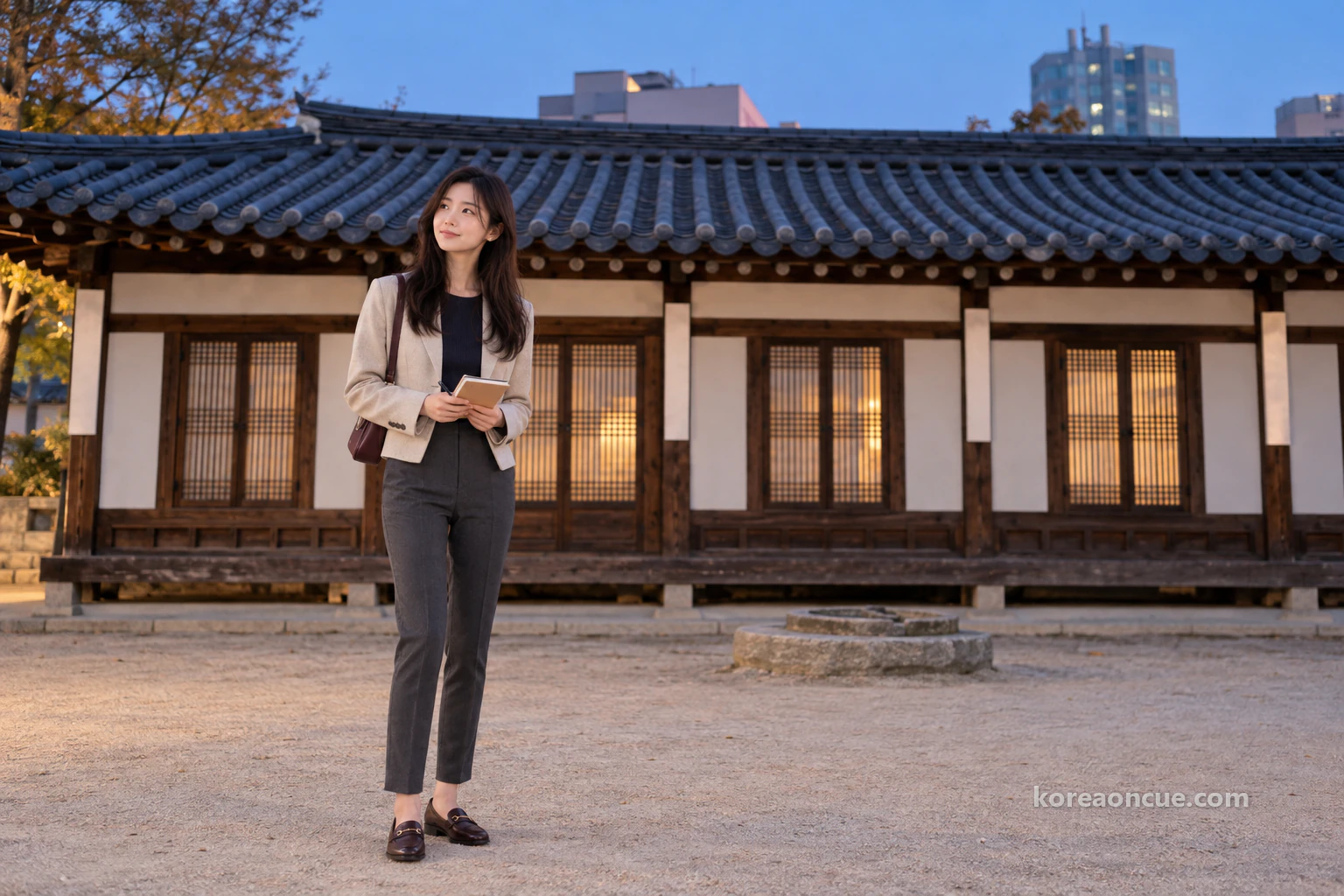
The name Unhyeongung has its own story. Long ago, there was a government office near here called Seowungwan (書雲觀). Unhyeon (雲峴) was the name of a hill pass in front of Seowungwan, and also a short name for Seowungwan itself. Seeing the two Chinese characters, Rina picks out their meanings one by one and reads them quietly aloud. “Un is cloud, hyeon is a hill pass. So it’s Cloud Pass.”
There is also an old song tied to this site. Unhyeongung stands where the old Gwansanggam office used to be. In the time of King Cheoljong, a folk song spread among people saying that the old Gwansanggam site held the energy of a king. Later, a king really did come from this house, which strikes Rina as quite a dramatic sequence. She jots the story in the corner of her notebook as “Song → king”.
The day this house became “Unhyeongung” is clearly recorded. It dates from 9 December 1863, when a royal edict raised Prince Heungseon to Heungseon Daewongun and his wife, Lady Min, to Budaebuin. Gojong took the throne four days later, on 13 December. About a month after the accession, work began to rebuild and enlarge the house. Nine months later, in September 1864, Norakdang and Noandang were finished.
The rebuilding was on a large scale. 17,830 nyang was provided for the work. Gojong attended the completion ceremony, bringing the Grand Queen Dowager and the Queen Dowager with him. That day, a special state exam was held, and 50 scholars and 497 boys were chosen and rewarded. Rina writes “A state exam for a housewarming” at the side of her notebook and laughs quietly to herself.
The old Unhyeongung was much larger than it is today. Its walls ran for several ri. It had four gates: Gyeonggeunmun, Gonggeunmun, the main gate and the rear gate. Gyeonggeunmun was the gate Gojong used only for himself when coming and going, and it stood between Changdeokgung and Unhyeongung. Rina has walked Injeongjeon at Changdeokgung, and for her this is the moment the two places first join up in one line.
Why start with Sujiksa? The rooms of those who guarded the house, to the right of the main gate
Once you are through the main gate, start with Sujiksa. It is to the right of the gate, so it is the first building you reach. Sujiksa is a long, low wing where the people in charge of guarding and running Unhyeongung stayed. You are seeing the rooms of those who guarded the house before the rooms of its owners. That is why Rina follows Unhyeongung’s own order and puts Sujiksa in the first box of her notebook.
The rooms of Sujiksa hold everyday objects such as a brazier, furniture and an oil lamp. They recreate how the people who guarded and ran the house once lived here. Rina leans forward a little in front of a room and looks inside for a long time. She copies where the brazier sits and how high the oil lamp stands into her notebook as small drawings. For Rina, “finishing” means not only the craft of an object but also where it is placed.
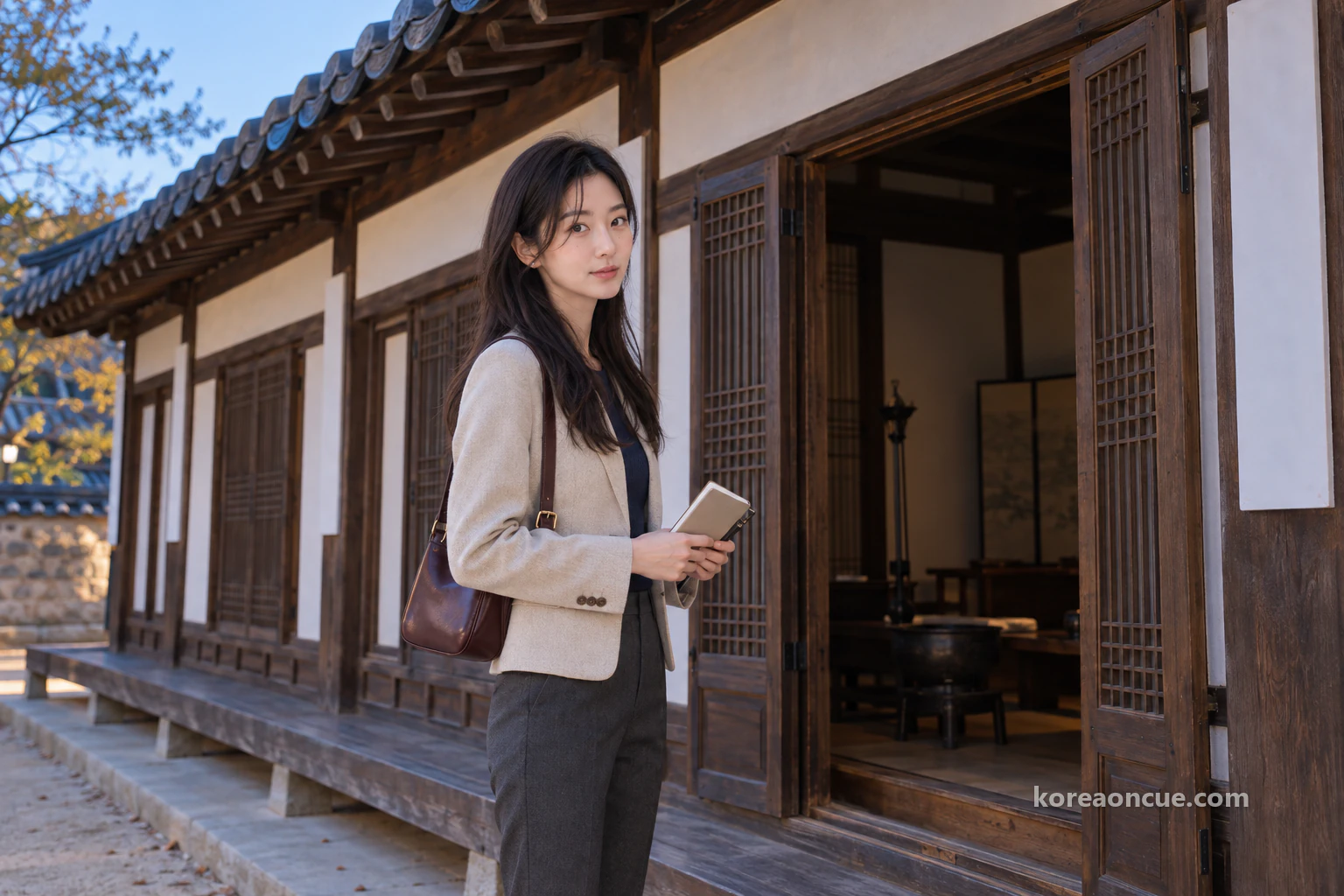
Take a careful look at the outside of the building too. Sujiksa is a low single-storey building with a black tiled roof, and its front yard is covered in fine earth. Brown wooden lattice windows sit neatly between the white plaster walls. White juryeon hang on every pillar. A juryeon is a board of writing hung vertically on a pillar. These white juryeon continue at Noandang, Norakdang and Irodang, so it helps to get used to them here first.
What to see at Noandang: Heungseon Daewongun’s sarangchae and the raised pavilion Yeonghwaru
After Sujiksa, the second stop is Noandang. Noandang is Unhyeongung’s sarangchae, where Heungseon Daewongun mostly stayed. A sarangchae is the outer building where the head of the house received and hosted guests. The name means “to respect the elderly and give them comfort”. Its ridge beam was raised in March 1864, together with Norakdang’s, and it was completed the same year.
Seen from above, Noandang is T-shaped. On one side is a nu-maru, a floor raised high above the ground, and it is called Yeonghwaru (迎和樓). Rina looks up for a long time at the name board hanging under the eaves on the nu-maru side. The ends of the hip-and-gable roof lift slightly towards the sky. A low wooden railing runs in front of the floor, and an autumn tree in full colour stands beside it.
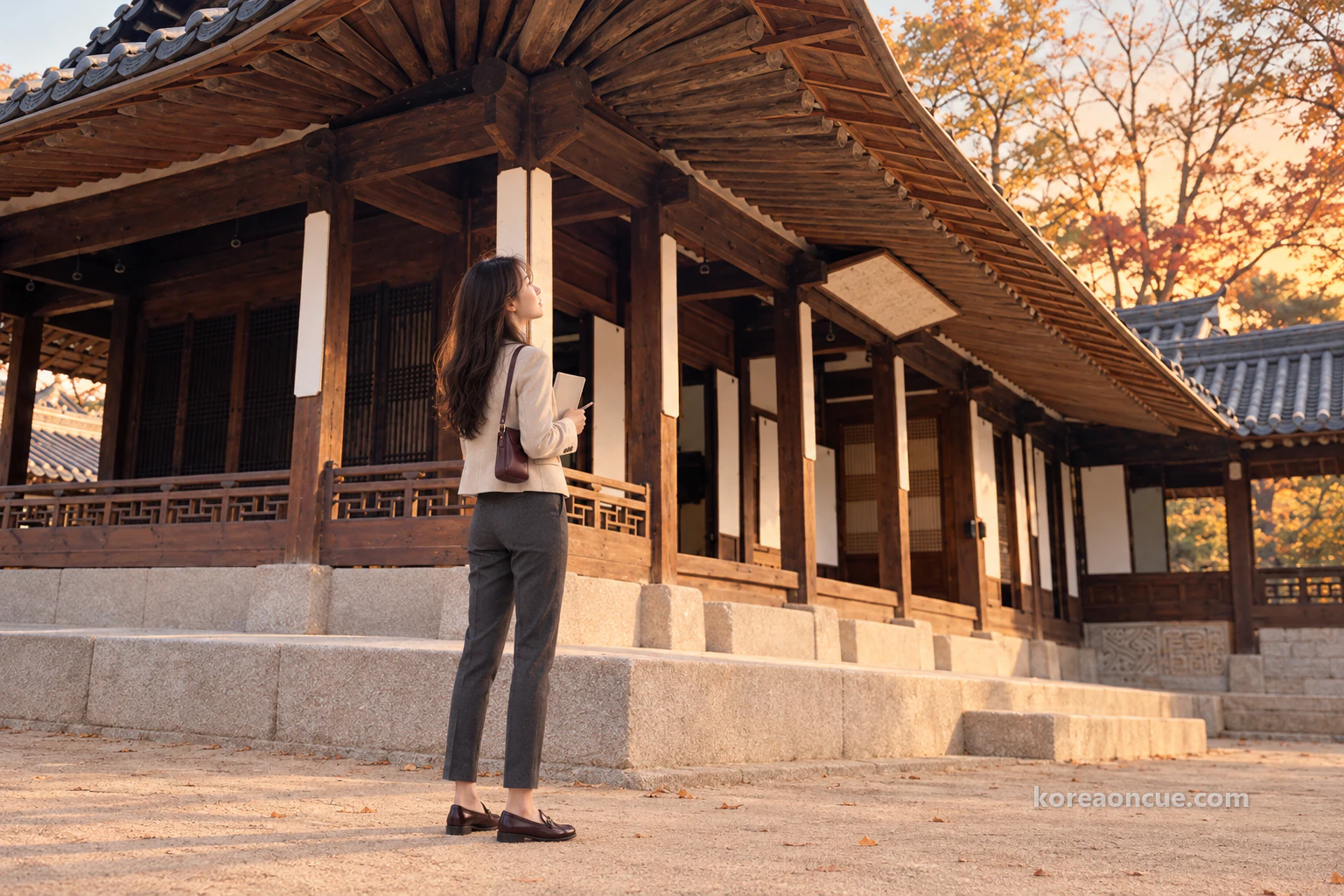
Noandang is also closely tied to Heungseon Daewongun’s last years. After he was taken to Qing China during the Imo Military Mutiny and then returned, the Daewongun lived here in hiding, almost as if in exile. He died in an inner room that was behind the large room of Noandang. After reading this, Rina looks up again at the nu-maru, seeing it a little differently. The high floor for receiving guests and the room for a quiet retreat were in the same building.
Here, Rina notes a small discovery in her notebook. The names Noandang (老安堂), Norakdang (老樂堂) and Irodang (二老堂) all contain the same character, 老. It is read almost the same way in Japanese (rō), so Rina spots it straight away. Read Rina’s way, they are a peaceful (安) old age, a joyful (樂) old age, and an old age shared by two (二). She writes the three names side by side and labels the box “Three 老”.
What to see at Norakdang: the central building where the royal wedding was prepared, and the only one with gongpo
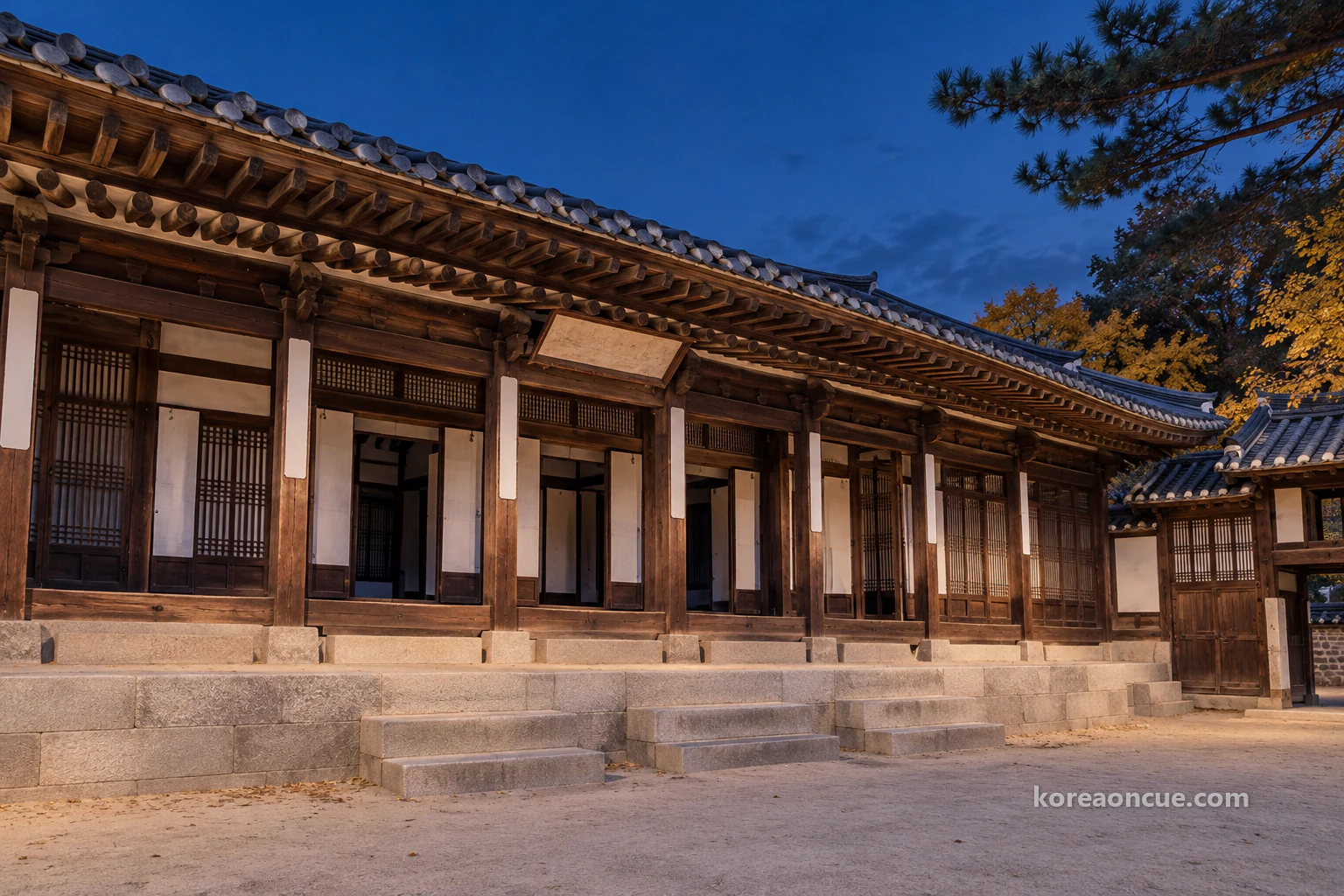
The third stop, Norakdang, is the central building of Unhyeongung. It was mainly used for big family occasions, such as 60th birthday celebrations and feasts. Its front runs in one long line from side to side, with a broad stone platform and stone steps in front. From the foot of the steps, Rina slowly follows the building with her eyes from one end to the other.

The biggest day in this house was 21 March 1866. In the third year of Gojong’s reign, the garye of Gojong and Empress Myeongseong took place right here at Unhyeongung. A garye is a royal wedding, in other words the king’s marriage ceremony. That day, 1,641 attendants and 700 horses were brought in, and all the preparations were made at Norakdang. Counting on her fingers from the year it was finished, Rina notes that within two years of being built, this building prepared the biggest celebration of all.
The thing to see at Norakdang is at the top of the pillars, just under the eaves. The wooden pieces fitted together on top of the pillars to carry the weight of the roof are called gongpo. Of the buildings at Unhyeongung today, only Norakdang has gongpo, so this is the one place in the house to see them. Norakdang’s gongpo are built in the styles called choikgong and mulikgong. If you see Sujiksa and Noandang first, you notice much more clearly how different the tops of the pillars are here.
Once you have looked at the eaves, lower your eyes to the railing. Norakdang’s railing is a flat railing with the stepped-cross pattern of the character 亞. On the hayeop, the supports holding up the handrail, lotus flowers are carved in relief. Rina crouches in front of the railing and looks at the lotus carvings for a long time, as if counting them one by one. She does not touch the railing, and just traces the shape of the lotus small in her notebook.

This is where the order makes sense. See the low eaves of Sujiksa and the upturned eaves of Noandang, then the gongpo of Norakdang, and the difference is obvious at a glance. If you go to Norakdang first, its richness becomes the standard, and the first two buildings can look plain instead. Rina writes “Gongpo — only here” in the Norakdang box. It is the shortest line she writes today, but the one she presses hardest.
What to see at Irodang: the square courtyard of the inner quarters and four chimneys
The fourth and last stop is Irodang. Irodang is Unhyeongung’s inner quarters, built in 1869, a few years after Noandang and Norakdang. The inner quarters were the building that handled the running of the household inside. The “Iro (二老)” in the name is read as referring to Heungseon Daewongun and Budaebuin, Lady Min of Yeoheung. The walk that started at the gatehouse by the main gate has passed the sarangchae and the central building and now reached the inside of the house.
Irodang is built around a square, like the character 口. Like 口, the building surrounds four sides with a courtyard in the middle. A central yard surrounded by buildings like this is called a jungjeong. At Irodang, look out for the chimneys, and there are four in all. One is in the central courtyard, one each on the west and east sides, and one at the back.
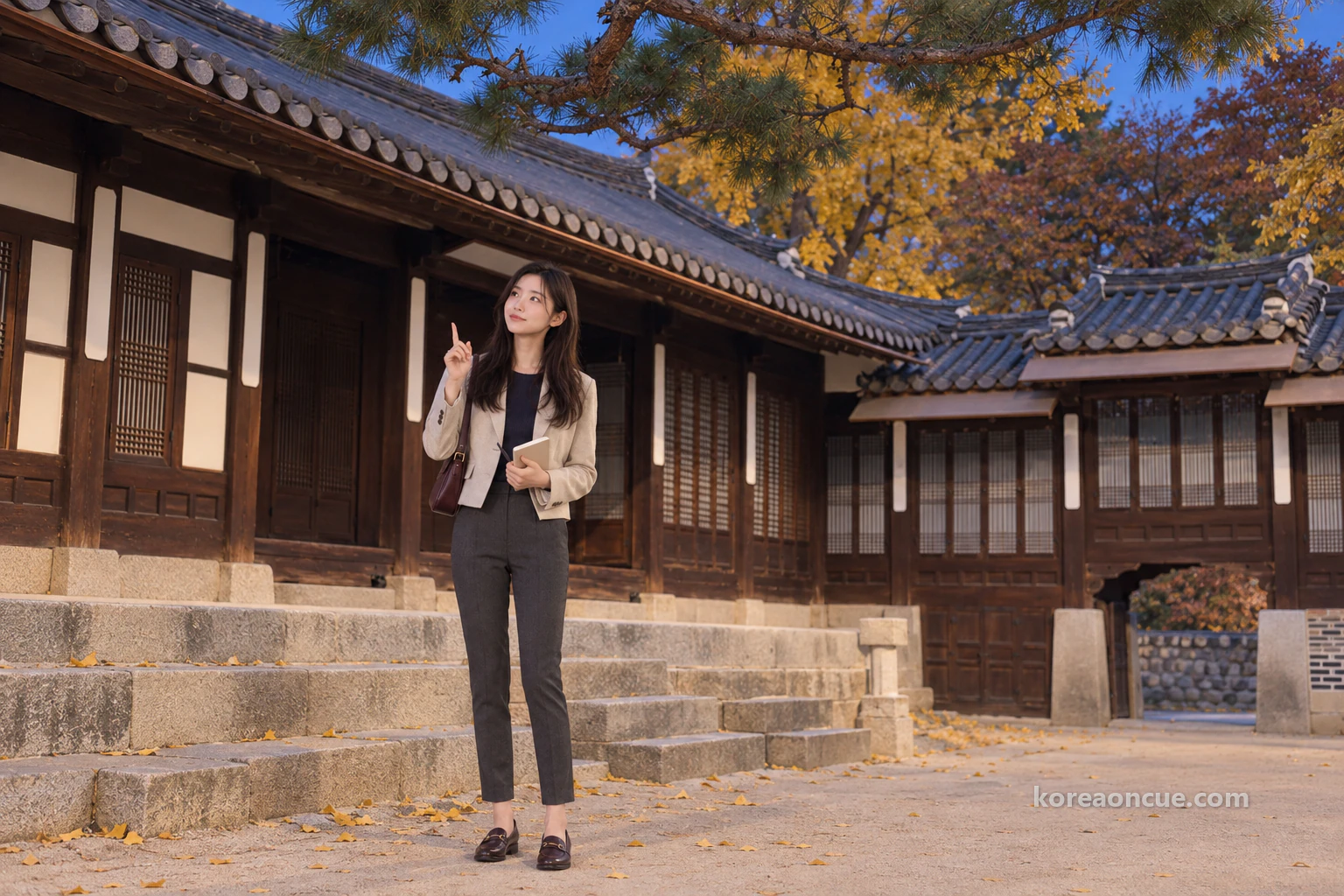
Rina picks out where each of the four chimneys stands with her eyes. Finding chimneys in the yard after sunset feels like a small spot-the-difference puzzle. Each time she finds one, she marks a dot in the Irodang box, and she only puts her pen down after the fourth dot. Once you know where the four chimneys are, you can picture the four sides of the inner quarters. On a first visit, look for the four chimneys first, and the shape of Irodang soon becomes clear.
The day in 1863 also lies behind the “Iro” of Irodang. In the same edict that made Prince Heungseon into Heungseon Daewongun, his wife, Lady Min, received the title Budaebuin. So the name Unhyeongung and the couple’s new names were born on the same day. Six years later, in 1869, “Iro”, meaning the two of them, became the name of these inner quarters. Rina adds “1863 → 1869” small beside the Irodang box.
Irodang is also the place of the people who kept this house going to the end. After the land survey of 1912, the Japanese colonial government had the minister of the Yi Royal Household Office manage Unhyeongung. Even so, the ones who actually maintained and looked after the house were the women of Irodang. The main buildings of Unhyeongung that remain today are Noandang, Norakdang and Irodang, three of the four that Rina saw today. Restoration work at Unhyeongung began in December 1993.
In front of Irodang, Rina goes back through her four boxes from the beginning. The first box, Sujiksa, was the rooms of the people who guarded the gate. The last box, Irodang, was the home of the women who kept the inner quarters. For Rina, today’s order opens and closes with the people who guarded this house. Between them come the sarangchae, where the owner received guests, and the central building, where the great royal celebration was prepared.
When are the November evening programmes? Dalbit Milhaeng dates and the hanok concert on 7 November
If you go on a November evening, check the dates of the evening programmes as well as the buildings. From 8 September to 29 November, Unhyeongung runs an evening programme called “Night Oasis”. The regular programmes are “Dalbit Sunra” and “Dalbit Pungsokdo”. Dalbit Sunra is subtitled “The People Who Guard Unhyeongung’s Night”, and Dalbit Pungsokdo “Unhyeongung’s Night, Met Through Light”. Remembering Sujiksa, which she has just seen, Rina underlines the subtitle of Dalbit Sunra.
There is also “Dalbit Milhaeng”, a programme you book in advance. It is an evening mission where you gather clues to find a missing royal seal, with the subtitle “Find the Missing Royal Seal!”. The November dates are the 4th (Wed), 6th (Fri), 8th (Sun), 10th (Tue), 11th (Wed) and 15th (Sun). It runs from 6:30 p.m. to 8:30 p.m. Rina copies these dates in small writing at the very bottom of her notebook.
Anyone aged 8 or over can take part. Places go to the first 20 people, and it costs ₩10,000 per person. Booking is through Naver, with up to 2 tickets per account. While copying the dates, Rina notices that today, 4 November, is one of them. Even so, she decides to spend this evening filling the four boxes she drew in advance.
On Saturday 7 November, there is a hanok concert at Norakdang. It runs for one hour, from 7:30 p.m. to 8:30 p.m. The performers are Mirakdan, a classical ensemble of soprano, baritone, piano and cello. No booking is needed: the first 100 people on site take part, and entry opens 30 minutes before the performance. Seats go on a first-come basis, so it is easier to arrive a little early and wait in front of Norakdang.
Under the Norakdang box, Rina writes one more line: “Sat — 19:30 — Norakdang?”. She only adds a question mark to places she could come back to, and a few question marks she has not yet rubbed out remain here and there in her notebook. She is curious what music would sound like in front of the building where the royal wedding was prepared. The concert is three days from today, so if her schedule fits, she can come back once more.
Back to the main gate: rules to follow and the way back to Anguk Station
Unhyeongung is a heritage site, so there are a few rules to follow as you walk. You cannot bring food in. The same goes for drinks other than bottled water. You can only drink water in the covered corridors. You must not step on or stand on outdoor relics such as the nodutdol, the stone used for getting on and off a horse, or the mortars to take photographs. Pets other than guide dogs are not allowed, and the whole of Unhyeongung is non-smoking.
Rina walks back towards the main gate a little after 8 p.m. On the way out, she passes Sujiksa, the first building she saw, once more. It is the same room as when she came in, but after seeing all four buildings, the room of the people who guarded the gate looks different. From the main gate to Anguk Station Exit 4, it is the same 100 m she came by. On the way back too, walk the way you came in reverse and you cannot get confused.

At the top of the station stairs, Rina sends Mali a short message. “See you at two tomorrow at Yongdu Station Exit 5. Today I read one old house, from the gate to the inner quarters.” While she waits for a reply, Rina steps aside from the stairs and opens the four boxes in her notebook again. Under “Sujiksa — Noandang — Norakdang — Irodang” run “Three 老”, “Gongpo — only here” and “1863 → 1869”. With a line or two added to each box, the boxes she drew in advance look a little cramped.
The one Rina looks at longest is the question mark under the Norakdang box. She loves trips where she adds a question mark to a new place, then goes back and rubs it out. Today, one question mark is left at Unhyeongung. The house outside the exit that she always walked past is now a house with a reason to return. Rina puts her notebook in her bag, thinks once more about where she is meeting Mali tomorrow, and heads down the subway stairs.
Common Mistakes
Going on a Monday
Unhyeongung closes every Monday. If Monday is a public holiday, it opens as usual.
Arriving after 8:30 p.m.
on November evening opening days (Tue, Wed, Fri, Sat and Sun), it closes at 21:00, but last entry is 20:30.
Starting with Norakdang
start at Sujiksa, to the right of the main gate, and go Noandang → Norakdang → Irodang. That way, the fact that only Norakdang has gongpo stands out clearly.
Bringing food or drinks
you cannot bring in food or drinks other than bottled water. Drink water only in the covered corridors.
Standing on mounting stones or mortars for photos
stepping on or standing on outdoor relics damages heritage and is not allowed.
Doing a photo shoot without applying
photographers, hanbok rental photo shoots, photography club outings and personal social media shoots must apply at least 3 days in advance. Shooting is allowed 09:30–17:30, up to 60 minutes per team, with one tripod and one selfie stick each. Changing clothes and doing make-up are not allowed, and you cannot shoot inside the railings of any building.
Driving
Unhyeongung has no car park. Anguk Station Exit 4 is the closest.
FAQ
Which station and exit should I use?
Come out of Anguk Station Exit 4 on Line 3 and walk 100 m straight on to the main gate. It is a 3-minute walk. From Jongno 3-ga Station Exit 5, it is an 8-minute walk.
How late is it open in November?
Until 29 November 2026, it opens 09:00–21:00 on Tuesdays, Wednesdays, Fridays, Saturdays and Sundays, with last entry at 20:30. It closes every Monday (open if it is a public holiday).
Is there an admission fee?
No. It is free.
What should I see first?
We suggest this order: Sujiksa, to the right of the main gate → Noandang, Heungseon Daewongun’s sarangchae → Norakdang, the central building where the royal wedding was prepared → Irodang, the inner quarters. It takes you from the outside of the house to the inside.
What evening programmes are there in November?
“Dalbit Milhaeng”, booked in advance, runs on 4, 6, 8, 10, 11 and 15 November, 18:30–20:30 (ages 8 and up, first 20 people, ₩10,000 per person, booking via Naver). On Saturday 7 November, 19:30–20:30, there is a hanok concert at Norakdang, and the first 100 people on site are admitted 30 minutes before it starts.
Who do I contact with questions?
The Unhyeongung management office on 02-766-9090.
Recap — 30 seconds before you go
- Anguk Station (Line 3) Exit 4 → straight on for 100 m → Unhyeongung main gate (a 3-minute walk, 464 Samil-daero)
- Until 29 November: Tue, Wed, Fri, Sat and Sun 09:00–21:00, last entry 20:30 · closed Mondays · free
- Order: Sujiksa → Noandang → Norakdang → Irodang (from the outside in)
- Norakdang: the only building at Unhyeongung with gongpo, and a railing carved with lotus flowers · Irodang: four chimneys
- No food or drinks (bottled water excepted), and do not stand on mounting stones or mortars
Sources
- Unhyeongung — Visitor informationAddress (464 Samil-daero, Jongno-gu) · free admission · winter hours (November–March) · closed Mondays (open on public holidays) · 3 minutes on foot from Anguk Station Exit 4, 8 minutes from Jongno 3-ga Station Exit 5 · buses · no car park · visitor rules (food and drink, mounting stones and mortars, pets, no smoking) · main phone numberchecked 2026-10-28
- Unhyeongung — 2026 extended evening opening trial1 September to 29 November 2026 · evening opening every Tuesday, Wednesday, Friday, Saturday and Sunday · 09:00–21:00, last entry 20:30 · regular closing day Mondaychecked 2026-10-28
- Unhyeongung — FAQMain gate 100 m straight ahead from Anguk Station Exit 4 · the way from Insadongchecked 2026-10-28
- Unhyeongung — HistoryHistoric Site No. 257 · Gojong’s home before he became king and Heungseon Daewongun’s residence · Unhyeon and Seowungwan · the old Gwansanggam site and the folk song · royal edict of 9 December 1863 and the accession on 13 December · Norakdang and Noandang completed in September 1864, 17,830 nyang · special state exam at the completion ceremony (50 scholars, 497 boys) · royal wedding of 21 March 1866 (1,641 attendants, 700 horses) · former size, four gates and Gyeonggeunmun · Noandang and the Daewongun’s last years · management by the Yi Royal Household Office after 1912 and the women of Irodang · main buildings · restoration from December 1993checked 2026-10-28
- Unhyeongung — BuildingsSujiksa (wing to the right of the main gate, room recreated with daily objects) · Noandang (sarangchae, meaning of the name, ridge beam raised March 1864, T-shaped plan, pavilion Yeonghwaru) · Norakdang (central building, the only building at Unhyeongung with gongpo bracket sets, choikgong and mulikgong, stepped-cross railing with lotus carving) · Irodang (inner quarters, meaning of “Iro”, built 1869, square courtyard plan, four chimneys)checked 2026-10-28
- Unhyeongung — Night Oasis8 September to 29 November 2026 · regular programmes Dalbit Sunra and Dalbit Pungsokdo with their subtitles · Dalbit Milhaeng by advance bookingchecked 2026-10-28
- Unhyeongung — Dalbit Milhaeng “Find the Missing Royal Seal!”4, 6, 8, 10, 11 and 15 November · 18:30–20:30 · ages 8 and up · first 20 people · ₩10,000 per person, up to 2 tickets per account · booking via Naver · evening mission to find the royal sealchecked 2026-10-28
- Unhyeongung — Hanok concert, Saturday 7 NovemberSaturday 7 November 2026, 19:30–20:30 · Norakdang · performers Mirakdan (soprano, baritone, piano and cello classical ensemble) · first 100 people on site, admitted 30 minutes beforechecked 2026-10-28
A Seoul story told with our AI characters. Place details are checked against public sources; the photos are AI-made illustrative images. How we use AI

