
SEOUL · GARAK
A business trip that ran a week over: Ethan and Lulu spend a Saturday morning at Garak Market and Garak Mall
From Garak Market Station Exit 2-1 into the B1 fruit and vegetable market, what is on each floor of the sales building, and how sangcharim works when you buy on the first floor and eat at a restaurant — shops for shoppers from 8 a.m., restaurants from 11 a.m.
On the day an email tells him his trip has been extended by a week, Ethan asks Lulu where their next market should be after Mangwon Market. Her answer is one line. “Garak Market, Saturday morning, Exit 2-1.”

How to get there
On Thursday afternoon, a work email lands on Ethan’s phone. His last two meetings have moved to the following week, so his second business trip to Seoul has been extended by a week. The Saturday he had set aside for packing is suddenly empty. Ethan is a 44-year-old engineer who designs machines in Seattle, and he decides what to do with that Saturday the moment he closes the email. He once lived in Itaewon for six years, and he is a fan of Korean food who always heads for a market first in Seoul.
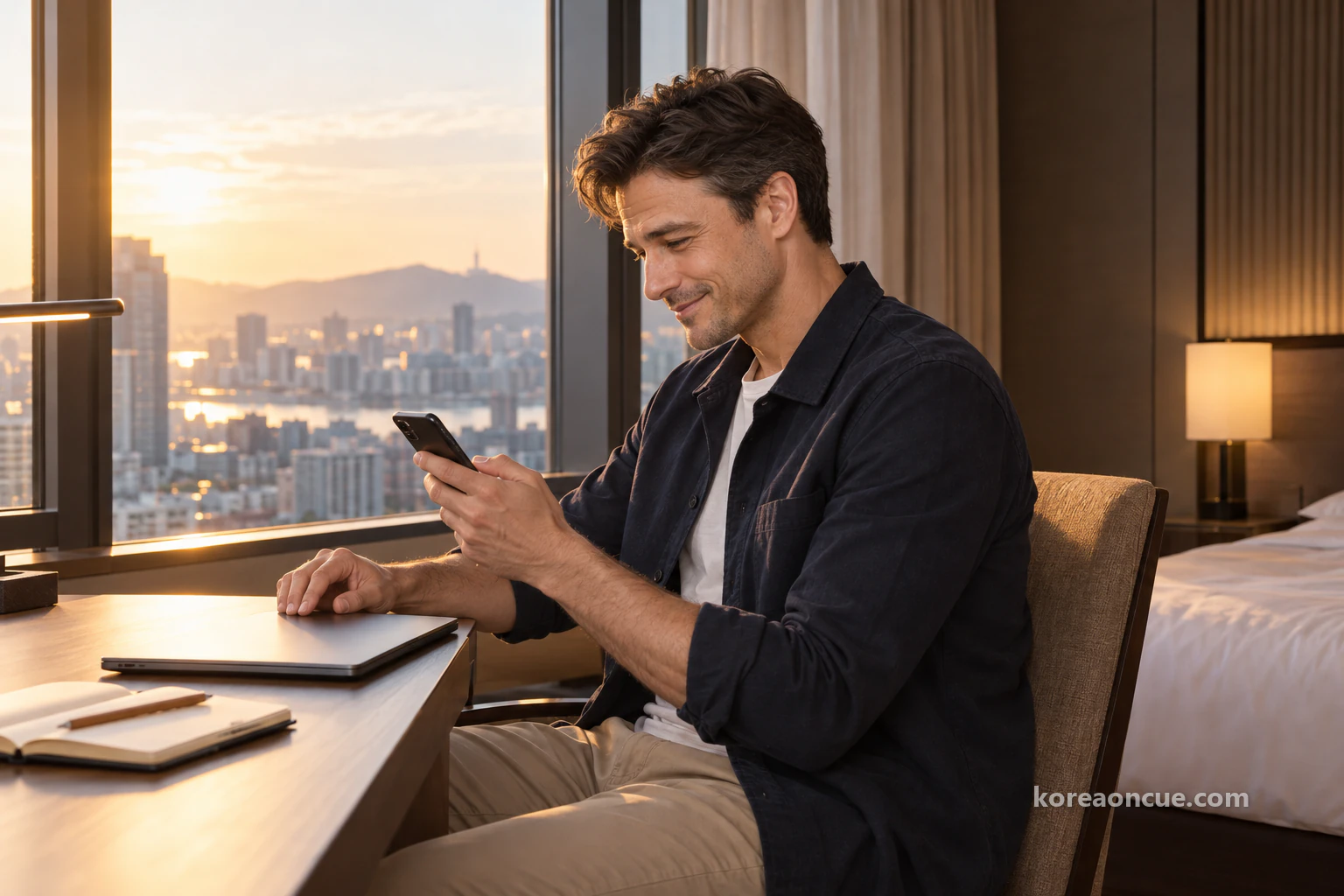
That evening, Ethan sends Lulu a message. “Where should our next market be, after Mangwon Market?” The two first met in front of a croquette counter at Mangwon Market. That day, Lulu changed the order in which he ate, and Ethan drew a plan of the market and sent it to her. They have since spent evenings together at Seokchon Lake and in Bangi-dong, but this is the first time they will walk a market on their own since Mangwon. While he waits for a reply, Ethan draws an empty box on a fresh page of his notebook, ready for the market’s name.
Lulu’s answer is one line. “Garak Market, Saturday morning, Exit 2-1.” Lulu is 20, born and raised in Seoul, and she makes short videos about neighbourhoods and markets. She tells him she has wanted to film “Seoul’s biggest market, with a friend who’s never been” for a long time. But Garak Market is so big that she never knew where to start, so she kept putting it off. “If you draw the plan, Ethan, I’ll handle the order for buying and the order for eating.”
This is the story of that Saturday, from morning to lunch. They are going to Garak Market in Garak-dong, Songpa-gu, and to Garak Mall inside it. Following their steps, this piece covers which exit at Garak Market Station to use, what time is good for looking round, and what is on each floor of the sales building. It also goes step by step through sangcharim, where you buy on the first floor and eat at a restaurant. After lunch, they walk up to the third-floor sky park and over to the old water tower by the office building.
The Cue
Garak Mall is a mixed-use market complex inside the Garak agricultural and fisheries wholesale market in Garak-dong, Songpa-gu, Seoul. Garak Market Station Exit 2-1, on Lines 3 and 8, connects directly to the Garak Mall B1 fruit and vegetable market. From Exit 2, it is about a 2-minute walk. Garak Mall is open all year round. Shops mainly for ordinary shoppers open 08:00–20:00 and restaurants open 11:00–23:00, and hours vary from shop to shop. You can buy seafood at the first-floor seafood market in the sales building and eat it at a restaurant. This is called sangcharim.
- Station and exit: Garak Market Station (Lines 3 and 8) Exit 2-1 → connects directly to the Garak Mall B1 fruit and vegetable market · about 2 minutes on foot from Exit 2. Songpa Station (Line 3) Exit 3, 10 minutes on foot · Police Hospital Station Exit 4, 19 minutes on foot. By bus, get off at the Garak Market stop.
- Hours: Garak Mall is open all year round. Shops mainly for ordinary shoppers 08:00–20:00 · restaurants 11:00–23:00 · shops mainly supplying businesses 23:00–12:00 the next day · large supermarket 24 hours. Hours vary from shop to shop.
- Closures: Many of the shops that mainly supply businesses close on Sundays. Garak Mall announces its closing days for the traditional holidays and the summer separately.
- Sales building floors: B1 fruit and vegetables · 1F seafood, meat, dried seafood and salted seafood markets · 2F grocery shops · 3F food and dried goods shops · B2 livestock by-products market.
- Where to eat: Sangcharim, where you buy seafood on the first floor and eat it at a restaurant · raw fish centre on the first floor of Hall 5 · ordinary restaurants and cafés on the third floor of Halls 1, 2 and 3 · food plaza on B1 of Hall 4.
- Worth seeing: Glass panoramic elevator from B1 to the third floor · third-floor sky park · the old water tower by the office building, “Curtain of Rain”.
- Contact: 02-3435-1000 · 02-3435-0400. For lost property, go to the civil service office (daytime 09:00–18:00 on the first floor of the office building, at night in the control room on B1 of the office building).
Which exit? Exit 2-1 leads straight into the B1 fruit and vegetable market
On a first visit to Garak Mall, you only need to remember one exit: 2-1. Garak Market Station Exit 2-1, on Lines 3 and 8, connects directly to the Garak Mall B1 fruit and vegetable market. The exit number is the same whether you arrive on Line 3 or Line 8. From Exit 2, it is also only about a 2-minute walk to Garak Mall. Lulu put the exit number first in her message for that reason: you can walk straight into the market without going up to street level.
Open in Kakao Map — Garak Market Station
At 9:30 on Saturday morning, Ethan gets off Line 3 at Garak Market Station. On the first page of his notebook is a short line he drew the night before. It starts at the station, bends at “2-1” and ends with “B1”. As he follows the underground passage, Lulu waves from the far end with her phone held low. Her hair is in its usual low side ponytail, and a folded shopping bag hangs from her shoulder. From the moment they spot each other, her phone is already recording.

“Today I’m opening with us walking into the market without going above ground once.” Lulu has already decided her first shot. Ethan shows her the line in his notebook and laughs. It is the shortest line he has drawn on this whole trip. There are other ways in, too. Songpa Station Exit 3 on Line 3 is a 10-minute walk, Police Hospital Station Exit 4 is a 19-minute walk, and by bus you get off at the “Garak Market” stop.
There is one more reason the underground route is easier. Around 46,000 vehicles come and go at Garak Market each day on average. That means a lot of vehicles loading and unloading goods, so the underground passage is the calmer way in on foot. Ethan writes the number in the corner of his notebook and nods. The busier the traffic, the more a separate walking route matters. It is a principle he learnt from years of drawing factory equipment.
Garak Market or Garak Mall? A building inside the wholesale market where anyone can shop
Garak Market is a large wholesale market, and Garak Mall is the building inside it where anyone can shop. Garak Market opened on 19 June 1985 as Korea’s first and largest public wholesale market. It has nine wholesale corporations, six for fruit and vegetables and three for seafood. There are 1,709 intermediate wholesalers. Writing down the year, Ethan laughs to himself that the market is three years younger than he is but does far bigger work.
Garak Mall is a mixed-use market complex. It has fruit and vegetable, seafood, dried seafood, meat and grocery shops, plus restaurants and amenities such as a bank and a library. There are seven facilities in all: a three-storey sales building, five theme halls full of restaurants and an 18-storey office building. The theme halls are numbered Garak Mall Hall 1 to Hall 5. Ethan draws seven boxes in his notebook, writing “Sales building” in the far left box and “Office building” in the far right one. The five boxes in the middle just get numbers, 1 to 5.

Lulu asks if she can put the sketch in her video. When Ethan nods, she holds her phone low over the notebook and pans slowly across it. “My friends from abroad always get confused about whether the market and the mall are the same thing.” As Lulu says, Garak Mall is inside Garak Market, and its address is 932 Yangjae-daero, Songpa-gu, Seoul. Put this address or “Garak Mall” into a map app and you will not get mixed up.
Garak Mall is not just for households. Restaurants, cafés and other businesses buy their ingredients here too. So the same sales building holds shops that mainly supply businesses and shops that mainly serve ordinary shoppers. The two types open at different times. “That’s why I said we should come in the morning.” Lulu asks Ethan to leave space in the middle of his notebook for the times.
When to go: shops for shoppers from 8 a.m., restaurants from 11 a.m.
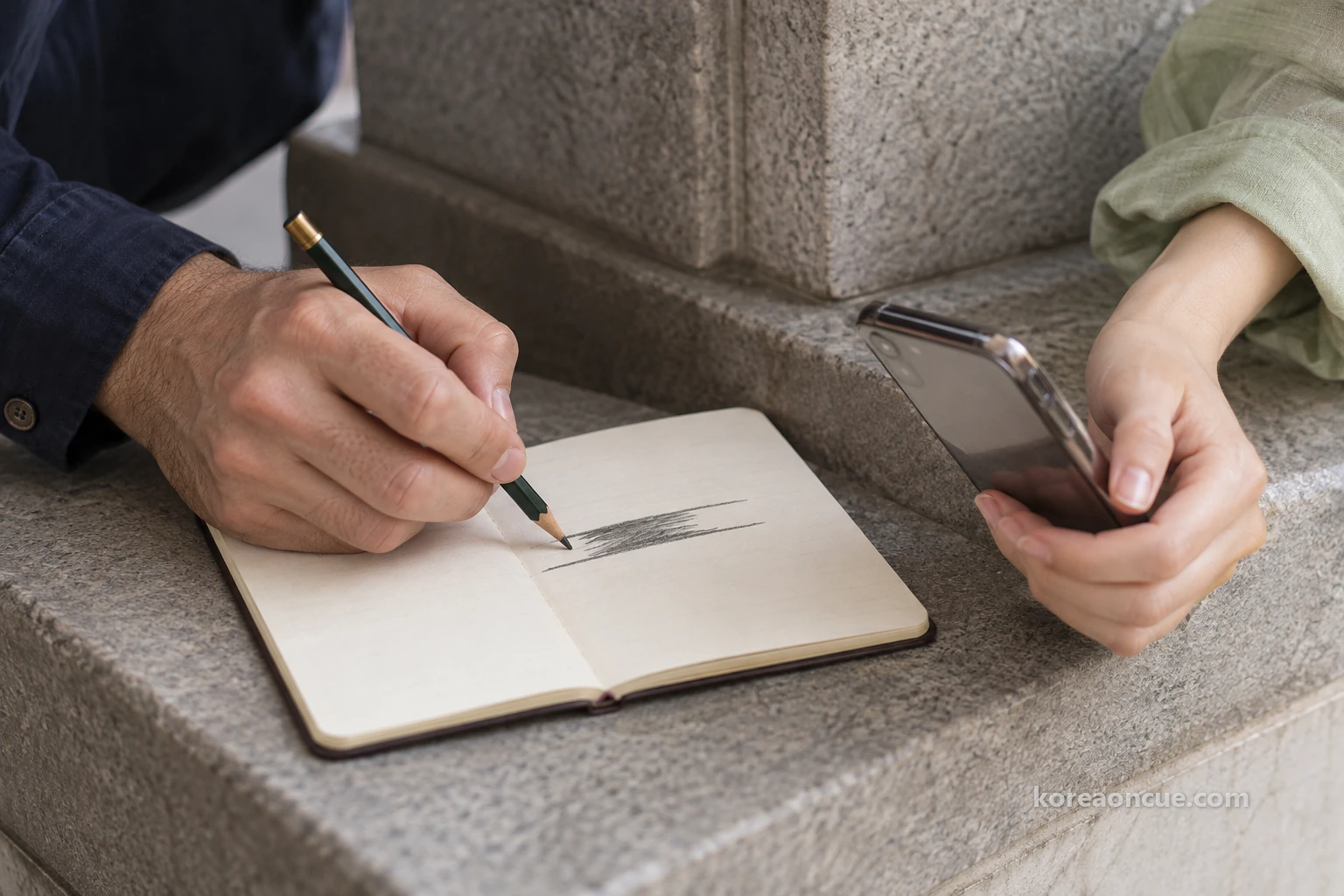
The best time for travellers to look round is after 8 a.m. Shops mainly for ordinary shoppers open from 8 a.m. to 8 p.m. Restaurants open from 11 a.m. to 11 p.m. Shops that mainly supply businesses trade from 11 p.m. to noon the next day, and the large supermarket is open 24 hours. Standing by a pillar in the B1 passage, Ethan copies these four sets of hours into the empty space in his notebook, one per line.
Then he cuts the four lines down to two. “Shopping 08 → 20” and “Eating 11 → 23”. Ethan draws a thick line where the two overlap and suggests they look round in the morning and go to eat after 11. “Looking until 10, buying from 10:30, eating at 11.” Lulu’s eyes go wide. It is exactly the running order she had pictured for her video.
These hours do not fit every shop, though. Hours differ from shop to shop and from product to product. If you have a particular shop in mind, it is best to ask that shop directly. Garak Mall is open all year round, but some shops close depending on their own circumstances. In particular, many of the shops that mainly supply businesses close on Sundays. That is why Lulu chose Saturday rather than Sunday, and she adds that Garak Mall announces its closing days for the traditional holidays and the summer separately.
The wholesale auctions take place at night and before dawn. For fruit, auctions for fruit such as sweet persimmons and tangerines start at 2 a.m., and apples and pears at 8 a.m. For seafood, live fish go at 3:30 a.m. Auction times shift with the shipping season and the amount coming in, and from November some vegetables, such as spinach, minari and garlic chives, follow winter times. There are no auctions from Saturday evening until early Sunday morning. “So while we’re asleep, the market finishes a whole day’s work,” Ethan says, and writes the auction times small in the margin outside his plan.
What is on each floor of the sales building? From fruit on B1 to shops on the third floor
The sales building is easiest to read from the bottom up. B2 is the livestock by-products market. B1 is fruit and vegetables. The first floor brings together the seafood market, the meat market, the dried seafood market and the salted seafood market. The second floor has grocery shops, and the third floor has food and dried goods shops. B1 and the first floor also have a rest room with a kiosk for a short break.
Ethan stacks these floors on one page of his notebook. He draws one line per floor and writes just one word beside each line. “B1 fruit”, “1 fish”, “2 groceries”, “3 dried”. When Lulu asks why he only writes one word each, Ethan says a plan has to be short to be read standing up. “First-timers only need the floor number and one word.”
It also helps to know what else is on each floor. The first floor of Garak Mall has a raw fish centre, seafood, dried seafood and meat shops, a bank and a pharmacy. B1 has the vegetable and fruit shops and the underground passage to Garak Market Station. So if you get lost inside, go down to B1 and look for the passage. It takes you straight back to the station you came from. Ethan draws a small arrow at the end of the B1 line and writes “station”.
Lulu decides to film just one scene per floor. On B1, crates of fruit. On the first floor, hands choosing fish. Ethan draws “B2” at the very bottom of the plan, then circles it to show they will skip that floor today. His trick is to decide first where you will not walk, so a big market wears you out less. They agree to just pass by the shops on the second and third floors today.
Starting at the B1 fruit and vegetable market: the glass elevator runs from B1 to the third floor
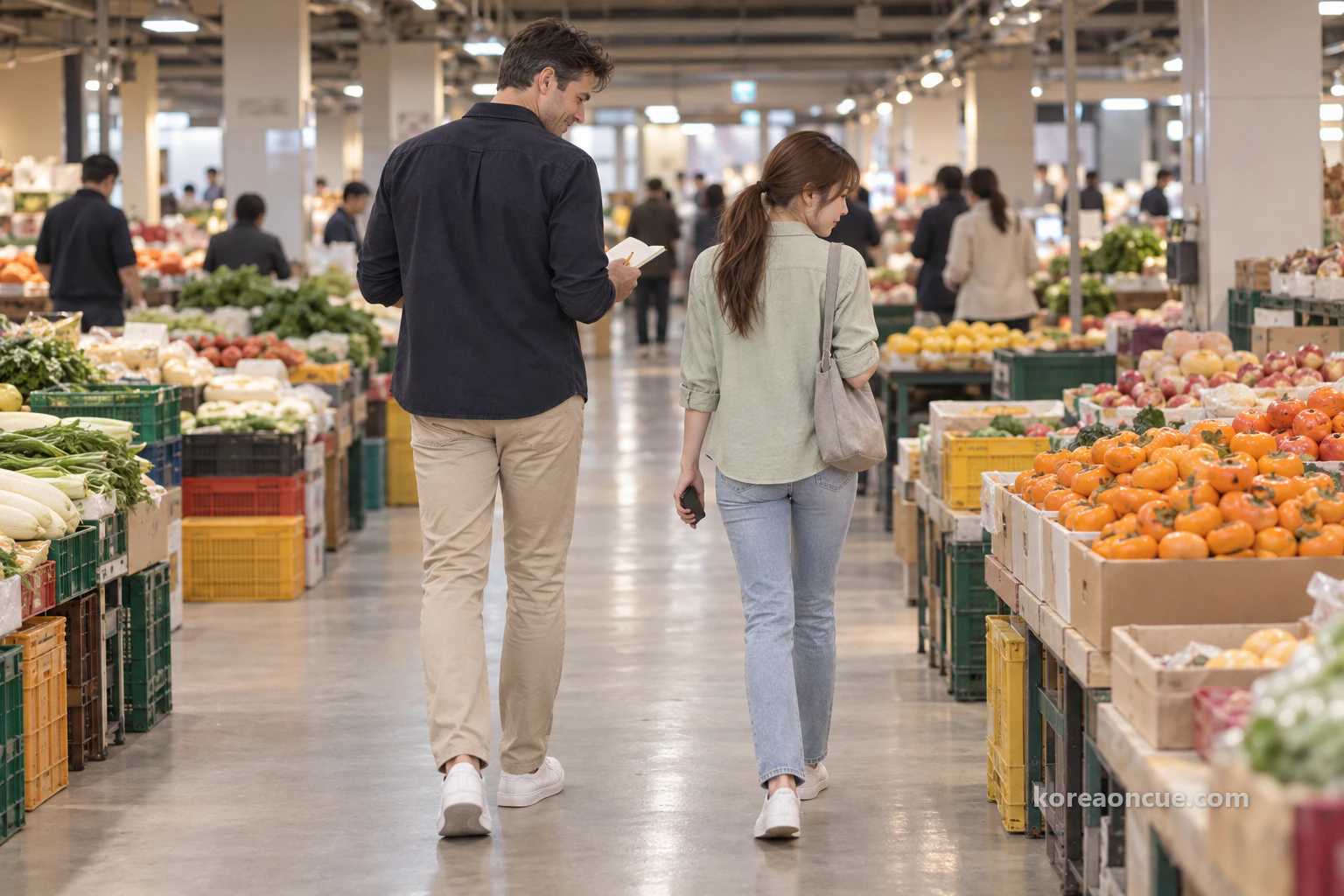
The B1 fruit and vegetable market is the first floor you reach from the station. On this Saturday morning in mid-November, people with shopping bags move slowly along the aisles. Ethan slows down to match their pace. As he learnt at Mangwon Market, when he wants to stop, he first steps half a pace aside towards the stalls. Ethan is tall, and if he stops suddenly in the middle of the aisle, he blocks the people behind him.
The first thing Ethan buys on this floor is a bag of sweet persimmons. He says they are for Rina and Maya. Lulu sees the bag and teases him. “You said we’d buy things last.” Ethan replies that light things are fine to buy now, but he keeps swapping the bag from hand to hand. Lulu types “Heavy things later, and light-looking things later too” in her notes app and laughs to herself.

On B1, try the panoramic elevator. The clear glass elevator runs from B1 to the third floor, so you can look around Garak Mall as you go up and down. Lulu picks this as the second shot of her video and films with her phone pressed close to the glass. Watching the floors change one by one below him, Ethan says it is like the lines in his notebook passing in front of his eyes. They ride up to the third floor once, then come back down and head for the first floor.
First-floor seafood, meat, dried seafood and salted seafood markets: ask before you lift your phone
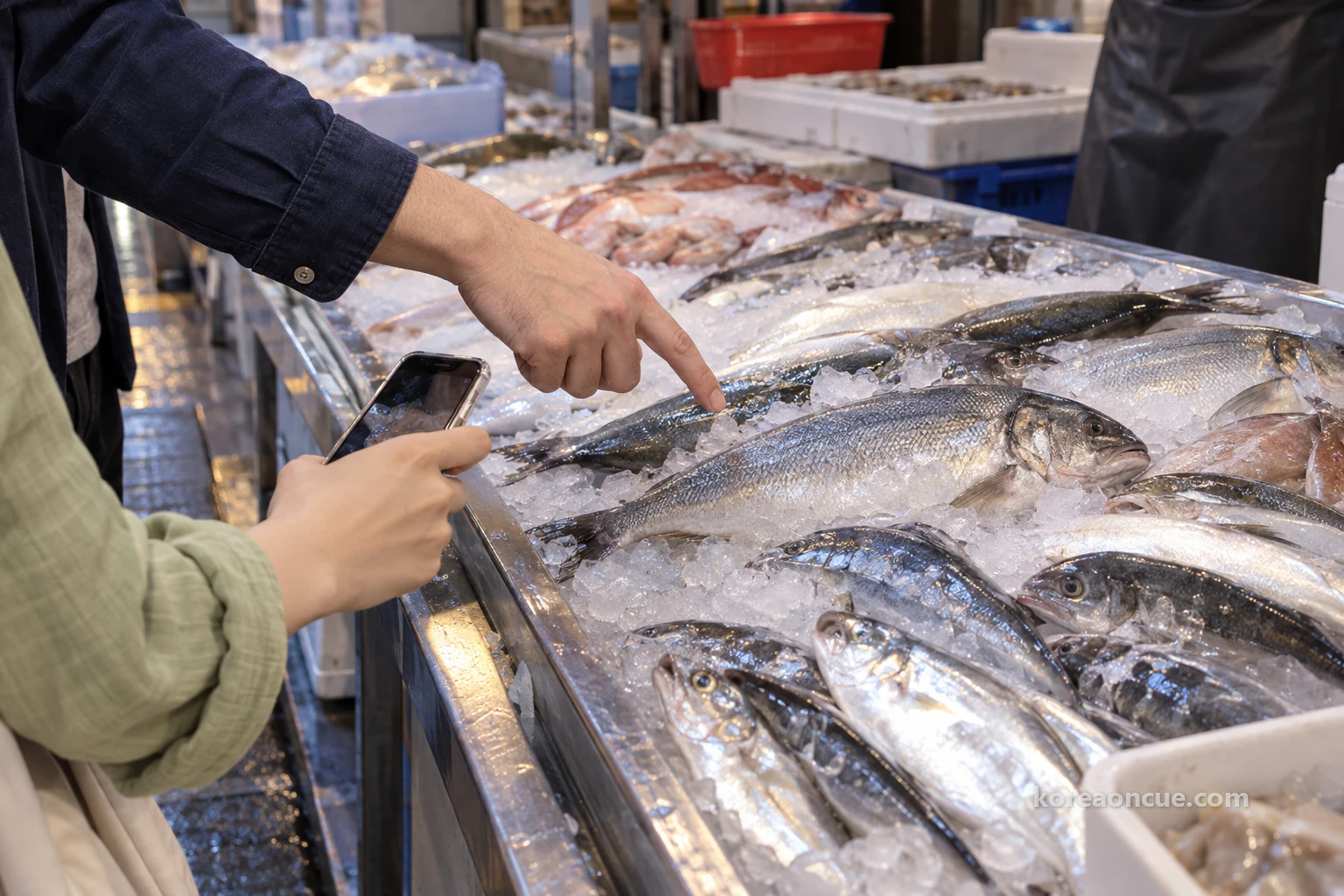
The moment they step out on the first floor, even the sound changes. The seafood market, meat market, dried seafood market and salted seafood market are all on one floor. They reach the first floor at about 10 a.m., and the fish on ice and the voices of shoppers all hit them at once. Lulu does not lift her phone straight away. First she bows her head and greets the shop owner. Watching her from behind, Ethan remembers the first time he saw her, at the croquette counter at Mangwon Market.
Lulu films the market the same way she did then. She greets the owner first and asks with a gesture whether she can film. If the owner is serving a customer, she waits until the customer leaves. She does not film faces up close, only the stalls and hands. Once again, Ethan thinks it is the same courtesy you would show stepping into someone else’s workplace. If you follow this order on a first visit, you will feel at ease lifting your phone in the market too.
Here, for the first time, their running orders clash. Ethan wants to walk the whole first floor once before choosing anything. “First lap, look only” has been his rule since Mangwon Market. But Lulu says they should only do half a lap on this floor. “It’s so big here that if you do a full lap, you’ll be too hungry to choose.”
In the end, they split the first floor in half. While Ethan walks to the far end of the seafood market, Lulu films the dried seafood and salted seafood side. They agree to meet back where they split up at 10:30. On a big floor, picking one meeting point like this saves you from wandering around looking for each other. Ethan marks a small cross on the first-floor line of his plan and writes “10:30” beside it.
How sangcharim works: three steps from buying on the first floor to eating at a restaurant
At Garak Mall, you can buy seafood in the sales building and eat it at a restaurant. This is called sangcharim. The seafood here means ingredients such as fish and clams before they are prepared and cooked. There are three steps. Buy at the first-floor seafood market, take it to a sangcharim restaurant, and eat at the table they set for you. Lulu was keen to film this because she thinks sangcharim is the thing her friends from abroad will find most surprising.
At 10:30, they meet again at the spot marked with a cross. Ethan says he stopped once at the fish and once at the clams on his lap. Lulu shows Ethan the clips of hands she filmed on her half lap. After talking it over for a while, they buy just one fish and a few clams. Buying less was Lulu’s idea.
“For two people, just one of each. Anything left over, you have to carry around.” Lulu sets the buying order too. Look round the light dried seafood first, and buy the heavy things just before going to the restaurant, so your hands hurt less. Ethan remembers buying the persimmons first and laughs sheepishly. Then he draws arrows along the first-floor line of his plan, in the order Lulu gave.

Restaurants open at 11 a.m. So for sangcharim, it is best to time your shopping for around 11. Buy too early, and you will be holding your bag until the restaurant opens. Before you go into a restaurant, ask first whether they will set a table with the seafood you have bought. Lulu holds up the bag at the restaurant door and asks first too, and they sit down just after 11.
Once the table is set, it is Lulu’s turn to decide the eating order. Cold things first, warm things last. It is the same order she taught him at Mangwon Market: “soup last”. After his first bite, Ethan is quiet for a long while. Then he says that when the ingredients are good, the structure can be simple. “You said that at Mangwon Market too,” Lulu says, lifting her phone above the table.
Where are the restaurants and cafés? Restaurant floors in theme halls 1 to 5
Even without sangcharim, Garak Mall has plenty of restaurants. Ordinary restaurants and cafés are concentrated on the third floor of Halls 1, 2 and 3. The first floor of Garak Mall Hall 5 has a raw fish centre, and its second and third floors are speciality restaurant floors. Hall 4 is restaurants from the first to the third floor, with “Garak 1985 food plaza” on B1. Ethan notices that the number in the name matches the year Garak Market opened, and underlines it in his notebook.
The other halls are simple too. Hall 1 has grocery shops on the first and second floors and a family restaurant on the third. Hall 2 has grocery shops on the first and second floors and restaurants on the third. Hall 3 has restaurants on the first and third floors and an eco-friendly shop on the second. Ethan divides the five boxes beside the sales building into floors and shades in pencil only the floors with restaurants.

There are more shaded boxes than they expected. Looking at the sketch, Lulu says a first-time friend could get tired just choosing a restaurant. So they decide to put just one rule in the video description. If you want to buy and then eat, start on the first floor of the sales building. If you want to eat straight away, go to the third floor of the theme halls. Ethan draws those two paths on the plan as two arrows, and writes “buy” and “now” at the ends.
The third-floor sky park: the largest rooftop space in the Songpa area
After lunch, go up to the third-floor sky park. The sky park is a rest area on the third floor of Garak Mall and the largest rooftop space in the Songpa area. It is laid with paving blocks and artificial grass, with flower beds and lighting added to make terrace gardens and rest areas. They ride the glass elevator they took that morning back up to the third floor. Stepping outside, the noise of the market fades and the sky suddenly opens up.
From the rooftop, the buildings with curved roofs all come into view at once. Ethan holds his notebook out and matches the seven boxes from the morning against the real roofs, one by one. “So this is where we mark this morning’s drawing.” As she says it, Lulu films so that the notebook and the roofs fit in one shot. A few boxes are slightly out of place, and Ethan laughs and takes out his eraser.

Garak Mall has more good spots for photographs. In front of “Chuni”, the 8 m Garak Mall mascot, is a good place for a photo together, and Chuni’s outfit changes when there is an event. There is also “Garak Gallery”, where you climb a spiral staircase slowly and see the history of Garak Mall. There is “Garak Stage” with various cultural events, and the “Reit Bridge” along Songpa-daero, where light pours down the bridge like rain in the evening. Lulu suggests that next time they bring their friends, the four of them take a photo in front of Chuni.
The old water tower by the office building, “Curtain of Rain”: a 32 m tower built in 1986
Look around from the rooftop and one tall tower catches your eye. It is the Garak Market water tower, built in 1986 and 32 m high. The tower stopped working in 2004 and later became a piece of public art. It is “Curtain of Rain”, a work by the internationally known installation artist Ned Kahn. The green space around the tower has also become a park, a place to enjoy culture and art.
Ethan stops for a long time in front of this story. He is glad that a piece of equipment that handled water became an artwork instead of being torn down when it stopped. He is an engineer who has spent years repairing machines that had done their job and putting them to new use. At the very top of his plan, Ethan draws the tower as one long vertical line and writes “32 m · 1986 · 2004” beside it. Lulu laughs that three numbers in a row are so very Ethan.
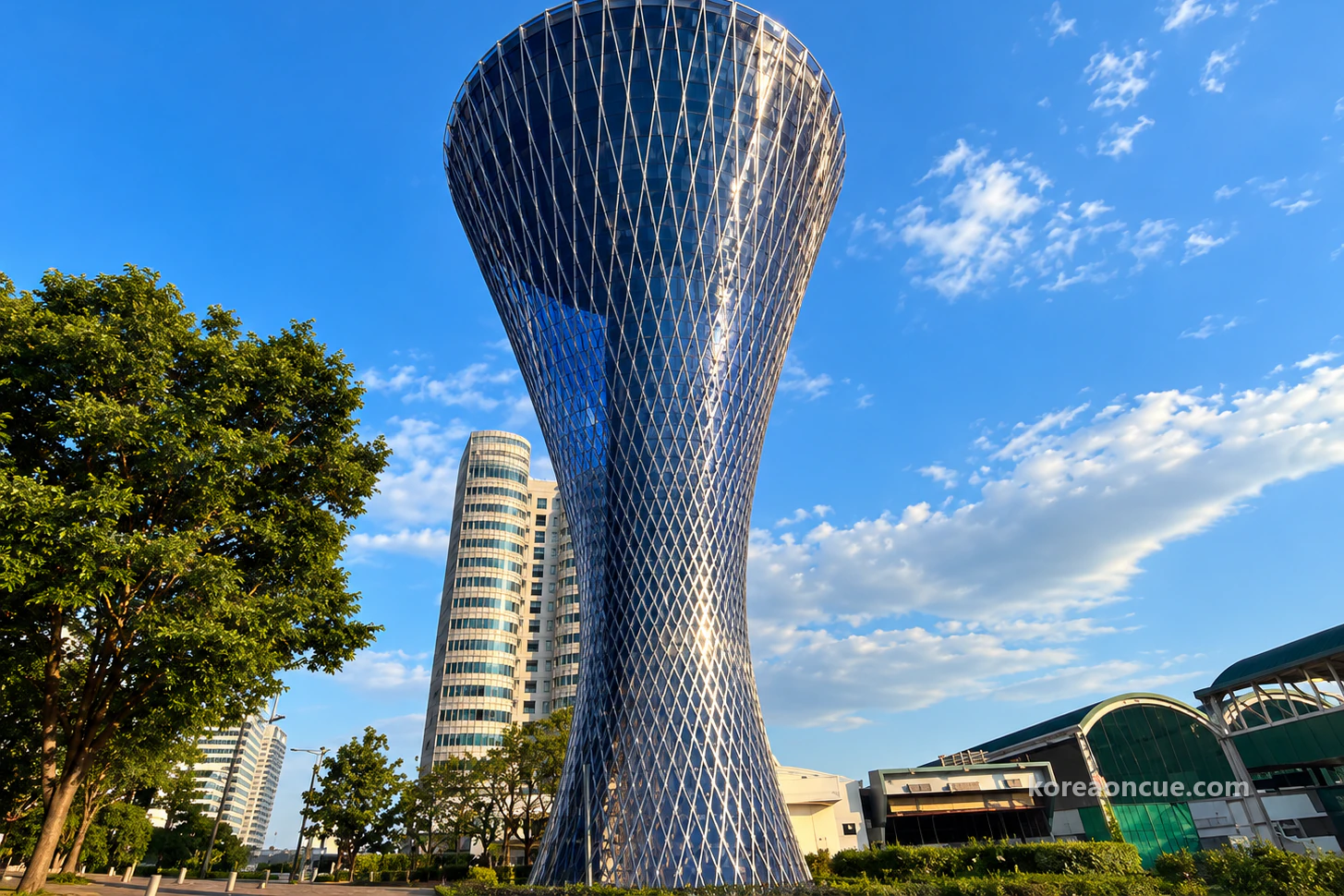
There is a little more to see around here. “Time of the Sea”, a work made together by 100 citizens, is also by the water tower. Towards Songpa-daero runs a street garden full of greenery. On the fourth floor of the office building are Garak Mall Library, which also stocks books on food culture, and a cooking studio that runs food culture programmes linked to books. The library opens from 9 a.m. to 6 p.m. and closes every Monday and on public holidays.
Back via Exit 2-1: from B1 straight to the station, and the next market for four
Just after 1 p.m., they come back down to B1. The way back is Exit 2-1 too. Lulu’s rule is that first-timers get less confused leaving the way they came in. In front of the passage, Lulu shows Ethan the day’s video first. The opening shot is not street level. It is Ethan’s notebook and its seven boxes.
At Mangwon Market, they each gave the other one thing. Lulu gave Ethan an eating order, and Ethan gave Lulu a plan of the market. Today, both went onto one page. Ethan’s plan has Lulu’s order drawn on it as arrows, and Lulu’s video starts with Ethan’s plan. Seeing more arrows than lines in his notebook, Ethan laughs, feeling slightly unfamiliar with it.
“Ethan, let’s do one market every time you come on a business trip. You draw the plan and I’ll set the order.” Ethan nods without hesitation. Then he opens the last page of his notebook and hands Lulu his pencil. Rina’s line for him, “Jongno 3-ga — Seosulla-gil — morning”, is still there, with the question mark beside it. Underneath, Lulu writes neatly, “Next market — the four of us”.

Ethan thinks for a moment about what to put next to that line. The date of his next trip has not been set yet. But the four of them going to a market together already feels settled. Instead of a question mark, Ethan draws a small circle. Before they part, he hands Lulu the bag of persimmons and asks her to give them to Rina and Maya. Lulu posts the video’s opening shot in the group chat for the four of them, with the caption “Garak Market — 2-1 — 11:00” over Ethan’s seven boxes.
Common Mistakes
Looking for the entrance at street level
Garak Market Station Exit 2-1 connects directly to the Garak Mall B1 fruit and vegetable market.
Buying seafood before the restaurants open
restaurants open at 11:00. For sangcharim, time your shopping for around 11.
Going on a Sunday and finding shops closed
many of the shops that mainly supply businesses close on Sundays.
Looking for retail shops late at night
shops mainly for ordinary shoppers open 08:00–20:00. Hours vary from shop to shop, so if you have one in mind, ask it directly.
Buying the heavy things first
set a buying order and buy the heavy things last.
Filming goods without asking
ask the owner first, and film mainly the stalls and hands.
FAQ
How do I get to Garak Mall?
Garak Market Station Exit 2-1, on Lines 3 and 8, connects directly to the Garak Mall B1 fruit and vegetable market. From Exit 2, it is about a 2-minute walk.
What time should I go?
Shops mainly for ordinary shoppers open 08:00–20:00, and restaurants open 11:00–23:00. Looking round in the morning and eating after 11 works well.
Are there closing days?
Garak Mall is open all year round. But some shops close depending on their own circumstances, and many of the shops that mainly supply businesses close on Sundays. Closing days for the traditional holidays and the summer are announced separately.
How does sangcharim work?
Buy seafood at the first-floor seafood market in the sales building and eat it at a sangcharim restaurant. Before you go in, ask whether they will set a table with the seafood you have bought.
What is on each floor of the sales building?
B1 fruit and vegetables, 1F seafood, meat, dried seafood and salted seafood markets, 2F grocery shops, 3F food and dried goods shops, and B2 the livestock by-products market.
Where is the raw fish centre?
On the first floor of Garak Mall Hall 5.
When are the auctions?
At night and before dawn. Fruit such as sweet persimmons and tangerines at 02:00, apples and pears at 08:00, and live fish at 03:30. Times shift with the season and the amount coming in, and there are no auctions from Saturday evening until early Sunday morning.
What if I lose something?
Go to the civil service office. Daytime, 09:00–18:00, on the first floor of the office building. At night, 18:00–09:00 the next day, in the control room on B1 of the office building.
Recap — 30 seconds before you go
- Garak Market Station (Lines 3 and 8) Exit 2-1 → Garak Mall B1 fruit and vegetable market (about 2 minutes on foot from Exit 2)
- Shops for shoppers 08:00–20:00 · restaurants 11:00–23:00 — look round in the morning, eat after 11
- Sales building: B1 fruit and vegetables · 1F seafood, meat, dried seafood and salted seafood · 2F groceries · 3F food and dried goods shops
- Sangcharim: buy seafood on the first floor → ask the restaurant first → eat
- Glass elevator (B1–3F) · third-floor sky park · the water tower by the office building, “Curtain of Rain”
Sources
- Seoul Agro-Fisheries & Food Corporation — Getting to Garak MallGarak Market Station Exits 1, 2 and 2-1 on Lines 3 and 8 · Exit 2-1 connects to the Garak Mall B1 fruit and vegetable marketchecked 2026-10-28
- Seoul Agro-Fisheries & Food Corporation — Garak Market overviewOpened on 19 June 1985 as Korea’s first and largest public wholesale market · about 2 minutes on foot from Exit 2 (2-1) · 10 minutes from Songpa Station Exit 3 · 19 minutes from Police Hospital Station Exit 4checked 2026-10-28
- Seoul Agro-Fisheries & Food Corporation — Garak Mall FAQLocation, address and phone numbers · what the complex includes · open all year, with some shops closing and many supply-focused shops closed on Sundays · opening hours by type of shop · Garak Market bus stop · Garak Mall Library hours and closing days · civil service office (lost property)checked 2026-10-28
- Seoul Agro-Fisheries & Food Corporation — Garak Mall operation and managementSeven facilities: the sales building, five theme halls and the office building · three-storey sales building, 18-storey office buildingchecked 2026-10-28
- Seoul Agro-Fisheries & Food Corporation — Garak Mall facilities by buildingSales building floors (B2 livestock by-products market to 3F food and dried goods shops) · grocery shops, restaurant floors, raw fish centre and food court in Halls 1–5checked 2026-10-28
- Seoul Agro-Fisheries & Food Corporation — Garak Mall tour mapGlass panoramic elevator (B1–3F) · sky park · sangcharim restaurants and the restaurants and cafés on the third floor of Halls 1, 2 and 3 · Garak 1985 food plaza · Chuni (8 m), Garak Gallery, Garak Stage and the Reit Bridgechecked 2026-10-28
- Seoul Agro-Fisheries & Food Corporation — Garak Market auction timesFruit auctions at 02:00 and 08:00 · live fish at 03:30 · winter times for some vegetables from November · times vary with season and volume · no auctions from Saturday evening to early Sundaychecked 2026-10-28
- Seoul Agro-Fisheries & Food Corporation — Garak Mall landmark projectThird-floor sky park (the largest rooftop space in the Songpa area) · water tower (built 1986, 32 m, out of use since 2004) and Ned Kahn’s “Curtain of Rain” · “Time of the Sea” made with 100 citizens · street gardenchecked 2026-10-28
A Seoul story told with our AI characters. Place details are checked against public sources; the photos are AI-made illustrative images. How we use AI
More from this area

Seoul Sky: Reading the City in Lines from 500 Metres Up
Part three of “Gangnam · Songpa.” Seoul Sky’s website calls this a 500-metre observatory. The Korea Tourism Organization’s English guide gives Lotte World Tower as 123 floors and 555 metres. Noah, who reads streets and routes by eye, looks at a city from above rather than from the side for the first time — to see what a string of corners becomes when you rise high enough.

Olympic Park: Through the Gate and Up onto the Earthen Wall
Part four of “Gangnam · Songpa.” At the heart of Olympic Park stands an earthen wall from the early Baekje period: Mongchontoseong Fortress. The National Heritage Service gives its circumference as about 2.7 km, while the park’s website gives the length of the wall as 2,285 m. On her first visit Rina saw the big gate and the lawn and went home. This time she walks through the gate and up onto the wall.