
SEOUL · NAMDAEMUN MARKET
Ethan measured 180 minutes from 6 p.m. at Namdaemun Market’s Seoul Moonlight Food Festival, and the order for a night when the shops close first
14 to 21 November, 6–9 p.m., closed only on Sunday the 15th — Dalbit Jumak dishes are ordered on the spot with no booking, a five-minute walk from Hoehyeon Station Exits 5, 6 and 7, and many of the market’s shops close before the festival does
An extra week on his business trip gave Ethan a free weekday evening, and he fitted Namdaemun Market’s night festival into a 180-minute slot. His first plan, to eat and then look at the shops, was turned upside down the moment he reread the market’s closing times at the Hoehyeon Station exit.
How to get there
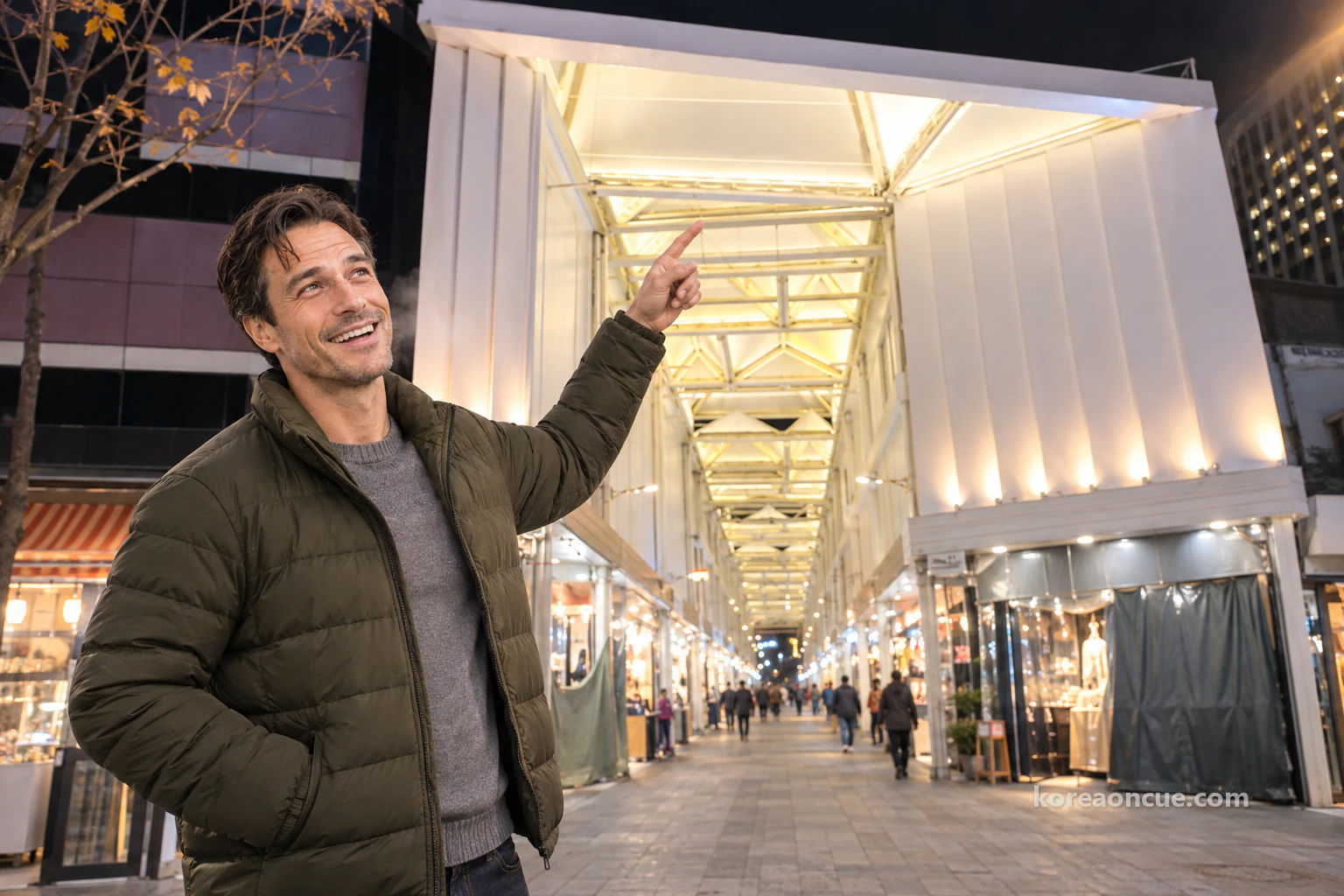
At 5.50 p.m. on Tuesday 17 November, Ethan came through the ticket gates at Hoehyeon Station on Line 4 and looked at his watch. His meeting had finished at half past five, and the time it took from the meeting room to the gates was already jotted down in a corner of his notebook. One work email last Thursday had stretched his second business trip to Seoul by a week, so this week’s evenings were a bonus. Ethan had put Namdaemun Market into the first of them. Until this Saturday, a night festival was running every evening right in the middle of the market.
Ethan, 44, designs machines in Seattle, lived in Itaewon for six years, and is the kind of Korean food fan who heads for a market first whenever he is back in Seoul. He also likes a drink with his evening meal, so when he read the name “Dalbit Jumak” in the festival notice, his ears pricked up. It was one of the programmes at the Seoul Moonlight Food Festival, the night food festival the city of Seoul is holding at Namdaemun Market. Reading the notice over lunch, Ethan had written “18:00–21:00 = 180 min” at the top of his notebook page. He is someone who notices the minutes in between before he notices the opening and closing times.
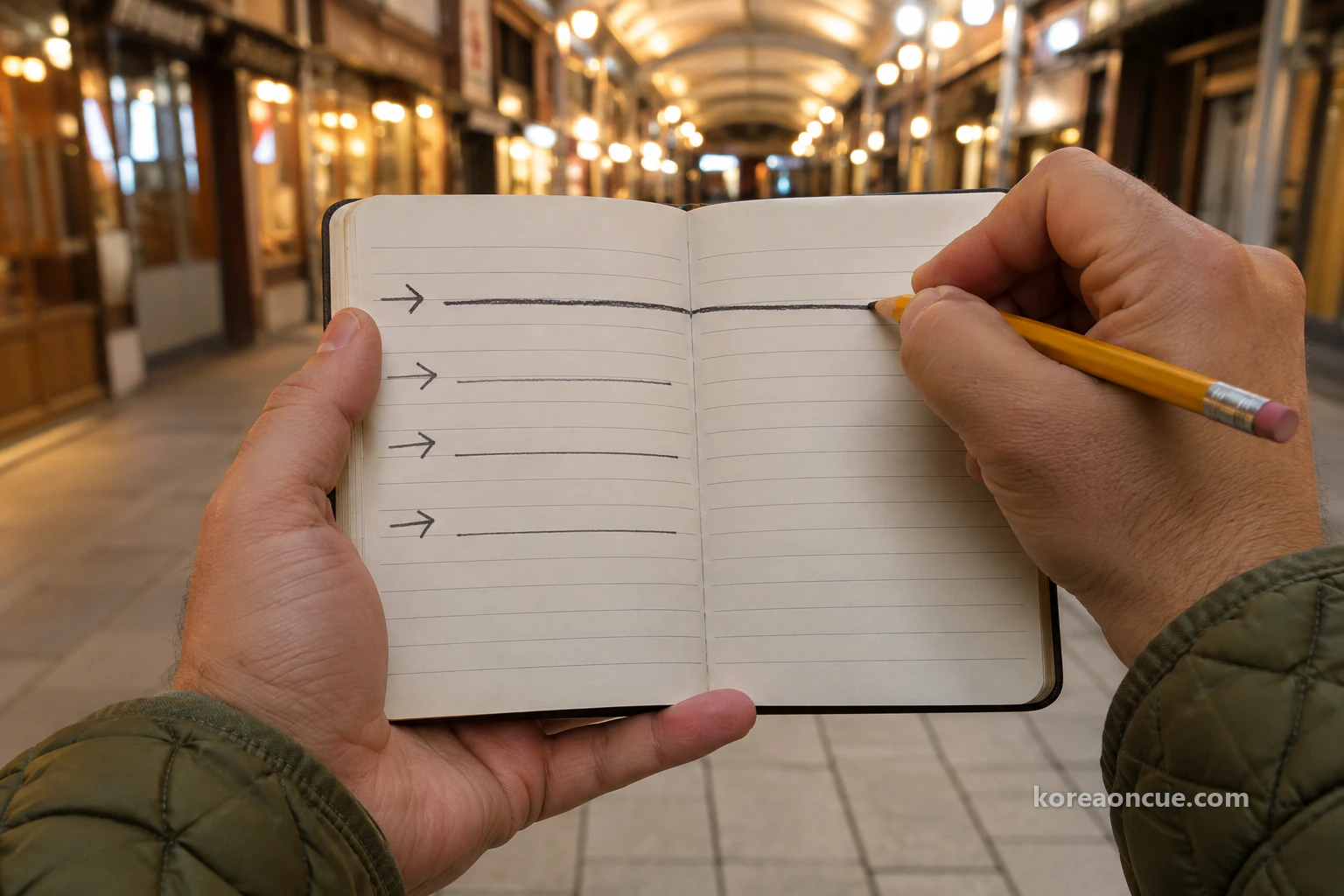
Below that he wrote the order in three lines. Line one was dinner at the jumak, line two was a look round the flea market, and line three was the market shops, to pick small presents for his team in Seattle. Fill up first, then choose at leisure, he thought. Ethan called this order “Rev A”. It is the name he gives every drawing the first time round, and Ethan’s Rev A had made it to the end only a handful of times.
The Cue — At a glance
The Seoul Moonlight Food Festival runs from 14 to 21 November 2026, 6–9 p.m., around the design arcade at Namdaemun Market, and is closed only on Sunday the 15th. Many of the market’s shops close before the festival does, so if the accessories buildings or the inward-facing shops of the general-goods building are what you are after, get there before 5 p.m. on a weekday. If you arrive at six, start with the shops that still have their lights on and leave Dalbit Jumak until last.
- Getting there: Hoehyeon Station (Line 4) Exits 5, 6 and 7, a five-minute walk to Namdaemun Market.
- Dates and times: Sat 14 – Sat 21 November, 18:00–21:00, closed on Sun 15 November.
- Dalbit Jumak: The dishes are ordered on the spot with no booking and are sold only during the festival.
- Enquiries: Seoul Metropolitan Government Tourism Industry Division (Tourism and Sports Bureau) 02-2133-2773, or the 120 Dasan Call Centre (02-120).
When and what time is the Seoul Moonlight Food Festival? 14–21 November, 6–9 p.m., closed only on Sunday the 15th
The Seoul Moonlight Food Festival starts on Saturday 14 November 2026 and ends on Saturday 21 November, and the hours are the same every day, from 6 p.m. to 9 p.m. It is organised by the Seoul Metropolitan Government, and its theme is “When night falls, Namdaemun becomes new.” The city’s English-language posts call it the Seoul Moonlight Food Festival. The event notice writes the Korean name as one word, “서울달빛미식회”, so if you are searching from abroad, put that in alongside the English name and it is easier to find.
Open in Kakao Map — Hoehyeon Station
| What | Details |
|---|---|
| Dates | Sat 14 – Sat 21 November 2026 |
| Hours | Daily 18:00–21:00 |
| Closed | Sun 15 November |
| Venue | Around the design arcade, Namdaemun Market |
| Dalbit Jumak dishes | Ordered on the spot, no booking |
| Organiser | Seoul Metropolitan Government |
The row to look at first is the closing day. Sunday the 15th, when the festival takes a break, is also Namdaemun Market’s regular day off, so that evening there is no festival and the market is closed too. The shops facing the street decide for themselves whether to open that day. The festival is on for seven days in all: Saturday the 14th, the five weekdays from the 16th to the 20th, and Saturday the 21st. Ethan multiplied 180 minutes by seven and wrote “1,260 min”, then looked a little wistful that his own share was a single 180.
The festival runs the same way across the two Saturdays and five weekdays, but the market itself keeps different hours. On Saturdays some buildings close as early as 2 p.m., so a Saturday evening leaves less time for the shops than a weekday one. If you only want the festival, a Saturday is fine, but if you want to shop at the market as well, a weekday evening gives you more room. That is also why Ethan chose this Tuesday rather than last Saturday, when he went shopping with Lulu at Garak Market. On a weekday he could finish his meeting, take the subway straight there and still arrive before six.
Which exit at Hoehyeon Station? Exits 5, 6 and 7, a five-minute walk
Namdaemun Market is a five-minute walk from Exits 5, 6 and 7 of Hoehyeon Station on Line 4. All three exits are five minutes away, so come up whichever one is nearest the gates. Line 4 brings you right to the front of the market without changing trains. Ethan chose Exit 5 and stopped just before the top of the stairs. He had meant to look at Rev A in his notebook once more, but a photo saved on his phone came to mind first.
It was the Namdaemun Market Merchants’ Association’s table of building opening hours, which he had taken at the hotel on Sunday night. At the time he had looked only at the festival dates and moved on, but when he opened it again on the exit stairs, every number in the closing column was early. 17:00, 17:30, 18:30. For someone walking into the market at 6 p.m., those times have either passed or are about to. Standing halfway up the stairs with a finger on line three of Rev A, Ethan saw that if he ate at the jumak and went round the market first, those closing times would have already passed by the time he reached the shops.
“If I eat first, there’ll be nothing left to choose from,” Ethan said to himself, and climbed the rest of the stairs. At street level the cold wind slipped inside the collar of the winter jacket he had worn every day since the weather turned. The sun had already set, and the alleys towards the market were a mix of lit shops and shops with their shutters half down. Pulling his collar closed, Ethan decided he could rework the order as he walked.
Where in the market is it held? The design arcade modelled on hanok eaves, about 135 m
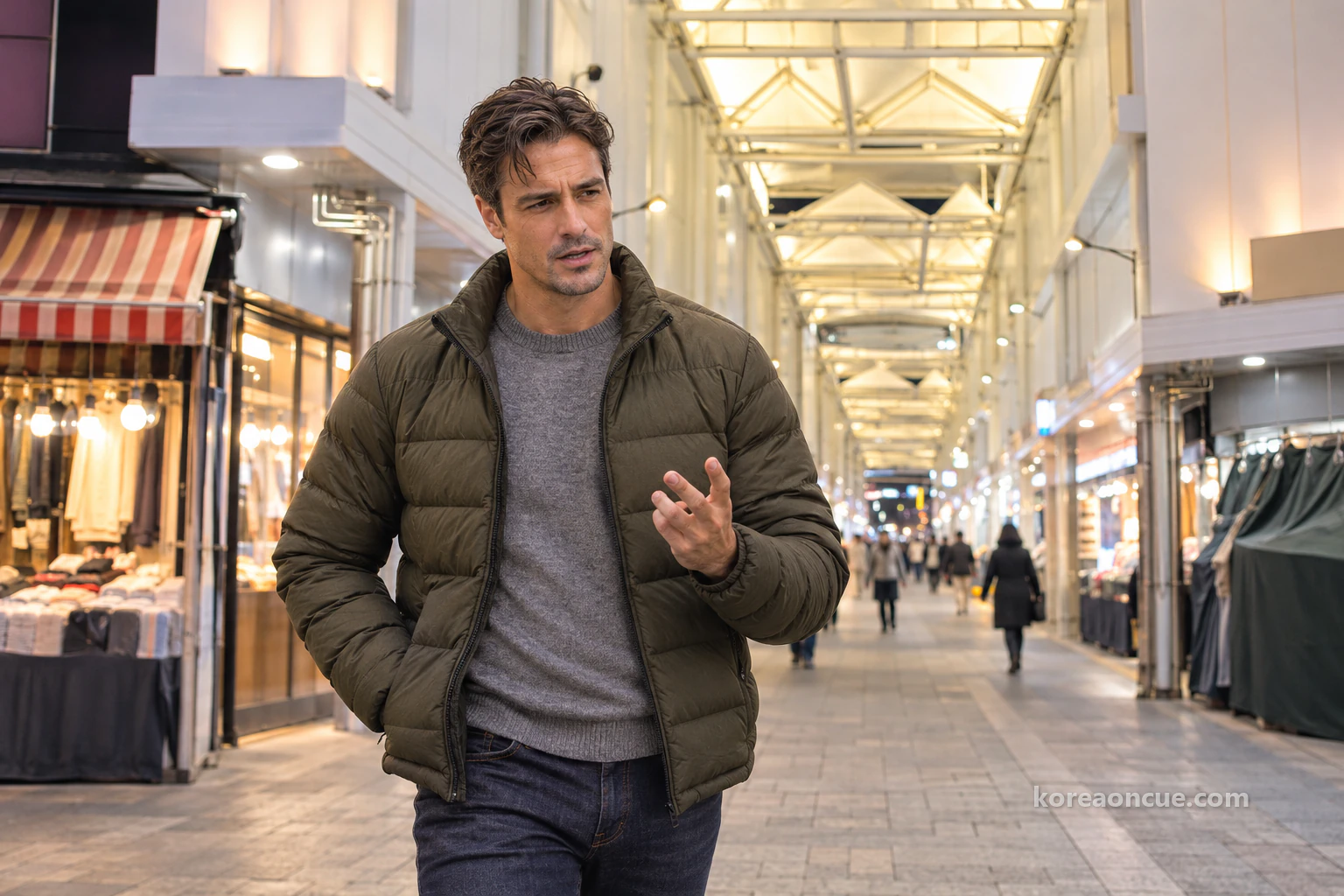
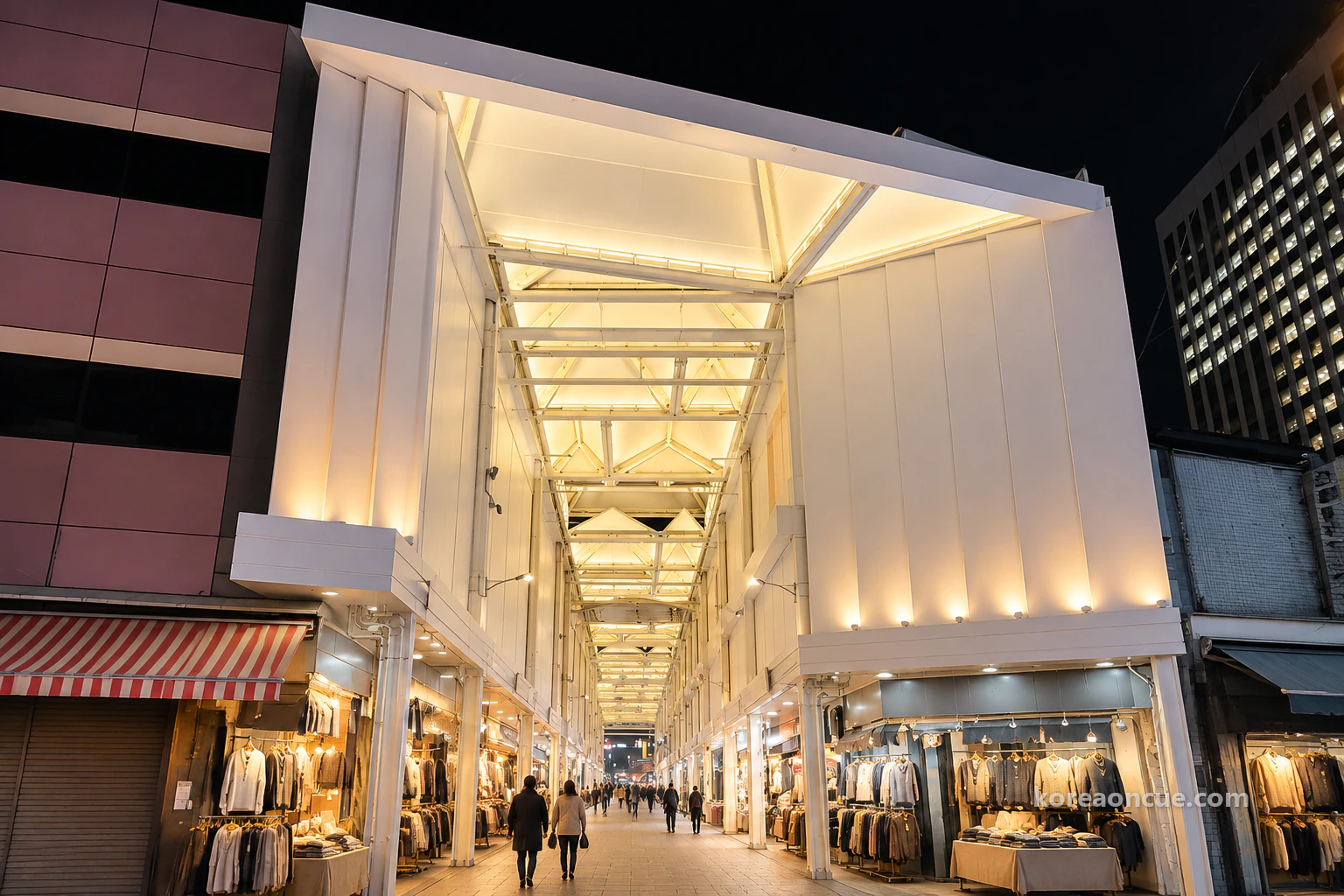
The festival’s stage is the area around the design arcade, which covers a stretch of about 135 m on Namdaemun Market’s central street. The city put a roof modelled on the eaves of a hanok over this stretch, and the opening ceremony for the finished arcade was held on 17 November 2025. This festival is a night festival held under that roof almost a year after it was completed. In the market’s alleys you can tell this stretch by its roof. Look up and you see a line of eaves unlike those in any other alley.
The roof is a membrane structure, built with the amount of daylight, the way air moves through and even noise in mind. When Ethan first read the words “membrane structure” in the notice, his eyes stayed on that line longer than on the menu. To someone who designs machines, stretching a wide membrane taut and using it as a roof is a structure that takes a lot of calculation. Once under the arcade, Ethan spent a long while looking only upwards, measuring the gaps between the pillars by eye. A passer-by wondered what he was staring at, glanced up too, and walked on.
Before walking, Ethan worked out the number of steps. At the 80 cm stride he had measured before, 135 m comes to about 169 steps, so he wrote that number in his notebook first as his estimate. But about ten steps into the arcade, the smell of broth drifted over on the breeze and he lost track of which step he was on. His second count, started again from the beginning, broke off once more in front of the smell of frying oil. Ethan put off the real count until the walk back and wrote next to his estimate, “169 — real count on hold because of the smells.”
The city is holding this night festival to stretch spending at traditional markets, which is concentrated in the daytime, into the evening, and to bring in overseas visitors and young people through K-food. From January to September this year, card spending by overseas visitors at Namdaemun Market rose 65.6% on the same period last year, a bigger jump than the 48.8% for Seoul’s traditional markets as a whole. Reading that figure, Ethan murmured, “My card spending must be in there too.” Then he quickly corrected himself. The card he had used three days earlier had been at Garak Market, and in any case it was November now, so it could not be in the January-to-September figures.
Six in the evening, when the festival starts, is also when many of the market’s shops begin closing one by one. For Ethan, a business traveller who works in the daytime, it was a pleasant surprise that six o’clock almost lined up with the end of his working day. For travellers, it means one more reason to call in at the market after a full day of sightseeing. How many shops were still open at six, though, was a number Ethan had not yet turned into minutes. He checked his watch once more and turned towards the arcade entrance to do that sum.
What is there to eat and see? Dalbit Jumak, Dalbit Jeombang, Dalbit Market and a market walk with a chef
The festival has Dalbit Jumak for eating, Dalbit Jeombang for looking at the market’s goods and Dalbit Market for buying and selling, and there is also a food tour that walks round the market with a chef. The first three are places you go to, and the tour is a programme where you follow the chef on foot. Copying the table below into his notebook, Ethan gave each programme a single word. “Eat” for the jumak, “look” for the jeombang and “choose” for the market.
| Programme | What is there |
|---|---|
| Dalbit Jumak | Special dishes made by two well-known chefs from the market’s signature foods and ingredients, and food trucks with special Namdaemun Market menus |
| Dalbit Jeombang | An exhibition and sales space presenting the market’s signature goods and household items in a new way |
| Dalbit Market | A flea market run with the Namdaemun Market Merchants’ Association, 20 or more sellers |
| Food tour | A tour that walks round Namdaemun Market with a chef |
The Dalbit Jumak dishes are sold only during the festival, and you order them on the spot without booking. The two chefs split the cooking between them and finish each dish together. Ethan thought of splitting a process in two to make a single part. Guessing which chef had handled which stage went into his notebook as one of the evening’s tasks.
The dish Ethan circled was “Pulchi-topped chicken kalguksu”, a new take on one of Namdaemun Market’s signature foods. Pulchi are small hairtail, so the idea of the words kalguksu and hairtail landing in one bowl made him smile before anything else. Dalbit Jumak also has food trucks with special Namdaemun Market menus, and Ethan drew a small star next to that line too.
Dalbit Jeombang presents the market’s signature goods and household items with fresh eyes. It is a space for both exhibiting and selling, so you can see the market’s distinctive everyday goods and more unusual items all in one place. Dalbit Market is a flea market run with the Namdaemun Market Merchants’ Association, with 20 or more sellers taking part. If you want to choose presents, these two programmes are where you can look at goods during festival hours. Ethan thought they could help with what line three of Rev A was meant to do.
What time do Namdaemun Market’s shops close? The festival runs to 9 p.m., many shops close between 5 and 7
The festival runs until 9 p.m., but many of Namdaemun Market’s shops close much earlier. Hours differ from building to building, and although the Bonsijang section keeps 06:00–23:00, each shop there sets its own hours too. Looking building by building, a lot of them close between 5 and 7 p.m. The table below lists the closing times Ethan noted from that photo on the exit stairs, set against the festival hours.
| Which shops | Hours |
|---|---|
| Bonsijang section | 06:00–23:00, each shop sets its own hours |
| Many accessories buildings | Close at 17:00–17:30 on weekdays |
| Inward-facing shops, general-goods building | Close at 17:30 on weekdays |
| Basement import-goods buildings | Close at 17:30–18:30 on weekdays |
| Outward-facing shops, general-goods building | Close at 21:00 |
| Saturdays | Some buildings close at 14:00 |
| Sundays | Regular day off, shops facing the street decide for themselves whether to open |
In the table, set only the closing times against the festival’s 9 p.m. The accessories buildings and the inward-facing shops of the general-goods building close before the festival even starts, and the basement import-goods buildings close within the festival’s first 30 minutes at the latest. The shops that stay open during the festival are those facing the street, such as the outward-facing shops of the general-goods building, and they also close at 9 p.m. alongside the festival. Outside the festival stretch, assume many shops in the alleys are shut after 7 p.m. If you can reach the market before six, spend that time on the buildings that close early, and from six on, give your time to the festival and the street-facing shops.
Standing by the arcade entrance, Ethan turned the time left at each building into minutes. Taking 6 p.m. as zero, the accessories buildings had closed 30 to 60 minutes earlier and the inward-facing shops 30 minutes earlier, while the basement import-goods buildings had 30 minutes left at most. Only the outward-facing shops of the general-goods building had the full 180 minutes, the same as the festival. When Ethan lined the numbers up again from shortest to longest, line three of Rev A rose to line one, and the jumak, which had been line one, dropped to the bottom.
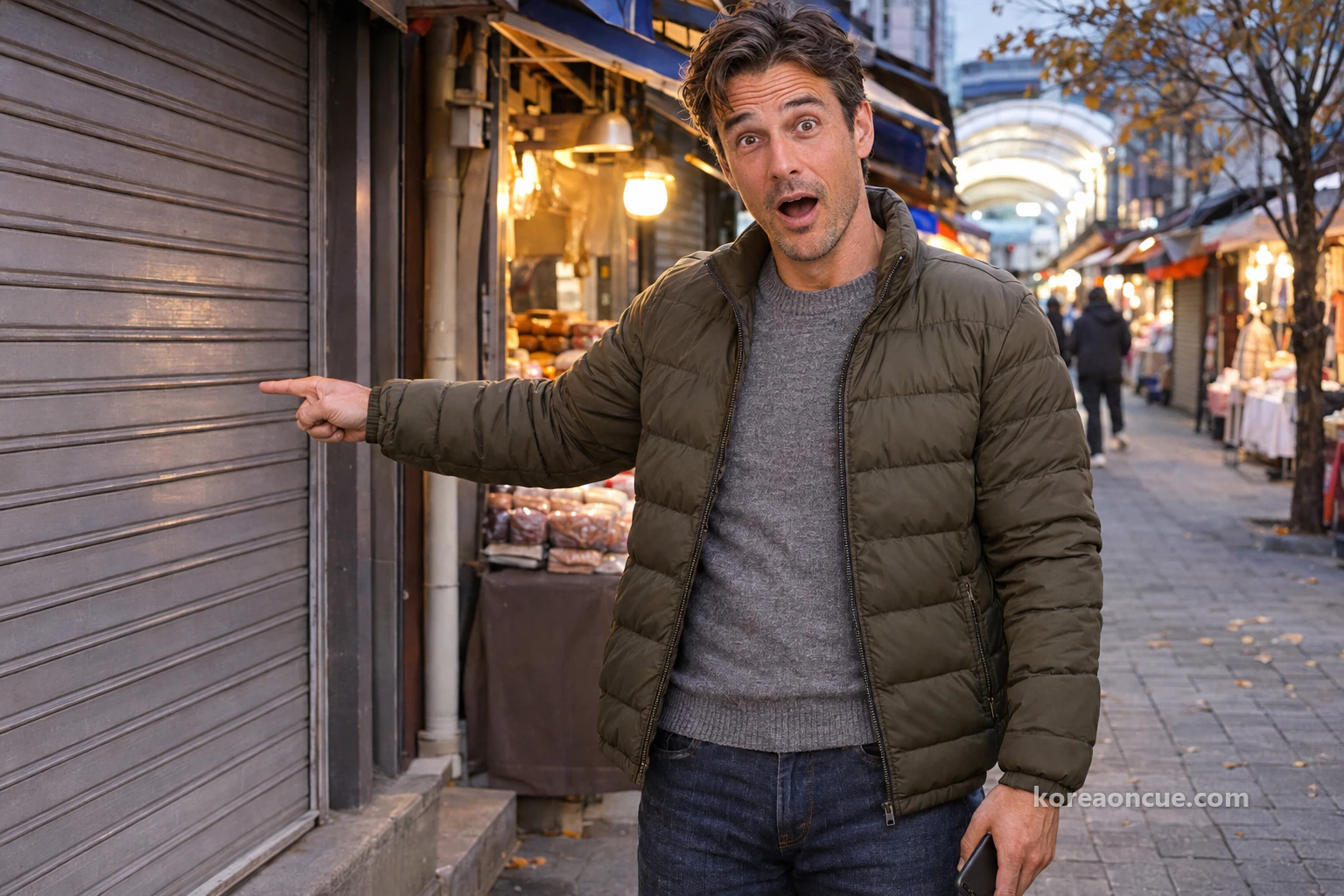
“Rev B goes in closing order, then,” Ethan said, drawing a line through Rev A in his notebook and writing the new order underneath. Line one was the basement import-goods buildings, which close first, line two was the street-facing shops that stay open until 9 together with Dalbit Jeombang and Dalbit Market, and line three was the jumak. The shops had closing times set earlier than the festival’s, while the jumak sat inside the festival’s slot, which runs until 9. Tackling what closes earliest first and leaving what stays open later until the end is how Ethan always draws up a process schedule.
When the festival ends at 9, the market’s evening is almost over too. The row in the table that stays open until 21:00 is the outward-facing shops, and they close at 9 along with the festival, so there is no time left to go round the shops after it ends. The Bonsijang section keeps going until 23:00, but each shop sets its own hours, so it is better not to plan on finding shops open after 9 p.m. Conversely, someone arriving at six has the longest stretch of time to see both the shops still open and the festival.
If you arrive at six, start with the shops still open — Ethan’s revised evening order at Namdaemun Market
Just after six, the first place Ethan went down to was the basement import-goods buildings. These buildings close between 17:30 and 18:30, so down there, shops with their shutters already down were mixed in with shops that still had their lights on. It was just as line one of Rev B said, using the place with the least time first, but the moment he reached the bottom Ethan checked his watch again. He had 25 minutes at most. Rather than buying a present in that time, Ethan decided to go round once and see what kinds of things there were.
As half past six drew near, the basement shops pulled down their shutters one after another, and the sound of the shutters ran along the passage in turn. Watching the 18:30 in the table come true in front of him, Ethan nodded to himself, glad he had turned the order round on the exit stairs. If he had eaten at the jumak first as Rev A said, those 25 minutes would not have existed at all. Back at street level, Ethan followed line two of his notebook towards the shops facing the street.
He chose the presents in front of a general-goods shop with its display table set out towards the alley. He had already decided on small things that would not take up much room in his suitcase, and standing at the display table, Ethan held one in each hand and weighed them first. His habit of thinking in grams carried on even in front of presents. He timed the choosing too, and it took exactly 24 minutes. Because he had already looked round in the basement, very little of that time went on deciding what to pick.

When he paid and stepped back into the alley, the inner lanes had grown noticeably darker as seven o’clock approached. Only the outward-facing shops on the street were still bright, and walking past them, Ethan recalled once more the line that said these shops also close at 9 with the festival. The paper shopping bag with the little parcels in it was lighter than he expected, so Ethan decided to leave its weight out of his suitcase sums. These street-facing shops remain an easy option for picking up gifts throughout festival hours. Ethan turned back from there and went under the arcade roof again.
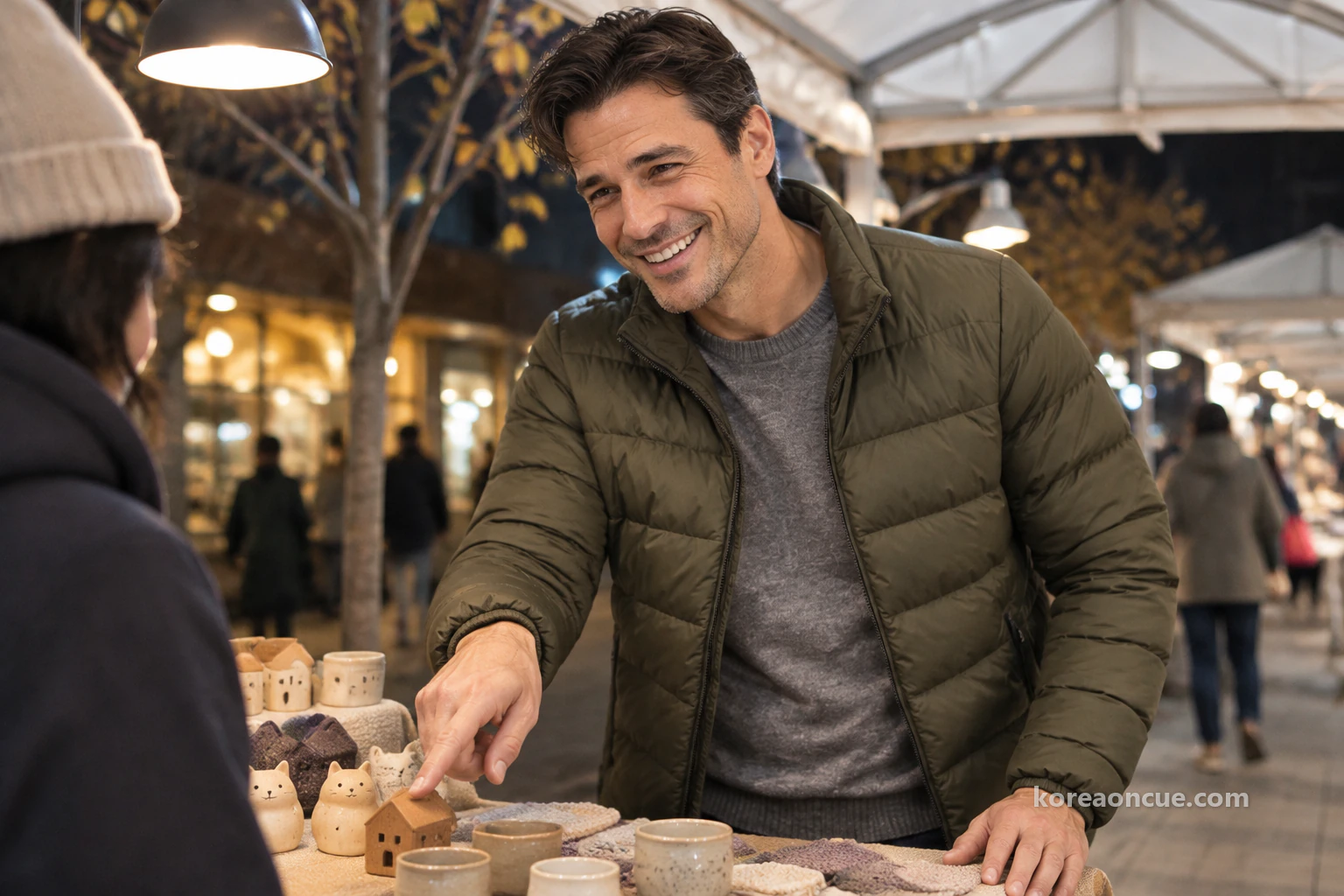
After seven it was the turn of Dalbit Jeombang and Dalbit Market. Looking at the jeombang, with the market’s everyday goods and unusual items laid out in one place, Ethan thought it was like a display case holding samples from the whole market on a single board. Moving on to the flea market, he found the sellers each at their own spot, and Ethan leant forward a little with one hand resting on the edge of a table to look at the goods. One seller saw him, smiled and lifted an item up to his eye level. “Thanks to you, I won’t have to bend any lower,” Ethan replied in Korean, and they laughed together.
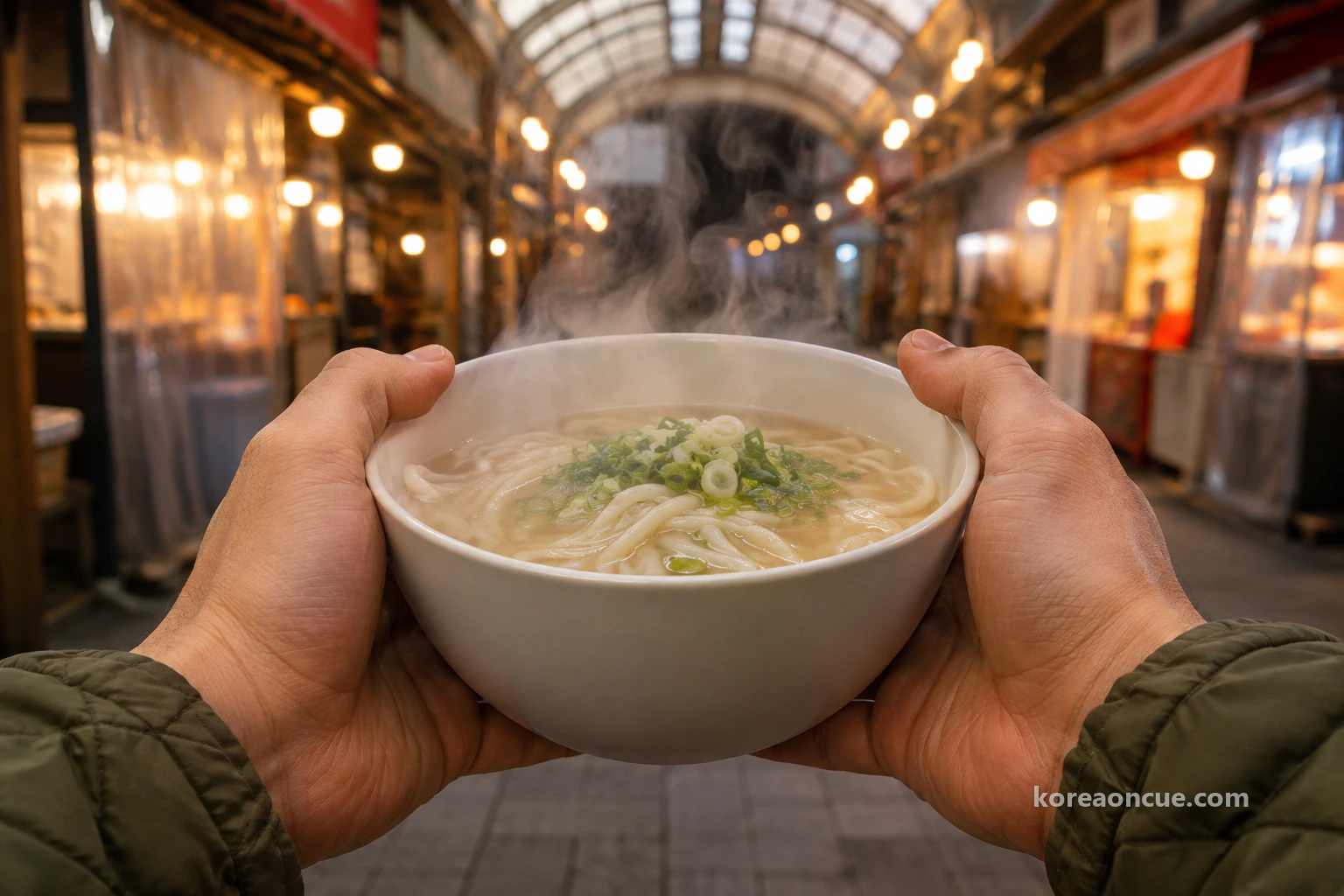
At eight, Ethan went to the last line in his notebook, the jumak. He ordered on the spot, and what he chose was the pulchi-topped chicken kalguksu he had circled from the start. As he took the bowl, the steam rose straight up into the cold evening air, and Ethan held the bowl in both hands and watched only the steam for a moment. The task he had set at lunch, working out which of the two chefs had handled which stage, was one he never managed to answer from the bowl alone, so Ethan left a question mark beside that line. For Ethan, who had spent all day looking at numbers in a meeting room, that bowl was the last item of the evening.
When he had finished, Ethan took a photo of the arcade roof and posted it to the group chat the four of them share. The message he sent with it was one line: “I thought it would be 169 steps, but the smells made me lose count twice.” The first to reply was Lulu, who had walked round Garak Market with him three days before. When her answer came, “If you lost count, Ethan, those smells must have been the real thing,” Ethan put the bowl down and laughed out loud. The circle next to “Next market — the four of us”, which Lulu had written on the last page of his notebook, he left as it was again today.
Still useful after the festival: Namdaemun Market’s evening hours and Sunday closing
If you come to Namdaemun Market in the evening after the festival is over, the same table is just as useful. The market’s regular day off is every Sunday, and the shops facing the street decide for themselves whether to open. To see the market properly, leave out Sundays, and on a Saturday, remember first that some buildings close at 2 p.m. On a weekday many buildings close between 5 and 7 p.m., so if shopping is your main goal, it is best to arrive before the sun goes down. The outward-facing shops along the street stay lit latest, closing at 9 p.m.
Copying the table into his notebook, Ethan wrote next to each closing time how many minutes it falls before the festival ends at 9. The accessories buildings close 210 to 240 minutes before the festival, the inward-facing shops of the general-goods building 210 minutes before, and the basement import-goods buildings 150 to 210 minutes before, while the outward-facing shops close at the same time as the festival. If you come to this market after the festival, simply read the same lines without the festival column. As Ethan saw it, the festival was filling those three evening hours, while the buildings close one by one, in a single stretch under the roof.
The city has announced a plan to spread this kind of night-time tourism to other traditional markets and to link it with nearby sights such as Myeongdong and Namsan, so that people out in the evening flow on to the markets and the shopping streets around them. Reading that plan, Ethan thought the name of a market might find its way into the evenings of his next business trip too. He added, though, that whichever market it was, he would check Sundays and Saturday afternoons first. It was the order he had learnt by turning Rev A round on the exit stairs.
One Namdaemun Market evening timed to the 9 p.m. close: 169 steps expected, 171 counted on the way back
At 8.50 p.m., Ethan left the jumak behind and stood at one end of the arcade. It was time to finish the count he had put off all evening. This time the smells could not shake a man with a full stomach, and Ethan counted all the way to the far end of the arcade without missing a single step. The number on the last step was 171. That was two steps off the 169 he had worked out with his 80 cm stride and written down in advance, and Ethan smiled, satisfied that for a hand-drawn sketch it was well within tolerance.
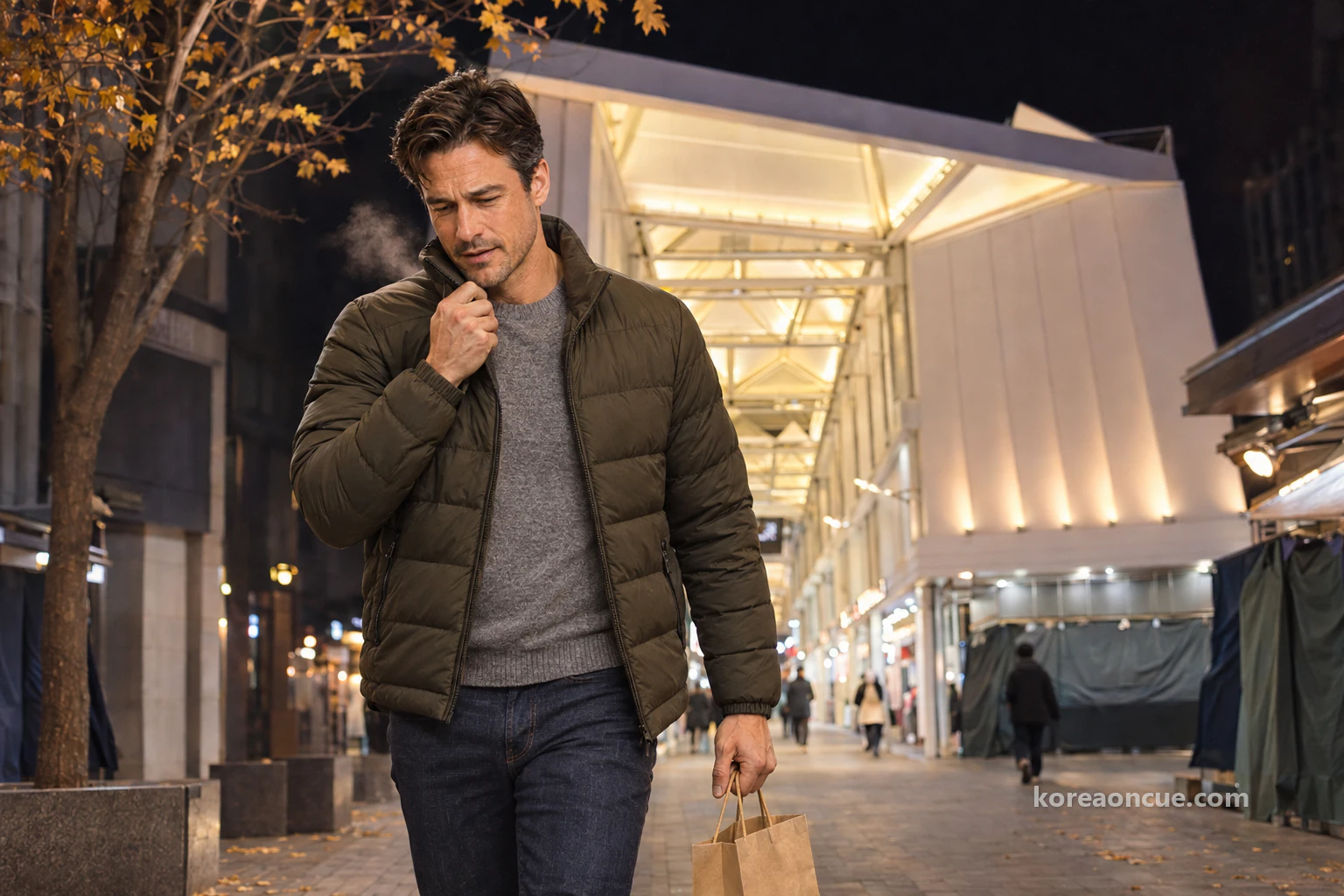
At 9 p.m. the sounds of the day being packed away began to rise beneath the lights of the festival stretch. Ethan stepped out of the arcade and looked back once. The numbers he had seen on the exit stairs at six were all in the past now, and among the shops pulling their shutters down, one outward-facing shop still had its lights on. Ethan took in the line of the eaves one more time and set off towards Hoehyeon Station. The small shopping bag in his left hand swung lightly with every step.
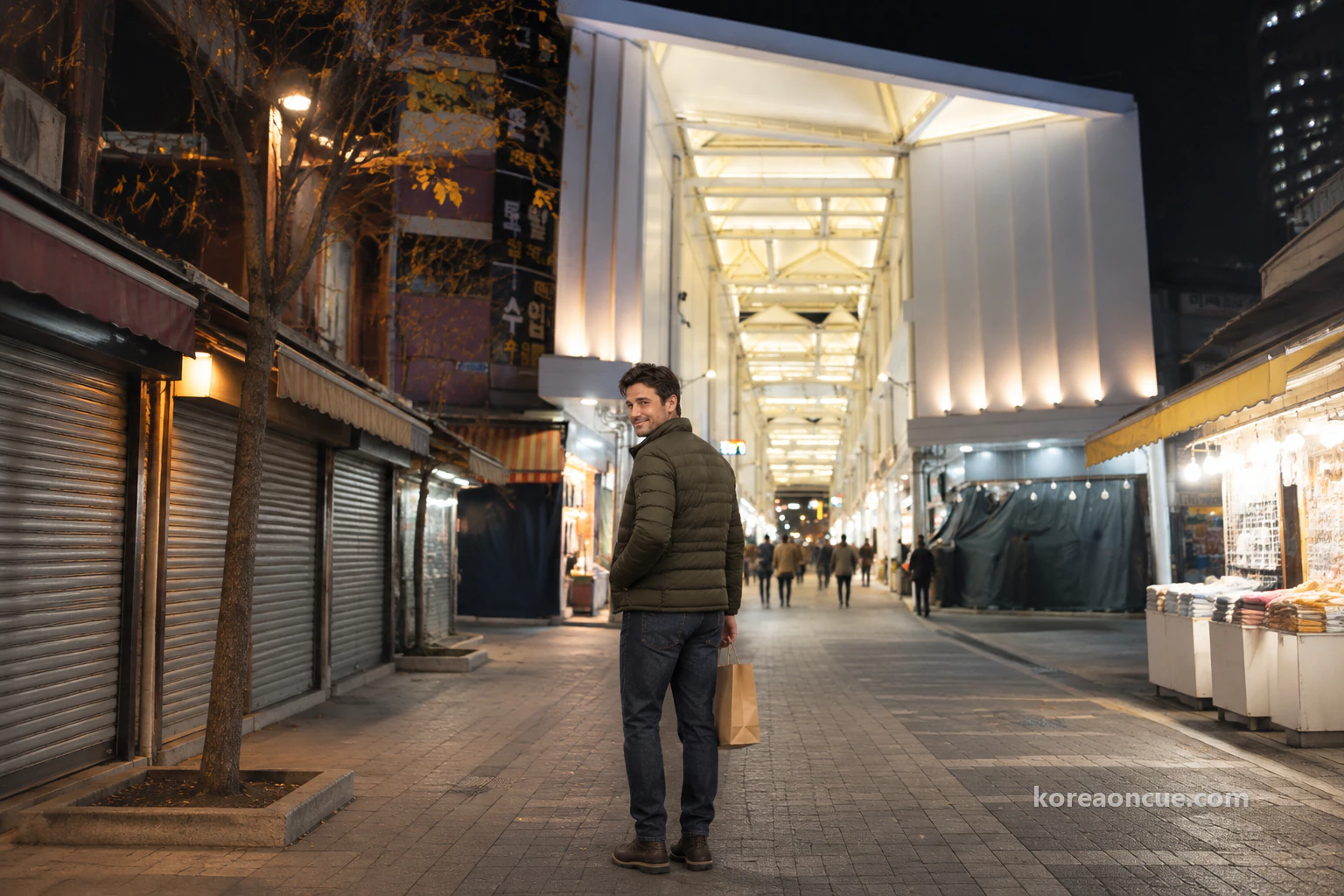
On the subway back to his hotel, Ethan wrote “Adopted” at the bottom of Rev B. He added one more line for whoever next visits this festival or comes to the market in the evening. Shops that close early first, the jumak inside the festival later, leave out Sundays, and on a Saturday look at 2 p.m. first. The order of Rev A, written first, was exactly the reverse, but Ethan left that line as it was instead of rubbing it out. Someone who has spent years drawing knows that you need the wrong first version to see why the corrected one is right.
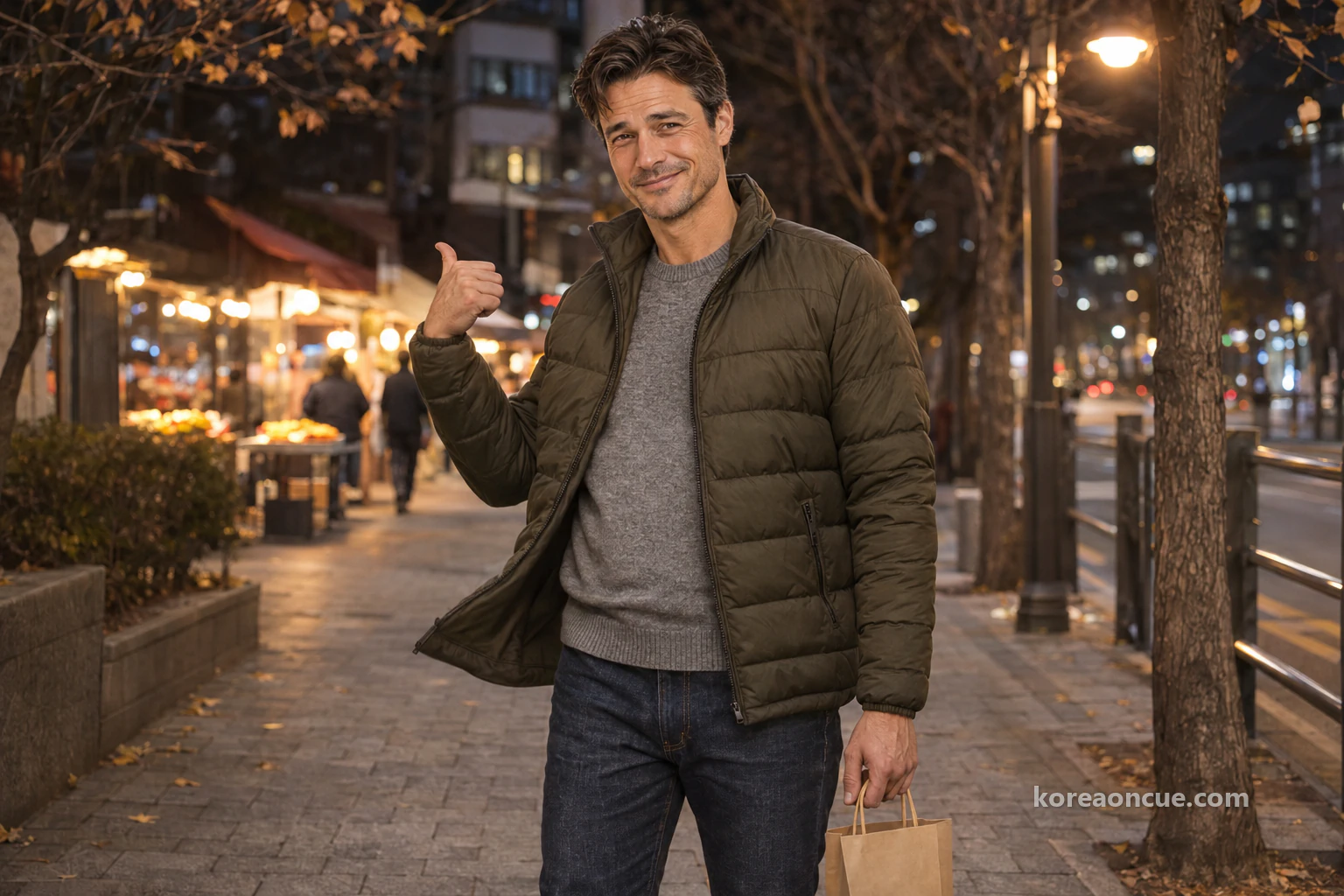
The Seoul Moonlight Food Festival ends at 9 p.m. on Saturday the 21st, and the arcade stays on after that as the roof over the market’s central street. During the festival, if accessories or the inward-facing general-goods shops are what you are after, come before those buildings close, and if you arrive at six, go round the shops still open first and leave the jumak under the roof until last. After the festival, take the same table without the festival column and walk by the closing times. Of the two versions left in Ethan’s notebook, the useful one was the corrected one, but the one he looked at longest was the first, with its line drawn through it.
Common Mistakes
Eating first and going to the shops afterwards
Ethan’s Rev A was turned completely upside down the moment he reread the closing times on the exit stairs.
Heading for the accessories buildings at six
They close at 17:00–17:30 even on weekdays, so by the time the festival starts they are already shut.
Coming on the evening of Sunday the 15th
It is the festival’s day off and the market’s regular day off too. The shops facing the street decide for themselves whether to open.
Leaving your shopping until after the festival
Even the outward-facing shops that stay open late close at 9 along with the festival.
FAQ
Do I need to book the Dalbit Jumak dishes?
They are ordered on the spot with no advance booking and are sold only during the festival.
Is there nothing at all on Sunday the 15th?
The festival takes the day off and the market is on its regular day off. The shops facing the street decide for themselves whether to open.
Does the arcade disappear when the festival ends?
No. The design arcade is the covered street on the market’s central stretch, completed in November 2025, and it stays as it is after the festival.
Recap — 30 seconds before you go
- Sat 14 – Sat 21 November, 18:00–21:00, closed only on Sun 15 November.
- A five-minute walk from Hoehyeon Station Exits 5, 6 and 7, and the Dalbit Jumak dishes are ordered on the spot with no booking.
- For accessories or the inward-facing general-goods shops, come before those buildings close. If you arrive at six, go round the shops still open first and leave the jumak until last.
Sources
- Seoul Metropolitan Government, Mediahub — Namdaemun Market food festival with a chefs’ tavern (Korean)Daily 18:00–21:00 from 14 to 21 November, closed Sunday 15th · theme “When night falls, Namdaemun becomes new” · Dalbit Jumak dishes sold only during the festival, ordered on the spot with no booking, two chefs splitting the cooking to finish each dish, pulchi-topped chicken kalguksu · Dalbit Jeombang exhibition and sales space · Dalbit Market (with the Merchants’ Association, 20 or more sellers) · around the design arcade on about 135 m of the central street · foreign card spending at Namdaemun Market up 65.6% in January–September (48.8% across Seoul’s traditional markets)checked 2026-11-13
- Seoul Metropolitan Government news — 2026 Seoul Moonlight Food Festival (14–21 November), event notice (Korean)Sat 14 – Sat 21 November 2026, 18:00–21:00, closed Sun 15 November · organised by the Seoul Metropolitan Government · Dalbit Jumak (including food trucks with special Namdaemun Market menus), Dalbit Jeombang, Dalbit Market and a food tour of Namdaemun Market with a chef · Tourism Industry Division, Tourism and Sports Bureau, 02-2133-2773checked 2026-11-13
- Seoul Culture Portal, FUN SEOUL — 2026 Seoul Moonlight Food Festival (Korean)Venue around the Namdaemun Market arcade · festival enquiries to the 120 Dasan Call Centre, 02-120checked 2026-11-13
- Namdaemun Market Merchants’ Association — Overview and directions (Korean)Hoehyeon Station (Line 4) Exits 5, 6 and 7, a five-minute walk · opening hours differ from building to buildingchecked 2026-11-13
- Namdaemun Market Merchants’ Association — Building opening hours (Korean)Bonsijang section 06:00–23:00 (each shop sets its own hours) · regular day off every Sunday (outward-facing shops open at their own discretion) · accessories buildings 17:00–17:30 on weekdays, inward-facing shops of the general-goods building 17:30 on weekdays, basement import-goods buildings 17:30–18:30 on weekdays, outward-facing shops 21:00, some buildings 14:00 on Saturdayschecked 2026-11-13
- Seoul Metropolitan Government, Mediahub — Hanok-eave roof and new walkways for the 600-year-old Namdaemun Market (Korean)Opening ceremony on 17 November 2025 · design arcade modelled on hanok eaves on the market’s central street · membrane-structure roof designed with daylight, ventilation and noise in mindchecked 2026-11-13
A Seoul story told with our AI characters. Place details are checked against public sources; the photos are AI-made illustrative images. How we use AI
More from this area
Culture Station Seoul 284: getting in without registering in advance
Elena wrote “11 a.m., the door of the old station” on the first line of her scene notes. It was opening day, and on the first day alone the doors opened at 3 p.m. Elena spent the four hours on Seoullo 7017, then put the eye she uses to tell real from fake to the test in front of a deepfake film.

Seoullo 7017: a walk on the road above the tracks
Seoullo 7017 is a walkway on the old Seoul Station overpass, 180 metres from Exit 1 of Seoul Station on Lines 1 and 4, and it is open all day and night.