
SEOUL · MANGWON
An engineer’s day at Seoul Battleship Park: inside three warships in Mangwon Hangang Park
From the wheelhouse of a 1,900-tonne frigate to a submarine cut open along its right side — opening hours, admission and free weekend guided tours
Lulu mentioned it when they met at Mangwon Market. “You’re an engineer. I think you’d like it.” Ethan decides to spend the last Sunday of his short holiday aboard the warships beside the Hangang.
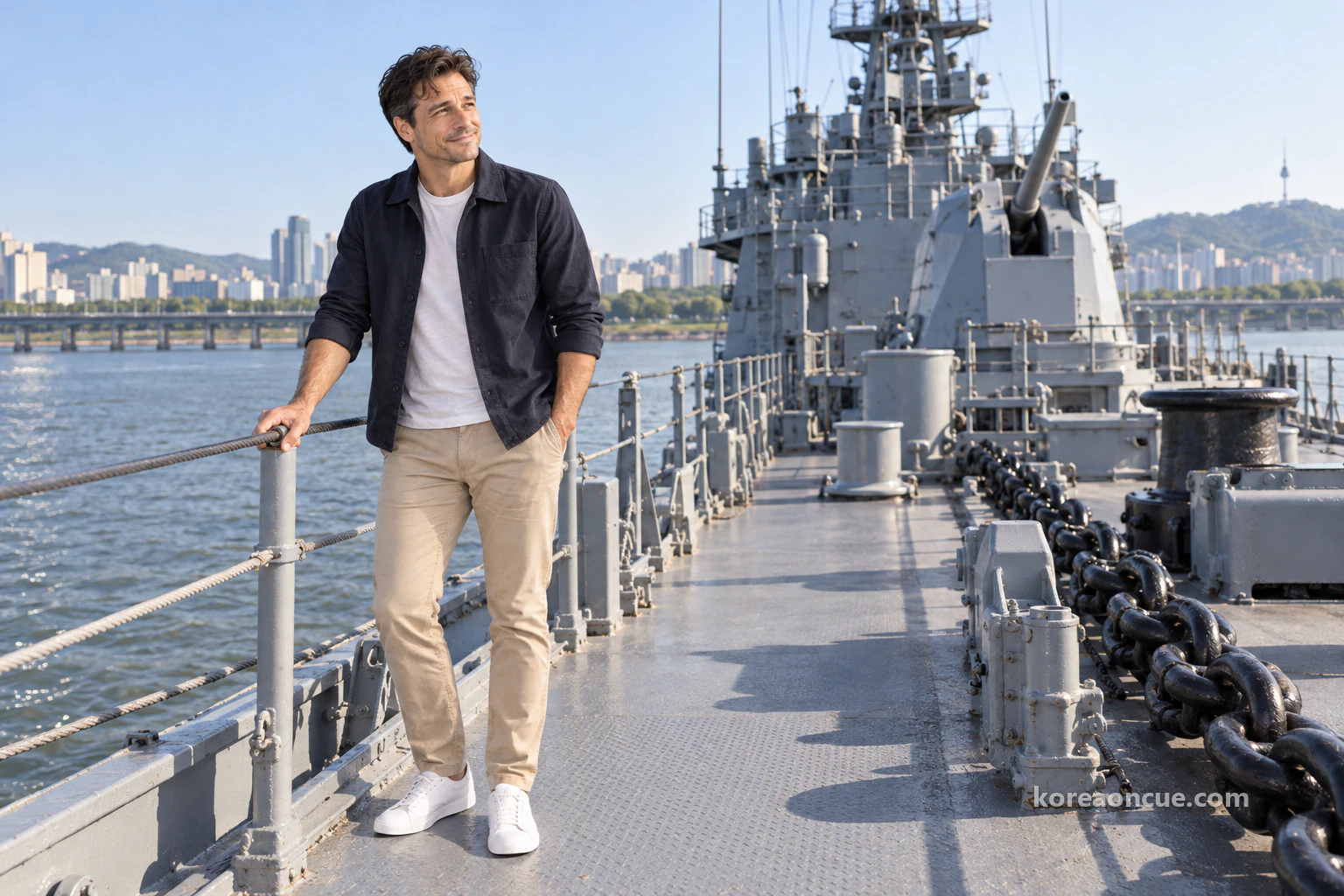
How to get there
On Sunday morning, Ethan wakes before his alarm. He is still thinking about the place Lulu told him about at Mangwon Market yesterday: “Once you come through the passage into the park, you’ll see a huge ship. A real warship.” Yesterday afternoon, when he went to see the Hangang, he only saw it from a distance. That long grey hull beside the river was enough to make up his mind about today — he wanted to go inside.
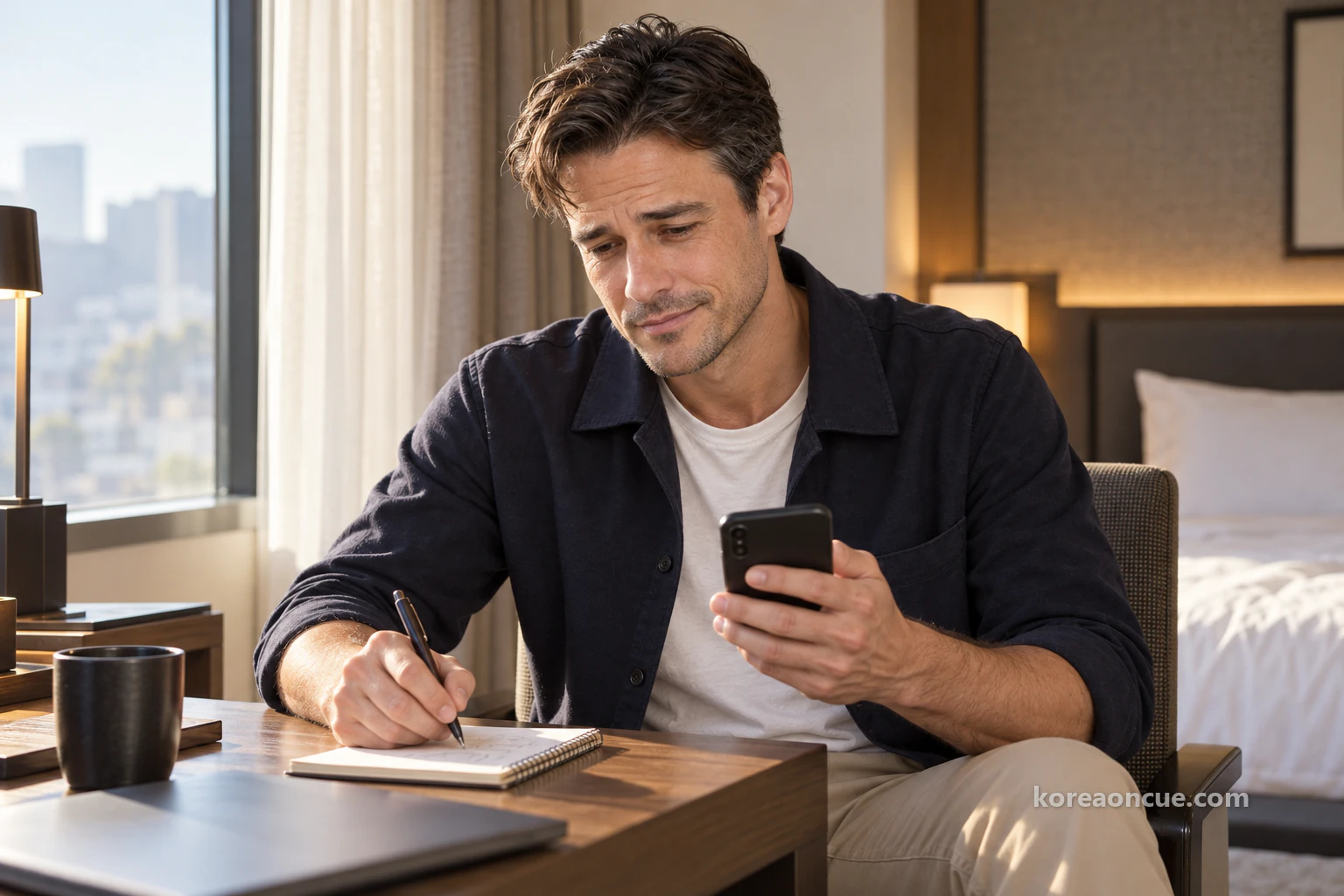
Ethan is an engineer who designs machinery in Seattle. He once lived in Itaewon for six years, so Seoul is familiar, though this holiday is his first visit to the riverside around Mangwon. He has never built a ship, but he has always been interested in how large structures fit together and work. Spending his last day aboard an actual warship that served at sea for 30 years feels like a fine way to finish his holiday. Over breakfast, he reads the Seoul Battleship Park website and writes the opening hours and directions in his notebook.
He plans the visit much as he approached the market yesterday: get an overview first, then look at each part. The website has a guide to the levels of all three vessels, which helps him sketch out a route. He will start with the submarine attached to the visitor centre, cross the bridge from level 2 to the patrol boat, then finish aboard the frigate on the water. After checking the weekend tour times, he decides to look round alone first and return with a guide in the afternoon. Ethan has always taken “the more you know, the more you notice” as a matter of doing things in the right order.
He opens Lulu’s message from last night again: “I’ll be waiting for your Seoul Battleship Park photos tomorrow.” Since she makes videos about markets, he thinks she might be curious about photographs taken inside a ship. Rather than send pictures alone, he decides to add a few lines explaining what he sees in an engineer’s terms. Yesterday, Lulu seemed particularly amused by his comment, “The structure’s simple, but it’s very well put together.”
This is the story of that Sunday, and a guide to a first visit to Seoul Battleship Park. Following Ethan, we’ll cover where it is, how to get there, opening hours and admission, and what to look for inside the three warships. We’ll also go through the visitor rules and free guided tours before heading aboard.
The Cue
Seoul Battleship Park is Seoul’s first warship theme park, at 407 Maponaru-gil, Mapo-gu, beside the children’s baseball ground in Mangwon Hangang Park. Visitors can walk inside three retired vessels preserved in their original form: the frigate Seoul, a Chamsuri patrol boat and a Dolgorae-class submarine. Take Mapo09 from outside Mangwon Station Exit 1 to 한강공원입구, then walk 7 minutes. Summer hours, March–October, are Tue–Fri 10:00–19:00 and Sat–Sun 10:00–20:00, while winter hours, November–February, are 10:00–18:00, with last admission 30 minutes before closing and closures on Mondays, 1 January, Seollal and Chuseok itself. Admission is ₩3,000 for adults, ₩2,000 for teenagers and military personnel, and ₩1,000 for children. Toilets are in the multipurpose plaza rather than inside the visitor centre.
- Where: 407 Maponaru-gil, Mapo-gu, Seoul (205-5 Mangwon-dong), beside the children’s baseball ground in Mangwon Hangang Park. Phone 02-332-7500.
- Getting there: Bus stop outside Mangwon Station Exit 1 → Mapo09 → 한강공원입구 → 7 minutes on foot. Alternatively, 홀트아동복지회 outside Hapjeong Station Exit 1 → Mapo16 → 망원유수지, 마포구민체육센터 → 7 minutes on foot.
- Hours: Summer (March–October), Tue–Fri 10:00–19:00 · Sat–Sun 10:00–20:00. Winter (November–February), 10:00–18:00. Last admission is 30 minutes before closing.
- Closures: Every Monday, 1 January, Seollal and Chuseok itself. Changes when closures coincide with public holidays are announced separately.
- Individual admission: Adults aged 19 or over ₩3,000 · teenagers aged 13–18 and military personnel ₩2,000 · children aged 6–12 ₩1,000. A 50% reduction applies to eligible visitors including national merit recipients, disabled visitors and people aged 65 or over.
- Rules: No smoking anywhere · no running · no food or drink in exhibition rooms · no pets · do not touch exhibits.
- Toilets: None inside the visitor centre. Use the toilets in the multipurpose plaza.
- Guided tours: Free at weekends, starting in the visitor centre’s level 1 lobby. Summer departures at 13:30 and 16:00.
From Mangwon Station to Seoul Battleship Park on Mapo09
Ethan boards Mapo09 at the bus stop outside Mangwon Station Exit 1. It is the park’s listed route, with a walk of about 7 minutes after getting off at 한강공원입구. From Hapjeong, the alternative is Mapo16 from 홀트아동복지회 outside Exit 1, getting off at 망원유수지, 마포구민체육센터 for another 7-minute walk. Yesterday he walked from the market to the river, but today he wants to save his legs for the ships.
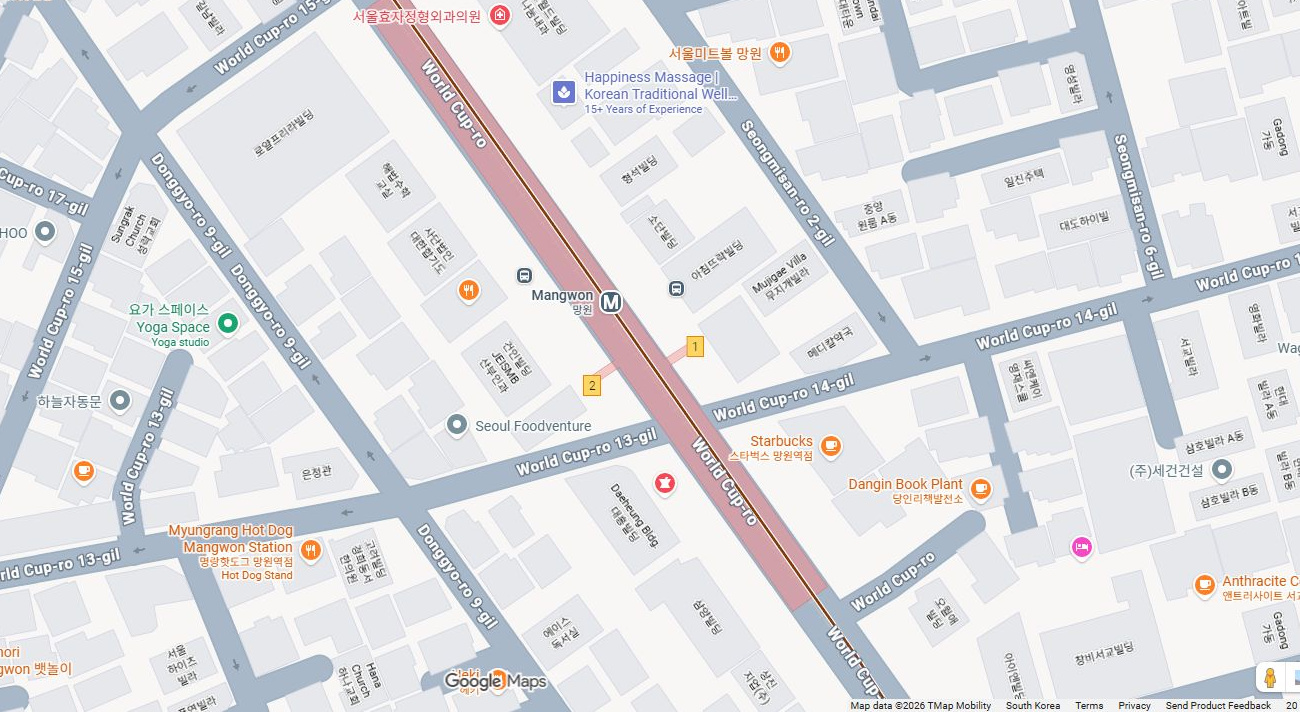
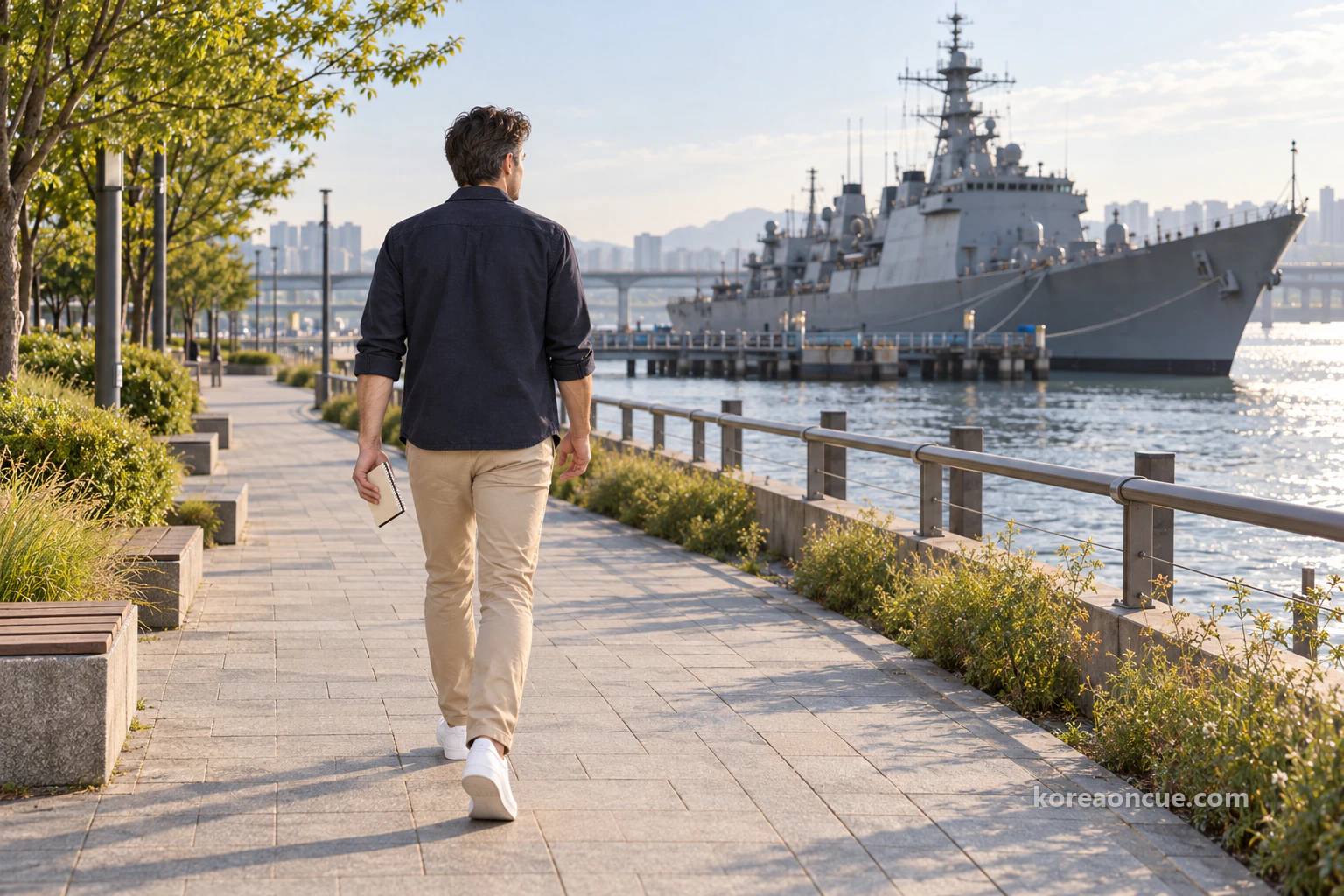
As he walks towards the river, the grey hull he saw yesterday grows steadily larger. The park is beside the children’s baseball ground in Mangwon Hangang Park. If you drive, the public car park in front of the Mangwon access passage, Mangwon Hangang Park Car Park 2, is a two-minute walk away, with parking charged separately from admission. Parking costs ₩1,000 for the first 30 minutes, then ₩200 for each additional 10 minutes, up to a daily maximum of ₩10,000. Ethan tries to judge the ship’s length by eye as he approaches, then laughs at how badly he has underestimated it.
At the entrance, all three vessels come into view together. A large grey ship floats on the water, a smaller one rests on supports in the plaza, and a black submarine has its bow against a glass building. These three retired warships form Seoul’s first warship theme park, which opened in November 2017. All three are on loan free of charge from Navy Headquarters.
Buying a ticket: opening hours and admission
Ethan buys his ticket at the counter on level 1 of the visitor centre. Admission costs ₩3,000 for adults, ₩2,000 for teenagers and military personnel, and ₩1,000 for children. There is no separate foreign-visitor tariff, and the same age bands apply. National merit recipients, disabled visitors, people aged 65 or over and holders of the Dadungi Happy Card receive a 50% reduction, while groups of 20 or more receive a 30% discount and must book in advance. Individual visitors can simply buy a ticket on arrival without booking.

Taking his ticket, Ethan checks the opening hours again. The park follows a summer timetable from March to October and a winter timetable from November to February. In summer, it opens from 10 a.m. to 7 p.m. Tuesday to Friday, and until 8 p.m. on Saturdays and Sundays. Winter opening hours are 10 a.m. to 6 p.m. on opening days, regardless of the day of the week. Last admission is 30 minutes before closing, so leave yourself enough time if you arrive late in the afternoon.
He makes a note of the closures too: every Monday, 1 January, Seollal and Chuseok itself. When a public holiday falls on a Monday, the park may open on that Monday and close on another day instead, so check the website notices around holiday periods. Ethan has rather lost track of the days while on holiday, and is relieved that this Sunday’s summer closing time is 8 p.m. He has enough time to spend the whole day here.
Beside the ticket counter, Ethan stops to read the visitor rules. Smoking is prohibited throughout the park, and visitors must not run. Food and drink cannot be taken into exhibition rooms, pets are not allowed, and display cases and exhibits must not be touched. Visitors who disregard the rules and disturb others may have their visit restricted. Ethan is relieved to confirm that none of yesterday’s market snacks are still in his bag.
The visitor centre and the submarine’s cut-open side
The first vessel is the Dolgorae-class submarine SSM-053, attached to the visitor centre. From 1991 to 2016, it operated independently on special-warfare infiltration, demolition and reconnaissance missions with a crew of around ten. Its diving depth is 100 m, a figure that makes Ethan stop. As an engineer, he wants to know how thick the hull must be, and how it is built to withstand the pressure at that depth.
The exhibition also traces the history of the Dolgorae-class submarines. The first was retired in December 2003, and the remaining two had their retirement ceremony on 30 June 2016. SSM-053 was one of those last two, serving until the end. Ethan pauses at the year 2016, surprised that the submarine was still at sea so recently. Realising that this was someone’s workplace only ten years ago makes him move through it a little more carefully.
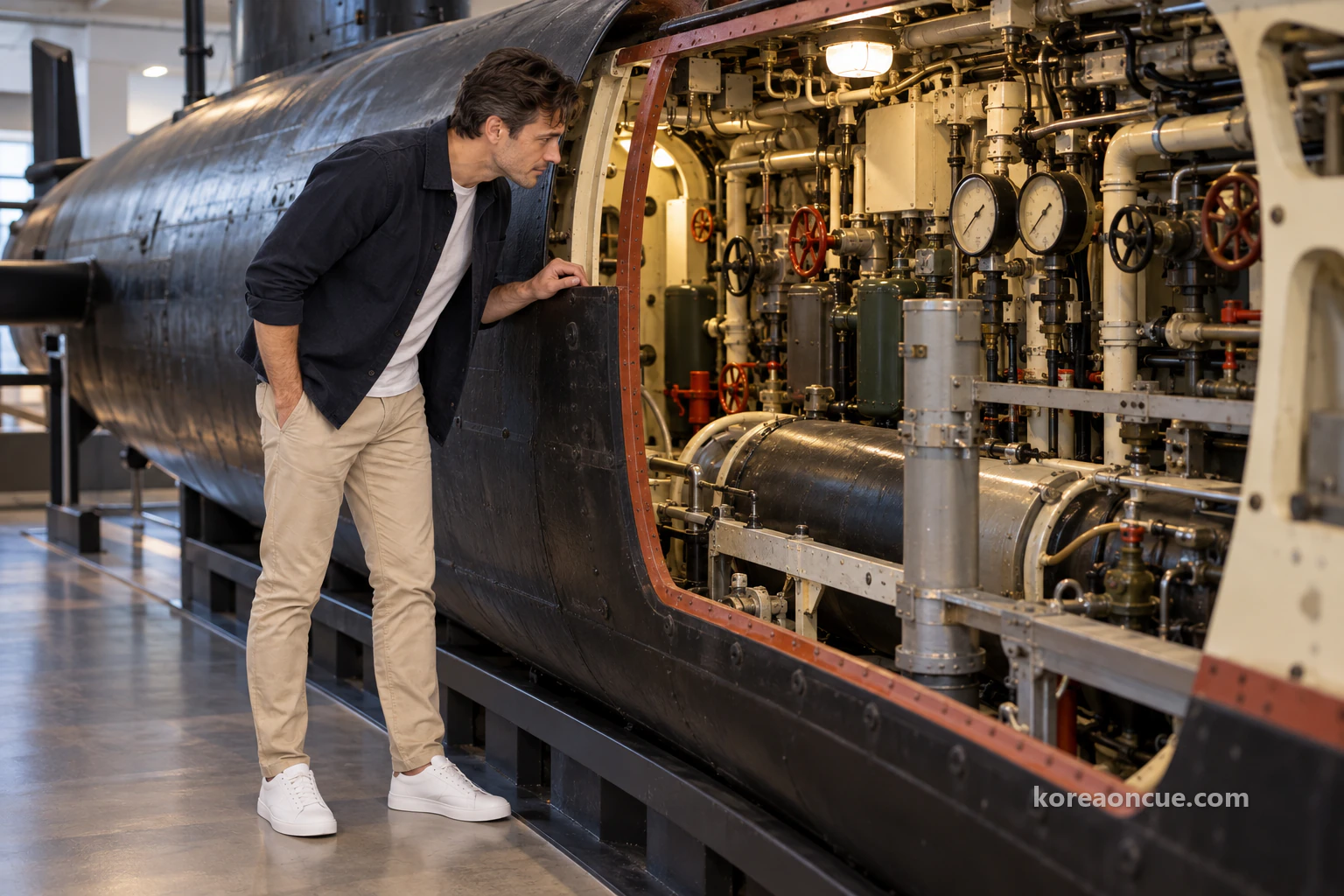
The submarine’s right-hand side has been cut open for display. Removing that section gives visitors a wider, safer view of the complicated interior and lets them explore it from inside and out. Ethan stands at the opening for a long time, looking at a full-sized version of the cross-sections he normally sees in engineering drawings. With pipes and equipment filling every gap, he struggles to picture around ten people living and working in here.
Level 1 of the visitor centre contains the ticket counter, displays about Seoul Battleship Park and the navy, the submarine interior exhibition and a photo spot. Level 2 has an exhibition on the history of the Hangang and the route to the Chamsuri patrol boat, while level 3 is a rooftop garden where visitors can take a break. In the Hangang exhibition, Ethan learns what this stretch of river used to be. Around Mangwonjeong, near today’s park, the riverbank was a naval training ground during the Joseon period, and kings sometimes watched the exercises. Retired warships now stand beside the river where naval forces trained hundreds of years ago.
Ethan sends Lulu his first photograph, showing the submarine’s exposed cross-section. Underneath, he writes, “They’ve opened up the side of a boat that went 100 m underwater. It feels like a drawing made real.” Her reply arrives almost immediately: “That sounds frightening — is it cramped?” “Cramped, yes, but there isn’t a bit of wasted space,” he replies.
Across the level 2 bridge to the Chamsuri patrol boat
Following the route from level 2 of the visitor centre, Ethan reaches the deck of the patrol boat resting on supports above the plaza. This is Chamsuri 285, built and deployed in 1978, and the same type as the patrol boats that fought in the First and Second Battles of Yeonpyeong in the West Sea in 2002. At 37 m long, it is longer than the submarine he has just visited, though small beside Seoul ahead. As soon as he steps aboard, he takes hold of the railing and looks over the whole boat.
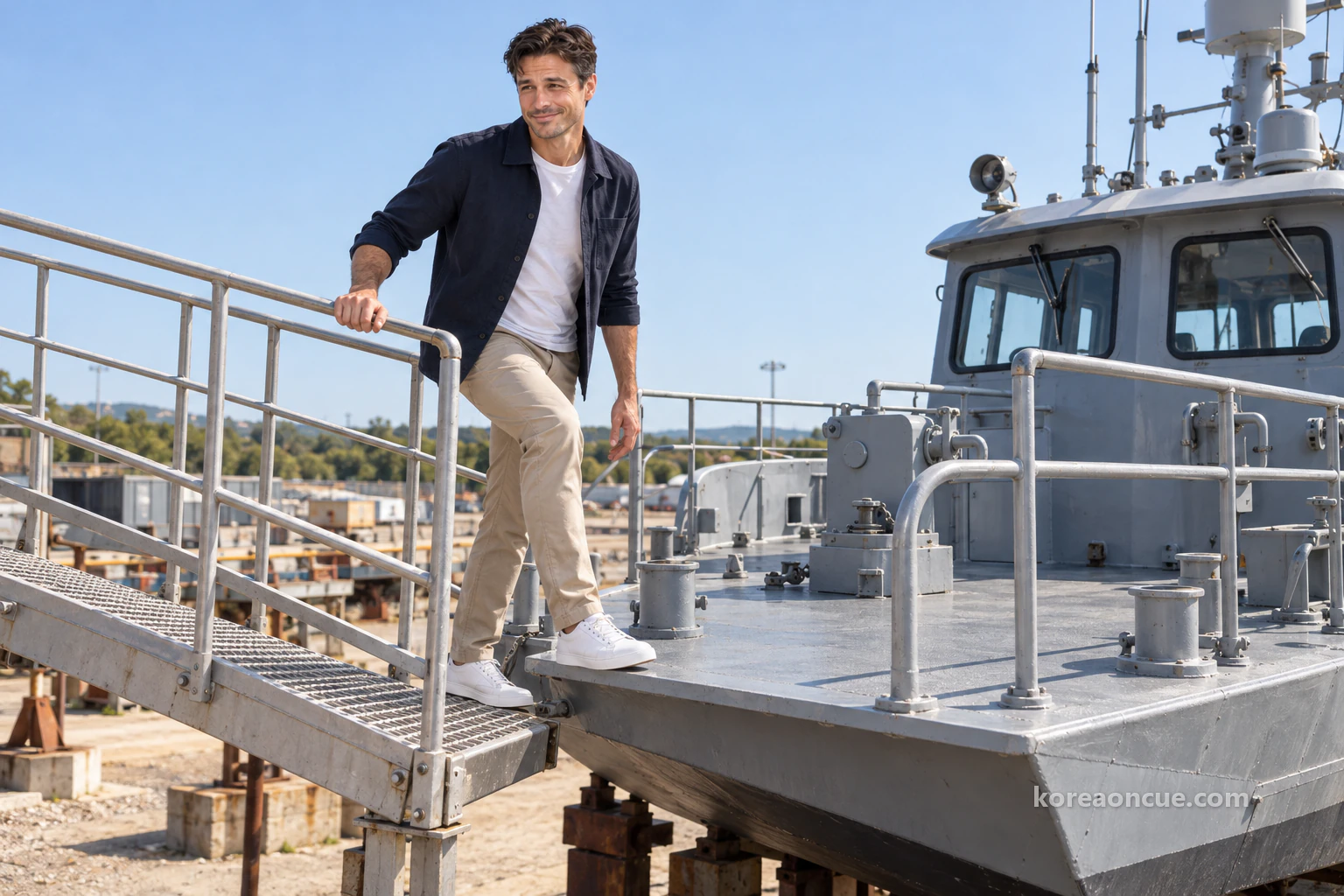
There is a story behind the name Chamsuri. Following the navy’s tradition of naming patrol boats after birds, they were first called Gireogi, meaning wild goose. The name was thought insufficiently forceful, so in 1993 it was changed to Chamsuri, the sea eagle, a bird of prey. Ethan likes that story, since naming machines is something people take seriously in the United States too. He writes “From wild goose to sea eagle” in his notebook and draws two little wings beside it.
The patrol boat has a naval information room on B1, a wheelhouse and communications room on level 1, while level 2 holds the bridge, a 20 mm Vulcan cannon and a 30 mm naval gun. Visitors can explore working spaces including the deck, communications room and wheelhouse, while a large screen in the indoor exhibition tells the navy’s story. Looking at the equipment packed into the small wheelhouse, Ethan begins to feel he understands why the boat was built for speed. Its maximum speed is 38 knots, and it carried 28 crew.
Leaving the wheelhouse, he thinks again about that number, 28. On a boat 37 m long, each person must have had very little space. In the factory where Ethan works, allowing enough room for each worker to move is a basic design requirement, while this patrol boat takes the opposite approach, squeezing space down to gain speed. Seeing how the same engineering discipline produces such different answers for different purposes is his most interesting discovery of the day.
From beside the Vulcan cannon on the bridge, he can see Seoul’s long hull across the plaza. Chamsuri rests on land, while Seoul floats on the river, two different ways of displaying vessels in the same park. He photographs the contrast and sends it to Lulu: “The little boat’s on land, the big one’s on the water — same navy, different places to stand.” “I’ve never seen a boat on land before,” she replies. Ethan sends another photograph, this time showing the red underside of the hull above its supports.
Inside the 1,900-tonne Seoul, from living quarters to wheelhouse
Last comes Seoul, the frigate floating on the water. Built in 1984 using Korean technology and commissioned in 1985, it served at sea for 30 years. It was the Republic of Korea Navy’s first domestically built frigate, and the first warship over 1,000 tonnes built by the Korean shipbuilding industry. Its displacement is 1,900 tonnes, its length 102 m and its maximum speed 36 knots, with a crew of about 150. Ethan spends a long time looking at “102 m”.
Seoul was built by Hyundai Heavy Industries. Seeing the shipyard’s name among the specifications, Ethan tries to picture Korean shipbuilding in the 1980s, when the frigate was under construction. Being the first Korean-built warship over 1,000 tonnes also made it an early step towards the many ships that followed. He writes “1984 — first domestically built frigate”, then adds “The first one is always difficult” underneath. It is a thought any engineer would recognise.
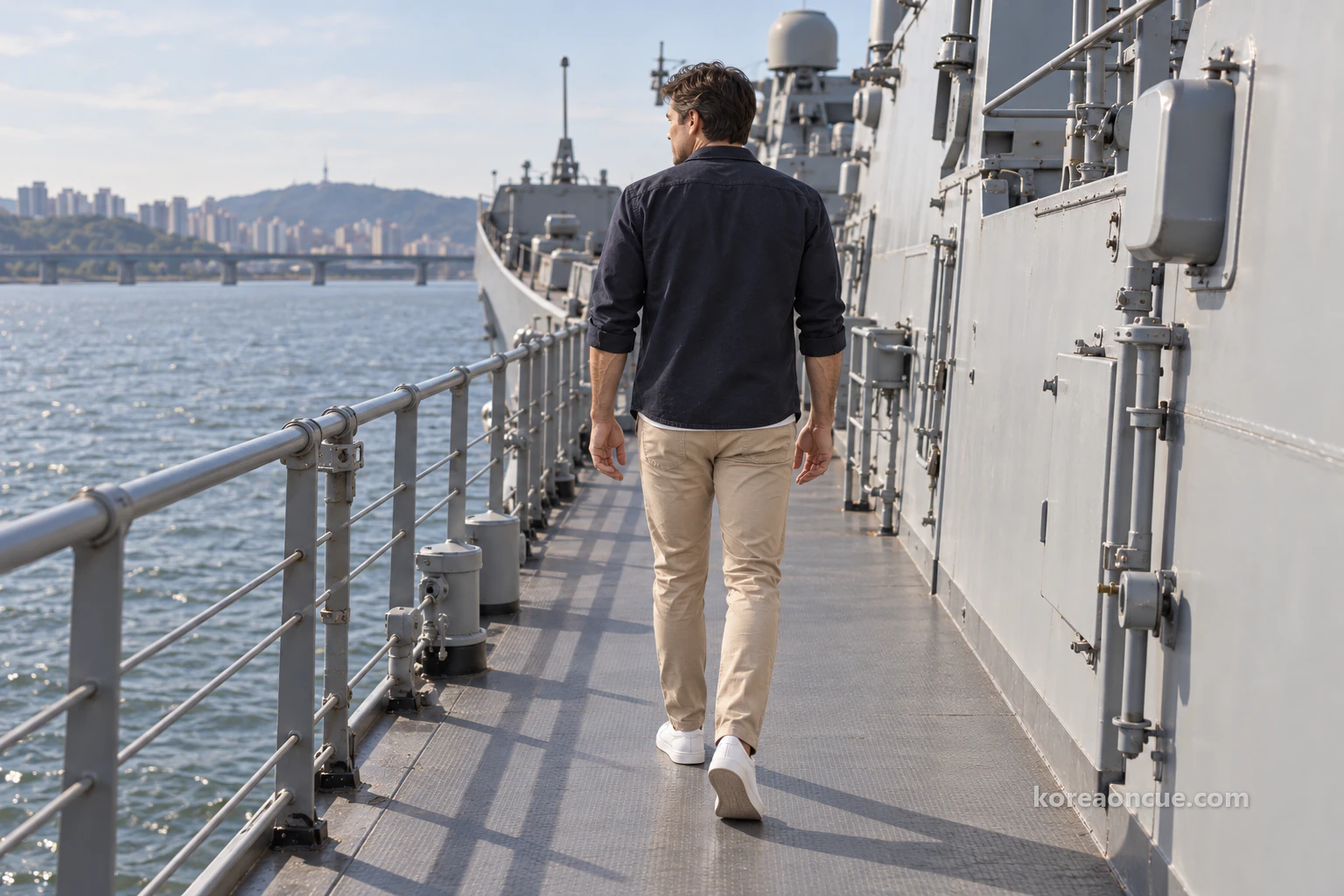
At 102 m, the ship is roughly the length of a football pitch. Its height, including the draught, is 28 m, comparable to an eight-storey apartment building. Ethan walks slowly along the side deck from bow to stern, measuring the length in footsteps. He has seen plenty of large machinery at work, but the thought of this enormous structure floating and moving at sea for 30 years still surprises him.
Each level inside Seoul has a different purpose. B1 contains the engine control room and enlisted crew’s sleeping quarters, while level 1 has officers’ sleeping quarters, a barber’s shop, a ship’s shop and separate dining rooms for enlisted crew and officers. Level 2 holds the combat information centre and captain’s cabin, level 3 the radar and communications rooms, and level 4 the wheelhouse and chart room. The living spaces on level 1 and working spaces on levels 2–4 have been preserved in their original form, showing how the crew ate, slept and worked.
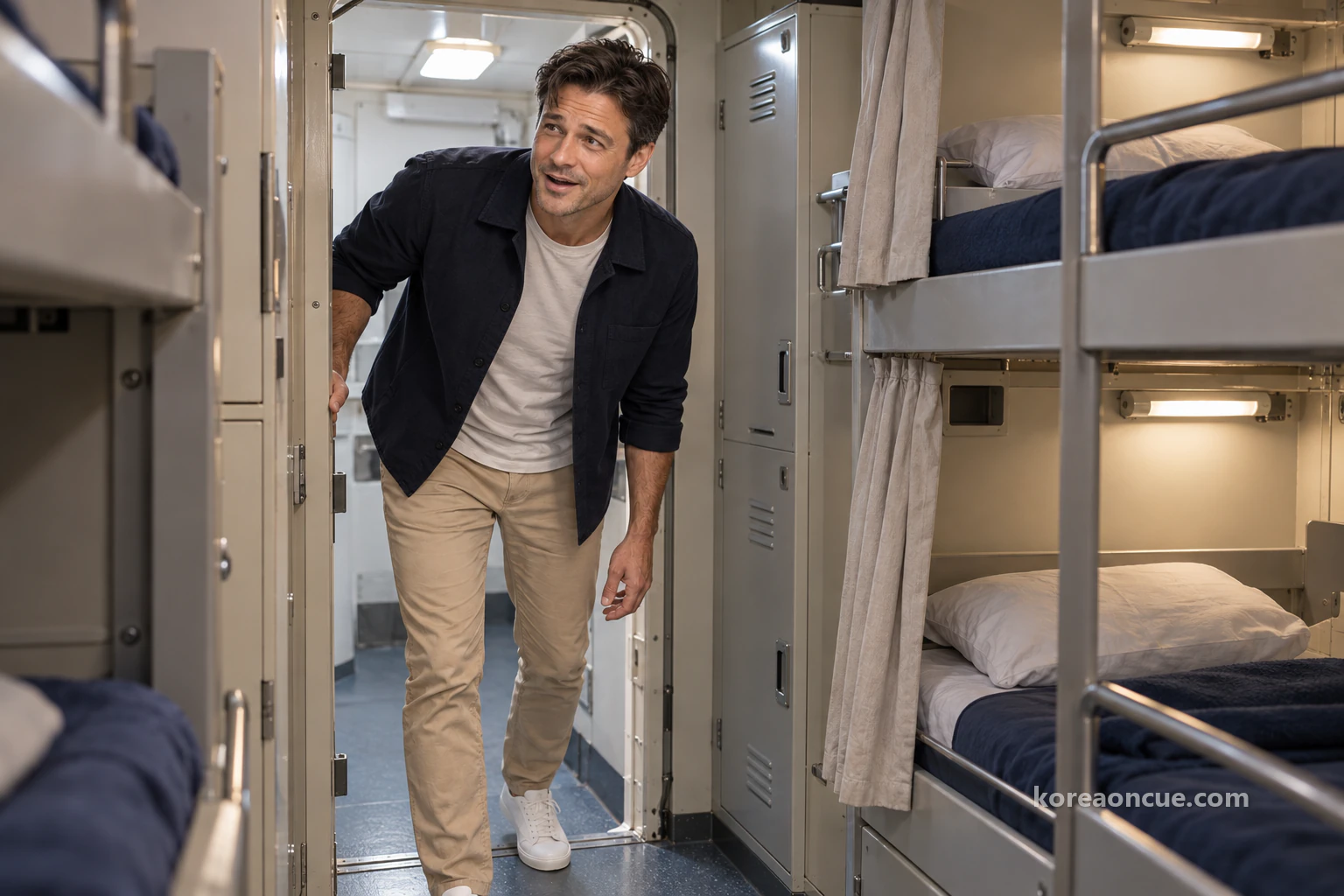
Ethan lingers outside the enlisted crew’s sleeping quarters. Bunks are stacked into the narrow room, with an aisle barely wide enough for one person between them. Remembering that 150 people shared this ship, he begins to see how carefully every bit of space was calculated. The ship’s shop and barber’s shop impress him too. For people spending long periods at sea, the ship was a workplace and a small town.
He also notices the separate dining rooms for officers and enlisted crew. Feeding 150 people three meals a day aboard one ship must have meant dividing up how the dining rooms worked. He smiles at the memory of eating lunch at the same restaurant every day when he lived in Itaewon. The sailors ate in the same place every day too, but he imagines these rooms were among the most sociable corners of the ship. Sending Lulu a photograph of a dining room, he captions it “The ship’s own Mangwon Market”.
Up in the top-level wheelhouse, the Hangang spreads out beyond the broad windows. Ethan examines the equipment one piece at a time. Imagining the people who stood here and handled the ship gives the room a weight he has never felt looking through a museum display case. He takes a photograph and sends it to Lulu: “They controlled a ship carrying 150 people from here. The simplest room I’ve seen today, and the most important.”
A free guided tour with a retired naval captain
At 1:30 p.m., Ethan returns to the visitor centre’s level 1 lobby for the free weekend guided tour. In summer, tours leave twice a day, at 1:30 and 4 p.m., starting with the submarine, continuing to the Chamsuri patrol boat and finishing aboard Seoul. Any visitor can join at the scheduled time. A retired naval captain leads the tour. The timetable changes for winter from November, so check the website for departures then.
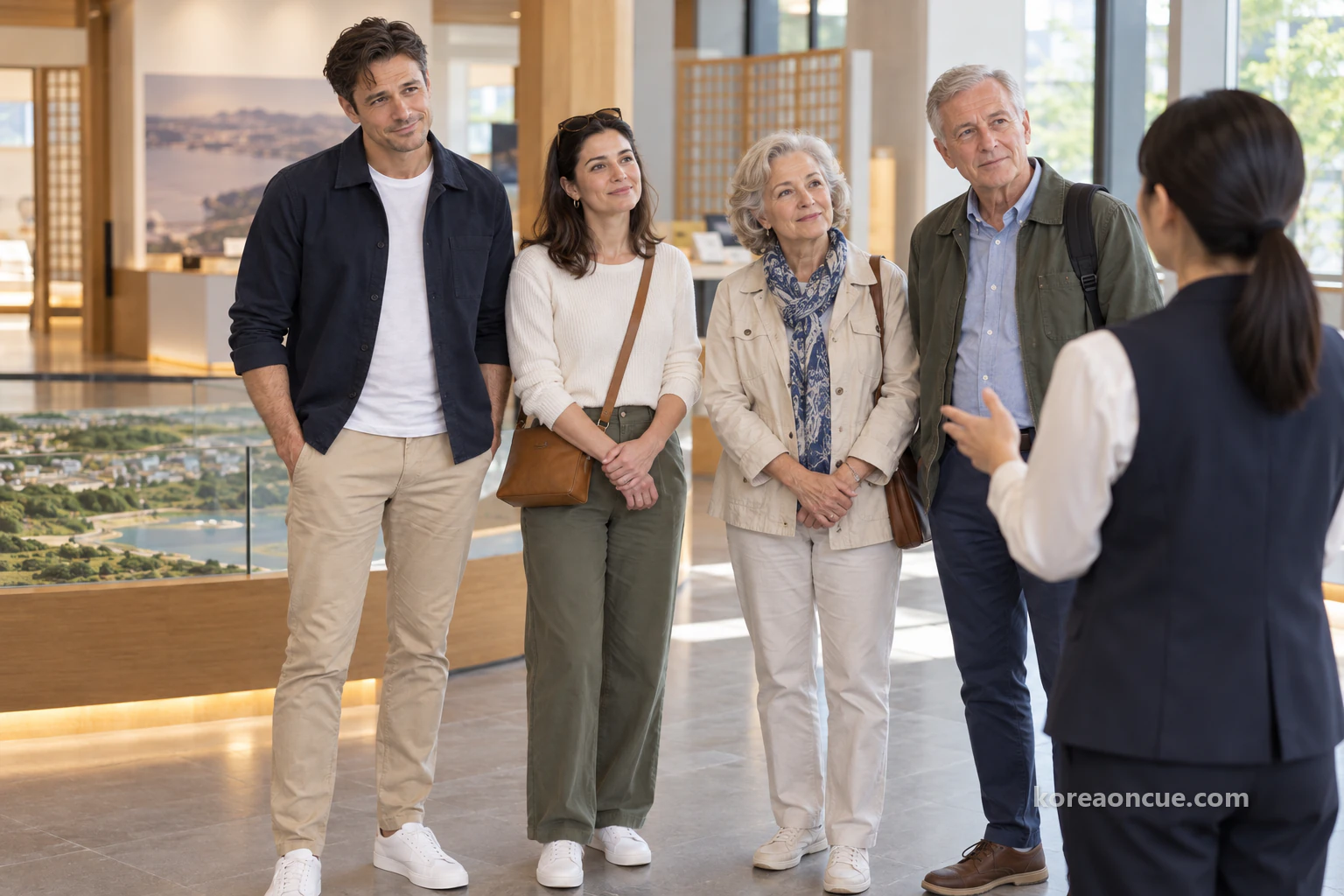
Having already explored alone, Ethan begins to notice things he passed earlier. The guide explains how the submarine’s crew moved through its narrow passages, why the patrol boat needed to be so small and fast, and how a day unfolded aboard the frigate. Ethan plucks up the courage to ask one of the engineering questions he has been holding onto, and the guide smiles and answers patiently. Afterwards, it is the expression on the guide’s face as he answers that stays with Ethan longer than the answer itself.
Many of the visitors on the tour are families with children. The children’s eyes light up at the wheelhouse equipment, while parents listen to the guide and explain things again to them. Watching, Ethan thinks that the ship now has a job telling its story to the next generation. After 30 years at sea, it spends its retirement beside the river answering people’s questions.
When the tour ends, Ethan gathers what he has heard into his notebook. On his own, he noticed numbers and structures, but now he can also picture the daily lives of the people inside them. For a first visit, his order works well: look round independently, then return with the weekend tour. The first circuit gives you questions, and the second helps answer them. With the summer tour at 1:30 p.m., arriving when the park opens at 10 a.m. leaves enough time to explore beforehand.
Taking photographs and finding the toilets
Visitors can freely take photographs as souvenirs of their visit to Seoul Battleship Park, which are exempt from the park’s filming regulations. Personal YouTube videos can also be filmed at any time during visits, including weekends and public holidays. Model shoots and larger productions need separate arrangements, while aerial filming, including drone footage, requires advance permission from the relevant authorities. After reading this, Ethan messages Lulu: “You can film videos here.”
One practical point is easy to miss: there are no toilets inside the visitor centre. Use the toilets in Seoul Battleship Park’s multipurpose plaza instead. Ethan spends a while looking inside before asking at the ticket counter and heading back out to the plaza. Exploring all three vessels takes a fair amount of time, so locate the plaza toilets before going in.
The rooftop garden on level 3 of the visitor centre gives him somewhere to rest. Late in the afternoon, Ethan sits on a bench and scrolls back through the photographs he has sent Lulu. There is the cut-open submarine, the patrol boat on its supports, the stacked bunks and the wheelhouse windows. With a line or two beneath each picture, the messages have become a day’s observation log. From the roof, he can look down at the whole length of Seoul floating on the water.
Sunset from Seoul’s stern deck, and the holiday’s last photograph
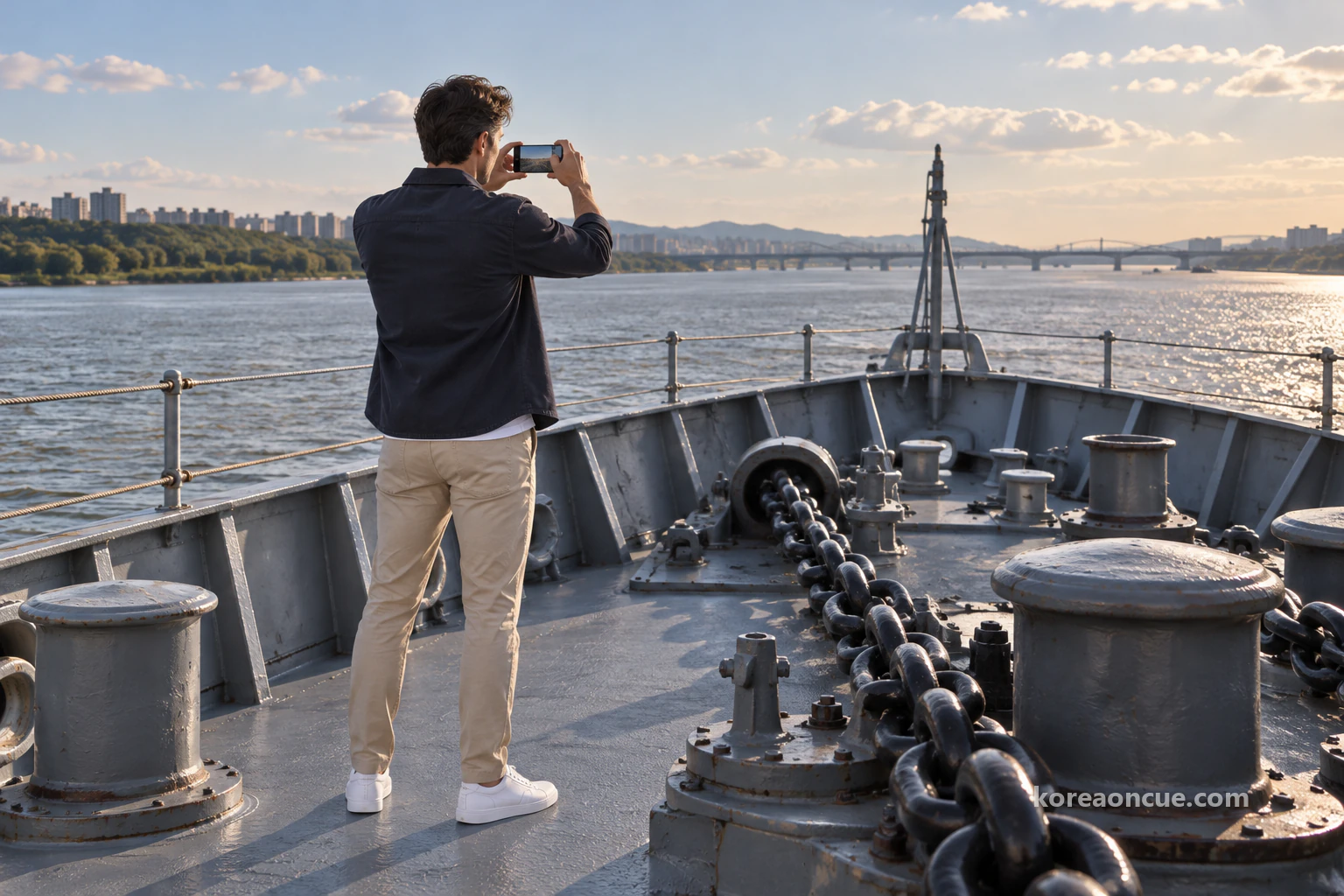
As the sun begins to drop, Ethan returns to the deck at Seoul’s stern. The bow and stern decks are photo spots aboard the warship, with the Hangang’s evening sky behind them. This Sunday’s summer opening hours run until 8 p.m., with last admission at 7:30 p.m. He leans against the railing and watches the evening light spread across the river. His holiday of a little over a week is drawing to an end on this deck.

Ethan sends Lulu one last photograph, the Hangang glowing beyond the deck railing. This time he leaves out the engineering commentary and adds a short caption: “Last photo of the holiday — started at the market, finished on a ship.” Instead of a smiley face, Lulu replies with a sentence: “Next time, let’s bring Maya and start at the market again.” Ethan writes back, “Then I’m choosing the order — soup last.”
As he leaves the park, Ethan opens the last page of his notebook and, below yesterday’s “Seoul Battleship Park — tomorrow”, records the day in an engineer’s shorthand. “Submarine — 100 m, cross-section / Chamsuri — 37 m, on land / Seoul — 102 m, on water, 150 people.” Underneath, he adds, “One extra day next holiday.” Tomorrow morning’s flight will take him back to the design office in Seattle, but the Seoul he knew from six years in Itaewon has grown to include Mangwon’s market lanes, the warships by the river, and one Seoul resident who connected the two.
Common Mistakes
Turning up on a Monday
the park closes every Monday, as well as on 1 January, Seollal and Chuseok itself. Check the notices when a Monday coincides with a public holiday.
Using the summer timetable in November
winter hours, November–February, are 10:00–18:00, with last admission at 17:30.
Looking for toilets inside the visitor centre
there are none in the building. Use the toilets in the multipurpose plaza.
Taking snacks into the ships
food and drink are prohibited in exhibition rooms. Pets are not allowed either.
Missing the weekend guided tour
the free tours start in the visitor centre’s level 1 lobby, at 13:30 and 16:00 in summer.
Filming the ships with a drone without permission
souvenir photographs are fine, but aerial filming requires advance permission from the relevant authorities.
FAQ
How do I get to Seoul Battleship Park?
Take Mapo09 from the bus stop outside Mangwon Station Exit 1 to 한강공원입구, then walk 7 minutes. Alternatively, take Mapo16 from 홀트아동복지회 outside Hapjeong Station Exit 1 to 망원유수지, 마포구민체육센터, also a 7-minute walk away.
What are the opening hours?
Summer hours, March–October, are Tue–Fri 10:00–19:00 and Sat–Sun 10:00–20:00. Winter hours, November–February, are 10:00–18:00. Last admission is 30 minutes before closing.
When is it closed?
Every Monday, 1 January, Seollal and Chuseok itself.
How much is admission?
Adults ₩3,000, teenagers and military personnel ₩2,000, and children ₩1,000. There is no separate foreign-visitor tariff, and the same age bands apply.
What can I see?
You can explore three vessels: the frigate Seoul, 102 m long with a displacement of 1,900 tonnes, Chamsuri patrol boat 285, 37 m long, and a Dolgorae-class submarine with its right-hand side cut open.
Are there guided tours?
Free tours run at weekends, starting in the visitor centre’s level 1 lobby. Summer departures are at 13:30 and 16:00. Check the website for the winter timetable.
Can I take photographs?
Visitors can take souvenir photographs and film personal YouTube videos during visits, including weekends and public holidays. Model shoots and larger productions need separate arrangements, and drones require advance permission.
Recap — 30 seconds before you go
- Mangwon Station Exit 1 → Mapo09 → 한강공원입구 → 7 minutes on foot.
- Summer: Tue–Fri 10:00–19:00 · Sat–Sun 10:00–20:00. Winter: 10:00–18:00. Last admission 30 minutes before closing. Closed Mondays.
- Adult admission ₩3,000, with no separate foreign-visitor tariff.
- Submarine at the visitor centre → level 2 bridge → Chamsuri patrol boat → Seoul. Free guided tours at weekends.
- Toilets are in the multipurpose plaza, outside the building. No smoking, no food or drink in exhibition rooms, and no pets.
Sources
- Seoul Battleship Park — Visitor guideSummer and winter opening hours and last admission · regular closure days · individual admission fees and 50% reductions · advance booking for groups of 20 or more · visitor rules · no toilets inside the visitor centre; use the multipurpose plaza toiletschecked 2026-10-22
- Seoul Battleship Park — DirectionsMapo 09 from Mangwon Station Exit 1 or Mapo 16 from Hapjeong Station Exit 1, followed by a 7-minute walk · 2-minute walk from Mangwon Hangang Park Car Park 2 · separate parking chargeschecked 2026-10-22
- Seoul Battleship Park — Guided toursFree weekend tours · summer departures at 13:30 and 16:00 · meeting point in the visitor centre’s first-floor lobby · submarine→Chamsuri→Seoul routechecked 2026-10-22
- Seoul Battleship Park — Seoul frigate (FFK-952)Built in Korea in 1984, commissioned in 1985 and served for 30 years · first domestically built frigate · built by Hyundai Heavy Industries · displacement 1,900 tonnes, length 102 m, maximum speed 36 knots and about 150 crew · living and working spaces by floor · bow and stern photo spotschecked 2026-10-22
- Seoul Battleship Park — Chamsuri patrol boat (285)Built and deployed in 1978 · renamed from Gireogi to Chamsuri · length 37 m, maximum speed 38 knots and 28 crew · naval exhibition room, wheelhouse, communications room, bridge and guns · indoor naval history displayschecked 2026-10-22
- Seoul Battleship Park — Dolgorae-class submarine (SSM-053)Service from 1991 to 2016 · cutaway right side · diving depth 100 m and about 10 crew · retirement history of the class · visitor centre floor guide, route to Chamsuri and rooftop gardenchecked 2026-10-22
A Seoul story told with our AI characters. Place details are checked against public sources; the photos are AI-made illustrative images. How we use AI
More from this area
Sunday at Jeoldusan, Monday at Yanghwajin: Noah’s two walks from Hapjeong Station Exit 7
The day after saying goodbye to Hina at Mangwon Hangang Park, Noah comes out of Hapjeong Station Exit 7.

Mali’s sixth work trip to Seoul: the background colour for a year-end shoot, found at Haneul Park at sunset
The homework: find a background colour that holds sunset light and dry-grass colour together, for a year-end shoot.