
SEOUL · MANGWON
How Ethan, an engineer, met Lulu at Mangwon Market
The lane to the right of Mangwon Station Exit 2, shops that keep their own hours, choosing what to eat and finding the way towards the Han River
On the last weekend of a short holiday, Ethan visits Mangwon Market for the first time. In the middle of the lane, Lulu, a Seoul local with a phone in hand, starts a conversation in English. Ethan replies in Korean.
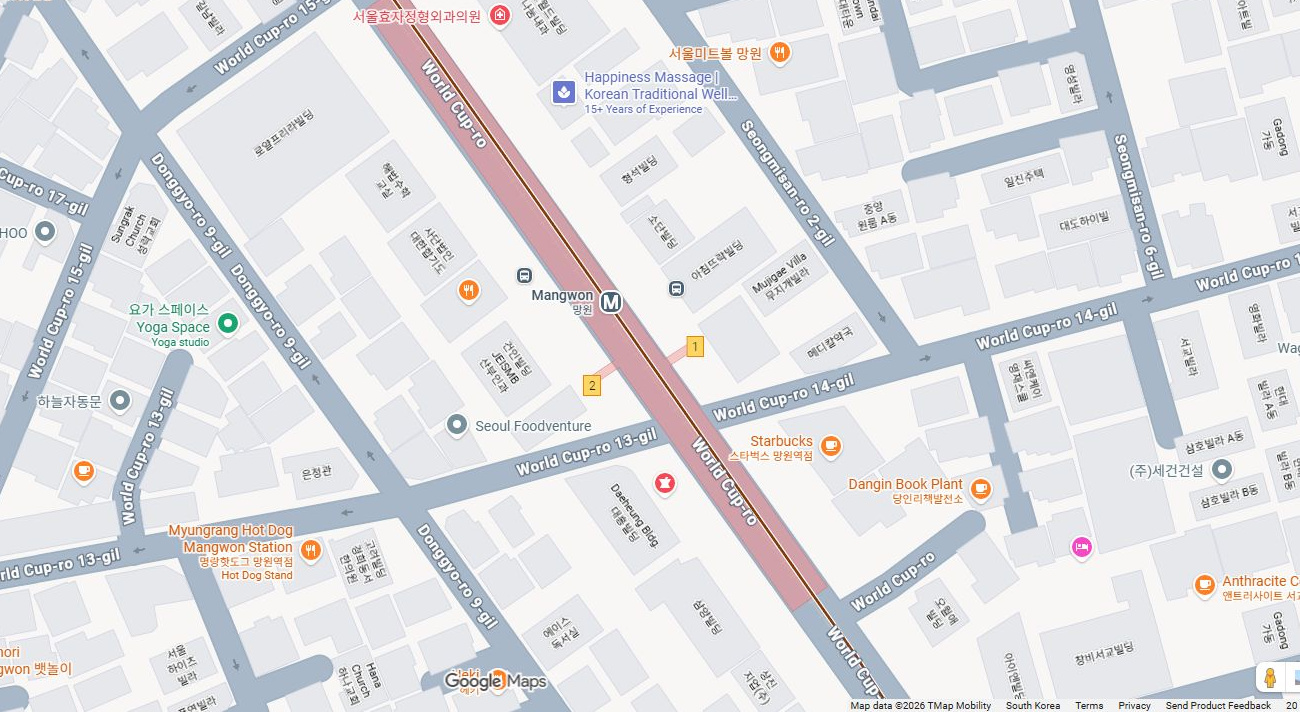
How to get there
It is Ethan’s first visit to Seoul in a year. A forty-four-year-old engineer who designs machinery in Seattle, he speaks Korean comfortably after six years living in Itaewon and heads for a market whenever he returns. This time he has a little over a week off and a long list of things to eat in his notebook. Six years in Seoul, though, have hardly made the whole city familiar. He knows a few markets around Itaewon well, but has barely explored the neighbourhood markets across the river to the west.
His fondness for markets is easy to explain: they show what people in a city actually eat every day. A restaurant menu is chosen for its customers, while a market stall gives him a glimpse of what the neighbours are having for dinner. Ethan makes a point of walking through at least one market wherever he travels, yet in Seoul he has always returned to familiar neighbourhoods. For this holiday, he has decided to pick a market somewhere he has never been and walk in as a newcomer.
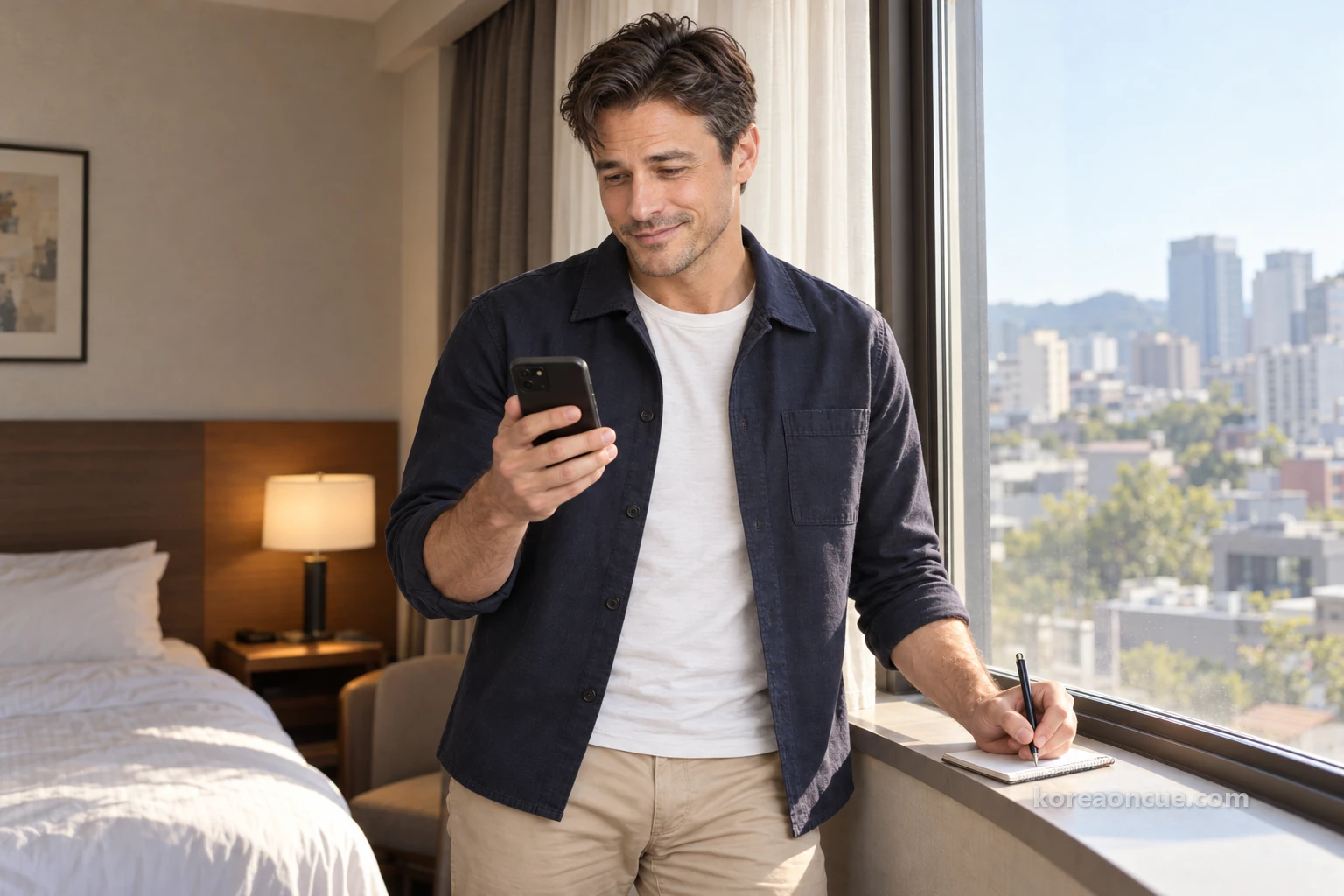
On the final Saturday of his holiday, Ethan pulls up a name sent by a friend from his Itaewon days: Mangwon Market. His friend described it as “a market where the neighbours do their shopping, rather than tourists”, and Ethan liked the sound of that. He plans the visit as an engineer would: leave Mangwon Station by Exit 2, head straight along the lane to the right, then walk the full length of the market before choosing food on the second pass. The first lap is research, the second is execution.
Ethan takes the subway from his accommodation to Mangwon Station. He knows there are buses too, but walking into an unfamiliar neighbourhood from its station helps the route stick in his head. Local bus Mapo09 and regular buses 271, 7733, 7013A and 7013B also serve Mangwon Market, so choose whichever works best from where you are staying. For the subway, remember Mangwon Station on Line 6, specifically Exit 2. On the train, Ethan repeats “Exit 2, right” to himself about three times.
The things Ethan wants to eat on this holiday are written in Korean in his notebook: kalguksu, eomuk, dakgangjeong and croquettes. Ordering in Korean is easy enough for him. The difficult part is knowing where everything is in an unfamiliar market, then deciding what to choose first when he reaches a display. Once he steps inside, there is far more in front of him than those four words suggest.
This piece follows that Saturday and doubles as a guide to a first visit to Mangwon Market. We will cover which station exit to use, how to enter the market and why opening hours differ between shops. Along the way, Ethan and Lulu, whom he meets that day, work out how to choose food in the narrow lanes and where to go afterwards for the Han River.
The Cue
Mangwon Market is a traditional market in Mangwon-dong, Mapo-gu, with plenty of food to choose from. To get there, leave Mangwon Station on Line 6 by Exit 2 and walk straight along the lane to the right, or take local bus Mapo09 or regular bus 271, 7733, 7013A or 7013B. Opening hours and days off vary by shop, so check separately if there is somewhere specific you want to visit. The lanes are narrow and local people come here to do their shopping, so stand close to the shops while choosing food and keep the middle clear. For enquiries, call 02-335-3591.
- Where: Mangwon-dong, Mapo-gu, Seoul. Mangwon Station (Line 6) Exit 2, then straight along the lane to the right.
- Buses: Local bus Mapo09 · regular buses 271, 7733, 7013A and 7013B.
- Opening hours and days off: These vary by shop. Check separately if you have a particular shop in mind.
- Food: The market is known for its food, including kalguksu, eomuk, dakgangjeong and croquettes.
- Approach: Walk through once before buying, then choose on the second pass. Stand close to the shops while deciding.
- Phone: 02-335-3591.
Mangwon Station Exit 2, then the lane to the right
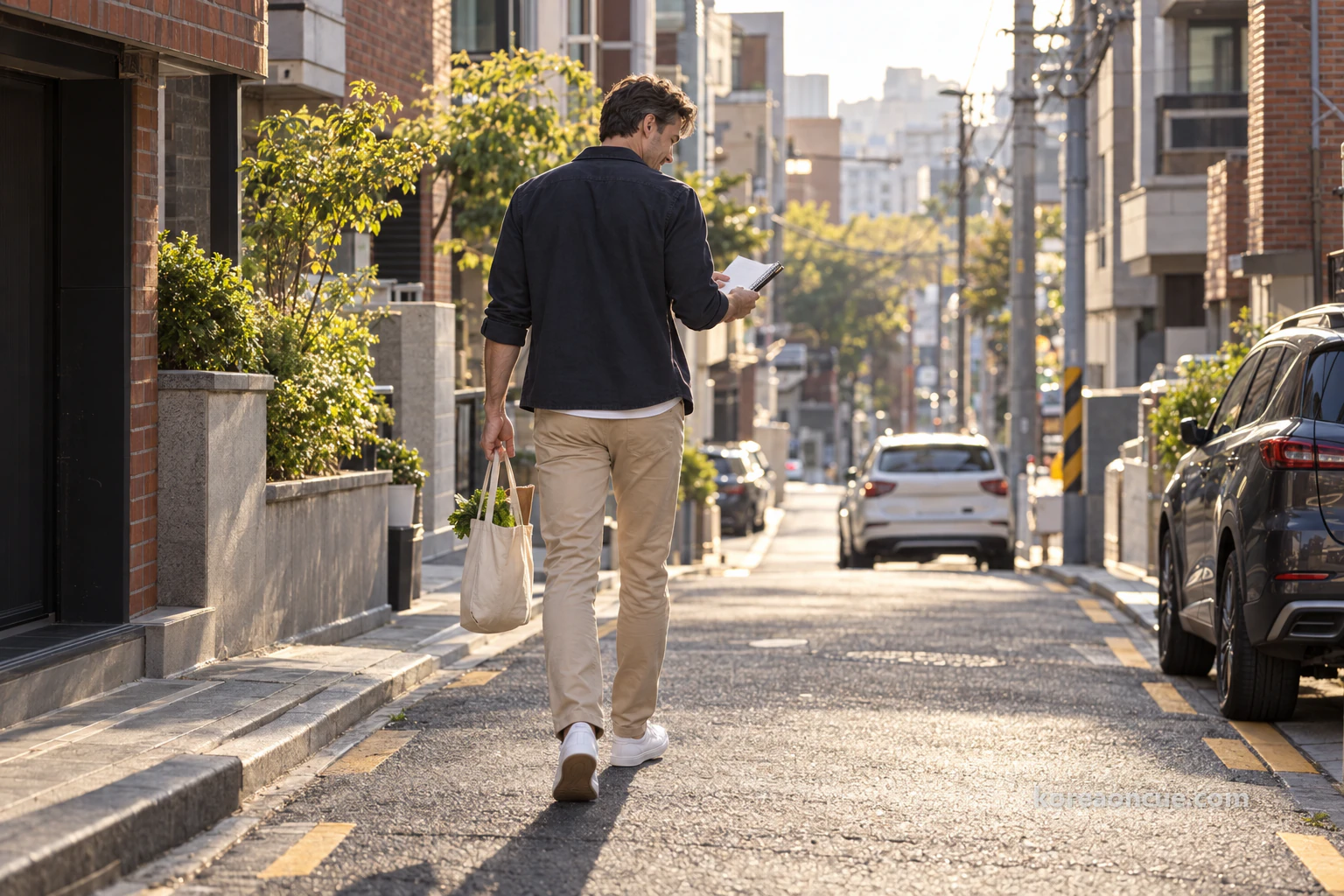
At eleven on Saturday morning, Ethan comes out of Mangwon Station Exit 2. He turns into the lane to the right, and within a few steps the market begins. He is only a block away from the main road, but the atmosphere has changed. Baskets of vegetables, steaming pots and people carrying shopping bags line the lane ahead. Ethan closes his map app and starts walking.
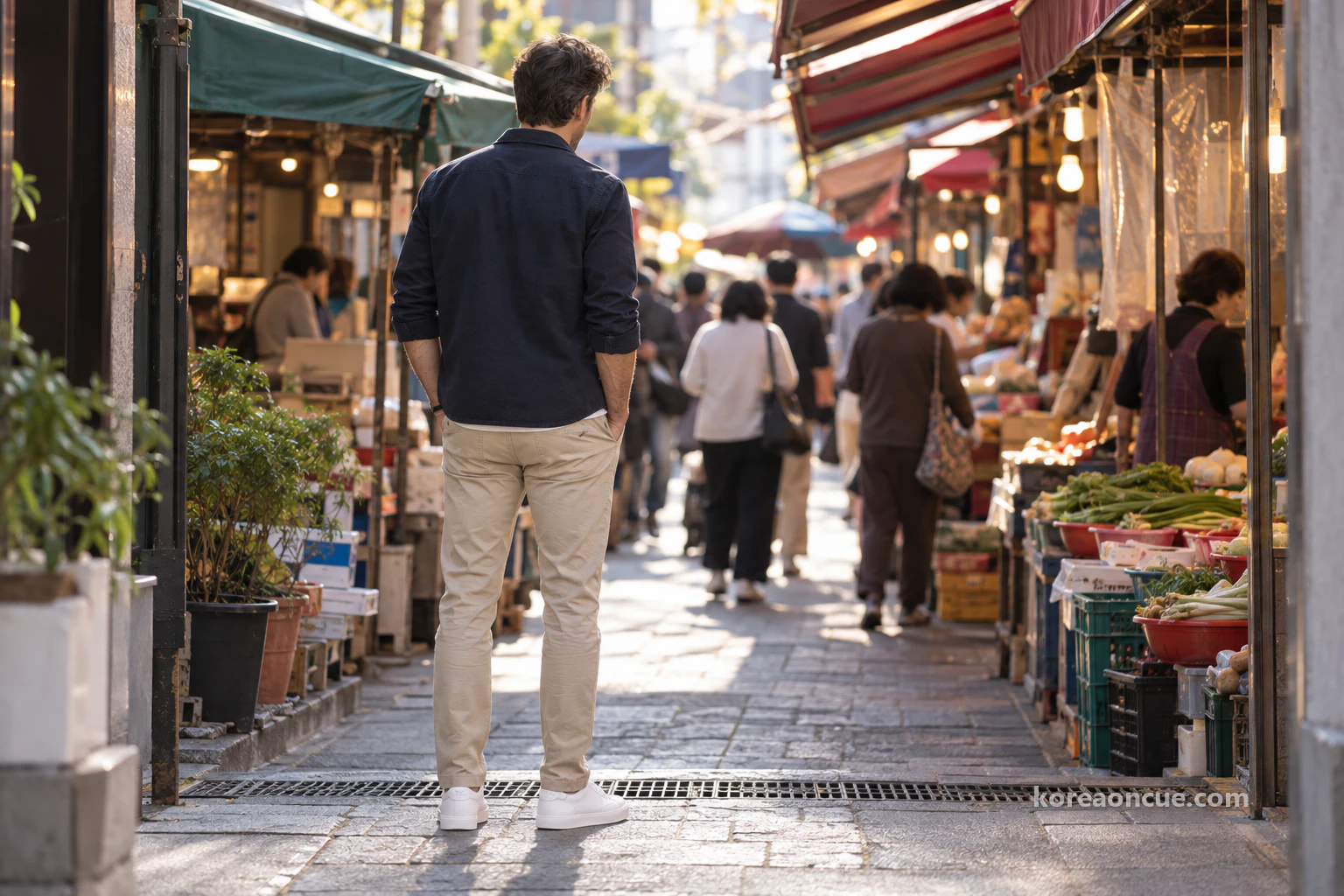
Ethan has a routine for his first walk through a market: buy nothing and go all the way to the end. He checks what is sold where, which shops have queues and roughly where the lane finishes. With a laugh, he usually puts it down to his work as an engineer. On a new site, he walks around to understand the layout before touching any equipment. A market, to Ethan, is another sort of site.
Above the shops on either side, Ethan can see the windows of people’s homes. He likes finding a market in the middle of a neighbourhood where people live, rather than between tall buildings. Most markets he has seen in the United States have been gathered inside one large building or set up on open ground beside a car park, and this feels different from the markets he knows around Itaewon too. As he walks, he begins to understand what his friend meant about the neighbours coming here to shop.
The lane goes on further than Ethan expects. One shop follows another, with a constant flow of people carrying shopping bags. Ethan matches his pace to theirs. He is tall enough that stopping suddenly would block the view of anyone behind him. As he would in a factory aisle, he takes half a step towards a shop whenever he wants to pause.
Looking first, and checking each shop’s hours
On his first lap, Ethan notes the shops’ positions in his notebook. Steam rises from a kalguksu shop, eomuk sits on skewers, dakgangjeong is being tossed in a large bowl and golden croquettes line a display case. Calling it a market full of food is no exaggeration. He soon finds all four things on his list, along with far more that he does not recognise.
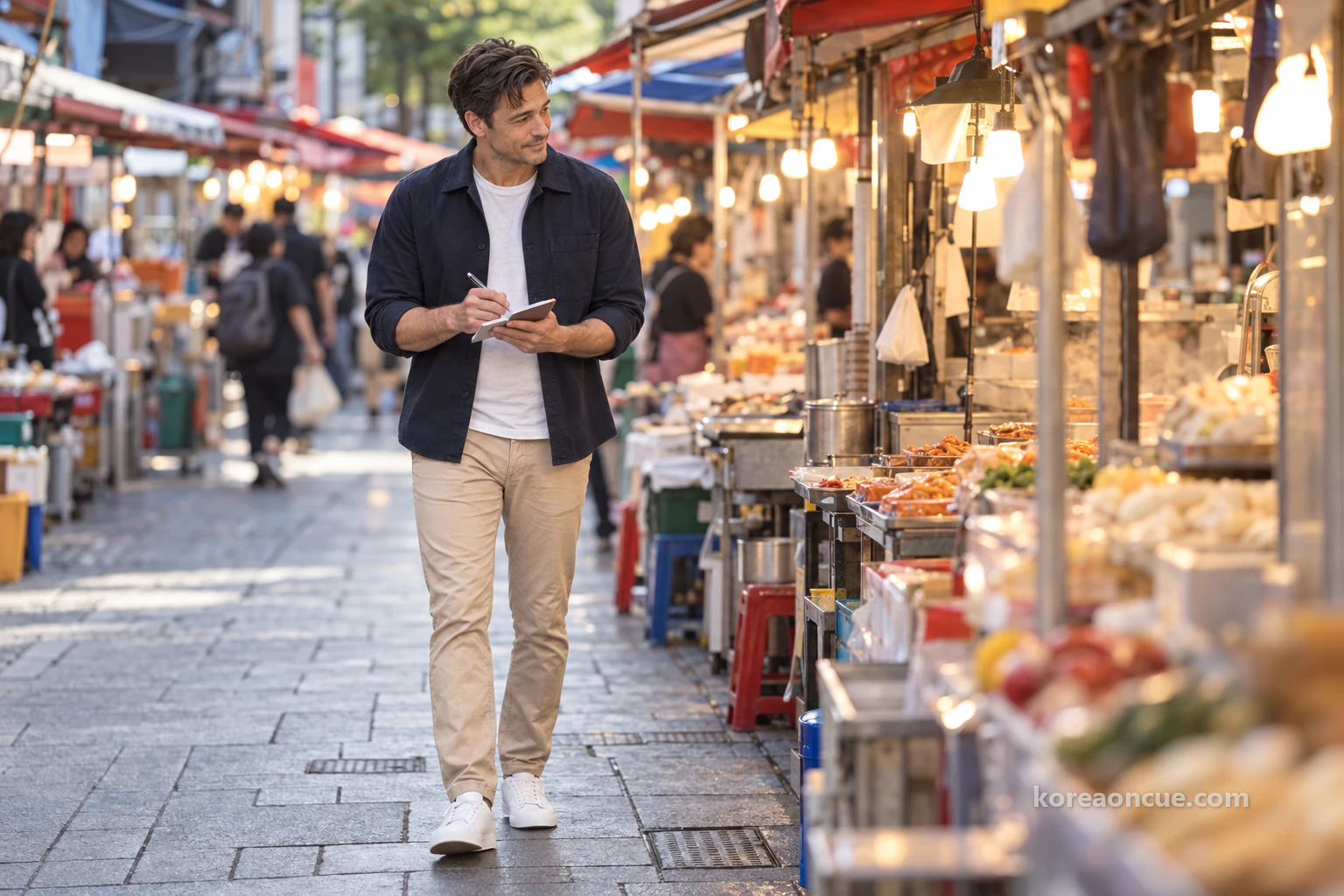
Some shops have yet to open, their shutters halfway up or their owners just starting to put things out. Opening hours and days off vary from shop to shop at Mangwon Market, rather than the whole market opening and closing together. Ethan writes a large reminder in his notebook: “Different hours for each shop.” If one particular shop is the reason for your first visit, check ahead that it will be open that day.
At the end of his first lap, Ethan stops at the far end of the lane to sort out his notes. There are seven things he wants to eat and only one stomach, so the engineer needs to set some priorities. There is another problem too. The croquettes he saw in the display case all looked much the same from the outside, and he could not tell what was inside them. As he starts his second lap, he returns to that display.
This is always the hardest moment for Ethan in a market. He can see what is for sale, but its appearance tells him little about how it will taste. At a familiar shop in his Itaewon days, he could simply ask the owner, “What’s good today?”, but here even finding the right moment to ask takes thought. Back in Seoul after a year, in a neighbourhood he does not know, Ethan finds himself feeling like a first-time visitor again.
Meeting Lulu at the croquette display
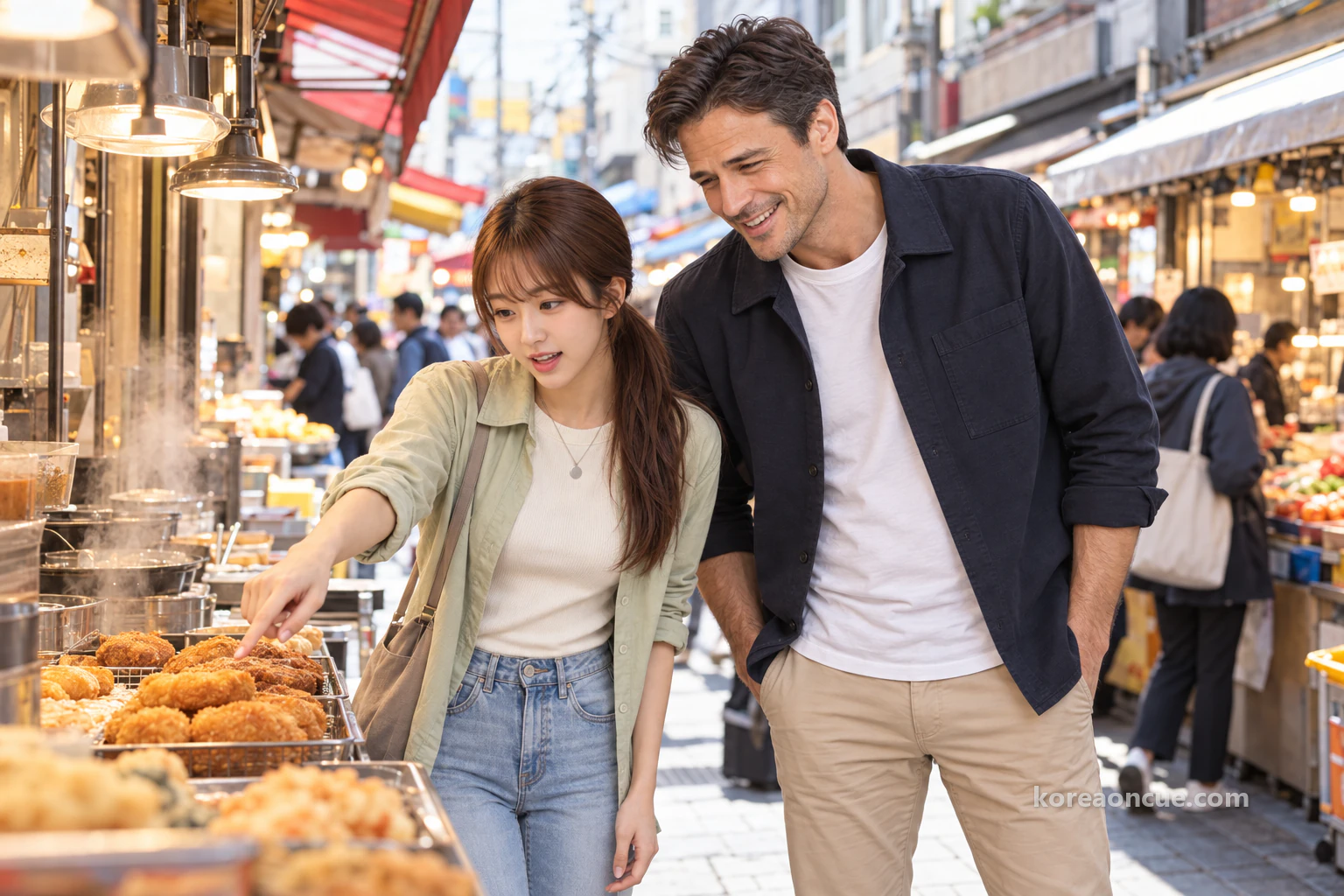
Someone has reached the croquette display before him, a young woman filming it with her phone held low. As Ethan tilts his head and peers at the croquettes one by one, she speaks to him in English: “Are you looking for a particular one? Shall I explain the fillings?” Ethan smiles and replies in Korean, “I was wondering about the difference between the potato ones and the meat ones,” which makes her eyes widen before she bursts out laughing. This is Lulu, twenty years old, born and raised in Seoul, and here today to film a neighbourhood market video.
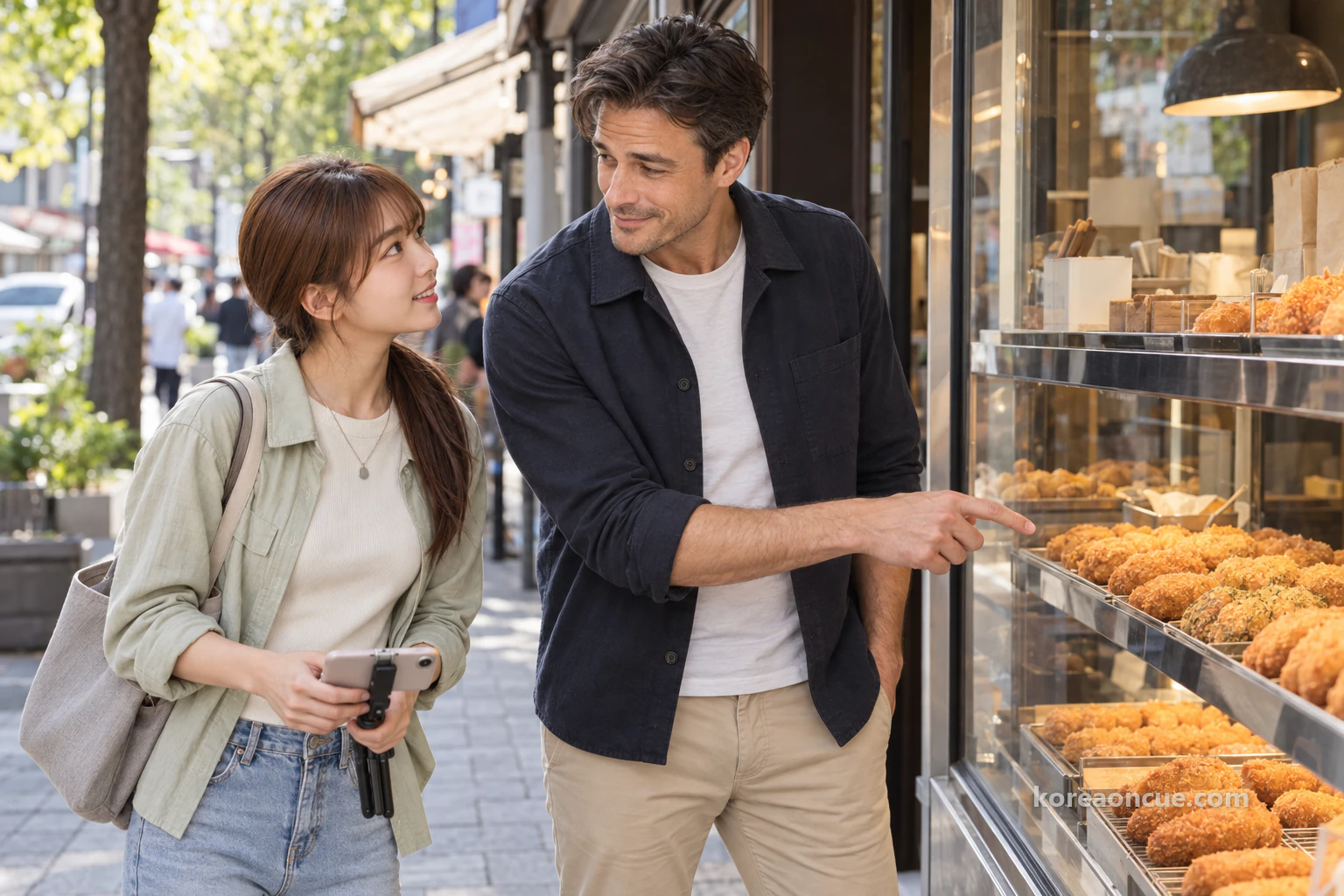
“Your Korean’s really good,” Lulu says, and Ethan briefly explains that he used to live in Itaewon for six years. Then he shows her his notebook, where the word “croquette” has three question marks beneath it. Laughing, Lulu points to the croquettes one by one and explains them, suggesting that a first visit is a good excuse to try different fillings. Ethan takes her advice and chooses three. He has been speaking Korean for longer, but Lulu knows this market far better.
After paying, Ethan thanks Lulu, who shows him her phone screen and explains that she is making a short video about the neighbourhood market. She often posts videos introducing Seoul with her friends, and the question friends from abroad ask most often is, “How do I choose things at a market?” Ethan laughs that he has just asked exactly that. Lulu asks whether she can briefly include his voice in the video. He readily agrees, on the condition that his face stays out of it.
Ethan notices how Lulu films. Before raising her phone at a display, she bows a greeting to the owner and gestures to ask permission, waiting until there is a gap between customers if the owner is busy. It reminds him of good manners on a work site. Ask before entering someone else’s workplace, then move without getting in the way of their work. Lulu says that is the least anyone filming a neighbourhood market should do.
Choosing food on the second lap
Lulu joins Ethan for his second lap, filming as they walk and answering his questions. He shows her the seven things he noted on the first lap, and she rearranges the order. “Leave the hot broth until last,” she says. “It’s awkward to carry and eat while walking.” The engineer’s priorities are being reorganised by a Seoul local.

Lulu’s advice for choosing food in the lane is straightforward: stand close to the shop and keep the middle clear while deciding. Local people walk through Mangwon Market with their shopping bags, and the longer someone lingers in front of a display, the harder it becomes for people behind to get past. Even when filming, Lulu stands beside the wall by a shop rather than in the middle of the lane. Watching her, Ethan shifts a step towards the wall with his bag of croquettes.
The same consideration applies when eating, and Lulu suggests stopping at a quieter edge of the lane or outside the market. Carrying food through the shoppers makes it easy to smear someone’s clothes if they bump into it. Ethan takes her advice and eats a croquette to one side at the end of the lane. Beneath the crisp outside, the filling is soft. In his notebook, he erases the three question marks beside “croquette” and draws a small star in their place.
At the kalguksu shop, Ethan places his order first: “One kalguksu, please, with plenty of broth.” Hearing this tall foreign visitor order so naturally in Korean, the owner smiles and asks, “Where did you learn to speak like that?” Ethan replies, “Six years in Itaewon.” Lulu, listening beside him, wants to film the exchange, but Ethan smiles and waves a hand. Their agreement still stands: his voice only.
Ethan has a few tips to offer Lulu in return, learnt from the owner of a shop he used to visit regularly in Itaewon. When a shop is busy, keep the order brief, pay before the food arrives and push the empty bowl towards a spot where the owner can clear it easily. “Even people from Seoul don’t all know that,” Lulu says, copying the advice into her phone notes. A twenty-year-old who lives in Seoul and a forty-four-year-old who used to live here are trading things the other does not know about the city.
Talking over a bowl of kalguksu
While waiting for the kalguksu, they learn a little more about each other. Ethan explains that he now designs machinery in Seattle and comes to Seoul when he has time off to eat the things he misses. Lulu was born in Seoul and still lives here, making videos about places across the city with her friends. She also mentions Maya, her Singaporean friend who explores Seoul with her. Ethan laughs that, despite six years in Itaewon, he has never been to Mangwon-dong, and that even a former resident still has plenty of Seoul to discover.
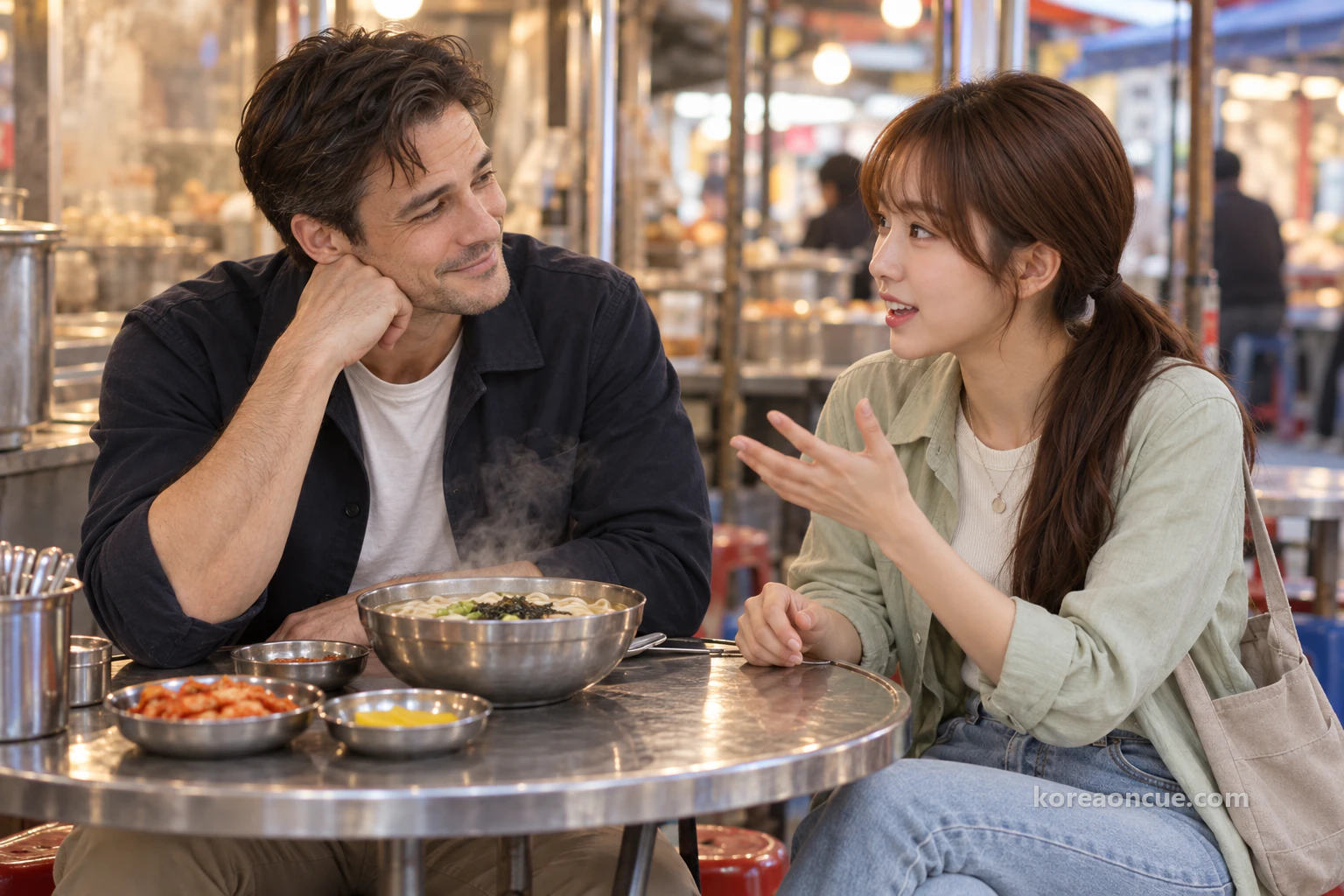
When the kalguksu arrives, Ethan takes a spoonful of broth first and says nothing for a while. “How is it?” Lulu asks, and his answer sounds exactly like an engineer’s: “Simple design, beautifully put together.” Lulu finds the wording so funny that she wants to use it just as it is in the video. Ethan smiles and adds that good food is like a good machine, with only a few parts that work properly together. Lulu copies that into her phone notes too.
As he eats, Ethan redraws his “plan” of the market in his notebook: Exit 2, the lane to the right, the shops from his first lap and the order Lulu has suggested. Lulu is astonished by the drawing. She has been coming here for years, yet someone on a first visit has organised it all in an hour. “Can I show this to friends from abroad next time they visit?” she asks. Ethan happily takes a photo of the page and sends it to her.
Looking at the drawing, Lulu tells him more about the market. As a child, she came shopping with her parents at markets around here, and back then they came for vegetables and fruit rather than things to eat on the spot. More people come for the food now, she says, but the market still belongs to the neighbours doing their shopping. Ethan writes “Shoppers first” in one corner of the plan. It is the most important line he has learnt from Lulu today.
Eomuk and dakgangjeong to finish
After the kalguksu, Ethan works through the remaining things on his list. At the eomuk shop, Lulu shows him how to choose a skewer, and at the dakgangjeong shop they buy a small portion to share. Ethan is intrigued by how long the chicken keeps its crispness and spends a while watching it being tossed at the front of the shop. To his engineer’s eye, that movement looks like a production process too.
There is a small incident at the eomuk shop when Ethan reaches for a skewer and nearly knocks into someone’s shopping bag. Lulu quickly pulls his arm out of the way, and the shopper passes with a smile. Ethan gives an embarrassed laugh: “On site I wear a hard hat, but in a market I need to use my eyes.” Lulu laughs too and says she wants that line in the video as well. In a crowded lane, look around before reaching out.
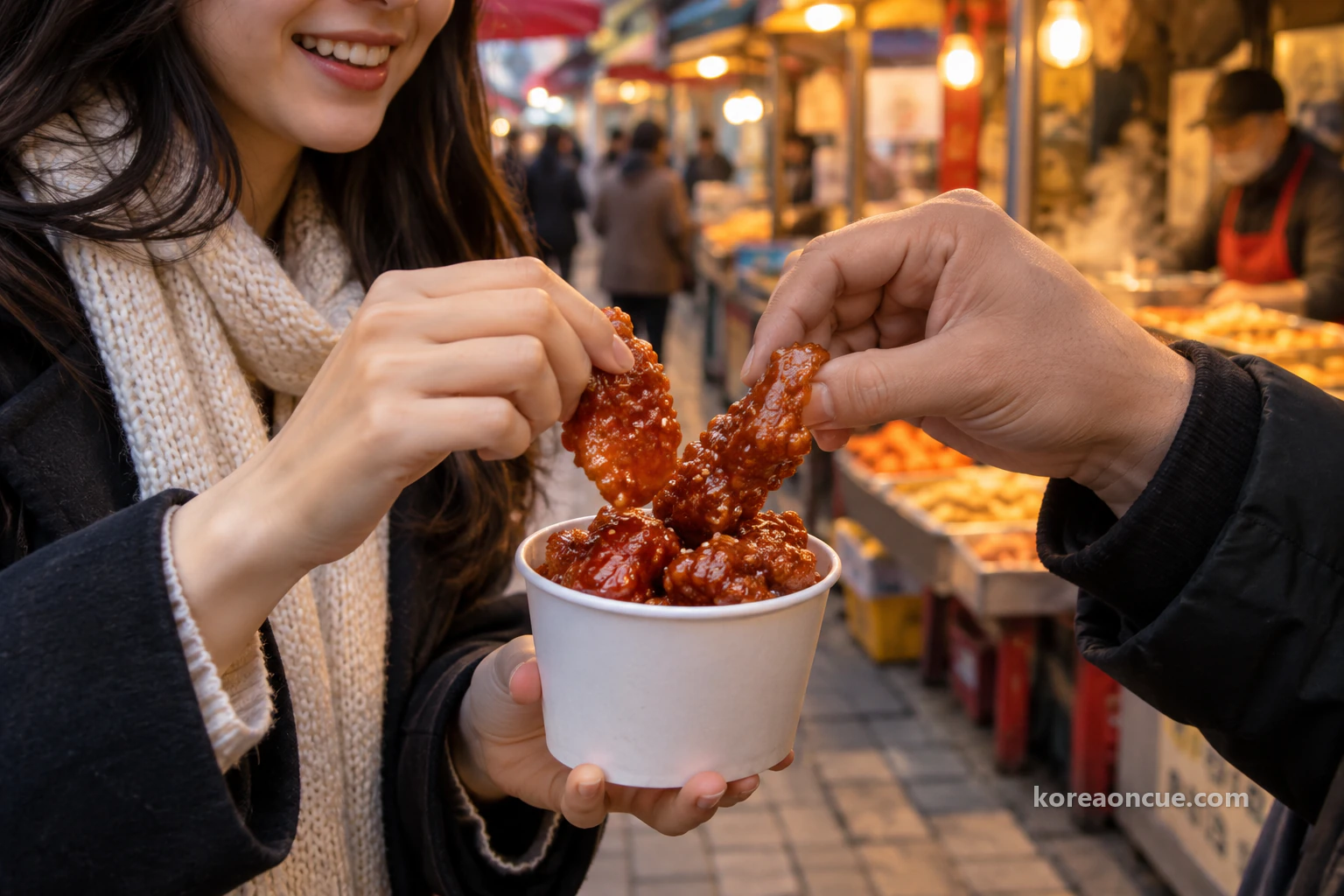
Lulu also shows him the market beyond the snack counters. Between the food shops are stalls selling vegetables, fruit, fish and prepared side dishes, with local shoppers bargaining in front of them. “This is a market for doing the shopping,” she says. “The snacks are fitted in between.” Ethan nods, warming to a market that feels like the neighbourhood’s kitchen rather than a food street made for tourists.
That is why Ethan takes care with his photos too. He holds his phone low to keep shoppers’ faces out of the frame and gestures to ask shop owners before taking pictures. Lulu says she also concentrates on displays and hands when filming, keeping people’s faces out of close-up. Remembering that they are guests briefly stepping into the neighbours’ daily lives makes the visit easier for everyone.
As lunchtime approaches, the lane grows noticeably busier. People coming to eat join those doing their shopping, and walking becomes slower than before. Lulu suggests arriving a little before lunchtime on a first visit and walking through once. That gives someone unfamiliar with the market time to find out what is where before it gets crowded. Ethan feels quietly pleased to realise he has happened upon exactly that order today.
Leaving for Mangwon Hangang Park and Seoul Battleship Park
After lunch, the market lane begins filling up further, and Ethan and Lulu leave before the crowds grow any more. Lulu asks what he has planned next, and he says he would like to see the Han River that afternoon. She tells him Mangwon Hangang Park is nearby. From the market entrance, return to Mangwon Station and take bus Mapo09 or Mapo16 from Exit 1 to the Mangwon Hangang Park stop. A map-app estimate puts the walk from Mangwon Station Exit 1 at about 1.5 km, or around 22 minutes.

Then Lulu mentions somewhere else she thinks he should visit: “Seoul Battleship Park is inside Mangwon Hangang Park, and there’s a real decommissioned warship. You’d like it as an engineer.” Ethan’s eyes light up at the thought of walking inside a retired warship. At the bottom of his notebook, he writes “Seoul Battleship Park — tomorrow”. The river today, the ship tomorrow.
Before parting, they swap Instagram accounts. Lulu promises to send Ethan the day’s video first when she posts it, and Ethan promises photos of the machinery inside the ship after his visit to Seoul Battleship Park. He is a forty-four-year-old engineer, she a twenty-year-old Seoul local. A conversation at a croquette display has turned into a promise of photos to come.

As she turns to go, Lulu adds, “Come with Maya next time. She likes markets too.” Ethan has yet to meet her, but promises to make it happen on his next holiday. The Seoul he visits on leave is becoming a city with more people’s names attached to it.
Before setting off towards the Han River, Ethan looks back at the market. The unfamiliar lane he entered that morning now feels familiar enough for him to picture roughly where the shops are. In two hours, a different Seoul from the one he knew during six years in Itaewon has found its way onto a page in his notebook. He adjusts his grip on the market bag and heads in the direction Lulu pointed.
The Mangwon Market tips in Ethan’s notebook
Walking towards the Han River, Ethan opens his notebook again to the list of kalguksu, eomuk, dakgangjeong and croquettes. What began that morning as four words now has four small stars beside it. Below them are the tips Lulu has shared: “Look on the first lap”, “Stand close to the shops”, “Broth last” and “Keep orders short”. Ethan thinks the list might be useful to someone else visiting Mangwon Market next.
That night, back at his accommodation, Ethan receives Lulu’s video. Over shots of displays, hands and steaming bowls, his voice appears briefly: “Simple design, beautifully put together.” Beneath the video is a short message from Lulu: “Looking forward to the Seoul Battleship Park photos tomorrow.” Ethan sets an alarm and checks the last line of his notebook once more: “Seoul Battleship Park — tomorrow.”
Common Mistakes
Taking the wrong station exit
leave Mangwon Station by Exit 2 and walk straight along the lane to the right for the market.
Making the trip for one shop without checking
opening hours and days off vary by shop. Check ahead if there is somewhere specific you want to visit.
Filling up at the first shop
there is plenty to eat. Walk through once, then choose on your second pass.
Standing in the middle of the lane in front of a display
these are narrow lanes where the neighbours do their shopping. Stand close to the shops.
Eating while carrying food through a crowded lane
stop at a quieter edge or outside the market to make things easier for everyone.
Filming shoppers’ faces in close-up
hold the phone low and concentrate on displays and hands.
FAQ
How do I get to Mangwon Market?
Leave Mangwon Station (Line 6) by Exit 2 and walk straight along the lane to the right. Buses serving the market include local bus Mapo09 and regular buses 271, 7733, 7013A and 7013B.
What time does it open?
Opening hours and days off vary by shop.
What can I eat?
The market is known for its food, including kalguksu, eomuk, dakgangjeong and croquettes.
Can I continue to the Han River park?
Mangwon Hangang Park is nearby. From Mangwon Station Exit 1, take bus Mapo09 or Mapo16 to the Mangwon Hangang Park stop, or walk about 1.5 km, around 22 minutes. Seoul Battleship Park is inside the park.
Where can I ask for more information?
Call 02-335-3591.
Recap — 30 seconds before you go
- Mangwon Station Exit 2 → straight along the lane to the right.
- Opening hours and days off vary by shop.
- Look on the first lap, choose on the second. Leave dishes with broth until last.
- Stand close to the shops and stop at the edge to eat.
- After the market: Mangwon Hangang Park, from Mangwon Station Exit 1 by bus Mapo09 or Mapo16, or about 22 minutes on foot. Seoul Battleship Park is inside the park.
Sources
- Mapo-gu Office — traditional market guide: Mangwon MarketLine 6 Mangwon Station Exit 2, then straight along the alley on the right · buses Mapo09, 271, 7733, 7013A and 7013B · contact numberchecked 2026-10-22
- Korea Tourism Organization Accessible Tourism — Mangwon MarketA traditional market with a wide variety of food · opening hours and closing days vary by store · contact 02-335-3591checked 2026-10-22
- Korea Tourism Organization, Korean travel guide — Mangwon MarketA traditional market in Mapo-gu, Seoul, with a wide variety of foodchecked 2026-10-22
- Korea Tourism Organization, English travel guide — Mangwon MarketOpening hours and closing days vary by storechecked 2026-10-22
- Seoul Media Hub — Mangwon Market, where a traditional market meets a hotspot (2017)Food examples featured in the account: knife-cut noodles, croquettes, glazed fried chicken and handmade fish cakeschecked 2026-10-22
A Seoul story told with our AI characters. Place details are checked against public sources; the photos are AI-made illustrative images. How we use AI
More from this area

An engineer’s day at Seoul Battleship Park: inside three warships in Mangwon Hangang Park
Lulu mentioned it when they met at Mangwon Market.

Sunday at Jeoldusan, Monday at Yanghwajin: Noah’s two walks from Hapjeong Station Exit 7
The day after saying goodbye to Hina at Mangwon Hangang Park, Noah comes out of Hapjeong Station Exit 7.