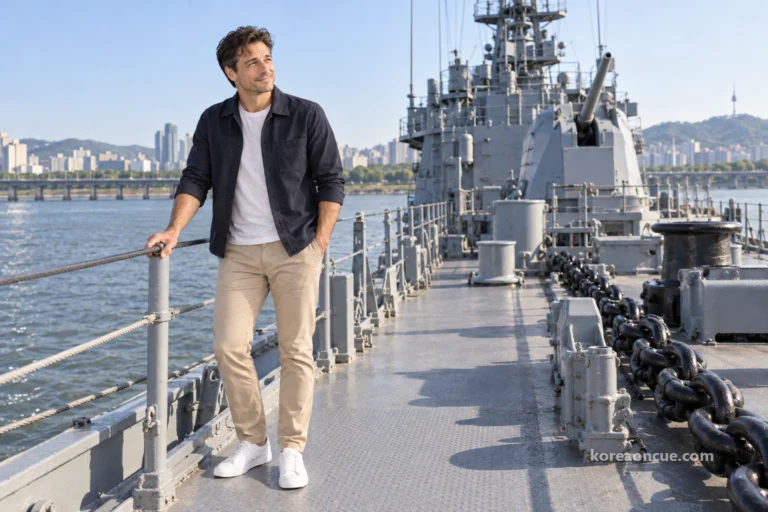
SEOUL · MANGWON
An afternoon before the concert: Hina and Noah meet again at Mangwon Hangang Park a month later
Walking from Mangwon Station to the riverside underpass, where shade tents are allowed until 10 p.m. in autumn, and an afternoon on one picnic mat
Outside the embassy last month, they promised to meet again. Noah has sketched his walk from Mangwon Station to the river, and Hina has the afternoon free before her evening concert.

How to get there
At noon on Saturday, before leaving her accommodation, Hina opens her bag’s zip pocket and checks her passport and phone, with the concert ticket on it. She needs to be at the venue by 7 p.m., but until then she has time. Outside the embassy last month, she and Noah made a promise before parting. They would meet again when she next came to Seoul, and this time she would show him the way to the concert venue.

Noah has chosen the meeting place. In the map photo he sent last night, there’s a circle beside Mangwon Hangang Park and a Korean word next to it: “나들목”. Hina had to look it up before she understood that a nadeulmok is what Seoul calls a passage from the streets into the riverside park. Noah suggested meeting outside that passage. Hina sets off with the map of busking zones she put together on Walking Street last night still open on her phone.
Noah arrived an hour earlier. A Canadian who records his walks around Seoul in drawings, he usually explores a new route on foot first. This time, too, he walked from Mangwon Station to the river, sketching the way in his notebook, just as he walked the route from Anguk Station Exit 6 to the embassy in advance last month.
On the bus, Hina thinks back to that weekend: losing her passport on Saturday night, then meeting Noah at the police box the next morning. He was the one who helped her check the spelling of her name on the report. Since then, they’ve been sending each other pictures of their days in Seoul, his notebook routes and her long queues outside concert venues. A month’s worth of messages has built up, but today is the first time they’ve seen each other again. Hina finds it slightly funny that she’s nervous.
This piece follows their Saturday afternoon at Mangwon Hangang Park, with practical help for a first visit. We’ll cover the route from Mangwon Station and where and when shade tents are allowed. Along the way, we’ll look at the rubbish, cooking and smoking rules, and the facilities inside the park.
The Cue
Mangwon Hangang Park sits on the north bank of the river in Mapo-gu, between Wonhyo Bridge and Seongsan Bridge. Take bus Mapo 09 or Mapo 16 from Mangwon Station (Line 6) Exit 1, or Hapjeong Station (Lines 2 and 6) Exit 1, and get off at “Mangwon Hangang Park”, or walk about 1.5 km from Mangwon Exit 1 in around 22 minutes. Lawns and walking paths run along the river, but shade tents are allowed in only two areas: beneath the northern end of Seongsan Bridge and on the green space beside Seoul Battleship Park. From 1 September to 30 November 2026, shade tents are permitted from 9 a.m. to 10 p.m., while picnic mats can be used anywhere, throughout the year. Cooking and smoking are prohibited, and rubbish must go home with you, with a ₩100,000 fine for leaving it behind.
- Where: 467 Maponaru-gil, Mapo-gu, Seoul (205-4 Mangwon-dong). On the north bank between Wonhyo Bridge and Seongsan Bridge.
- Public transport: Mangwon Station Exit 1 or Hapjeong Station Exit 1 → bus Mapo 09 or Mapo 16 → “Mangwon Hangang Park”. On foot, about 1.5 km / 22 minutes from Mangwon Station Exit 1. Mangwon Pier on the Hangang River Bus also connects to the park.
- Shade tents: Only beneath the northern end of Seongsan Bridge and on the green space beside Seoul Battleship Park. From 1 September to 30 November 2026: 09:00–22:00. Approximately 2 m × 2 m, for around four people. Shade tents are not allowed outside the permitted season, but picnic mats can be used year-round.
- Rules: No cooking · no smoking · dogs on leads · take rubbish home (₩100,000 fine for leaving it) · no loud noise · no motorcycles · no drones without approval.
- Facilities: Convenience shops · toilets (11 directly managed facilities) · drinking fountains · one delivery zone · lifts · riverside underpasses · automated external defibrillators · information centre.
- By car: Weekends and public holidays are busy, so use public transport if possible. Parking outside designated areas carries a ₩50,000 fine. Towards Ilsan, leave the road on the right 300 m after Yanghwa Bridge, then find the access tunnel 500 m along on the left. Towards Guri, the entrance is on the right 700 m after Seongsan Bridge.
- Information centre: 02-3780-0601–4.
From Mangwon Station Exit 1 to the river, in Noah’s notebook
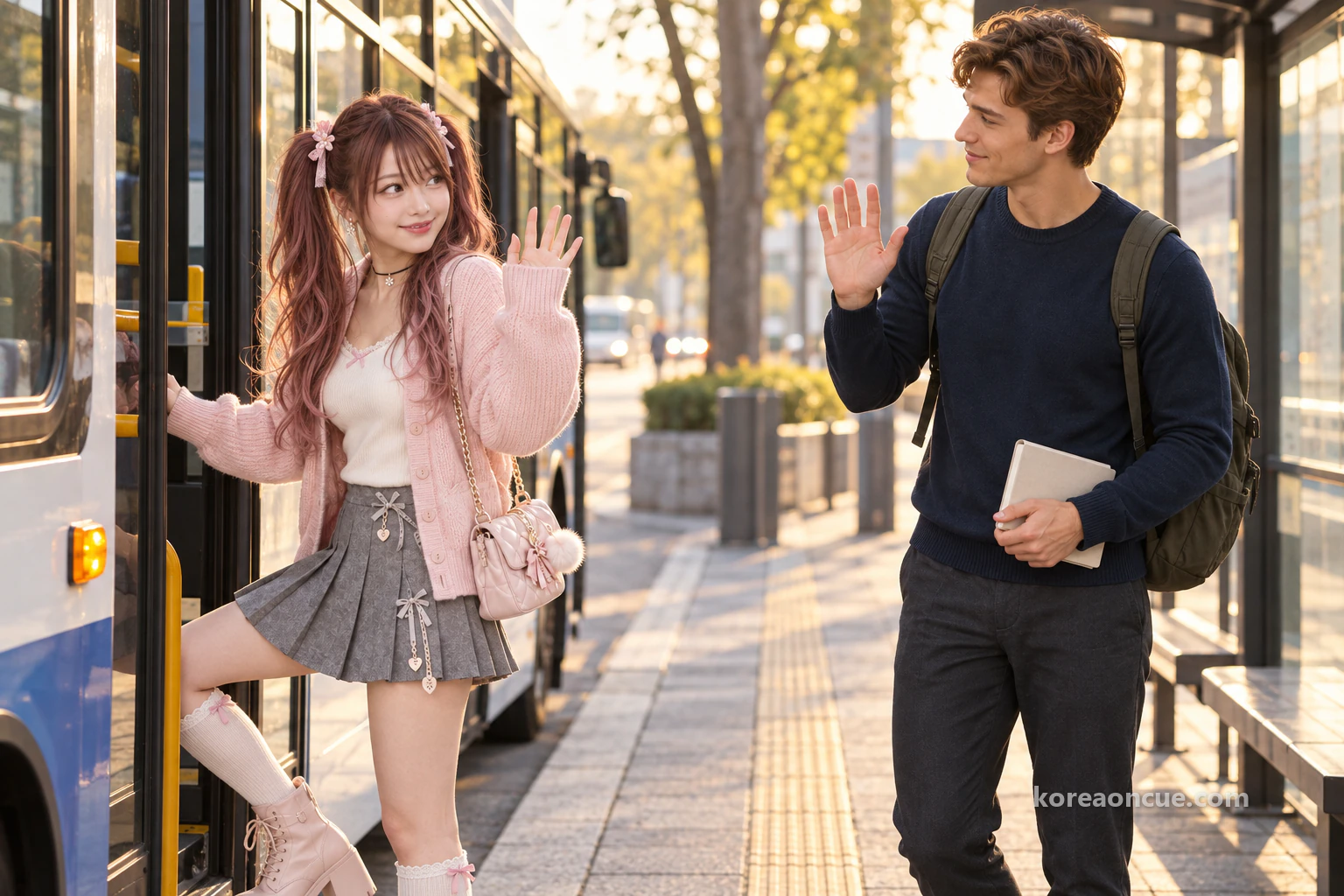
Hina comes out of Mangwon Station Exit 1 and catches bus Mapo 09. The bus route is straightforward. From either Mangwon Station Exit 1 or Hapjeong Station Exit 1, take Mapo 09 or Mapo 16 to “Mangwon Hangang Park”. With an evening concert ahead, Hina wants to save her legs, and the bus reaches the stop sooner than she expects. As soon as she steps off, she spots Noah standing there, waving his notebook.
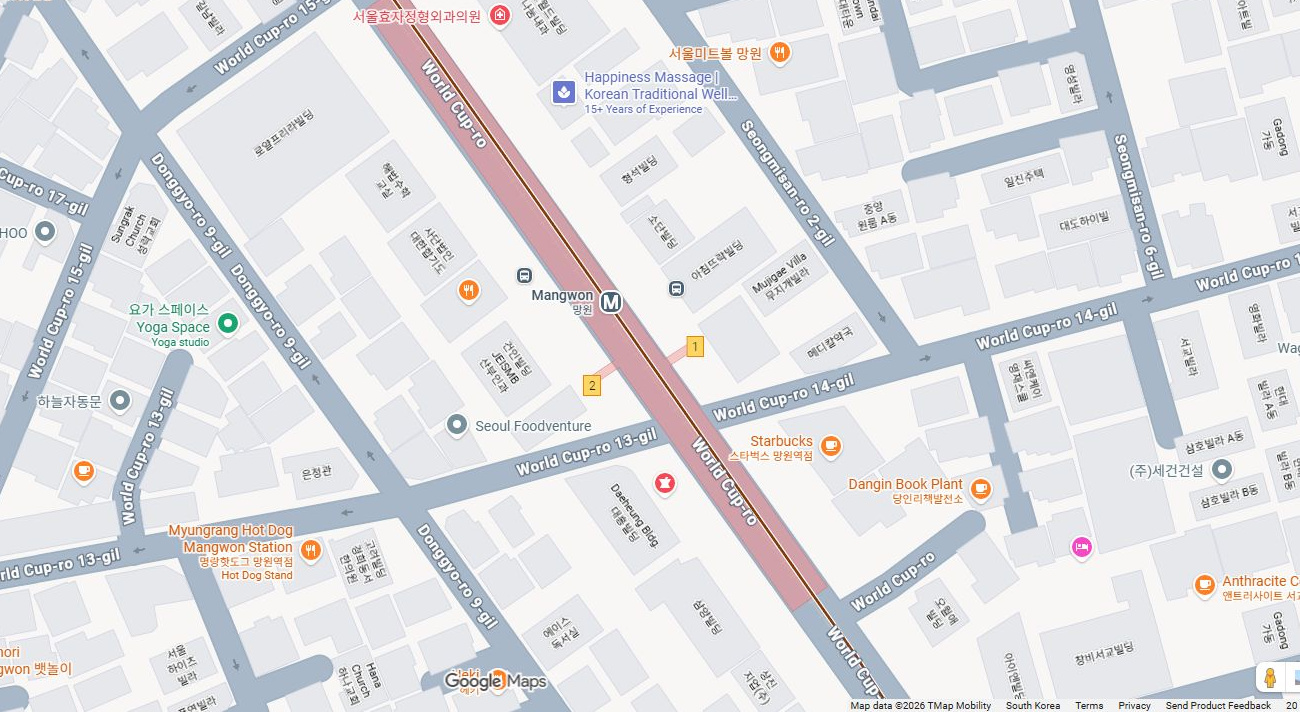
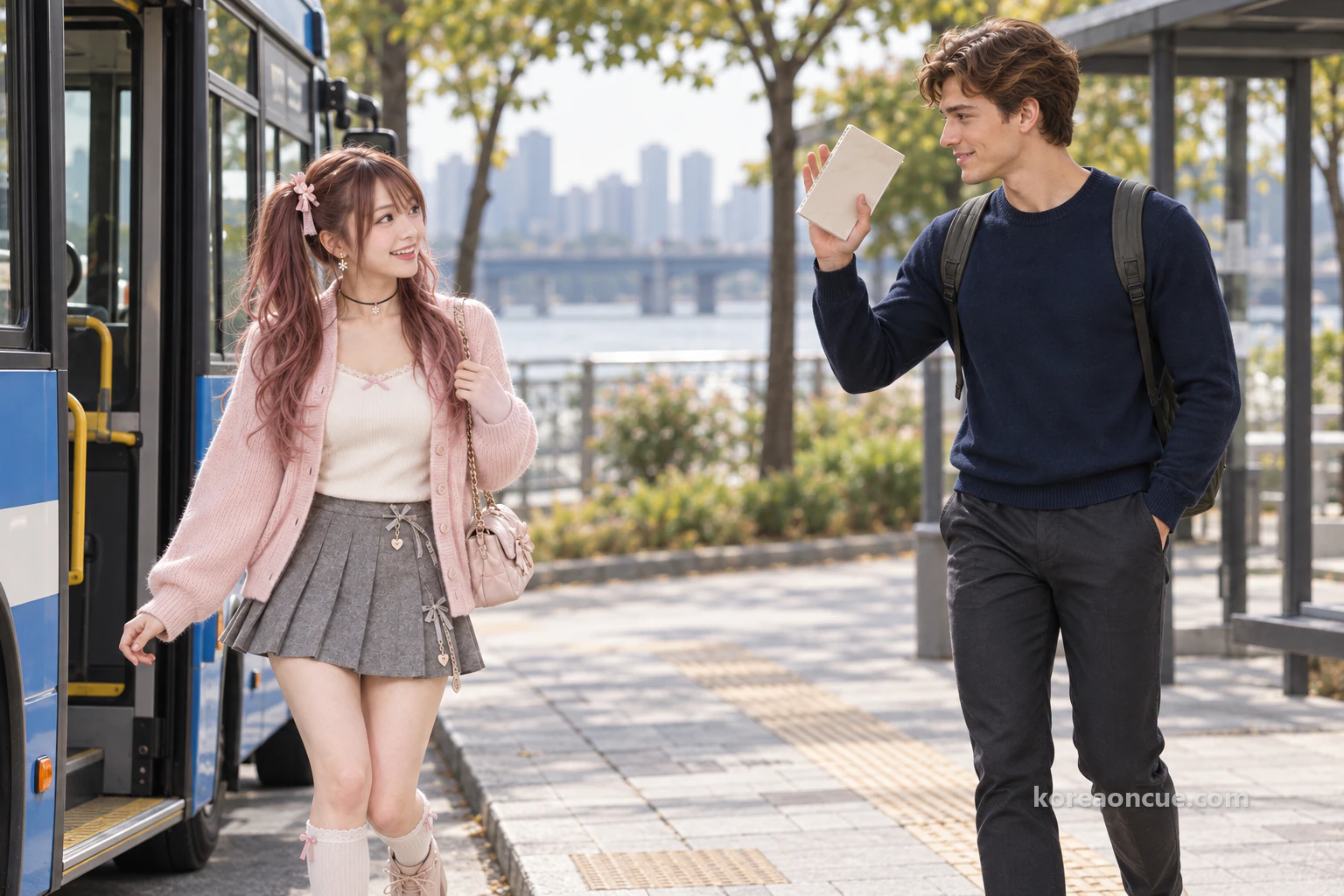
“It’s been a month,” Hina says, and Noah opens his notebook to show her. A line starts at Mangwon Station Exit 1, runs through the neighbourhood’s lanes and ends at a little drawing of a tunnel beside the river. He says the walk from Exit 1 took him a little over 20 minutes. From that exit to the park is about 1.5 km, or 22 minutes on foot. To walk it, open your map app and head for the riverside underpass.
Noah’s sketch includes small notes about what he passed: a market lane, narrow streets between houses and the passage beneath Gangbyeonbuk-ro. Hina traces the line with her finger and laughs. “Last month it was Anguk Station to the embassy, and now it’s Mangwon Station to the river.” Noah nods, saying he only feels he knows a new neighbourhood once he’s walked it and drawn the route. Hina’s bus ride and Noah’s walk now share a page, two ways of reaching the same place.
Choose the walk or the bus to suit the rest of your day. Walking from Mangwon Station takes you past neighbourhood lanes and the market area, with time to see a little of Mangwon-dong. The bus saves your legs, especially with bags or another evening plan like Hina’s, while walking suits a slower look around like Noah’s. Another option is to use the bus one way and walk the other. Take the bus to the park, then explore the neighbourhood on the walk back to the station.
Through Mangwon Nadeulmok and the Rabbit Museum to the river
They walk towards the tunnel in Noah’s sketch. This is Mangwon Nadeulmok, one of several passages into Mangwon Hangang Park beneath Gangbyeonbuk-ro. These underpasses connect the streets on the city side of the road with the riverside grounds. Mangwon Nadeulmok was the first dark underpass Seoul transformed into a media art space, the Rabbit Museum.

Images move slowly across the passage walls, which have become enormous screens. Hina slows down and looks up. It feels quite different from the video walls in concert venue lobbies. Rather than announcing something, the screens seem to invite people passing through to pause. Noah says he stood here for ages when he came through alone yesterday, and adds a small ripple pattern beside his tunnel sketch.
“I think it would feel different coming back through in the evening,” Hina says, and Noah nods. During the day people pass through towards the river, then after dark they come back the other way. That’s why he always adds a direction arrow when he draws an underpass. The view changes depending on the direction, he says, and the way out is usually when he loses his bearings. Hina saves the location of today’s underpass separately in her phone’s map.
Coming out of the passage, they suddenly have an open view. Broad lawns and walking paths stretch along the river. Mangwon Hangang Park occupies the north bank between Wonhyo Bridge and Seongsan Bridge, with wide riverside lawns that keep the view open. The whole park runs for 7.4 km and covers more than 420,000 m². Thinking of the narrow lanes on Walking Street last night, Hina says, “I can’t believe this is the same neighbourhood.”
The park stretches from Manchocheon Bridge at the northern end of Wonhyo Bridge to just before Hongjecheon Bridge in Sangam-dong. It’s long enough for the far end to disappear from sight, so choose one underpass and spend time nearby rather than trying to walk it all in a day. Mangwon Hangang Park has eight underpasses. Noah says he gave each a small identifying mark, almost like a number, while walking through the park yesterday. Remembering which one you came through makes the return easier.
Just outside the underpass, a large grey ship floats beside the river. This is Seoul Battleship Park, Seoul’s first ship-themed park made using decommissioned naval vessels, downstream of the northern end of Seongsan Bridge. Noah quickly sketches the bow in a corner of his notebook, but they decide to leave a visit for another day. Hina has a fixed concert time, and today they want to sit beside the river rather than go aboard.

Shade tents in two areas only, until 10 p.m. in autumn
Noah takes a picnic mat out of his bag. He considered bringing a shade tent, he says, but read the park rules first and changed his mind. Shade tents can’t go just anywhere in a Hangang park. Here, only the area beneath the northern end of Seongsan Bridge and the green space beside Seoul Battleship Park are designated for them. Picnic mats can be used anywhere and at any time of year.

For a shade tent, check the permitted dates and hours as well as the location. In 2026, the season runs from 1 March to 30 November, with tents around 2 m × 2 m, suitable for about four people. The usual closing time varies by season, at 7 or 8 p.m., but from 1 September to 30 November it has been extended to 10 p.m. Even in late October, that allows an evening stay in the designated tent areas. Outside the permitted season, only picnic mats are allowed.
Hina nods as she listens. After last night’s busking zones, too, she feels that Seoul’s public spaces often specify exactly where and until when something is allowed. Noah marks the two shade-tent areas with small triangles in his notebook: the broad lawn towards Seongsan Bridge and the space beside Seoul Battleship Park they passed earlier. They’re sitting outside both, but with just a picnic mat, that doesn’t matter.
There’s one more detail to remember if you’re bringing a shade tent: taking it down is your responsibility. It must be packed away by the end of the permitted hours, rather than left standing beyond them. Questions about shade-tent use can go to the 120 Dasan Call Centre. Noah says reading that part settled his decision to bring the mat. “I walk everywhere, so I need to keep my bag light.”
Take your rubbish home or face a ₩100,000 fine
Once they’re sitting on the mat, Noah takes two bottles of drink and a small snack out of a convenience-shop bag. He stopped on the way, he says, though there are convenience shops inside the park. Hina looks at the bag and smiles: “We’ll be taking that home again.” Rubbish must be taken away from Mangwon Hangang Park, with a ₩100,000 fine for leaving it behind. As if to show he’s already thought of that, Noah produces another empty bag.
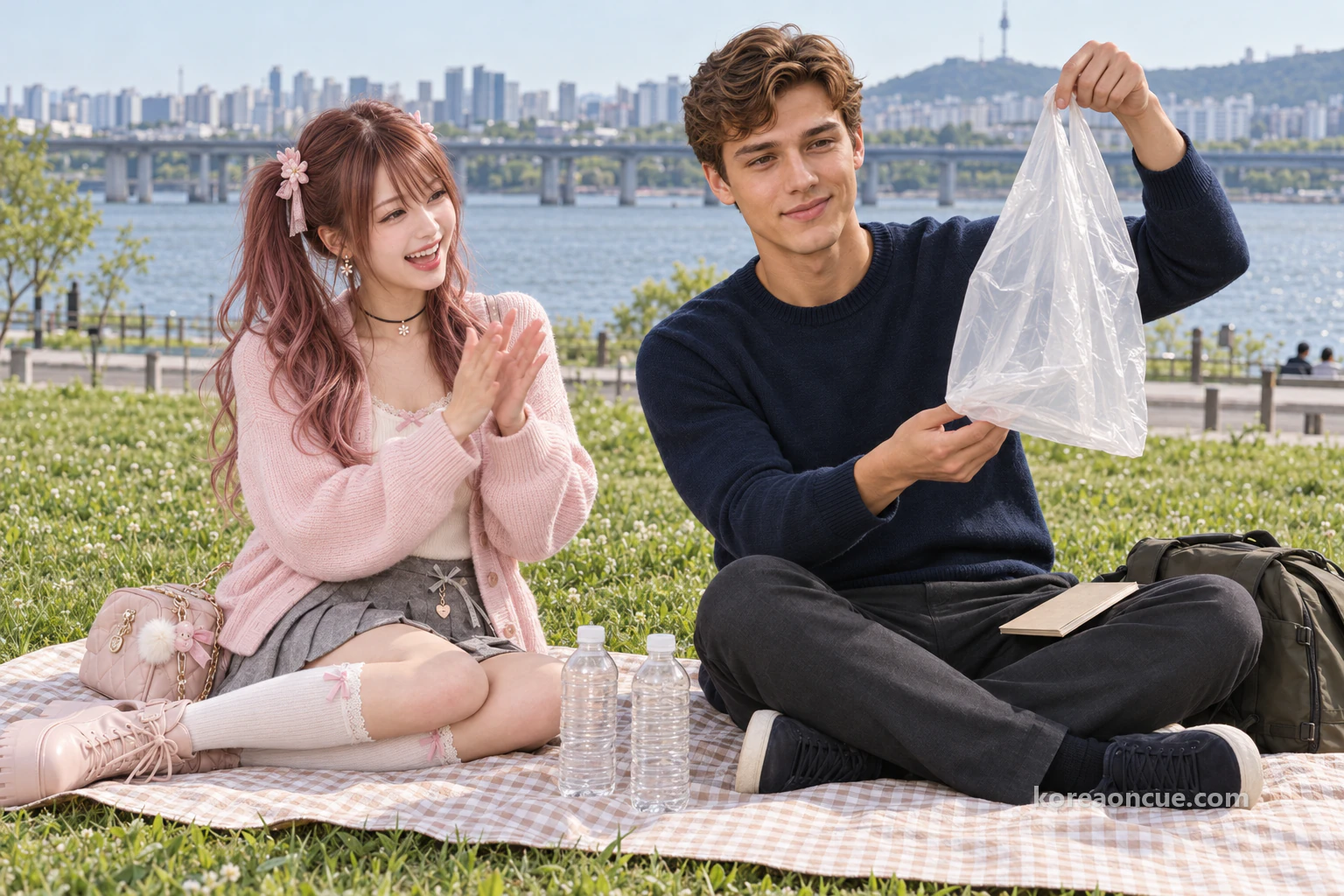
Rubbish isn’t the only thing covered by the park rules. As he tidies the snack packets on the mat, Noah runs through them with Hina. Keep pets on leads, don’t smoke or cook, ride bicycles and inline skates slowly, keep motorcycles out and avoid loud conversations or shouting. Shade tents belong only in the designated areas, and drones need approval before they can be flown. Someone walks a dog past their mat, holding its lead short.
Fishing has its own restrictions. Groundbait and fishmeal are prohibited, as are using four or more rods and snagging fish, and fishing in a prohibited area carries a fine. Anyone wanting to swim in the river must first complete a water leisure activity notification form at the information centre. Noah explains why even these small rules are in his notebook: “If I’m drawing a route, I need to know what isn’t allowed along it.” Hina thinks that sounds exactly like him.
The rule about not shouting or talking loudly makes Hina smile. Now she understands the message Noah sent last night: “It’s like that by the river tomorrow, too. People sit for ages without making much noise.” Quite a few groups have spread mats around them, but it’s quiet enough to hear the wind coming off the river.
There’s something to watch on the water, too. Mangwon Hangang Park has floating restaurants and cafés, along with water recreation facilities for yachts, duck pedal boats, motorboats and kayaks. From their mat, they can see a small boat moving slowly along the river. If you’re bringing your own boat, remember that the Mangwon launch ramp is unavailable from June 2025 to May 2028. Watching the boats, Hina says she’d like to try a duck pedal boat next time.
Facilities inside Mangwon Hangang Park
Over their snacks, Noah shows Hina another notebook page. These are the things he noted while walking around the park yesterday. Mangwon Hangang Park has convenience shops, toilets, drinking fountains, a children’s playground, lifts, automated external defibrillators and an information centre, including 11 directly managed toilet facilities and 13 drinking fountains. When Hina says she needs to use the toilets before heading to her concert, Noah points to the small marks on his page. Even in such a long park, he tells her, toilets and drinking water needn’t mean a long detour from wherever they are.

Beyond the mat, bicycles keep passing. A 7.2 km cycle route follows the park, including 3.1 km shared with pedestrians, so listen out for approaching bikes when walking. Personal mobility devices such as electric scooters are allowed only on cycle paths, not on footpaths or lawns. Riders must keep to 20 km/h or below and wear helmets. The park also has football pitches, basketball courts, volleyball courts, jokgu courts, a basic baseball field, tennis courts, gateball courts and fitness areas, and Noah has sketched a few people kicking a ball.
Some places in Noah’s notebook have only their names so far: Mangwon Chorok-gil, Mangwonjeong Pavilion and the Maponaru sculpture. All are sights within Mangwon Hangang Park. He didn’t have time to see everything yesterday, he says, but will fill in the spaces one at a time on future visits. Hina tries reading the names aloud and says she likes the sound of “Maponaru”. Noah draws a little boat beside it.
Turning the pages, Hina notices how many people appear in Noah’s drawings. There are children kicking a ball on the grass, someone stopping their bicycle for a drink and someone lying on a mat with a book. He leaves out faces, using only a few lines to catch each person’s posture. Hina says even the drawings show when the park is busy and when it’s quiet. The morning pages have people dotted about, while the afternoon pages are crowded with lines.
If you get hungry, there’s a delivery zone as well. Mangwon Hangang Park has one, close to a designated shade-tent area. When ordering food, set the delivery zone as your collection point. Cooking with a flame inside the park isn’t allowed, so bring food that’s ready to eat. Hina and Noah laugh that their convenience-shop snacks are quite enough.
The information centre is worth remembering if something goes wrong in the park. Administrative services run from 9 a.m. to 6 p.m., while enforcement operates 24 hours a day, and the phone numbers run from 02-3780-0601 to 02-3780-0604. Noah has written them on the last page of his notebook, a habit he picked up after what happened to Hina last month. “Wherever I go, I write down one place I can ask for help.” Hina feels a little guilty that she prompted the habit, but grateful, too.
Hina draws the concert route and shares her busking map
After 2 p.m., Hina borrows Noah’s notebook. It’s her turn to draw, and time to keep last month’s promise: “Next time, I’ll show you the way to the concert venue.” She draws a line from Mangwon Hangang Park to the subway station, then onwards to the venue. Her hand isn’t as practised as Noah’s, but each line has the sort of notes a concertgoer would know to add: “Merchandise queue here”, “Entry queue here”.

Noah spends a while looking at it, noticing that his routes contain buildings, lanes and trees, while Hina’s contain queues. “Same streets, different things to notice,” he says. Hina explains that outside a concert venue, the queues matter more than the streets. Knowing where each queue begins and which way it bends keeps her from getting lost on concert days. Noah writes “Hina’s route” at the top and puts it beside his own drawing.
Hina also shows him the busking-zone map she put together last night. It has the street numbers for all four zones, which have amplifiers and which don’t, and a note about the guitar she heard in Zone 3. Looking at it, Noah says he’ll walk Walking Street in zone-number order next time. Now each of them has a route to share. Last month Noah helped Hina find her way, and this month the directions are going both ways.
For a while, they look at the river without speaking. For Hina, the nicest thing about today is that the silence doesn’t feel awkward. Last month, they hurried through conversations between an unfamiliar police box and the embassy counter, but today there’s no need to rush. Noah draws the outline of the opposite bank while Hina runs through the evening’s concert setlist in her head. They sit together, each occupied with something they love.
Public transport at weekends, and plans for tomorrow
At about 3:30 p.m., Hina checks the time. Before going to the venue, she needs to stop at her accommodation for her concert cheering gear. They fold the mat and collect the empty bottles and snack packets in Noah’s bag, leaving nothing where they sat. Noah looks back once, then draws a small rectangle on today’s notebook page. It’s the place their mat occupied.
With another plan later in the day, decide in advance when to leave the park. Hina worked backwards from the concert admission time, allowing for travel and a stop at her accommodation. For the return, take the bus again from the “Mangwon Hangang Park” stop where you arrived, so remembering its location helps. Noah laughs that her calculations sound like the way he draws a route. She chooses the endpoint first, then draws the line backwards.

On their way out, Hina remembers the advice about busy weekends. Saturdays, Sundays and public holidays bring crowds and heavy traffic, including for large events inside the Hangang parks, so public transport is the better choice. Parking outside designated areas carries a ₩50,000 fine, and by this afternoon far more people are coming through the underpass than when they arrived. Hina decides on the bus again, while Noah points towards Mangwon Pier and says he’d like to arrive by boat next time. Getting off the Hangang River Bus there leads straight into the park.
At the bus stop, Noah tells her his plan for tomorrow. He’ll follow the river towards Hapjeong and draw Jeoldusan, near Hapjeong Station. Hina’s flight is tomorrow night, so she can’t join him. Instead, she says, “Send me that drawing, too,” and sends him a photo of the place they sat today. It’s a patch of empty grass, with the mat already packed away.
On the subway to the concert venue, Hina receives a photo from Noah. It’s today’s notebook page: his line from Mangwon Station, the ripples in the underpass, the bow at Seoul Battleship Park, the little rectangle where they sat and “Hina’s route” beside it. She adds the photo between last month’s note, “The way home”, and last night’s, “The night before the concert”. In a month, she has made three Seoul notes, and the same person appears in all three.
At the concert that night, Hina waves her light stick as much as she likes. It’s the opposite of their quiet afternoon by the river, but both feel like Seoul to her. Afterwards, on the way back to her accommodation, she sends Noah a short message: “I followed the drawing to the venue. Even the queue bent the way I’d drawn it.” His reply is a map photo of the riverside towards Hapjeong, where he’ll walk tomorrow, and once again he’s the one who has drawn the next circle.
Common Mistakes
Putting up a shade tent anywhere
Mangwon Hangang Park has only two permitted areas: beneath the northern end of Seongsan Bridge and on the green space beside Seoul Battleship Park. Elsewhere, use a picnic mat.
Packing away early just because it’s autumn
from 1 September to 30 November 2026, shade tents are allowed until 10 p.m. From December, shade tents aren’t allowed.
Leaving rubbish beside a park bin
rubbish must go home with you. Leaving it carries a ₩100,000 fine, so pack an empty bag.
Grilling meat on a portable stove
cooking inside the park isn’t allowed. Bring food that’s ready to eat.
Driving at the weekend
weekends and public holidays are busy, so use public transport if possible. Parking outside designated areas carries a ₩50,000 fine.
Riding a scooter across the lawn
personal mobility devices belong only on cycle paths, at 20 km/h or below, with a helmet.
FAQ
How do I get to Mangwon Hangang Park?
Take bus Mapo 09 or Mapo 16 from Mangwon Station Exit 1 or Hapjeong Station Exit 1, and get off at “Mangwon Hangang Park”. From Mangwon Station Exit 1, the walk is about 1.5 km and takes around 22 minutes.
Where can I put up a shade tent?
Only beneath the northern end of Seongsan Bridge and on the green space beside Seoul Battleship Park. Tents should be around 2 m × 2 m, for about four people.
Until what time are shade tents allowed?
From 1 September to 30 November 2026, the hours are 09:00–22:00. Outside that period, shade tents aren’t allowed, but picnic mats can be used at any time.
Can I order food for delivery?
There is one delivery zone, close to a designated shade-tent area. Cooking with a flame inside the park isn’t allowed.
Are there toilets?
The park has 11 directly managed toilet facilities, as well as drinking fountains and convenience shops.
Can I bring a pet?
Keep pets on leads. The park rules also prohibit smoking and loud noise.
What’s the information centre’s phone number?
02-3780-0601–4.
Recap — 30 seconds before you go
- Mangwon Station or Hapjeong Station Exit 1 → bus Mapo 09 or Mapo 16 → “Mangwon Hangang Park”. Walking from Mangwon takes about 22 minutes over 1.5 km.
- Through the underpass are the lawns and river, with Seoul Battleship Park just outside.
- Shade tents are allowed only beneath the northern end of Seongsan Bridge and on the green space beside Seoul Battleship Park, until 10 p.m. in autumn (September–November). Picnic mats can be used year-round.
- No cooking or smoking, and pets on leads. Take rubbish home to avoid a ₩100,000 fine, and bring an empty bag.
- Use public transport at weekends. The park has 11 toilet facilities, convenience shops and a delivery zone.
Sources
- Seoul Metropolitan Government, Future Hangang Headquarters — Mangwon overviewPark location, address, 7.4 km length, lawns and paths · Seoul Battleship Park and other sights · sports and riverside leisure facilities and cycle path · no cooking or smoking, pet leads, taking rubbish home and the KRW 100,000 fine · fishing restrictions · Mangwon boat ramp closure period · information centre contactchecked 2026-10-22
- Seoul Metropolitan Government, Future Hangang Headquarters — Getting to MangwonMapo 09 and Mapo 16 buses from Exit 1 of Mangwon or Hapjeong Station to the Mangwon Hangang Park stop · connection from Mangwon Hangang Bus pier · vehicle entrances · public transport recommended on weekends and holidays · KRW 50,000 fine for parking outside designated areas · information centre hourschecked 2026-10-22
- Seoul Metropolitan Government, Future Hangang Headquarters — Mangwon facilities and park FAQ11 directly operated toilets, 13 drinking fountains, eight underpasses, one delivery zone and other amenities · no unapproved drone flights · water leisure activity declaration before swimming · personal mobility devices on cycle paths, 20 km/h speed limit and helmetschecked 2026-10-22
- Seoul Metropolitan Government, Future Hangang Headquarters — 2026 Hangang Park shade tent rulesTwo permitted areas below the north end of Seongsan Bridge and on the green beside Seoul Battleship Park · 1 March–30 November 2026 season · extended hours of 09:00–22:00 from 1 September to 30 November · approximately 2 m × 2 m, for four people · packing up by closing time · picnic mats allowed year-round · enquiries to 120checked 2026-10-22
- Seoul Media Hub — Longer evenings on the Han River: shade tents and delivery zonesShade tent hours extended to 22:00 in autumn 2026 · one delivery zone in Mangwon · delivery zones near permitted shade tent areaschecked 2026-10-22
- Seoul Media Hub — Mangwon Underpass becomes the Rabbit Museum media art spaceCreation of the first Rabbit Museum in Mangwon Underpass and its wall projectionschecked 2026-10-22
A Seoul story told with our AI characters. Place details are checked against public sources; the photos are AI-made illustrative images. How we use AI