
SEOUL · CHILDREN'S GRAND PARK
The day after the drone show: Hina walks Seoul Children’s Grand Park with a timetable
Half a day on 1 November, after the marathon road closures lift — in through Children’s Grand Park Station Exit 1, past the zoo and two outdoor stages, and out through the back gate to Achasan Station
The day after watching the drones at Ttukseom, Hina has half a day free before flying back to Tokyo. She hesitates for a moment in front of a park with “Children’s” in its name, then does what she always does and opens her timetable first.

How to get there
The morning after watching the drones over Ttukseom on Halloween night, Hina sits on the edge of her hotel bed, leafing through her notebook. She is twenty-one, works for a marketing company in Tokyo and comes to Seoul about twice a month for shows and merchandise, and this time, as usual, she is flying home on Sunday evening. Her bag is almost packed, and half a day stands empty before she leaves for the airport. The map she drew last night went to the back of Noah’s notebook on the platform, and all that remains in hers is the thin edge where she tore the page out.

Looking for somewhere to spend those hours, Hina lands on Seoul Children’s Grand Park in Gwangjin-gu. Admission to the park is free, and the main gate and back gate lead to different subway stations, so she can walk straight through in one direction without retracing her steps. Then her finger stops at the name. Children’s Grand Park. Would it look odd for an adult to go in alone with no children — and a foreigner pulling a suitcase, at that?
Still hesitating, she opens the park’s website and finds a notice at the top of the news page: on Sunday 1 November, the JTBC Seoul Marathon will close parts of the road outside the main gate to traffic. The restrictions run from 08:29 to 11:31 between the Gunja Station intersection and the Konkuk University Station intersection, with a request to keep clear of the closed section during those hours. The moment she sees the time, Hina writes “11:31” at the top of her notebook. “I always start with the showtime.” Today, instead of a show, the first box on her timetable goes to the moment the roads reopen.
So this piece follows Hina’s half day on 1 November, once the marathon has passed, from the main gate in to the back gate out. It runs in the order of her notebook: from Children’s Grand Park Station (Line 7) Exit 1 to the main gate, why the park works well for an adult walking alone, how late the zoo stays open and what you can see there, what was on at the two outdoor stages that day, what stops running in November, and the way out from the back gate to Achasan Station (Line 5) Exit 4. The same order should help whether you have only half a day before flying home or a whole day to spend with children.
The Cue
Seoul Children’s Grand Park is at 216 Neungdong-ro, Gwangjin-gu, Seoul. It opens 05:00–22:00 every day of the year, and admission to the park is free. Children’s Grand Park Station (Line 7) Exit 1 leads to the main gate and Achasan Station (Line 5) Exit 4 to the back gate, and the walk from the main gate to the back gate takes about 20 minutes. The zoo is open 10:00–17:00. On Sunday 1 November, the JTBC Seoul Marathon closes parts of the road outside the main gate to traffic from 08:29 to 11:31, and the same day brings a taekkyeon tournament to the Forest Stage (11:00–16:00) and a kids’ and seniors’ fashion show to the Open Stage (13:00–17:00). The music fountain finished its season on 31 October, and the botanical garden is closed for remodelling.
- Where: Seoul Children’s Grand Park, 216 Neungdong-ro, Gwangjin-gu, Seoul. Enquiries: 02-450-9311.
- Hours and fees: Park 05:00–22:00, open every day, free admission. Zoo 10:00–17:00.
- Getting in and out: Children’s Grand Park Station (Line 7) Exit 1 → main gate (2 min on foot) · back gate → Achasan Station (Line 5) Exit 4. Main gate to back gate is about 20 minutes on foot, by the park’s own guide.
- Sunday 1 November only: JTBC Seoul Marathon vehicle restrictions on parts of the road outside the main gate (Gunja Station intersection to Konkuk University Station intersection), 08:29–11:31. Keep clear of the closed section during those hours.
- On stage that day: Forest Stage taekkyeon tournament 11:00–16:00 · Open Stage kids’ and seniors’ fashion show 13:00–17:00.
- Not running: The music fountain runs 15 March–31 October (not in November) · the botanical garden is closed from 27 May 2026 until the second half of 2027 (provisional).
- Luggage: Paid lockers at the main and back gates, 05:00–22:00. Base rate for 3 hours: small 800 won, medium 1,100 won, large 1,500 won.
- Leave behind: No bicycles or kick scooters, no pets, and no smoking or drinking anywhere in the park.
Counting back from 11:31, when the marathon restrictions lift on 1 November
Hina’s sums start from the “11:31” at the top of her notebook. The restrictions apply to vehicles, so they don’t directly affect her as she is travelling by subway, but she would still rather not pass the main gate while they are in force. She knows exactly what happens outside a concert hall when the queue going in crosses the crowd coming out, and she has long been in the habit of dodging the moments when everyone is funnelled down one path. So she sets her arrival at the main gate for around noon and divides the hours backwards from the time she has to leave for the airport.
Open in Kakao Map — Children’s Grand Park Station

If you visit the park that day, you can borrow Hina’s sums as they are. Arriving by car or taxi, or on a bus along the main road outside the main gate, it is easier to avoid 08:29–11:31, and coming by subway, Children’s Grand Park Station (Line 7) Exit 1 leads straight to the main gate. From Exit 1 to the gate is 119 m, a two-minute walk. The restrictions only apply on 1 November, though, so on any other day an early start is fine. The park opens at 5 a.m.
Hina leaves her hotel just after half past eleven. She takes Line 7 to Children’s Grand Park Station and comes up through Exit 1, and the main gate appears within a few steps. Before setting off she noted down the exit number separately, because a map app given only the station name sometimes draws the route from the middle of the station. Pick the wrong exit and a two-minute walk can stretch by several minutes — something she has learned more than once at stations near concert venues.
If you are staying along Line 2, there is another way. From Konkuk University Station (Line 2), the bus takes about five minutes to the main gate, or you can change to Line 7 and ride to Children’s Grand Park Station. Buses 302, 721, 2222, 3216, 3220 and 4212 run towards the main gate. On a day like the morning of 1 November, though, with the road outside the gate closed, Hina reckons the subway is the calmer option.
The main gate information centre and lockers: choosing your exit gate first
Once through the main gate, the first thing Hina thinks about is the weight of her bag. She has to head to the airport this evening, so a small suitcase is in her hand. As it happens, there are lockers at the main gate and the back gate, and they have been charging since 14 July 2026. They are available every day from 5 a.m. to 10 p.m., with a base rate for 3 hours of 800 won for small, 1,100 won for medium and 1,500 won for large. Go beyond the base time and an hourly charge is added according to the locker size.
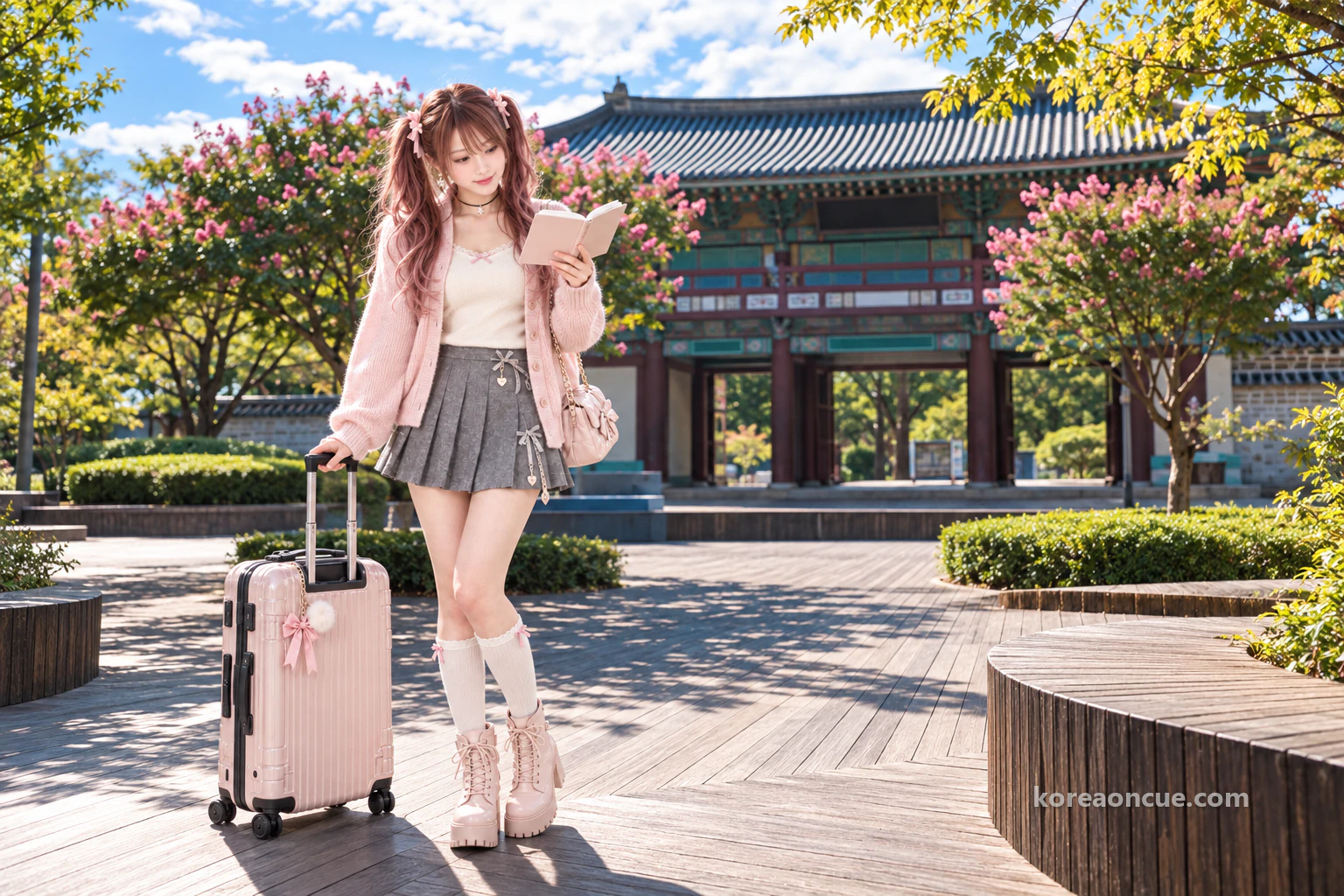
Hina gets as far as the lockers, glances down at her notebook and pulls her hand back. Her plan is to leave by the back gate and catch the subway at Achasan Station. If she leaves her bag at the main gate, she will have to walk all the way back there after crossing the park. Someone who counts time backwards has to settle on the finishing gate first, and Hina only realises this just before she turns the key. If you are leaving by the gate you came in, the main gate lockers are handy, but if, like Hina, you are leaving by a different gate, either walk with your bag or use the lockers at the gate you will leave by.
The suitcase is small and on wheels, so Hina decides to simply pull it along. Instead, she marks the customer information centre at the main gate in her notebook with a star. The park’s first-aid room is inside the information centre, open 09:00–18:00 with a lunch break from 12:00 to 13:00. It is the same habit she has at every venue, checking the emergency exits and the help desk first. When you walk a big park on your own, knowing one place where you can ask for help makes everything feel lighter.
There are a few rules to know before you go in. Bicycles, kick scooters, inline skates, electric vehicles and other wheeled rides cannot enter the park, and pets are not allowed either, to keep the zoo animals safe and prevent disease. Smoking and drinking are banned throughout the park, and feeding the animals is not allowed. Reading the list, Hina thinks it sounds like the announcements before a concert begins. When the rules are clear, it is actually easier to walk in feeling at ease.
Opening the park map, Hina is surprised by how many gates there are. Besides the main and back gates, the map numbers gate after gate in turn: Hoegwan Gate, the south gate, Guui Gate, the east gate, the north gate, the west gate and Neungdong Gate. Of these, the main gate, back gate, Guui Gate and Neungdong Gate open with the park, 05:00–22:00, and the walk is about 15 minutes from the main gate to Guui Gate and about 18 minutes from the back gate to Guui Gate. Hina marks just the two gates she will use today, main and back, in bold and leaves the rest lightly in pencil. The more gates a park has, the less likely you are to get lost if you decide first where you will come in and where you will go out.
An adult alone at a “children’s” park: from a 1929 golf course to the 2009 reopening
Standing in the main gate plaza, Hina thinks back to her hesitation that morning. Looking around, she sees families pushing pushchairs, but also an older man reading a newspaper on a bench, people walking alone with earphones in and couples strolling side by side. The park describes itself as a place of rest that citizens look after and enjoy together, and an ecological park where animals and plants live happily side by side. It is open every day from 5 a.m. to 10 p.m. and charges no admission, so the “Children’s” in its name is less a closed door than a reminder of who it was first built for.
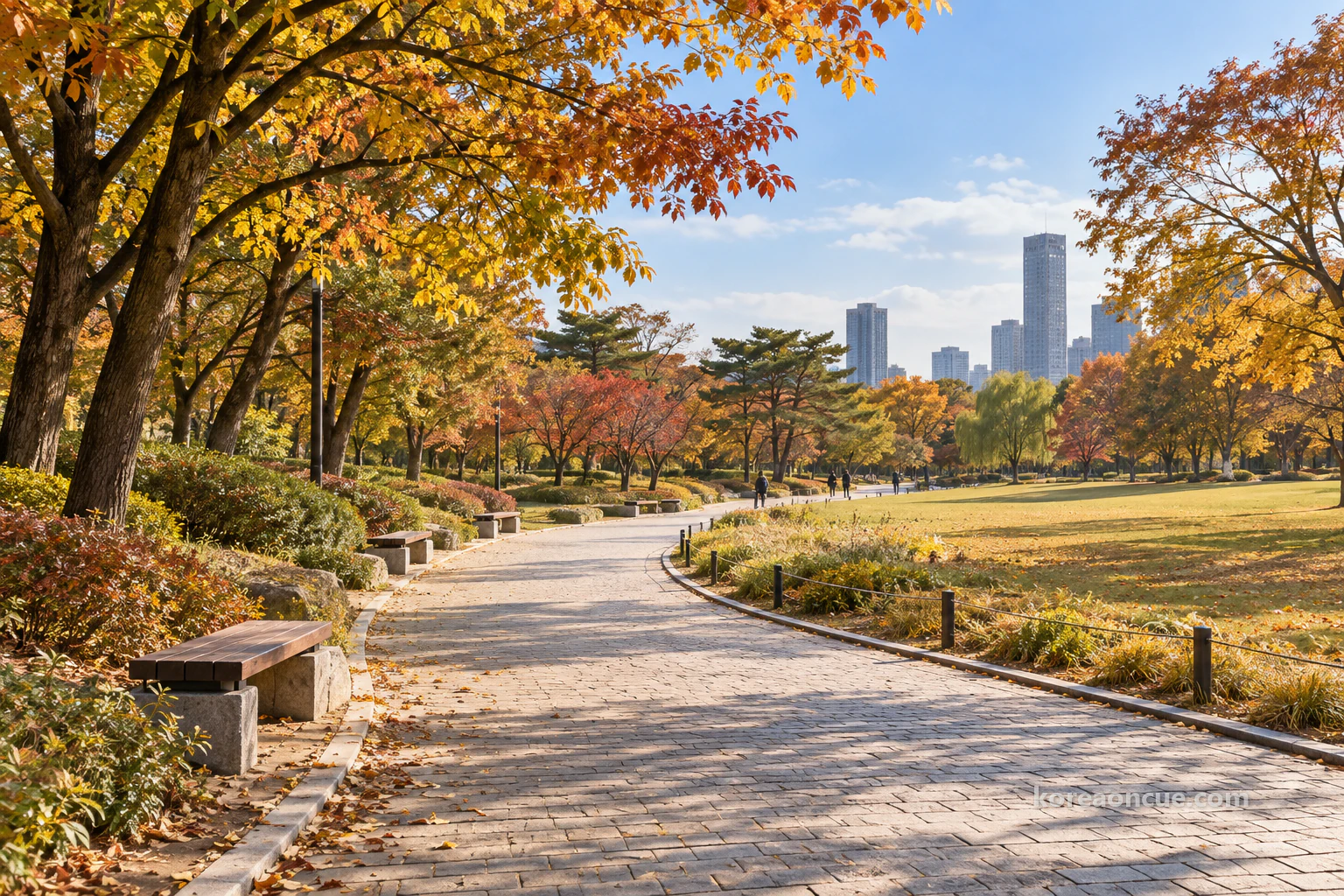
Curious about that beginning, Hina stops and looks up the park’s history. The story of this land starts on 22 June 1929, when the Gyeongseong Golf Club opened. In 1972, Seoul Country Club donated 120,000 pyeong free of charge and 98,000 pyeong of private land was bought to make up the site, and after construction began on 3 November that year, Children’s Grand Park opened on 5 May 1973 — Children’s Day. Only then does Hina see where the wide lawns and gently curving paths in front of her come from. This land was a golf course.
The history runs on long after that. Admission became free for children on 5 May 1986, and the whole park opened free of charge on 14 October 2006. A redevelopment began in November 2007 and the park reopened on 5 May 2009, a day the history labels “Grand Open: reborn after 36 years”, and in August 2014 the amusement park was refurbished and reopened too. Hina, who works in marketing, underlines “reborn after 36 years”. The opening, free admission for children and the grand reopening all fell on 5 May, so this park seems very good at remembering its birthday.
The park’s size hits home in numbers, too. Its total area is 536,094.50 m², with a 4 km perimeter, and 271,535.34 m² of that is green space and woodland. Inside are 5.487 km of roads on 23 routes and 3.624 km of walking paths on 26 routes, and the figures are enough for Hina to give up on walking all of it today. Instead she decides to pass through in one direction, main gate to back gate, stopping only at the places on her timetable. It is a bit like picking the songs you must hear from a setlist rather than staying for a whole show from start to finish.
Reading the park as a timetable: zoo 10:00–17:00, music fountain finished on 31 October
With the park map spread out, the first thing Hina does is divide the place up like a concert venue. The park falls into three broad areas — Animal Land, Nature Land and Fun Land — and within Fun Land are two outdoor stages, the Open Stage and the Forest Stage. Hina circles both stages, then writes “10–17” in the zoo box and “05–22” in the park box. The zoo closes at 5 p.m. but the park stays open until 10 p.m., which means anyone arriving late will be walking a park without animals.

Next, Hina crosses off what she can. The music fountain in the middle of the park only runs from 15 March to 31 October each year. During the season it works in cycles — within each 30 minutes, 20 minutes of the music fountain and 10 minutes of the ordinary fountain, then a 30-minute rest — and it stops every Tuesday for cleaning and checks. This year’s last day happened to be yesterday, the very day Hina watched the drones over Ttukseom. Crossing out the fountain box, Hina murmurs, “So there were two shows yesterday,” and if you come to the park in November, the music fountain means waiting until next spring.
The botanical garden goes into a crossed-out box too. It is closed for remodelling from 27 May 2026 until the second half of 2027 (provisional), and is due to reopen with more to enjoy once the work is finished. If you were counting on it as an indoor option for a rainy day, it is worth making another plan this time. Nature Land does have a run of outdoor gardens instead: the Eco Pond, the UNICEF Mamkkeot Garden, the children’s vegetable plots, Wildflower & Herb Land and the Four Seasons Garden. The Eco Pond covers 5,100 m² and is planted with 18 species that grow in Korean wetlands, such as rosegold pussy willow and monochoria.
In the space that is left, Hina writes in the autumn festival. From 19 September to 7 November the whole park is hosting its autumn festival, “Classics in Autumn Leaves”. Hina’s visit on 1 November falls in the festival’s last week, and October’s calendar included dates such as a classical concert by the Seoul Pops Orchestra on 17 October. If the festival’s name is what draws you, keep that 7 November end date in mind. Next to the festival box Hina writes “last week”, then circles again, in bold, the two boxes she must not miss today: the Open Stage at 1 p.m. and the zoo after it.
A taekkyeon tournament on the Forest Stage and a fashion show on the Open Stage: two stages on Sunday 1 November
Past the main gate plaza, the first stop on Hina’s timetable is the two outdoor stages. On 1 November the Forest Stage is hosting the “26th Seoul Taekkyeon Association President’s Cup” from 11 a.m. to 4 p.m. It is a competition in taekkyeon, a traditional sport, with youth, general and senior divisions all taking part. Hina stands for a moment at the back edge of the crowd and looks at the people gathered around the stage. What strikes her first is that the ages of the spectators are as varied as those on the stage.
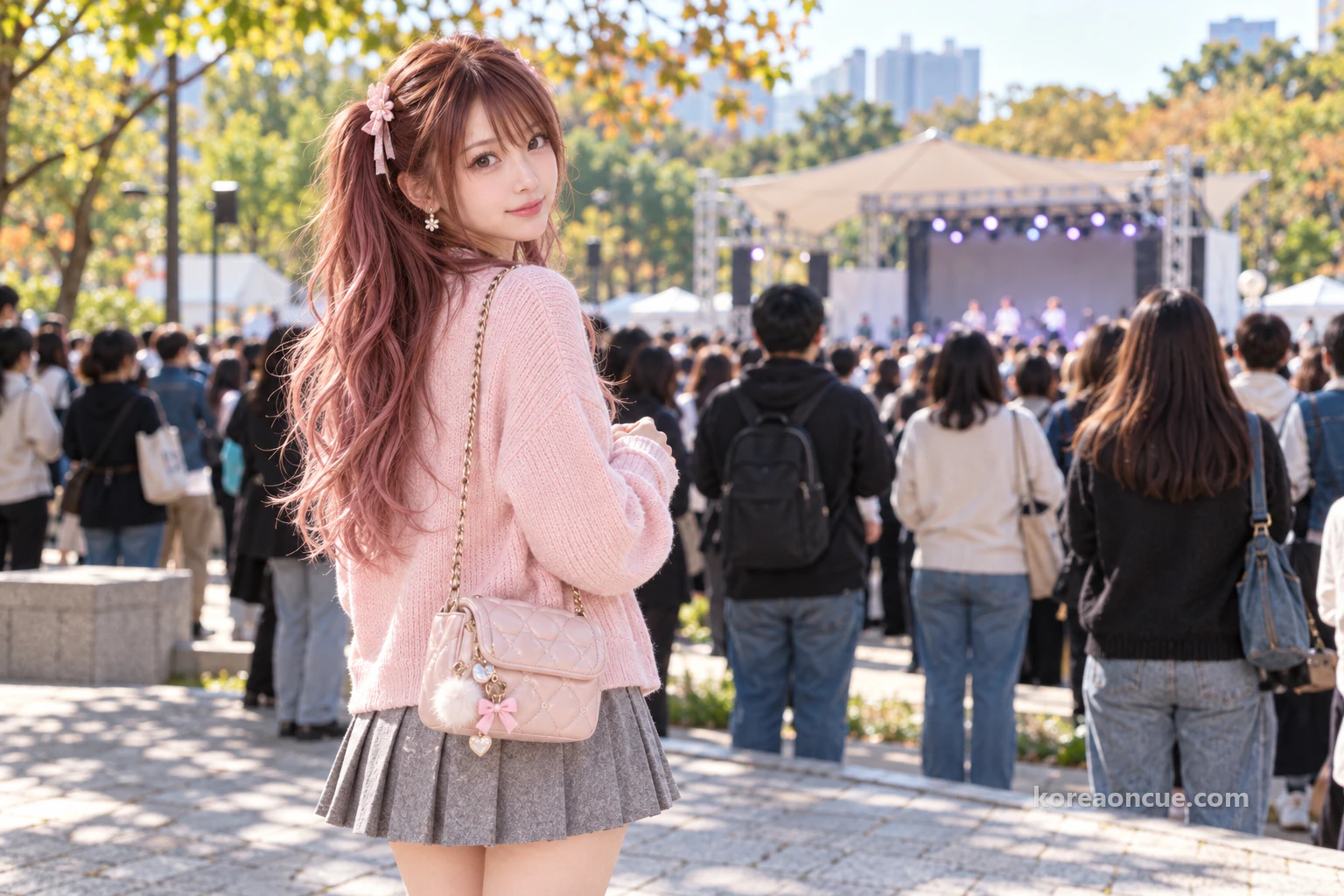
The thickest circle in Hina’s notebook is around 1 p.m. The Open Stage hosts the “3rd Kids–Seniors Cultural Harmony Festival” from 13:00 to 17:00, with a kids’ and seniors’ fashion show as its programme, and Hina liked the event’s name from the moment she first saw it. Right next to the word “children” that had caught her that morning sat the word “seniors”. In a park whose calendar puts children and older people on the same stage, an adult standing in front of it alone is not strange in the slightest. Hina watches from the back until the first act begins, then heads for the zoo as her timetable says.
For Hina, who works in concert promotion, the park’s stage calendar is a good read in itself. That Saturday, 7 November, the Four Seasons Garden has the “Pang-Pang Playground for the Whole Family”, with bouncy castles and hands-on booths from 10:00 to 17:00, and on Sunday 8 November the Open Stage has traditional performances from five Central Asian countries from 13:00 to 18:00. On the afternoon of Saturday 14 November, the same Open Stage has a pop concert, the “Happiness Sharing Concert”. Jotting down the dates stage by stage, Hina thinks the park is like an open-air venue whose line-up changes every weekend.
You can find these events by clicking a date on the events calendar on the park’s website. A month’s performance and event schedule usually goes up at the end of the month before. So once your travel dates are set, open the box for your day a few days before you leave. If the stages are empty, it becomes a quiet day of walking, and if they are full, your walk picks up one more sound along the way. Hina notes in the corner of her notebook that she will look again when next month’s calendar goes up.
Nine minutes from the main gate: the zoo’s marine animal house windows and animals on show
After the first act of the fashion show, Hina heads for the zoo. It is 639 m from the main gate, about a nine-minute walk. The zoo is home to about 500 animals of around 50 species, split into seven areas: the marine animal house, the tropical animal house, the Little Animal Village, the Monkey Village, the Predator Village, the Herbivore Village and the waterbird aviary. On the park’s home page, next to the zoo opening hours, a note says the outdoor zoo is open and the bird house is not. Reading it, Hina thinks of the phrase “today’s line-up”, and picturing a stage where the cast changes a little each day only makes her more curious.
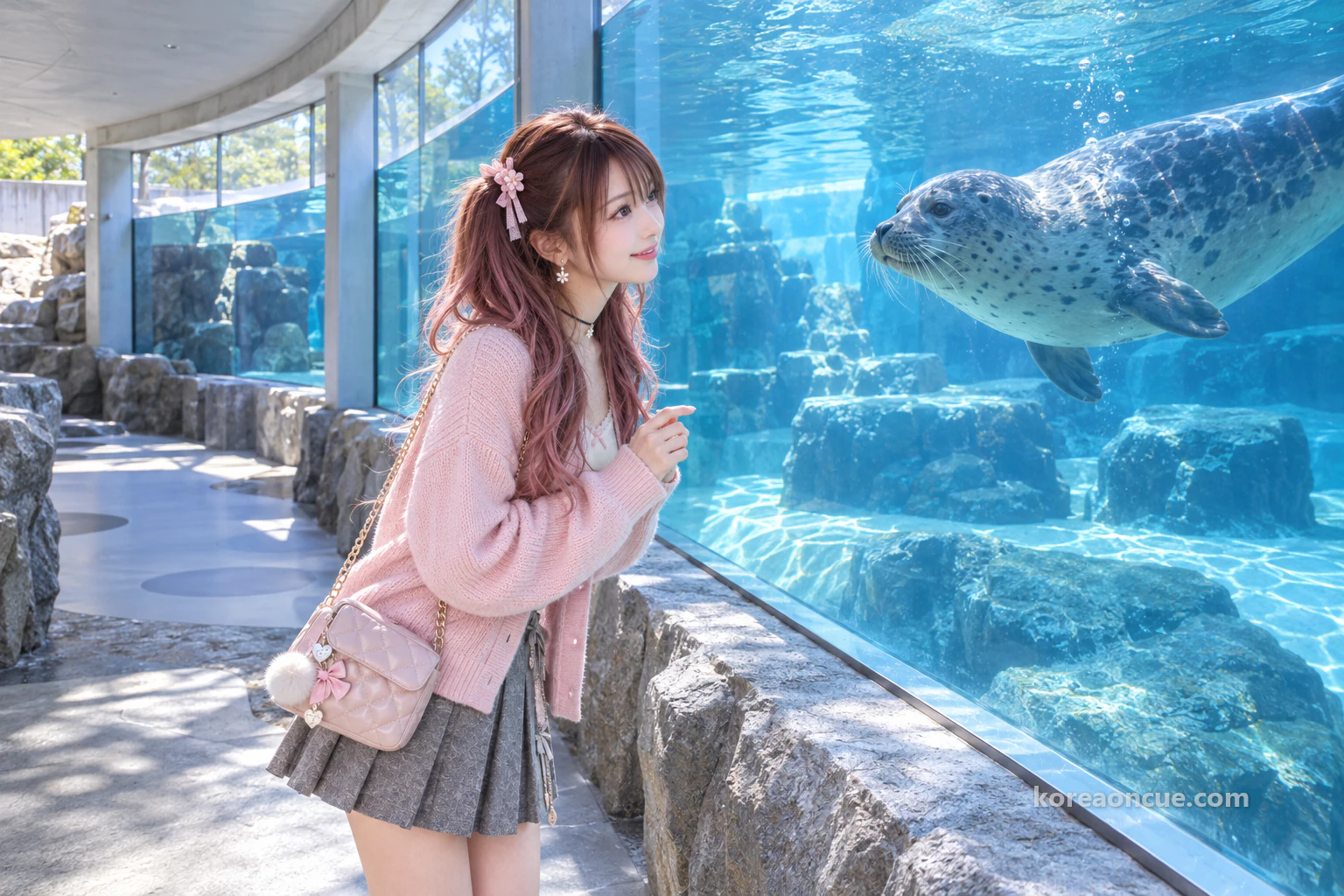
Her first stop is the marine animal house. Here you can see South American fur seals and spotted seals up close through large windows on the ground floor, and look down over the whole pool from the observation area upstairs. At the ground-floor window, Hina’s eyes follow a fur seal gliding round through the water for a long while. It feels like a venue with both front-row seats and a balcony, so she deliberately climbs the stairs and looks down once more from above. Seeing the same scene once from the front and once from above feels like watching a show twice.
Next come the otters. The zoo’s Eurasian otters, Sudori and Dalsuni, are out in their enclosure every day from 10 a.m. to 5 p.m., and the Korean Otter LIVE webcam runs 24 hours a day. But however long Hina waits in front of the enclosure, there is no otter in sight. Reading the notice again, she finds it says the otters roam freely around their large enclosure and may not be visible. Laughing, she writes in her notebook: “Confirmed for the show, entrance time TBC.”
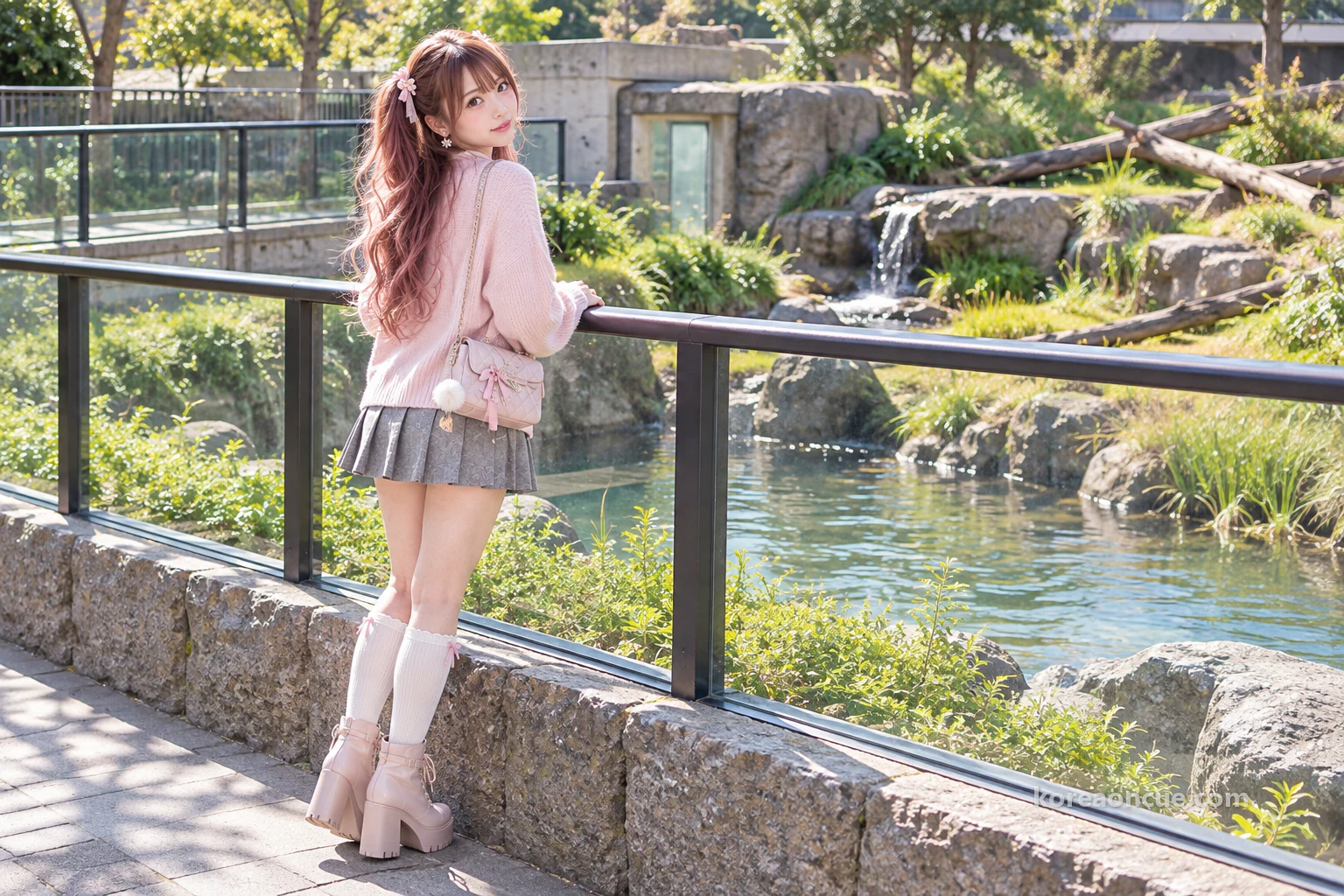
The zoo keeps miniature horses, Asiatic black bears, red foxes, fur seals, Eurasian otters, spotted seals, guanacos, donkeys and alpacas out in their enclosures as a rule. On some days, though, they stay in because of disease-control measures or the weather. When it turns cold, viewing also depends on the outside temperature: meerkats and Asian elephants can be seen at 5°C and above, and yellow-cheeked gibbons and silvery gibbons at 10°C and above. The animal feeding LIVE that ran once a day from April to October (excluding June–August) is out of season in November too, so on a late-autumn visit it makes sense to go round the zoo first, in the warmth of the middle of the day.
Palgakdang and the path to the back gate: the 315 m that hosted the Children’s Garden Festival
Leaving the zoo a little after 3 p.m., Hina turns towards the back gate. From the main gate to the Palgakdang indoor playground is 573 m, about an eight-minute walk. Palgakdang is an indoor playground for children only, open 10:00–18:00, costing 3,000 won for children and 1,500 won for adults for two hours, booked in advance on Naver or at the door. As it is a children’s playground, Hina doesn’t go inside, but after looking at it once from outside she draws a small octagon in her notebook, borrowing from the name, which means “octagonal hall”.
The path running from the back gate to Palgakdang is also where the 2026 Children’s Garden Festival was held for two weeks, from 5 to 18 May this year. Along a 315 m stretch covering 12,000 m², gardens were laid out on the theme “The garden is a gallery, children are the artists”. The festival is over now, but after reading the theme, Hina sees the same path a little differently. Like a theatre lobby after the curtain comes down, a path the festival has passed along offers its own pleasure in imagining what was there.
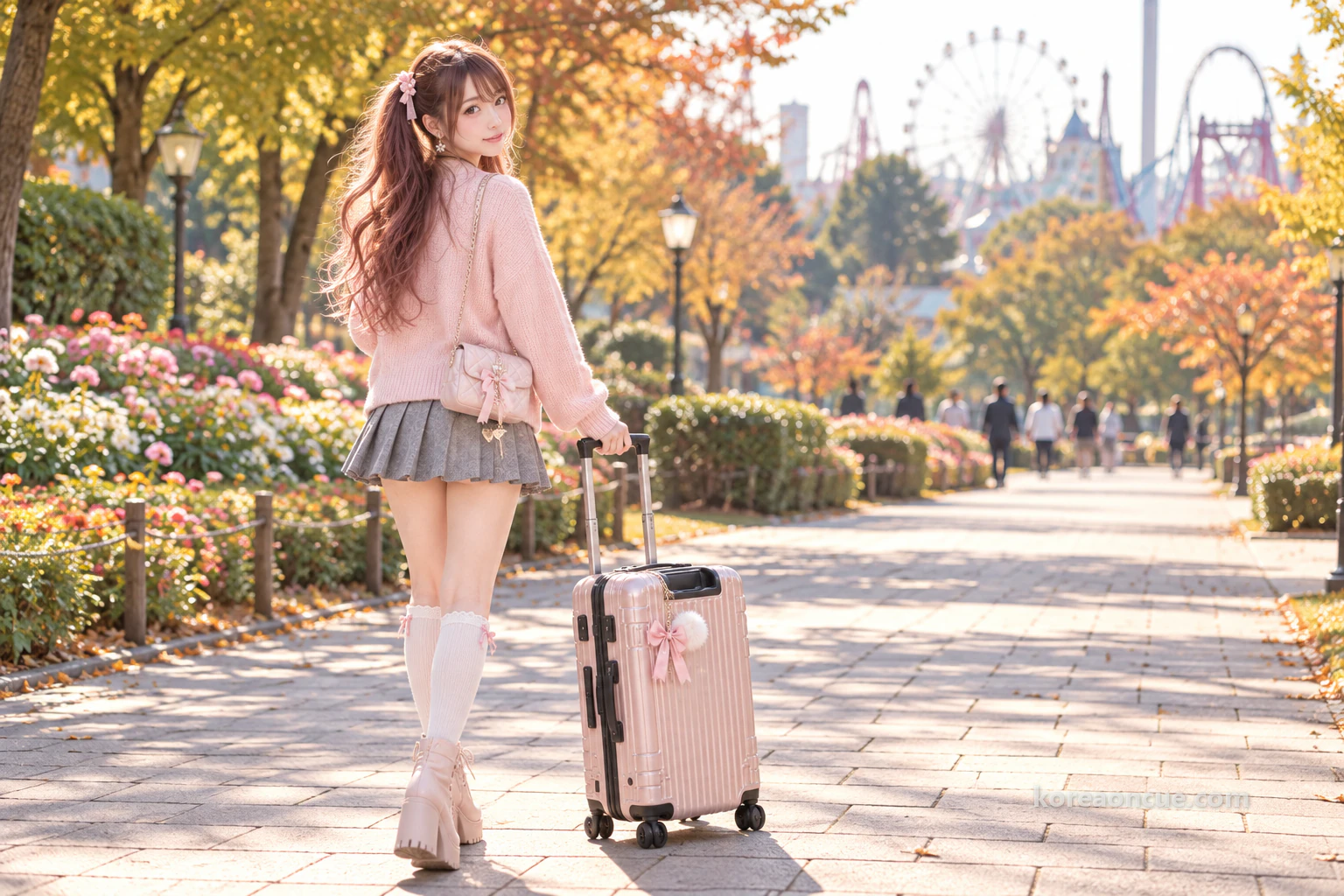
The amusement park is on the back gate side. It is listed separately from the park, and questions such as ticket sales go to the amusement park’s own phone line, 02-458-5580. Hina has no plans to go on any rides today, but she slows for a moment when she spots the name “the first Blue Dragon Coaster” on the list of photo spots. There is also a “SEOUL MY SEOUL” photo spot near the back gate. Instead of taking a photo, Hina is thinking about a kind of map she is about to draw for the first time in this park.
A map without times, and the back gate to Achasan Station Exit 4
Before going out through the back gate, Hina sits on a bench by the path and opens her notebook to a fresh page. Usually she would write the times along the line: main gate 12:00, Open Stage 13:00, the zoo, back gate some time after 15:00. Today, though, the hand holding the pencil stops in front of the numbers. Last night there had not been a single time in Noah’s notebook, and in the 15 minutes the drones were in the sky he never once moved his pen. This time, Hina decides to do it Noah’s way and draw only the route, with no times.

The line that begins at the main gate passes the wave-shaped viewing window, an empty round enclosure, the two semicircular stages and a small octagon, and ends at the back gate. With the times wiped away, what is left in their place are scenes: her eyes following the seal, the otters that never came out, the backs of the people gathered in front of the stage. Hina had no idea a map without times could hold on to a day’s memories so clearly, and she photographs the finished page and sends it to Noah. “No times today. Noah style.”
From the back gate to Achasan Station (Line 5) is 400 m, about a six-minute walk. As the park’s guide says, Achasan Station Exit 4 connects with the back gate. Coming in by the main gate and leaving by the back gate means you don’t have to retrace your steps, and since you use one station each on Lines 7 and 5, you can pick whichever suits your next stop. The reverse order works just as well: start from Achasan Station, enter by the back gate, leave by the main gate and board at Children’s Grand Park Station. Inside the park, main gate to back gate is about 20 minutes on foot by the park’s guide, so allow plenty of time for the places you will stop at along the way.

On the walk to Achasan Station, Noah’s reply arrives. “Even without the times, I can see the whole route.” After reading that one line, Hina gives the page in her notebook a title — not numbers but two words, “Sunday afternoon”. Her habit of fixing the showtime first and counting backwards will probably stay the same. But as she goes down the subway stairs, Hina thinks it might be fine to leave the times off the last page now and then, as she did today.
Common Mistakes
Driving to the main gate on the morning of 1 November
that day, the JTBC Seoul Marathon closes parts of the road outside the main gate (Gunja Station intersection to Konkuk University Station intersection) to traffic, 08:29–11:31. Avoid those hours or come by Line 7 to Children’s Grand Park Station Exit 1.
Going to see the music fountain in November
it only runs from 15 March to 31 October, and even then it stops every Tuesday.
Counting on the botanical garden as a rainy-day option
it is closed for remodelling from 27 May 2026 until the second half of 2027 (provisional).
Leaving your bag at the main gate when you will exit by the back gate
there are lockers at both the main and back gates. Decide which gate you will leave by before you store anything.
Heading for the zoo after 5 p.m.
the park stays open until 22:00, but zoo hours are 10:00–17:00.
Giving up as soon as you can’t see the otters
they roam freely around a large enclosure and are sometimes out of sight. Give it a little while.
FAQ
Is it all right to go as an adult on my own?
The park is open 05:00–22:00 every day of the year with no admission charge. It is presented as a place of rest for all citizens and an ecological park.
Which station and exit should I use?
Children’s Grand Park Station (Line 7) Exit 1 for the main gate (2 min on foot), and Achasan Station (Line 5) Exit 4 for the back gate. The address is 216 Neungdong-ro, Gwangjin-gu, Seoul.
How late is the zoo open?
10:00–17:00. Hours may change in part depending on disease-control measures or the weather.
Is the autumn festival still on in November?
The autumn festival, “Classics in Autumn Leaves”, runs across the whole park from 19 September to 7 November 2026.
What’s on stage on 1 November?
A taekkyeon tournament on the Forest Stage (11:00–16:00) and a kids’ and seniors’ fashion show on the Open Stage (13:00–17:00).
Can I leave luggage?
Paid lockers at the main and back gates operate 05:00–22:00. The base rate for 3 hours is 800 won small, 1,100 won medium and 1,500 won large.
Can I bring my dog?
No. Pets are not allowed, to keep the zoo animals safe and prevent disease.
Recap — 30 seconds before you go
- Children’s Grand Park Station (Line 7) Exit 1 → main gate (2 min) · back gate → Achasan Station (Line 5) Exit 4
- Park 05:00–22:00, open every day, free · zoo 10:00–17:00
- 1 November: marathon vehicle restrictions 08:29–11:31 · Forest Stage taekkyeon tournament 11:00–16:00 · Open Stage fashion show 13:00–17:00
- Music fountain finished on 31 October · botanical garden closed for works
- Autumn festival “Classics in Autumn Leaves” runs until 7 November
- Store luggage at the gate you will leave by
Sources
- Seoul Facilities Corporation, Children’s Grand Park — Hours and feesPark hours 05:00–22:00 · opening hours of the main, back, Guui and Neungdong gates · free park admission · zoo hours 10:00–17:00, subject to disease-control measures and weather · bicycles, kick scooters and pets prohibited · no feeding the animalschecked 2026-10-26
- Seoul Facilities Corporation, Children’s Grand Park — Directions216 Neungdong-ro, Gwangjin-gu · Line 7 Children’s Grand Park Station Exit 1 for the main gate · Line 5 Achasan Station Exit 4 for the back gate · about five minutes by bus from Konkuk University Station or a transfer to Line 7 · bus numbers serving the main gatechecked 2026-10-26
- Seoul Facilities Corporation, Children’s Grand Park — Zoo visitor guideAbout 500 animals of around 50 species across seven viewing areas · zoo hours 10:00–17:00 · about 20 minutes on foot from the main gate to the back gate · animals routinely on outdoor display and exceptions for disease control or weather · winter viewing temperature thresholds · animal feeding LIVE runs April–October, excluding June–Augustchecked 2026-10-26
- Seoul Facilities Corporation, Children’s Grand Park — Marine animal houseSouth American fur seals and spotted seals · underwater viewing through large ground-floor windows · views from the upper-floor observation areachecked 2026-10-26
- Seoul Facilities Corporation, Children’s Grand Park — The otters’ daily lifeSudori and Dalsuni · daily outdoor display 10:00–17:00 · 24-hour otter webcam · otters may be out of sight as they roam their large enclosurechecked 2026-10-26
- Seoul Facilities Corporation, Children’s Grand Park — JTBC Seoul Marathon traffic restrictionsVehicle restrictions on roads outside the main gate on 1 November 2026 · 08:29–11:31 between Gunja Station intersection and Konkuk University Station intersectionchecked 2026-10-26
- Seoul Facilities Corporation, Children’s Grand Park — Botanical garden closure noticeBotanical garden closed for remodelling from 27 May 2026 until the second half of 2027, provisionallychecked 2026-10-26
- Seoul Facilities Corporation, Children’s Grand Park — Events on 1 November 202626th Seoul Taekkyeon Association President’s Cup at the Forest Stage, 11:00–16:00 · third Kids–Seniors Cultural Harmony Festival at the Open Stage, 13:00–17:00, featuring a children’s and seniors’ fashion showchecked 2026-10-26
A Seoul story told with our AI characters. Place details are checked against public sources; the photos are AI-made illustrative images. How we use AI
Next Cue
Rina walks Gyeonghuigung on a late-autumn afternoon, six boxes from Heunghwamun to Seoam
At Changdeokgung, Rina learned the name “Eastern Palace”, and she has wondered ever since about its partner, the “Western Palace”.

The first walk for three: Rina brings Maya and Mali together at Boramae Park in late autumn
To the message “Next trip, a morning, the forest path, the three of us”, Maya replied, “Let’s choose somewhere new for the first walk of the three of us.” The place they chose was Boramae Park, on the site of the old Korea Air Force Academy, where eight aircraft stand beside the lawn.

Harmony on the 1st floor, Network on the 2nd: Noah’s time map of the Seoul Science Center, drawn floor by floor
Noah’s time maps have always been drawn on streets.