
SCENE TO STREET
A K-Drama Café Scene in a Real Travel Plan
What would it take to enjoy the atmosphere of a drama café scene on your own trip? Look at the light and composition, then think through seating, ordering, travel time and clothes.

How to get there
Walking distance and time are map-route estimates; exit numbers are as of the check date.
- This guide does not recreate a specific drama, actor or café. It uses a four-part editorial framework to read café scenes, and shows what changes when you carry it into half a day in Seongsu.
- The unit is half a day (three to four hours). A full day belongs to the route; this guide plans one café and one street.
- No new outfit formula here. The principles live in the office-romance translation, and the long-day budgets in the drama-ready autumn look.
- Indoor chill is explained by the café culture note. The seat variable here only looks at light and time.
- Every number references a source record. Elena’s sentences are a point of view, not evidence of a real visit or purchase.
The scene is imagined, not a record of a visit. Seating, ordering and indoor conditions vary by café and by day.
What to consider
In a drama café scene, window light falls on the characters and the wait for an order passes quickly. Travel to the next location is edited out, and clothes are arranged for the shot. On your trip, you have to make those choices yourself. Looking closely at what you liked in the scene can help you think through the seat, order, journey and outfit.
One rule. Don’t copy the scene — take only what makes it work. Take the reason and the scene rebuilds itself in another café, in another season. Copy it and the first condition breaks at the café door.
“I read the scene. I draw the line first: what is a condition of the screen, and what survives on the street. Once the line is drawn, the plan gets shorter and the disappointment disappears.”
Elena interprets drama scenes into the context of real life in Korea. This guide follows that reading in order: the four signals a scene actually gives, what to keep, drop and change, the four real-life variables, where they collide with half a day, and one formula to close.
Planning your outfit
What we actually read in a scene is four signals. Look at the conditions, not the person.
Four signals in the scene — THE SCENE
- Window light · toward the person
- Order · done between lines
- Movement · cut away
- Clothes · one layer
- A smooth scene
When all four hold at once the scene feels smooth. In real life each signal demands its own condition, and those conditions are this guide’s four variables.
The four signals are this guide’s editorial framework, not a claim about every scene. Window light is a time of day. On screen it comes from a lamp; on the street it comes from the sun. Ordering is a procedure. The scene skips it, but where you order at the counter first, the line comes before the seat. Movement is distance. The walk removed between cuts returns in real minutes. Clothes are layers. The scene’s single layer leaves the indoor–outdoor temperature gap out of the calculation.
01Choose what to keep — KEEP
Keep — what still holds on the street
The first step is choosing. Decide what survives before anything else, and the later steps stop drifting into “exactly like the drama”. Less survives than you expect, which makes it easy to protect.
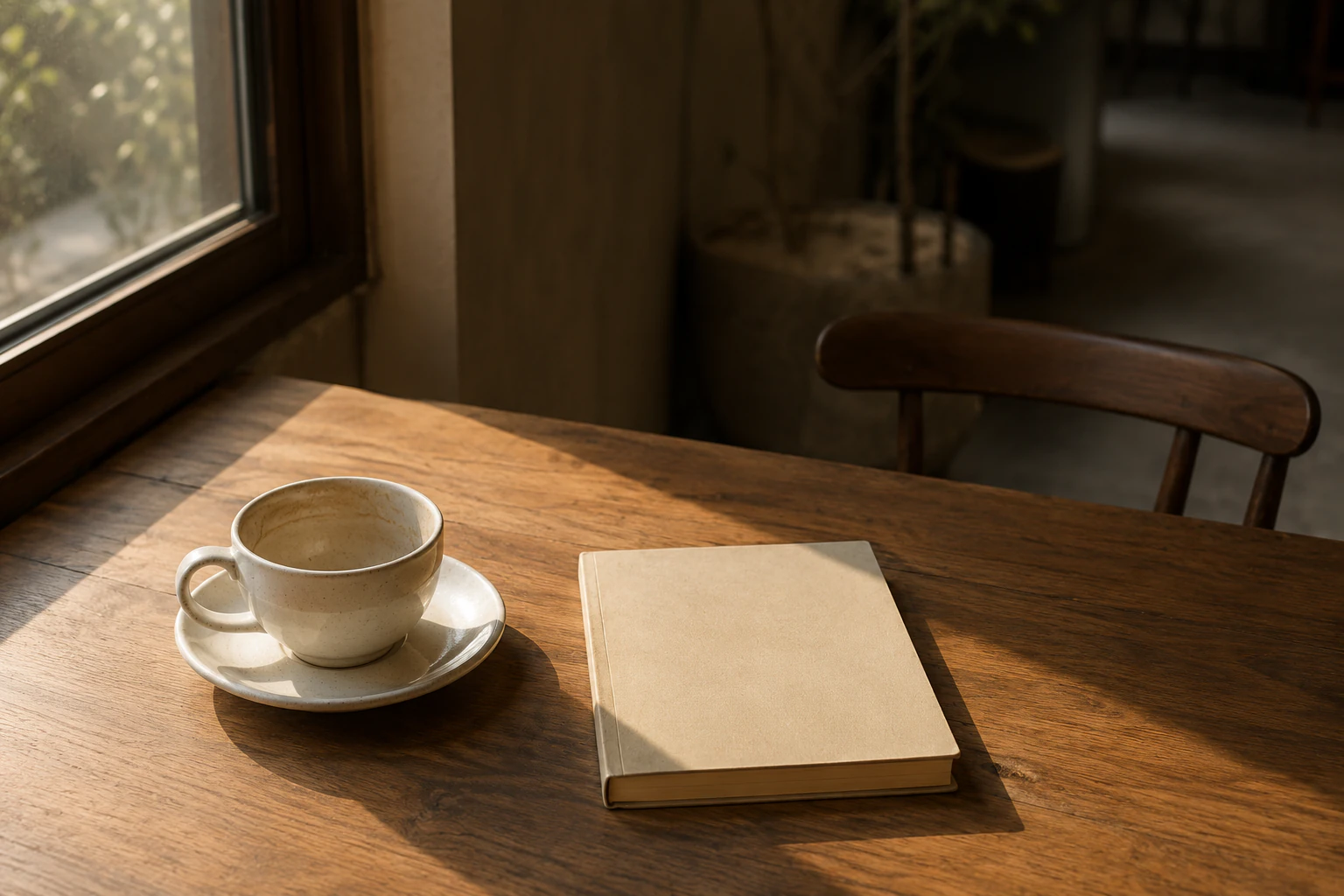
- Keep the direction of the light. Window beside you, not behind you. Use the same principle where a workable window seat exists.
- Keep the rhythm of one long cup. The scene’s conversation is slow because there is one cup. A second order breaks the rhythm.
- Keep one indoor stop per day. A scene resolves inside one café; this guide’s half-day formula uses one café too. The same principle as the evening revisit’s one indoor stop.
- Keep clean lines and low saturation. The clothing principles are the three from the office-romance translation, unchanged.
What you keep is a principle, not a state. You can keep the direction of the light but the sun sets the hour; you can keep the rhythm of one cup but not the empty café. Telling principle from state is the whole of this step.
02Write down what to drop — DROP
Drop — what only works because it is a screen
The second step is dropping. Leave a screen-only condition in the plan and it is the first thing to collapse at the café door.
- Drop table service. Where you order at the counter first, the line comes before the seat. “The cup arrives as you sit down” is a skipped procedure.
- Drop the empty café. An empty seat next to you is a filming condition. Crowding and waits vary by place, day and time, so this guide does not assume them in advance.
- Drop teleporting. The movement removed between cuts is walking time in real life. It comes back by the minute in Step 05.
- Drop the one-layer outfit. There can be a gap between indoor and outdoor temperature, so this guide does not assume one layer is enough. Layer design belongs to one jacket, three indoor temperatures.
03Decide what to change — CHANGE
Change — what practically shifts in Seongsu
The third step is changing: putting the kept principles back on top of real conditions. This is where the plan starts.
- Match arrival to the light. A window-light scene is made when the sun is low. Seoul’s October sunset runs sunset 18:16 on 1 Oct to 17:35 on 31 Oct (Seoul, 2026, KST), and this simulation’s planning criterion is arrival 90 minutes before sunset — a creator-test value, not a fact of nature.
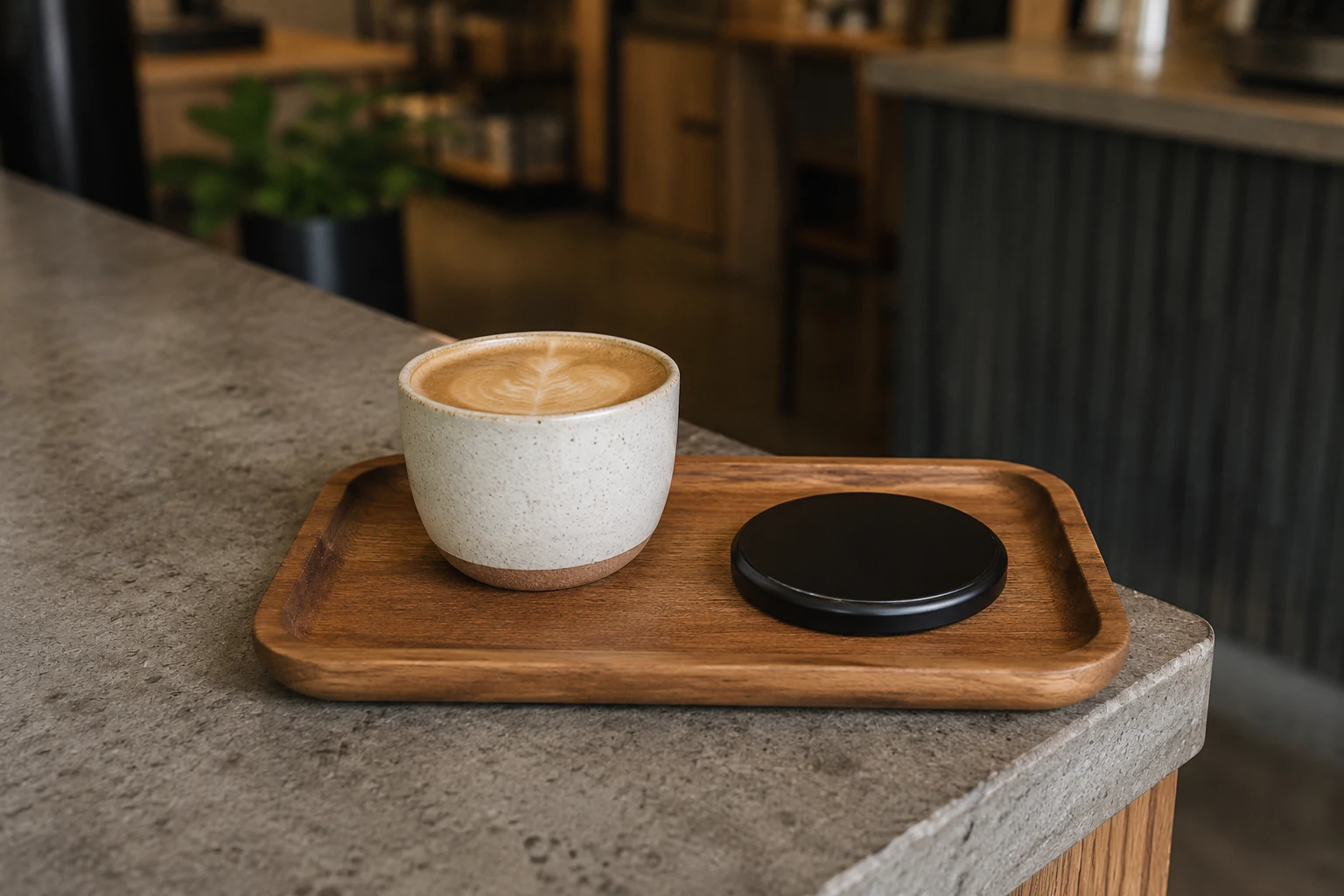
- Make ordering a procedure. Where the café works counter-first, the order is “line → order → seat”. Some places let you hold a seat first and some don’t, so read the signage when you arrive.
- Turn movement into a number. Borrowing one café from the route’s source record, it is 109 m from Seongsu Station Exit 2 (3 min). The walk to the next stop is added in the Step 05 ledger.
- Turn clothes into layers. Instead of one layer, add one that folds to A5. The formula is in the two linked guides; here you only decide “add one layer”.
Then the procedure you dropped comes back as a keep. This guide’s verdicts depend on how the shop works, which is why they carry the condition “where the café works counter-first”. Read the signage and swap the column.
04Think through seating, ordering, travel and clothes
Seat / Order / Movement / Clothes
The fourth step is a table. Sort the first three steps into four variables and the same table can be applied to another café scene. With the table, a new drama needs no new calculation.
KEEP · DROP · CHANGE matrix — planning exercise
| Variable | Read in the scene | KEEP | DROP | CHANGE (Seongsu) |
|---|---|---|---|---|
| Seat | Window, empty neighbour, long stay | Direction of light | Empty café · unlimited stay | Arrival counted back from sunset · follow seating-time notices where posted · indoor chill via the café culture note |
| Order | At the table, between lines | The rhythm of one long cup | Table service · no waiting | Where counter-first: line → order → seat · price from the source record |
| Movement | Cut away | One indoor stop | Teleporting | Walking by the minute · half a day = café 1 + street 1 |
| Clothes | One layer, clean lines, low saturation | Three principles | One-layer outfit · pressed suiting surface | One extra layer that folds to A5 · shoes chosen for walking |
- Seat: time first, seat second. If the window is taken, keep the direction of the light and give up the seat.
- Order: don’t build the plan around an empty café; read the signage on arrival. Counter-first means line first; table service means seat first. Use the route record’s example price (Americano 5,500 won) only as a reference value.
- Movement: this guide’s half-day formula is café 1 + street 1. In this guide a second indoor stop falls outside the formula.
- Clothes: add one layer and choose shoes for walking. Everything else follows the linked formulas as written.

05Check how it fits into your half-day plan
Where it collides — one indoor stop · walking legs · sunset
The fifth step is collision. Each variable can be right on its own and still collide inside one half-day. The collisions happen in three fixed places.
Half-day movement ledger — reused from the route source record
| Item | Value | Where it collides with the scene |
|---|---|---|
| Station → café (example) | 109 m from Seongsu Station Exit 2 (3 min) | The first walk that was cut away |
| Example café hours | daily 08:00–22:00 (weekends from 09:00) | Not “as you sit down” but between opening and closing |
| Longest route leg | 1.8 km | The leg a half-day does not include |
| Full-day walking total | 67 minutes | Half a day stays under half of this |
| October sunset | sunset 18:16 on 1 Oct to 17:35 on 31 Oct (Seoul, 2026, KST) | The closing time of a window scene |
Every value is reused from a source record. The café is a worked example, not a recommendation, and walking times are map-route times, not times walked.
- Collision with one indoor stop: a shop after the café falls outside this guide’s half-day formula. Choose one.
- Collision with walking legs: the route’s longest leg (1.8 km) is outside a half-day plan. Keep only short legs before and after the café.
- Collision with sunset: put the window scene last and you are late. Window in the middle, street at the end.
- When the plan slips, cut the middle, not the end. The same principle as the first-visit plan in the saved-folder guide.
06Put together one plan — THE REAL-LIFE FORMULA
The formula — final values for four variables
The sixth step is closing. Shrink the table to one line and you can pull it out at the café door. A formula has to be short.
THE REAL-LIFE FORMULA — a half-day café scene
| Variable | Final value |
|---|---|
| Seat | Planning criterion: arrive 90 minutes before sunset (creator-test value) · window beside you · seat negotiable |
| Order | Signage first · one cup · no second order |
| Movement | Café 1 + street 1 · longest leg excluded · cut the middle when late |
| Clothes | Three principles + one A5 layer + walking shoes |
Don’t copy the scene — take only what makes it work. This table is the whole of that reason.
Use the same table but swap “seat” for “background”. Direction and time of light stay, the order variable disappears, and the movement variable doubles. Street-scene movement belongs to the route.
Things to watch for
- Putting the window last — after sunset, indoor reflections can grow strong on the glass. Window in the middle, street at the end.
- Holding a seat first — where the café works counter-first, the line comes first. Assume nothing until you have read the signage.
- Two indoor stops — outside this guide’s half-day formula, and the layer calculation starts over.
- Choosing the café by drama title — this framework does not assume any particular title. Read the four signals and the same table can be reused when the café changes; follow the title and the first condition breaks at that café’s door.
FAQ
Which drama, which café?
Neither. This guide does not recreate a specific drama or shop. It reads this guide’s four editorial signals and moves them into a half-day plan. The framework does not assume any particular title, so the same table can be reused when the café changes.
How do I know the ordering method?
It differs by shop, so this guide does not decide it. Reading the signage on arrival is written in as a procedure: counter-first means line first, table service means seat first.
Can’t I do two cafés in half a day?
This guide’s half-day formula is café 1 + street 1, so the moment there are two indoor stops the plan falls outside the formula — and the layer calculation and the movement ledger start again. For two, go to the full-day route.
What do I wear?
This guide only decides “add one layer” and “shoes chosen for walking”. The formulas are in the office-romance translation and the drama-ready autumn look.
Before you go — 30 seconds before you leave
- Today’s sunset: ____ → window arrival 90 minutes before (planning criterion)
- Signage first on arrival: counter-first / table service
- One cup, no second order
- One indoor stop · longest leg excluded · cut the middle when late
- One extra layer (A5) · walking shoes
What has been checked
The ledger’s walking distances and times are map-route estimates. The café hours and the price of one drink are examples used to plan the itinerary. Sunset times are calculated for Seoul in October 2026 and shown in Korea Standard Time (KST).
(※ This article includes staged images created with AI.)
Putting it into practice
What remains after the scene is not the café but the table. When the next drama’s café scene shows you the four signals first, that scene is already a plan. That is why the scene Elena rereads in the evening is a time of day rather than a lamp, a procedure rather than a line. You don’t have to copy the scene for it to stay — you took the reason it worked.
More from this neighbourhood
When Street Signs Get Confusing in Seongsu
What do you do when a sign points one way and people walk another?

Seoul Forest: The Waterworks You Only Notice the Second Time
Part four of “Hangang.” The Seoul Metropolitan Government writes that Seoul Forest was once a royal hunting ground, then Seoul’s first water-supply source in 1908, and later a racecourse and a golf course. On an evening walk through Seongsu, Rina only crossed the far edge of this park. This time she comes in daylight and looks for what those earlier lives left behind.