
SCENE TO STREET
When Street Signs Get Confusing in Seongsu
What do you do when a sign points one way and people walk another? Compare the sign with the street around you before choosing your next turn, and check opening or access information separately.

How to get there
Walking distance and time are map-route estimates; exit numbers are as of the check date.
- Use it alongside a navigation app. When the screen and the street disagree, check the signs, entrances and corners around you.
- Distance is handled by It looked close on the map. This piece is about cues, not metres: not how far, but what you look at to decide a direction.
- The frame is Seongsu in daylight. Judgement after dark is handled separately by the evening revisit.
- Every number references a source record. Noah’s sentences are a marked point of view, never evidence of a real visit or purchase.
- Examples borrow only the leg figures from the route’s source record.
The character scenes are imagined, not records of a visit. Signs and entrances may change; check the latest on-site directions.
What to consider
It is easy to hesitate when a sign and the people around you seem to point different ways. An arrow may point right while people turn left, or the map may show a straight path where you see a wall. Alongside checking the screen, look for entrances and corners nearby. Find another clue before deciding where to go.
Reading a street is not a question of trusting signs or distrusting them. It is a question of never holding only one cue. A sign is one cue. The flow of people is another. The corner of a building and the direction of the light are two more. Build a structure in which the others answer when one wobbles, and the lane can confuse you without the day falling apart.
“A route makes sense when the next scene connects, not just when one sign looks right. A sign tells you a point; a scene tells you a direction.”
Noah observes streets and visual routes. This guide follows that reading in four steps. He notices one thing, compares it with a second, leaves one line, and moves on: NOTICE · COMPARE · CUE · MOVE. A fifth step draws the boundary around what sight cannot settle.
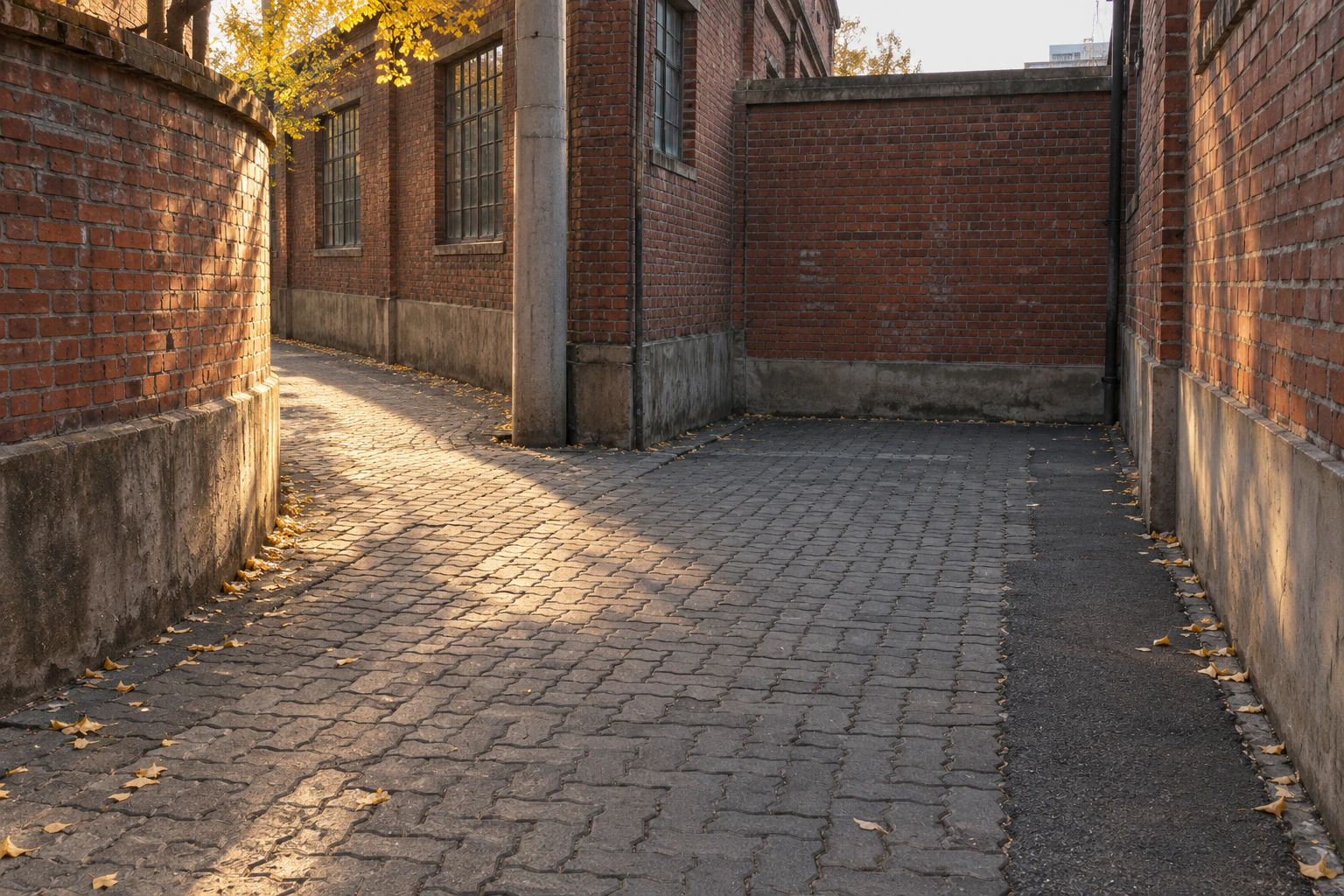
What to notice in the street
Noah reads four kinds of cue on a street. They tell you a direction rather than a point.
Four cues on the street — THE STREET
- The sign — arrows, boards, floor markings. Can state a point or direction directly. Its authority, currency and visibility still need checking.
- The flow of people — which way they walk, where they stop. Shows movement happening now. Different destinations and times can make it point somewhere other than your route.
- The corner of a building — brick, a blank face, the direction of steps. Tells memory. Most useful on the way back.
- The light — the side the shadow falls on, the bright end of the lane. Tells time. Keeps changing through the day.
What matters is that each cue speaks about something different. The sign gives a point, the flow a direction, the corner a memory, the light a time. That is why the other three expose it when one is wrong.
01Pick one cue, specifically — NOTICE
Notice — something you can point at, not an impression
The first step is choosing. “It feels like this way” is not a cue. Only what you could point at later counts, because anything vaguer than that cannot be compared in the second step.
- Pick something you can name. “The red brick corner.” “Three steps up.” “The arrow points right.” A name still points at the same thing after you have moved on; an impression does not.
- Prefer things that do not move. People and cars move on quickly. Walls, steps, street trees and paving stay. The cue you use on the way back comes from here.
- Pick only one. Look at three at once and you cannot tell later which one was wrong. Take one now and add exactly one more in the next step.
- If you photograph it, say what you photographed. A picture remembers the scene but not the direction. “Brick on the left, downhill to the right” is enough.
Then there are no cues missing — you simply have not stopped. Cues do not appear while you are walking. Pause in a safe spot, scan once, and two or three usually appear. If they still do not, do not judge that lane: return to the last junction.
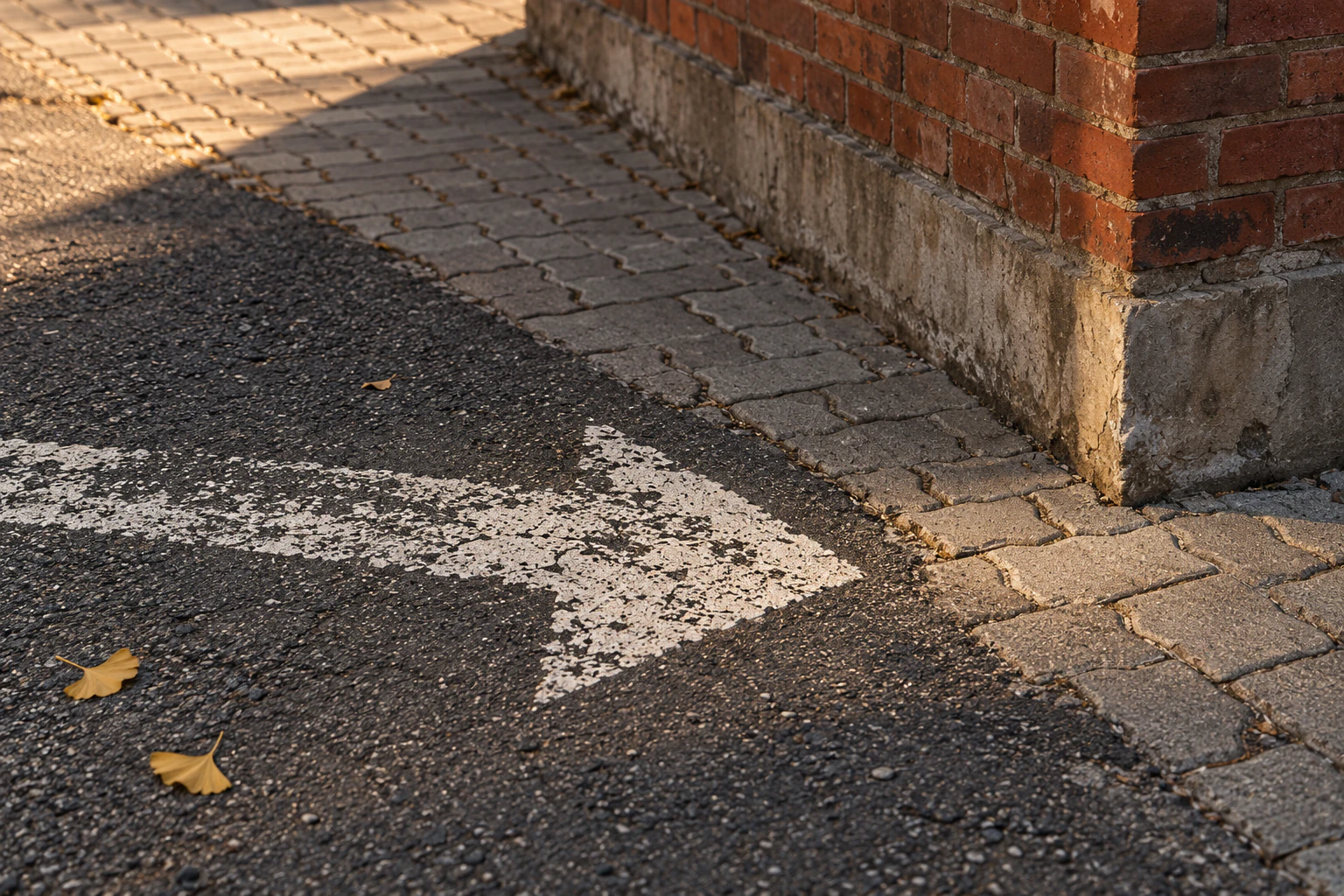
02Compare it with a second cue — COMPARE
Compare — one cue is a hypothesis, not an answer
The second step is comparison. One cue is a hypothesis; it becomes a judgement when a second one points the same way. When they disagree, the disagreement is itself information: neither becomes the answer automatically, and it is a signal to check again.
- Choose a different kind of cue. Compare two signs and they can both be out of date together. Compare a sign with the flow of people and each one checks the other.
- When two cues agree, you gain one reason. When two cues point the same way, you have one more reason for the judgement. When they disagree, neither becomes the answer automatically. The disagreement is a signal to check again.
- Do not automatically prefer pedestrian flow when the cues disagree. People may be heading to different destinations, and a sign may differ in authority or currency. Recheck against the navigation app, an official direction, or a reference point you have already verified.
- If both are vague, go to a corner. Walls, steps and street trees are the same today as yesterday. When you cannot settle a direction, the corner you already walked past is the surest reference point you have.
- Read the light last. The side the shadow falls on restores your sense of direction, but it disappears on an overcast day. If the other three settle it, you do not need the light at all.
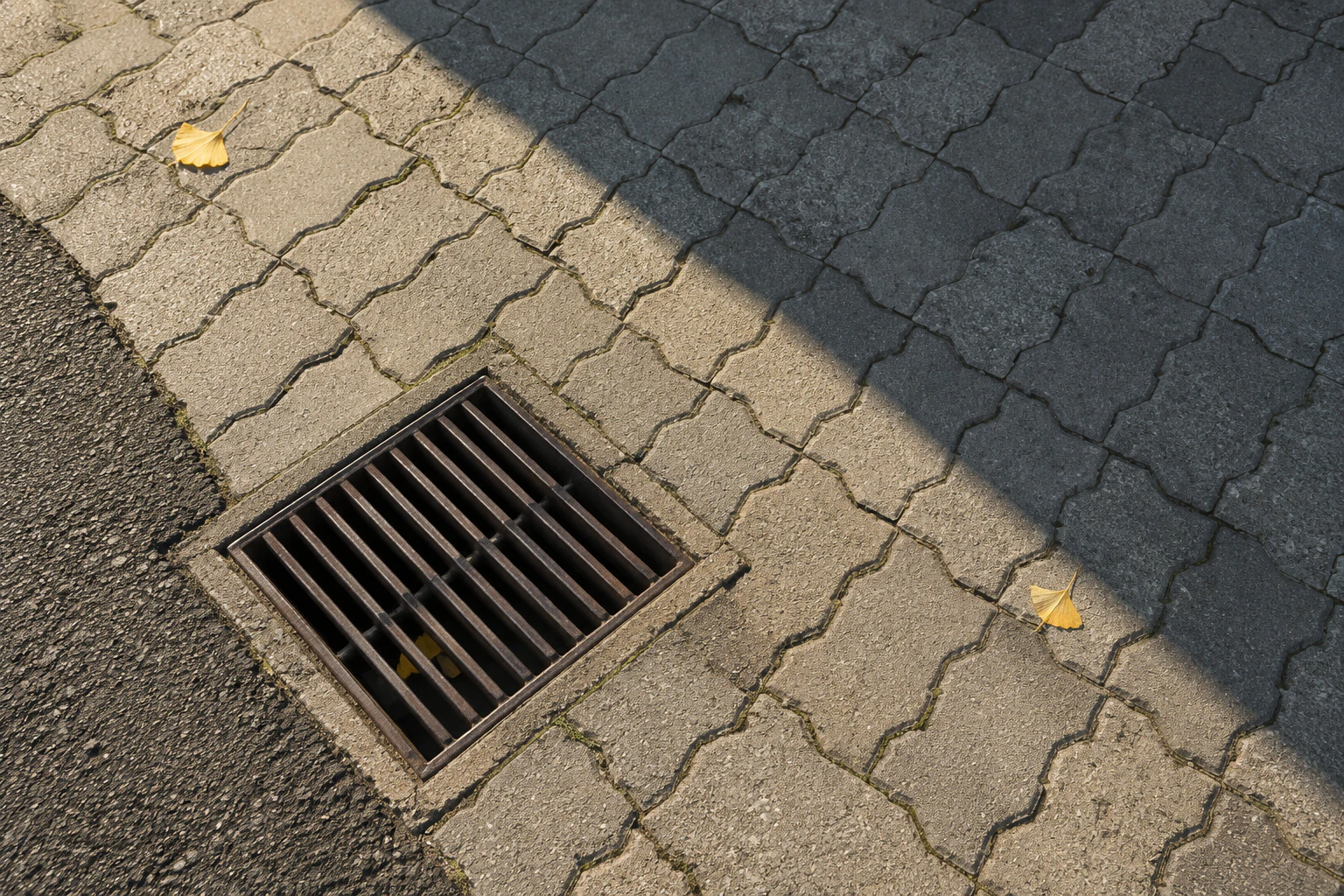
03Write down what you noticed — CUE
Cue — in a form the next person can use immediately
The third step is leaving something behind. A judgement kept in your head fades as you move. Written as one line it works on the way back, hands over to whoever is with you, and still works the next time you come.
- Write it as direction plus reference point. “From the brick corner, the downhill side.” The name and the direction have to travel together or the line will not read in reverse.
- Put only one condition in a sentence. If something like “reversed at lunchtime” attaches itself, move it to a second line. A line has to be short enough to pull out mid-walk.
- Write down what was wrong, too. “Arrow right, people left” is not a failure — it is the most valuable line you will write, because the same spot will not confuse you twice.
- Leave the numbers out. The app is better at metres. This line carries what the app never says: what you looked at in order to decide.
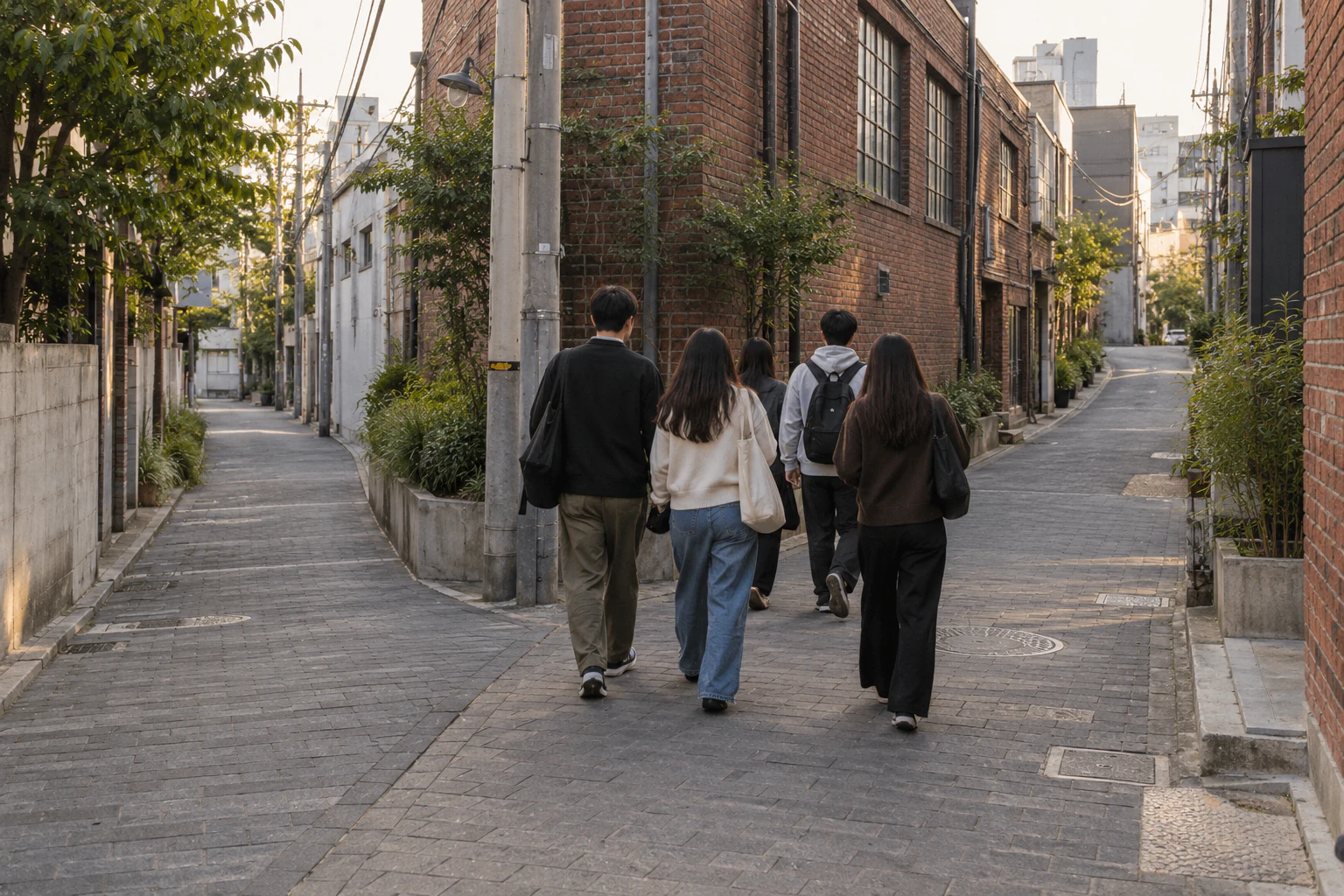
Doubling back is information, not failure. The route’s own source record plans a leg that doubles back west (19 min (1.3 km, doubling back west) on foot from LCDC). On the way back, do not hunt for new cues — read the line you wrote on the way out, backwards. That is what the line was for.
04Move to the next junction — MOVE
Move — do not stand in one place for long
The fourth step is moving. Reading serves judgement, not admiration. Once the line is written, your work at that spot is done. Standing longer does not add cues; it only adds confidence.
NOTICE · COMPARE · CUE · MOVE — four things done in one spot
| Step | What you do | Sign it is done | If it will not come |
|---|---|---|---|
| NOTICE | One cue you can point at | You can name it | Pause somewhere safe and scan |
| COMPARE | A second cue of a different kind | Same direction, or you know the gap | Cannot judge · recheck |
| CUE | One line: direction plus reference | It reads on the way back | Write down what was wrong |
| MOVE | Walk to the next junction | Your feet are moving | Return to the last corner |
- Aim only for the next junction. Try to read all the way to the destination and you will miss the disagreement in the middle. Lanes are read one junction at a time.
- Do not read while walking. Read standing somewhere safe, walk while walking. Mixed, both are done badly. Read briefly in one spot, then walk.
- Do not use leg length as a reading rule. The total distance and longest-leg calculation belong to It looked close on the map. If the direction becomes uncertain, stop somewhere safe and check again regardless of the length of the leg.
- Re-read when the light changes. The same lane gives different cues in the afternoon and at dusk. Sunset in Seoul in October runs sunset 18:16 on 1 Oct to 17:35 on 31 Oct (Seoul, 2026, KST), so switch to corner cues on either side of it.
Appoint one reader. Two people reading at once do not produce more cues, only more opinions. One person runs NOTICE and COMPARE while the other writes the CUE, and the pace picks up.
05Separate what sight cannot settle
What sight cannot settle — hours, construction, accessibility
The fifth step draws a boundary. The four steps above only handle what the eye can do. Fill an invisible condition with observation and guessing has begun. This step is where the guessing stops.
- Do not look at opening hours — check them. Lights on does not mean open, and dark does not mean closed. Some places differ by floor (daily 11:00–20:00 (varies by floor · some 3F brands closed Mondays)).
- Construction and closures are today’s information. The hoarding may not have been there yesterday and may be gone tomorrow. What you saw supports “this is blocked today”, never “this route is impassable”.
- Do not judge accessibility by sight alone. Steps, slopes and entrances may be visible, but whether a route works depends on the access conditions a reader needs. Check information a scene cannot establish — lift operation, step-free routes and entrance width — in current official facility or accessibility information first. Where access conditions matter, they are a condition of the route, not an extra.
- If a required access condition cannot be verified, leave it marked “unverified” and secure an alternative first. Do not treat an unverified condition as “it will probably work”; prepare an alternative entrance, stop or mode of transport that you have checked against your access needs.
- If you cannot verify it, take it out of the plan. An unverified stop kept as “it will probably work” becomes the failure point of the day. The freed slot is refilled by the principle in turning a saved folder into a plan.
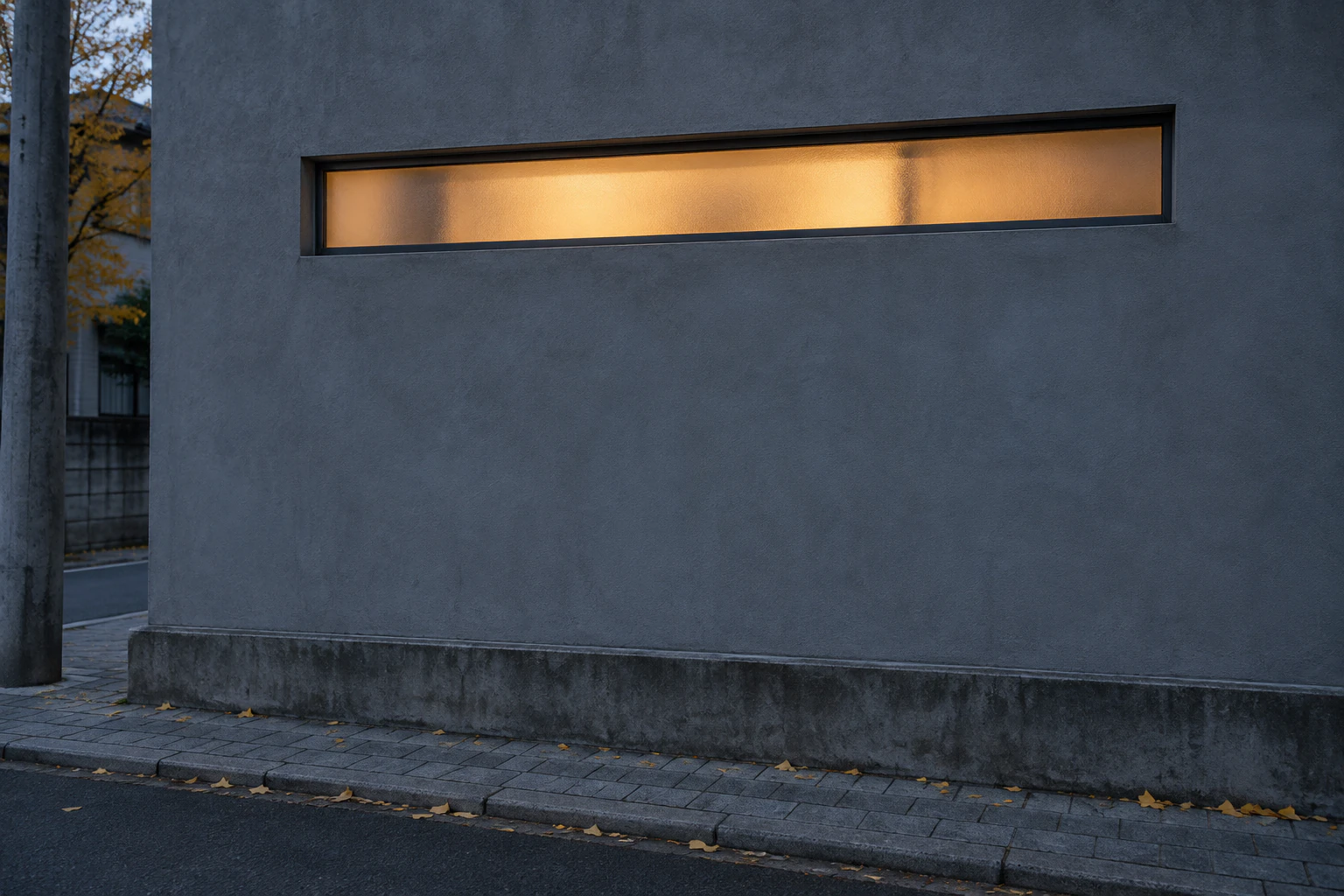
(※ This article includes staged images created with AI.)
Things to watch for
- Concluding from one sign — a sign carries the information of the day it was mounted. Decide a direction without a second cue of a different kind and, when it turns out wrong, you cannot find where it went wrong.
- Reading while walking — mixing movement and reading turns cues into impressions, and impressions fade as you move.
- Treating doubling back as failure — a doubling-back leg is in the plan already. The problem is not going back; it is going back without a line to read.
- Filling the invisible with observation — hours, construction and accessibility cannot be settled by sight. Guessing that starts here becomes the failure point of the day.
FAQ
Why not just use a navigation app?
Check distance and routing in the app, and when the screen and the street disagree, compare the cues around you. After doubling back, find your direction again in the same order.
Does this work outside Seongsu?
The four steps do not care what kind of lane it is. Seongsu only supplies the leg figures. Sign conventions and pedestrian flow do differ by city, so it is safer to run the comparison once more at your first junction.
Has Noah actually walked those lanes?
No. Noah is an original KOREA ON CUE editorial character, and the reading order here is a planning exercise.
What if I cannot write the line down?
Saying it out loud once keeps most of it. What matters is not the format but the shape — direction plus reference point. Keep that and a note or a voice memo works the same.
Before you go — 30 seconds before you go
- Start from one cue you can name
- Compare with a different kind — when they disagree, treat it as undecided and re-check; neither cue is automatically right
- One line: direction plus reference. Write the wrong ones down too
- Read standing somewhere safe — leg length is not a reading rule
- Hours, construction, accessibility — check, do not look
What has been checked
Leg distances and times, opening hours and sunset times reference the Seongsu full-day route and official venue notices. Read the signs and the flow of people on the day, in this guide’s order.
Putting it into practice
When you have finished reading a lane, what you keep is not a map but a handful of lines. Stand in the same place again and the line reads first, so even with the sign blocked you know where to start reading. A good route is not the one that always looks like the plan. It is the one that tells you where to go back to.
More from this neighbourhood

Seoul Forest: The Waterworks You Only Notice the Second Time
Part four of “Hangang.” The Seoul Metropolitan Government writes that Seoul Forest was once a royal hunting ground, then Seoul’s first water-supply source in 1908, and later a racecourse and a golf course. On an evening walk through Seongsu, Rina only crossed the far edge of this park. This time she comes in daylight and looks for what those earlier lives left behind.
Why Seoul cafés feel colder
You can feel comfortable outside and chilly once you sit down in a café.