
SEOUL · JEONGDONG
Elena at the Seoul Museum of Art’s Seosomun main building
Lynn Hershman Leeson: First Person Plural, inside the old Supreme Court — Four minutes on foot from City Hall Station Exit 10: how to see a free media art exhibition, open until 21 February 2027, in the order of its six sections
Elena has always written her scene directions inside square brackets, so the brackets in an exhibition title were enough to make her choose it. Waiting for her were around 200 works from more than 60 years by an artist who is also a film director, and a building put up as a courthouse that has carried several names since.
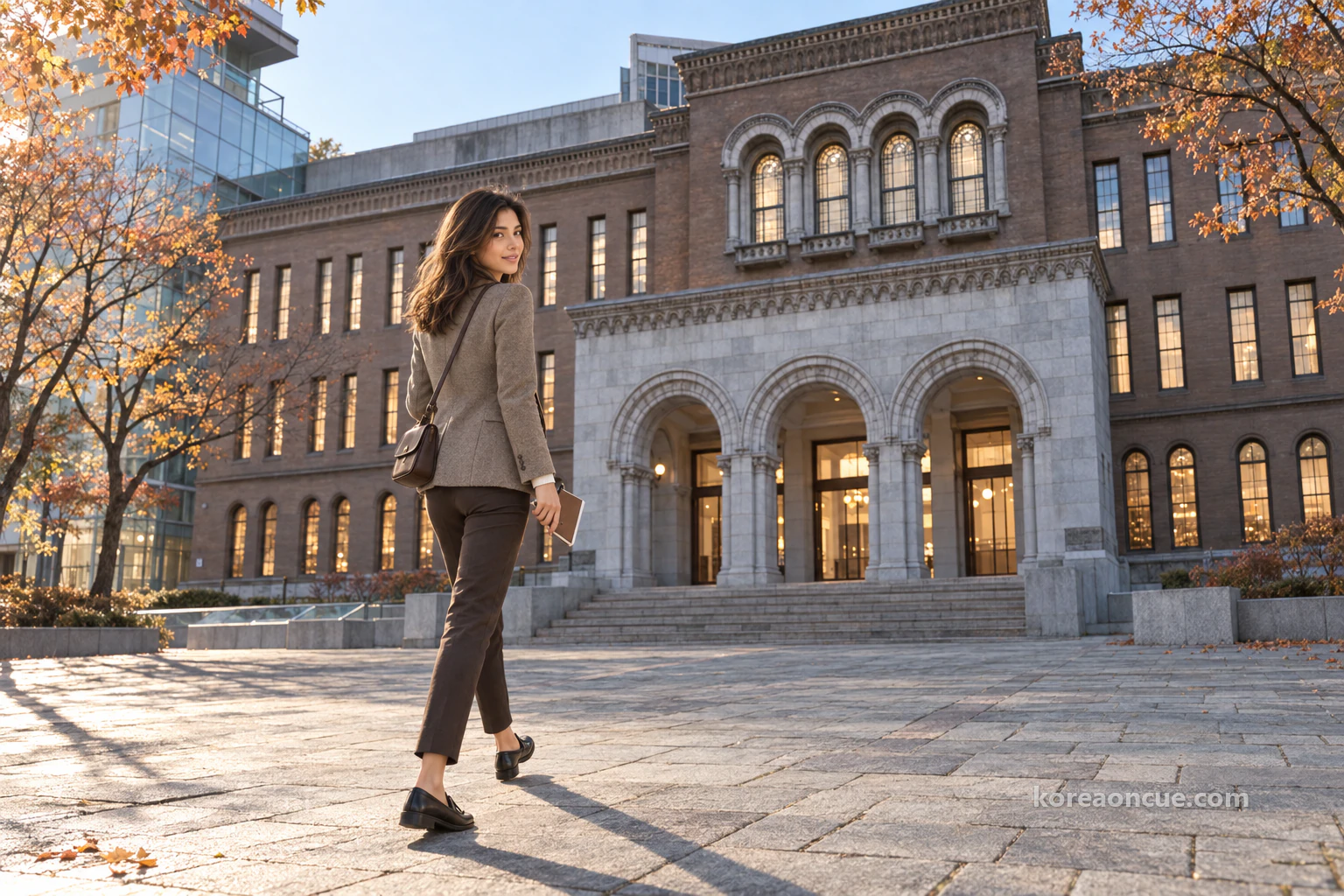
How to get there
In Elena’s notebook, square brackets have had one job for a long time. She is twenty-seven, from Spain, and she reads scenes from dramas and films back into the real places where they were set. She numbers every scene and writes her directions, such as where the camera is looking from, inside square brackets: “[close-up]”, “[voice off-screen]”. So when she spotted an exhibition called *Lynn Hershman Leeson: 나의 [나]들* — roughly “my [me]s” — in the Seoul Museum of Art listings, her eye went to the brackets before the word inside them. The sign she uses for directions was sitting right in the middle of an exhibition title.
Clicking through, Elena stopped again at the first line about the artist. Lynn Hershman Leeson (born 1941) is a veteran American media artist and film director, and this is her first museum solo exhibition in Asia. Around 200 works, from drawings, paintings, photographs and sculpture to media installations, video and film, bring more than 60 years of her work together in one place. For someone who travels to read scenes, the chance to walk through six decades of a film director’s work in a single building does not come along often, so Elena cleared the following Friday afternoon there and then.
Today she is heading for the Seosomun main building of the Seoul Museum of Art, at 61 Deoksugung-gil, Jung-gu. The exhibition, titled *First Person Plural* in English, runs from 21 October 2026 to 21 February 2027 in the building’s second-floor galleries, third-floor galleries and third-floor Crystal Gallery, and admission is free. Her day starts at Exit 10 of City Hall Station on Line 2 and follows Deoksugung-gil up to the museum’s forecourt, then reads the history of a building made as a courthouse, walks the six sections in numbered order, passes through the light-filled rooms on the third floor and comes back out to the forecourt in the evening. Closing times and the things that are easy to miss are here too, in the order they appear in Elena’s notebook.
Elena had a reason for choosing a Friday. The museum stays open until 8 p.m. from Tuesday to Thursday and until 9 p.m. on Fridays, but in the winter season from November to February it closes at 6 p.m. on Saturdays, Sundays and public holidays. Last entry is one hour before closing, so a late weekend afternoon leaves less time than it seems. Wanting to take the 200-odd works at an unhurried pace, Elena chose a Friday afternoon, the latest opening of the week, and wrote “[Friday, until 21:00]” on the first page of her notebook.
The Cue
*Lynn Hershman Leeson: First Person Plural* runs until 21 February 2027 at the Seoul Museum of Art’s Seosomun main building (61 Deoksugung-gil, Jung-gu, Seoul). It is the first museum solo exhibition in Asia by the American media artist and film director Lynn Hershman Leeson, with around 200 works in six sections across the second- and third-floor galleries and the third-floor Crystal Gallery, and admission is free. The museum is open until 20:00 Tuesday–Thursday and 21:00 on Fridays, and closes at 18:00 on Saturdays, Sundays and public holidays from November to February. It is a four-minute walk (260 m) from City Hall Station (Line 2) Exit 10.
- Where: Seoul Museum of Art, Seosomun main building, 61 Deoksugung-gil, Jung-gu, Seoul. The exhibition is in the second-floor galleries, the third-floor galleries and the third-floor Crystal Gallery.
- Dates and admission: 21 October 2026 – 21 February 2027. This exhibition is free.
- Subway: City Hall Station (Line 2) Exit 10, then 260 m (a four-minute walk) towards the Seoul Central District Court Jungbu Registry Office. On Line 1, City Hall Station Exit 1 is 380 m away (6 min).
- Hours: Tue–Thu 10:00–20:00, Fri 10:00–21:00, Sat, Sun and public holidays 10:00–18:00 from November to February. Last entry one hour before closing.
- Closed: Every Monday and 1 January (open when a Monday is a public holiday).
- Docent tours: Tue–Sun at 15:00.
- Driving: Parking at the museum is limited, so there is little room for visitors’ cars. Come by subway or bus.
- Enquiries: Visitor information desk, 02-2124-8868.
From City Hall Station Exit 10 along Deoksugung-gil to the Seosomun forecourt
Just before 2 p.m. on Friday, Elena gets off at City Hall Station on Line 2. The closest of the routes the museum gives is from Exit 10: 260 m towards the Seoul Central District Court Jungbu Registry Office, a four-minute walk. On Line 1 it is 380 m (6 min) in the same direction from City Hall Station Exit 1, and on Line 5 it is about 900 m, or roughly 13 minutes, from Seodaemun Station Exit 5 or Gwanghwamun Station Exit 6. Before leaving the station, Elena drops a pin on “61 Deoksugung-gil” in her map app.
Open in Kakao Map — City Hall Station
By bus, take bus 172, 472, 600, 602 or 7019 and get off at the “City Hall Seosomun Building” stop. Parking inside the museum is limited and general visitors will struggle to find a space, so it is much less stressful to plan on the subway or bus from the start. Elena has packed light, with just her notebook, a pencil and a thin jacket in her bag. Earlier trips have taught her that when an exhibition is spread over two floors, travelling light means she can keep walking for longer.
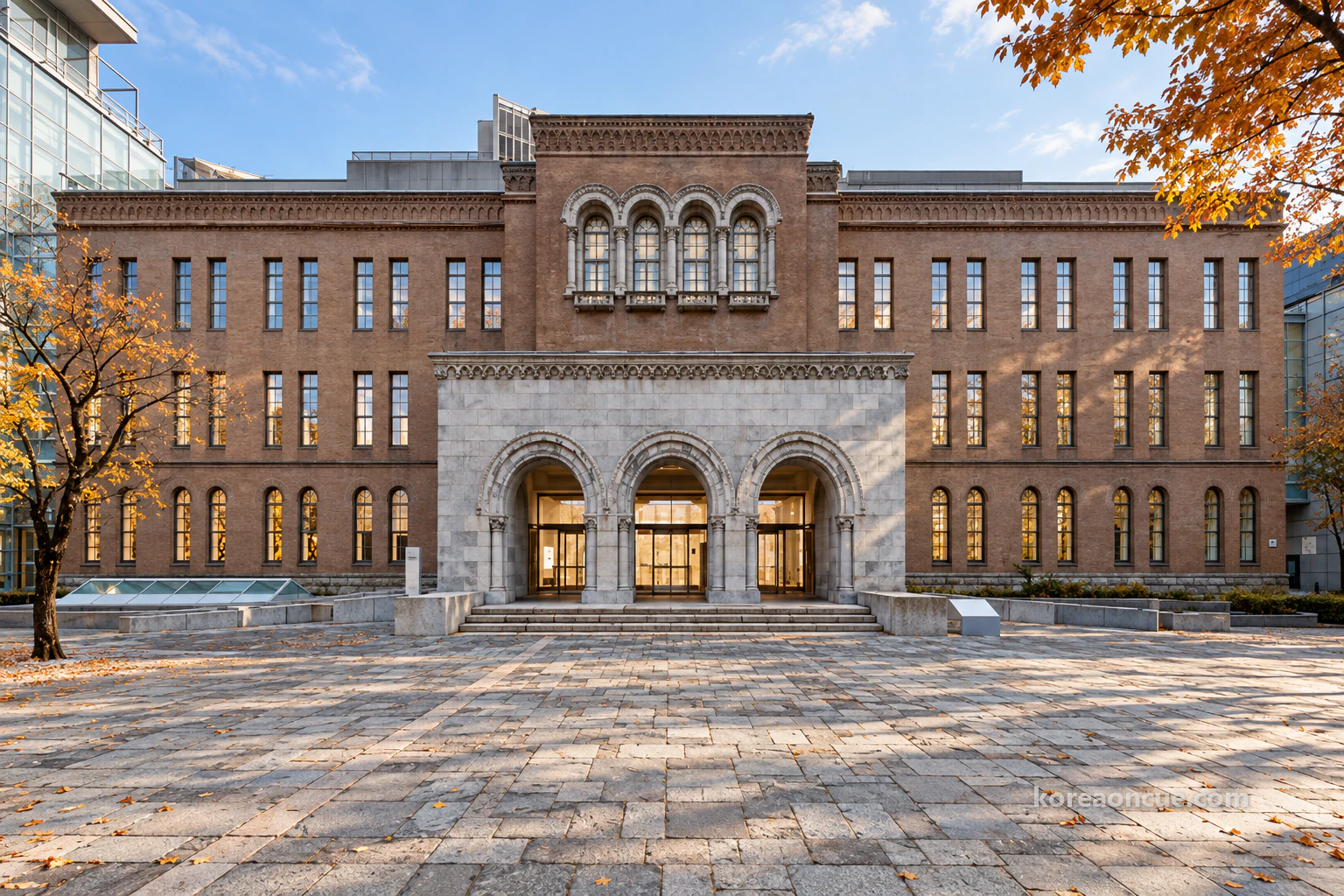
Follow Deoksugung-gil up the sloping lane and the museum comes into view. Its outdoor garden, full of old trees and flowers, opens onto the street with no wall around it, so the slope simply carries walkers into the forecourt. The moment the reddish stone building fills her view at the top of the hill like a scene from a film, Elena slows her pace.
From the forecourt, three arches of grey granite form the entrance porch at the centre of the facade, with a row of arched windows above them. Tall arched windows line both wings as well, and a modern glass-walled building is attached on the left. Standing on the wide stone-paved forecourt in front of the low steps, Elena does not go straight in, and sketches the front of the building in her notebook in a few simple lines instead. Something about a new building joined to an old facade reminds her of the title of the exhibition she is about to see.
From courthouse to Supreme Court to art museum: the names of the Seosomun building
Before going in, Elena reads up on the building’s history. This was originally the site of Pyeongniwon (Hanseong Court), Korea’s first court of law, and the present building went up in 1928, built by the Japanese colonial authorities as the Gyeongseong Court. After liberation it served as the Supreme Court, and once the Supreme Court moved to Seocho-dong in 1995, it became the Seoul Museum of Art in 2002. Elena writes the names in her notebook, each inside its own brackets: “[Pyeongniwon] → [Gyeongseong Court] → [Supreme Court] → [Seoul Museum of Art]”.
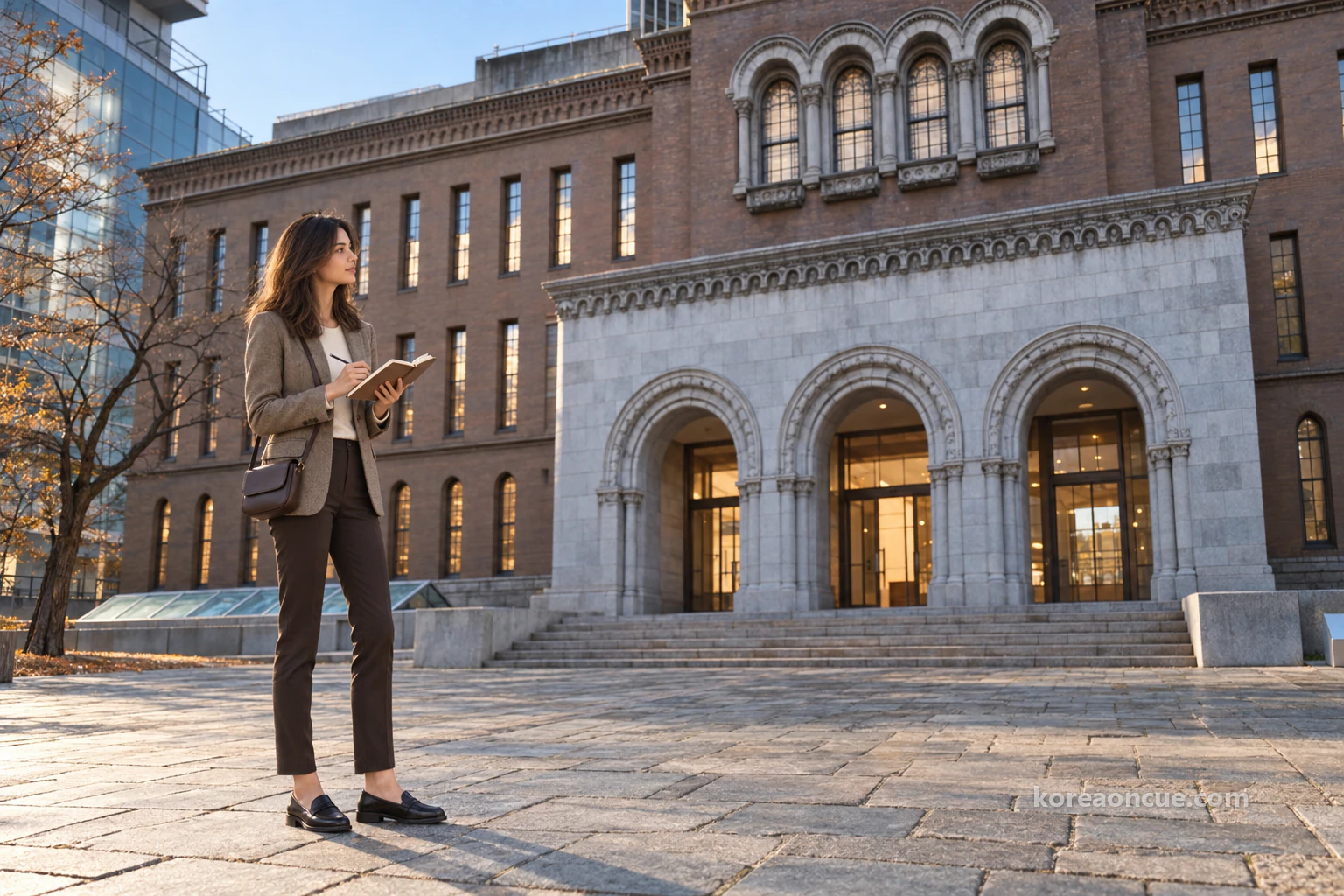
Written out, it makes quite a long line. The same site has gone by a different name in each era, and a building that once handed down verdicts is now a place people visit to see art. Thinking of today’s title, “나의 [나]들”, Elena reflects that this building, too, has several names to put in brackets. Under that line she adds a separate note: through all the changes of name, the front has kept the look of the old Supreme Court building.
The building is two parts joined as one, the Renaissance-style front of the old Supreme Court and a modern rear section. Recognised for how well it carries the symbolism of the former Supreme Court and for its architectural and historical value, it was designated registered heritage No. 237 in 2006. Behind the facade sketch in her notebook, Elena adds a neat rectangle and leaves a gap between the two. What that meeting point of old and new really looks like, she will fill in once she is inside.
The glass-roofed entrance space and lobby: lockers and museum chairs
The answer to the gap in her notebook arrives as soon as she passes the porch. Between the building’s old front and the lobby lies the first space visitors meet on entering the museum, and its glass ceiling lets light into the whole area. The museum describes it as a place where the difference between past and present is expressed through light. Elena tilts her head back and gazes up at the glass for a long moment, then draws several short lines coming down from above into the gap in her notebook.
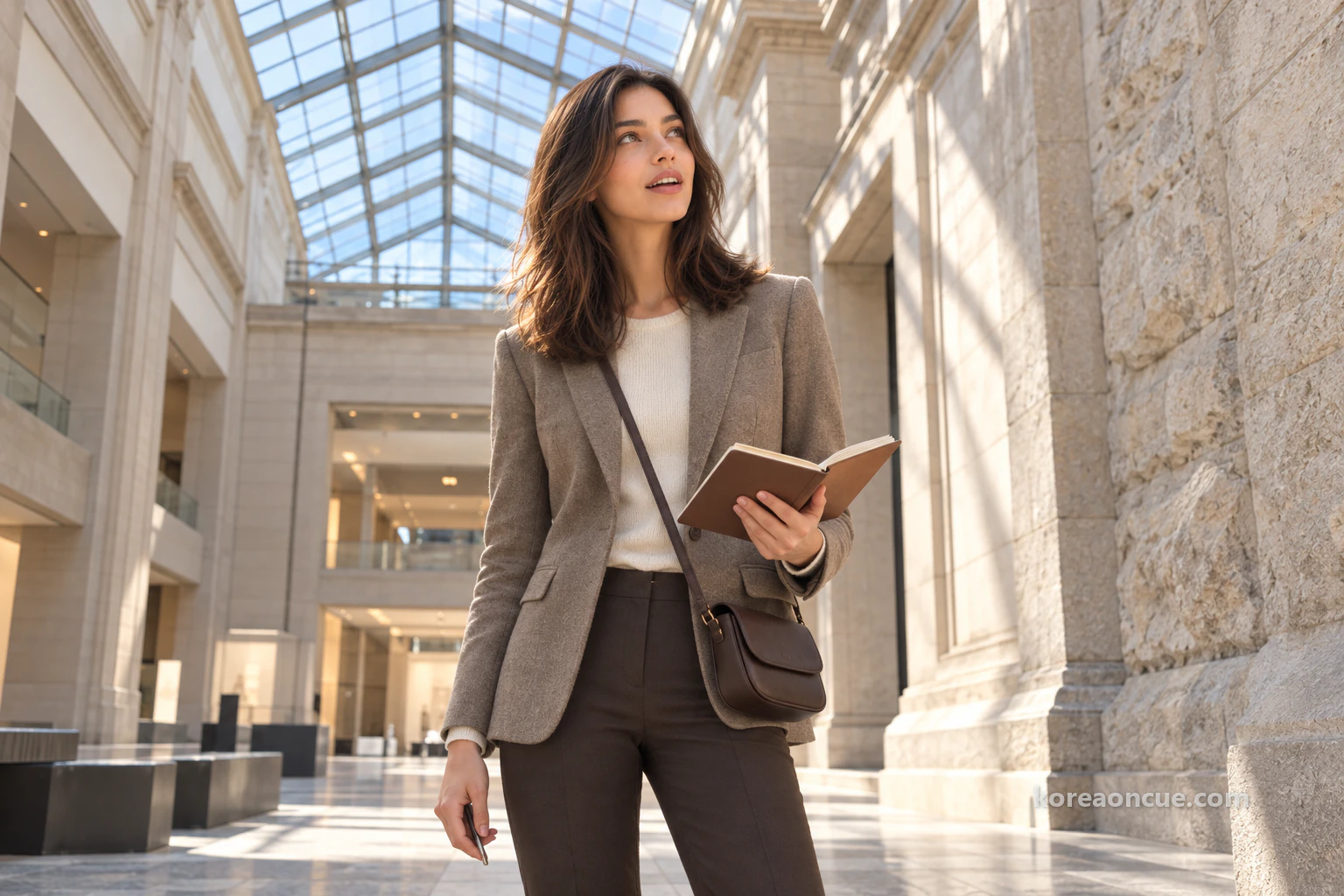
The lobby is a wide, high space, and on first stepping in it is easy to pause and look around, unsure which way to go. Elena does a full turn on the spot to get her bearings. The exhibition covers the second-floor galleries, the third-floor galleries and the third-floor Crystal Gallery, so the thing to do is head upstairs. There is a lift and wheelchairs are available to borrow, so moving between floors is manageable even for anyone who finds stairs hard going.
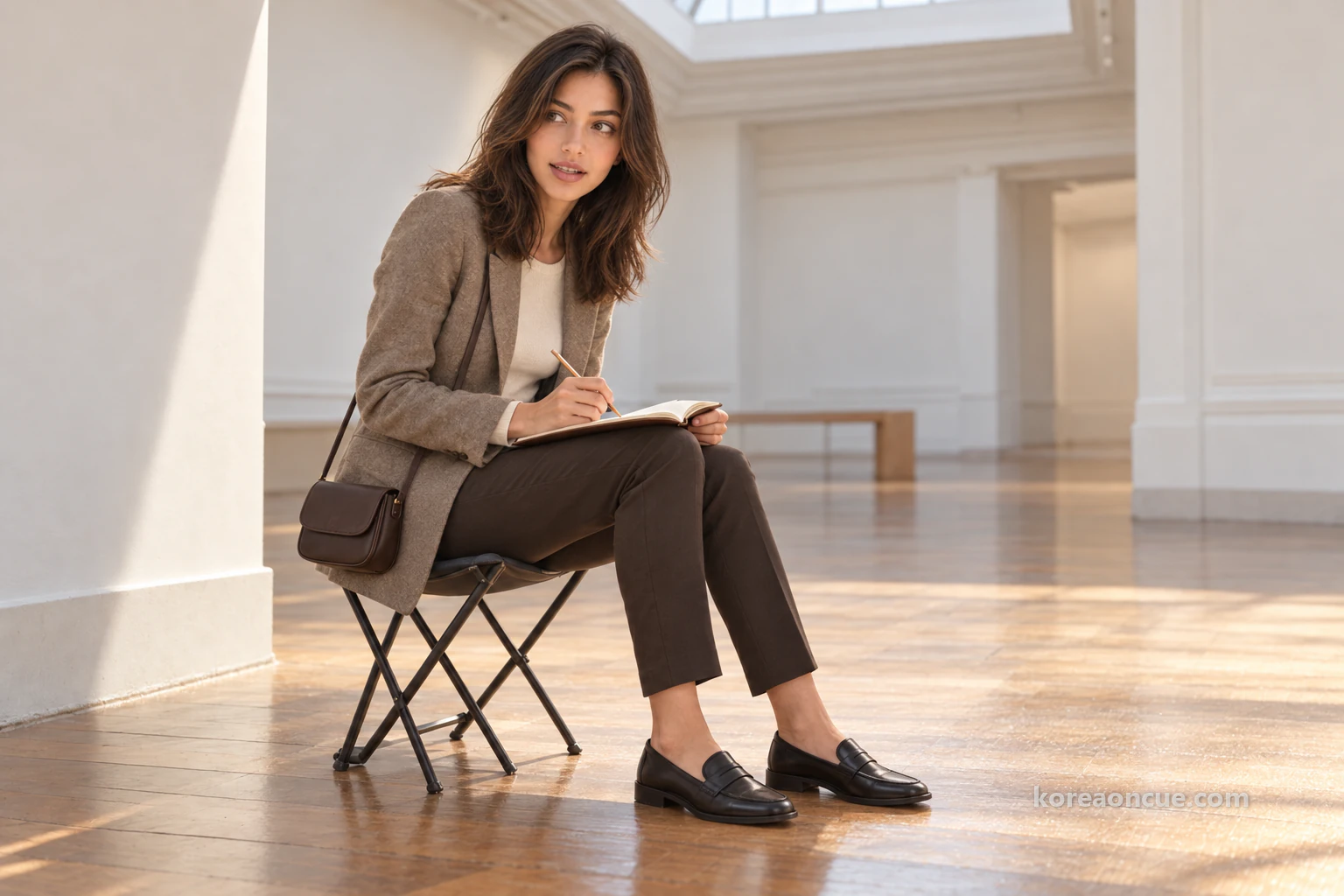
Before going up, Elena sorts out her things. The museum has lockers for personal belongings, and leaving a coat in one makes the two floors far easier to walk. Museum chairs, which are folding stools, are free to use during your visit too, so pick one up if you would like to sit in front of the video works for a while. Knowing this is an exhibition with a lot of video, Elena hooks a stool over her arm without a second thought.
Reading the two exhibition titles side by side: 나의 [나]들 and First Person Plural
Outside the galleries, Elena reads the title again. The brackets in the Korean title, 나의 [나]들, are the ones used in programming, and through them the title holds the many selves that are copied and endlessly reassembled inside a technological environment. If the brackets in Elena’s notebook were screen directions, here they are computer language. She likes the idea that she and the title have been reading the same symbol in different languages, and beside the bracket on her first page she adds a small “[code]”.
The English title is “First Person Plural”. It is borrowed from the third work in *The Electronic Diary*, a video series the artist has continued since 1984, and in English grammar it means the first person plural, in other words “we”. With a Korean title that turns “me” into many and an English title meaning “we” both pointing at the same exhibition, Elena feels as if she is reading one scene from two scripts. In her notebook she writes the two titles one above the other and draws a single short vertical line between them.
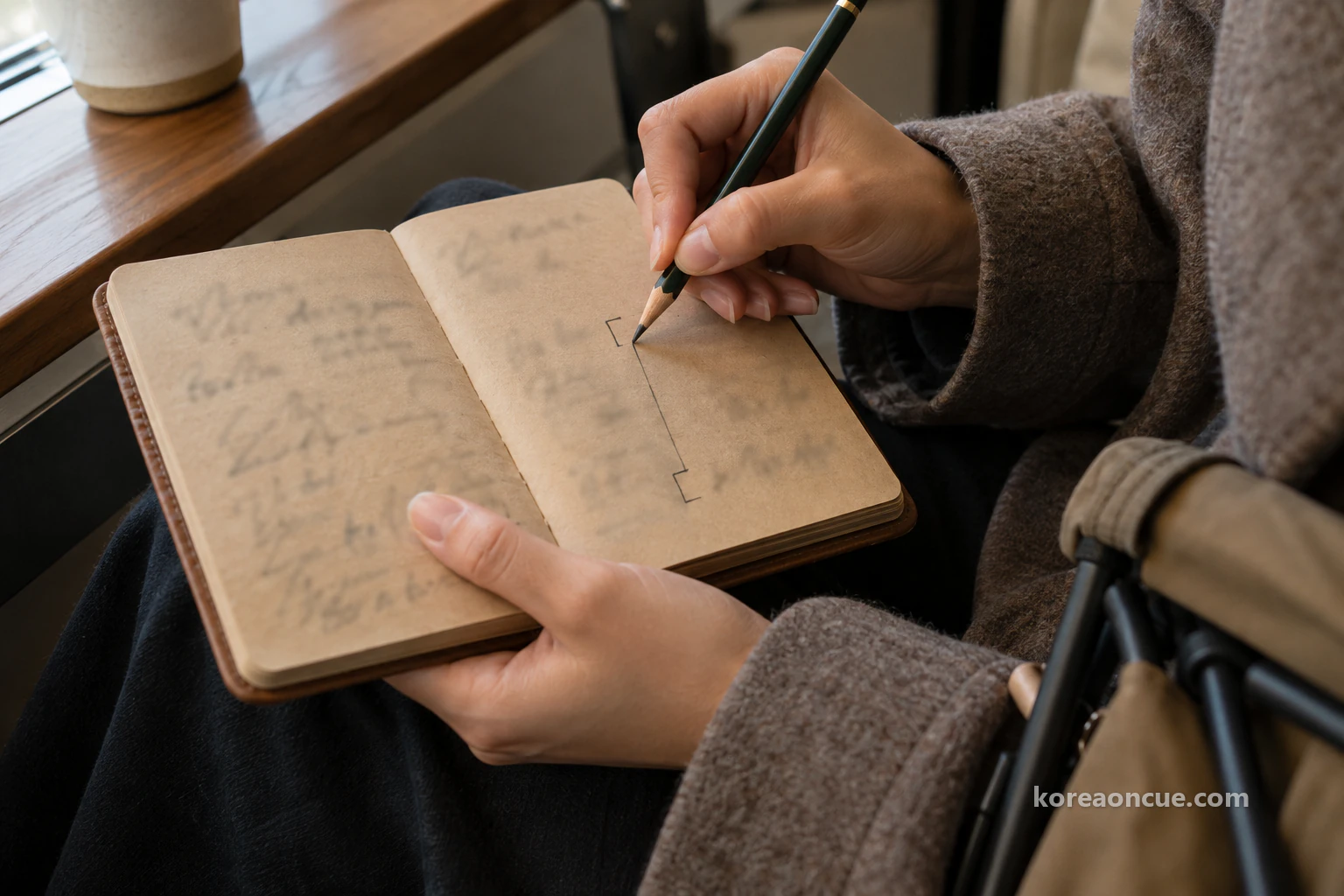
The exhibition was conceived in response to “technology”, the Seoul Museum of Art’s exhibition theme for 2026, and is built around the question of how technology and media shape our identity. It also asks, for the age of AI, “Who am I, and where do I end?” Elena puts the question in her own terms and copies it into her notebook: “How much of the person on screen is the actor, and where does the role begin?” It is a question anyone who reads scenes has asked at least once, and Elena decides to carry that line with her all day.
Walking the six sections in order, from Confessions of a Chameleon to The Edited Future
The exhibition is divided into six sections: 1 “Confessions of a Chameleon”, 2 “Making Personas”, 3 “Flesh and Machine”, 4 “Screens Respond”, 5 “When Data Becomes Love” and 6 “The Edited Future”. Instead of numbering the scenes afresh as she usually does, this time Elena decides to use the section numbers as her scene numbers. She rules six lines in her notebook and writes a section name in brackets at the start of each, and the page turns into something like the contents page of a screenplay.
Read from top to bottom, the six lines tell a story. Inborn identity expands through social relationships and machines, connects through media and networks, and finally reaches the stage of being edited biologically through genetic engineering. Elena boils this down to a short chain of arrows: “me → relationships → machines → screens → data → editing”. Deciding that this order matters more than which floor each section is on, she plans to find the numbers one by one, checking the signs on each floor.

Docent tours run from Tuesday to Sunday at 3 p.m. Elena walks into the galleries a little after 2, so she chooses to do her first round alone, in numbered order, and jots the tour time in the corner of her notebook. Walking through on your own first shows you where you want to linger, and the tour is still worth joining after that. On a first visit, it helps to plan the day with the 3 p.m. tour placed before or after your own look round.
In the second-floor galleries, Elena looks at the building as well as the works. The ceiling here has an opening in the centre that draws down natural light coming in through the ceiling of the third-floor galleries above, with indoor lighting to top it up. The floor is finished in wooden blocks, and the ceiling is 3.6 m high. Thinking that light travelling from the upper floor to the one below resembles an exhibition that stays one continuous flow even when split across floors, Elena sketches the cross-section on one side of her notebook page.
Breathing Machines and the webcam dolls Tillie and CybeRoberta: works where the viewer is watched
Of the works mentioned in the exhibition introduction, the first Elena copies into her notebook is the *Breathing Machines* series from the late 1960s. When a visitor comes close, a sensor picks them up and the artist’s voice is heard: her breathing, her laughter, or words such as “Why are you looking at me?” Reading that line, Elena laughs before she can stop herself. She has always been the one watching the screen, and here she becomes the one a work asks why she is looking, which feels strange and funny at the same time.
The same question carries on in *Tillie* and *CybeRoberta*. Both dolls have a video camera in the left eye and a webcam in the right, and they upload the footage to each doll’s own website every 20 seconds. Elena also notices that *CybeRoberta* carries two dates, 1996/2026. She writes “[audience = subject]” in her notebook and thinks that today the watcher and the watched will be swapping places quite often.
*Hero Sandwiches*, from the 1980s, layers the self in another way. Negatives of famous people are printed one over the other and then painted over, merging two people into one. Overlapping film reminds Elena of a dissolve, where one scene melts into the next, so she reads the description twice. The idea of two people in a single face leads straight back to the question she wrote down outside the galleries, about where the actor ends and the role begins.
Deep Contact, Lorna and Agent Ruby: interactive works in Korean for the first time, and The Electronic Diary parts 1–6
In truth, Elena had a bigger reason for choosing this exhibition: the works that let viewers choose the story for themselves. *Lorna*, made between 1979 and 1984, is the first work to use laserdisc technology to invite interactive participation, and viewers use a remote control to steer Lorna’s choices through 36 sequences. For Elena, who always numbers her scenes in order, a film whose scene order changes with every viewer is a new question in itself.
*Deep Contact*, from 1984, uses a touchscreen to let visitors step into how the story unfolds. A woman on screen called Marion draws visitors into touching the screen, and the story is split into 57 different episodes. For this exhibition, a Korean typeface was chosen to suit the look of early-1980s computer screens. Reading that even the typeface was matched to its era, Elena thinks of the people who agonise over a single subtitle font when an old film is brought back to the screen.
There is one more reason these works are special this time. This is the first time the artist’s interactive media works have been offered in a language other than English, and Korean versions of three of her key interactive works are shown for the first time in this exhibition. *Lorna*, which runs in English, now has Korean subtitles for Korean visitors. *Agent Ruby*, a web-based AI chatbot made between 1998 and 2002, changes its expression as the conversation goes, frowning or pursing its lips, and because it was designed to chat only in English, a Korean subtitle window has been added for this exhibition.
After reading this, Elena draws a small table in her notebook, with columns for the title, what the visitor holds and the number of scenes. Under *Deep Contact* she writes “touchscreen, 57”, under *Lorna* “remote, 36”, and under *Agent Ruby* “conversation”. That Korean has come along with this retrospective, the first of its kind in Seoul, feels to Elena like the reason this exhibition has to be seen here.

Section 4, “Screens Respond”, is also where *The Electronic Diary* is shown. This is the video series the artist has continued since 1984, the very one the English title First Person Plural is borrowed from. The exhibition screens parts 1 to 6 in this section and saves the final part, part 7, for its last section, “The Edited Future”. First-time visitors can easily assume the series ends here and walk on, so remember that part 7 is waiting separately in the final section.
Elena likes this arrangement. Split one series between two places and you end up reading the same diary in two sittings. She writes “[1–6]” on line 4 and “[7]” on line 6, and joins them with a long arrow. After watching six parts and passing through the other sections before meeting the last one, she imagines, the time spent walking in between will slip in like the margins of a diary. Deliberately reading a scene in two halves rather than all at once is a habit Elena has kept every time she walks a place, too.
Up the wooden stairs from the second floor to the third: the skylit gallery and the 10-metre Crystal Gallery
To go up to the third floor, Elena takes the wooden stairs rather than the lift. From these stairs between the second and third floors, the front of the building and the glass-linked interior can be seen together, with a character all of their own. Plenty of natural light pours into the bright stairwell, and it is a popular spot for photos. Elena stops once halfway up, looking back and forth between the facade she sketched in the forecourt that afternoon and the view through the glass in front of her.

On the third floor, the room where Elena stands longest is the gallery on the right-hand side of the building. The Seosomun building’s third-floor right gallery has the highest ceiling of all its galleries, about 6 m, and natural light enters the centre of the room through a pyramid-shaped skylight in the middle of the ceiling. Realising that the light dropping through the opening in the second-floor ceiling starts right here, Elena adds another storey on top of the cross-section she drew downstairs. Now the whole path of light, from top to bottom, fits on one page of her notebook.
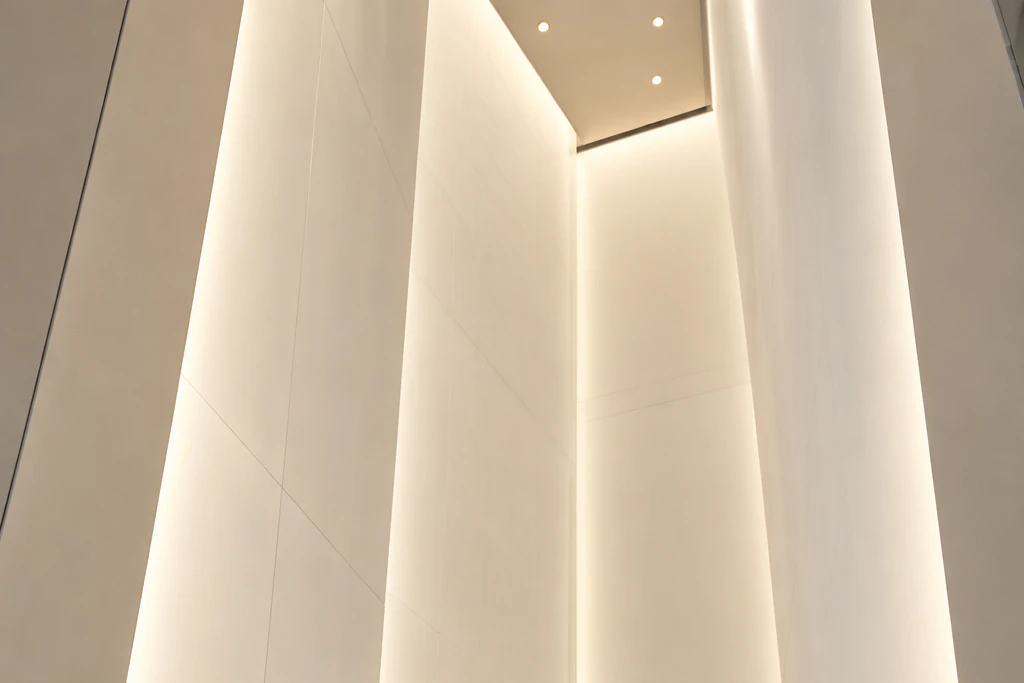
The Crystal Gallery is a small room between the central gallery and the lobby on the third floor. It is small, but trapezoid-shaped with a ceiling about 10 m high, and light fittings set in the space between its inner walls and the outside are designed to make the whole volume glow. Reading that it is used for major works, models, video, VR and AR pieces, Elena labels the room “[light box]” in her notebook. It feels as if a whole room is holding the kind of light she has only ever seen glow inside a projection booth.
Between the third-floor galleries there is also a specialist art bookshop. It stocks artists’ books, the museum’s exhibition catalogues, art criticism and art theory, which makes it a good place for a short break midway through the exhibition. Elena wanders slowly between the shelves, looking at the covers of a few books on video and film. Resting in front of the bookcases takes the ache out of her legs, and she finds the energy to walk on to the final section.
The Edited Future: the fluorescent cat, The Electronic Diary part 7 and closing the arrow in the final section
Past section 5, “When Data Becomes Love”, and on into section 6, “The Edited Future”, a title from the introduction catches her eye: *Fluorescent Cat*. The work deals with a scientific case in which a gene for green fluorescent protein, found in jellyfish, was introduced into a cat’s genome to make it glow. Here the last word in her chain of arrows, “editing”, becomes clear. In film, editing means cutting and joining scenes, but in this section the word stretches all the way to the blueprint of life.
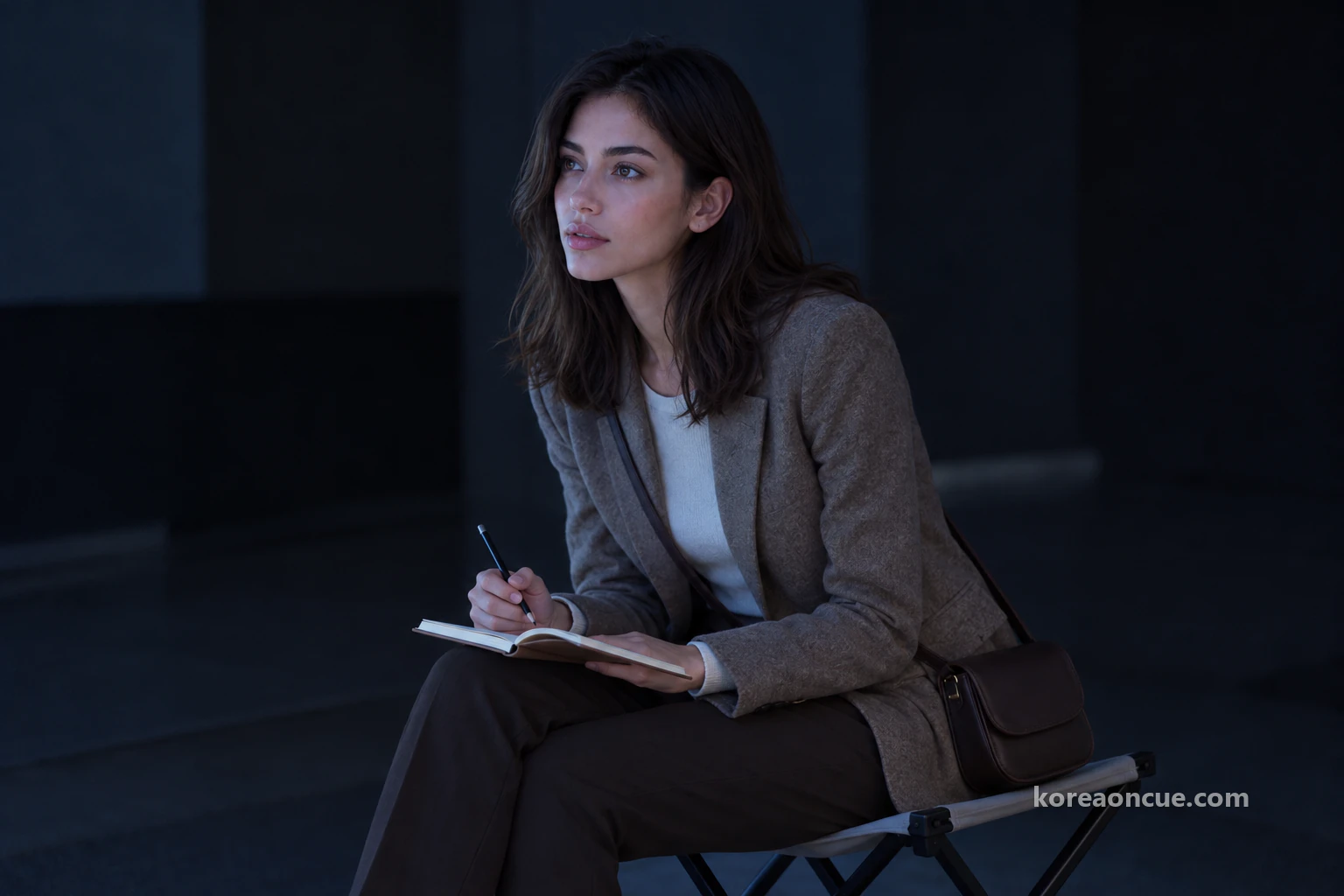
In that section Elena finds part 7 of *The Electronic Diary*, the one she has saved until last, and unfolds her stool. It is time to close the arrow that started on line 4 at line 6. Between parts 1–6 and the final part 7 came the fifth section, the light-filled rooms on the third floor and a short rest by the bookshop, and to Elena that stretch of time feels like a long margin between diary entries. Only after drawing a small circle at the tip of the arrow does she see that all six lines of the day are filled in.
Back to the entrance space on a Friday evening, then down Deoksugung-gil to City Hall Station
By the time Elena leaves the galleries, the sun has already set. On Fridays the museum stays open until 9 p.m., with last entry at 8, so even an afternoon arrival like hers needs no rushing. In the same month of November, though, it closes at 6 p.m. on Saturdays, Sundays and public holidays, with last entry at 5, so at the weekend it is better to arrive early in the day. Elena comes down the stairs and stands once more in the glass-roofed entrance space she first passed through in the afternoon.
The glass ceiling that poured light in during the day now holds a darkening sky. Passing through the same spot twice in one day, she finally feels what it means for this space to express the gap between past and present through light. Next to the gap where she drew lines coming down from above that afternoon, Elena draws one more box, a dark one this time. Her habit of reading a place twice before a scene feels complete has been proved, in this building, by a single glass ceiling.
Before leaving, Elena checks the related programmes as well. A workshop linked to the exhibition, *The Face of a [Me] That Isn’t Me*, runs from 12 to 28 November, with applications open until 10 November. There is also a related programme of feature film screenings at Seoul Art Cinema, which gives Elena, keen to see more of the artist as a film director, one more scene to look forward to. The same building is also showing *The Underside of Technology: Scenes on the Edge* until 22 November, so if you have time to spare, it is worth looking round that too.
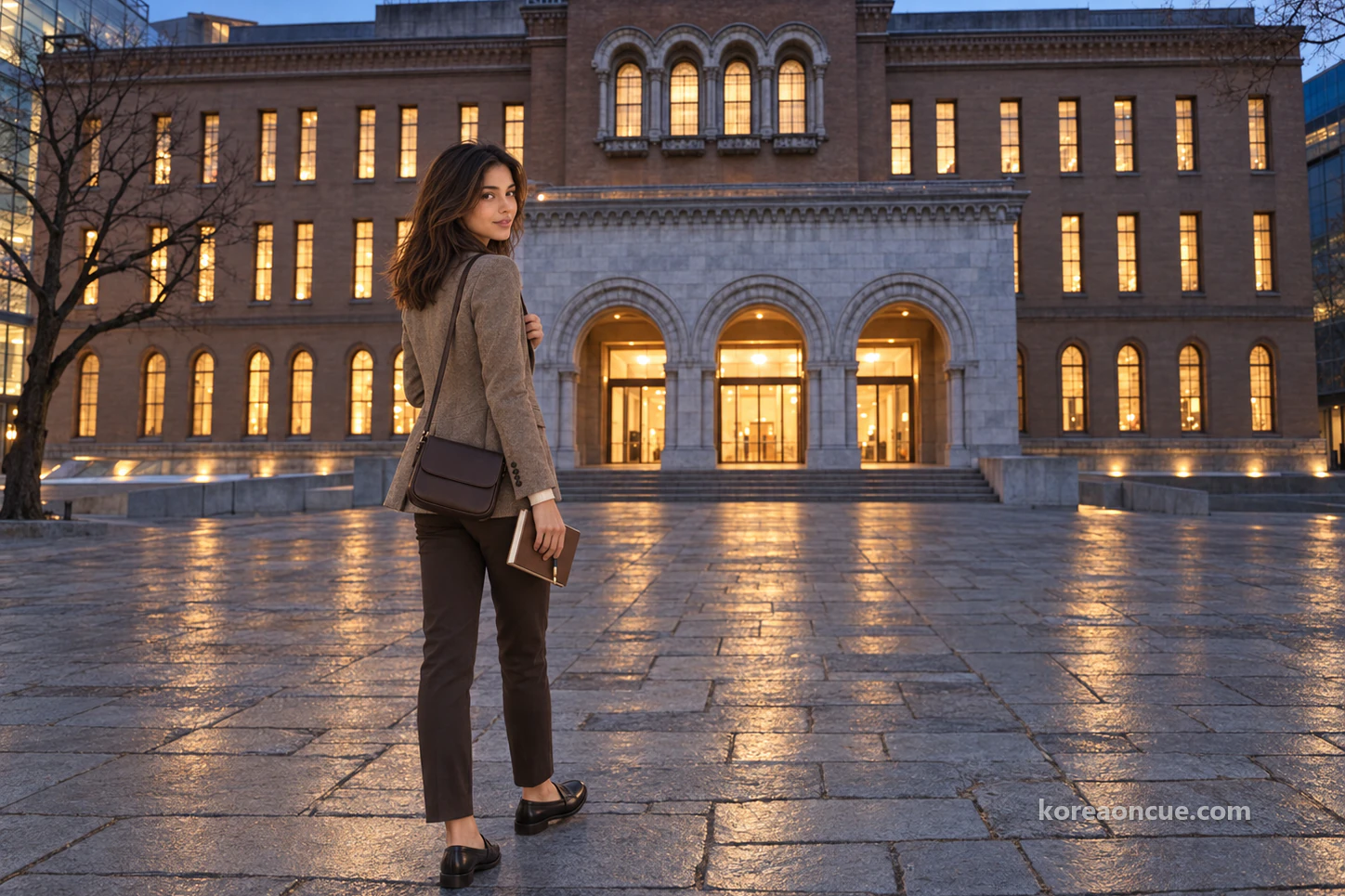
Out in the forecourt, Elena turns to look at the lit facade once more. She thinks back to the line of names she wrote that afternoon, Pyeongniwon, the Gyeongseong Court, the Supreme Court and the Seoul Museum of Art, and opens one more bracket at the very end of it: “[today’s audience]”. Of all the names this building has carried, she feels, the one it has now was made in the end by people coming and going like this. Then she walks slowly down the gentle slope of Deoksugung-gil towards Exit 10 of City Hall Station, the way she came.
On the walk to City Hall Station, Elena leafs through her notebook from the beginning. Begun with brackets for screen directions, it is now full of them: the building’s names, two titles, six sections, the dolls’ eyes and the remote control, right through to the diary’s part 7 that she saved until last. Inside them, in turn, are Elena reading the building, Elena being questioned by a work of art and Elena closing the arrow at the end. On the last page she writes the English title once more and smiles to herself. Today’s first person, after all, has been quite a few people.
Common Mistakes
Arriving late on a November weekend afternoon
from November to February, the museum closes at 18:00 on Saturdays, Sundays and public holidays, with last entry an hour earlier at 17:00. Go early at the weekend, or for a relaxed visit try a Friday, when it stays open until 21:00.
Going on a Monday
the museum closes every Monday (it opens when a Monday is a public holiday). It is also closed on 1 January.
Thinking you have seen all of The Electronic Diary in section 4
“Screens Respond” shows parts 1–6, and the final part 7 is screened in the last section, “The Edited Future”.
Driving
parking at the museum is limited, so there is little room for visitors’ cars. It is a four-minute walk from City Hall Station Exit 10.
Standing through the videos
museum chairs, which are folding stools, are free to use during your visit. Pick one up and sit down in the sections with longer videos.
FAQ
Which station and exit should I use?
City Hall Station (Line 2) Exit 10, then 260 m towards the Seoul Central District Court Jungbu Registry Office, a four-minute walk. On Line 1, City Hall Station Exit 1 is 380 m away (6 min). The address is 61 Deoksugung-gil, Jung-gu, Seoul.
Is there an admission fee?
No. *Lynn Hershman Leeson: First Person Plural* is free.
How late is it open?
Until 20:00 Tuesday–Thursday and 21:00 on Fridays. From November to February it closes at 18:00 on Saturdays, Sundays and public holidays. Last entry is one hour before closing.
Which floors is the exhibition on?
The second-floor galleries, the third-floor galleries and the third-floor Crystal Gallery of the Seosomun main building.
Are there guided tours?
Docent tours run Tuesday to Sunday at 15:00.
Do the English-language works have Korean?
*Lorna* has Korean subtitles, and *Agent Ruby*, which chats only in English, has an added Korean subtitle window. Korean versions of three key interactive works are shown for the first time in this exhibition.
Are there related programmes?
The workshop *The Face of a [Me] That Isn’t Me* runs 12–28 November (applications close on 10 November). Feature film screenings at Seoul Art Cinema are also part of the related programme.
Who do I contact with questions?
The visitor information desk on 02-2124-8868, or the museum’s main number, 02-2124-8800.
Recap — 30 seconds before you go
- City Hall Station (Line 2) Exit 10 → 4-minute walk (260 m) → Seoul Museum of Art, Seosomun main building (61 Deoksugung-gil).
- *First Person Plural* until 21 February 2027, free — second- and third-floor galleries and the third-floor Crystal Gallery.
- Tue–Thu until 20:00 · Fri until 21:00 · Sat, Sun and public holidays until 18:00 from November to February. Last entry one hour before closing, closed Mondays.
- Walk the six sections in numbered order. Part 7 of The Electronic Diary is in the final section.
- Docent tours Tue–Sun at 15:00. Museum chairs and lockers available.
Sources
- Seoul Museum of Art — exhibition details, Lynn Hershman Leeson: First Person PluralDates 21 October 2026 to 21 February 2027 · second- and third-floor galleries and the third-floor Crystal Gallery at the Seosomun main building · free admission · opening hours, last entry and closing days · docent tours Tuesday to Sunday at 15:00 · the artist and about 200 works · the museum’s 2026 theme of technology · the six sections and their sequence · meaning of the Korean and English titles · descriptions of Breathing Machines, Tillie, CybeRoberta, Hero Sandwiches, Deep Contact, Lorna, Agent Ruby and the fluorescent cat · The Electronic Diary parts 1–6 and part 7 · Korean subtitles · contactschecked 2026-10-27
- Seoul Museum of Art — Visit, Seosomun main buildingDistance and walking time from each subway exit (Line 2 City Hall Exit 10, 260 m, 4 min; Line 1 City Hall Exit 1, 380 m, 6 min; Line 5, about 900 m, 13 min) · bus routes and stop · address · parking note · opening hours · the Pyeongniwon site, the 1928 Gyeongseong Court, the Supreme Court and the museum from 2002, registered heritage No. 237 · front and rear sections of the building · the glass-roofed entrance space · wooden staircase · second- and third-floor galleries and the Crystal Gallery · art bookshop · lockers, museum chairs, wheelchairs and lifts · outdoor garden · the related workshop · main phone numberchecked 2026-10-27
- Seoul Museum of Art press release (20 October 2026) — Lynn Hershman Leeson: First Person PluralThe artist’s first museum solo show in Asia · about 200 works across some 60 years · Korean versions of three key interactive works shown for the first time · the question of who we are and where we end · feature film screenings at Seoul Art Cinema as a related programmechecked 2026-10-27
- Seoul Museum of Art — current exhibitionsThe other exhibition running at the Seosomun main buildingchecked 2026-10-27
- Seoul Museum of Art — exhibition details, Gana Art Collection exhibitionDates 16 April to 22 November 2026checked 2026-10-27
A Seoul story told with our AI characters. Place details are checked against public sources; the photos are AI-made illustrative images. How we use AI
More from this area
18:00 and 21:00: Hina counts back from closing time at Seoul Metropolitan Library
On the afternoon before her show, Hina has until 9 pm.
Seoul at 1/1500: Noah looks down on the whole city for the first time, one evening at the Seoul Museum of History
Noah’s notebook holds plenty of maps of Seoul neighbourhoods, but he has never joined them together.